Industrial Revolution Books
Explore tailored Industrial Revolution books created by our AI
Books readers created
17 Industrial Revolution books, each written for the reader who ordered it. Read its introduction, then personalize it to get a book of your own.
The Gears of Change
How the Industrial Revolution Reshaped Britain and Europe
Many believe the Industrial Revolution was merely about the invention of machines and factories. In reality, it was a seismic shift that forever altered the fabric of society, economy, and culture in ways we're still grappling with today. The Gears of Change takes you on a captivating journey through the heart of the Industrial Revolution in Great Britain. You'll discover how this period of rapid innovation and social upheaval laid the foundation for modern Europe and shaped the world we live in today. From the steam engine to the power loom, from rural villages to sprawling urban centers, this book explores the inventions, ideas, and individuals that drove this unprecedented transformation. You'll gain insights into the complex interplay of technological advancements, economic shifts, and social changes that defined this era. Whether you're a history buff or simply curious about how past events continue to influence our present, The Gears of Change offers a fresh perspective on one of the most pivotal periods in human history. Prepare to see the Industrial Revolution - and its lasting impact on Britain and Europe - in a whole new light.
Threads of Change
How the Industrial Revolution Reshaped Fashion Forever
Think the Industrial Revolution was all about factories and steam engines? Think again. This groundbreaking era didn't just change how we work—it revolutionized what we wear. "Threads of Change" unravels the fascinating story of how technological advancements altered the very fabric of fashion. You'll discover how new manufacturing processes not only changed the way clothes were made but also influenced design, accessibility, and even social norms. From the rise of ready-to-wear clothing to the birth of synthetic fabrics, this book weaves together the intricate connections between industrial progress and sartorial evolution. You'll explore how mass production democratized fashion, making style accessible to the masses, and how new dyeing techniques expanded the palette of possibility. Prepare to see fashion through a new lens as you uncover the hidden influences that shaped the clothes we wear today. This isn't just a history lesson—it's a journey through time that will forever change how you view your wardrobe.
The Forge of Progress
Britain's Industrial Revolution and Its Impact on World History
Step into the smoky streets of 18th and 19th century Britain, where the clanging of machinery and the hiss of steam engines herald a new era. "The Forge of Progress" takes you on an exhilarating journey through the heart of the Industrial Revolution, a period that reshaped not just Britain, but the entire world. As you delve into these pages, you'll witness the transformation of a nation from an agrarian society to an industrial powerhouse. You'll explore the ingenious inventions that sparked this revolution, from the spinning jenny to the steam engine, and meet the visionaries who dared to dream of a mechanized future. But this isn't just a tale of technological triumph. You'll also grapple with the complex social changes that accompanied industrialization - the rise of the working class, the growth of cities, and the birth of new political ideologies. Through vivid narratives and insightful analysis, you'll gain a nuanced understanding of how these changes rippled across the globe, influencing everything from international trade to colonial expansion. "The Forge of Progress" doesn't shy away from the darker aspects of this era, examining the harsh working conditions, environmental impacts, and social inequalities that arose alongside unprecedented economic growth. By the time you turn the final page, you'll have gained a profound appreciation for how this pivotal period in British history shaped the modern world we inhabit today.
Discover how British inventors revolutionized the world and shaped the modern age. This book takes you beyond the textbook names to reveal the fascinating stories of the men and women who transformed everyday life through their ingenuity. You'll explore the personal struggles, brilliant insights, and relentless determination that drove innovations from the steam engine to the jet engine, from photography to wireless communication. Learn how these inventors overcame financial constraints, social prejudices, and technical impossibilities to create technologies that still impact your daily life. Through vivid narratives and historical context, you'll understand not just what they invented, but why their work mattered and how their legacies continue to influence modern innovation. Whether you're interested in history, science, entrepreneurship, or simply great human achievement, this book reveals the remarkable individuals behind Britain's greatest contributions to civilization.
Forging a Nation
The Industrial Revolution and the Shaping of 19th Century America
The Industrial Revolution was a pivotal moment in American history, reshaping the nation's economy, society, and culture. In "Forging a Nation," you'll explore the dramatic transformation of the United States during the 19th century, as it evolved from an agrarian society to an industrial powerhouse. This book takes you through the key developments that defined this era, from the rise of factories and mass production to the growth of cities and the emergence of new social classes. You'll gain insights into the inventions and innovations that drove progress, the lives of workers and industrialists, and the profound changes in transportation, communication, and daily life. "Forging a Nation" also delves into the complex social and political consequences of industrialization, including labor movements, immigration, and the changing role of government. By understanding this crucial period, you'll gain a deeper appreciation for the forces that shaped modern America and continue to influence our world today.
The Plow to the Tractor
How Machines Transformed Farming and Shaped the Modern World
You'll trace the remarkable transformation of agriculture from labor-intensive hand cultivation to machine-driven industrial farming. This journey reveals how the steam engine, the mechanical reaper, and the tractor didn't simply make farming easier—they rewrote the rules of human civilization. Discover how mechanization triggered the greatest migration in human history, emptied countryside villages, and powered the rise of industrial cities. Explore how different nations adapted these technologies to their own circumstances, creating vastly different agricultural systems. Examine the environmental consequences of mechanized farming, from soil depletion to chemical pollution, and understand how these challenges shape our food systems today. You'll see how mechanization deepened global inequalities, concentrating wealth in the hands of large landowners while devastating traditional farming communities. By the end, you'll understand that agricultural mechanization wasn't simply progress—it was a complex transformation with winners and losers, benefits and costs, that continues to reshape our world.
Wallsend Through Time
A Journey from Ancient Settlements to Modern Urban Landscape
Elevate your understanding of local history with "Wallsend Through Time: A Journey from Ancient Settlements to Modern Urban Landscape." This captivating exploration takes you on a fascinating tour through the rich tapestry of Wallsend's past, from its pre-Roman roots to its vibrant present. You'll uncover the hidden stories behind the Roman Wall remnants, delve into the impact of coal mining and shipbuilding, and trace the area's evolution through medieval times and the Industrial Revolution. Discover how Wallsend's unique identity has been shaped by its connection to Hadrian's Wall, the mighty River Tyne, and the resilient spirit of its people. Through vivid narratives and insightful analysis, you'll gain a newfound appreciation for the architectural styles, local traditions, and cultural shifts that have defined this remarkable community. Whether you're a longtime resident or a curious visitor, this book will deepen your connection to Wallsend's heritage and inspire you to see the area through new eyes.
The Victorian Era Reimagined
Understanding the Architecture That Shaped Modern Design
Discover how Victorian architecture became one of history's most influential and misunderstood design movements. This exploration takes you through the dramatic transformation of the built environment during the 19th century, revealing how industrial progress, social upheaval, and artistic innovation converged to create buildings that still captivate us today. You'll learn why Victorian architects made the choices they did, how they solved unprecedented technical challenges, and what their designs reveal about the era's values and ambitions. From the soaring Gothic Revival cathedrals to the ornate townhouses that define entire neighborhoods, you'll understand the principles that guided these creations. More importantly, you'll see how Victorian design thinking continues to influence contemporary architecture and urban planning. Whether you're drawn to the aesthetic richness of Victorian buildings or curious about architectural history's deeper currents, this book provides the context and insight needed to truly appreciate one of architecture's most transformative periods.
The Meiji Restoration
How Japan Transformed from Feudal Empire to Modern Nation
Japan in the 1860s faced an existential crisis: Western powers demanded trade and threatened colonization, while internal divisions threatened to tear the nation apart. The Meiji Restoration emerged as Japan's answer—a radical yet calculated transformation that would reshape an entire civilization in just decades. This book explores how a group of visionary leaders dismantled the feudal system, built a modern military, industrialized the economy, and established a constitutional government—all while maintaining Japanese cultural identity and imperial continuity. You'll discover the remarkable individuals who drove this change, the strategies they employed to overcome fierce resistance, and the profound social upheaval that accompanied modernization. From the fall of the samurai to the rise of industrial cities, from educational revolution to imperial expansion, this account reveals how Japan navigated the collision between tradition and modernity to become Asia's first modern nation. Understand the forces that shaped contemporary Japan and learn how one nation's response to global pressure created a model that would influence modernization efforts worldwide.
The Chartist Movement
Britain's First Mass Working-Class Political Campaign and Its Legacy
Discover how ordinary working people in 19th-century Britain organized to demand a voice in their own governance. The Chartist Movement stands as one of history's most significant yet often overlooked campaigns for democratic rights. This book traces the movement from its emergence in the 1830s through its peak in the 1840s, examining the economic conditions, political exclusions, and social aspirations that drove millions to petition for change. You'll explore the lives of key figures like Feargus O'Connor and William Lovett, understand the strategic debates between moral force and physical force advocates, and see how regional communities adapted Chartist principles to their local circumstances. Rather than viewing Chartism as a failure, this account reveals how the movement fundamentally transformed British politics and democracy itself. By understanding this pivotal moment in working-class history, you'll gain insight into how ordinary people challenge entrenched power and how social movements create lasting change.
The Gilded Age promised opportunity and progress, yet it was built on a foundation of deception, corruption, and violence. The robber barons who dominated this era—Rockefeller, Carnegie, Vanderbilt, and others—didn't simply outcompete their rivals; they systematically destroyed them through predatory practices, bribery, and intimidation. This book examines how these titans accumulated unprecedented wealth by manipulating markets, corrupting government officials, and exploiting millions of workers. You'll discover how monopoly consolidation tactics eliminated competition, how political corruption became standard business practice, and how the wealthy crafted narratives to justify their greed while concealing their crimes. By analyzing the economic structures, ethical failures, and power dynamics of this pivotal era, you'll gain critical insight into how modern capitalism inherited its most troubling characteristics. This is essential reading for understanding the historical origins of wealth inequality and the ongoing tension between corporate interests and public welfare.
From the humble stone cottages of Dunfermline, Scotland, to the towering steel mills of Pittsburgh, you'll follow one of history's most remarkable transformations. This comprehensive biography traces Andrew Carnegie's extraordinary path from a poor weaver's son to becoming one of America's wealthiest industrialists and most influential philanthropists. You'll discover how Carnegie's Scottish heritage shaped his democratic ideals, work ethic, and revolutionary approach to wealth. Through detailed exploration of his early struggles as an immigrant family in Pennsylvania, his rise through the railroad and telegraph industries, and his eventual dominance of American steel production, you'll gain insight into the mind of a man who fundamentally changed both industry and philanthropy. The narrative reveals Carnegie's complex character—a shrewd businessman who could be ruthless in competition yet generous beyond measure in giving. You'll explore his groundbreaking philosophy that the wealthy have a moral obligation to use their fortunes for society's benefit, leading to the creation of over 2,500 libraries worldwide and numerous educational and cultural institutions. This book examines not just Carnegie's business acumen and philanthropic legacy, but also his role as a Scottish-American who never forgot his roots, maintaining deep connections to his homeland while helping to build the industrial foundation of his adopted country. You'll understand how one man's vision continues to influence education, culture, and charitable giving more than a century after his death.
Most people think quantum mechanics is an esoteric field reserved for physicists in laboratories, disconnected from everyday life and historical events. Nothing could be further from the truth. Every smartphone you touch, every medical scan you receive, every GPS direction you follow exists because of quantum physics—and the story of how we discovered these principles is inseparable from the rise and fall of empires, the outcome of wars, and the transformation of human society. This book reveals the hidden connections between physics breakthroughs and civilizational change. You'll discover how Newton's laws enabled the Industrial Revolution, how Einstein's relativity reshaped geopolitics, and how quantum mechanics birthed the digital age. From ancient astronomers to Manhattan Project scientists, from the steam engine to the silicon chip, you'll see how our understanding of the physical world has repeatedly rewritten the human story. This is not a textbook—it's the epic tale of how curiosity about nature's deepest secrets changed everything about how we live, work, and understand our place in the cosmos.
Faith and Justice
The Historical Roots and Modern Relevance of Christian Socialism
Discover how Christianity's earliest followers practiced radical economic sharing and how this vision resurged during the Industrial Revolution as Christian thinkers confronted unprecedented human suffering. This book traces Christian Socialism from its biblical roots through its emergence as a distinct theological movement in 19th-century Europe and America, exploring how faith communities have wrestled with the relationship between spiritual salvation and social justice. You'll examine the lives and ideas of influential Christian Socialist thinkers, understand the theological arguments that distinguish this tradition from both secular socialism and conservative Christianity, and explore how these principles manifest in contemporary movements addressing inequality, labor rights, and environmental justice. Through historical analysis and theological reflection, you'll gain insight into a often-overlooked dimension of Christian history that continues shaping faith-based activism today. Whether you're a student of religious history, an activist seeking theological grounding, or a believer exploring Christianity's prophetic tradition, this book provides the context and analysis needed to understand how faith and justice have been inseparably linked throughout Christian history.
Echoes of Humanity
A Journey Through Time: Exploring Life in Major Historical Eras
Imagine standing at the crossroads of time, able to witness the daily lives of people from ancient civilizations to the modern era. In "Echoes of Humanity," you'll do just that. This captivating exploration of human history takes you on a vivid tour through the ages, allowing you to experience the triumphs, challenges, and everyday moments of those who came before us. As you turn each page, you'll find yourself walking the streets of ancient Rome, feeling the excitement of the Renaissance, and understanding the profound changes brought by revolutions and technological advancements. You'll gain insights into how people lived, worked, and thought in different eras, connecting the dots between major historical events and their impact on ordinary lives. By the time you finish this book, you'll have developed a rich, multifaceted understanding of human history. You'll be able to analyze historical events with a critical eye, recognizing patterns and drawing connections across time and cultures. Most importantly, you'll gain a deeper appreciation for the shared human experience that binds us all, regardless of the era we live in.
Most people believe photography was invented in a single moment of genius, but the truth is far more complex and fascinating. The invention of photography was a gradual convergence of chemistry, optics, and human ambition that unfolded across decades and continents. This book traces the remarkable journey from early camera obscura experiments to the first permanent images, revealing the brilliant minds—Nicéphore Niépce, Louis Daguerre, William Henry Fox Talbot, and others—who made it possible. Beyond the technical breakthroughs, discover how photography fundamentally disrupted society: it challenged artists, revolutionized journalism, enabled scientific advancement, and forever changed how humans see and understand the world. Through vivid storytelling and historical context, you'll understand not just how photography was invented, but why it mattered so profoundly to the 19th century and continues to shape our world today.
Unraveling Humanity
A Fresh Lens on Social Evolution and World History
Discover a groundbreaking perspective on the tapestry of human civilization. "Unraveling Humanity" challenges long-held assumptions about our past, offering you a nuanced understanding of how societies have evolved from ancient times to the present day. This eye-opening exploration delves into the intricate web of factors that have shaped human progress, from the emergence of early writing systems to the complex dynamics of modern nation-states. You'll gain insights into the origins of agriculture, the development of urban centers, and the rise and fall of empires that have left indelible marks on our collective history. Through a careful examination of archaeological evidence and anthropological theories, you'll explore the diverse political systems and social structures that have defined different cultures across time and space. From the bustling city-states of ancient Mesopotamia to the far-reaching influence of the Silk Road, each chapter unveils fascinating connections between past events and present-day realities. "Unraveling Humanity" doesn't just recount historical facts; it provides you with the tools to analyze and interpret the complex forces that have driven social change. Whether you're preparing for your next lesson plan or simply curious about the human story, this book will revolutionize your understanding of world history and inspire you to see our shared past—and future—in a whole new light.
Related books you may like:
Embark on a captivating journey through one of the most pivotal moments in British history with "1066: The Year That Changed England." This meticulously researched account of the Battle of Hastings offers you a front-row seat to the events that reshaped the course of European history. Delve into the complex web of political intrigue, military strategy, and cultural shifts that led to this momentous clash. You'll gain a deep understanding of the key players - William the Conqueror, Harold Godwinson, and Harald Hardrada - and the high-stakes game of thrones they played. Through vivid storytelling and expert analysis, you'll experience the tension of the battlefield, the clash of Anglo-Saxon and Norman cultures, and the far-reaching consequences of William's victory. Discover how this single event transformed England's language, laws, and social structure, leaving an indelible mark on the nation's identity. Whether you're a history buff or simply curious about this transformative period, this book offers fresh insights and a comprehensive overview that will enrich your understanding of medieval Europe and the foundations of modern Britain.
Many assume the French Revolution ended in 1799 with Napoleon's rise to power. In reality, the struggle for democracy and social justice continued to convulse France throughout the nineteenth century. The 1848 Revolution represents a pivotal moment when ordinary people—workers, students, intellectuals, and the poor—rose up against an entrenched monarchy and demanded fundamental change. This book explores the dramatic events of that revolutionary year, from the February uprising that toppled King Louis-Philippe to the violent June Days that exposed the revolution's internal contradictions. You'll discover how economic crisis, industrial transformation, and competing political ideologies collided to reshape not just France, but the entire European continent. Through vivid narratives and careful analysis, this account reveals why 1848 mattered then and why its lessons remain relevant today for understanding how societies change, how revolutions succeed and fail, and how the pursuit of liberty continues to define our world.
Discover how a single year transformed global history and set the stage for the modern world. The Russian Revolutions of 1917 were pivotal moments that toppled an empire, established the first communist state, and triggered consequences that rippled across the entire 20th century. This book walks you through the complex web of causes—from centuries of imperial rule and industrialization to the devastating impact of World War I—that made revolution possible. You'll explore the dramatic events of both the February and October revolutions, meet the key figures who shaped these upheavals, and understand how ordinary Russians experienced these extraordinary times. Beyond the headlines and heroic narratives, you'll examine the real economic hardships, military failures, and social tensions that drove millions to support radical change. This comprehensive account reveals why 1917 matters today, how it reshaped global politics and ideology, and what it teaches us about revolution, power, and historical change. Whether you're a history student, curious learner, or someone seeking to understand the roots of modern geopolitics, this book provides the context and clarity needed to grasp one of history's most consequential moments.
Discover the pivotal events and complex forces that shaped one of the 20th century's most consequential moments. This comprehensive examination takes you through the centuries of Jewish diaspora, the rise of Zionism, and the dramatic final years leading to Israel's establishment in 1948. You'll understand how the Holocaust transformed international politics, why the British Mandate created irreconcilable tensions, and how the UN Partition Plan became a flashpoint for conflict. Through careful analysis of key figures, military campaigns, and political negotiations, you'll gain insight into how a new nation emerged from centuries of displacement and persecution—while grappling with the displacement of another people. This book presents the historical evidence, competing narratives, and lasting consequences of 1948, enabling you to understand not just what happened, but why it matters for the modern Middle East and global politics today.
Most people think the Norman Conquest was simply a military victory that happened in a single day. In reality, 1066 marked the beginning of a decades-long transformation that would fundamentally reshape English society, language, and identity. This book reveals how William the Conqueror's invasion wasn't inevitable—it emerged from a disputed succession, political intrigue, and the ambitions of ambitious leaders. Beyond the famous Battle of Hastings, you'll discover how Norman rulers consolidated power through feudalism, how the French language permanently altered English, and how a new ruling class gradually integrated with the existing population. Through vivid storytelling and careful analysis, you'll understand how this single conquest rippled across centuries, influencing everything from English law and governance to the very words we speak today. Whether you're exploring medieval history for the first time or deepening your existing knowledge, this book illuminates why 1066 remains one of history's most consequential moments—and how its effects continue to shape our world.
Create an Industrial Revolution Book Tailored to You
Create an AI-crafted book tailored to your goals, interests, and background






Benefits of AI-tailored books
- Read one book, not ten:
- all the Industrial Revolution knowledge you need, gathered into a single book.
- Save days of learning:
- tell us your goals, choose your topics, and the whole book is built around them.
- Learn effortlessly:
- Industrial Revolution book written for your specific background and expertise.
- Understand at a glance:
- includes charts, tables, timelines, checklists, decision trees, and more.
- Stay current:
- written the day you order it, not years ago.
- Trust what you read:
- every book is checked for accuracy, with real research when your subject needs it.
Create your unique book in 3 steps
- 1. Select your focus
Select the focus of your Industrial Revolution book and share your background
- 2. Personalize your book
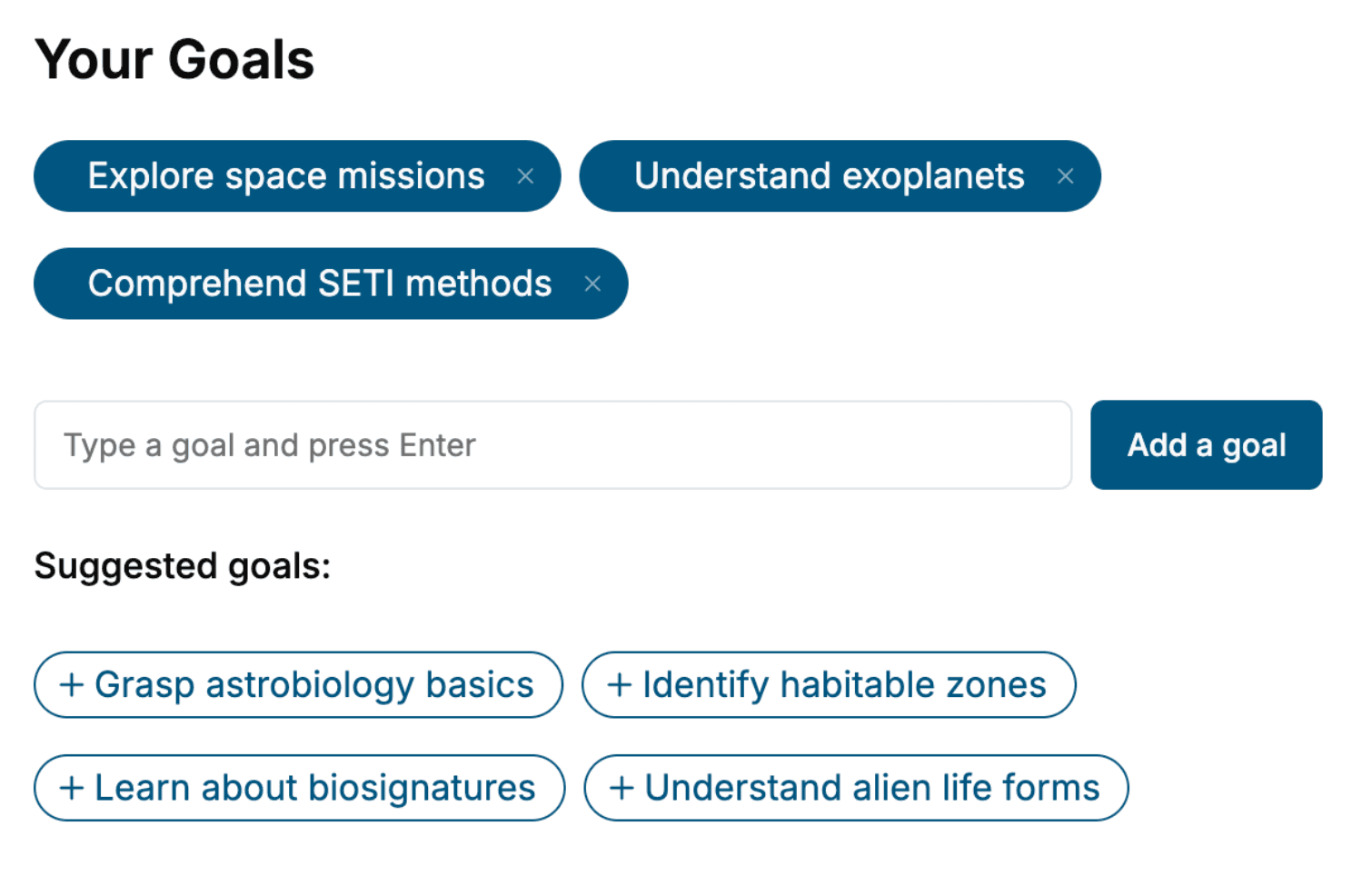
Specify your goals and choose sub-topics to include
- 3. Get your tailored book
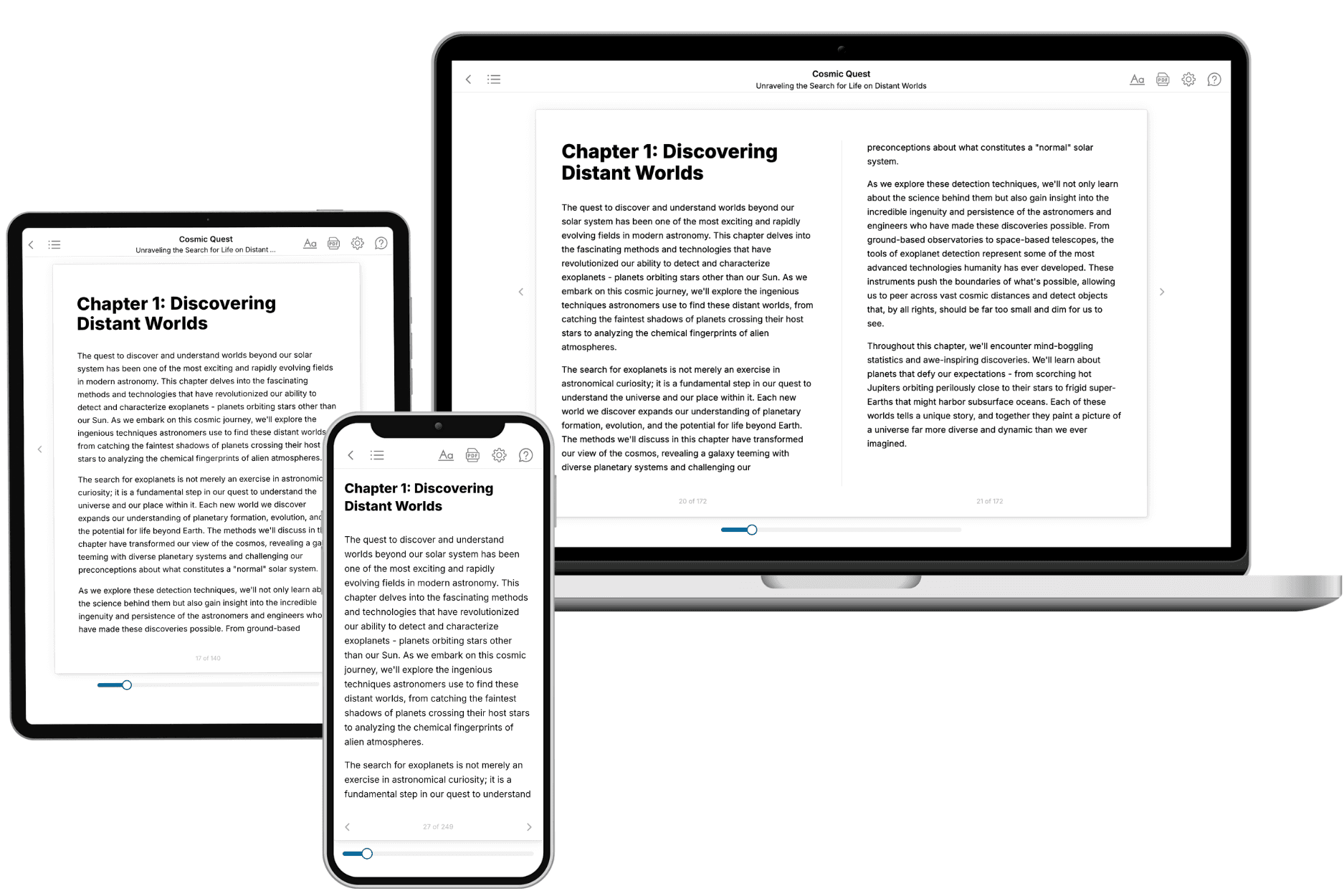
Your book is ready in 10 minutes. Read it online, download as EPUB or PDF, or send to Kindle.

Frequently asked questions
- What is TailoredRead?
TailoredRead creates complete, full-length nonfiction ebooks, written specifically for you. Tell us what you want to learn and why, and TailoredRead writes you a complete ebook on it, with charts, tables, and diagrams throughout. Read it online, on Kindle, or on any e-reader, or download it as a PDF or EPUB. Every book is written fresh the day you order it.
- How is the book tailored to me?
Before anything is written, you answer a few short questions about your goals, your background, and the topics you care about. Your book is then planned around your answers: written at your level, focused on your goals, and covering the topics you chose, instead of the one-size-fits-all book a store sells everyone.
- Will it read like generic AI content?
No. Your book isn't a chat transcript: it's planned chapter by chapter before a single word is written, told in a clear book voice, and explains ideas visually with charts, tables, and diagrams. After writing, every book goes through an editorial pass that polishes chapters so the book reads consistent from start to finish. Judge for yourself: browse thousands of sample books on our Explore Books page.
- How accurate is the content?
Our AI first checks whether your subject needs live research. Niche and fast-moving subjects are researched before writing, and the book plan and chapters are grounded in what it finds. After writing, every book goes through a quality pass that checks its facts and consistency, and researched books list their sources in a Notes section at the back.
- How long is the book?
You choose the length: Comprehensive (250-300 pages), Detailed (150-200 pages), Essential (70-100 pages), or Short (30-50 pages).
- Does the book include visuals?
Yes. Every book includes charts, tables, and diagrams: timelines, checklists, step-by-step guides, decision trees, comparison tables, matrices, and bar charts. A typical book includes dozens of these visual elements.
- Can I read it on Kindle? What formats can I download?
Yes. Every book can be read in our online reader or downloaded as a PDF or EPUB. The EPUB can be opened with Kindle, Apple Books, Kobo, and any e-reader. The Commercial and Author licenses also include an editable Word (DOCX) and Markdown download.
- How much does it cost?
About the price of a regular ebook. The exact price depends on your book's length and complexity, from $2 for the shortest books to $35 for the most comprehensive, and it's shown when you review your book, before you commit to anything. Each book is a one-time purchase, yours to keep, no subscription. Licenses that let you share, teach, or publish your book range from $35.99 to $49.99.
- Can I preview the book before purchasing?
Before you pay, you'll see what your book will cover: the title, a detailed description, the estimated length, and the complete chapter-by-chapter table of contents, so you know what you're getting before you decide. The full text itself is written after you purchase.
- How long does it take to create a book?
About 10 minutes. You can start reading the opening chapters while the rest is still being written.