The Meiji Restoration
How Japan Transformed from Feudal Empire to Modern Nation
Japan in the 1860s faced an existential crisis: Western powers demanded trade and threatened colonization, while internal divisions threatened to tear the nation apart.
176 pages9 chaptersEnglishDec 4, 2025Japanese History
About this book
The Meiji Restoration emerged as Japan's answer—a radical yet calculated transformation that would reshape an entire civilization in just decades. This book explores how a group of visionary leaders dismantled the feudal system, built a modern military, industrialized the economy, and established a constitutional government—all while maintaining Japanese cultural identity and imperial continuity. You'll discover the remarkable individuals who drove this change, the strategies they employed to overcome fierce resistance, and the profound social upheaval that accompanied modernization. From the fall of the samurai to the rise of industrial cities, from educational revolution to imperial expansion, this account reveals how Japan navigated the collision between tradition and modernity to become Asia's first modern nation. Understand the forces that shaped contemporary Japan and learn how one nation's response to global pressure created a model that would influence modernization efforts worldwide.
Table of contents
- IntroductionWhy the Meiji Restoration Matters Today, Japan Before Meiji: A Nation in Crisis, What You'll Discover in This BookRead below
- Chapter 1: The End of the ShogunateTwo Centuries of Tokugawa Stability, Western Pressure and the Opening of Japan, The Internal Collapse of Shogunal Authority
- Chapter 2: The Visionary LeadersThe Young Samurai Who Changed History, Emperor Meiji: Symbol and Figurehead, The Key Architects of Transformation
- Chapter 3: Dismantling the Feudal SystemAbolishing the Domains and Centralizing Power, The Decline of the Samurai Class, Social Restructuring and New Class Systems
- Chapter 4: Building a Modern MilitaryMilitary Modernization and Western Models, The Conscription System and National Defense, From Weakness to Regional Military Power
- Chapter 5: Industrial Revolution and Economic TransformationJapan's Industrialization Strategy, The Rise of the Zaibatsu: Industrial Conglomerates, Economic Disruption and Rural Challenges
- Chapter 6: Education and Cultural ModernizationRevolutionary Education Reform, Importing Western Knowledge and Expertise, Preserving Japanese Cultural Identity
- Chapter 7: Constitutional Government and Political DevelopmentThe Meiji Constitution: Balancing Tradition and Progress, Building New Political Institutions, Maintaining Imperial Authority in a Modern State
- Chapter 8: Navigating Western Relations and Unequal TreatiesThe Burden of Unequal Treaties, Strategic Diplomacy and Treaty Revision, Regional Expansion and Imperial Ambitions
- Chapter 9: Social Change and Urban DevelopmentRapid Urbanization and City Growth, Social Tensions and Labor Movements, Transformation of Daily Life and Culture
- ConclusionThe Lasting Legacy of the Meiji Restoration, A Model for the Non-Western World
Introduction
In the summer of 1853, four black-hulled warships appeared in Edo Bay, shattering two centuries of Japanese isolation. Commodore Matthew Perry's arrival represented more than a diplomatic mission—it was a confrontation between worlds. Japan faced a stark choice: open its ports to Western trade or risk the fate of China, carved into spheres of influence by European powers. Within fifteen years, this crisis would catalyze one of history's most remarkable transformations. The Meiji Restoration dismantled a feudal system that had governed Japan for centuries and replaced it with a modern nation-state capable of competing with Western powers on equal terms.
The speed and scope of Japan's transformation defies easy comparison. Consider that in 1868, samurai still walked the streets carrying swords, enforcing a rigid social hierarchy unchanged for generations. By 1905, Japan had defeated Russia in a modern war, stunning the world and announcing its arrival as a major power. This wasn't simply technological adoption—it required reimagining every aspect of society, from education and law to economics and military organization. The Meiji leaders accomplished in decades what had taken Western nations centuries, yet they did so without losing their cultural identity or succumbing to colonization.
Understanding the Meiji Restoration means grappling with fundamental questions about modernization, cultural change, and national survival. How does a society transform itself so completely while maintaining continuity with its past? What enables some nations to successfully adopt foreign innovations while others struggle or fail? The answers lie not in simple formulas but in the complex interplay of crisis, leadership, strategic vision, and cultural adaptation. This book explores these dynamics through the people, decisions, and forces that reshaped Japan and created a model that would influence modernization efforts across Asia and beyond.
Why the Meiji Restoration Matters Today
The Meiji Restoration offers crucial insights for understanding contemporary global dynamics and the challenges facing developing nations. Japan's experience demonstrates that modernization doesn't require abandoning cultural identity or accepting Western dominance. The Meiji leaders selectively borrowed technologies, institutions, and practices while consciously preserving elements they considered essential to Japanese identity. This selective adaptation created a hybrid model—neither purely Western nor traditionally Japanese—that proved remarkably effective. Today, as nations navigate globalization while seeking to maintain cultural distinctiveness, Japan's nineteenth-century experience provides valuable lessons about balancing change and continuity.
The transformation also illuminates the relationship between economic development and political power. Japan's rapid industrialization wasn't driven by free-market forces alone but by deliberate government intervention and strategic planning. The Meiji government identified key industries, imported foreign expertise, built infrastructure, and created favorable conditions for industrial growth. Once industries became viable, the government often transferred them to private enterprises, creating the powerful zaibatsu conglomerates. This state-led development model influenced later industrialization efforts in South Korea, Taiwan, and China, making the Meiji approach relevant for understanding East Asian economic success throughout the twentieth century.
Understanding the Meiji period also helps explain Japan's subsequent trajectory, including its imperial expansion and eventual conflict with Western powers. The same forces that drove modernization—fear of colonization, desire for international respect, and determination to secure resources—also fueled territorial ambitions. Japan's leaders concluded that becoming a modern nation meant acquiring an empire like Western powers possessed. This logic led to wars with China and Russia, the annexation of Korea, and ultimately to the Pacific War. The Meiji Restoration's legacy is thus complex, encompassing both remarkable achievements and troubling consequences that shaped twentieth-century Asian history.
The period offers insights into how societies manage rapid change and the social costs of transformation. Modernization created winners and losers in Meiji Japan. Urban merchants and industrialists prospered while rural farmers struggled with new tax systems and market pressures. The samurai class lost their privileged status, though many found new roles in government, military, or business. Traditional craftspeople faced competition from factory-made goods. These tensions produced social movements, protests, and occasional violence. Examining how Meiji Japan navigated these challenges provides perspective on contemporary debates about technological disruption, economic inequality, and the pace of social change.
The Meiji experience also demonstrates the importance of education and human capital in national development. The government's commitment to universal education, sending students abroad, and importing foreign teachers created the skilled workforce necessary for industrialization. Within a generation, literacy rates soared and Japan developed its own cadre of engineers, scientists, and administrators. This investment in education proved as crucial as any technological import. For developing nations today, Japan's emphasis on education as the foundation for modernization remains highly relevant, showing that sustainable development requires not just infrastructure and capital but also knowledge and skills.
Finally, the Meiji Restoration matters because it challenges simplistic narratives about modernization and Westernization. Japan didn't simply copy Western models but adapted them to local conditions and values. The Meiji Constitution, for instance, drew on Prussian models but preserved the emperor's sacred status and limited democratic participation. The military adopted Western organization and technology but retained distinctly Japanese concepts of loyalty and honor. This creative adaptation suggests that modernization can take multiple forms, shaped by local culture and circumstances rather than following a single predetermined path. This insight remains valuable for understanding diverse development trajectories in the contemporary world.
The global impact of Japan's transformation extended beyond Asia. By successfully modernizing without being colonized, Japan demonstrated that non-Western nations could master Western technology and compete on equal terms. This achievement inspired nationalist movements across Asia and Africa, providing hope that colonial domination wasn't inevitable. Leaders from Sun Yat-sen in China to Mustafa Kemal Atatürk in Turkey studied Japan's example, seeking lessons for their own nations. The Meiji Restoration thus became more than a Japanese phenomenon—it represented a turning point in global history, challenging assumptions about Western superiority and opening new possibilities for non-Western modernization.
Japan Before Meiji: A Nation in Crisis
To appreciate the magnitude of the Meiji transformation, you must understand the Japan that preceded it. For over two centuries, the Tokugawa shogunate had maintained rigid control through a carefully constructed system. The shogun, based in Edo (modern Tokyo), held supreme military and political authority while the emperor remained a ceremonial figure in Kyoto. Society was divided into strict hereditary classes: samurai warriors at the top, followed by farmers, artisans, and merchants at the bottom. This hierarchy wasn't merely social convention but legal reality, enforced through detailed regulations governing everything from clothing to housing. Movement between classes was virtually impossible, and even travel between domains required official permission.
The Tokugawa system rested on the sankin-kotai system, which required domain lords (daimyo) to maintain residences in Edo and spend alternate years there, leaving their families as permanent hostages. This arrangement drained daimyo finances through travel expenses and maintaining dual households, preventing them from accumulating resources for rebellion. The shogunate also controlled foreign relations, restricting trade to a single Dutch trading post in Nagasaki and severely limiting contact with the outside world. This isolation, known as sakoku, protected Japan from foreign influence but also left it increasingly ignorant of global developments, particularly the Industrial Revolution transforming Western nations.
By the 1850s, this system showed serious strain. The samurai class, despite their elevated status, faced economic hardship. Stipends paid in rice couldn't keep pace with rising costs in an increasingly monetized economy. Many samurai fell into debt to merchants, creating resentment toward the commercial class they theoretically outranked. Meanwhile, wealthy merchants and rural entrepreneurs accumulated capital but lacked political power or social status. This disconnect between economic reality and social structure created tensions the rigid Tokugawa system couldn't easily accommodate. Natural disasters, famines, and peasant uprisings further destabilized the countryside, revealing the government's limited capacity to respond to crises.
The arrival of Western powers exposed Japan's military weakness and technological backwardness. Perry's steam-powered warships, called black ships
by the Japanese, demonstrated capabilities Japan couldn't match. The shogunate's inability to expel the foreigners shattered the illusion of invulnerability and raised fundamental questions about its legitimacy. When the shogunate signed treaties opening Japanese ports without imperial approval, it violated the principle that the emperor sanctioned all major decisions. These unequal treaties
granted foreigners extraterritorial rights and limited Japan's control over tariffs, creating a sense of national humiliation. The treaties became a rallying point for opposition, with critics arguing that only by restoring the emperor to power could Japan regain its sovereignty and dignity.
The crisis intensified as different factions proposed competing solutions. Some advocated joi (expel the barbarians), arguing for military resistance against Western encroachment. Others recognized Japan's military inferiority and advocated learning from the West to strengthen the nation. Still others sought to preserve the Tokugawa system through limited reforms. These debates weren't merely intellectual—they sparked violence, including assassinations of pro-Western officials and attacks on foreigners. The shogunate's inconsistent responses, alternating between accommodation and resistance, satisfied no one and further eroded its authority. By the mid-1860s, powerful domains in southwestern Japan, particularly Satsuma and Choshu, openly challenged shogunal authority.
The domains that would lead the Restoration had their own grievances and ambitions. Satsuma and Choshu were tozama domains—outside lords who had submitted to Tokugawa rule only after military defeat. They retained substantial autonomy and resources but were excluded from shogunal decision-making. These domains had also experienced direct confrontations with Western military power. Choshu forces were defeated by a Western naval coalition in 1864, while Satsuma clashed with British warships in 1863. These humiliating defeats convinced domain leaders that Japan needed fundamental military and technological reform. Rather than weakening these domains, the defeats galvanized them to pursue modernization more aggressively than the shogunate itself.
Economic pressures compounded political instability. The opening of ports disrupted traditional trade patterns and caused inflation as silver flowed out of Japan. The silk industry, crucial to many regions, faced new international competition and market volatility. Urban populations grew as people sought opportunities in port cities, straining traditional social controls. The influx of foreign goods and ideas challenged established practices and values. Some Japanese embraced Western products and fashions, while others saw them as threats to Japanese culture. This cultural anxiety added another dimension to the crisis, raising questions about Japanese identity in an increasingly interconnected world. The stage was set for dramatic change, though few could have predicted the scope of transformation that would follow.
What You'll Discover in This Book
This book guides you through the Meiji Restoration chronologically and thematically, examining both the dramatic political events and the deeper social and economic transformations. You'll begin with the collapse of the Tokugawa shogunate, exploring the forces that undermined two centuries of stability and created the opening for radical change. The narrative examines key events like the Boshin War, which established the new government's authority, and the political maneuvering that convinced or coerced domain lords to surrender their autonomy. Understanding this foundation is essential because the Restoration wasn't inevitable—it required specific decisions by specific individuals at crucial moments, and alternative outcomes remained possible throughout the transition period.
You'll meet the remarkable individuals who drove the transformation, from young samurai activists who risked everything for their vision of Japan's future to the oligarchs who consolidated power and implemented reforms. These weren't distant historical figures but complex people with competing motivations, personal rivalries, and evolving ideas. The book examines how figures like Okubo Toshimichi, Kido Takayoshi, and Saigo Takamori shaped events, and how their disagreements sometimes erupted into conflict. You'll also learn about Emperor Meiji himself—how a teenage emperor became the symbol of modernization and what role he actually played in the decisions made in his name. Understanding these personalities helps explain why certain policies were adopted and others rejected.
The book explores the systematic dismantling of feudal structures and the creation of new institutions. You'll discover how the government abolished the domain system, eliminated samurai privileges, and created a centralized bureaucracy. These weren't simple administrative changes but wrenching social transformations that destroyed the world samurai had known and created opportunities for previously marginalized groups. The narrative examines both the strategic logic behind these reforms and their human costs, including the Satsuma Rebellion of 1877, when former samurai took up arms against the government they had helped create. This rebellion, and its defeat, marked the definitive end of the samurai era and the triumph of the new order.
Military modernization receives detailed attention because it was central to the Meiji project. You'll learn how Japan built a modern army and navy from scratch, adopting conscription despite fierce resistance from samurai who saw military service as their exclusive privilege. The book examines the debates over whether to follow French, German, or British military models, and how these choices reflected broader strategic considerations. You'll discover how Japan developed domestic arms production, established military academies, and created a professional officer corps. The narrative traces Japan's military development through its first tests—the Taiwan Expedition of 1874, the suppression of the Satsuma Rebellion, and ultimately the Sino-Japanese War of 1894-95, which announced Japan's arrival as a regional military power.
Economic transformation forms another major theme. You'll explore Japan's industrialization strategy, including the government's direct role in establishing model factories and importing foreign technology and expertise. The book examines specific industries—textiles, mining, shipbuilding, and railways—showing how each developed and what obstacles they faced. You'll learn about the zaibatsu, the powerful family-controlled conglomerates that came to dominate the economy, and how their close relationship with government shaped Japanese capitalism. The narrative also addresses the darker side of industrialization: harsh working conditions, environmental degradation, and the disruption of traditional livelihoods. Understanding these economic changes is crucial because they transformed not just what Japan produced but how people lived and worked.
Education and cultural change receive thorough examination because they were fundamental to everything else. You'll discover how the government created a national education system, what curriculum it promoted, and how education served both practical and ideological purposes. The book explores the tension between importing Western knowledge and preserving Japanese values, showing how educators navigated this challenge. You'll learn about the thousands of foreign experts hired to teach in Japan and the Japanese students sent abroad to study. The narrative also examines cultural changes in daily life—from the adoption of Western clothing and architecture to changes in diet, timekeeping, and social customs. These seemingly minor changes reflected and reinforced deeper transformations in how Japanese people understood themselves and their place in the world.
The book addresses political development, including the creation of the Meiji Constitution and the establishment of a parliamentary system. You'll learn why the government chose the Prussian constitutional model, how the constitution balanced imperial authority with representative institutions, and what limits it placed on democratic participation. The narrative examines early political parties, their ideologies, and their conflicts with the oligarchic government. You'll discover how the government managed dissent, sometimes through accommodation and sometimes through repression. Understanding this political evolution helps explain both Japan's later democratic development and the authoritarian tendencies that emerged in the 1930s. The Meiji political system contained contradictions that would shape Japanese politics for decades.
Finally, you'll explore Japan's international relations and imperial expansion. The book examines the long struggle to revise the unequal treaties and achieve recognition as an equal by Western powers. You'll learn how Japan's victories over China and Russia transformed its international position and how success bred new ambitions. The narrative addresses the colonization of Hokkaido, the annexation of the Ryukyu Islands, and the eventual colonization of Korea and Taiwan. These expansionist policies weren't aberrations but logical extensions of the Meiji project—if being a modern nation meant having an empire, then Japan would acquire one. Understanding this imperial dimension is essential for grasping the full legacy of the Meiji Restoration, including its impact on Japan's neighbors and its role in setting the stage for twentieth-century conflicts.
Throughout the book, you'll find specific examples, case studies, and concrete details that bring this history to life. Rather than abstract generalizations, the narrative provides:
- Detailed accounts of specific events, showing how decisions were made and implemented
- Examples of how reforms affected ordinary people in different regions and social classes
- Comparisons with other modernization efforts to highlight what made Japan's approach distinctive
- Analysis of primary sources, including government documents, personal letters, and contemporary observations
- Examination of specific technologies, institutions, and practices that Japan adopted or adapted
- Discussion of historiographical debates and different interpretations of key events and trends
By the end of this book, you'll understand the Meiji Restoration as a complex, multifaceted transformation driven by crisis, ambition, and strategic vision. You'll appreciate both its remarkable achievements and its significant costs, both its progressive elements and its authoritarian tendencies. Most importantly, you'll grasp why this period matters—not just for Japanese history but for understanding modernization, cultural change, and the dynamics of global power. The Meiji Restoration demonstrates that history isn't predetermined, that human agency matters, and that societies can transform themselves in response to challenges. These lessons remain relevant as nations and communities today navigate their own transformations in an era of rapid technological change and global interconnection.
This is the end of the free sample. The full book has 9 chapters.
Want this book written for you?
Tell us your goals and background, and get your own version of this book, tailored by AI to you.


Benefits of AI-tailored books
- Read one book, not ten:
- all the Japanese History knowledge you need, gathered into a single book.
- Save days of learning:
- tell us your goals, choose your topics, and the whole book is built around them.
- Learn effortlessly:
- Japanese History book written for your specific background and expertise.
- Understand at a glance:
- includes charts, tables, timelines, checklists, decision trees, and more.
- Stay current:
- written the day you order it, not years ago.
- Trust what you read:
- every book is checked for accuracy, with real research when your subject needs it.
Create your unique book in 3 steps
- 1. Select your focus
Select the focus of your Japanese History book and share your background
- 2. Personalize your book
Specify your goals and choose sub-topics to include
- 3. Get your tailored book
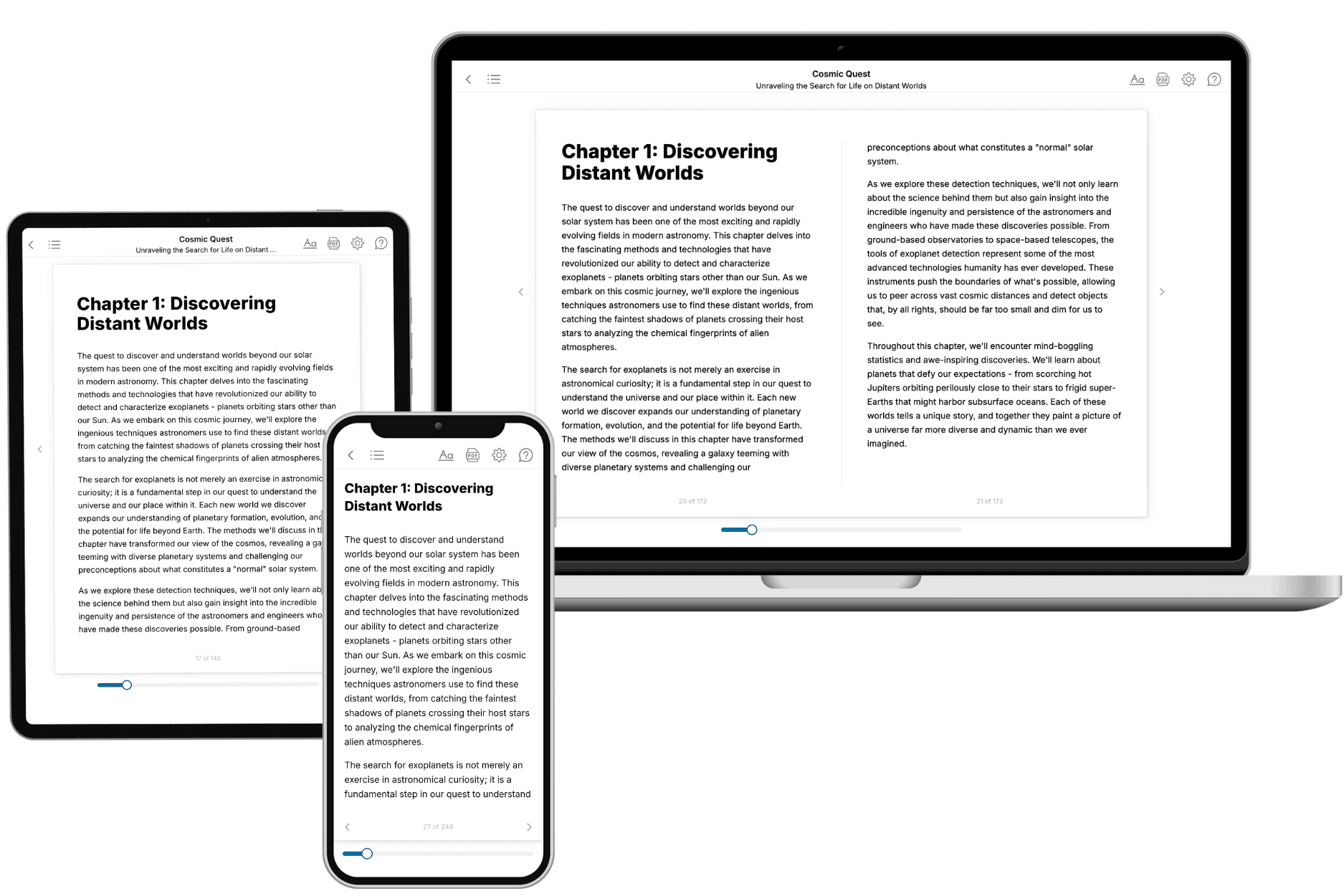
Your book is ready in 10 minutes. Read it online, download as EPUB or PDF, or send to Kindle.

Frequently asked questions
- What is TailoredRead?
TailoredRead creates complete, full-length nonfiction ebooks, written specifically for you. Tell us what you want to learn and why, and TailoredRead writes you a complete ebook on it, with charts, tables, and diagrams throughout. Read it online, on Kindle, or on any e-reader, or download it as a PDF or EPUB. Every book is written fresh the day you order it.
- How is the book tailored to me?
Before anything is written, you answer a few short questions about your goals, your background, and the topics you care about. Your book is then planned around your answers: written at your level, focused on your goals, and covering the topics you chose, instead of the one-size-fits-all book a store sells everyone.
- Will it read like generic AI content?
No. Your book isn't a chat transcript: it's planned chapter by chapter before a single word is written, told in a clear book voice, and explains ideas visually with charts, tables, and diagrams. After writing, every book goes through an editorial pass that polishes chapters so the book reads consistent from start to finish. Judge for yourself: browse thousands of sample books on our Explore Books page.
- How accurate is the content?
Our AI first checks whether your subject needs live research. Niche and fast-moving subjects are researched before writing, and the book plan and chapters are grounded in what it finds. After writing, every book goes through a quality pass that checks its facts and consistency, and researched books list their sources in a Notes section at the back.
- How long is the book?
You choose the length: Comprehensive (250-300 pages), Detailed (150-200 pages), Essential (70-100 pages), or Short (30-50 pages).
- Does the book include visuals?
Yes. Every book includes charts, tables, and diagrams: timelines, checklists, step-by-step guides, decision trees, comparison tables, matrices, and bar charts. A typical book includes dozens of these visual elements.
- Can I read it on Kindle? What formats can I download?
Yes. Every book can be read in our online reader or downloaded as a PDF or EPUB. The EPUB can be opened with Kindle, Apple Books, Kobo, and any e-reader. The Commercial and Author licenses also include an editable Word (DOCX) and Markdown download.
- How much does it cost?
About the price of a regular ebook. The exact price depends on your book's length and complexity, from $2 for the shortest books to $35 for the most comprehensive, and it's shown when you review your book, before you commit to anything. Each book is a one-time purchase, yours to keep, no subscription. Licenses that let you share, teach, or publish your book range from $35.99 to $49.99.
- Can I preview the book before purchasing?
Before you pay, you'll see what your book will cover: the title, a detailed description, the estimated length, and the complete chapter-by-chapter table of contents, so you know what you're getting before you decide. The full text itself is written after you purchase.
- How long does it take to create a book?
About 10 minutes. You can start reading the opening chapters while the rest is still being written.