19th Century History Books
Explore tailored 19th Century History books created by our AI
The Year of Revolutions
How 1848 Reshaped Europe and Changed the Course of History
What if a single year could fundamentally reshape an entire continent's political future? The revolutions of 1848 swept across Europe like wildfire, challenging centuries of monarchical rule and inspiring millions to demand democracy, national independence, and social justice. Yet within months, most had been crushed by military force. This book explores the dramatic story of how ordinary people rose up against entrenched power, why their movements ultimately faltered, and how their legacy continues to influence our world today. From the barricades of Paris to the streets of Vienna, from the halls of Frankfurt to the mountains of Italy, discover the interconnected revolutions that nearly transformed Europe. Through vivid narratives, historical analysis, and examination of the key figures who shaped these events, you'll understand not just what happened in 1848, but why it matters for understanding modern democracy, nationalism, and social change. This is the story of a pivotal moment when history hung in the balance.
Many assume the French Revolution ended in 1799 with Napoleon's rise to power. In reality, the struggle for democracy and social justice continued to convulse France throughout the nineteenth century. The 1848 Revolution represents a pivotal moment when ordinary people—workers, students, intellectuals, and the poor—rose up against an entrenched monarchy and demanded fundamental change. This book explores the dramatic events of that revolutionary year, from the February uprising that toppled King Louis-Philippe to the violent June Days that exposed the revolution's internal contradictions. You'll discover how economic crisis, industrial transformation, and competing political ideologies collided to reshape not just France, but the entire European continent. Through vivid narratives and careful analysis, this account reveals why 1848 mattered then and why its lessons remain relevant today for understanding how societies change, how revolutions succeed and fail, and how the pursuit of liberty continues to define our world.
The Chartist Movement
Britain's First Mass Working-Class Political Campaign and Its Legacy
Discover how ordinary working people in 19th-century Britain organized to demand a voice in their own governance. The Chartist Movement stands as one of history's most significant yet often overlooked campaigns for democratic rights. This book traces the movement from its emergence in the 1830s through its peak in the 1840s, examining the economic conditions, political exclusions, and social aspirations that drove millions to petition for change. You'll explore the lives of key figures like Feargus O'Connor and William Lovett, understand the strategic debates between moral force and physical force advocates, and see how regional communities adapted Chartist principles to their local circumstances. Rather than viewing Chartism as a failure, this account reveals how the movement fundamentally transformed British politics and democracy itself. By understanding this pivotal moment in working-class history, you'll gain insight into how ordinary people challenge entrenched power and how social movements create lasting change.
Picture Ireland in the 1840s: a nation of eight million people, most dependent on a single crop for survival. Then imagine that crop failing—not once, but repeatedly, for years. This is the story of the Irish Potato Famine, one of history's most devastating humanitarian crises. But this wasn't simply nature's cruelty. It was the collision of agricultural vulnerability, colonial policies, and systemic inequality that transformed a crop failure into a catastrophe claiming over a million lives. Through meticulous research and compelling narrative, this book reveals how the famine unfolded, why it became so deadly, and how it forever changed Ireland and the world. You'll discover the complex interplay of factors that made the famine possible, the government responses that often worsened conditions, and the massive wave of emigration that reshaped nations. More than a historical account, this is an exploration of how societies fail their most vulnerable members—and what we can learn from this tragedy about resilience, justice, and human dignity.
The Meiji Restoration
How Japan Transformed from Feudal Empire to Modern Nation
Japan in the 1860s faced an existential crisis: Western powers demanded trade and threatened colonization, while internal divisions threatened to tear the nation apart. The Meiji Restoration emerged as Japan's answer—a radical yet calculated transformation that would reshape an entire civilization in just decades. This book explores how a group of visionary leaders dismantled the feudal system, built a modern military, industrialized the economy, and established a constitutional government—all while maintaining Japanese cultural identity and imperial continuity. You'll discover the remarkable individuals who drove this change, the strategies they employed to overcome fierce resistance, and the profound social upheaval that accompanied modernization. From the fall of the samurai to the rise of industrial cities, from educational revolution to imperial expansion, this account reveals how Japan navigated the collision between tradition and modernity to become Asia's first modern nation. Understand the forces that shaped contemporary Japan and learn how one nation's response to global pressure created a model that would influence modernization efforts worldwide.
The French Revolutionary Wars
How Europe's Greatest Conflict Reshaped Nations and Ideologies
Discover how a financial crisis in France spiraled into a quarter-century of warfare that fundamentally transformed Europe. This comprehensive exploration takes you through the ideological fervor, military genius, and political upheaval that defined the French Revolutionary Wars from 1792 to 1815. You'll understand the economic collapse that triggered revolution, the radical ideologies that inspired armies, and the military innovations that changed warfare forever. Follow the rise of Napoleon from artillery officer to emperor, witness the coalition wars that reshaped the continent, and grasp why this conflict mattered more than any other in European history. Whether you're exploring how nations are born from revolution, studying military strategy, or understanding the roots of modern Europe, this book provides the context, analysis, and narrative you need to see how one nation's internal crisis became the defining event of an era.
Discover how a radical shift in human consciousness transformed literature, art, and society forever. This book traces the Romantic movement from its philosophical roots in 18th-century Europe through its explosive flowering in the early 19th century, revealing how writers and artists rebelled against cold rationalism to champion emotion, imagination, and individual vision. You'll explore the lives and works of literary giants who dared to prioritize feeling over logic, nature over civilization, and personal truth over universal rules. Through vivid analysis of key texts and movements, you'll understand why Romanticism matters today—how its celebration of creativity, authenticity, and emotional depth continues to shape how we write, think, and experience the world. Whether you're a literature enthusiast, history buff, or simply curious about the forces that shaped modern culture, this exploration reveals the Romantic revolution's enduring power to inspire and challenge conventional thinking.
Napoleon's Europe
How One Man Reshaped a Continent and Changed History Forever
Imagine understanding the pivotal moment when Europe transformed from a collection of feudal kingdoms into the modern continent we know today. The Napoleonic Wars represent one of history's most consequential periods—a time when one extraordinary military leader reshaped nations, rewrote laws, and challenged the very foundations of European society. This book takes you through the rise of Napoleon from a Corsican officer to Emperor of France, the sweeping military campaigns that conquered and reorganized Europe, and the coalition efforts that ultimately brought him down. You'll discover how his innovations in military strategy still influence warfare today, how his legal code became the foundation for modern civil law systems, and how the wars he fought sparked nationalist movements that defined the 19th century. Whether you're exploring how empires rise and fall, interested in military history, or curious about the roots of modern Europe, this comprehensive yet accessible guide illuminates the forces, personalities, and decisions that shaped our world.
Signals Across Distance
How the Telegraph Rewired the World and Launched the Modern Age
Imagine a world where news traveled at the speed of a horse or ship—where a message from London to New York took weeks to arrive. The telegraph changed everything. This book traces the fascinating story of how scientists, inventors, and entrepreneurs harnessed electricity to create the first global communication network, fundamentally reshaping commerce, journalism, warfare, and society itself. You'll discover how the telegraph emerged from centuries of scientific discovery, why multiple inventors contributed to its success, and how this technology compressed time and distance in ways that seemed almost magical to people of the era. Explore the infrastructure challenges, the rise of telegraph operators as a new professional class, and the geopolitical implications of instant communication. Understand how the telegraph's limitations ultimately sparked the race for even faster technologies. This is the story of how one invention rewired human civilization and set the stage for our modern connected world.
The Boer Wars
Britain's Imperial Ambition and the Struggle for South African Independence
Many assume the Boer Wars were simply a straightforward British military victory over Dutch settlers in South Africa. In reality, these conflicts represent one of the most complex and consequential struggles of the 19th century—a clash that exposed the vulnerabilities of imperial power and introduced modern warfare tactics that would influence military strategy for decades. This book examines the origins of the Boer Wars, tracing how the discovery of precious minerals transformed peaceful coexistence into bitter conflict. You'll explore the military campaigns, the innovative guerrilla tactics employed by Boer forces, and the humanitarian crisis that shocked the world. Beyond the battlefields, you'll understand how these wars reshaped British imperial policy, influenced international law, and set the stage for South Africa's complex future. Whether you're studying 19th-century history, imperial politics, or the evolution of modern warfare, this comprehensive account reveals why the Boer Wars remain essential to understanding our world.
Discover the extraordinary story of how enslaved people in Saint-Domingue transformed themselves into free citizens and built the world's first Black republic. This book traces the Haitian Revolution from its roots in colonial oppression through the thirteen-year struggle that shook the Atlantic world. You'll encounter the brilliant military strategists, visionary leaders, and countless ordinary people who risked everything for freedom. The narrative explores the complex social hierarchies, economic forces, and ideological conflicts that made Haiti's revolution unique among the age of revolutions. You'll understand how enslaved Africans and their descendants drew on African traditions, Enlightenment principles, and practical military knowledge to defeat French armies and establish an independent nation. This comprehensive account examines the revolution's profound impact on global politics, slavery debates, and the struggle for human rights. Whether you're studying history, exploring themes of resistance and liberation, or seeking to understand a pivotal moment that reshaped the modern world, this book provides the context, analysis, and human stories that bring the Haitian Revolution to life.
The Battle of Atlanta
Sherman's March to Victory and the Turning Point of the Civil War
Picture yourself standing at a pivotal moment in American history—July 1864, when the fate of a nation hung in the balance. The Battle of Atlanta was far more than a military engagement; it was the turning point that determined whether the Union would survive and slavery would end. This comprehensive account takes you through the strategic decisions, tactical maneuvers, and human drama that unfolded as General William Tecumseh Sherman's Union forces clashed with Confederate General John Bell Hood's desperate defense of Georgia's vital city. You'll discover how this single battle shifted the entire trajectory of the Civil War, boosted Northern morale when it mattered most, and introduced revolutionary concepts of modern warfare. Through detailed analysis of troop movements, supply lines, and command decisions, you'll understand why Atlanta's fall was inevitable and how it set the stage for Sherman's devastating March to the Sea. This is essential reading for anyone seeking to comprehend the Civil War's most consequential moments and the military innovations that shaped American conflict forever.
Imagine understanding one of history's most consequential periods—not through oversimplified narratives, but through a clear-eyed examination of how power, economics, and human ambition reshaped an entire civilization. The British Raj stands as one of history's most transformative colonial enterprises, fundamentally altering India's trajectory while leaving imprints that persist today. This book cuts through mythology to reveal how a trading company became an empire, how colonial administrators justified their rule, and how Indians resisted, adapted, and ultimately reclaimed their nation. You'll discover the economic mechanisms that extracted wealth, the administrative innovations that governed hundreds of millions, and the intellectual currents that both sustained and eventually undermined colonial authority. By examining primary sources, competing perspectives, and historical evidence, you'll gain the analytical tools to understand not just what happened, but why it matters for understanding modern India, British identity, and global power dynamics. This is history that illuminates the present.
Understanding French political parties during the Revolution and its aftermath requires grappling with a fundamental challenge: how do ideological movements transform into functioning political systems? This period witnessed the birth of modern political ideology itself, as competing visions for society crystallized into distinct factions. From the radical Jacobins to the moderate Girondins, from royalist counterrevolutionaries to Bonapartist pragmatists, each movement embodied different answers to revolutionary questions about power, rights, and social organization. This book traces how these early political movements emerged from philosophical debate, shaped the course of revolution, and ultimately established patterns that would define European politics for centuries. You'll discover how personal rivalries, regional interests, and ideological conviction intertwined to create the first modern political parties, and how their struggles to balance revolutionary ideals with practical governance created lasting institutional innovations. By examining the specific parties, their leaders, and their competing visions, you'll gain insight into how political systems develop and why the French Revolution's political legacy remains so influential today.
What if the most misunderstood philosopher of the modern era was actually far more nuanced than the ideologies built in his name? Karl Marx has become a symbol of communist revolution, yet his actual life and work reveal a complex intellectual journey driven by rigorous analysis rather than dogma. This biography traces Marx from his early years as a Prussian intellectual through his exile in London, exploring how personal hardship, philosophical evolution, and relentless scholarship shaped his revolutionary ideas. You'll discover the man behind the myth—his relationships, his struggles with poverty and illness, and his genuine commitment to understanding how societies function. By examining Marx's actual writings alongside the movements that claimed his legacy, you'll gain clarity on one of history's most influential yet polarizing thinkers. Whether you're interested in philosophy, history, economics, or politics, this book provides the context needed to understand Marx on his own terms and evaluate his lasting impact on the modern world.
Many believe the Civil War was decided by grand strategy and famous generals, but the truth is far more complex. The Battle of Shiloh, fought April 6-7, 1862, in southwestern Tennessee, shattered every assumption Americans held about their conflict. In just two days, over 23,000 soldiers fell—more casualties than in all previous American wars combined. This battle transformed the Civil War from a romantic notion of heroic combat into a grim reality of industrial-scale slaughter. Through detailed accounts of the fighting, personal narratives of soldiers and commanders, and analysis of tactical decisions, this book reveals how Shiloh changed everything. You'll discover why both armies were unprepared for what they faced, how weather and terrain shaped the outcome, and why this "victory" for the Union actually proved inconclusive. More importantly, you'll understand how Shiloh forced military leaders, politicians, and citizens to confront the war's true nature—a prolonged struggle that would demand total commitment and exact an unprecedented human cost.
Atoms and Revolution
How Nuclear Science Emerged from the Ashes of the French Revolution
Discover how one of history's most violent upheavals gave birth to the science that would define the modern world. The French Revolution didn't just topple a monarchy—it shattered the old order of scientific patronage and opened the door to revolutionary thinking about matter itself. This book traces the fascinating connection between the chaos of 1789 and the discovery of nuclear energy, showing how the Enlightenment ideals that sparked revolution directly enabled scientists to unlock the secrets of the atom. You'll explore how France's scientific institutions were rebuilt from rubble, how the pursuit of reason became a national obsession, and how the dream of progress through science became inseparable from French identity. From the laboratories of post-revolutionary Paris to the cutting-edge physics of the 19th century, witness how political transformation and scientific breakthrough became intertwined, ultimately positioning France as a global leader in nuclear science and energy.
Discover how a group of visionary artists revolutionized painting by capturing light itself. This comprehensive exploration takes you through the Impressionist movement's dramatic emergence in 1870s Paris, revealing the bold techniques, scientific innovations, and personal struggles that defined an era. You'll understand why critics initially ridiculed these painters, how they overcame institutional resistance, and why their work fundamentally altered the trajectory of modern art. Through detailed analysis of masterworks by Monet, Renoir, Degas, and others, you'll see how Impressionism wasn't just about pretty landscapes—it was a philosophical shift in how artists perceived reality and color. Explore the technological breakthroughs, the vibrant social context of industrial Paris, and the movement's profound influence on everything from Post-Impressionism to contemporary art. Whether you're an art enthusiast, history student, or simply curious about how creative revolutions happen, this book illuminates the genius, determination, and innovation behind one of history's most transformative artistic movements.
Jane Austen: The Life Behind the Novels
Discovering the Woman Who Shaped English Literature
Most people know Jane Austen through her novels—witty, romantic, and perfectly crafted. But the woman behind these masterpieces remains surprisingly mysterious. You'll discover that Austen's life was far more complex and dramatic than the genteel image suggests. From her family's financial struggles to her own romantic disappointments, from her sharp observations of society to her years of writing in obscurity, this biography reveals how a quiet woman in provincial England became one of literature's greatest minds. You'll learn how her personal experiences directly shaped every novel she wrote, why anonymity was both a curse and a protection, and how she navigated the constraints placed on women of her era. By understanding Austen's life—her relationships, her struggles, her triumphs—you'll gain deeper insight into her novels and appreciate the remarkable achievement of her literary legacy.
Marx and the Modern World
Understanding Marxist Theory Through History and Ideas
Gain a sophisticated understanding of one of history's most influential and misunderstood thinkers. This book cuts through ideological debates to explore Marxist theory as a crucial intellectual tradition that shaped the modern world. You'll discover how Marx's analysis of capitalism emerged from 19th-century conditions, learn the core concepts that define his work, and understand how his ideas were transformed through history. Rather than advocating for or against Marxism, this book equips you with the analytical tools to engage critically with Marx's arguments and their real-world applications. Whether you're studying history, political science, economics, or simply seeking to understand the ideological currents that shaped the 20th century, you'll find clear explanations of complex ideas, historical context that brings theory to life, and balanced perspectives on Marx's enduring relevance. Perfect for anyone wanting to move beyond caricatures and engage seriously with one of humanity's most consequential intellectual legacies.
Most people believe photography was invented in a single moment of genius, but the truth is far more complex and fascinating. The invention of photography was a gradual convergence of chemistry, optics, and human ambition that unfolded across decades and continents. This book traces the remarkable journey from early camera obscura experiments to the first permanent images, revealing the brilliant minds—Nicéphore Niépce, Louis Daguerre, William Henry Fox Talbot, and others—who made it possible. Beyond the technical breakthroughs, discover how photography fundamentally disrupted society: it challenged artists, revolutionized journalism, enabled scientific advancement, and forever changed how humans see and understand the world. Through vivid storytelling and historical context, you'll understand not just how photography was invented, but why it mattered so profoundly to the 19th century and continues to shape our world today.
The Impressionists
How a Radical Vision Transformed Art and Changed the World
Most people think of Impressionism as a purely aesthetic movement—beautiful paintings of water lilies and haystacks. But this overlooks the real story: a group of artists who risked everything to paint in a radically new way, facing mockery from the art establishment and financial ruin for decades. This book reveals the human drama behind the masterpieces. You'll discover how Claude Monet nearly went blind chasing light, how Berthe Morisot fought against a society that deemed women unsuitable for serious art, and how a chance meeting in a studio led to a revolution. Through intimate biographical narratives, you'll understand not just what the Impressionists painted, but why their vision mattered—and how their struggle to capture fleeting moments of light fundamentally changed how we see the world. This is the story of ambition, friendship, heartbreak, and the transformative power of artistic courage.
Divided Nation
Understanding the Deep Roots of America's Greatest Conflict
Discover how a young nation built on ideals of liberty gradually fractured along irreconcilable lines. This book traces the intricate web of political decisions, economic forces, and ideological conflicts that transformed the United States from a unified republic into a house divided against itself. You'll explore how the founding compromise on slavery created a ticking time bomb, how westward expansion forced the nation to repeatedly confront its deepest contradictions, and how political leaders struggled—and ultimately failed—to bridge an ever-widening chasm. Through careful examination of key events, influential figures, and competing visions of America's future, you'll gain a comprehensive understanding of why compromise became impossible and why millions of Americans felt compelled to take up arms. This is not a story of inevitable destiny, but rather a chronicle of choices, missed opportunities, and the tragic consequences when a nation cannot reconcile its founding principles with its lived reality.
Games of Revolution
How Sports Shaped French Society During the Revolutionary Era
Discover how sports became a battleground for revolutionary ideals during one of history's most transformative periods. This book reveals the surprising connection between athletic pursuits and the French Revolution, showing how games, competitions, and physical activities served as powerful expressions of political change. From the elimination of aristocratic hunting privileges to the creation of mass public spectacles, sports embodied the revolutionary struggle between old and new visions of society. You'll explore how physical education was weaponized to create loyal citizens, how public games became stages for national identity, and how the Napoleonic era redirected athletic culture toward military might. By examining the playing fields and gymnasiums of Revolutionary France, you'll gain fresh perspective on how cultural practices both reflect and drive historical transformation. This accessible exploration bridges sports history and European history, offering unexpected insights into how ordinary activities like games and exercise reveal the deepest currents of social and political upheaval.
Related books you may like:
Embark on a captivating journey through one of the most pivotal moments in British history with "1066: The Year That Changed England." This meticulously researched account of the Battle of Hastings offers you a front-row seat to the events that reshaped the course of European history. Delve into the complex web of political intrigue, military strategy, and cultural shifts that led to this momentous clash. You'll gain a deep understanding of the key players - William the Conqueror, Harold Godwinson, and Harald Hardrada - and the high-stakes game of thrones they played. Through vivid storytelling and expert analysis, you'll experience the tension of the battlefield, the clash of Anglo-Saxon and Norman cultures, and the far-reaching consequences of William's victory. Discover how this single event transformed England's language, laws, and social structure, leaving an indelible mark on the nation's identity. Whether you're a history buff or simply curious about this transformative period, this book offers fresh insights and a comprehensive overview that will enrich your understanding of medieval Europe and the foundations of modern Britain.
Discover how a single year transformed global history and set the stage for the modern world. The Russian Revolutions of 1917 were pivotal moments that toppled an empire, established the first communist state, and triggered consequences that rippled across the entire 20th century. This book walks you through the complex web of causes—from centuries of imperial rule and industrialization to the devastating impact of World War I—that made revolution possible. You'll explore the dramatic events of both the February and October revolutions, meet the key figures who shaped these upheavals, and understand how ordinary Russians experienced these extraordinary times. Beyond the headlines and heroic narratives, you'll examine the real economic hardships, military failures, and social tensions that drove millions to support radical change. This comprehensive account reveals why 1917 matters today, how it reshaped global politics and ideology, and what it teaches us about revolution, power, and historical change. Whether you're a history student, curious learner, or someone seeking to understand the roots of modern geopolitics, this book provides the context and clarity needed to grasp one of history's most consequential moments.
Discover the pivotal events and complex forces that shaped one of the 20th century's most consequential moments. This comprehensive examination takes you through the centuries of Jewish diaspora, the rise of Zionism, and the dramatic final years leading to Israel's establishment in 1948. You'll understand how the Holocaust transformed international politics, why the British Mandate created irreconcilable tensions, and how the UN Partition Plan became a flashpoint for conflict. Through careful analysis of key figures, military campaigns, and political negotiations, you'll gain insight into how a new nation emerged from centuries of displacement and persecution—while grappling with the displacement of another people. This book presents the historical evidence, competing narratives, and lasting consequences of 1948, enabling you to understand not just what happened, but why it matters for the modern Middle East and global politics today.
Most people think the Norman Conquest was simply a military victory that happened in a single day. In reality, 1066 marked the beginning of a decades-long transformation that would fundamentally reshape English society, language, and identity. This book reveals how William the Conqueror's invasion wasn't inevitable—it emerged from a disputed succession, political intrigue, and the ambitions of ambitious leaders. Beyond the famous Battle of Hastings, you'll discover how Norman rulers consolidated power through feudalism, how the French language permanently altered English, and how a new ruling class gradually integrated with the existing population. Through vivid storytelling and careful analysis, you'll understand how this single conquest rippled across centuries, influencing everything from English law and governance to the very words we speak today. Whether you're exploring medieval history for the first time or deepening your existing knowledge, this book illuminates why 1066 remains one of history's most consequential moments—and how its effects continue to shape our world.
Create a 19th Century History Book Tailored to You
Create an AI-crafted book tailored to your goals, interests, and background






Benefits of AI-tailored books
- Read one book, not ten:
- all the 19th Century History knowledge you need, gathered into a single book.
- Save days of learning:
- tell us your goals, choose your topics, and the whole book is built around them.
- Learn effortlessly:
- 19th Century History book written for your specific background and expertise.
- Understand at a glance:
- includes charts, tables, timelines, checklists, decision trees, and more.
- Stay current:
- written the day you order it, not years ago.
- Trust what you read:
- every book is checked for accuracy, with real research when your subject needs it.
Create your unique book in 3 steps
- 1. Select your focus
Select the focus of your 19th Century History book and share your background
- 2. Personalize your book
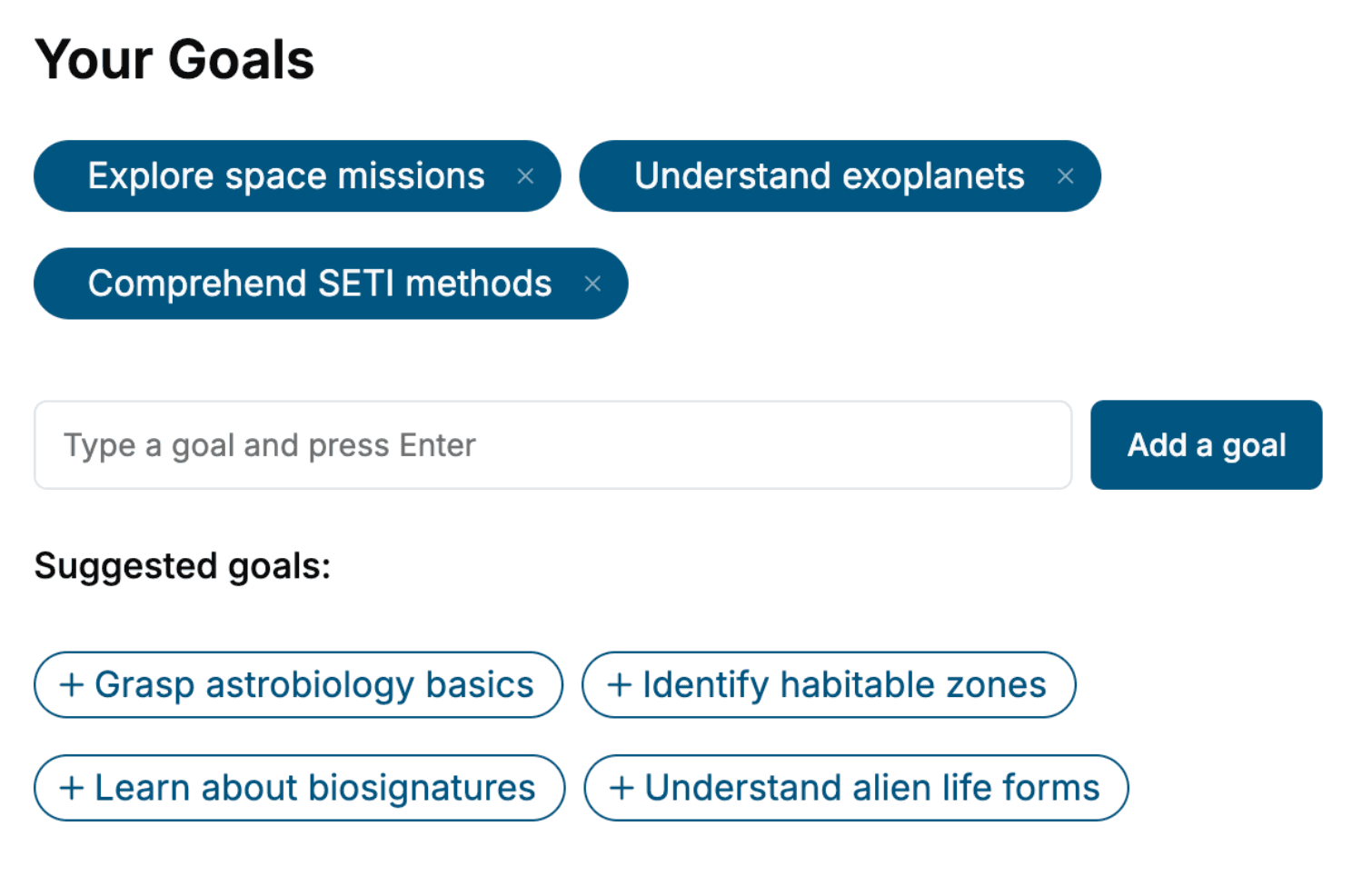
Specify your goals and choose sub-topics to include
- 3. Get your tailored book
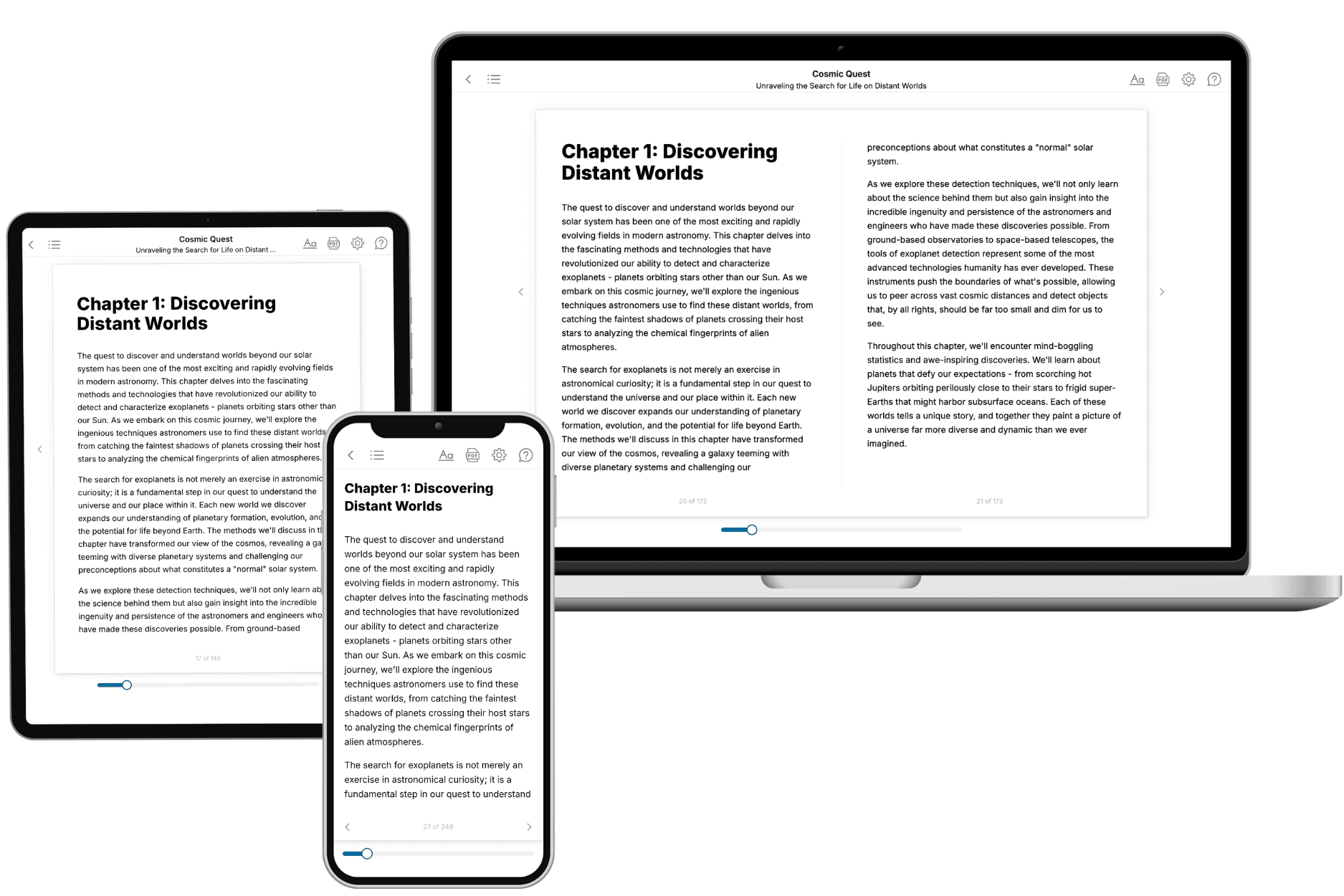
Your book is ready in 10 minutes. Read it online, download as EPUB or PDF, or send to Kindle.

Frequently asked questions
- What is TailoredRead?
TailoredRead creates complete, full-length nonfiction ebooks, written specifically for you. Tell us what you want to learn and why, and TailoredRead writes you a complete ebook on it, with charts, tables, and diagrams throughout. Read it online, on Kindle, or on any e-reader, or download it as a PDF or EPUB. Every book is written fresh the day you order it.
- How is the book tailored to me?
Before anything is written, you answer a few short questions about your goals, your background, and the topics you care about. Your book is then planned around your answers: written at your level, focused on your goals, and covering the topics you chose, instead of the one-size-fits-all book a store sells everyone.
- Will it read like generic AI content?
No. Your book isn't a chat transcript: it's planned chapter by chapter before a single word is written, told in a clear book voice, and explains ideas visually with charts, tables, and diagrams. After writing, every book goes through an editorial pass that polishes chapters so the book reads consistent from start to finish. Judge for yourself: browse thousands of sample books on our Explore Books page.
- How accurate is the content?
Our AI first checks whether your subject needs live research. Niche and fast-moving subjects are researched before writing, and the book plan and chapters are grounded in what it finds. After writing, every book goes through a quality pass that checks its facts and consistency, and researched books list their sources in a Notes section at the back.
- How long is the book?
You choose the length: Comprehensive (250-300 pages), Detailed (150-200 pages), Essential (70-100 pages), or Short (30-50 pages).
- Does the book include visuals?
Yes. Every book includes charts, tables, and diagrams: timelines, checklists, step-by-step guides, decision trees, comparison tables, matrices, and bar charts. A typical book includes dozens of these visual elements.
- Can I read it on Kindle? What formats can I download?
Yes. Every book can be read in our online reader or downloaded as a PDF or EPUB. The EPUB can be opened with Kindle, Apple Books, Kobo, and any e-reader. The Commercial and Author licenses also include an editable Word (DOCX) and Markdown download.
- How much does it cost?
About the price of a regular ebook. The exact price depends on your book's length and complexity, from $2 for the shortest books to $35 for the most comprehensive, and it's shown when you review your book, before you commit to anything. Each book is a one-time purchase, yours to keep, no subscription. Licenses that let you share, teach, or publish your book range from $35.99 to $49.99.
- Can I preview the book before purchasing?
Before you pay, you'll see what your book will cover: the title, a detailed description, the estimated length, and the complete chapter-by-chapter table of contents, so you know what you're getting before you decide. The full text itself is written after you purchase.
- How long does it take to create a book?
About 10 minutes. You can start reading the opening chapters while the rest is still being written.