20th Century History Books
Explore tailored 20th Century History books created by our AI
Books readers created
64 20th Century History books, each written for the reader who ordered it. Read its introduction, then personalize it to get a book of your own.
The Velvet Revolution
How Czechoslovakia Peacefully Overthrew Communism and Changed Europe
Discover how a nation of 15 million people peacefully dismantled communist rule in just 10 days without firing a shot. The Velvet Revolution stands as one of history's most remarkable examples of nonviolent resistance, proving that moral courage and strategic organizing can topple even the most entrenched authoritarian systems. This book traces the revolution's roots in decades of cultural suppression and economic decline, introduces the visionary leaders who guided the movement, and reveals the specific tactics and conditions that made peaceful transformation possible. You'll explore how intellectuals, artists, and ordinary citizens built networks of resistance, how international events created a critical window of opportunity, and how the revolution's success reshaped not just Czechoslovakia but the entire political landscape of Europe. Whether you're studying revolutionary movements, seeking inspiration from historical examples of nonviolent change, or simply curious about one of the 20th century's most pivotal moments, this book provides essential context and compelling insights into how ordinary people can achieve extraordinary political transformation.
Britain Between the Wars
The Interwar Years That Shaped Modern Europe
What if the decisions made in the 1920s and 1930s could have prevented the catastrophe of World War II? The interwar period in Britain was far more than a quiet interval between conflicts—it was a crucible of economic crisis, political upheaval, and cultural renaissance that fundamentally reshaped the modern world. This book explores how Britain navigated the treacherous waters of post-war recovery, economic collapse, and the rise of totalitarianism across Europe. You'll discover how the Treaty of Versailles sowed the seeds of future conflict, why the gold standard became an economic straitjacket, and how British appeasement policies inadvertently enabled fascism's rise. Through vivid accounts of political leaders, social movements, and everyday struggles, you'll understand how this turbulent era transformed Britain from imperial superpower to a nation grappling with its diminished role. Essential reading for anyone seeking to understand how the past shapes our present.
The Soviet Collapse
How Ideology, Economics, and Human Choice Ended a Superpower
Discover how the world's second superpower unraveled in less than a decade, and why this transformation still shapes global politics today. This book takes you beyond Cold War clichés to reveal the genuine forces that dismantled the Soviet Union—from the mathematical impossibility of central planning to the nationalist movements that shattered communist unity. You'll understand how Gorbachev's well-intentioned reforms backfired, why economic stagnation proved more destabilizing than military competition, and how ordinary citizens and bold leaders made choices that redirected history. Through carefully documented analysis and compelling narratives, you'll see how the Soviet collapse wasn't predetermined but rather the result of cascading decisions, structural contradictions, and the human desire for freedom. This comprehensive examination equips you with historical perspective essential for understanding contemporary Russia, regional conflicts, and the fragility of even the most powerful systems.
The Atomic Gamble
How Nuclear Weapons Shaped the Cold War and Defined Modern America
Discover how nuclear weapons transformed American power and global politics during the Cold War. This book takes you through the pivotal moments, strategic decisions, and technological breakthroughs that made nuclear weapons central to US foreign policy. You'll understand why leaders chose deterrence over disarmament, how the arms race escalated despite mutual fears, and what role nuclear weapons played in defining American supremacy. From the Manhattan Project's aftermath to arms control treaties, explore the complex interplay between military strategy, political ideology, and scientific innovation. Learn how nuclear proliferation created both unprecedented security challenges and paradoxical stability. This comprehensive examination reveals how decisions made in the 1940s-1980s continue to shape international relations today, offering essential context for understanding modern nuclear tensions and the enduring legacy of Cold War nuclear strategy.
The Suez Crisis
How Britain Lost an Empire and Reshaped the Modern Middle East
Discover how a single moment in 1956 fundamentally altered the course of British history and reshaped global power dynamics. The Suez Crisis stands as one of the most consequential geopolitical events of the twentieth century, marking the point where Britain's imperial dominance gave way to American leadership and where the Middle East began charting its own course. Through meticulous analysis of the political maneuvering, military operations, and diplomatic failures that defined this crisis, you'll understand how a dispute over a canal became a watershed moment for the modern world. Explore the personalities who shaped events—from Nasser's bold nationalism to Eden's miscalculations—and examine how this conflict exposed the fragility of post-war alliances and the irreversible shift in international power. This book illuminates why the Suez Crisis remains essential to understanding contemporary Middle Eastern politics, British decline, and the emergence of the modern geopolitical order.
The Easter Rising of 1916
Ireland's Rebellion and the Birth of a Nation
What if a small group of rebels, armed with idealism and determination, could fundamentally reshape the course of a nation's history? The Easter Rising of 1916 stands as one of history's most transformative moments—a six-day rebellion that changed Ireland forever. This book explores the intricate web of political movements, personal sacrifices, and historical circumstances that converged in Dublin during Easter week. You'll discover how decades of failed constitutional reform, the pressures of World War I, and the vision of Irish independence combined to spark an uprising that seemed doomed from the start. Through vivid accounts of the key figures, the street-by-street fighting, and the dramatic executions that followed, you'll understand how a military defeat became a moral victory that galvanized an entire nation. Whether you're exploring Irish history, European politics, or the nature of revolutionary change, this comprehensive examination reveals why the Easter Rising remains a defining moment in the struggle for self-determination.
Tiananmen Square 1989
The Uprising That Changed China and Challenged the World
Discover the story of one of the twentieth century's most pivotal moments—when hundreds of thousands of Chinese citizens gathered in Tiananmen Square demanding change. This examination takes you through the decades of economic transformation and political tension that set the stage for the 1989 uprising, introduces you to the diverse voices and motivations of protesters, and walks you through the dramatic events that unfolded over those fateful weeks. You'll explore the complex decision-making within China's leadership, understand the international dimensions of the crisis, and examine how this moment reshaped China's political landscape and continues to influence global conversations about democracy, human rights, and state power. Through careful analysis of primary sources, historical accounts, and multiple perspectives, this book provides the context and nuance necessary to understand why Tiananmen matters—not just as a historical event, but as a window into fundamental questions about governance, social change, and the human desire for freedom.
Tiananmen Square
The 1989 Protests and Their Impact on Modern Asia
What happens when a generation demands change in a nation undergoing rapid transformation? The Tiananmen Square protests of 1989 represent one of the most significant political events of the late twentieth century, yet their full historical context and lasting consequences remain misunderstood by many. This book examines the complex factors that led to the protests—from economic anxieties to intellectual ferment—and explores how the government's response reshaped not only China but the entire Asian region. You'll discover how Cold War dynamics, generational conflict, and competing visions of modernization collided in Beijing's streets, and how the aftermath influenced everything from China's economic policies to international relations across Asia. By understanding Tiananmen's origins, unfolding events, and enduring legacy, you'll gain crucial insight into how modern Asia developed and the ongoing tensions between development, stability, and freedom that define the region today.
Flowers of Freedom
The Carnation Revolution and How Ordinary People Toppled a Dictatorship
Imagine a nation where citizens lived under the weight of dictatorship for nearly five decades, where secret police monitored every conversation and colonial wars drained resources and lives. On April 25, 1974, that changed forever. In a single day, ordinary people—workers, students, soldiers, and families—peacefully reclaimed their freedom and transformed their country. This is the story of the Carnation Revolution, one of history's most remarkable examples of how nonviolent resistance can succeed against overwhelming odds. Through vivid accounts of the events leading up to that pivotal day, the revolution itself, and its profound aftermath, you'll discover how a nation rebuilt itself from the ashes of authoritarianism. You'll learn the strategies that made peaceful revolution possible, the role of unexpected allies, and the challenges of creating lasting democratic change. Whether you're studying revolutionary movements, exploring political history, or seeking inspiration about human resilience, this book reveals how ordinary people can achieve extraordinary transformation.
The Northern Ireland Troubles represent one of modern Europe's most complex and tragic conflicts, yet many people struggle to understand its origins and significance. This book cuts through the confusion by providing a clear, balanced account of how religious division, colonial history, and political ambition created decades of violence that claimed over 3,500 lives. You'll discover how partition in 1921 set the stage for conflict, how the civil rights movement of the 1960s reignited tensions, and how paramilitary organizations on both sides escalated the violence. More importantly, you'll learn how political leaders, international mediators, and ordinary citizens worked together to achieve the groundbreaking Good Friday Agreement of 1998. This comprehensive history examines the key events, personalities, and turning points that shaped modern Britain and Ireland, while exploring the deeper questions of identity, justice, and reconciliation that remain relevant today. Whether you're studying history, interested in conflict resolution, or simply seeking to understand this pivotal period, this book provides the context and clarity you need.
The Miners' Strike
Britain's Defining Labor Battle and Its Lasting Legacy
Discover how a labor dispute transformed a nation. The miners' strike stands as one of the most pivotal moments in modern British history, reshaping the relationship between workers, employers, and government. This book traces the complete arc of this defining conflict—from the economic pressures that made confrontation inevitable to the dramatic confrontations that captured world attention. You'll explore the personal stories of miners and their families who endured months of hardship, understand the political calculations that drove government decisions, and examine how media coverage shaped public opinion. Through detailed analysis of key events, influential figures, and the strike's ripple effects across British society, you'll gain insight into how industrial disputes reflect deeper tensions in society. Whether you're interested in labor history, British politics, or understanding how communities respond to economic crisis, this comprehensive examination reveals why the miners' strike remains essential to understanding modern Britain and the ongoing struggle between capital and labor.
The Marshall Plan
America's Blueprint for Rebuilding Europe and Reshaping the Post-War World
Imagine a world where economic devastation threatens to destabilize an entire continent, where millions face hunger and homelessness, and where political extremism gains ground in the vacuum of despair. This was Europe in 1947. The Marshall Plan changed everything. This book reveals how American policymakers crafted an audacious strategy to rebuild a shattered continent—not through military occupation, but through massive economic investment and partnership. You'll discover how Secretary of State George Marshall's vision transformed American foreign policy, prevented communist takeover in Western Europe, and created the foundation for unprecedented prosperity and cooperation. Through detailed accounts of negotiations, implementation challenges, and remarkable results, you'll understand how strategic economic aid became America's most powerful tool in the Cold War. This is the story of how one bold initiative reshaped global politics, rebuilt nations, and demonstrated that investment in human prosperity could achieve what military might alone could not.
The Irish Civil War
Nation Divided, History Defined
Discover how a nation's struggle for independence transformed into a devastating internal conflict that reshaped Ireland forever. This comprehensive examination takes you through the Irish Civil War—a pivotal moment when Irish fought Irish over the vision of their newly independent state. You'll understand the political tensions that made the conflict inevitable, meet the leaders whose decisions determined outcomes, and witness the human cost of ideological division. From the controversial Anglo-Irish Treaty that sparked the conflict to the Free State's emergence and the lasting scars on Irish society, you'll gain clarity on how this 11-month war fundamentally altered Ireland's constitutional status, its relationship with Britain, and its path toward becoming a republic. This book reveals not just what happened, but why it mattered—and how its consequences continue to echo through Irish and European history today.
Discover how a decade of ideological fervor transformed China and reshaped global communism. The Chinese Cultural Revolution (1966-1976) stands as one of history's most consequential yet misunderstood political upheavals. This book provides a comprehensive examination of how Mao Zedong launched a radical campaign to purify communist ideology, mobilize youth through the Red Guards, and consolidate power—with catastrophic human consequences. You'll explore the ideological foundations that drove the movement, the mechanisms of mass mobilization and violence, the factional struggles that spiraled into chaos, and the profound impact on millions of Chinese citizens. Through careful analysis of primary sources, historical accounts, and scholarly perspectives, you'll understand how the Cultural Revolution emerged from specific political circumstances, how it unfolded across different regions and institutions, and how its legacy continues to shape contemporary China. This accessible yet rigorous exploration reveals the dangers of unchecked ideological extremism and offers essential lessons about power, control, and social transformation.
Discover the complete story of the Cuban Revolution—one of the 20th century's most transformative and controversial events. This book takes you from the corrupt Batista regime through Fidel Castro's rise to power, exploring the social, economic, and political forces that made revolution inevitable. You'll understand the revolution's early radical policies, the dramatic confrontations with the United States including the Bay of Pigs and Missile Crisis, and how Cuba became a Cold War flashpoint. Beyond the headlines, you'll examine the revolution's complex legacy: genuine improvements in healthcare and education alongside political repression and economic challenges. Whether you're studying Latin American history, interested in Cold War politics, or seeking to understand modern Cuba, this book provides the context, analysis, and nuance needed to grasp why the Cuban Revolution remains one of history's most debated turning points.
Discover how a single letter from a British Foreign Secretary fundamentally altered the course of Middle Eastern history. This book provides you with a clear, evidence-based understanding of the Balfour Declaration—one of history's most consequential yet misunderstood documents. You'll learn the political calculations that led Britain to issue this promise, the competing interests it attempted to balance, and why its ambiguous language created conflicts that persist over a century later. Through careful examination of primary sources, historical context, and multiple perspectives, you'll gain the analytical tools to understand how imperial decisions shape modern geopolitics. Whether you're studying history, seeking to understand contemporary Middle Eastern politics, or simply curious about how historical documents influence nations, this book equips you with the knowledge to engage thoughtfully with one of the world's most debated declarations.
Britain's Great War
How World War I Transformed a Nation and Shaped the Modern World
What if the alliance system that pulled Europe into war in 1914 had been different? World War I stands as one of history's most transformative yet tragic events, reshaping Britain and the entire world in ways that still echo today. This book takes you through the origins of the conflict, the brutal realities of trench warfare, and the home front mobilization that sustained Britain's four-year struggle. You'll discover how a regional crisis in the Balkans spiraled into global catastrophe, how new technologies made warfare deadlier than ever before, and how the war's aftermath created the conditions for future conflict. By understanding Britain's role in the Great War—from the initial decision to fight through the peace settlement—you'll gain insight into how modern Europe was forged in the trenches and how the decisions made between 1914 and 1918 continue to influence our world today.
Canada's Lifeline Under Fire
How the Battle of the Atlantic Shaped a Nation and Won a War
The Battle of the Atlantic was the longest and most grueling campaign of World War II, yet Canada's extraordinary role in this struggle remains underappreciated. While German U-boats hunted merchant ships carrying vital supplies to Britain, Canadian naval forces—initially undermanned and under-equipped—grew into the primary defenders of transatlantic convoys. This book reveals how Canadian sailors, ships, and strategic innovations became essential to Allied survival and ultimate victory. You'll discover the technological breakthroughs that turned the tide, the tactical brilliance of Canadian commanders, and the personal stories of those who faced death in the cold Atlantic waters. From the early disasters when U-boats dominated the shipping lanes to the final defeat of the German submarine fleet, this account shows how a young nation's determination and adaptability transformed the course of the war. Whether you're interested in military history, Canadian heritage, or the human dimensions of warfare, this book illuminates a defining chapter in both Canadian and world history.
1948: The Birth of a Nation
How Israel Emerged from Conflict, Displacement, and Determination
Discover the pivotal events and complex forces that shaped one of the 20th century's most consequential moments. This comprehensive examination takes you through the centuries of Jewish diaspora, the rise of Zionism, and the dramatic final years leading to Israel's establishment in 1948. You'll understand how the Holocaust transformed international politics, why the British Mandate created irreconcilable tensions, and how the UN Partition Plan became a flashpoint for conflict. Through careful analysis of key figures, military campaigns, and political negotiations, you'll gain insight into how a new nation emerged from centuries of displacement and persecution—while grappling with the displacement of another people. This book presents the historical evidence, competing narratives, and lasting consequences of 1948, enabling you to understand not just what happened, but why it matters for the modern Middle East and global politics today.
D-Day: The Normandy Landings
How Operation Overlord Changed the Course of World War II
What if the Normandy Landings had failed? This question haunted Allied commanders as they planned Operation Overlord, the most ambitious military operation ever attempted. On June 6, 1944, over 150,000 troops stormed the beaches of Normandy in a desperate gamble to liberate Western Europe from Nazi occupation. This book reveals the extraordinary story behind this pivotal moment—from the strategic brilliance that deceived German high command to the raw courage of soldiers facing machine gun fire on blood-soaked beaches. You'll discover how meticulous planning, technological innovation, and sheer determination overcame seemingly impossible odds. Through detailed accounts of the planning phase, the invasion itself, and the brutal campaign that followed, you'll understand why D-Day remains one of history's most consequential military operations. Whether you're a history buff or simply curious about how this turning point unfolded, this comprehensive guide illuminates the decisions, sacrifices, and human stories that changed the course of World War II and shaped the modern world.
Discover how a single year transformed global history and set the stage for the modern world. The Russian Revolutions of 1917 were pivotal moments that toppled an empire, established the first communist state, and triggered consequences that rippled across the entire 20th century. This book walks you through the complex web of causes—from centuries of imperial rule and industrialization to the devastating impact of World War I—that made revolution possible. You'll explore the dramatic events of both the February and October revolutions, meet the key figures who shaped these upheavals, and understand how ordinary Russians experienced these extraordinary times. Beyond the headlines and heroic narratives, you'll examine the real economic hardships, military failures, and social tensions that drove millions to support radical change. This comprehensive account reveals why 1917 matters today, how it reshaped global politics and ideology, and what it teaches us about revolution, power, and historical change. Whether you're a history student, curious learner, or someone seeking to understand the roots of modern geopolitics, this book provides the context and clarity needed to grasp one of history's most consequential moments.
Discover how 338,000 soldiers escaped from the beaches of Dunkirk against overwhelming odds, transforming a potential catastrophe into a defining moment of British resilience. This account takes you beyond the headlines to explore the military strategy, civilian heroism, and historical contingencies that made the evacuation possible. You'll understand the desperate circumstances that forced the British Expeditionary Force to retreat, the bold decision to evacuate rather than fight to the last man, and the remarkable mobilization of civilian vessels that became the operation's backbone. Through detailed analysis of key decisions, personal accounts, and strategic context, you'll see how this evacuation wasn't just a military maneuver—it was a turning point that preserved Britain's ability to continue fighting and ultimately shaped the outcome of World War II. Whether you're a history buff or simply curious about how nations respond to existential crises, this book reveals the human and strategic dimensions of one of history's most consequential military operations.
The Battle of the Somme stands as one of history's most devastating conflicts, yet many struggle to understand why it happened, what made it so catastrophic, and why it still matters today. This book cuts through the complexity to reveal how a single battle reshaped European history, military strategy, and national identity. You'll discover the political tensions and military miscalculations that led to the offensive, follow the experiences of soldiers across multiple nations, and explore how the Somme's unprecedented scale of destruction forced the world to reconsider warfare itself. From the trenches of northern France to the halls of power in Paris and London, this account examines both the grand strategy and the human reality of industrial-scale conflict. Whether you're interested in military history, European politics, or understanding how societies cope with catastrophic loss, this book provides the context, analysis, and narrative you need to grasp why the Somme remains a pivotal moment in human history.
The D-Day invasion stands as one of history's most consequential military operations, yet many people understand only its surface details. Without a deeper grasp of the planning, strategy, and human experiences behind June 6, 1944, you miss the full scope of how this single day reshaped the world. This book provides the comprehensive account you need. You'll discover how Allied commanders orchestrated the largest amphibious assault ever attempted, how elaborate deception campaigns fooled Nazi leadership, and how ordinary soldiers faced extraordinary challenges on the beaches of Normandy. Through detailed analysis of the military strategy, technological innovations, and personal accounts, you'll understand why D-Day succeeded against formidable odds and how it became the turning point that led to Nazi Germany's defeat. Whether you're a history student, military enthusiast, or simply curious about this pivotal moment, this book delivers the insights and context that transform D-Day from a historical date into a vivid, comprehensible chapter of human history.
D-Day: The Normandy Invasion
How Operation Overlord Changed the Course of World War II
Imagine standing on the cliffs of Normandy, understanding the full scope of what happened on June 6, 1944—not just the facts, but the strategic brilliance, the human courage, and the world-changing consequences. This book takes you beyond the headlines to reveal how the D-Day invasion unfolded, why it succeeded against tremendous odds, and how it fundamentally altered the course of World War II and modern history. You'll discover the intricate planning that went into Operation Overlord, the deception campaigns that fooled German high command, the experiences of soldiers who stormed the beaches, and the ripple effects that liberated millions. Whether you're a history buff seeking deeper understanding or simply curious about one of humanity's most significant military operations, this comprehensive account combines strategic analysis with compelling human narratives to bring this pivotal moment to life.
Argentina's Dirty War stands as one of the twentieth century's most devastating examples of state-sponsored terror. Between 1976 and 1983, a military junta systematically eliminated tens of thousands of perceived political opponents through torture, disappearance, and execution. This book traces the historical forces that led to the coup, examines the mechanisms of repression that defined the dictatorship, and explores how Argentina confronted this dark chapter through trials, truth commissions, and ongoing memory work. You'll discover how ordinary institutions became instruments of terror, how families of the disappeared fought for justice, and how a nation rebuilt itself after profound trauma. Through detailed analysis of key events, personal testimonies, and historical documents, this examination reveals not just what happened, but why it matters for understanding democracy, human rights, and the possibility of reconciliation. The Dirty War's lessons extend far beyond Argentina's borders, offering crucial insights into how societies can prevent such atrocities and heal from their aftermath.
The Hidden War
How Intelligence and Espionage Shaped World War II's Outcome
Discover how secret intelligence operations determined the outcome of World War II in ways that official histories often overlook. This comprehensive analysis examines the hidden war fought by codebreakers, spies, and intelligence agencies that fundamentally shaped military strategy, diplomatic negotiations, and the final victory of the Allied powers. From Bletchley Park's revolutionary codebreaking to the OSS's covert operations and Soviet spy networks, you'll explore how intelligence failures crippled Axis powers while intelligence successes guided Allied commanders. Learn how diplomatic negotiations were informed by classified intelligence, how espionage in the Pacific Theater influenced military tactics, and how resistance movements provided critical information. This book connects the dots between intelligence gathering, military strategy, and political leadership, revealing the complex interplay that determined which side possessed decisive advantages. Whether you're studying military history, analyzing leadership decisions, or understanding how information shapes outcomes in large-scale conflicts, this examination of WWII's hidden war provides essential context for understanding both the conflict itself and the intelligence frameworks that emerged from it.
The Iranian Revolution
How a Nation Transformed the Middle East and Reshaped Global Politics
Imagine understanding one of history's most transformative political upheavals—the moment when an entire nation rejected centuries of monarchy and fundamentally rewrote its future. The Iranian Revolution of 1979 stands as a watershed moment that reshaped not just Iran, but the entire Middle East and global politics. This book takes you through the compelling story of how a diverse coalition of Iranians—from religious scholars to secular intellectuals, from workers to students—united to topple the Shah's regime and establish an Islamic Republic. You'll discover the deep historical roots of discontent, the key figures who shaped events, and the revolutionary moment itself. More importantly, you'll understand how this revolution created ripple effects across the Muslim world, influenced international relations for decades, and continues to impact global politics today. Whether you're studying history, international relations, or simply seeking to understand the modern Middle East, this comprehensive yet accessible account provides the context and clarity needed to grasp why the Iranian Revolution matters.
The Pahlavi Dynasty
Iran's Modern Transformation and the Legacy of a Contested Era
Many assume the Pahlavi Dynasty was simply a period of Western-backed authoritarianism in Iran. In reality, this 54-year era (1925-1979) represents one of history's most dramatic national transformations—for better and worse. This book examines how two rulers took a fragmented, semi-colonial nation and built a modern state with significant regional power, while simultaneously creating the conditions for revolution. You'll discover how Reza Shah consolidated power and reformed the military, how Mohammad Reza Shah leveraged oil wealth to fuel rapid industrialization, and why modernization policies ultimately alienated the very society they aimed to transform. Through careful analysis of political decisions, economic policies, cultural shifts, and social tensions, this book reveals how the Pahlavi Dynasty reshaped Iran's identity and continues to influence Middle Eastern politics today. Whether you're studying history, understanding contemporary Iran, or exploring how modernization and tradition collide, this comprehensive guide provides the context and insights you need.
The Roaring Twenties
America's Jazz Age, Prosperity, and the Seeds of Crisis
What made the 1920s so different from everything that came before—and what lessons does that era hold for understanding modern America? The Roaring Twenties was far more than jazz and flappers; it was a decade of profound transformation that reshaped American society from the ground up. This book explores how technological innovation, economic expansion, and cultural revolution created an intoxicating sense of progress and possibility. You'll discover how the automobile, radio, and cinema rewired American life, how women's newfound political power challenged social hierarchies, and how Prohibition inadvertently created a criminal underworld. But beneath the glittering surface lay dangerous contradictions: a stock market built on speculation, an agricultural crisis, and deep social divisions over immigration and race. By examining the Roaring Twenties in all its complexity, you'll gain crucial insights into how prosperity can mask systemic fragility and how cultural change generates both liberation and backlash—patterns that continue to echo through American history today.
Gain a nuanced understanding of one of modern Europe's most significant conflicts. This comprehensive examination of the Troubles in Northern Ireland takes you beyond headlines and stereotypes to explore the deep historical roots, political complexities, and human dimensions of a conflict that shaped an entire nation. You'll discover how centuries of colonial history, religious division, and competing visions of national identity converged to create decades of violence and political turmoil. Through careful analysis of key events, influential figures, and competing narratives, you'll develop the contextual knowledge needed to understand contemporary Irish and British politics. Whether you're studying history, seeking to understand European conflicts, or simply curious about how societies recover from deep internal divisions, this book provides the authoritative foundation you need. By the final page, you'll possess a sophisticated understanding of how the Troubles emerged, evolved, and ultimately transformed through the Good Friday Agreement—and why its legacy remains vital to understanding modern Britain and Ireland.
The Communist and Socialist Movements
Understanding Ideology, History, and Political Impact
You encounter conflicting narratives about communism and socialism everywhere—in politics, media, and casual conversation—yet struggle to separate ideology from history, theory from practice. This book cuts through the polarization to provide a clear, evidence-based examination of these influential political movements. Rather than advocating for or against these ideologies, it explores how they emerged from specific historical conditions, how they've been interpreted and implemented across different nations, and why they continue to shape global politics today. You'll discover the intellectual foundations laid by Marx and Engels, trace the divergent paths taken by communist and socialist movements from Russia to China to Cuba, and understand how these ideologies influenced everything from labor movements to welfare systems. By examining both the theoretical aspirations and real-world outcomes, you'll develop the nuanced understanding necessary to engage thoughtfully with contemporary political debates and recognize the genuine human concerns these movements addressed, even when their solutions proved inadequate or harmful.
The Battle of Algiers
Urban Warfare, Colonial Conflict, and the Fight for Independence
The Battle of Algiers stands as one of history's most consequential urban conflicts, yet many struggle to understand its significance beyond the famous film. This book cuts through the complexity to reveal how a year-long struggle in Algeria's capital reshaped colonial warfare, international relations, and the future of North Africa. You'll discover how the FLN's shift to urban guerrilla tactics forced the French military to confront an enemy that couldn't be defeated through conventional means. The book examines the brutal counterinsurgency measures, the civilian toll, and the strategic miscalculations that transformed a tactical French victory into a strategic defeat. By exploring the political, military, and human dimensions of this conflict, you'll gain insight into how nationalist movements challenge imperial power and why military superiority alone cannot guarantee political victory. This is essential reading for understanding modern insurgency, colonial collapse, and the enduring consequences of the Algerian War.
The Falklands War
Britain's South Atlantic Conflict and the Struggle for Empire
Many assume the Falklands War was simply a minor territorial dispute between two distant nations. In reality, this 1982 conflict was a pivotal moment that reshaped international relations, military strategy, and the political futures of two nations. This book reveals how economic crisis and nationalist fervor in Argentina led to an invasion that Britain could not ignore, and how a small island chain became the stage for a modern naval war. You'll discover the strategic decisions that determined victory, the human stories behind the statistics, and how this brief but intense conflict established precedents that still influence global politics today. From the political calculations in Buenos Aires and London to the experiences of soldiers on the front lines, this account examines every dimension of the war—its origins, its conduct, and its profound consequences. Whether you're interested in military history, geopolitics, or understanding how nations respond to aggression, this book provides the context and analysis you need to grasp why the Falklands War matters.
Argentina's Military Rule
Understanding the Proceso de Reorganización Nacional and Its Legacy
Discover how Argentina's military dictatorship from 1976 to 1983 reshaped a nation and left scars that persist today. This comprehensive examination takes you through the political turmoil and economic crisis that preceded the coup, the systematic repression that defined the regime, and the courageous resistance that ultimately led to democracy's restoration. You'll understand the human cost of authoritarian rule through documented accounts of disappearances and state violence, explore how economic policies restructured Argentine society, and learn how survivors and activists fought for justice and memory. By examining declassified documents, testimonies, and historical analysis, this book reveals how a nation confronted its darkest chapter and continues to reckon with its past. Whether you're studying Latin American history, interested in how democracies can be threatened and restored, or seeking to understand Argentina's contemporary political landscape, this book provides the context and clarity needed to grasp one of South America's most consequential historical periods.
Between 1948 and 1973, Britain invited thousands of Caribbean citizens to help rebuild the nation after World War II. These workers—the Windrush generation—became integral to British society, working as nurses, bus drivers, teachers, and construction workers. Yet in 2017, many discovered they faced deportation, despite having lived legally in Britain for decades. This book traces the extraordinary story of how a government policy designed to create a "hostile environment" for undocumented immigrants instead ensnared thousands of legal residents and citizens in a nightmare of bureaucratic cruelty. You'll discover how institutional failures, lost records, and a culture of disbelief combined to create one of modern Britain's greatest injustices. Through personal stories, policy analysis, and historical context, this account examines what the scandal reveals about immigration, citizenship, belonging, and accountability in contemporary Britain. The Windrush Scandal is not just a historical reckoning—it's a vital examination of how systems of power can fail ordinary people and what it takes to demand justice.
This book takes you through one of history's most transformative conflicts—the Irish War of Independence—and shows you how a colonized nation fought for freedom and fundamentally altered the course of European history. You'll discover the deep historical roots of Irish grievance, trace the pivotal moments that shifted public opinion, and understand the guerrilla tactics that challenged imperial power. Through detailed examination of key figures, military campaigns, and political negotiations, you'll see how ordinary people and extraordinary leaders navigated impossible choices during a brutal conflict. The book explores the complex realities often overlooked in simplified accounts: the internal divisions within the independence movement, the experiences of women and working-class activists, and the regional variations across Ireland. You'll gain insight into how the war's outcome—the Anglo-Irish Treaty and partition—created both a new nation and lasting tensions that continue to influence Irish and British politics today. By the end, you'll understand not just what happened, but why it matters for understanding modern Ireland, European history, and the broader patterns of anti-colonial resistance worldwide.
Many people view World War II as a distant European conflict, overlooking the devastating impact it had on Asia and the Pacific. The Japanese occupation of the Philippines from 1941 to 1945 was one of the most transformative and traumatic periods in Philippine history, yet it remains underexplored in mainstream historical narratives. This book provides a comprehensive examination of this critical era, exploring how a nation of over 16 million people endured three years of military rule, economic collapse, and social upheaval. You'll discover the strategic decisions that led to the occupation, the remarkable resistance movements that emerged, the everyday struggles of ordinary Filipinos, and how this period fundamentally reshaped the nation's future. Through detailed accounts of military campaigns, personal stories, and historical analysis, this book illuminates a pivotal chapter that shaped modern Asia and demonstrates the resilience of the Filipino people during their darkest hours.
Discover how a single maritime disaster reshaped the course of world history. On May 7, 1915, the RMS Lusitania sank off the Irish coast, killing nearly 1,200 people and shocking the world. This book examines the events leading to that fateful day, the immediate aftermath, and the profound consequences that rippled across continents and decades. You'll understand the military strategies behind Germany's submarine campaign, the geopolitical tensions that made the sinking so consequential, and how public reaction to the tragedy accelerated America's path toward entering World War I. Through detailed historical analysis and compelling narratives, you'll explore the complex questions the sinking raised about civilian casualties, maritime law, and the ethics of modern warfare. Whether you're a history student, a World War I enthusiast, or simply curious about pivotal moments that changed history, this book provides the context, evidence, and perspective needed to fully grasp why the Lusitania matters today.
German Expressionism
Art, Politics, and Rebellion in Early 20th Century Germany
Many assume German Expressionism was simply an avant-garde art movement focused on aesthetic innovation. In reality, it was a profound cultural rebellion rooted in the anxieties and upheavals of early 20th-century Germany. This book explores how artists responded to industrialization, war, and social transformation through radical new forms of visual expression. You'll discover how Expressionist painters, sculptors, and printmakers used distorted forms, vibrant colors, and psychological intensity to capture the inner emotional landscape of their turbulent era. From the revolutionary Die Brücke group to Wassily Kandinsky's spiritual abstractions, you'll understand the philosophical foundations and artistic techniques that defined the movement. The book also examines how political forces—particularly Nazi suppression of Expressionism as "degenerate art"—reveal the dangerous intersection of culture and authoritarianism. By tracing Expressionism's influence on film, theater, and contemporary art, you'll gain insight into how artistic movements shape and reflect historical moments, and why creative freedom remains essential to society.
Discover how a small island nation faced down the most powerful military force in Europe and emerged victorious in one of history's most consequential battles. The Battle of Britain stands as a turning point in World War II—the moment when Nazi Germany's seemingly unstoppable advance was halted in the skies above England. This account takes you through the strategic calculations, technological innovations, and human courage that defined this pivotal conflict. You'll explore how the RAF's revolutionary radar systems and tactical innovations countered the Luftwaffe's numerical superiority, how political leadership shaped critical decisions, and how ordinary citizens endured the devastating Blitz. By examining the military strategies, key personalities, and broader historical context, you'll understand why this battle mattered not just for Britain, but for the entire course of European history. This is the story of how determination, innovation, and resolve changed the world.
Diana: The People's Princess
Her Life, Legacy, and Lasting Impact on the Modern Monarchy
Discover the extraordinary life of Princess Diana—a woman who transformed the British monarchy and captured the world's heart. From her aristocratic childhood to her meteoric rise as the People's Princess, this biography traces Diana's remarkable journey and her profound impact on royal tradition, humanitarian work, and global culture. Explore how she broke centuries of royal protocol to connect authentically with the public, revolutionized charitable engagement, and challenged the institution from within. Understand the personal struggles behind the fairy tale, the complexities of her marriage, and the media dynamics that shaped her public image. Through carefully researched accounts and historical context, you'll gain insight into how one woman's compassion and courage reshaped expectations of royalty itself. This comprehensive biography reveals not just who Diana was, but why her influence remains vital decades after her death, continuing to inspire modern approaches to duty, empathy, and public service.
The Dieppe Raid
Canada's Costly Lesson in Modern Warfare
The Dieppe Raid stands as one of the most controversial and costly military operations in Canadian history. On August 19, 1942, nearly 5,000 Canadian soldiers launched an amphibious assault on the heavily fortified French port of Dieppe—a mission that would end in devastating failure. With over 900 casualties and more than 2,000 captured, the raid tested the limits of courage and exposed the harsh realities of modern warfare. This book examines the strategic decisions, tactical challenges, and human stories behind this pivotal moment. You'll discover why military leaders authorized such a dangerous operation, how soldiers faced overwhelming odds, and what lessons emerged from the tragedy. Rather than a simple tale of defeat, the Dieppe Raid became a crucible that transformed Allied military strategy and directly influenced the success of future operations. Through detailed analysis and compelling narratives, this book reveals how a single day of sacrifice reshaped warfare itself and cemented Canada's role in the Allied victory.
Many assume the 1997 Hong Kong handover was simply a bureaucratic transfer of power from one government to another. In reality, it was one of the most consequential geopolitical events of the late 20th century—a moment that reshaped Asia's political landscape and tested the viability of international agreements on sovereignty. This book examines the handover from multiple angles: the colonial history that made it necessary, the diplomatic negotiations that shaped its terms, the human drama of a population facing uncertain futures, and the geopolitical implications that reverberate today. You'll discover how the "One Country, Two Systems" framework emerged, why so many Hong Kong residents emigrated before 1997, what actually happened during the handover ceremony, and how the transition has unfolded in the decades since. By understanding this pivotal moment, you'll gain insight into contemporary Asian politics, the complexities of sovereignty and autonomy, and how historical events continue to influence global affairs.
Imagine understanding one of history's most consequential periods—not through oversimplified narratives, but through a clear-eyed examination of how power, economics, and human ambition reshaped an entire civilization. The British Raj stands as one of history's most transformative colonial enterprises, fundamentally altering India's trajectory while leaving imprints that persist today. This book cuts through mythology to reveal how a trading company became an empire, how colonial administrators justified their rule, and how Indians resisted, adapted, and ultimately reclaimed their nation. You'll discover the economic mechanisms that extracted wealth, the administrative innovations that governed hundreds of millions, and the intellectual currents that both sustained and eventually undermined colonial authority. By examining primary sources, competing perspectives, and historical evidence, you'll gain the analytical tools to understand not just what happened, but why it matters for understanding modern India, British identity, and global power dynamics. This is history that illuminates the present.
The Six Day War
How Six Days Reshaped the Middle East and Changed History
Imagine understanding the pivotal moment that redrew the map of the Middle East and set the stage for decades of conflict and negotiation. The Six Day War of 1967 was a transformative military conflict that lasted just 144 hours but fundamentally altered the geopolitical landscape of the region and the world. This book provides a comprehensive, balanced examination of the war's origins, the military campaigns that unfolded, and the profound consequences that continue to shape international relations today. You'll explore the political tensions and miscalculations that made war inevitable, the strategic decisions that determined its rapid outcome, and how territorial acquisitions created the foundation for ongoing disputes. Through detailed analysis of military operations, diplomatic efforts, and human experiences, you'll gain insight into how this brief conflict became one of history's most consequential wars. Whether you're studying Middle Eastern history, international relations, or seeking to understand the roots of contemporary geopolitical tensions, this book offers the context and clarity needed to comprehend this pivotal moment and its lasting legacy.
The Cold War's Hidden Front
How US-China Relations Shaped the Struggle for Global Supremacy
The relationship between the United States and China stands as one of the most consequential yet misunderstood dynamics in modern history. Many assume this rivalry is inevitable, but the truth is far more complex. From the Communist Revolution through the Cold War and into the present day, US-China relations have been shaped by strategic choices, missed opportunities, and moments of unexpected cooperation. This book traces how American policymakers navigated the challenge of a rising communist power, how Nixon's bold diplomatic opening transformed global politics, and how economic ties became both a bridge and a source of tension. By examining the historical decisions that brought these superpowers together and drove them apart, you'll gain crucial insight into why today's geopolitical landscape looks the way it does and what might come next. This is essential reading for anyone seeking to understand the forces reshaping our world.
This book takes you through one of history's most significant and troubling chapters: the rise and fall of apartheid in South Africa. You'll discover how a system of racial segregation became law, how it controlled every aspect of millions of lives, and how ordinary people—both Black and white—resisted it. The narrative moves from the colonial foundations that made apartheid possible, through the decades of oppression and resistance, to the dramatic negotiations that ended the system and the ongoing challenges of building a truly equal society. Along the way, you'll encounter the key figures, pivotal moments, and powerful stories that shaped this history. This book equips you with a nuanced understanding of how systematic racism operates, how societies can transform, and why the work of reconciliation remains unfinished. Whether you're studying history, seeking to understand social justice movements, or simply wanting to comprehend a pivotal moment in human history, this comprehensive guide provides the context and clarity you need.
Discover the extraordinary life of John Maclean, the Scottish schoolteacher who became a revolutionary force in early 20th-century politics. This biography traces his journey from a modest background in Lanarkshire to becoming one of Britain's most formidable socialist voices, a champion of Scottish independence, and a figure whose defiance of wartime authorities earned him imprisonment and lasting notoriety. Through meticulous research and engaging narrative, you'll explore how Maclean synthesized Marxist theory with Scottish nationalism, creating a political vision that challenged the establishment on multiple fronts. Witness his tireless organizing efforts in Glasgow's industrial heartland, his courageous anti-war stance during World War I, and his unwavering commitment to workers' rights despite personal sacrifice. This comprehensive biography reveals not just the man behind the legend, but the historical forces that shaped him and the enduring influence his ideas continue to exert on Scottish politics and identity today.
Okinawa: The Final Battle
How the Last Major Campaign of World War II Changed Warfare Forever
Discover the full story of the Battle of Okinawa, the bloodiest battle of the Pacific War and a turning point that reshaped military strategy and world history. From April to June 1945, American and Japanese forces clashed on this small island in a brutal campaign that cost over 200,000 lives and fundamentally changed how nations wage war. This book takes you through the strategic decisions that led to the battle, the intense fighting across Okinawa's terrain, the devastating human cost to soldiers and civilians alike, and the profound consequences that rippled through the end of World War II and beyond. You'll understand why military historians consider Okinawa a watershed moment—where new tactics were forged, where the atomic bomb's use became more likely, and where the modern rules of warfare were tested. Whether you're a history student, military enthusiast, or simply seeking to understand this pivotal moment, this comprehensive account reveals how one island battle influenced the course of the twentieth century.
What if the most ambitious political experiment in modern history could be explained in a way that actually makes sense? The European Union is often portrayed as either a bureaucratic nightmare or a visionary achievement—but the reality is far more nuanced and fascinating. This book cuts through the complexity to show you how a continent devastated by war transformed itself into an unprecedented union of 27 democracies. You'll discover the historical forces that drove integration, the ingenious (and sometimes frustrating) institutions that make it work, and the real tensions that threaten its future. From the Coal and Steel Community's modest beginnings to today's debates over sovereignty and identity, this book reveals why the EU matters—not just for Europeans, but for understanding how nations can choose cooperation over conflict. Whether you're curious about how Brussels actually functions, puzzled by Brexit, or wondering what Europe's future holds, you'll find clear answers grounded in history and contemporary reality.
Many believe the Boxer Rebellion was simply a chaotic peasant uprising easily suppressed by Western forces. In reality, it was a complex nationalist response to decades of foreign domination that fundamentally reshaped American foreign policy and global power dynamics. This book examines how Western imperialism, particularly American commercial expansion, created the conditions for the rebellion while simultaneously using it to justify deeper military involvement in Asia. You'll discover how the United States' response to the crisis established patterns of intervention that would define American foreign policy throughout the 20th century. By exploring the rebellion through multiple perspectives—Chinese resistance fighters, American diplomats, and international powers—you'll gain insight into how imperial powers maintained control over colonized regions and how nationalist movements emerged in response. This historical moment reveals the roots of modern tensions between Western powers and Asia, making it essential for understanding contemporary international relations and American global influence.
Many believe World War II was decided in Europe, but the Pacific campaign was equally decisive—and it began at Guadalcanal. This battle is often overshadowed by larger operations, yet it represented America's first major offensive against Japan and fundamentally changed the trajectory of the entire war. From August 1942 to February 1943, American forces fought through dense jungle, devastating naval battles, and relentless Japanese counterattacks to secure a remote island most Americans had never heard of. This book reveals how a grueling six-month campaign transformed inexperienced American troops into a formidable fighting force, how strategic decisions shaped the outcome, and why this victory proved Japan was not invincible. Through detailed accounts of combat, leadership, logistics, and sacrifice, you'll understand how Guadalcanal became the turning point that launched America's path to victory across the Pacific and established the foundation for modern amphibious warfare.
The Meiji Restoration
How Japan Transformed from Feudal Empire to Modern Nation in 50 Years
Imagine a nation that, in just fifty years, transformed itself from a feudal society ruled by competing warlords into a modern industrial power that rivaled Western nations. This is the story of Japan's Meiji Restoration—one of history's most remarkable transformations. You'll discover how a group of visionary leaders, responding to the threat of Western colonization, dismantled centuries of tradition and rebuilt their entire society from the ground up. Through careful study of Western institutions, strategic adoption of foreign technology, and deliberate preservation of Japanese culture, these reformers created a blueprint for modernization that other nations would attempt to replicate. This book takes you through the political upheaval, social revolution, and economic transformation that reshaped Japan. You'll understand the key figures who drove change, the obstacles they overcame, and the lasting impact of their decisions on Japan and the world. Whether you're a history student, a curious learner, or someone interested in how societies successfully navigate radical change, this exploration of the Meiji era offers invaluable insights into modernization, leadership, and cultural resilience.
From Poverty to Prosperity
How South Korea Built an Economic Miracle in a Single Generation
South Korea's rise from war-torn devastation to global economic powerhouse represents one of history's most remarkable transformations. This book traces the strategic decisions, bold policies, and cultural forces that enabled a nation with virtually no natural resources to build the world's 12th largest economy in just 60 years. You'll discover how visionary leaders implemented export-driven industrialization, how massive investments in education created a highly skilled workforce, and how the unique chaebol system mobilized capital at unprecedented scale. Through detailed analysis of each development phase—from labor-intensive manufacturing to heavy industry to cutting-edge technology—you'll understand the specific mechanisms that drove growth. You'll also explore the human dimension: the sacrifices workers made, the role of Confucian values in driving ambition, and how national unity transformed economic policy into collective purpose. Whether you're studying economic development, Asian history, or seeking lessons for emerging economies, this book provides both the big-picture narrative and the granular details that explain how South Korea achieved what many thought impossible.
The Sino-Japanese Wars
Conflict, Culture, and the Shaping of Modern Asia
Many assume the tensions between China and Japan are recent phenomena, but their roots run deep into the late 19th and 20th centuries. The Sino-Japanese Wars represent pivotal moments when two ancient civilizations collided in the modern era, reshaping not just their own futures but the entire trajectory of Asia. This book traces the origins, progression, and lasting consequences of these transformative conflicts. You'll discover how Japan's rapid modernization challenged China's traditional power structure, how military innovations changed warfare forever, and how decisions made during these wars continue to influence international relations today. Through detailed analysis of key battles, political decisions, and cultural factors, this book illuminates why these conflicts matter—not as distant historical events, but as foundational moments that explain contemporary Asia. Whether you're a history student, policy analyst, or simply curious about how nations shape their destinies, this comprehensive examination provides the context needed to understand modern East Asia.
Discover the untold story of one of World War II's most dramatic military engagements. The Siege of Bastogne stands as a testament to American courage, strategic brilliance, and the indomitable human spirit in the face of overwhelming odds. From December 1944 through January 1945, a surrounded American garrison held a critical Belgian town against relentless Nazi assaults during the Battle of the Bulge. This account takes you through the frozen forests of the Ardennes, into the command posts where crucial decisions were made, and into the foxholes where soldiers endured impossible conditions. You'll meet the commanders who refused to surrender, the soldiers who held the line, and the civilians caught in the crossfire. Through detailed analysis of military strategy, personal accounts, and historical context, this book reveals how a determined force of Americans turned what could have been a catastrophic defeat into a symbol of Allied victory. The siege's outcome reshaped the course of the war and demonstrated that American resolve could not be broken.
Reaching for the Stars
How America's Space Missions Changed History and Shaped Our Future
Many people think space exploration is purely about scientific discovery, but America's space program was fundamentally shaped by Cold War competition, political ambition, and the desire to prove national superiority. This book reveals how the United States transformed from a nation trailing in early space achievements to the first to land humans on the moon—and what that journey cost and gained. You'll discover the engineering breakthroughs, the courageous astronauts, the brilliant minds behind the scenes, and the ripple effects that changed everyday life on Earth. From the earliest satellite launches to the International Space Station, explore how space missions drove innovation in medicine, communications, and technology. Learn about the overlooked contributions of women and minorities, the geopolitical stakes that drove the Space Race, and how America's space legacy continues to inspire exploration today. This is the story of ambition, competition, and human achievement that defined a generation and continues to shape our future.
The Bataan Death March stands as one of World War II's most harrowing chapters, yet many struggle to grasp its full human and historical significance. In April 1942, approximately 78,000 Filipino and American soldiers faced an impossible ordeal: a 65-mile forced march through Philippine jungle in scorching heat, with minimal food, water, and medical care. Thousands perished from disease, starvation, and brutality. This book moves beyond statistics to reveal the personal stories of those who endured this catastrophe—soldiers who faced unimaginable suffering, made impossible choices, and either survived to bear witness or became part of history's tragic toll. You'll discover how military decisions, cultural clashes, and individual acts of courage shaped this event. Through survivor accounts, historical analysis, and documented evidence, you'll understand not just what happened, but why it matters. This is essential reading for anyone seeking to comprehend the Pacific War's human cost and the enduring lessons about military responsibility, prisoner treatment, and the resilience of the human spirit.
Many people view modernist architecture as cold, impersonal, or even oppressive—a style that prioritized abstract ideals over human comfort. In reality, modernist architects were visionary idealists who believed that thoughtful design could solve social problems and improve everyday life. This book reveals the fascinating story behind the glass towers, clean lines, and open spaces that define our cities. You'll discover how modernism emerged from the chaos of early 20th-century Europe, learn about the brilliant minds who shaped the movement, and understand the principles that continue to influence architecture today. From the Bauhaus school to iconic buildings like the Barcelona Pavilion, you'll explore how modernists challenged centuries of tradition and created a new visual language for the modern age. Whether you're an architecture enthusiast, a student, or simply curious about the buildings around you, this book provides the context and insight needed to appreciate modernism's revolutionary impact and ongoing relevance.
What makes a person willing to sacrifice 27 years of freedom for a cause they may never see realized? Nelson Mandela's life offers a profound answer to this question, revealing a man far more complex and human than the icon we remember. This biography traces Mandela's journey from a rural Xhosa village to the presidency of South Africa, exploring the personal struggles, moral dilemmas, and strategic choices that defined his path. You'll discover how his early years shaped his values, how imprisonment tested and refined his character, and how he navigated the treacherous politics of ending apartheid without descending into revenge. Through intimate details of his relationships, his evolving political thinking, and his quiet moments of doubt, this book reveals the man behind the legend—someone whose greatest strength was not invincibility, but the courage to remain human in the face of dehumanization. Mandela's story is ultimately about the transformative power of principle, patience, and the belief that reconciliation is possible even after centuries of injustice.
Understand how Cuba transformed from a Caribbean nation under authoritarian rule into the Western Hemisphere's only communist state. This comprehensive guide examines the historical forces that propelled Fidel Castro to power, the ideological foundations of Cuban communism, and how the system has evolved over six decades. You'll explore the revolution's early promises and achievements, the mechanisms of communist governance, Cuba's complex relationship with the Soviet Union, and the economic challenges that reshaped the island after 1991. By analyzing both the system's accomplishments in healthcare and education alongside its restrictions on political freedom and economic innovation, you'll gain a balanced perspective on what Cuban communism means for its people. This book cuts through propaganda and oversimplification to present the nuanced reality of how communism functions in practice, the consequences of international isolation, and Cuba's ongoing struggle to sustain its revolutionary model in a changing world.
Many believe Vichy France was simply a German puppet state where the French passively accepted occupation. In reality, the Vichy regime was far more complex—a government with its own authoritarian ideology that actively shaped French society during World War II. This book cuts through popular myths to reveal the genuine political, social, and moral landscape of occupied France. You'll discover how Vichy leaders pursued their National Revolution agenda, how collaboration operated across different levels of society, and why resistance movements took time to organize. Rather than presenting simplistic heroes and villains, this examination explores the difficult choices ordinary people faced, the economic systems that sustained the regime, and the lasting consequences of this period. By understanding Vichy France in its full complexity—including uncomfortable truths about collaboration and complicity—you'll gain deeper insight into how democracies can be undermined, how societies rationalize difficult choices, and how historical memory shapes national identity.
Monte Cassino: The Turning Point
How Four Nations Fought for Italy's Strategic Heights
Many believe the Battle of Monte Cassino was simply a straightforward military assault on a hilltop monastery. In reality, it was one of World War II's most complex and devastating campaigns—a four-month struggle involving four separate major offensives, multiple nations, and over 300,000 casualties. This book reveals why a single mountain in Italy became the focal point of the entire Allied strategy in Europe, how defending forces held out against overwhelming odds, and what the battle cost in human lives and cultural heritage. You'll discover the strategic calculations that made Monte Cassino essential to breaking through German defensive lines, the tactical innovations that emerged from mountain warfare, and the personal stories of soldiers from Poland, New Zealand, India, Canada, and beyond. Whether you're studying World War II history, interested in military strategy, or seeking to understand how geography shapes warfare, this account provides the context, detail, and human perspective needed to grasp why Monte Cassino remains one of history's most significant and sobering battles.
Create a 20th Century History Book Tailored to You
Create an AI-crafted book tailored to your goals, interests, and background






Benefits of AI-tailored books
- Read one book, not ten:
- all the 20th Century History knowledge you need, gathered into a single book.
- Save days of learning:
- tell us your goals, choose your topics, and the whole book is built around them.
- Learn effortlessly:
- 20th Century History book written for your specific background and expertise.
- Understand at a glance:
- includes charts, tables, timelines, checklists, decision trees, and more.
- Stay current:
- written the day you order it, not years ago.
- Trust what you read:
- every book is checked for accuracy, with real research when your subject needs it.
Create your unique book in 3 steps
- 1. Select your focus
Select the focus of your 20th Century History book and share your background
- 2. Personalize your book
Specify your goals and choose sub-topics to include
- 3. Get your tailored book
Your book is ready in 10 minutes. Read it online, download as EPUB or PDF, or send to Kindle.


Frequently asked questions
- What is TailoredRead?
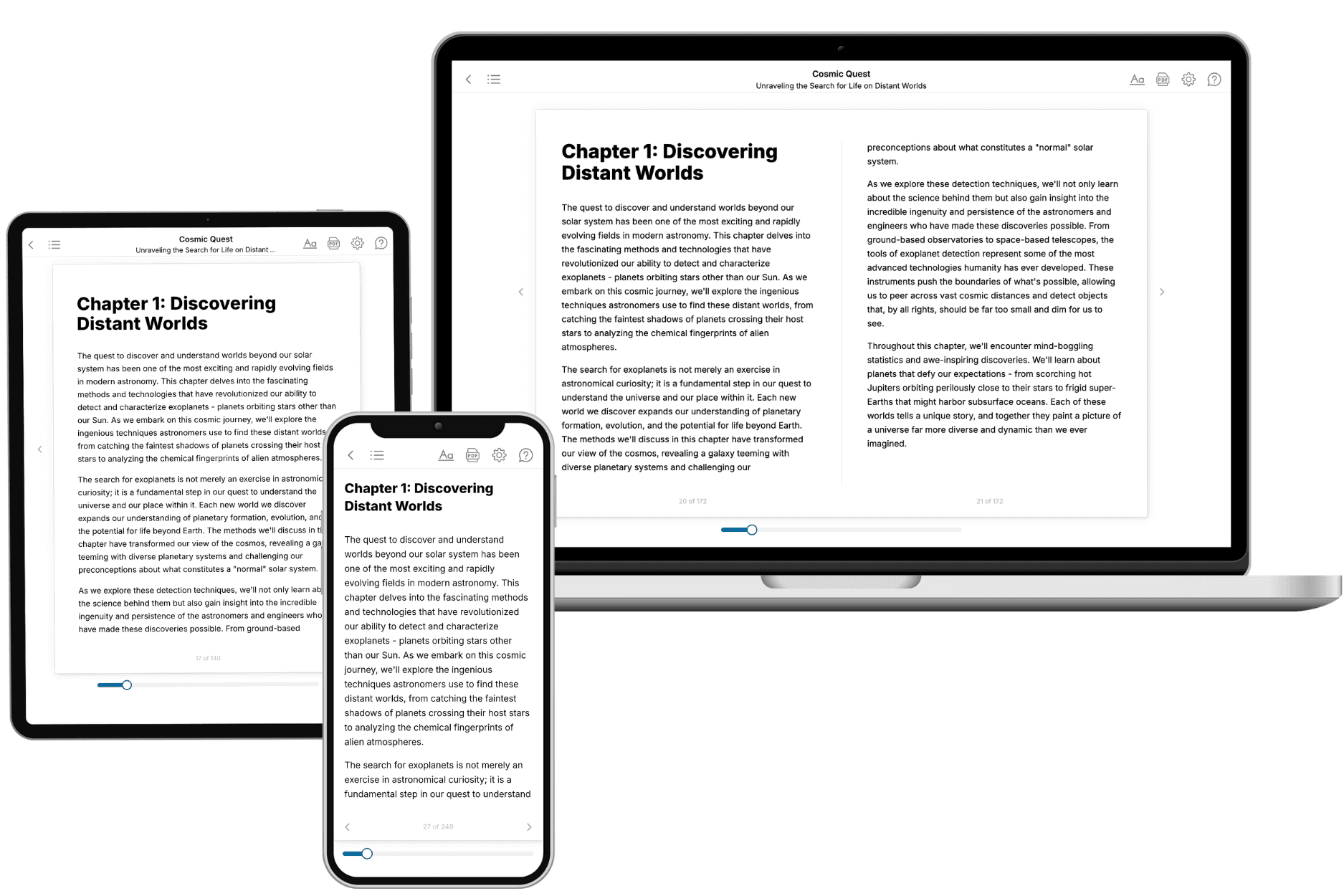
TailoredRead creates complete, full-length nonfiction ebooks, written specifically for you. Tell us what you want to learn and why, and TailoredRead writes you a complete ebook on it, with charts, tables, and diagrams throughout. Read it online, on Kindle, or on any e-reader, or download it as a PDF or EPUB. Every book is written fresh the day you order it.
- How is the book tailored to me?
Before anything is written, you answer a few short questions about your goals, your background, and the topics you care about. Your book is then planned around your answers: written at your level, focused on your goals, and covering the topics you chose, instead of the one-size-fits-all book a store sells everyone.
- Will it read like generic AI content?
No. Your book isn't a chat transcript: it's planned chapter by chapter before a single word is written, told in a clear book voice, and explains ideas visually with charts, tables, and diagrams. After writing, every book goes through an editorial pass that polishes chapters so the book reads consistent from start to finish. Judge for yourself: browse thousands of sample books on our Explore Books page.
- How accurate is the content?
Our AI first checks whether your subject needs live research. Niche and fast-moving subjects are researched before writing, and the book plan and chapters are grounded in what it finds. After writing, every book goes through a quality pass that checks its facts and consistency, and researched books list their sources in a Notes section at the back.
- How long is the book?
You choose the length: Comprehensive (250-300 pages), Detailed (150-200 pages), Essential (70-100 pages), or Short (30-50 pages).
- Does the book include visuals?
Yes. Every book includes charts, tables, and diagrams: timelines, checklists, step-by-step guides, decision trees, comparison tables, matrices, and bar charts. A typical book includes dozens of these visual elements.
- Can I read it on Kindle? What formats can I download?
Yes. Every book can be read in our online reader or downloaded as a PDF or EPUB. The EPUB can be opened with Kindle, Apple Books, Kobo, and any e-reader. The Commercial and Author licenses also include an editable Word (DOCX) and Markdown download.
- How much does it cost?
About the price of a regular ebook. The exact price depends on your book's length and complexity, from $2 for the shortest books to $35 for the most comprehensive, and it's shown when you review your book, before you commit to anything. Each book is a one-time purchase, yours to keep, no subscription. Licenses that let you share, teach, or publish your book range from $35.99 to $49.99.
- Can I preview the book before purchasing?
Before you pay, you'll see what your book will cover: the title, a detailed description, the estimated length, and the complete chapter-by-chapter table of contents, so you know what you're getting before you decide. The full text itself is written after you purchase.
- How long does it take to create a book?
About 10 minutes. You can start reading the opening chapters while the rest is still being written.