Colonialism Books
Explore tailored Colonialism books created by our AI
Colonialism Mastery
A Customized Guide to Colonial History, Theory, and Global Legacies
You'll navigate the complex architecture of colonialism—from its emergence in 15th-century Europe through its transformation into contemporary neocolonial systems. This guide systematically deconstructs how imperial powers consolidated control through administrative hierarchies, economic monopolies, and ideological frameworks that justified domination. You'll examine the sophisticated mechanisms of extraction—mercantilism, plantation economies, and resource capitalism—that generated wealth for empires while impoverishing colonized regions. Critically, you'll explore how indigenous peoples resisted through cultural preservation, political organization, and armed struggle, ultimately forcing decolonization. The book connects historical analysis to present-day realities: global inequality structures, institutional legacies, and ongoing sovereignty struggles. You'll engage with postcolonial theory frameworks that explain how colonial power persists through economic dependency and cultural narratives. By centering indigenous perspectives and subaltern voices, you'll develop a comprehensive understanding of how colonialism shaped—and continues to shape—global systems of power, knowledge production, and resource distribution.
This book takes you through a critical examination of settler colonialism—one of the most consequential yet often misunderstood political systems shaping our world. You'll discover how settler colonialism differs fundamentally from other forms of colonialism, and why this distinction matters for understanding everything from contemporary land disputes to indigenous rights movements. Through concrete historical examples and contemporary case studies, you'll see how settler colonial logic operates: the systematic replacement of indigenous populations, the legal frameworks that legitimize dispossession, and the cultural narratives that normalize these processes. You'll explore how settler colonialism persists in modern nation-states long after formal independence, embedded in property laws, educational systems, and political institutions. By examining specific regions—from North America to Australia to the Middle East—you'll recognize patterns while appreciating how settler colonialism manifests uniquely in different contexts. This book equips you with analytical tools to understand ongoing conflicts over land, sovereignty, and justice, while introducing you to indigenous perspectives and resistance movements that challenge settler colonial authority. Whether you're studying politics, engaged in activism, or simply seeking to understand the world's most pressing conflicts, this book provides essential context for making sense of our settler colonial present.
Drawn in Ink, Lived in Blood
How Colonial Borders Shaped Modern Conflicts and Identities
Discover why the world's most intractable conflicts, from the Middle East to sub-Saharan Africa, trace their roots to lines drawn on maps by colonial administrators who never set foot in the territories they divided. This book reveals how European powers carved up continents to serve their economic interests, creating borders that ignored centuries of cultural, ethnic, and religious geography. You'll understand why these arbitrary lines persist today despite their destructive consequences, how they fuel modern wars and humanitarian crises, and what this means for resolving contemporary geopolitical tensions. Through case studies spanning multiple continents and centuries, you'll see the direct connections between colonial boundary-drawing and today's refugee crises, resource conflicts, and identity struggles. Whether you're studying international relations, working in policy, or simply seeking to understand why the world is shaped as it is, this book provides the historical foundation necessary to comprehend modern global challenges.
Empire's Shadow
Unraveling the Complex Legacy of Colonialism and Imperialism in World History
Have you ever wondered how the world we live in today was shaped by the forces of colonialism and imperialism? "Empire's Shadow" takes you on an eye-opening exploration of these powerful historical phenomena that have left an indelible mark on our global civilization. This book delves deep into the intricate web of political, economic, and cultural forces that drove empires to expand their reach across continents, forever altering the course of world history. You'll gain a nuanced understanding of how colonial powers reshaped societies, economies, and cultures around the world. From the Americas to Africa, Asia to Oceania, you'll discover the far-reaching consequences of imperial ambitions and the complex legacies they've left behind. "Empire's Shadow" doesn't shy away from the challenging questions. You'll explore the motivations behind colonial expansion, the resistance movements that arose in response, and the lasting impact on both colonized and colonizing nations. By the end of this journey, you'll have a deeper appreciation for the complexities of our interconnected world and the historical forces that continue to shape global relations today.
The End of Empire
How Britain Lost Its Colonies and Reshaped the Modern World
Discover how the world's most powerful empire systematically dismantled itself over just two decades. This book traces the dramatic collapse of British imperial rule from the end of World War II through the 1970s, revealing the political calculations, nationalist uprisings, and global power shifts that transformed the map of the world. You'll explore how Britain navigated the loss of India, Africa, and the Caribbean, examining the perspectives of both colonial administrators grappling with inevitable change and independence leaders fighting for their nations' futures. Through compelling historical narratives and clear analysis, you'll understand why decolonization happened when it did, how it unfolded across different regions, and what consequences still reverberate today. This is not a story of inevitable progress or simple good versus evil—it's a nuanced examination of how empires end and how that ending continues to shape our modern world.
The Scramble for Africa
How European Powers Carved Up a Continent and Shaped the Modern World
Within just three decades, from the 1880s to 1914, European powers transformed Africa from a continent of independent kingdoms, empires, and societies into a patchwork of colonial territories. This dramatic partition—the Scramble for Africa—represents one of history's most consequential geopolitical transformations, yet its complexities often remain obscured by simplified narratives. You'll explore the multifaceted forces that drove European expansion: industrial capitalism's hunger for raw materials and markets, nationalist rivalries among competing powers, technological innovations that shifted military balance, and the ideological frameworks that justified conquest. Moving beyond European perspectives, you'll examine how African leaders and communities responded—through armed resistance, diplomatic negotiation, strategic alliances, and adaptation. The book traces the scramble's execution across different regions, from the Berlin Conference's diplomatic maneuvering to the violent realities of conquest and resistance. You'll understand how arbitrary colonial borders were drawn, how diverse governance systems were imposed, and how economic structures were fundamentally reordered. Finally, you'll connect historical events to contemporary Africa, recognizing how colonial legacies continue shaping political boundaries, economic systems, ethnic relations, and development challenges across the continent.
Discover how a small island nation became the world's most powerful empire, controlling a quarter of the globe at its peak. This book traces the British Empire's remarkable journey from its medieval origins through its twentieth-century collapse, revealing the forces that propelled Britain to global dominance and the consequences that still shape our world today. You'll explore the economic ambitions that drove expansion, the naval innovations that secured British supremacy, and the political strategies that allowed a relatively small population to rule hundreds of millions. Beyond the triumphalist narratives, you'll examine the complex realities: how imperial rule transformed colonized societies, the resistance movements that challenged British authority, and why the empire ultimately proved unsustainable. This comprehensive account balances historical achievement with honest assessment of imperial exploitation, offering essential context for understanding modern international relations, global inequality, and the ongoing debates about colonialism's legacy. Whether you're studying history, seeking to understand current global dynamics, or simply curious about one of history's most consequential empires, this book provides the clarity and depth you need.
Stones of Empire
How Colonial Architecture Shaped Power, Identity, and Resistance
What if the buildings around you were designed not to shelter you, but to control you? Colonial architecture stands as one of history's most powerful yet overlooked tools of political domination. From grand administrative centers to segregated urban layouts, these structures encoded the ideology of empire into stone, steel, and space. This book reveals how colonizers weaponized architecture to establish hierarchies, erase indigenous cultures, and consolidate power—and how colonized peoples resisted through adaptation and cultural persistence. You'll discover how the cities you inhabit today still bear the imprint of colonial thinking, from property systems to infrastructure patterns. By understanding how architecture functioned as an instrument of control, you'll gain critical insight into how power operates through the spaces we inhabit, and why decolonizing our built environment matters for creating more equitable futures.
Imagine understanding one of history's most consequential periods—not through oversimplified narratives, but through a clear-eyed examination of how power, economics, and human ambition reshaped an entire civilization. The British Raj stands as one of history's most transformative colonial enterprises, fundamentally altering India's trajectory while leaving imprints that persist today. This book cuts through mythology to reveal how a trading company became an empire, how colonial administrators justified their rule, and how Indians resisted, adapted, and ultimately reclaimed their nation. You'll discover the economic mechanisms that extracted wealth, the administrative innovations that governed hundreds of millions, and the intellectual currents that both sustained and eventually undermined colonial authority. By examining primary sources, competing perspectives, and historical evidence, you'll gain the analytical tools to understand not just what happened, but why it matters for understanding modern India, British identity, and global power dynamics. This is history that illuminates the present.
This book takes you through one of history's most transformative conflicts—the Irish War of Independence—and shows you how a colonized nation fought for freedom and fundamentally altered the course of European history. You'll discover the deep historical roots of Irish grievance, trace the pivotal moments that shifted public opinion, and understand the guerrilla tactics that challenged imperial power. Through detailed examination of key figures, military campaigns, and political negotiations, you'll see how ordinary people and extraordinary leaders navigated impossible choices during a brutal conflict. The book explores the complex realities often overlooked in simplified accounts: the internal divisions within the independence movement, the experiences of women and working-class activists, and the regional variations across Ireland. You'll gain insight into how the war's outcome—the Anglo-Irish Treaty and partition—created both a new nation and lasting tensions that continue to influence Irish and British politics today. By the end, you'll understand not just what happened, but why it matters for understanding modern Ireland, European history, and the broader patterns of anti-colonial resistance worldwide.
You'll gain a comprehensive understanding of how colonial power structures persist in the 21st century, shaping global economics, culture, and geography long after formal empires dissolved. This book examines the invisible mechanisms through which former colonial powers and new global actors maintain influence over developing nations—from debt dependency and resource extraction to cultural imperialism and territorial control. Through rigorous analysis grounded in cultural geography and earth sciences, you'll explore how neocolonialism manifests in land use patterns, environmental degradation, migration flows, and the unequal distribution of natural resources. You'll discover the spatial dimensions of economic exploitation, the role of international institutions in perpetuating dependency, and how indigenous knowledge systems are marginalized in favor of Western paradigms. Whether you're studying international development, environmental justice, or global power dynamics, this book equips you with the analytical frameworks to recognize neocolonial patterns in contemporary geopolitics. You'll learn to critically assess development projects, trade agreements, and conservation initiatives through a decolonial lens, understanding both historical continuities and emerging forms of domination in our interconnected world.
Many people think African history begins with European colonization, but this misconception erases thousands of years of sophisticated civilizations, powerful empires, and remarkable achievements. Africa's pre-colonial past includes thriving kingdoms like Mali and Great Zimbabwe, complex trade networks spanning continents, and cultural innovations that influenced the world. This book takes you on a chronological journey through African history, starting with ancient civilizations and progressing through the colonial period and its lasting impact. You'll discover the political systems, economic structures, and cultural achievements of major African empires, meet the historical figures who shaped nations, and understand how colonialism disrupted societies in ways still felt today. Whether you're a student seeking deeper knowledge or an adult learner exploring your heritage, this guide provides the context needed to understand Africa's central role in human history and its profound connection to African-American identity and culture.
The Divided Land
How the Sykes-Picot Agreement Ignited Kurdish Rebellions in Turkey
The most significant challenge in understanding Middle Eastern conflicts today lies in grasping how arbitrary lines drawn on maps over a century ago continue to fuel rebellions and resistance movements. The Sykes-Picot Agreement of 1916 didn't just redraw borders—it shattered communities, divided peoples, and created the conditions for decades of conflict that persist to this day. This comprehensive examination reveals how the secret wartime agreement between Britain and France fundamentally altered the Kurdish experience in Turkey. You'll discover how the artificial borders imposed after World War I ignored centuries of Kurdish cultural and territorial heritage, setting the stage for a series of rebellions that would define Turkish-Kurdish relations for generations. Through detailed analysis of historical documents, military campaigns, and political developments, you'll gain insight into the complex web of causes and consequences that emerged from this pivotal moment in history. From the Sheikh Said Rebellion of 1925 to the broader patterns of resistance that followed, this book connects the dots between colonial decision-making and its lasting impact on regional stability. Whether you're seeking to understand the roots of contemporary Middle Eastern conflicts or exploring the broader implications of imposed borders on ethnic communities, this book provides the historical foundation necessary to comprehend one of the region's most enduring challenges.
Many assume the 1997 Hong Kong handover was simply a bureaucratic transfer of power from one government to another. In reality, it was one of the most consequential geopolitical events of the late 20th century—a moment that reshaped Asia's political landscape and tested the viability of international agreements on sovereignty. This book examines the handover from multiple angles: the colonial history that made it necessary, the diplomatic negotiations that shaped its terms, the human drama of a population facing uncertain futures, and the geopolitical implications that reverberate today. You'll discover how the "One Country, Two Systems" framework emerged, why so many Hong Kong residents emigrated before 1997, what actually happened during the handover ceremony, and how the transition has unfolded in the decades since. By understanding this pivotal moment, you'll gain insight into contemporary Asian politics, the complexities of sovereignty and autonomy, and how historical events continue to influence global affairs.
Western Sahara Unraveled
A Geopolitical Analysis of Africa's Last Colony
Picture yourself as a keen observer, standing at the crossroads of history and geopolitics in North Africa. You're about to gain a profound understanding of one of the world's most complex and lesser-known territorial disputes. "Western Sahara Unraveled" offers you a comprehensive exploration of this fascinating region, its people, and the intricate web of international relations surrounding it. This book takes you on an illuminating journey through the sands of Western Sahara, from its days under Spanish colonization to the current struggle for self-determination. You'll delve into the heart of the conflict, examining the roles of key players like the Polisario Front, Morocco, and Algeria. The book provides a balanced analysis of crucial events such as the Green March and the construction of the Moroccan Wall, offering insights into their lasting impact on the region's geopolitical landscape. As you progress through the chapters, you'll gain a nuanced understanding of the diplomatic efforts to resolve the dispute, including the UN-led MINURSO mission and various proposed solutions like the Baker Plan and the Saharan Autonomy Plan. The book also sheds light on the often-overlooked aspects of the conflict, such as the rich nomadic Sahrawi culture and the strategic importance of the region's phosphate resources. "Western Sahara Unraveled" equips you with the knowledge to critically analyze this complex situation, understand the challenges of decolonization in the modern world, and appreciate the broader implications for regional stability and international relations. Whether you're a student of geopolitics, a professional seeking to expand your global awareness, or simply a curious mind, this book will broaden your perspective and deepen your understanding of one of Africa's most enduring conflicts.
What separates leaders who build lasting legacies from those whose decisions trigger conflict and collapse? This book examines the pivotal moments when political leaders shaped the course of history—and explores the forces that constrained or enabled their choices. From failed treaty negotiations that sparked wars to economic policies that toppled regimes, you'll discover how individual decisions ripple through societies. You'll analyze the role of media in manufacturing consent, explore how corruption erodes institutions, and understand why some leaders chose democratic accountability while others embraced authoritarianism. Through case studies spanning continents and centuries, this book reveals the patterns underlying major historical conflicts, diplomatic breakthroughs, and power transitions. Whether examining indigenous suffering under colonial rule, revolutionary movements that reshaped nations, or the propaganda techniques that sway elections, you'll gain insight into the ethical dimensions of power and the consequences of leadership choices. This is essential reading for anyone seeking to understand not just what happened in history, but why—and what it means for our world today.
Discover the rich, complex history of Argentina's indigenous peoples—a story often overshadowed in mainstream historical narratives. This comprehensive exploration reveals how indigenous civilizations thrived across Argentina's diverse landscapes for millennia, developing sophisticated societies with distinct languages, governance systems, and cultural achievements. You'll understand how Spanish colonization transformed these societies, the remarkable resistance movements that defined centuries of struggle, and how indigenous communities continue asserting their rights and cultural identity today. From the Mapuche warriors of Patagonia to the Guaraní of the northeast, from pre-Columbian achievements to contemporary activism, this book illuminates the indigenous foundations of Argentine society. By examining archaeological evidence, historical documents, and contemporary voices, you'll gain critical insights into how indigenous history shapes Argentina's national identity, regional diversity, and ongoing debates about land rights, representation, and cultural preservation. This is essential reading for anyone seeking to understand South America's true historical complexity.
The Trail of Tears
Understanding America's Forced Removal of Native Nations
Gain a deeper understanding of one of America's most consequential and tragic historical events. This comprehensive examination of the Trail of Tears moves beyond surface-level narratives to explore the complex political, legal, and social forces that drove the forced removal of Native American nations from their ancestral lands. You'll discover how federal policy, westward expansion, and the ideology of Manifest Destiny converged to displace thousands of Native Americans in the 1830s and beyond. Through detailed accounts of the Cherokee, Creek, Chickasaw, Choctaw, and Seminole experiences, you'll understand the human cost of removal—the deaths, suffering, and cultural disruption—alongside stories of resistance and resilience. This book contextualizes the Trail of Tears within broader American history, examining the legal mechanisms that enabled removal, the diverse responses of Native nations, and the lasting legacy that continues to shape Native American communities today. Whether you're a student, educator, or history enthusiast, this accessible yet authoritative account provides the knowledge needed to understand this pivotal moment and its enduring significance.
Discover how a single letter from a British Foreign Secretary fundamentally altered the course of Middle Eastern history. This book provides you with a clear, evidence-based understanding of the Balfour Declaration—one of history's most consequential yet misunderstood documents. You'll learn the political calculations that led Britain to issue this promise, the competing interests it attempted to balance, and why its ambiguous language created conflicts that persist over a century later. Through careful examination of primary sources, historical context, and multiple perspectives, you'll gain the analytical tools to understand how imperial decisions shape modern geopolitics. Whether you're studying history, seeking to understand contemporary Middle Eastern politics, or simply curious about how historical documents influence nations, this book equips you with the knowledge to engage thoughtfully with one of the world's most debated declarations.
Discover how a single piece of legislation fundamentally altered the course of American history and the lives of thousands of Native Americans. This book traces the origins, implementation, and devastating consequences of the Indian Removal Act of 1830—a federal policy that forcibly displaced Native nations from their ancestral homelands. You'll explore the political motivations behind the act, the harrowing experiences of those forced westward on the Trail of Tears, and the profound ways this policy violated treaties and constitutional principles. Through careful examination of primary sources, historical accounts, and contemporary perspectives, you'll understand how this act represents a critical chapter in American civil rights history. You'll also discover how Native nations resisted removal, adapted to new territories, and continue to fight for justice and sovereignty today. This comprehensive exploration reveals the human cost of westward expansion and provides essential context for understanding ongoing Native American struggles and the importance of honoring indigenous rights and self-determination.
The Irish Exodus
How Millions of Irish Built America While Transforming Their Homeland
What if the story of Irish immigration to America isn't primarily about seeking the American Dream, but about escaping centuries of systematic oppression? This book reveals how Irish immigration fundamentally reshaped both nations. From the colonial policies that impoverished Ireland to the discrimination Irish immigrants faced in American cities, you'll discover the complex forces that drove millions across the Atlantic. You'll explore how Irish communities built political machines, transformed labor movements, and created a distinct Irish-American identity that influenced American culture for generations. This narrative connects the dots between Irish history, European context, and American development, showing how one group's struggle became central to America's story. Whether you're interested in immigration history, Irish heritage, or understanding how marginalized groups achieve social mobility, this book provides the historical depth and analytical clarity you need to grasp this pivotal chapter in both nations' histories.
Common Sense
Understanding Thomas Paine's Revolutionary Argument for American Independence
Many assume Thomas Paine's Common Sense was simply a call to arms during the American Revolution. In reality, it was a sophisticated political argument that transformed how colonists understood government, freedom, and their own power. This book reveals why a 47-page pamphlet published in January 1776 became the most influential political document of its era, selling over 500,000 copies in a population of just 2.5 million. You'll discover how Paine dismantled the case for monarchy, exposed the economic costs of British rule, and articulated a vision of America that inspired a nation. By examining the historical context, analyzing Paine's key arguments, and exploring the pamphlet's immediate and lasting impact, you'll understand not just what Common Sense said, but why it mattered—and why its ideas about government, representation, and human rights remain relevant today.
Many believe the Boxer Rebellion was simply a chaotic peasant uprising easily suppressed by Western forces. In reality, it was a complex nationalist response to decades of foreign domination that fundamentally reshaped American foreign policy and global power dynamics. This book examines how Western imperialism, particularly American commercial expansion, created the conditions for the rebellion while simultaneously using it to justify deeper military involvement in Asia. You'll discover how the United States' response to the crisis established patterns of intervention that would define American foreign policy throughout the 20th century. By exploring the rebellion through multiple perspectives—Chinese resistance fighters, American diplomats, and international powers—you'll gain insight into how imperial powers maintained control over colonized regions and how nationalist movements emerged in response. This historical moment reveals the roots of modern tensions between Western powers and Asia, making it essential for understanding contemporary international relations and American global influence.
You'll gain a comprehensive understanding of how the Arab-Israeli conflict evolved from competing imperial ambitions and nationalist movements into one of the world's most intractable disputes. This book traces the historical trajectory from the Balfour Declaration through the British Mandate, the 1948 war, and contemporary peace efforts, examining how imperialism, nationalism, and religious identity intersected to shape the region. You'll explore the origins of the Zionist movement, Palestinian nationalism, and Arab League responses while analyzing concrete disputes over water rights, land partition, and settlement expansion. By examining key events, political causes, and social impacts through a balanced historical lens, you'll develop the contextual knowledge needed to assess current proposals like the two-state solution and understand why previous frameworks like the Oslo Accords achieved limited success. This analysis equips you with the historical foundation to engage thoughtfully with Middle Eastern affairs.
This book takes you through one of history's most significant and troubling chapters: the rise and fall of apartheid in South Africa. You'll discover how a system of racial segregation became law, how it controlled every aspect of millions of lives, and how ordinary people—both Black and white—resisted it. The narrative moves from the colonial foundations that made apartheid possible, through the decades of oppression and resistance, to the dramatic negotiations that ended the system and the ongoing challenges of building a truly equal society. Along the way, you'll encounter the key figures, pivotal moments, and powerful stories that shaped this history. This book equips you with a nuanced understanding of how systematic racism operates, how societies can transform, and why the work of reconciliation remains unfinished. Whether you're studying history, seeking to understand social justice movements, or simply wanting to comprehend a pivotal moment in human history, this comprehensive guide provides the context and clarity you need.
You'll discover how a small religious movement in first-century Palestine grew into a force that reshaped empires, created institutions that still influence society today, and fundamentally altered the course of human civilization. This exploration takes you through the pivotal moments when Christian beliefs intersected with political power, cultural transformation, and social change. You'll examine how medieval monasteries preserved knowledge, how the Reformation challenged established authority, how missionary movements connected distant continents, and how Christian thought influenced everything from science to social justice. By understanding these historical connections, you'll gain insight into how religious movements shape societies, why certain historical events unfolded as they did, and how the past continues to influence our present world. This is not merely a chronicle of dates and figures—it's an analysis of cause and effect, belief and consequence, that reveals the profound ways faith and history intertwine.
Most people think of territory as simply lines on a map—political boundaries that divide nations and define property ownership. But territory is far more complex and consequential than that. Territory shapes how we identify ourselves, organize our communities, compete for resources, and understand our place in the world. From the invisible boundaries of a neighborhood to the contested borders of nations, from indigenous sacred lands to digital spaces we claim online, territoriality influences nearly every aspect of human culture and society. This book explores how geography and culture intertwine through territorial behavior, examining why humans claim space, how these claims create meaning and identity, and what happens when territorial interests collide. By understanding territoriality through a cultural and geographic lens, you'll gain insight into conflicts, cultural preservation, urban development, and the fundamental ways humans organize themselves across the planet.
Green Conquest
The Hidden History of Ecological Imperialism and Its Global Impact
Many believe that environmental changes are solely a product of modern industrialization. However, the roots of our current ecological challenges stretch far deeper into history. "Green Conquest" unveils the often-overlooked phenomenon of ecological imperialism, a force that has shaped our world for centuries. This book takes you on a journey through time and across continents, exploring how the movement of people, plants, animals, and microorganisms has dramatically altered ecosystems and societies. You'll discover how seemingly innocuous introductions of species to new environments have led to far-reaching consequences, from the reshaping of landscapes to the fall of civilizations. "Green Conquest" doesn't just recount history; it provides a new lens through which to view our past, present, and future. By understanding the intricate connections between human expansion, biological exchanges, and environmental change, you'll gain invaluable insights into the complex challenges we face today. This knowledge will empower you to think critically about conservation, global interactions, and the delicate balance of our planet's ecosystems.
The Pahlavi Dynasty
Iran's Modern Transformation and the Legacy of a Contested Era
Many assume the Pahlavi Dynasty was simply a period of Western-backed authoritarianism in Iran. In reality, this 54-year era (1925-1979) represents one of history's most dramatic national transformations—for better and worse. This book examines how two rulers took a fragmented, semi-colonial nation and built a modern state with significant regional power, while simultaneously creating the conditions for revolution. You'll discover how Reza Shah consolidated power and reformed the military, how Mohammad Reza Shah leveraged oil wealth to fuel rapid industrialization, and why modernization policies ultimately alienated the very society they aimed to transform. Through careful analysis of political decisions, economic policies, cultural shifts, and social tensions, this book reveals how the Pahlavi Dynasty reshaped Iran's identity and continues to influence Middle Eastern politics today. Whether you're studying history, understanding contemporary Iran, or exploring how modernization and tradition collide, this comprehensive guide provides the context and insights you need.
Related books you may like:
You're about to supercharge your animal advocacy efforts and nonprofit management skills with the power of AI. This groundbreaking guide is tailored specifically for leaders in the animal rights movement who are ready to harness cutting-edge technology to make a bigger impact. Discover how to leverage AI tools to streamline your operations, enhance your strategic planning, and amplify your advocacy campaigns. You'll learn practical techniques for automating administrative tasks, optimizing your workflow, and making data-driven decisions that will take your organization to the next level. From improving time management and task delegation to enhancing donor engagement and project tracking, this book offers a comprehensive roadmap for integrating AI into every aspect of your work. You'll gain insights into AI-driven research methods, problem-solving techniques, and productivity metrics that will revolutionize the way you approach animal advocacy.
Discover how air sign energy shapes your thinking, communication style, and approach to relationships. Whether you have a Gemini, Libra, or Aquarius placement in your birth chart, this guide reveals the intellectual and social gifts these signs bring—along with the blind spots worth understanding. You'll learn why air signs are natural communicators and idea-generators, how each sign expresses itself uniquely, and how your specific air sign placements influence your personality across different life areas. Through practical insights and real-world examples, you'll recognize air sign patterns in yourself and others, harness your natural strengths in connection and innovation, and navigate the challenges of overthinking and emotional detachment. Whether you're exploring your Sun, Moon, Rising, or other planetary placements, this book provides the clarity you need to work with your air sign energy authentically and effectively.
What if you could resolve years of trauma in just a handful of therapy sessions instead of months or years of traditional talk therapy? Accelerated Resolution Therapy (ART) offers a scientifically-grounded approach that harnesses your brain's natural healing capacity to process traumatic memories and emotional distress rapidly. This book demystifies how ART works at the neurological level, explains why it's so effective for conditions like PTSD, anxiety, and phobias, and explores how it differs from conventional therapeutic approaches. Whether you're a mental health professional considering adding ART to your practice, someone exploring treatment options for yourself or a loved one, or simply curious about innovative psychological interventions, this guide provides practical insights into one of the most promising developments in modern therapy. Discover how guided imagery and eye movement can facilitate profound emotional healing, what the research shows about its effectiveness, and whether ART might be the breakthrough approach you've been seeking.
The assumption that political parties are natural, inevitable, or even desirable features of democracy is surprisingly recent. For most of Western political history, the most sophisticated thinkers viewed organized factions as corrupting forces that distorted the pursuit of the common good. This book traces the genealogy of anti-party political thought from Plato's critique of democratic factionalism through contemporary populist movements, examining how philosophers, statesmen, and theorists have conceptualized the dangers of partisanship and imagined alternatives. You'll encounter Rousseau's vision of a general will transcending faction, the Federalist Papers' constitutional anxiety about party machinery, Tocqueville's ambivalent analysis of American partisanship, and the radical rejection of parties by socialist and anarchist movements. Rather than treating anti-party sentiment as mere nostalgia or populist demagoguery, this analysis reveals it as a coherent intellectual tradition grappling with enduring tensions between democratic participation and organized political competition. By understanding how different historical periods and ideological traditions have confronted the problem of faction, you gain critical perspective on contemporary debates about party reform, populism, and democratic alternatives.
Many people believe that behavior is determined either by our genetics or by direct rewards and punishments we experience. However, Albert Bandura's groundbreaking research revealed a more nuanced truth: we learn by watching others. This book explores the life and work of one of psychology's most influential figures and the revolutionary theory that transformed our understanding of human behavior. You'll discover how Bandura's concept of self-efficacy explains why some people persevere through challenges while others give up, how observational learning shapes everything from aggression to prosocial behavior, and why the environment, our thoughts, and our actions are constantly influencing each other. Whether you're an educator seeking to improve student outcomes, a professional interested in behavior change, or simply curious about the science of learning, this comprehensive guide illuminates the principles that govern human development and provides practical insights into how these theories apply to everyday life.
Create a Colonialism Book Tailored to You
Create an AI-crafted book tailored to your goals, interests, and background






Benefits of AI-tailored books
- Read one book, not ten:
- all the Colonialism knowledge you need, gathered into a single book.
- Save days of learning:
- tell us your goals, choose your topics, and the whole book is built around them.
- Learn effortlessly:
- Colonialism book written for your specific background and expertise.
- Understand at a glance:
- includes charts, tables, timelines, checklists, decision trees, and more.
- Stay current:
- written the day you order it, not years ago.
- Trust what you read:
- every book is checked for accuracy, with real research when your subject needs it.
Create your unique book in 3 steps
- 1. Select your focus
Select the focus of your Colonialism book and share your background
- 2. Personalize your book
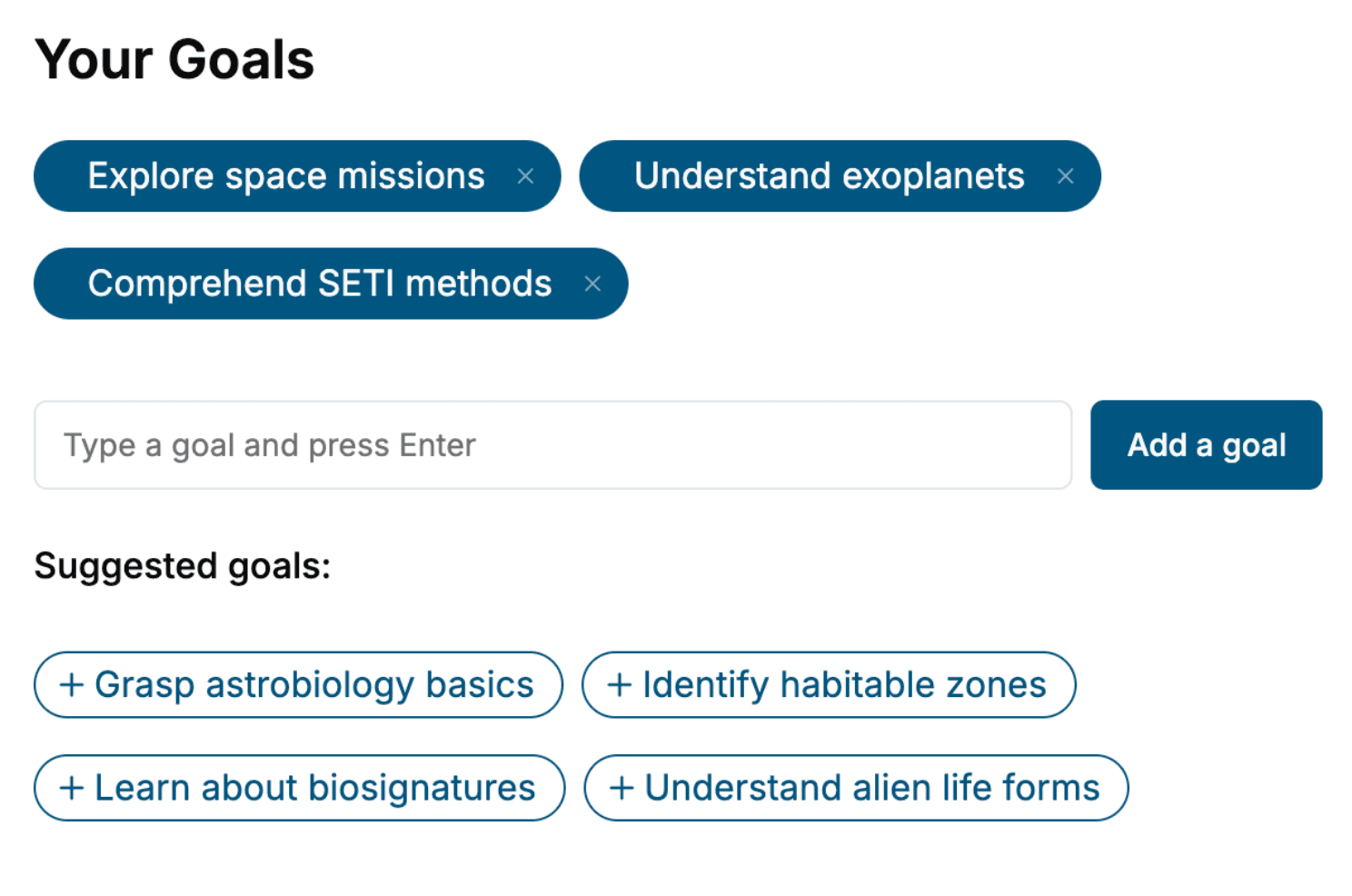
Specify your goals and choose sub-topics to include
- 3. Get your tailored book
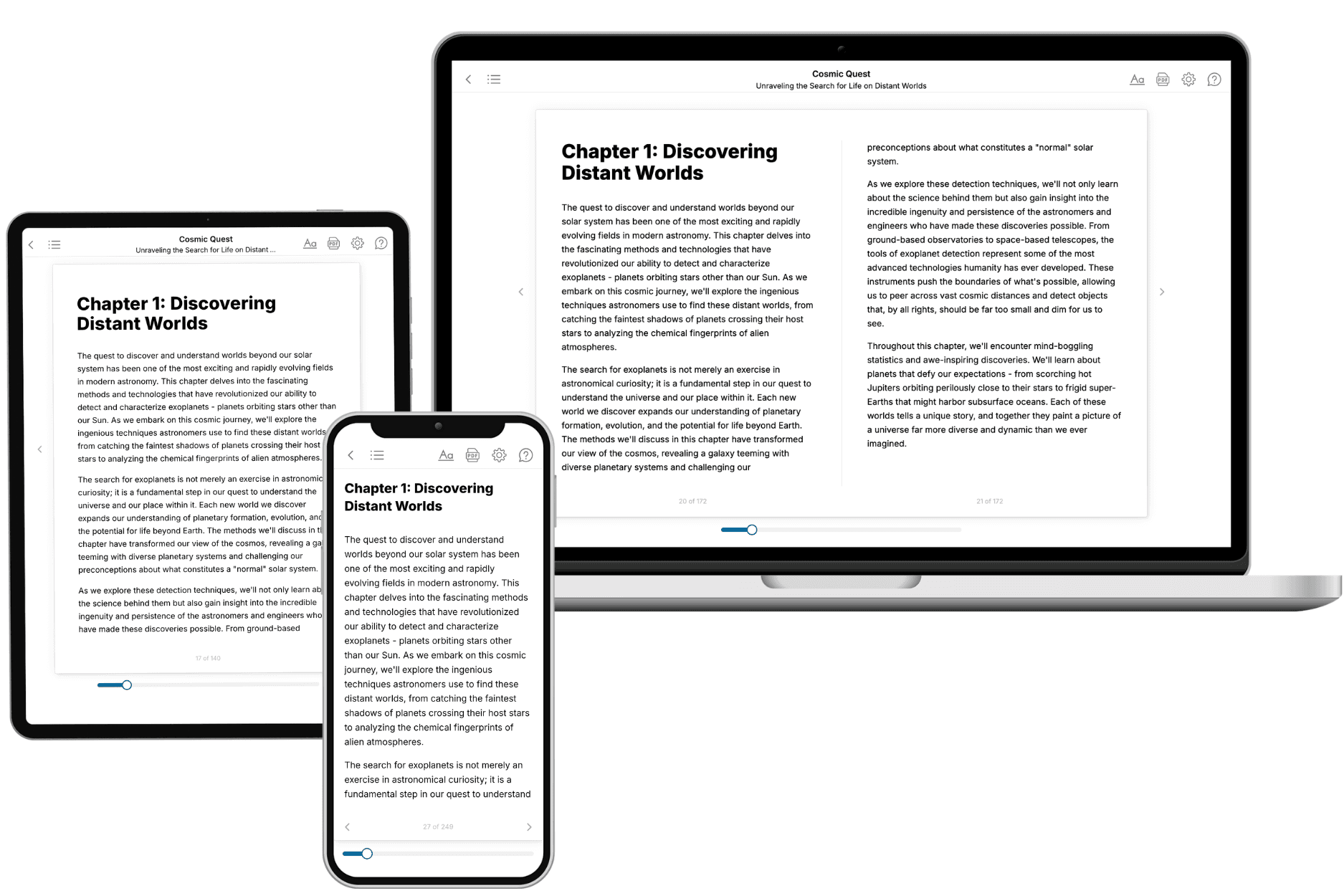
Your book is ready in 10 minutes. Read it online, download as EPUB or PDF, or send to Kindle.

Start from a template
Frequently asked questions
- What is TailoredRead?
TailoredRead creates complete, full-length nonfiction ebooks, written specifically for you. Tell us what you want to learn and why, and TailoredRead writes you a complete ebook on it, with charts, tables, and diagrams throughout. Read it online, on Kindle, or on any e-reader, or download it as a PDF or EPUB. Every book is written fresh the day you order it.
- How is the book tailored to me?
Before anything is written, you answer a few short questions about your goals, your background, and the topics you care about. Your book is then planned around your answers: written at your level, focused on your goals, and covering the topics you chose, instead of the one-size-fits-all book a store sells everyone.
- Will it read like generic AI content?
No. Your book isn't a chat transcript: it's planned chapter by chapter before a single word is written, told in a clear book voice, and explains ideas visually with charts, tables, and diagrams. After writing, every book goes through an editorial pass that polishes chapters so the book reads consistent from start to finish. Judge for yourself: browse thousands of sample books on our Explore Books page.
- How accurate is the content?
Our AI first checks whether your subject needs live research. Niche and fast-moving subjects are researched before writing, and the book plan and chapters are grounded in what it finds. After writing, every book goes through a quality pass that checks its facts and consistency, and researched books list their sources in a Notes section at the back.
- How long is the book?
You choose the length: Comprehensive (250-300 pages), Detailed (150-200 pages), Essential (70-100 pages), or Short (30-50 pages).
- Does the book include visuals?
Yes. Every book includes charts, tables, and diagrams: timelines, checklists, step-by-step guides, decision trees, comparison tables, matrices, and bar charts. A typical book includes dozens of these visual elements.
- Can I read it on Kindle? What formats can I download?
Yes. Every book can be read in our online reader or downloaded as a PDF or EPUB. The EPUB can be opened with Kindle, Apple Books, Kobo, and any e-reader. The Commercial and Author licenses also include an editable Word (DOCX) and Markdown download.
- How much does it cost?
About the price of a regular ebook. The exact price depends on your book's length and complexity, from $2 for the shortest books to $35 for the most comprehensive, and it's shown when you review your book, before you commit to anything. Each book is a one-time purchase, yours to keep, no subscription. Licenses that let you share, teach, or publish your book range from $35.99 to $49.99.
- Can I preview the book before purchasing?
Before you pay, you'll see what your book will cover: the title, a detailed description, the estimated length, and the complete chapter-by-chapter table of contents, so you know what you're getting before you decide. The full text itself is written after you purchase.
- How long does it take to create a book?
About 10 minutes. You can start reading the opening chapters while the rest is still being written.