Stones of Empire
How Colonial Architecture Shaped Power, Identity, and Resistance
What if the buildings around you were designed not to shelter you, but to control you?
191 pages9 chaptersFeb 12, 2026Architecture History
About this book
Colonial architecture stands as one of history's most powerful yet overlooked tools of political domination. From grand administrative centers to segregated urban layouts, these structures encoded the ideology of empire into stone, steel, and space. This book reveals how colonizers weaponized architecture to establish hierarchies, erase indigenous cultures, and consolidate power—and how colonized peoples resisted through adaptation and cultural persistence. You'll discover how the cities you inhabit today still bear the imprint of colonial thinking, from property systems to infrastructure patterns. By understanding how architecture functioned as an instrument of control, you'll gain critical insight into how power operates through the spaces we inhabit, and why decolonizing our built environment matters for creating more equitable futures.
Table of contents
- IntroductionWhy Architecture Matters in Colonial History, Beyond Aesthetics: Architecture as Political Tool, What You'll Discover in This BookRead below
- Chapter 1: The Foundations of Colonial PowerEmpire Building Through Space, Architecture as Ideology, The Colonial Mindset and Built Form
- Chapter 2: Designing Dominance: Urban Planning and ControlGrid Cities: Order and Control, Segregation Through Space, Centers of Power: Administrative Architecture
- Chapter 3: Monuments and Meaning: Symbolic ArchitectureScale and Supremacy, Religious Architecture and Conversion, Commemorating Conquest
- Chapter 4: Erasing and Replacing: Cultural Destruction Through BuildingDemolition as Domination, Architectural Erasure of Indigenous Cultures, Imposing Foreign Aesthetics
- Chapter 5: Resistance and Adaptation: Indigenous ResponsesSubverting Colonial Space, Preserving Building Traditions, Hybrid Architectures of Resistance
- Chapter 6: Colonial Architecture Across ContinentsAfrica: Colonial Cities and Extraction, Asia: Imperial Landscapes and Local Adaptation, The Americas: Settler Colonialism and Urban Design
- Chapter 7: The Persistence of Colonial LegaciesColonial Cities Today, Property Systems and Inequality, Infrastructure as Ongoing Power
- Chapter 8: Decolonizing the Built EnvironmentRecognizing Colonial Histories, Centering Indigenous Knowledge Systems, Reimagining Equitable Spaces, Activism and Architectural Change
- Chapter 9: Reading Colonial Architecture: A Practical GuideAnalyzing Buildings Critically, Spatial Hierarchies and Power, Tracing Colonial Influence in Your Community
- ConclusionArchitecture as History, Toward Decolonial Futures
- Further Reading and Resources
Introduction
Walk through any major city today and you're surrounded by stories written in stone, steel, and concrete. Buildings speak, though not with words. They communicate power, hierarchy, belonging, and exclusion through their scale, placement, and design. Yet most of us move through these spaces without questioning what they're telling us or why they were built the way they were. Colonial architecture represents one of history's most deliberate and sustained efforts to encode political domination into physical form. For centuries, European empires constructed buildings and cities across Africa, Asia, and the Americas that were designed not merely to house administrators or facilitate commerce, but to establish psychological and social control over colonized populations. These structures proclaimed the superiority of colonizers, organized space to enforce racial hierarchies, and systematically erased indigenous ways of building and living.
The legacy of this architectural imperialism persists in profound ways. The cities where billions of people live today were often shaped by colonial planning principles that prioritized extraction, surveillance, and segregation over community needs. Property systems established during colonial rule continue to determine who owns land and who doesn't. Infrastructure networks still reflect the priorities of empire rather than equitable development. Understanding colonial architecture isn't an academic exercise in historical trivia—it's essential for recognizing how power operates through the spaces we inhabit every day. When you understand that a grand railway station was positioned to facilitate resource extraction, or that a city's layout was designed to separate colonizers from the colonized, you begin to see your environment differently. You recognize patterns of control that might otherwise remain invisible.
This book invites you to develop a critical eye for the built environment and to understand architecture as a political force. You'll discover how colonizers weaponized design to reshape societies, how colonized peoples resisted through adaptation and preservation, and how the spatial logic of empire continues to shape contemporary inequality. By examining specific buildings, urban plans, and architectural movements across different colonial contexts, you'll gain tools to analyze the spaces around you and to imagine alternatives. The goal isn't simply to catalog colonial buildings or to condemn the past, but to understand how architecture functions as an instrument of power—and how recognizing this can inform efforts to create more equitable and just built environments for the future.
Why Architecture Matters in Colonial History
Architecture occupies a unique position in the machinery of colonial power because it operates simultaneously at multiple levels. Unlike laws that can be changed or military forces that eventually withdraw, buildings remain as permanent fixtures in the landscape, continuing to shape behavior and perception long after their creators are gone. A colonial courthouse built in 1850 still stands in 2024, still communicating authority through its imposing facade, still organizing social interactions through its spatial layout. This permanence makes architecture particularly effective as a tool of domination. Colonial powers understood this intuitively. They invested enormous resources in constructing buildings that would outlast individual administrators and military campaigns, creating physical environments that would continue enforcing colonial hierarchies even without constant supervision.
The power of architecture lies in its ability to naturalize social arrangements. When you encounter a massive government building elevated on a hill, surrounded by open plazas that make approaching it feel exposed and vulnerable, you're experiencing a designed power relationship. The building's scale makes you feel small. Its elevation positions authority above you. The open space eliminates places to gather or organize resistance. These aren't accidental features—they're deliberate design choices intended to produce specific psychological and social effects. Over time, as people navigate these spaces daily, the power relationships they encode begin to feel inevitable rather than constructed. The spatial hierarchy becomes internalized. This is why colonial architecture matters: it transforms political domination into seemingly natural features of the landscape, making resistance harder to imagine because the built environment itself constantly reinforces the colonizer's worldview.
Consider how colonial architecture functioned across different domains of social life. In the economic sphere, the placement and design of ports, warehouses, and railway stations organized space to facilitate resource extraction, making it physically easier to move raw materials out of colonies than to develop local manufacturing. In the social sphere, residential segregation enforced through urban planning created separate neighborhoods for colonizers and colonized, with vastly different levels of infrastructure and services. In the cultural sphere, the construction of European-style churches, schools, and civic buildings communicated that indigenous architectural traditions were inferior and needed to be replaced. In the political sphere, administrative buildings designed to intimidate and impress established the colonizer's authority as unquestionable. Architecture touched every aspect of colonial society, shaping possibilities and constraining alternatives through physical form.
The spatial dimension of colonial control extended beyond individual buildings to encompass entire urban systems. Colonial cities were designed as instruments of governance, with layouts that facilitated surveillance, movement of troops, and separation of populations. The famous grid plans imposed on many colonial cities weren't chosen for aesthetic reasons—they created legible, controllable spaces where authorities could quickly identify and respond to resistance. Wide boulevards allowed rapid military deployment. Central administrative districts concentrated power in easily defensible locations. Residential zones segregated by race or ethnicity prevented solidarity between different colonized groups. These urban planning decisions had profound consequences for how people lived, worked, and organized politically. The physical structure of cities became a form of governance itself, shaping social possibilities without requiring constant enforcement.
Understanding colonial architecture also reveals how power operates through everyday spaces rather than just spectacular monuments. While grand government buildings and cathedrals certainly communicated colonial authority, the organization of ordinary residential neighborhoods, markets, and transportation networks had equally significant impacts on daily life. The decision to provide running water and sewage systems to European quarters while denying them to indigenous neighborhoods wasn't just discriminatory policy—it was architectural violence that produced differential health outcomes and life expectancies. The placement of police stations, the width of streets, the presence or absence of public gathering spaces—all these mundane design choices accumulated into systems of control. Recognizing architecture's role in colonialism means paying attention to these ordinary spaces, not just the obvious symbols of power.
The study of colonial architecture also illuminates resistance and agency among colonized peoples. Architecture wasn't simply imposed from above without response. Indigenous communities adapted colonial buildings for their own purposes, preserved traditional building practices despite pressure to abandon them, and created hybrid architectural forms that blended elements from different traditions. Examining these responses reveals that colonized peoples weren't passive victims but active agents who negotiated, subverted, and resisted colonial spatial control. Understanding this resistance is crucial for recognizing the full complexity of colonial history and for identifying precedents for contemporary decolonization efforts. The built environment became a site of struggle, not just domination, and that struggle continues today in debates over preservation, urban development, and whose histories get commemorated in public space.
Finally, architecture matters in colonial history because its effects persist into the present. The spatial patterns established during colonial rule continue to shape contemporary cities, often perpetuating historical inequalities. Neighborhoods that were under-resourced during colonial periods often remain under-resourced today. Property systems established to benefit colonizers continue to concentrate land ownership in particular groups. Infrastructure networks designed for extraction rather than equitable development still determine which areas receive investment. By understanding the colonial origins of these spatial patterns, you can better recognize how historical injustices continue to operate through the built environment and can more effectively advocate for changes that address these ongoing legacies. Architecture provides a material record of colonial power that remains visible and consequential in the present, making it an essential lens for understanding both history and contemporary inequality.
Beyond Aesthetics: Architecture as Political Tool
Most discussions of colonial architecture focus on style—the neoclassical columns, the Gothic arches, the blend of European and indigenous decorative elements. While these aesthetic features are certainly worth examining, they can distract from architecture's primary function in colonial contexts: establishing and maintaining political control. Colonial buildings weren't designed primarily to be beautiful; they were designed to communicate power, organize social hierarchies, and facilitate governance. Understanding architecture as a political tool requires looking beyond surface aesthetics to analyze how buildings and urban spaces shaped behavior, structured social relationships, and encoded ideology into physical form. This shift in perspective reveals that seemingly neutral design choices—the height of a building, the width of a street, the location of a neighborhood—were actually political decisions with profound consequences for colonized populations.
Architecture functions as a political tool through several interconnected mechanisms. First, it communicates ideology through symbolic representation. A government building designed to resemble a Greek temple doesn't just look impressive—it makes a specific claim about the colonizer's connection to classical civilization and implies that colonized peoples lack such heritage. The choice of architectural style becomes a statement about who possesses culture, sophistication, and the right to rule. Second, architecture organizes space in ways that facilitate or constrain particular activities. A city designed with a central administrative district surrounded by residential zones segregated by race doesn't just reflect existing social hierarchies—it actively produces and reinforces them by making certain interactions easy and others difficult. Third, architecture shapes psychological experience through scale, materials, and spatial relationships. A courthouse designed to make visitors feel small and intimidated doesn't just house legal proceedings—it communicates the power of colonial law and the futility of resistance.
Consider the specific example of the British Raj's administrative buildings in India. The Victoria Memorial in Kolkata, completed in 1921, exemplifies architecture as political tool. This massive marble structure combines British and Mughal architectural elements, but its primary function wasn't aesthetic synthesis—it was establishing British rule as the legitimate successor to Mughal authority while simultaneously asserting British superiority through scale and materials. The building's placement in a large park surrounded by open space made it visible from great distances, dominating the urban landscape. Its museum contents celebrated British imperial achievements while presenting Indian history as leading inevitably to British rule. The memorial didn't just commemorate Queen Victoria; it created a physical environment that naturalized British dominance and positioned resistance as opposition to historical progress. Every design choice served political purposes, from the selection of white marble (expensive, imported, permanent) to the building's orientation and relationship to surrounding streets.
The political function of colonial architecture becomes even clearer when examining urban planning at the city scale. Consider the French colonial city of Dakar in Senegal. French administrators redesigned the city in the early twentieth century according to principles that prioritized colonial control over local needs. The plan included:
- Spatial segregation: European quarters (the Plateau) were physically separated from African neighborhoods (the Médina) with different infrastructure standards
- Strategic placement: Administrative buildings were positioned on elevated ground with clear sightlines for surveillance
- Transportation networks: Roads and railways were designed to move goods to the port rather than connect African neighborhoods to each other
- Public space control: Large open plazas prevented crowds from gathering near government buildings
- Building regulations: Different construction standards applied to European and African zones, with the latter receiving minimal services
Architecture also functioned as a political tool through its role in cultural transformation. Colonial powers used building projects to reshape colonized societies according to European models, replacing indigenous spatial practices with imported ones. The construction of European-style schools, for instance, wasn't just about providing education—it was about creating physical environments that would socialize colonized children into European ways of thinking and behaving. The architecture of these schools, with their rigid classroom layouts, separated spaces for different activities, and emphasis on individual desks rather than communal learning, embodied particular educational philosophies and social values. Students learned not just from the curriculum but from the spatial organization itself, which taught lessons about hierarchy, discipline, and proper behavior. Similarly, the construction of churches in indigenous communities wasn't just about providing places of worship—it was about creating focal points for European religious and social practices while marginalizing indigenous spiritual sites and ceremonies.
The economic dimensions of architecture as political tool deserve particular attention. Colonial building projects served multiple economic functions that reinforced political control. They provided employment that made local populations dependent on colonial authorities. They created demand for imported materials and expertise, enriching metropolitan economies while preventing development of local industries. They established property systems that concentrated land ownership among colonizers and their allies. They created infrastructure networks designed to extract resources rather than support local development. A railway station, for example, wasn't just a transportation facility—it was a node in a system designed to move raw materials from interior regions to coastal ports for export, while making it difficult for colonized peoples to develop independent economic networks. The architecture of extraction became embedded in the landscape, shaping economic possibilities for generations.
Understanding architecture as political tool also requires examining what wasn't built. Colonial authorities often deliberately withheld infrastructure and services from indigenous neighborhoods, creating differential living conditions that reinforced racial hierarchies. The absence of sewage systems, paved roads, public buildings, and parks in colonized areas wasn't accidental neglect—it was a political choice that communicated the colonized population's inferior status and made their neighborhoods less healthy, less accessible, and less valuable. This strategic under-building functioned as effectively as monumental construction in maintaining colonial power. When you analyze colonial architecture, you must look not just at impressive buildings but at the patterns of investment and disinvestment across urban space, recognizing that the decision not to build can be as politically significant as the decision to construct.
Finally, recognizing architecture as political tool rather than aesthetic achievement changes how you evaluate colonial buildings today. A structure might be architecturally impressive while simultaneously representing violence and oppression. The beauty of a colonial mansion doesn't erase the fact that it was built with wealth extracted through exploitation, positioned to overlook and dominate indigenous neighborhoods, and designed to communicate the colonizer's superiority. This doesn't necessarily mean such buildings should be destroyed, but it does mean they should be understood and interpreted honestly, with recognition of their political functions and the harms they facilitated. Preserving colonial architecture without acknowledging its role in systems of domination allows those buildings to continue performing their original political function—naturalizing hierarchy and obscuring violence. Understanding architecture as political tool enables more honest engagement with these complex legacies.
What You'll Discover in This Book
This book provides a comprehensive framework for understanding colonial architecture as an instrument of power and for recognizing its ongoing influence on contemporary built environments. You'll develop analytical tools for reading buildings and urban spaces critically, learning to identify the political choices embedded in design decisions that might otherwise appear neutral or inevitable. The book moves systematically from foundational concepts through specific case studies to contemporary applications, building your capacity to analyze the spaces around you and to participate in efforts to create more equitable built environments. Each chapter introduces key concepts, provides concrete historical examples, and connects colonial architectural practices to present-day spatial patterns, helping you understand both historical processes and their continuing effects.
The opening chapters establish the conceptual foundation for understanding colonial architecture as political tool. You'll explore how empire-building depended on spatial control, how architectural styles communicated ideology, and how the colonial mindset shaped built form. These chapters introduce essential concepts like spatial hierarchy, architectural symbolism, and the relationship between physical environment and social organization. You'll learn to recognize patterns that appear across different colonial contexts—the segregated city, the monumental government building, the infrastructure network designed for extraction—and understand the political logic behind these patterns. This foundation prepares you to analyze specific examples with greater sophistication, recognizing not just what colonial powers built but why they built it and what effects these buildings produced.
The middle chapters examine specific architectural strategies that colonial powers employed to establish and maintain control. You'll discover how urban planning created segregated cities that enforced racial hierarchies through spatial organization. You'll analyze how monumental architecture used scale and symbolism to communicate colonial supremacy and intimidate colonized populations. You'll explore how colonial authorities systematically demolished indigenous buildings and replaced them with European structures, attempting to erase local cultures and impose foreign aesthetics. These chapters provide detailed case studies from different colonial contexts, showing how similar strategies were adapted to different environments and populations. You'll see, for example, how British colonial architecture in India differed from French colonial architecture in West Africa, while recognizing underlying commonalities in their political functions.
Crucially, the book dedicates substantial attention to resistance and agency among colonized peoples. You'll learn how indigenous communities subverted colonial spaces, using buildings designed for control in ways their creators never intended. You'll discover how traditional building practices persisted despite pressure to abandon them, maintaining cultural continuity and providing alternatives to colonial spatial logic. You'll examine hybrid architectural forms that emerged from encounters between different building traditions, recognizing these not as simple cultural mixing but as strategic responses to colonial domination. These chapters challenge narratives that present colonized peoples as passive victims, instead revealing the creativity, resilience, and political sophistication of architectural resistance. Understanding these responses is essential for recognizing the full complexity of colonial history and for identifying precedents for contemporary decolonization efforts.
The book's geographic scope encompasses colonial architecture across Africa, Asia, and the Americas, examining how different colonial powers (British, French, Spanish, Portuguese, Dutch, Belgian) employed architecture in different contexts. You'll explore:
- African colonial cities: How urban planning facilitated resource extraction and population control in places like Dakar, Nairobi, and Kinshasa
- Asian imperial landscapes: How colonial architecture interacted with existing urban traditions in India, Indonesia, and Vietnam
- Settler colonial contexts: How architecture functioned differently in the Americas, where colonizers sought to permanently replace indigenous populations rather than just govern them
- Comparative patterns: How similar architectural strategies appeared across different contexts while adapting to local conditions
- Regional variations: How geography, climate, existing building traditions, and specific colonial policies shaped architectural outcomes
Later chapters address the persistence of colonial architectural legacies in contemporary cities. You'll learn to identify how spatial patterns established during colonial rule continue to shape urban development, property ownership, infrastructure investment, and social inequality today. The book examines specific mechanisms through which colonial spatial logic persists—property systems that concentrate land ownership, infrastructure networks that prioritize certain areas over others, zoning regulations that perpetuate segregation, and preservation policies that celebrate colonial buildings while neglecting indigenous sites. You'll discover how recognizing these ongoing legacies is essential for addressing contemporary urban inequality and for understanding why certain neighborhoods consistently receive more investment than others. These chapters connect historical analysis to present-day concerns, showing why understanding colonial architecture matters for contemporary social justice efforts.
The book's final chapters focus on decolonization and transformation. You'll explore what it means to decolonize the built environment, examining efforts to acknowledge colonial histories, center indigenous knowledge systems, and reimagine urban spaces according to principles of equity rather than domination. These chapters provide concrete examples of decolonization in practice, from renaming buildings and streets to redesigning public spaces and developing new approaches to urban planning that prioritize community needs over profit or control. You'll learn about architectural activism and community-led design processes that challenge colonial spatial legacies. The book doesn't offer simple solutions—decolonizing architecture is complex, contested work—but it provides frameworks for thinking about these challenges and examples of promising approaches.
Throughout the book, you'll develop practical skills for analyzing buildings and urban spaces critically. The final chapter provides a systematic guide for reading colonial architecture in your own community, with specific questions to ask and features to examine. You'll learn to:
- Identify architectural elements that communicate power and hierarchy
- Analyze spatial organization and its effects on social interaction
- Trace the historical origins of contemporary urban patterns
- Recognize whose histories are commemorated in public space and whose are erased
- Evaluate infrastructure distribution and its relationship to historical segregation
- Assess preservation decisions and their political implications
By the end of this book, you'll possess a fundamentally different understanding of architecture and urban space. You'll recognize buildings not as neutral containers for human activity but as active agents in producing social relationships and power dynamics. You'll see cities not as natural formations but as designed environments that reflect particular political choices and serve particular interests. You'll understand how colonial spatial logic continues to shape contemporary inequality and why addressing historical injustices requires transforming built environments, not just changing policies. Most importantly, you'll have tools for participating in efforts to create more equitable and just spaces—whether through advocacy, activism, professional practice, or simply more informed engagement with your community. Understanding colonial architecture isn't just about the past; it's about recognizing how history shapes the present and imagining different futures.
This is the end of the free sample. The full book has 9 chapters.
Want this book written for you?
Tell us your goals and background, and get your own version of this book, tailored by AI to you.


Benefits of AI-tailored books
- Read one book, not ten:
- all the Architecture History knowledge you need, gathered into a single book.
- Save days of learning:
- tell us your goals, choose your topics, and the whole book is built around them.
- Learn effortlessly:
- Architecture History book written for your specific background and expertise.
- Understand at a glance:
- includes charts, tables, timelines, checklists, decision trees, and more.
- Stay current:
- written the day you order it, not years ago.
- Trust what you read:
- every book is checked for accuracy, with real research when your subject needs it.
Create your unique book in 3 steps
- 1. Select your focus
Select the focus of your Architecture History book and share your background
- 2. Personalize your book
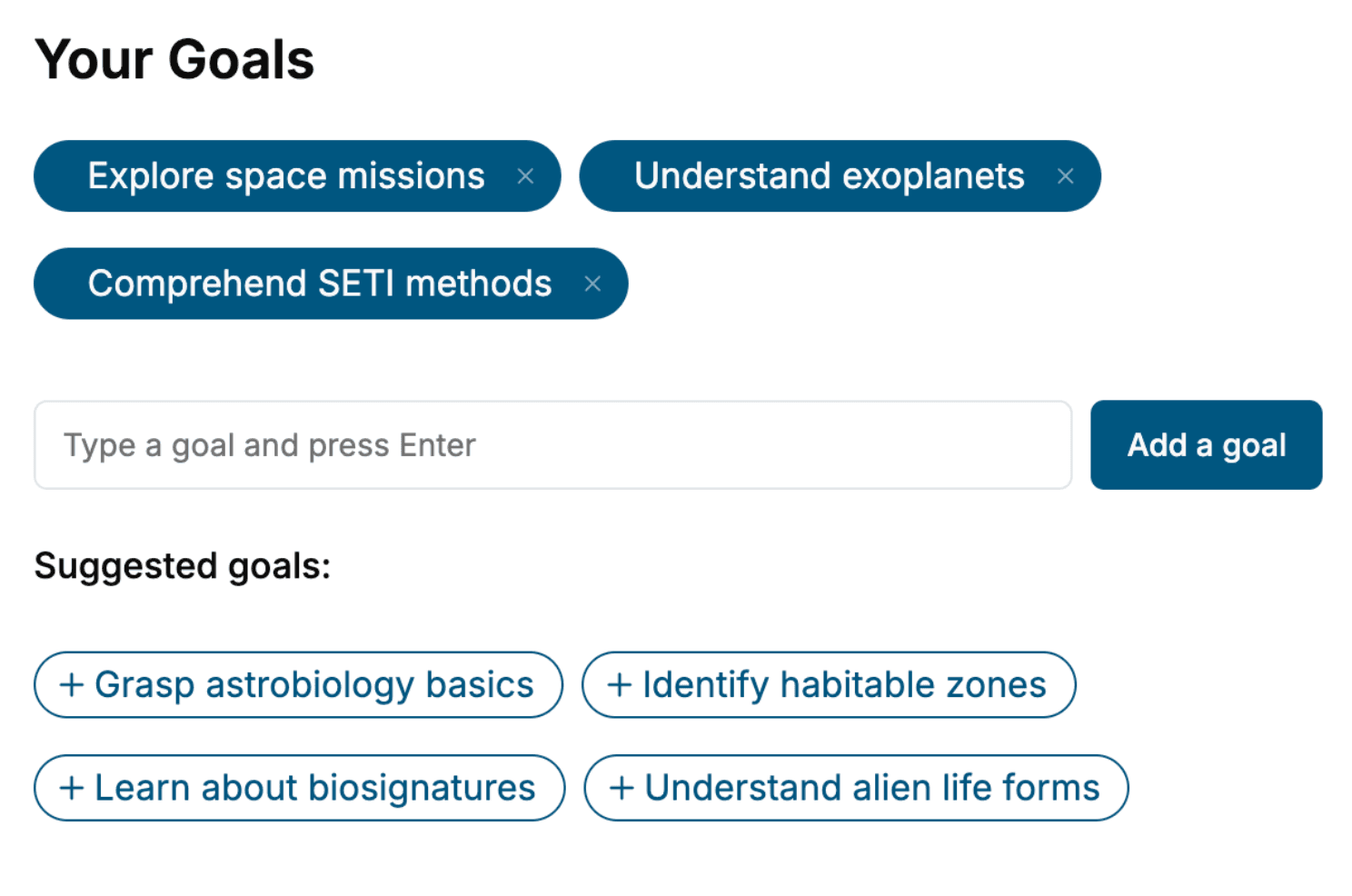
Specify your goals and choose sub-topics to include
- 3. Get your tailored book
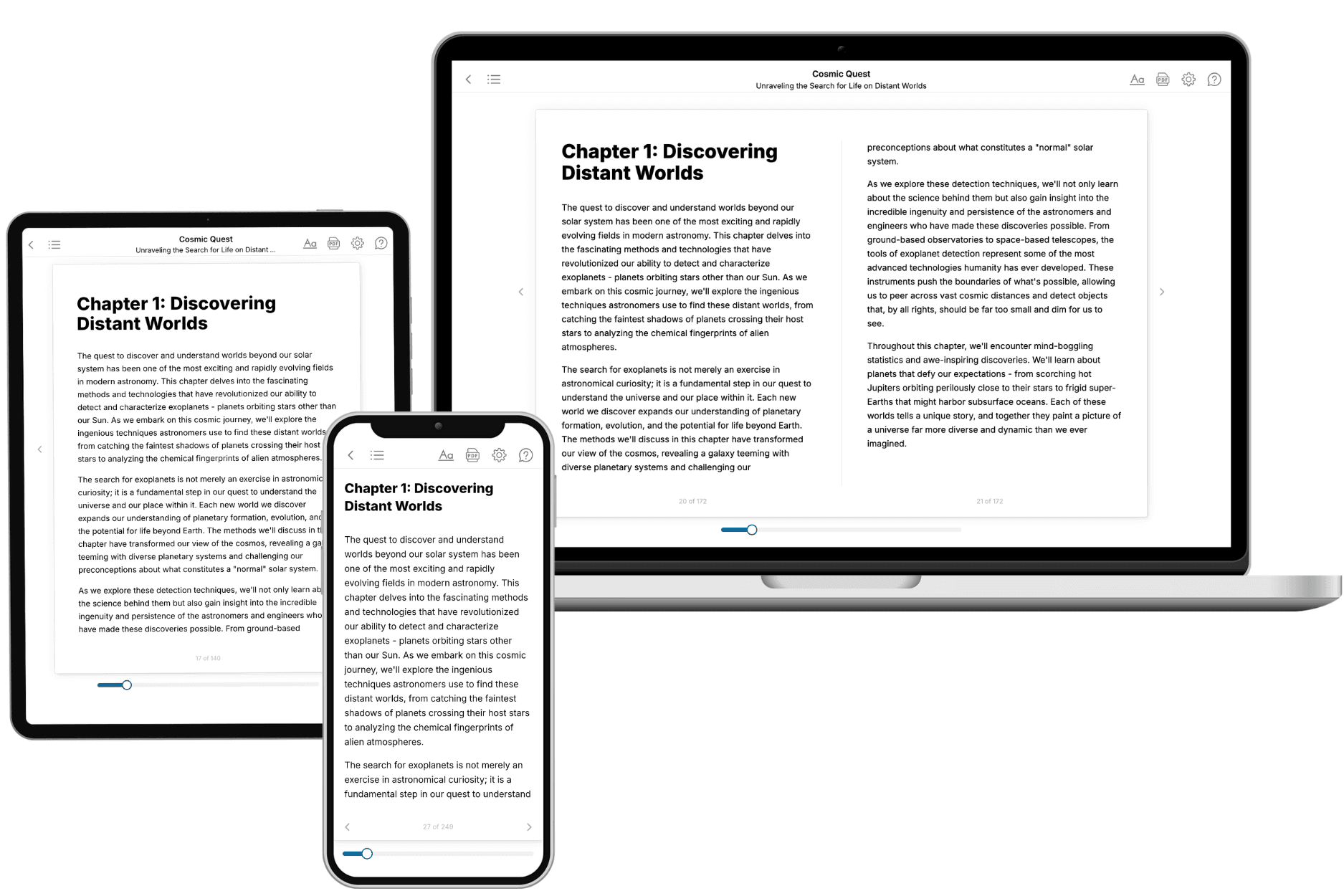
Your book is ready in 10 minutes. Read it online, download as EPUB or PDF, or send to Kindle.

Frequently asked questions
- What is TailoredRead?
TailoredRead creates complete, full-length nonfiction ebooks, written specifically for you. Tell us what you want to learn and why, and TailoredRead writes you a complete ebook on it, with charts, tables, and diagrams throughout. Read it online, on Kindle, or on any e-reader, or download it as a PDF or EPUB. Every book is written fresh the day you order it.
- How is the book tailored to me?
Before anything is written, you answer a few short questions about your goals, your background, and the topics you care about. Your book is then planned around your answers: written at your level, focused on your goals, and covering the topics you chose, instead of the one-size-fits-all book a store sells everyone.
- Will it read like generic AI content?
No. Your book isn't a chat transcript: it's planned chapter by chapter before a single word is written, told in a clear book voice, and explains ideas visually with charts, tables, and diagrams. After writing, every book goes through an editorial pass that polishes chapters so the book reads consistent from start to finish. Judge for yourself: browse thousands of sample books on our Explore Books page.
- How accurate is the content?
Our AI first checks whether your subject needs live research. Niche and fast-moving subjects are researched before writing, and the book plan and chapters are grounded in what it finds. After writing, every book goes through a quality pass that checks its facts and consistency, and researched books list their sources in a Notes section at the back.
- How long is the book?
You choose the length: Comprehensive (250-300 pages), Detailed (150-200 pages), Essential (70-100 pages), or Short (30-50 pages).
- Does the book include visuals?
Yes. Every book includes charts, tables, and diagrams: timelines, checklists, step-by-step guides, decision trees, comparison tables, matrices, and bar charts. A typical book includes dozens of these visual elements.
- Can I read it on Kindle? What formats can I download?
Yes. Every book can be read in our online reader or downloaded as a PDF or EPUB. The EPUB can be opened with Kindle, Apple Books, Kobo, and any e-reader. The Commercial and Author licenses also include an editable Word (DOCX) and Markdown download.
- How much does it cost?
About the price of a regular ebook. The exact price depends on your book's length and complexity, from $2 for the shortest books to $35 for the most comprehensive, and it's shown when you review your book, before you commit to anything. Each book is a one-time purchase, yours to keep, no subscription. Licenses that let you share, teach, or publish your book range from $35.99 to $49.99.
- Can I preview the book before purchasing?
Before you pay, you'll see what your book will cover: the title, a detailed description, the estimated length, and the complete chapter-by-chapter table of contents, so you know what you're getting before you decide. The full text itself is written after you purchase.
- How long does it take to create a book?
About 10 minutes. You can start reading the opening chapters while the rest is still being written.