Environmental History Books
Explore tailored Environmental History books created by our AI
Green Conquest
The Hidden History of Ecological Imperialism and Its Global Impact
Many believe that environmental changes are solely a product of modern industrialization. However, the roots of our current ecological challenges stretch far deeper into history. "Green Conquest" unveils the often-overlooked phenomenon of ecological imperialism, a force that has shaped our world for centuries. This book takes you on a journey through time and across continents, exploring how the movement of people, plants, animals, and microorganisms has dramatically altered ecosystems and societies. You'll discover how seemingly innocuous introductions of species to new environments have led to far-reaching consequences, from the reshaping of landscapes to the fall of civilizations. "Green Conquest" doesn't just recount history; it provides a new lens through which to view our past, present, and future. By understanding the intricate connections between human expansion, biological exchanges, and environmental change, you'll gain invaluable insights into the complex challenges we face today. This knowledge will empower you to think critically about conservation, global interactions, and the delicate balance of our planet's ecosystems.
Imagine a landscape so transformed by wind and dust that day becomes indistinguishable from night, where families lose everything they've built and must choose between staying or abandoning their ancestral homes. The Dust Bowl of the 1930s was one of America's most devastating environmental catastrophes, yet it emerged not from nature alone but from the collision of human ambition, economic desperation, and ecological fragility. This book takes you through the dramatic story of how the Great Plains became a wasteland and how millions of Americans endured unimaginable hardship. You'll discover the agricultural practices that backfired, the economic forces that trapped farmers in impossible situations, and the federal government's bold—and sometimes controversial—response. Through vivid accounts and historical analysis, you'll understand how this crisis reshaped American agriculture, sparked mass migration, and fundamentally changed how we think about land stewardship. The Dust Bowl's lessons remain vital today as we grapple with climate change and sustainable farming.
Discover how the world's great civilizations rose and fell based on their geographical circumstances, and how the places we inhabit continue to shape our identities, economies, and futures. This exploration takes you through the interconnected story of human geography—examining why certain regions became centers of power, how trade routes transformed societies, and why borders drawn on maps have sparked centuries of conflict. You'll learn how geography isn't just background scenery to human history, but an active force that determines where people settle, what they grow, how they trade, and ultimately who they become. From ancient river valleys to modern megacities, from colonial empires to contemporary climate crises, this book reveals the geographical patterns underlying human civilization. By understanding these spatial relationships and historical processes, you'll gain new insight into why the world looks the way it does today and what geographical forces will shape our collective future.
What if a single discovery could reshape an entire nation's destiny? The California Gold Rush of 1848 was far more than a treasure hunt—it was a transformative moment that redefined America's identity, economy, and territorial ambitions. This book explores how the discovery of gold in California's Sierra Nevada foothills triggered one of history's largest mass migrations, bringing fortune seekers, families, and entrepreneurs from every corner of the globe. You'll discover how this rush accelerated westward expansion, fueled debates that pushed the nation toward civil war, and created both unprecedented opportunities and devastating consequences. Through vivid accounts of miners, merchants, and the indigenous peoples whose lands were invaded, you'll understand how a few ounces of gold fundamentally altered the course of American history. Whether you're interested in economic history, westward expansion, or the human stories behind historical events, this comprehensive exploration reveals why the Gold Rush remains one of America's most consequential moments.
Discover the rich and complex world of the Sami people, Norway's indigenous inhabitants whose heritage spans thousands of years. This comprehensive guide takes you beyond surface-level knowledge to reveal the depth of Sami culture, history, and contemporary life. You'll explore how the Sami maintained distinct traditions and livelihoods across the Arctic landscape, understand the profound impact of historical assimilation policies, and learn about their remarkable cultural renaissance. From traditional reindeer herding practices to modern artistic expressions, from language revitalization efforts to political advocacy for indigenous rights, this book illuminates how the Sami continue to shape Norwegian society while preserving their unique identity. Whether you're interested in indigenous cultures, Nordic history, or human resilience, you'll gain essential insights into a people whose story challenges conventional narratives and inspires contemporary movements for cultural preservation and self-determination.
Golden Horizons
The California Gold Rush and the Shaping of 19th Century America
The year is 1848, and a glimmer in the American River is about to change the course of history. As word spreads of gold in California, you're thrust into a world of opportunity, danger, and unprecedented change. The California Gold Rush wasn't just about striking it rich – it was a catalyst that transformed a nation. Golden Horizons takes you on a riveting journey through this pivotal moment in American history. You'll walk alongside the diverse cast of characters who risked everything for a chance at fortune: the miners, the merchants, the dreamers, and the displaced. Through their stories, you'll gain a nuanced understanding of how this rush for riches reshaped the American landscape, economy, and identity. From the treacherous journey west to the boom towns that sprung up overnight, you'll experience the grit and determination that defined this era. You'll delve into the environmental impact of the rush, the technological innovations it spurred, and the complex social dynamics it created. Most importantly, you'll see how the Gold Rush's effects rippled far beyond California's borders, influencing everything from American expansion to the Civil War. Prepare to unearth the complex legacy of the California Gold Rush – a tale of ambition, perseverance, and the birth of the American Dream. This isn't just a history lesson; it's an exploration of the very forces that shaped the nation we know today.
The Sami People of Sweden
History, Culture, and Identity in the Nordic North
Discover the rich and complex world of the Sami people, Sweden's indigenous inhabitants whose presence in the Nordic North spans millennia. This comprehensive exploration takes you through the historical foundations of Sami society, from their early settlement patterns and traditional economies to their encounters with Swedish expansion and modernization. You'll learn how the Sami maintained their distinct language, customs, and way of life despite centuries of external pressures, and how contemporary communities continue to navigate the balance between honoring ancestral traditions and participating in modern Swedish society. Through detailed examination of Sami culture—including their distinctive music, art, traditional dress, and spiritual practices—you'll gain insight into what makes this indigenous culture unique. The book also addresses the contemporary challenges and achievements of Sami communities, including their ongoing efforts to secure land rights, political representation, and educational opportunities. By the end, you'll understand not just who the Sami are, but why their story matters for understanding Nordic history, indigenous resilience, and cultural diversity in Europe.
What if the map you've been looking at your entire life has been subtly distorting your understanding of the world? Maps are everywhere—on our phones, in classrooms, hanging on office walls—yet we rarely stop to ask who created them, why they made certain choices, or what those choices reveal about power and culture. This book takes you on a visual journey through centuries of cartography, exploring how maps have shaped exploration, colonization, trade, and identity. You'll discover how the Mercator projection became the global standard despite its significant distortions, learn about the sophisticated territorial systems Indigenous peoples developed, and uncover the mythical geographies that captured human imagination. From the Silk Road trade routes to forgotten cities, from urban planning visions to environmental transformations, maps tell stories that go far beyond geography. By the end, you'll see maps as cultural documents that reveal the values, fears, and ambitions of the societies that created them—and you'll never look at a map the same way again.
The Mercury Crisis
Understanding Environmental Contamination and Its Impact on Public Health
What if the air you breathe and the fish you eat contain invisible toxins that could be silently damaging your brain and nervous system? Mercury contamination represents one of the most pervasive yet underrecognized environmental health threats of our time. This comprehensive guide reveals the hidden world of mercury pollution, from its industrial sources to its devastating effects on human health and ecosystems. You'll discover how this toxic heavy metal travels through our environment, accumulating in the food chain and reaching dangerous levels in everyday foods. Through clear scientific explanations and real-world examples, you'll learn to identify exposure sources, understand the latest research on health impacts, and grasp why certain populations face disproportionate risks. The book examines the intersection of environmental science and public policy, showing how grassroots advocacy and scientific research have driven important regulatory changes. You'll gain insight into the ongoing debates surrounding mercury regulation and the challenges of balancing industrial interests with public health protection. Armed with this knowledge, you'll be better equipped to make informed decisions about your health and environment while understanding the broader implications of mercury contamination for society. This essential resource transforms complex environmental science into accessible information that empowers you to navigate our mercury-contaminated world with greater awareness and confidence.
The Progressive Era
How America Transformed in the Early 20th Century
Discover how America transformed from a nation plagued by corruption and inequality into a modern state with robust regulatory systems and expanded democratic participation. The Progressive Era fundamentally reshaped American society between roughly 1890 and 1920, introducing reforms that still govern our lives today. This book explores the movement's origins in public outrage over monopolies and political corruption, the crusading journalists who exposed wrongdoing, and the reformers who fought for change. You'll understand how Progressives tackled business monopolies, improved working conditions, protected consumers, expanded voting rights, and conserved natural resources. Through compelling stories of key figures and pivotal moments, you'll see how ordinary citizens and determined leaders challenged entrenched power and created lasting institutions. Whether you're studying American history, interested in how reform movements work, or curious about the roots of modern government regulation, this book provides essential context for understanding contemporary America and the ongoing tension between business freedom and public protection.
Gain the expertise to evaluate development projects and protect ecosystems through comprehensive Environmental Impact Assessment knowledge. Whether you're working to preserve local habitats, advocating for sustainable development, or seeking to understand how major projects affect our environment, this handbook provides the systematic approach you need to make a meaningful difference. You'll discover proven methodologies for assessing air quality, water resources, soil health, and biodiversity impacts while learning to navigate complex regulatory processes. From understanding baseline environmental conditions to developing effective mitigation strategies, each chapter builds your capacity to influence decision-making and ensure environmental protection measures are properly implemented. This comprehensive guide covers everything from stakeholder engagement and public participation processes to cumulative impact analysis and long-term monitoring strategies. You'll learn to identify potential environmental risks before they become irreversible problems, advocate effectively for alternative solutions, and hold developers accountable for their environmental commitments. Master the tools and techniques that environmental professionals use to safeguard our planet's resources while promoting responsible development that balances human needs with ecological preservation.
Related books you may like:
You're about to supercharge your animal advocacy efforts and nonprofit management skills with the power of AI. This groundbreaking guide is tailored specifically for leaders in the animal rights movement who are ready to harness cutting-edge technology to make a bigger impact. Discover how to leverage AI tools to streamline your operations, enhance your strategic planning, and amplify your advocacy campaigns. You'll learn practical techniques for automating administrative tasks, optimizing your workflow, and making data-driven decisions that will take your organization to the next level. From improving time management and task delegation to enhancing donor engagement and project tracking, this book offers a comprehensive roadmap for integrating AI into every aspect of your work. You'll gain insights into AI-driven research methods, problem-solving techniques, and productivity metrics that will revolutionize the way you approach animal advocacy.
Discover how air sign energy shapes your thinking, communication style, and approach to relationships. Whether you have a Gemini, Libra, or Aquarius placement in your birth chart, this guide reveals the intellectual and social gifts these signs bring—along with the blind spots worth understanding. You'll learn why air signs are natural communicators and idea-generators, how each sign expresses itself uniquely, and how your specific air sign placements influence your personality across different life areas. Through practical insights and real-world examples, you'll recognize air sign patterns in yourself and others, harness your natural strengths in connection and innovation, and navigate the challenges of overthinking and emotional detachment. Whether you're exploring your Sun, Moon, Rising, or other planetary placements, this book provides the clarity you need to work with your air sign energy authentically and effectively.
What if you could resolve years of trauma in just a handful of therapy sessions instead of months or years of traditional talk therapy? Accelerated Resolution Therapy (ART) offers a scientifically-grounded approach that harnesses your brain's natural healing capacity to process traumatic memories and emotional distress rapidly. This book demystifies how ART works at the neurological level, explains why it's so effective for conditions like PTSD, anxiety, and phobias, and explores how it differs from conventional therapeutic approaches. Whether you're a mental health professional considering adding ART to your practice, someone exploring treatment options for yourself or a loved one, or simply curious about innovative psychological interventions, this guide provides practical insights into one of the most promising developments in modern therapy. Discover how guided imagery and eye movement can facilitate profound emotional healing, what the research shows about its effectiveness, and whether ART might be the breakthrough approach you've been seeking.
The assumption that political parties are natural, inevitable, or even desirable features of democracy is surprisingly recent. For most of Western political history, the most sophisticated thinkers viewed organized factions as corrupting forces that distorted the pursuit of the common good. This book traces the genealogy of anti-party political thought from Plato's critique of democratic factionalism through contemporary populist movements, examining how philosophers, statesmen, and theorists have conceptualized the dangers of partisanship and imagined alternatives. You'll encounter Rousseau's vision of a general will transcending faction, the Federalist Papers' constitutional anxiety about party machinery, Tocqueville's ambivalent analysis of American partisanship, and the radical rejection of parties by socialist and anarchist movements. Rather than treating anti-party sentiment as mere nostalgia or populist demagoguery, this analysis reveals it as a coherent intellectual tradition grappling with enduring tensions between democratic participation and organized political competition. By understanding how different historical periods and ideological traditions have confronted the problem of faction, you gain critical perspective on contemporary debates about party reform, populism, and democratic alternatives.
Many people believe that behavior is determined either by our genetics or by direct rewards and punishments we experience. However, Albert Bandura's groundbreaking research revealed a more nuanced truth: we learn by watching others. This book explores the life and work of one of psychology's most influential figures and the revolutionary theory that transformed our understanding of human behavior. You'll discover how Bandura's concept of self-efficacy explains why some people persevere through challenges while others give up, how observational learning shapes everything from aggression to prosocial behavior, and why the environment, our thoughts, and our actions are constantly influencing each other. Whether you're an educator seeking to improve student outcomes, a professional interested in behavior change, or simply curious about the science of learning, this comprehensive guide illuminates the principles that govern human development and provides practical insights into how these theories apply to everyday life.
Create an Environmental History Book Tailored to You
Create an AI-crafted book tailored to your goals, interests, and background






Benefits of AI-tailored books
- Read one book, not ten:
- all the Environmental History knowledge you need, gathered into a single book.
- Save days of learning:
- tell us your goals, choose your topics, and the whole book is built around them.
- Learn effortlessly:
- Environmental History book written for your specific background and expertise.
- Understand at a glance:
- includes charts, tables, timelines, checklists, decision trees, and more.
- Stay current:
- written the day you order it, not years ago.
- Trust what you read:
- every book is checked for accuracy, with real research when your subject needs it.
Create your unique book in 3 steps
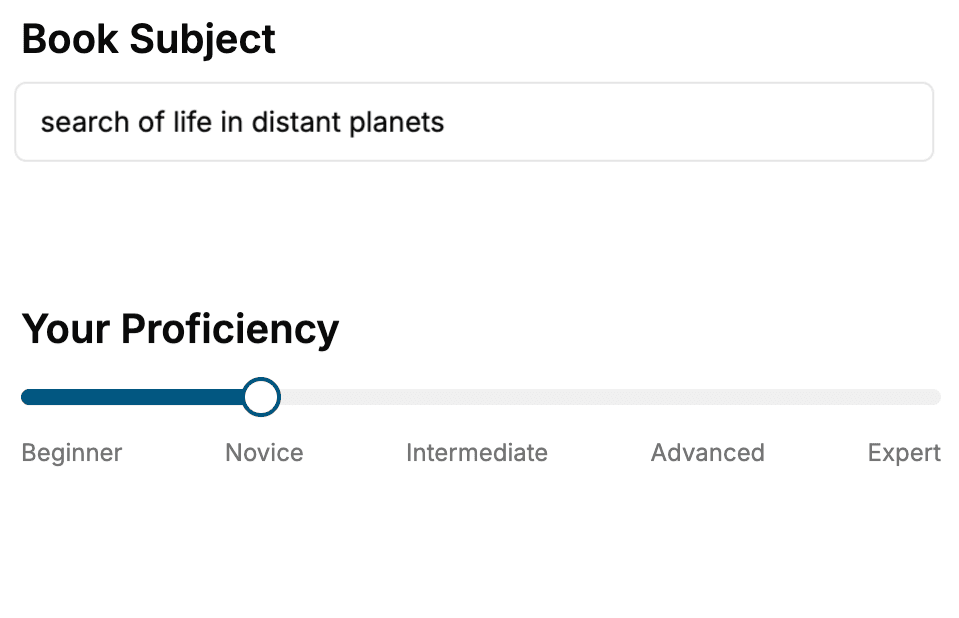
- 1. Select your focus
Select the focus of your Environmental History book and share your background
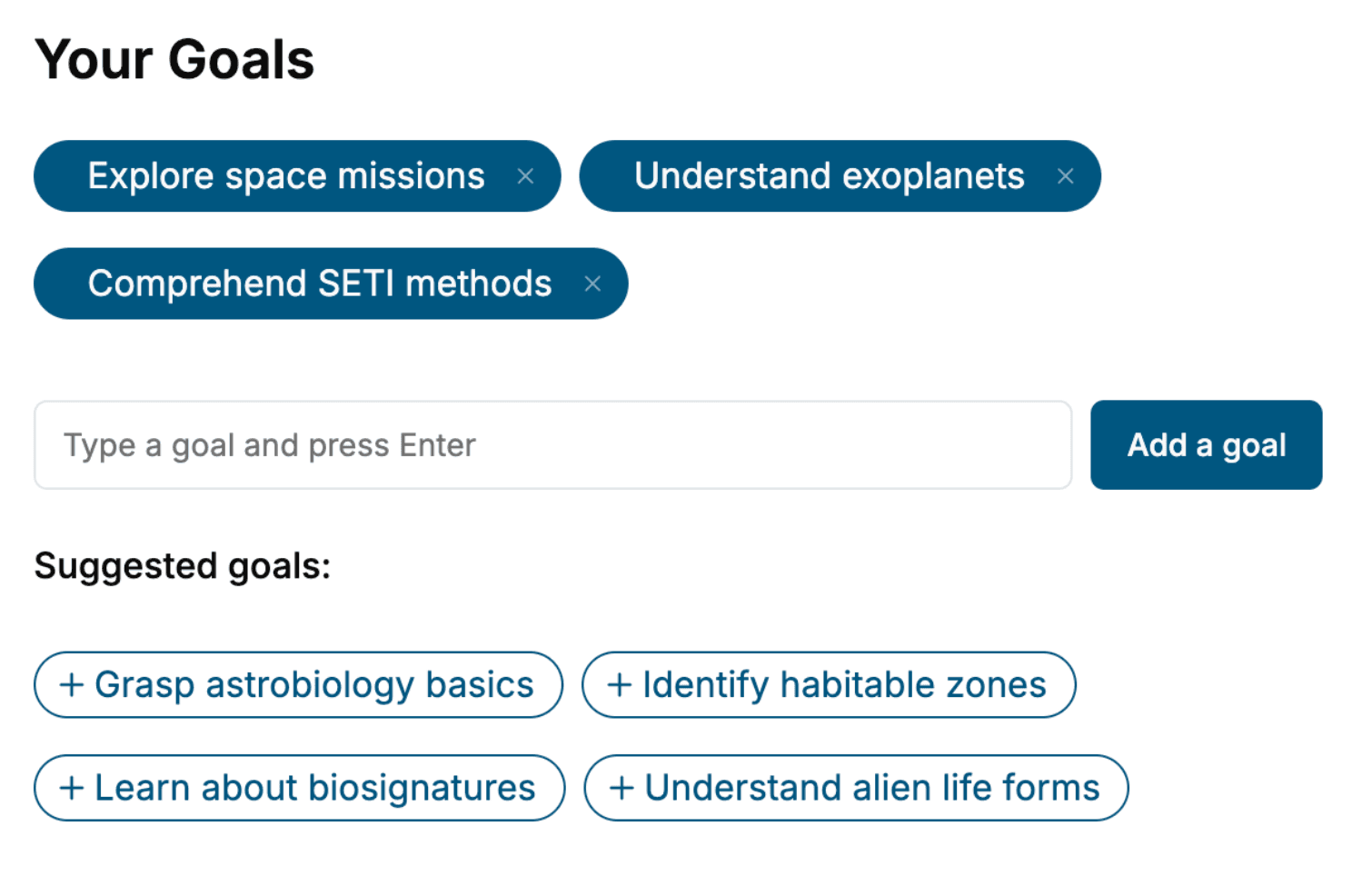
- 2. Personalize your book
Specify your goals and choose sub-topics to include
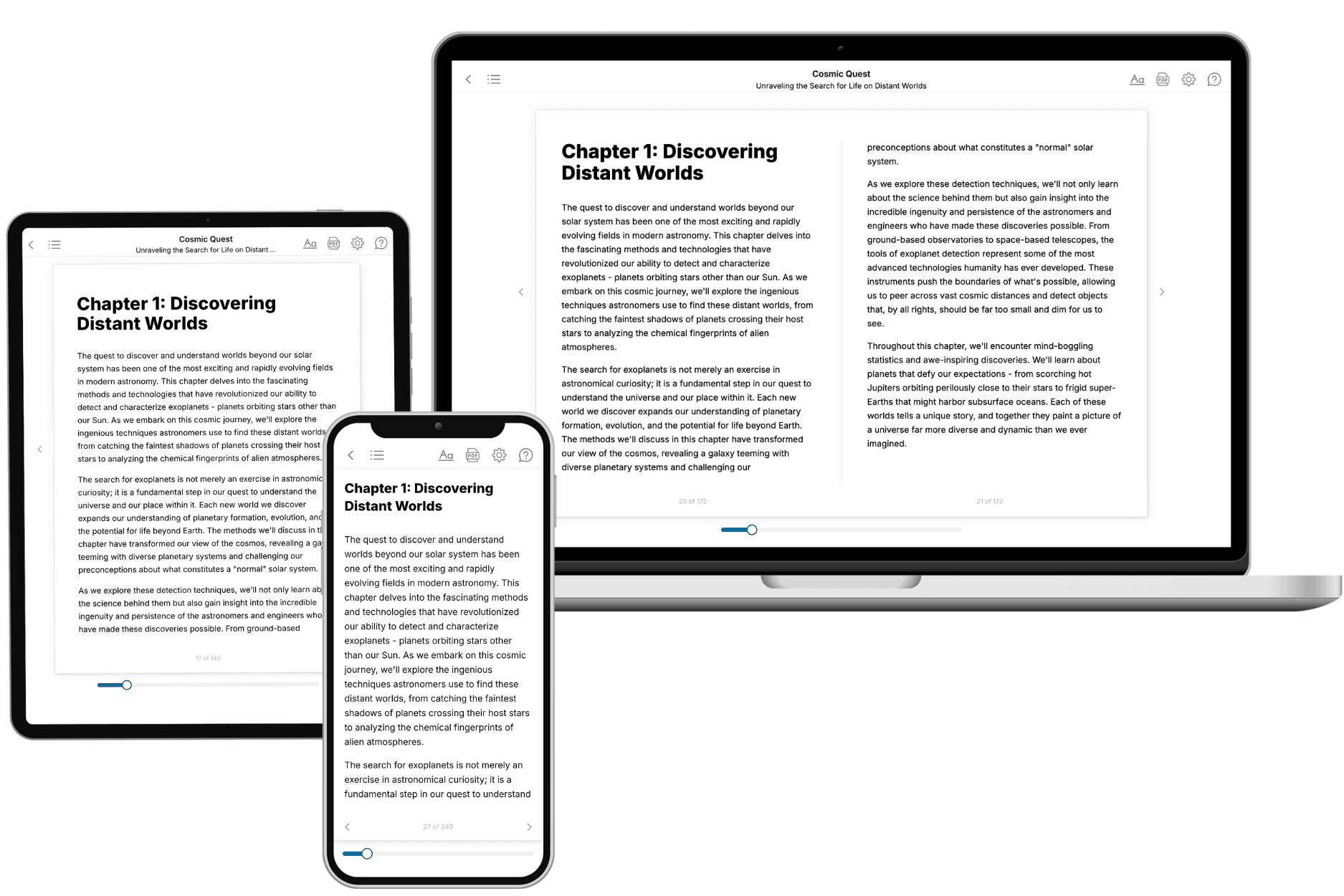
- 3. Get your tailored book
Your book is ready in 10 minutes. Read it online, download as EPUB or PDF, or send to Kindle.
Frequently asked questions
- What is TailoredRead?
TailoredRead creates complete, full-length nonfiction ebooks, written specifically for you. Tell us what you want to learn and why, and TailoredRead writes you a complete ebook on it, with charts, tables, and diagrams throughout. Read it online, on Kindle, or on any e-reader, or download it as a PDF or EPUB. Every book is written fresh the day you order it.
- How is the book tailored to me?
Before anything is written, you answer a few short questions about your goals, your background, and the topics you care about. Your book is then planned around your answers: written at your level, focused on your goals, and covering the topics you chose, instead of the one-size-fits-all book a store sells everyone.
- Will it read like generic AI content?
No. Your book isn't a chat transcript: it's planned chapter by chapter before a single word is written, told in a clear book voice, and explains ideas visually with charts, tables, and diagrams. After writing, every book goes through an editorial pass that polishes chapters so the book reads consistent from start to finish. Judge for yourself: browse thousands of sample books on our Explore Books page.
- How accurate is the content?
Our AI first checks whether your subject needs live research. Niche and fast-moving subjects are researched before writing, and the book plan and chapters are grounded in what it finds. After writing, every book goes through a quality pass that checks its facts and consistency, and researched books list their sources in a Notes section at the back.
- How long is the book?
You choose the length: Comprehensive (250-300 pages), Detailed (150-200 pages), Essential (70-100 pages), or Short (30-50 pages).
- Does the book include visuals?
Yes. Every book includes charts, tables, and diagrams: timelines, checklists, step-by-step guides, decision trees, comparison tables, matrices, and bar charts. A typical book includes dozens of these visual elements.
- Can I read it on Kindle? What formats can I download?
Yes. Every book can be read in our online reader or downloaded as a PDF or EPUB. The EPUB can be opened with Kindle, Apple Books, Kobo, and any e-reader. The Commercial and Author licenses also include an editable Word (DOCX) and Markdown download.
- How much does it cost?
About the price of a regular ebook. The exact price depends on your book's length and complexity, from $2 for the shortest books to $35 for the most comprehensive, and it's shown when you review your book, before you commit to anything. Each book is a one-time purchase, yours to keep, no subscription. Licenses that let you share, teach, or publish your book range from $35.99 to $49.99.
- Can I preview the book before purchasing?
Before you pay, you'll see what your book will cover: the title, a detailed description, the estimated length, and the complete chapter-by-chapter table of contents, so you know what you're getting before you decide. The full text itself is written after you purchase.
- How long does it take to create a book?
About 10 minutes. You can start reading the opening chapters while the rest is still being written.