Exploration History Books
Explore tailored Exploration History books created by our AI
What if everything you learned about Columbus in school was incomplete? The story of Christopher Columbus has been told and retold so many times that myth has overshadowed history. This book cuts through the romanticized narratives and popular misconceptions to reveal the real Columbus—a complex figure whose ambitions, calculations, and decisions set in motion events that fundamentally altered human civilization. You'll discover how Columbus's four voyages were shaped by the technology, politics, and knowledge of his era, why his treatment of indigenous peoples reflected the colonial mindset of the time, and how his legacy continues to spark debate among historians. By examining primary sources, archaeological evidence, and competing historical interpretations, you'll gain a deeper understanding of how one man's expeditions became a turning point in world history—for better and worse. This is history as it actually happened, not as legend has painted it.
Voyages of Discovery
Understanding the 16th Century Age of Exploration and Its Global Impact
Many assume the Age of Exploration was simply about brave adventurers seeking new lands. In reality, it was a calculated convergence of economic desperation, technological innovation, religious fervor, and geopolitical competition that transformed the entire world. This book examines the 16th century's greatest voyages and explorers—from Columbus to Magellan—revealing the complex motivations behind their journeys and the far-reaching consequences that followed. You'll discover how advances in navigation technology made oceanic exploration possible, why European powers competed so fiercely for trade routes, and how these voyages created the interconnected global system we inhabit today. More importantly, you'll understand the human cost of exploration: the devastating impact on indigenous populations, the establishment of colonial systems, and the long-term power imbalances that still shape our world. This is not a romanticized tale of discovery, but a nuanced historical account that helps you grasp how the 16th century fundamentally altered human civilization.
The Spanish Explorers
How Spain Shaped the Modern World Through Discovery and Conquest
Discover how a small Iberian kingdom became a global superpower that reshaped the entire world. This book traces Spain's remarkable journey from medieval Christian kingdoms fighting the Reconquista to the master of vast overseas empires spanning continents. You'll explore the bold explorers who sailed into unknown waters, the political intrigue that funded their voyages, and the technological innovations that made exploration possible. More importantly, you'll understand the profound and lasting consequences of Spanish expansion—from the transformation of indigenous societies to the creation of new trade networks that connected Europe, Africa, Asia, and the Americas. This is not simply a story of heroic discovery, but a nuanced examination of ambition, faith, commerce, and cultural collision that fundamentally altered human civilization and continues to shape our world today.
Imagine standing at the edge of an unmapped continent, holding a compass and a dream of discovery. The Lewis and Clark Expedition represents one of history's greatest adventures—a three-year journey that transformed American geography, science, and national identity. This book takes you beyond the romanticized tales to reveal the true story: the meticulous planning by President Jefferson, the incredible hardships faced by the Corps of Discovery, and the crucial contributions of Native American guides and interpreters. You'll discover how this expedition documented thousands of previously unknown species, gathered geographical intelligence that shaped a nation's expansion, and forever changed our understanding of the American West. Through detailed accounts of daily challenges, scientific discoveries, and complex cultural encounters, you'll gain a deeper appreciation for how one expedition influenced American exploration, settlement, and identity. Whether you're a history buff seeking comprehensive knowledge or simply curious about America's frontier heritage, this exploration reveals why the Lewis and Clark Expedition remains one of the most significant undertakings in American history.
What if the map you've been looking at your entire life has been subtly distorting your understanding of the world? Maps are everywhere—on our phones, in classrooms, hanging on office walls—yet we rarely stop to ask who created them, why they made certain choices, or what those choices reveal about power and culture. This book takes you on a visual journey through centuries of cartography, exploring how maps have shaped exploration, colonization, trade, and identity. You'll discover how the Mercator projection became the global standard despite its significant distortions, learn about the sophisticated territorial systems Indigenous peoples developed, and uncover the mythical geographies that captured human imagination. From the Silk Road trade routes to forgotten cities, from urban planning visions to environmental transformations, maps tell stories that go far beyond geography. By the end, you'll see maps as cultural documents that reveal the values, fears, and ambitions of the societies that created them—and you'll never look at a map the same way again.
Discover the remarkable true story of Sacagawea, the Shoshone woman whose intelligence, courage, and expertise proved indispensable to one of America's greatest expeditions. You'll gain a deeper appreciation for how this remarkable individual navigated impossible circumstances—from her capture as a young girl to her pivotal role guiding the Lewis and Clark Expedition across uncharted territory. This biography moves beyond the simplified narratives to reveal Sacagawea as a skilled diplomat and strategist whose contributions shaped the course of American exploration. Through carefully researched accounts and historical context, you'll understand how her knowledge of languages, geography, and tribal relationships transformed the expedition's success. You'll also explore the complexities of her life after the journey and examine why her story has been both celebrated and obscured in American history. This book honors Sacagawea's agency and legacy while acknowledging the gaps in historical records, offering a more complete picture of a woman whose impact resonates through centuries.
Frozen Frontiers
The Untold Story of Operation Highjump and America's Antarctic Expedition
Imagine standing on the icy expanse of Antarctica, surrounded by a fleet of ships and aircraft, part of one of the most ambitious polar expeditions in history. This is the world of Operation Highjump, a fascinating yet often overlooked chapter in the annals of Arctic and Antarctic exploration. "Frozen Frontiers: The Untold Story of Operation Highjump and America's Antarctic Expedition" takes you on an exhilarating journey to the bottom of the world. You'll discover the intricate planning, cutting-edge technology, and sheer human determination that went into this massive naval operation in 1946-1947. From the geopolitical context of the early Cold War to the scientific advancements made during the expedition, this book offers a multifaceted exploration of Operation Highjump. You'll gain insights into the challenges faced by the expedition members, the groundbreaking mapping techniques employed, and the lasting impact of this mission on our understanding of the polar regions. Whether you're a history buff, a polar exploration enthusiast, or simply curious about one of the most ambitious expeditions to the Antarctic, "Frozen Frontiers" provides a compelling narrative that brings this crucial moment in polar history to life.
The Age of Encounter
How European Colonization Reshaped the Americas in the 17th Century
Discover how the 17th century became the pivotal moment when European powers fundamentally transformed the Americas. This comprehensive exploration takes you through the motivations that drove colonization—from the pursuit of wealth and religious conversion to geopolitical competition among European nations. You'll examine how different colonial powers established distinct systems in North America, Central America, and South America, each shaped by local geography and resources. The book reveals the complex experiences of indigenous populations who faced unprecedented challenges while developing strategies of resistance and adaptation. Through detailed analysis of key events, figures, and systems, you'll understand how colonization created lasting demographic, economic, and social changes. This is not a simple story of conquest, but rather a nuanced examination of how two worlds collided, adapted, and ultimately created entirely new societies that blended European and indigenous elements in ways that continue to influence the Americas today.
Clash of Empires
The Conquest of Mexico and Its Role in Shaping the New World
Imagine standing at the crossroads of two great civilizations, where ambition, culture, and power collide in a struggle that will reshape the Americas forever. The Conquest of Mexico was not just a military campaign, but a pivotal moment that altered the course of world history. In "Clash of Empires: The Conquest of Mexico and Its Role in Shaping the New World," you'll be transported to the heart of this monumental conflict. From the opulent halls of Montezuma's palace to the strategic mind of Hernán Cortés, you'll witness the complex interplay of cultures, technologies, and ideologies that fueled this world-changing event. This book goes beyond the surface-level narrative, delving deep into the societal structures, military strategies, and personal motivations that drove both the Aztecs and the Spanish. You'll gain a nuanced understanding of how this conquest set the stage for centuries of cultural exchange, conflict, and eventual independence movements across the Americas. Through vivid storytelling and meticulous research, "Clash of Empires" brings to life the human drama behind the historical facts. You'll come away with a profound appreciation for the lasting impact of this pivotal moment in history, and how it continues to shape our world today.
What if a single discovery could reshape an entire nation's destiny? The California Gold Rush of 1848 was far more than a treasure hunt—it was a transformative moment that redefined America's identity, economy, and territorial ambitions. This book explores how the discovery of gold in California's Sierra Nevada foothills triggered one of history's largest mass migrations, bringing fortune seekers, families, and entrepreneurs from every corner of the globe. You'll discover how this rush accelerated westward expansion, fueled debates that pushed the nation toward civil war, and created both unprecedented opportunities and devastating consequences. Through vivid accounts of miners, merchants, and the indigenous peoples whose lands were invaded, you'll understand how a few ounces of gold fundamentally altered the course of American history. Whether you're interested in economic history, westward expansion, or the human stories behind historical events, this comprehensive exploration reveals why the Gold Rush remains one of America's most consequential moments.
The Golden Reign
Understanding the Elizabethan Era That Shaped Modern England
The complexity of the Elizabethan Era often overwhelms those trying to understand how a single monarch's reign could so dramatically transform a nation. This comprehensive guide cuts through the confusion by presenting the period's most significant developments in clear, interconnected themes that reveal the true scope of Elizabeth I's impact on English society. You'll discover how the Virgin Queen's 45-year reign created the perfect conditions for an unprecedented cultural flowering, from Shakespeare's revolutionary plays to Drake's circumnavigation of the globe. The book examines the delicate balance Elizabeth maintained between religious factions, her masterful use of marriage negotiations as diplomatic tools, and the economic policies that funded England's golden age of exploration and artistic achievement. Through detailed analysis of court life, popular culture, and social transformation, you'll understand how Elizabethan England evolved from a relatively minor European power into a confident nation ready to challenge Spanish dominance. The book reveals the interconnections between political stability, cultural innovation, and economic expansion that made this era so remarkable. By the end, you'll have a complete picture of how the Elizabethan Era's achievements in literature, exploration, governance, and social development created the foundation for England's later emergence as a global power, making this period essential to understanding both English and world history.
Many Americans view the Louisiana Purchase as a straightforward triumph of American expansion—a simple land deal that doubled the nation's size. Yet this perspective misses the complex political intrigue, constitutional questions, and human consequences that made this 1803 transaction far more consequential than its price tag suggests. This book reveals how a desperate French government, American diplomatic skill, and geopolitical necessity converged to create one of history's most transformative real estate transactions. You'll discover how Jefferson grappled with constitutional concerns about his own authority, how the purchase reshaped federal power, and how it set the stage for westward expansion that would define American identity for generations. Beyond the diplomatic narrative, you'll explore the profound impact on Native American populations, the slavery debates it ignited, and the scientific expeditions it enabled. Whether you're a history student, educator, or curious citizen, this comprehensive examination reveals why the Louisiana Purchase remains central to understanding American development and the tensions that continue to shape the nation today.
Imagine standing at a bustling marketplace in ancient Samarkand, where merchants from China, Persia, India, and beyond gather to exchange not just goods, but ideas, religions, and technologies. This is the world of the Silk Road—a vast network of trade routes that connected civilizations across continents for over fifteen centuries. This book takes you on a comprehensive journey through these legendary pathways, revealing how they transformed global commerce and culture. You'll discover the merchants and explorers who risked everything to traverse deserts and mountains, the cities that flourished as crossroads of civilization, and the extraordinary exchange of goods and ideas that shaped our world. From the origins of these routes during the Han Dynasty to their eventual decline, you'll understand how the Silk Road wasn't merely about commerce—it was about human connection, cultural fusion, and the relentless drive to bridge distant worlds. Whether you're a history enthusiast or simply curious about how our interconnected world came to be, this exploration reveals the profound legacy of these ancient pathways.
The French and Indian War
A Comprehensive Guide to North America's Pivotal Conflict
Discover how a regional conflict in the American wilderness became a global war that redrew the map of North America and set the stage for American independence. The French and Indian War (1754-1763) was far more than a colonial skirmish—it was the pivotal moment when European powers battled for continental dominance, Indigenous nations fought to preserve their sovereignty, and the American colonies began their transformation into a unified nation. This comprehensive guide takes you through the complex causes rooted in colonial competition, the dramatic military campaigns from the frontier to Europe, and the war's profound consequences. You'll meet the ambitious generals, resourceful Indigenous leaders, and determined colonists who shaped this conflict. More importantly, you'll understand how this war's outcome—British victory and French defeat—directly led to the taxation disputes and colonial grievances that sparked the American Revolution just thirteen years later. Whether you're a history student, a curious learner, or someone seeking to understand America's foundational conflicts, this book provides the clarity and context you need.
Fallen Timbers
The Battle That Shaped the American Frontier
Discover how a single day of combat in 1794 reshaped the entire American frontier and determined the fate of Native American nations for generations to come. The Battle of Fallen Timbers stands as one of the most consequential yet underappreciated conflicts in American history. This comprehensive examination takes you beyond the basic facts to explore the complex political, military, and cultural forces that converged in the Ohio Valley. You'll understand the strategic brilliance of both the American commanders and the Native American confederacies, the critical role of British diplomacy, and how this battle's outcome triggered the westward expansion that would define the young nation. Through detailed analysis of the military tactics, the personalities involved, and the far-reaching consequences, you'll gain a complete picture of why this battle mattered then—and why it still matters today for understanding American history and Native American sovereignty.
The Silk Road Maps
Tracing Trade Routes, Cultures, and Connections Across Asia
Most people think of the Silk Road as a single, well-defined trade route—but the reality is far more complex and fascinating. The Silk Road was actually a vast network of interconnected pathways that evolved over centuries, shaped by geography, politics, and commerce. This book uses detailed maps and clear explanations to guide you through the intricate web of routes that connected China, Central Asia, the Middle East, and beyond. You'll discover how mountains and deserts determined where merchants traveled, which cities became crucial trading hubs, and how goods, ideas, and religions flowed across continents. Whether you're a history enthusiast, geography student, or simply curious about how ancient trade shaped our world, these maps and narratives reveal the strategic brilliance of merchants who navigated one of history's most important commercial networks. Explore the routes that changed civilizations.
The Fall of Constantinople
How the Ottoman Siege of 1453 Reshaped the Medieval World
What if the last great city of the Roman Empire had never fallen? The conquest of Constantinople in 1453 stands as one of history's most transformative moments—a collision between empires, religions, and eras that fundamentally reshaped the world. This book takes you beyond the dramatic siege itself to explore the centuries of decline, political intrigue, and military innovation that made the Ottoman victory possible. You'll discover how the city's fall triggered the Renaissance, redirected global trade, and established the Ottoman Empire as a dominant world power. Through vivid accounts of the final defenders, the brilliant Ottoman commander Mehmed II, and the desperate diplomatic efforts to save a dying empire, you'll understand not just what happened, but why it mattered. This is the story of how one city's fall became the catalyst for the modern world.
Picture yourself standing at the edge of uncharted territory, driven by an unwavering sense of purpose and a burning desire to make a difference in the world. This is the world of David Livingstone, Scotland's most renowned explorer and a man whose legacy continues to inspire generations. In "David Livingstone: Explorer, Missionary, Visionary," you'll be transported to the heart of 19th-century Africa, where Livingstone's extraordinary adventures unfold. From his humble beginnings in Blantyre, Scotland, to his groundbreaking expeditions across the African continent, this book offers a vivid and intimate portrait of a man who defied conventions and pushed the boundaries of human achievement. Discover how Livingstone's unique blend of scientific curiosity, religious conviction, and humanitarian spirit shaped his approach to exploration and his interactions with the people he encountered. You'll gain insight into his tireless efforts to map uncharted territories, his pioneering work in tropical medicine, and his passionate advocacy against the slave trade. Through carefully researched accounts and compelling storytelling, this book brings to life the triumphs, challenges, and personal sacrifices that defined Livingstone's remarkable career. Whether you're a history enthusiast, an adventure seeker, or simply curious about one of Scotland's most influential figures, this book offers a fresh and nuanced perspective on David Livingstone's enduring impact on Africa and the world. Prepare to be inspired by a life lived with purpose, courage, and an unwavering commitment to making the world a better place.
Imagine writing Caribbean fiction that resonates with historical authenticity—where your characters inhabit a world you truly understand, where the landscape carries the weight of real history, and where cultural details ring true to readers who know this region intimately. This book provides the historical foundation you need. You'll explore the Caribbean from the sophisticated agricultural systems of the Taíno peoples through the brutal machinery of colonialism, the explosive energy of revolutionary movements, and the complex negotiations of postcolonial nations. You'll discover how oral traditions preserved history when written records were controlled by colonizers, how religious syncretism became an act of cultural resistance, and how trade networks made the Caribbean central—not peripheral—to global history. Each chapter connects historical events and themes directly to the creative challenges fiction writers face: developing authentic characters, building believable settings, understanding cultural context, and avoiding stereotypes. Whether you're crafting a novel set in 1492, during the Haitian Revolution, or in contemporary Caribbean society, this book equips you with the knowledge to write with confidence and integrity.
The D-Day invasion stands as one of history's most consequential military operations, yet many people understand only its surface details. Without a deeper grasp of the planning, strategy, and human experiences behind June 6, 1944, you miss the full scope of how this single day reshaped the world. This book provides the comprehensive account you need. You'll discover how Allied commanders orchestrated the largest amphibious assault ever attempted, how elaborate deception campaigns fooled Nazi leadership, and how ordinary soldiers faced extraordinary challenges on the beaches of Normandy. Through detailed analysis of the military strategy, technological innovations, and personal accounts, you'll understand why D-Day succeeded against formidable odds and how it became the turning point that led to Nazi Germany's defeat. Whether you're a history student, military enthusiast, or simply curious about this pivotal moment, this book delivers the insights and context that transform D-Day from a historical date into a vivid, comprehensible chapter of human history.
The Renaissance Unveiled
How Art, Ideas, and Innovation Transformed Europe
Many people struggle to understand why the Renaissance matters or how it differs from the Middle Ages that preceded it. This book cuts through the confusion by revealing how a deliberate revival of classical learning sparked one of history's most transformative periods. You'll discover how Renaissance thinkers, artists, and innovators fundamentally changed European society—from the revolutionary techniques that made paintings come alive to the scientific methods that challenged centuries of accepted wisdom. Through compelling stories of patrons, artists, and scholars, you'll see how the printing press spread ideas across continents, how merchant cities became cultural powerhouses, and how the period's emphasis on human potential reshaped Western civilization. By the end, you'll understand not just what happened during the Renaissance, but why it remains essential to understanding the modern world we inhabit today.
Related books you may like:
Embark on a captivating journey through one of the most pivotal moments in British history with "1066: The Year That Changed England." This meticulously researched account of the Battle of Hastings offers you a front-row seat to the events that reshaped the course of European history. Delve into the complex web of political intrigue, military strategy, and cultural shifts that led to this momentous clash. You'll gain a deep understanding of the key players - William the Conqueror, Harold Godwinson, and Harald Hardrada - and the high-stakes game of thrones they played. Through vivid storytelling and expert analysis, you'll experience the tension of the battlefield, the clash of Anglo-Saxon and Norman cultures, and the far-reaching consequences of William's victory. Discover how this single event transformed England's language, laws, and social structure, leaving an indelible mark on the nation's identity. Whether you're a history buff or simply curious about this transformative period, this book offers fresh insights and a comprehensive overview that will enrich your understanding of medieval Europe and the foundations of modern Britain.
Many assume the French Revolution ended in 1799 with Napoleon's rise to power. In reality, the struggle for democracy and social justice continued to convulse France throughout the nineteenth century. The 1848 Revolution represents a pivotal moment when ordinary people—workers, students, intellectuals, and the poor—rose up against an entrenched monarchy and demanded fundamental change. This book explores the dramatic events of that revolutionary year, from the February uprising that toppled King Louis-Philippe to the violent June Days that exposed the revolution's internal contradictions. You'll discover how economic crisis, industrial transformation, and competing political ideologies collided to reshape not just France, but the entire European continent. Through vivid narratives and careful analysis, this account reveals why 1848 mattered then and why its lessons remain relevant today for understanding how societies change, how revolutions succeed and fail, and how the pursuit of liberty continues to define our world.
Discover how a single year transformed global history and set the stage for the modern world. The Russian Revolutions of 1917 were pivotal moments that toppled an empire, established the first communist state, and triggered consequences that rippled across the entire 20th century. This book walks you through the complex web of causes—from centuries of imperial rule and industrialization to the devastating impact of World War I—that made revolution possible. You'll explore the dramatic events of both the February and October revolutions, meet the key figures who shaped these upheavals, and understand how ordinary Russians experienced these extraordinary times. Beyond the headlines and heroic narratives, you'll examine the real economic hardships, military failures, and social tensions that drove millions to support radical change. This comprehensive account reveals why 1917 matters today, how it reshaped global politics and ideology, and what it teaches us about revolution, power, and historical change. Whether you're a history student, curious learner, or someone seeking to understand the roots of modern geopolitics, this book provides the context and clarity needed to grasp one of history's most consequential moments.
Discover the pivotal events and complex forces that shaped one of the 20th century's most consequential moments. This comprehensive examination takes you through the centuries of Jewish diaspora, the rise of Zionism, and the dramatic final years leading to Israel's establishment in 1948. You'll understand how the Holocaust transformed international politics, why the British Mandate created irreconcilable tensions, and how the UN Partition Plan became a flashpoint for conflict. Through careful analysis of key figures, military campaigns, and political negotiations, you'll gain insight into how a new nation emerged from centuries of displacement and persecution—while grappling with the displacement of another people. This book presents the historical evidence, competing narratives, and lasting consequences of 1948, enabling you to understand not just what happened, but why it matters for the modern Middle East and global politics today.
Most people think the Norman Conquest was simply a military victory that happened in a single day. In reality, 1066 marked the beginning of a decades-long transformation that would fundamentally reshape English society, language, and identity. This book reveals how William the Conqueror's invasion wasn't inevitable—it emerged from a disputed succession, political intrigue, and the ambitions of ambitious leaders. Beyond the famous Battle of Hastings, you'll discover how Norman rulers consolidated power through feudalism, how the French language permanently altered English, and how a new ruling class gradually integrated with the existing population. Through vivid storytelling and careful analysis, you'll understand how this single conquest rippled across centuries, influencing everything from English law and governance to the very words we speak today. Whether you're exploring medieval history for the first time or deepening your existing knowledge, this book illuminates why 1066 remains one of history's most consequential moments—and how its effects continue to shape our world.
Create an Exploration History Book Tailored to You
Create an AI-crafted book tailored to your goals, interests, and background






Benefits of AI-tailored books
- Read one book, not ten:
- all the Exploration History knowledge you need, gathered into a single book.
- Save days of learning:
- tell us your goals, choose your topics, and the whole book is built around them.
- Learn effortlessly:
- Exploration History book written for your specific background and expertise.
- Understand at a glance:
- includes charts, tables, timelines, checklists, decision trees, and more.
- Stay current:
- written the day you order it, not years ago.
- Trust what you read:
- every book is checked for accuracy, with real research when your subject needs it.
Create your unique book in 3 steps
- 1. Select your focus
Select the focus of your Exploration History book and share your background
- 2. Personalize your book
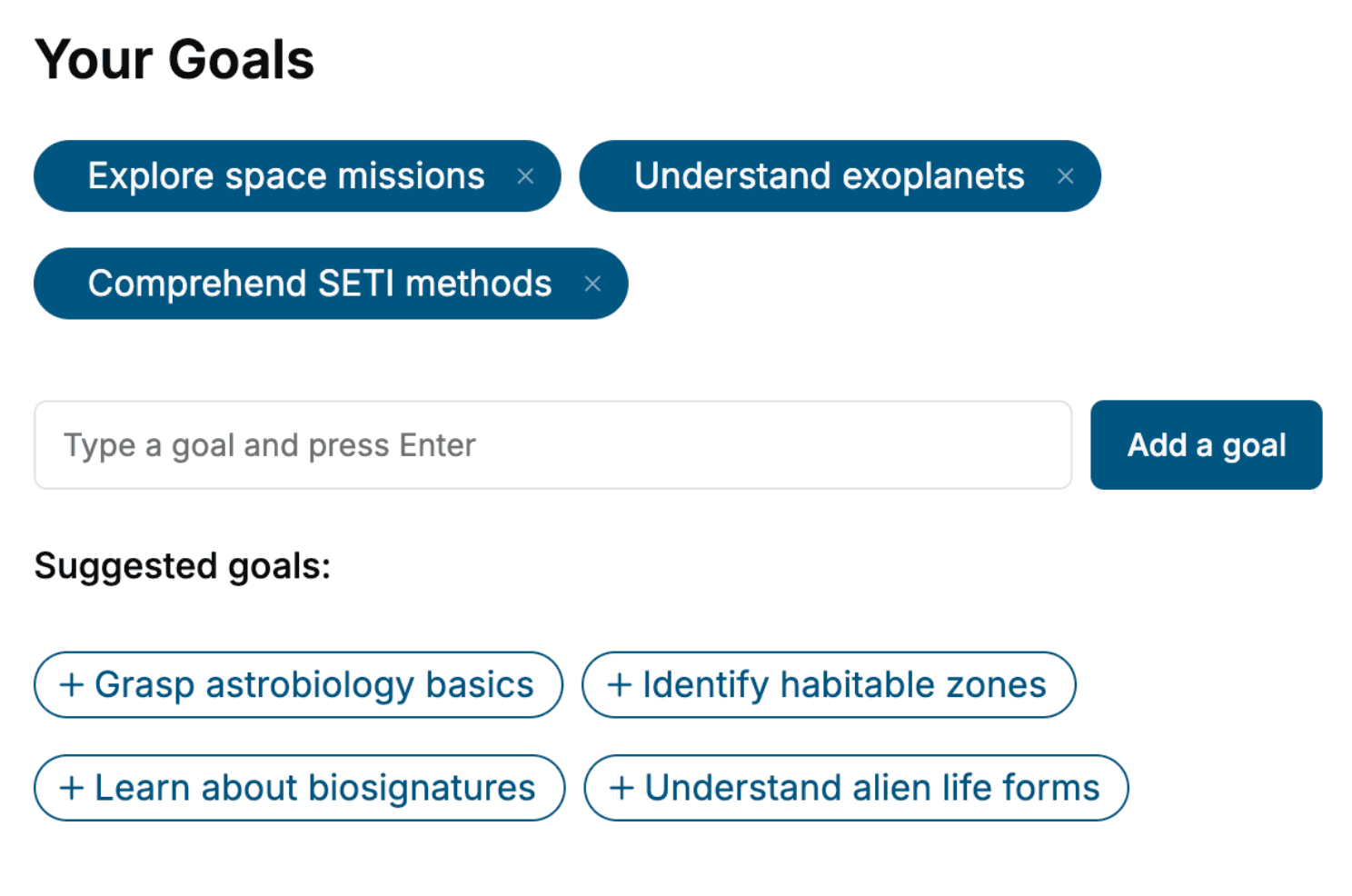
Specify your goals and choose sub-topics to include
- 3. Get your tailored book
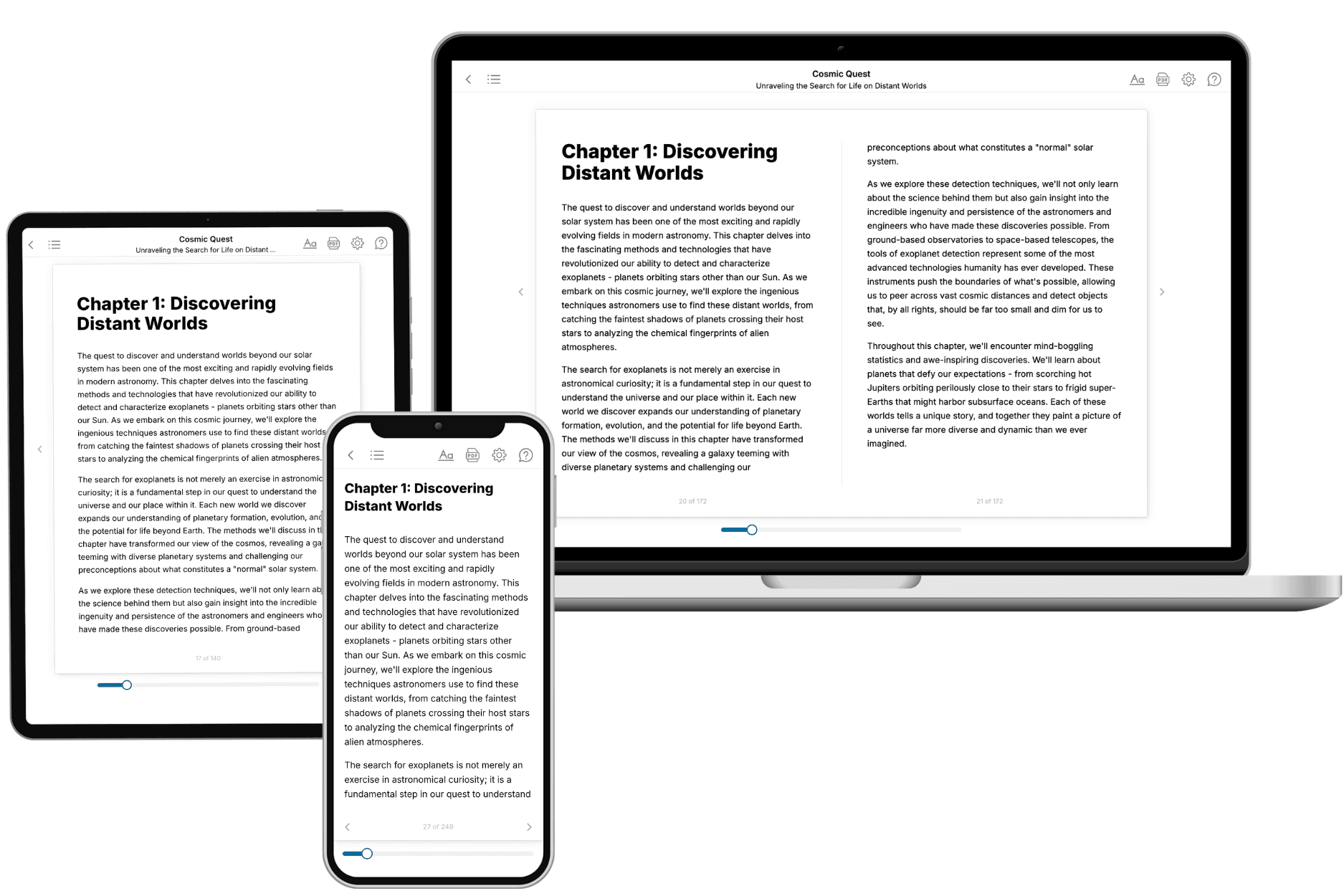
Your book is ready in 10 minutes. Read it online, download as EPUB or PDF, or send to Kindle.

Frequently asked questions
- What is TailoredRead?
TailoredRead creates complete, full-length nonfiction ebooks, written specifically for you. Tell us what you want to learn and why, and TailoredRead writes you a complete ebook on it, with charts, tables, and diagrams throughout. Read it online, on Kindle, or on any e-reader, or download it as a PDF or EPUB. Every book is written fresh the day you order it.
- How is the book tailored to me?
Before anything is written, you answer a few short questions about your goals, your background, and the topics you care about. Your book is then planned around your answers: written at your level, focused on your goals, and covering the topics you chose, instead of the one-size-fits-all book a store sells everyone.
- Will it read like generic AI content?
No. Your book isn't a chat transcript: it's planned chapter by chapter before a single word is written, told in a clear book voice, and explains ideas visually with charts, tables, and diagrams. After writing, every book goes through an editorial pass that polishes chapters so the book reads consistent from start to finish. Judge for yourself: browse thousands of sample books on our Explore Books page.
- How accurate is the content?
Our AI first checks whether your subject needs live research. Niche and fast-moving subjects are researched before writing, and the book plan and chapters are grounded in what it finds. After writing, every book goes through a quality pass that checks its facts and consistency, and researched books list their sources in a Notes section at the back.
- How long is the book?
You choose the length: Comprehensive (250-300 pages), Detailed (150-200 pages), Essential (70-100 pages), or Short (30-50 pages).
- Does the book include visuals?
Yes. Every book includes charts, tables, and diagrams: timelines, checklists, step-by-step guides, decision trees, comparison tables, matrices, and bar charts. A typical book includes dozens of these visual elements.
- Can I read it on Kindle? What formats can I download?
Yes. Every book can be read in our online reader or downloaded as a PDF or EPUB. The EPUB can be opened with Kindle, Apple Books, Kobo, and any e-reader. The Commercial and Author licenses also include an editable Word (DOCX) and Markdown download.
- How much does it cost?
About the price of a regular ebook. The exact price depends on your book's length and complexity, from $2 for the shortest books to $35 for the most comprehensive, and it's shown when you review your book, before you commit to anything. Each book is a one-time purchase, yours to keep, no subscription. Licenses that let you share, teach, or publish your book range from $35.99 to $49.99.
- Can I preview the book before purchasing?
Before you pay, you'll see what your book will cover: the title, a detailed description, the estimated length, and the complete chapter-by-chapter table of contents, so you know what you're getting before you decide. The full text itself is written after you purchase.
- How long does it take to create a book?
About 10 minutes. You can start reading the opening chapters while the rest is still being written.