International Economics Books
Explore tailored International Economics books created by our AI
The OPEC Equation
How Oil Politics Shape Global Markets and Your World
Discover how a cartel of oil-producing nations wields extraordinary influence over global economics and international relations. This book takes you through OPEC's complex world—from its founding during Cold War tensions to its current struggle for relevance in an energy-transitioning world. You'll learn how production quotas set in Vienna conference rooms ripple through stock markets, affect inflation rates, and shape foreign policy decisions. Explore the internal politics that make consensus difficult, the historical moments when OPEC reshaped geopolitics, and the emerging challenges threatening its traditional power. Whether you're tracking energy markets, understanding geopolitical tensions, or simply curious about the forces shaping global economics, this book provides the clarity and context you need to grasp why OPEC matters—and what its future holds in a world increasingly focused on renewable energy and climate change.
Many assume globalization is an inevitable force that simply happens to countries. In reality, globalization is a deeply political process shaped by deliberate choices, competing interests, and power struggles between nations, corporations, and citizens. This book examines how globalization fundamentally reshapes political systems, national sovereignty, and international relations across the world. You'll discover why some nations thrive in the global economy while others struggle, how international institutions both enable and constrain state power, and why globalization fuels political backlash in democracies and authoritarian states alike. Through concrete examples from Europe, Asia, Africa, and the Americas, you'll learn how different political systems navigate the tensions between openness and protection, integration and sovereignty. Whether you're seeking to understand trade wars, migration politics, or the rise of nationalist movements, this book provides the analytical framework to make sense of our interconnected world and the political choices that shape it.
What if the most powerful forces shaping your world aren't governments, but corporations operating across borders with minimal accountability? This book traces the surprising continuity between historical colonialism and modern transnational corporate power. You'll discover how trading companies evolved into multinational giants, how they influence political decisions that affect billions, and why developing nations struggle to negotiate fair terms with corporate interests. Through historical analysis, case studies, and structural examination, this book reveals the mechanisms of corporate power—from supply chains to lobbying networks to trade agreements. Rather than presenting a pessimistic view, it equips you with the knowledge to understand global inequality, corporate influence on politics, and the real stakes of economic globalization. Whether you're interested in history, politics, economics, or social change, you'll gain clarity on how transnational corporations shape the world and what alternatives might look like.
The Geography of Prosperity
How Location, Resources, and Human Systems Shape Economic Success
Most people assume that economic success is purely about individual effort or national policy. But the truth is far more complex. Your location—whether you live in a coastal city or inland region, a resource-rich area or one dependent on imports—profoundly shapes your economic opportunities. This book reveals how geography creates the invisible architecture of global prosperity. You'll discover why some regions become economic powerhouses while others struggle, how trade routes and infrastructure networks determine winners and losers, and why understanding these patterns matters for your career, investments, and understanding of global inequality. Through real-world examples from Silicon Valley to Sub-Saharan Africa, from manufacturing hubs to agricultural regions, you'll learn to read the economic landscape like never before. This isn't about determinism—it's about recognizing the geographic foundations of economic life and how they can be transformed.
Imagine standing at a bustling marketplace in ancient Samarkand, where merchants from China, Persia, India, and beyond gather to exchange not just goods, but ideas, religions, and technologies. This is the world of the Silk Road—a vast network of trade routes that connected civilizations across continents for over fifteen centuries. This book takes you on a comprehensive journey through these legendary pathways, revealing how they transformed global commerce and culture. You'll discover the merchants and explorers who risked everything to traverse deserts and mountains, the cities that flourished as crossroads of civilization, and the extraordinary exchange of goods and ideas that shaped our world. From the origins of these routes during the Han Dynasty to their eventual decline, you'll understand how the Silk Road wasn't merely about commerce—it was about human connection, cultural fusion, and the relentless drive to bridge distant worlds. Whether you're a history enthusiast or simply curious about how our interconnected world came to be, this exploration reveals the profound legacy of these ancient pathways.
Many people assume natural gas is simply piped from wells to homes, but the reality is far more complex. Liquefied Natural Gas (LNG) has become one of the world's most important energy commodities, yet most people don't understand how it works or why it matters. This book demystifies LNG by exploring the complete picture: from how natural gas is extracted and cooled to -320°F, to how it's shipped across oceans, and finally how it powers homes and industries worldwide. You'll discover why LNG has become a geopolitical tool, how it affects global energy security, and what role it plays as the world transitions toward cleaner energy. Whether you're interested in energy markets, environmental policy, or simply understanding the infrastructure that powers modern life, this book provides the knowledge you need to grasp one of the 21st century's most consequential energy technologies.
What if your polyacrylonitrile procurement strategy is missing the macroeconomic signals that predict price movements months in advance? This book provides supply chain professionals with a comprehensive framework for understanding how feedstock costs, global production capacity, and currency dynamics drive PAN pricing in the aerospace industry. Rather than treating pricing as an unpredictable commodity, you'll learn to analyze the interconnected macroeconomic factors that create measurable patterns. Discover how to build predictive models that anticipate price trends, develop hedging strategies tailored to your risk profile, and strengthen your position in supplier negotiations by understanding their cost structure and market constraints. Through practical financial modeling techniques and real-world case studies, you'll master the analytical tools needed to optimize procurement decisions, protect margins against volatility, and transform raw material cost management from a reactive function into a strategic competitive advantage. This is essential reading for supply chain leaders who want to move beyond guesswork to data-driven decision-making.
You'll gain a powerful lens for understanding how our world truly works—not as isolated countries and regions, but as an interconnected system of relationships, flows, and hierarchies that shape everything from local cultures to global patterns. This comprehensive guide takes you beyond surface-level geography to explore the deep structures that organize our planet. You'll discover how historical processes created the core-periphery relationships that still influence global development today, and learn to recognize the spatial patterns that reveal hidden connections between distant places. Through clear explanations and real-world examples, you'll master the analytical tools needed to understand why certain regions prosper while others struggle, and how cultural practices spread across continents. You'll explore how physical geography intersects with human systems, examining how natural resources, climate, and location influence a region's position in the global hierarchy. The book reveals how cities function as command centers in worldwide networks, how migration creates new cultural landscapes, and how technological advances continuously reshape global relationships. By the end, you'll possess a sophisticated understanding of world systems theory that transforms how you view international news, cultural trends, and global challenges. You'll be equipped to analyze complex spatial relationships and understand the geographic forces that shape our interconnected world.
What if the most ambitious political experiment in modern history could be explained in a way that actually makes sense? The European Union is often portrayed as either a bureaucratic nightmare or a visionary achievement—but the reality is far more nuanced and fascinating. This book cuts through the complexity to show you how a continent devastated by war transformed itself into an unprecedented union of 27 democracies. You'll discover the historical forces that drove integration, the ingenious (and sometimes frustrating) institutions that make it work, and the real tensions that threaten its future. From the Coal and Steel Community's modest beginnings to today's debates over sovereignty and identity, this book reveals why the EU matters—not just for Europeans, but for understanding how nations can choose cooperation over conflict. Whether you're curious about how Brussels actually functions, puzzled by Brexit, or wondering what Europe's future holds, you'll find clear answers grounded in history and contemporary reality.
The Geography of Food
How Land, Culture, and Climate Shape What We Grow and Eat
Many people assume agriculture is simply about farming—planting seeds and harvesting crops. But the reality is far more complex. Where food grows, how it's produced, and who benefits from it are shaped by geography in profound ways. This book explores the intricate connections between land, climate, culture, and food systems across the world. You'll discover why certain regions specialize in specific crops, how historical trade routes still influence what we eat today, and why some communities struggle with food security while others have abundance. Through case studies and real-world examples, you'll learn how geography explains agricultural patterns from small family farms to massive industrial operations. Whether you're interested in sustainability, food justice, or simply understanding where your food comes from, this book provides the geographic perspective needed to grasp the challenges and opportunities facing global agriculture in the 21st century.
From Poverty to Prosperity
How South Korea Built an Economic Miracle in a Single Generation
South Korea's rise from war-torn devastation to global economic powerhouse represents one of history's most remarkable transformations. This book traces the strategic decisions, bold policies, and cultural forces that enabled a nation with virtually no natural resources to build the world's 12th largest economy in just 60 years. You'll discover how visionary leaders implemented export-driven industrialization, how massive investments in education created a highly skilled workforce, and how the unique chaebol system mobilized capital at unprecedented scale. Through detailed analysis of each development phase—from labor-intensive manufacturing to heavy industry to cutting-edge technology—you'll understand the specific mechanisms that drove growth. You'll also explore the human dimension: the sacrifices workers made, the role of Confucian values in driving ambition, and how national unity transformed economic policy into collective purpose. Whether you're studying economic development, Asian history, or seeking lessons for emerging economies, this book provides both the big-picture narrative and the granular details that explain how South Korea achieved what many thought impossible.
Macroeconomics Essentials
From Agricultural Development to Global Economic Policy
Understanding how entire economies work seems overwhelming when you're drowning in theories, models, and competing policy perspectives. You struggle to connect abstract concepts like aggregate demand and supply to real-world decisions about agricultural development, trade policy, and employment. This book cuts through the complexity by building macroeconomic principles from the ground up, using agricultural economics and development policy as your practical anchor. You'll master GDP accounting, inflation measurement, and unemployment concepts before progressing to fiscal and monetary policy mechanisms. The book then applies these foundations to agricultural sectors, showing how government spending multipliers, exchange rates, and trade barriers directly impact farming communities and rural development. By the end, you'll understand not just the theories—you'll see how they explain real economic outcomes, from business cycles to stagflation to long-run growth. You'll be equipped to analyze policy trade-offs, predict economic consequences, and contribute meaningfully to development economics discussions.
Discover how the Silk Road transformed the Middle East and Iran into the world's most dynamic centers of commerce, culture, and innovation. This comprehensive exploration reveals the untold stories of merchants, rulers, and cities that built and controlled the ancient world's greatest trade networks. You'll learn how Iranian and Middle Eastern civilizations didn't simply participate in Silk Road commerce—they engineered it, profiting from their strategic geographical position to become wealthy, powerful, and culturally influential. From the rise of the Parthian Empire to the golden age of Islamic cities, explore how trade routes shaped empires, spread religions, and connected distant civilizations. Understand the sophisticated systems of credit, currency, and logistics that made long-distance commerce possible. Examine how the Silk Road's decline reshaped global power dynamics and set the stage for modern geopolitical tensions. This book connects ancient history to contemporary Middle Eastern affairs, showing why understanding these trade networks remains essential for comprehending regional politics, cultural identity, and international relations today.
The Silk Road Maps
Tracing Trade Routes, Cultures, and Connections Across Asia
Most people think of the Silk Road as a single, well-defined trade route—but the reality is far more complex and fascinating. The Silk Road was actually a vast network of interconnected pathways that evolved over centuries, shaped by geography, politics, and commerce. This book uses detailed maps and clear explanations to guide you through the intricate web of routes that connected China, Central Asia, the Middle East, and beyond. You'll discover how mountains and deserts determined where merchants traveled, which cities became crucial trading hubs, and how goods, ideas, and religions flowed across continents. Whether you're a history enthusiast, geography student, or simply curious about how ancient trade shaped our world, these maps and narratives reveal the strategic brilliance of merchants who navigated one of history's most important commercial networks. Explore the routes that changed civilizations.
Understand how the military industrial complex operates as an integrated system that shapes global technology, economics, and geopolitics. This book examines the historical evolution of military technology since World War II, the concentration of power within defense corporations, and the systemic relationships that bind government, industry, and military institutions together. You'll explore how post-WWII industrial restructuring created permanent military economies, trace the technological innovations that defined each era of military development, and analyze the organizational dynamics that drive defense spending and policy decisions. Through systems thinking frameworks, you'll see how military industrial decisions ripple across global trade networks, civilian industries, and international relations. Whether you're analyzing structural design challenges, studying organizational power dynamics, or seeking to understand how complex systems influence technological development, this book provides the conceptual tools and historical context needed to grasp one of the world's most influential and least understood systems.
The Global Stage
Understanding Power, Diplomacy, and Conflict in the Modern World
Many people view international relations as a distant realm of diplomats and politicians, disconnected from everyday life. In reality, the decisions made in boardrooms and government offices directly affect your economy, security, and future. This book demystifies how nations interact, compete, and cooperate in an increasingly complex world. You'll discover why some countries form alliances while others clash, how economic ties can prevent or provoke conflict, and why international institutions matter more than you might think. Through clear explanations and real-world examples, you'll learn the fundamental forces driving global politics—from power dynamics and strategic interests to the role of culture and ideology. Whether you're curious about geopolitics, concerned about global stability, or simply want to understand the news better, this book provides the essential knowledge to make sense of our interconnected world and your place within it.
Pension systems are breaking. Across the developed world, aging populations, longer lifespans, and unsustainable funding models are forcing governments and policymakers to confront hard truths about retirement security. This book cuts through the complexity to show you what's actually happening in pension reform—and why it matters to your financial future. You'll discover how governance failures and political pressures are reshaping retirement systems in the UK, US, and OECD countries. Learn the critical difference between Defined Benefit and Defined Contribution pensions, understand why fiduciary duty matters, and explore the real-world consequences of shifting retirement risk from employers to workers. This book examines the equity challenges facing women and older workers, the dangers of politicizing pension funds, and the regulatory innovations driving change. Whether you're planning retirement, managing pension assets, or simply trying to understand the headlines, this guide provides the clarity and context you need to make informed decisions in an era of unprecedented pension system transformation.
The Power of Systems
How Economic and Political Forces Shape Society and Your Life
You're about to discover how the invisible forces of politics and economics shape everything from your job prospects to global conflicts. This book pulls back the curtain on political economy—the study of how power, money, and institutions interact to create the world we live in. Rather than treating politics and economics as separate domains, you'll learn how they're fundamentally intertwined, with political decisions determining economic rules and economic power influencing political outcomes. Through clear explanations and real-world examples, you'll explore different economic systems, understand how institutions function as the machinery of society, and recognize the power dynamics embedded in everyday transactions and policies. You'll examine how globalization, technology, and finance have reshaped political-economic relationships, and discover how ordinary people can influence these systems through collective action. By the end, you'll possess a sophisticated framework for analyzing current events, evaluating policy proposals, and understanding your place within larger economic and political structures.
Picture yourself confidently navigating the complex world of international relations, where you can analyze global conflicts with the nuanced understanding that comes from seeing beyond headlines and political rhetoric. You'll develop the analytical framework to understand how nations wield economic and diplomatic pressure, why some interventions succeed while others backfire, and how regional dynamics shape global responses to conflict. This comprehensive exploration takes you deep into the mechanics of international sanctions, using the Nagorno-Karabakh conflict as a revealing lens through which to examine broader principles of diplomatic pressure and conflict resolution. You'll discover how historical grievances, ethnic tensions, and geopolitical interests intersect to create the complex landscape where sanctions operate, often with unintended consequences. Through detailed analysis of real-world applications, you'll learn to recognize the patterns that determine sanctions effectiveness, understand the role of international organizations in coordinating responses, and appreciate how modern conflicts challenge traditional diplomatic tools. The book reveals how cultural context, timing, and multilateral coordination can make the difference between successful pressure campaigns and costly failures. By the end, you'll possess a sophisticated understanding of how international pressure works in practice, equipped with the analytical tools to evaluate current conflicts and predict the likely outcomes of various diplomatic strategies. This knowledge will enhance your ability to engage with global affairs, whether in professional, academic, or civic contexts.
This book takes you through the intricate world of European Union enlargement, revealing how the EU has grown from six founding members to twenty-seven nations and what that expansion means for Europe's future. You'll discover the historical forces that drove each enlargement wave, the rigorous criteria candidates must meet, and the complex negotiations that shape membership. The book examines how enlargement has transformed European politics, economics, and security while creating new challenges around migration, regional inequality, and institutional capacity. You'll gain insight into the Copenhagen Criteria, the accession process, and the political dynamics that determine which countries join and when. Whether you're interested in understanding Europe's past expansion, current candidate countries, or the future of European integration, this book provides the analytical framework and concrete examples needed to grasp one of the most consequential developments in modern international relations.
The Belt and Road Initiative
Understanding China's Global Strategy for the 21st Century
Imagine a world where infrastructure connects continents, where trade flows along ancient routes reimagined for the modern era, and where a single nation's vision reshapes global development patterns. This is the reality of China's Belt and Road Initiative—one of the most ambitious and consequential projects of our time. This book cuts through the complexity and controversy to give you a clear understanding of what BRI actually is, how it works, and why it matters. You'll discover the historical roots of this initiative in China's past, explore the mechanics of how projects are financed and implemented, and examine real-world impacts across Asia, Africa, Europe, and beyond. Whether you're concerned about debt sustainability, curious about geopolitical implications, or interested in how infrastructure shapes international relations, you'll find balanced analysis grounded in evidence. By the end, you'll understand not just the facts of BRI, but the deeper strategic thinking behind it and what it means for the future of global development and power dynamics.
The Somali Pirate Wars
How Modern Maritime Conflict Reshaped Global Security
Picture yourself understanding one of the most significant maritime conflicts of the 21st century, where desperate fishermen evolved into sophisticated naval adversaries who held the world's shipping lanes hostage. You'll discover how a failed state's coastal waters became the epicenter of a conflict that forced global superpowers to reimagine maritime security. This comprehensive examination reveals the intricate web of factors that created the perfect storm for modern piracy off the Horn of Africa. You'll explore the tactical evolution from small-boat raids to complex operations involving mother ships, satellite phones, and international money transfers. The book details how pirate organizations developed hierarchical structures rivaling legitimate businesses, complete with negotiators, accountants, and security specialists. You'll gain insight into the unprecedented international response that brought together naval forces from dozens of nations in the largest maritime security operation since World War II. The analysis covers the technological innovations, diplomatic challenges, and strategic decisions that ultimately contained this threat while reshaping how the world approaches maritime security. Through detailed operational analysis and strategic assessment, you'll understand how this conflict influenced everything from shipping insurance to naval doctrine, creating lasting changes in how nations protect their maritime interests in an interconnected global economy.
Related books you may like:
Imagine launching a blockchain game that players genuinely want to play—not because of token rewards, but because the gameplay is compelling, the economy is sustainable, and the community thrives. This is the reality of blockchain gaming in 2026. This book cuts through the hype and speculation to show you how the industry has evolved from the 2022 GameFi crash into a mature, gameplay-first sector. You'll learn how to design tokenomics that actually work, architect smart contracts that scale, and integrate blockchain mechanics so seamlessly that players never think about wallets or gas fees. Whether you're a game developer exploring Web3 integration, a software engineer building blockchain infrastructure, or an entrepreneur launching your first blockchain game, you'll discover practical frameworks for sustainable economies, player retention strategies, and the technical architecture that powers today's successful blockchain games. Grounded in real-world examples from studios like Big Time, Axie Infinity, and emerging AAA entries, this book provides the knowledge you need to build games that last.
What if you could identify your most promising prospects before they even realize they're ready to buy? In today's competitive insurance market, the difference between thriving advisors and struggling ones isn't luck—it's data. AI tools have fundamentally changed how top-performing insurance professionals qualify leads, predict close probability, and convert prospects into clients. This book reveals the exact strategies, tools, and workflows that leading life insurance advisors use to increase conversion rates and productivity. You'll discover how predictive analytics identifies high-potential prospects, how conversation intelligence coaches you to close more deals, and how workflow automation reclaims hours of your week. Whether you're managing a small book of business or leading a team, you'll learn to build a modern GTM tech stack that turns data into revenue. The insurance industry is shifting—and the advisors who master AI-powered lead qualification will dominate their markets.
Master the intricacies of blockchain technology and revolutionize your data engineering practices. This comprehensive guide takes you on a deep dive into the world of blockchain, unraveling its complex architecture and showcasing its transformative potential in business landscapes. You'll gain a solid understanding of blockchain's fundamental principles and explore its practical applications across various industries. Discover the most powerful blockchain platforms available today and learn how to leverage them effectively in your projects. As artificial intelligence continues to reshape the tech landscape, this book bridges the gap between blockchain and AI, revealing innovative ways to combine these cutting-edge technologies. By the end of your reading journey, you'll be equipped with the knowledge and skills to implement blockchain solutions, optimize data processes, and drive technological innovation in your organization.
Discover how blockchain technology works beneath the surface and why it matters far beyond cryptocurrency. This book takes you through the fundamental principles that make blockchain systems secure and trustworthy, explaining the cryptographic foundations, consensus mechanisms, and distributed architecture that enable decentralized networks to function without intermediaries. You'll explore how smart contracts automate complex agreements, examine real-world applications transforming industries from supply chain to healthcare, and understand the genuine challenges the technology faces today. Whether you're curious about the technical architecture, interested in practical implementations, or concerned about scalability and environmental impact, this guide provides the knowledge you need to understand blockchain's role in shaping the future of digital systems. By the end, you'll have a clear grasp of what blockchain can and cannot do, and how it's being applied to solve real-world problems across multiple sectors.
Navigate the practical landscape of blockchain technology with a clear-eyed approach to real-world implementation. This guide moves beyond theoretical concepts to show you how organizations are actually deploying blockchain solutions across supply chains, financial systems, healthcare networks, and governance structures. You'll discover the methodologies that separate successful projects from failed experiments, including how to evaluate blockchain platforms, design smart contracts that work reliably, manage organizational change, and ensure compliance with regulatory requirements. Whether you're assessing blockchain's fit for your organization, leading an implementation team, or optimizing existing systems, this book provides the frameworks, case studies, and practical strategies you need to make informed decisions and execute effectively. Learn from real implementations, understand the trade-offs between different approaches, and develop the expertise to guide your organization through blockchain adoption with confidence.
Create an International Economics Book Tailored to You
Create an AI-crafted book tailored to your goals, interests, and background






Benefits of AI-tailored books
- Read one book, not ten:
- all the International Economics knowledge you need, gathered into a single book.
- Save days of learning:
- tell us your goals, choose your topics, and the whole book is built around them.
- Learn effortlessly:
- International Economics book written for your specific background and expertise.
- Understand at a glance:
- includes charts, tables, timelines, checklists, decision trees, and more.
- Stay current:
- written the day you order it, not years ago.
- Trust what you read:
- every book is checked for accuracy, with real research when your subject needs it.
Create your unique book in 3 steps
- 1. Select your focus
Select the focus of your International Economics book and share your background
- 2. Personalize your book
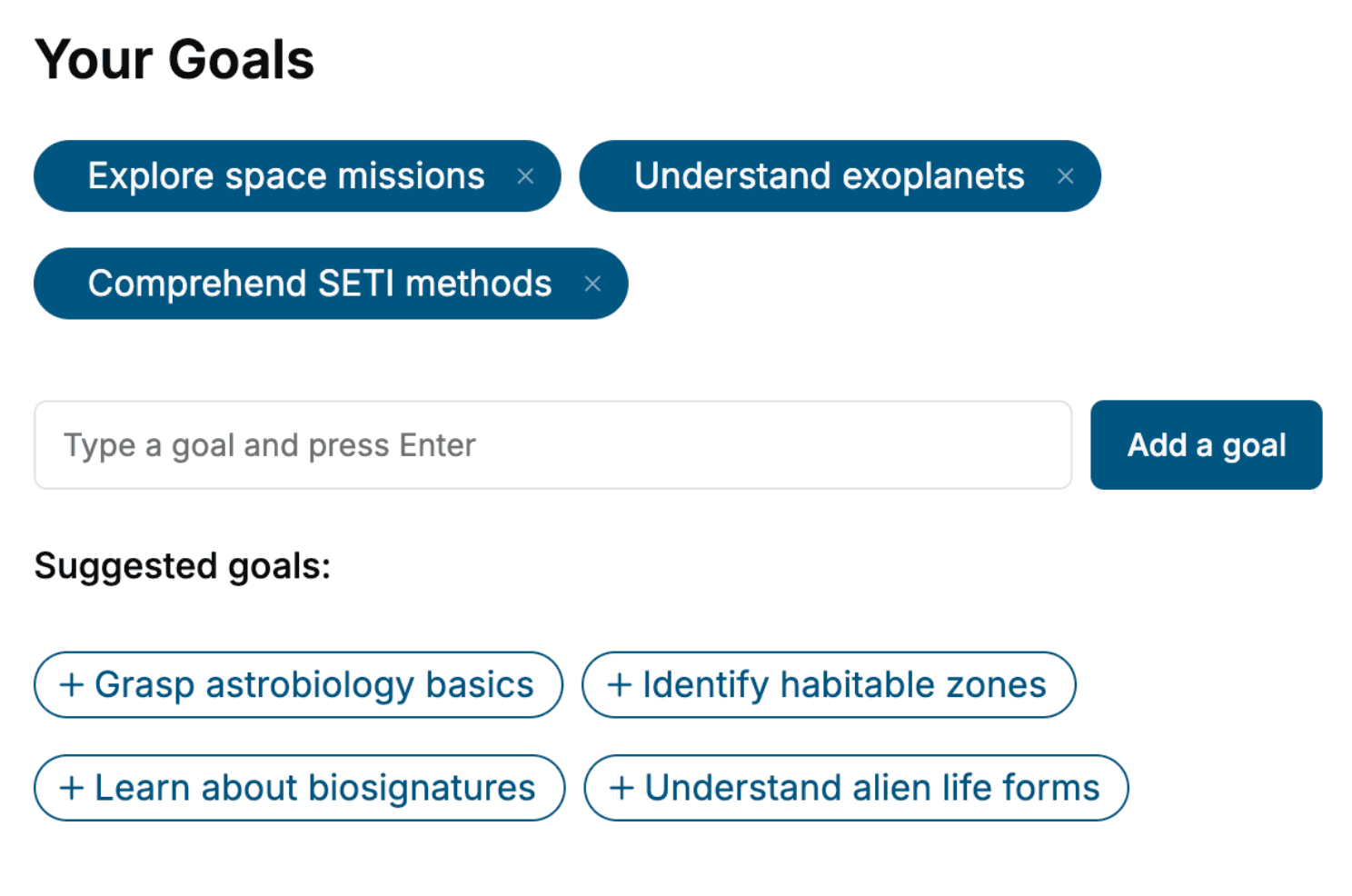
Specify your goals and choose sub-topics to include
- 3. Get your tailored book
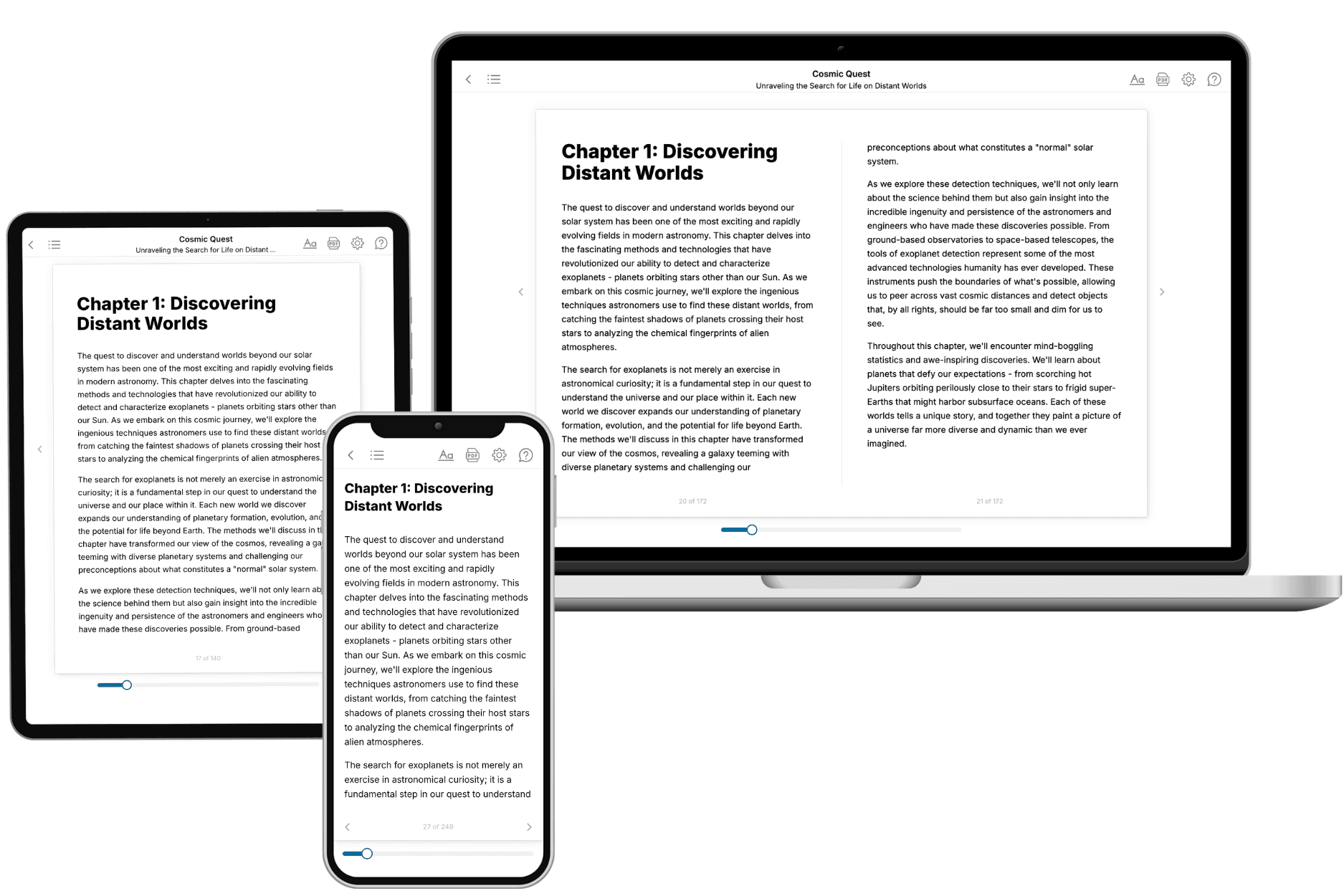
Your book is ready in 10 minutes. Read it online, download as EPUB or PDF, or send to Kindle.

Start from a template
Frequently asked questions
- What is TailoredRead?
TailoredRead creates complete, full-length nonfiction ebooks, written specifically for you. Tell us what you want to learn and why, and TailoredRead writes you a complete ebook on it, with charts, tables, and diagrams throughout. Read it online, on Kindle, or on any e-reader, or download it as a PDF or EPUB. Every book is written fresh the day you order it.
- How is the book tailored to me?
Before anything is written, you answer a few short questions about your goals, your background, and the topics you care about. Your book is then planned around your answers: written at your level, focused on your goals, and covering the topics you chose, instead of the one-size-fits-all book a store sells everyone.
- Will it read like generic AI content?
No. Your book isn't a chat transcript: it's planned chapter by chapter before a single word is written, told in a clear book voice, and explains ideas visually with charts, tables, and diagrams. After writing, every book goes through an editorial pass that polishes chapters so the book reads consistent from start to finish. Judge for yourself: browse thousands of sample books on our Explore Books page.
- How accurate is the content?
Our AI first checks whether your subject needs live research. Niche and fast-moving subjects are researched before writing, and the book plan and chapters are grounded in what it finds. After writing, every book goes through a quality pass that checks its facts and consistency, and researched books list their sources in a Notes section at the back.
- How long is the book?
You choose the length: Comprehensive (250-300 pages), Detailed (150-200 pages), Essential (70-100 pages), or Short (30-50 pages).
- Does the book include visuals?
Yes. Every book includes charts, tables, and diagrams: timelines, checklists, step-by-step guides, decision trees, comparison tables, matrices, and bar charts. A typical book includes dozens of these visual elements.
- Can I read it on Kindle? What formats can I download?
Yes. Every book can be read in our online reader or downloaded as a PDF or EPUB. The EPUB can be opened with Kindle, Apple Books, Kobo, and any e-reader. The Commercial and Author licenses also include an editable Word (DOCX) and Markdown download.
- How much does it cost?
About the price of a regular ebook. The exact price depends on your book's length and complexity, from $2 for the shortest books to $35 for the most comprehensive, and it's shown when you review your book, before you commit to anything. Each book is a one-time purchase, yours to keep, no subscription. Licenses that let you share, teach, or publish your book range from $35.99 to $49.99.
- Can I preview the book before purchasing?
Before you pay, you'll see what your book will cover: the title, a detailed description, the estimated length, and the complete chapter-by-chapter table of contents, so you know what you're getting before you decide. The full text itself is written after you purchase.
- How long does it take to create a book?
About 10 minutes. You can start reading the opening chapters while the rest is still being written.