Business History Books
Explore tailored Business History books created by our AI
What if the most powerful business networks in Mumbai today operate on principles established 300 years ago by merchant communities that predated modern corporations? This book reveals how colonial trade routes, merchant dynasties, and exclusive social networks transformed Mumbai from a colonial outpost into a global financial center—and how those same structures continue to shape business power today. Drawing on detailed historical analysis of the East India Company's trade monopolies, the Parsi, Marwari, and Gujarati merchant empires, and the evolution of institutions like the Bombay Stock Exchange and Bombay Club, you'll discover the hidden architecture of Mumbai's business world. Explore the physical landmarks—Fort Business District, Kala Ghoda, Dalal Street, Malabar Hill—where fortunes were made and lost. Examine why family business dynasties like the Tatas and Sassoons thrived while others collapsed, extracting lessons applicable to modern succession planning and institutional governance. This is essential reading for business leaders seeking to understand how historical networks, caste-based credit systems, and merchant communities continue to influence capital flows, deal-making, and business access in contemporary Mumbai and India.
Code to Empire
The Untold Story of Microsoft's Rise to Tech Dominance
Contrary to popular belief, Microsoft's ascent to tech supremacy wasn't just about being in the right place at the right time. It was a masterclass in technical innovation and strategic business acumen. In "Code to Empire: The Untold Story of Microsoft's Rise to Tech Dominance," you'll discover the intricate web of decisions, innovations, and competitive maneuvers that propelled a small software company to become a global tech giant. This book peels back the layers of Microsoft's history, revealing how the synergy between software expertise and business strategy created an unstoppable force in the tech world. From the early days of the Gates-Allen partnership to the development of MS-DOS and the evolution of Windows, you'll trace the trajectory of Microsoft's most iconic products. You'll gain insider insights into the creation of the Office suite and explore how Microsoft consistently stayed ahead of the curve in a rapidly changing industry. This book doesn't just recount history; it analyzes the pivotal moments that shaped the tech landscape we know today.
Silicon Gold Rush
The Dot-Com Bubble and Its Echoes in American History
Uncover the fascinating parallels between the Dot-Com Bubble and earlier boom-and-bust cycles in American history. This book takes you on an enlightening journey through time, connecting the digital revolution of the late 20th century with the economic patterns and technological innovations that shaped the United States since the 1800s. You'll gain a deep understanding of how the Dot-Com Bubble emerged, its rapid inflation, and its eventual burst, all while drawing insightful comparisons to historical events like the Railroad Boom and the Roaring Twenties. Through careful analysis and engaging storytelling, you'll discover the recurring themes of innovation, speculation, and economic transformation that have defined American progress for over two centuries. By exploring the Dot-Com era within this broader historical context, you'll develop a nuanced perspective on technological revolutions, market dynamics, and the cyclical nature of economic growth. This book equips you with the knowledge to better comprehend not just a pivotal moment in recent history, but the ongoing patterns that continue to shape our digital age and economic landscape.
The Dutch East India Company
How a Trading Enterprise Shaped the Modern World
Imagine understanding how a single trading company reshaped global commerce, politics, and culture for over two centuries. The Dutch East India Company stands as one of history's most influential yet often overlooked institutions. This book reveals how a group of Dutch merchants created the world's first multinational corporation, wielding military power, governing territories, and accumulating wealth that rivaled nations. You'll discover how the VOC pioneered modern business practices—from stock markets to corporate governance—while simultaneously establishing the colonial systems that defined the modern world. Through vivid accounts of merchants, sailors, and administrators, you'll trace the company's rise from Amsterdam's harbor to dominance across Asia, and understand why its eventual decline mattered as much as its success. This is the story of how commerce, innovation, and ambition created the blueprint for the global economy we inhabit today.
Discover how a revolutionary approach to work transformed factories, businesses, and entire economies. Scientific management principles fundamentally changed the way humans organize labor, measure productivity, and structure organizations—and their influence extends far beyond the factory floor into your workplace today. This book traces the origins of scientific management from industrial chaos to systematic efficiency, exploring how pioneers like Frederick Taylor developed methods that would reshape global business. You'll understand the mechanics of time-and-motion studies, standardization, and process optimization that became the blueprint for modern management. More importantly, you'll see how these principles created both remarkable productivity gains and significant social tensions that continue to influence workplace culture. By examining real historical examples and their consequences, you'll gain insight into why your workplace operates the way it does, how efficiency metrics shape decision-making, and what trade-offs between productivity and worker satisfaction really mean. Whether you're interested in business history, management philosophy, or understanding the forces that shaped the modern world, this exploration of scientific management provides essential context for contemporary work life.
What if the most powerful forces shaping your world aren't governments, but corporations operating across borders with minimal accountability? This book traces the surprising continuity between historical colonialism and modern transnational corporate power. You'll discover how trading companies evolved into multinational giants, how they influence political decisions that affect billions, and why developing nations struggle to negotiate fair terms with corporate interests. Through historical analysis, case studies, and structural examination, this book reveals the mechanisms of corporate power—from supply chains to lobbying networks to trade agreements. Rather than presenting a pessimistic view, it equips you with the knowledge to understand global inequality, corporate influence on politics, and the real stakes of economic globalization. Whether you're interested in history, politics, economics, or social change, you'll gain clarity on how transnational corporations shape the world and what alternatives might look like.
The Gilded Age promised opportunity and progress, yet it was built on a foundation of deception, corruption, and violence. The robber barons who dominated this era—Rockefeller, Carnegie, Vanderbilt, and others—didn't simply outcompete their rivals; they systematically destroyed them through predatory practices, bribery, and intimidation. This book examines how these titans accumulated unprecedented wealth by manipulating markets, corrupting government officials, and exploiting millions of workers. You'll discover how monopoly consolidation tactics eliminated competition, how political corruption became standard business practice, and how the wealthy crafted narratives to justify their greed while concealing their crimes. By analyzing the economic structures, ethical failures, and power dynamics of this pivotal era, you'll gain critical insight into how modern capitalism inherited its most troubling characteristics. This is essential reading for understanding the historical origins of wealth inequality and the ongoing tension between corporate interests and public welfare.
Understand how the military industrial complex operates as an integrated system that shapes global technology, economics, and geopolitics. This book examines the historical evolution of military technology since World War II, the concentration of power within defense corporations, and the systemic relationships that bind government, industry, and military institutions together. You'll explore how post-WWII industrial restructuring created permanent military economies, trace the technological innovations that defined each era of military development, and analyze the organizational dynamics that drive defense spending and policy decisions. Through systems thinking frameworks, you'll see how military industrial decisions ripple across global trade networks, civilian industries, and international relations. Whether you're analyzing structural design challenges, studying organizational power dynamics, or seeking to understand how complex systems influence technological development, this book provides the conceptual tools and historical context needed to grasp one of the world's most influential and least understood systems.
Building the Emirates
How Infrastructure Transformed the UAE from Desert to Global Hub
Discover how a desert nation became a global economic powerhouse through strategic infrastructure development. This book traces the UAE's remarkable transformation from the 1960s to today, revealing how visionary leaders leveraged oil wealth and geographic advantage to build world-class ports, airports, and cities. You'll explore the critical decisions that shaped Dubai and Abu Dhabi, understand the role of infrastructure in attracting international business, and learn how the Emirates balanced rapid modernization with sustainability challenges. Through detailed case studies of iconic projects—from Jebel Ali Port to the Palm Islands to smart city initiatives—you'll gain insight into the principles of infrastructure planning that created lasting economic value. Whether you're interested in Middle Eastern history, urban development, or how nations build competitive advantages, this book reveals the strategic thinking behind one of the world's most impressive development stories.
From the humble stone cottages of Dunfermline, Scotland, to the towering steel mills of Pittsburgh, you'll follow one of history's most remarkable transformations. This comprehensive biography traces Andrew Carnegie's extraordinary path from a poor weaver's son to becoming one of America's wealthiest industrialists and most influential philanthropists. You'll discover how Carnegie's Scottish heritage shaped his democratic ideals, work ethic, and revolutionary approach to wealth. Through detailed exploration of his early struggles as an immigrant family in Pennsylvania, his rise through the railroad and telegraph industries, and his eventual dominance of American steel production, you'll gain insight into the mind of a man who fundamentally changed both industry and philanthropy. The narrative reveals Carnegie's complex character—a shrewd businessman who could be ruthless in competition yet generous beyond measure in giving. You'll explore his groundbreaking philosophy that the wealthy have a moral obligation to use their fortunes for society's benefit, leading to the creation of over 2,500 libraries worldwide and numerous educational and cultural institutions. This book examines not just Carnegie's business acumen and philanthropic legacy, but also his role as a Scottish-American who never forgot his roots, maintaining deep connections to his homeland while helping to build the industrial foundation of his adopted country. You'll understand how one man's vision continues to influence education, culture, and charitable giving more than a century after his death.
What if one invention could reshape an entire nation's economy while simultaneously deepening its most profound moral crisis? Eli Whitney's cotton gin did exactly that, transforming American agriculture, industry, and society in ways its inventor never anticipated. This book takes you beyond the simple story of a mechanical breakthrough to explore the complex life of a man whose ingenuity solved one problem while inadvertently amplifying another. You'll discover how Whitney's struggles with manufacturing, patents, and business rivals led him to pioneer the concept of interchangeable parts—a revolution that would define modern industry. Through detailed examination of his methods, mindset, and the historical forces surrounding him, you'll gain insight into how innovation works, how ideas spread, and how technology intersects with society in unexpected ways. Whether you're fascinated by invention, interested in American history, or seeking to understand how one person's work can ripple through generations, this exploration of Whitney's life offers valuable lessons about creativity, persistence, and the unintended consequences of progress.
Discover how a remote ridge in Central Pennsylvania became the epicenter of an industrial empire that transformed American steel production. Orviston Ridge reveals the complete story of clay mining, fire brick manufacturing, and the intricate systems of corporate control that bound thousands of workers to a single company's interests. From the geological surveys that identified valuable clay deposits to the mechanized extraction processes, from the innovative kiln technologies that produced fire bricks to the railroad networks that delivered them to steel mills across Pennsylvania, this book traces the entire industrial ecosystem. More importantly, it exposes how the company town system—encompassing worker housing, company stores, wage systems, and surveillance—created an all-encompassing control mechanism that left workers with virtually no escape. Through detailed examination of labor practices, immigrant recruitment, child labor, occupational hazards, and systematic denial of accident compensation, you'll understand how industrial capitalism functioned at ground level. The narrative culminates in the post-1950s decline, revealing how corporations abandoned communities once profitability waned, leaving environmental devastation and economic collapse in their wake. This is essential reading for understanding how American industrial development was built on systematic labor exploitation and resource extraction.
The Spark of Genius
Thomas Edison's Extraordinary Journey from Obscurity to Illumination
Have you ever wondered what it takes to change the world with a single idea? Thomas Edison, the wizard of Menlo Park, did just that – not once, but time and time again. In "The Spark of Genius," you'll discover the fascinating story of a man whose insatiable curiosity and relentless drive revolutionized the way we live. This captivating biography takes you on an electrifying journey through Edison's life, from his humble beginnings as a curious child with hearing difficulties to his rise as one of the most prolific inventors in history. You'll gain insight into the mind of a genius who saw possibilities where others saw limitations, and whose work ethic was as legendary as his inventions. Delve into the triumphs and setbacks that shaped Edison's career, from the creation of the phonograph to the development of the electric light bulb. Explore the lesser-known aspects of his life, including his complex relationships, business acumen, and the controversies that surrounded some of his work. "The Spark of Genius" illuminates not just Edison's inventions, but the very essence of innovation itself, challenging you to see the world through the eyes of a true visionary.
From Poverty to Prosperity
How South Korea Built an Economic Miracle in a Single Generation
South Korea's rise from war-torn devastation to global economic powerhouse represents one of history's most remarkable transformations. This book traces the strategic decisions, bold policies, and cultural forces that enabled a nation with virtually no natural resources to build the world's 12th largest economy in just 60 years. You'll discover how visionary leaders implemented export-driven industrialization, how massive investments in education created a highly skilled workforce, and how the unique chaebol system mobilized capital at unprecedented scale. Through detailed analysis of each development phase—from labor-intensive manufacturing to heavy industry to cutting-edge technology—you'll understand the specific mechanisms that drove growth. You'll also explore the human dimension: the sacrifices workers made, the role of Confucian values in driving ambition, and how national unity transformed economic policy into collective purpose. Whether you're studying economic development, Asian history, or seeking lessons for emerging economies, this book provides both the big-picture narrative and the granular details that explain how South Korea achieved what many thought impossible.
The 2008 Global Financial Crisis reshaped the world economy and left millions struggling with unemployment, foreclosures, and shattered savings. This book walks you through the events that triggered the worst economic collapse since the Great Depression, revealing how decisions made in boardrooms and regulatory agencies cascaded into a global catastrophe. You'll discover how subprime mortgages became toxic financial weapons, why ratings agencies stamped AAA on garbage investments, and how deregulation created a perfect storm of risk. Through clear explanations of complex instruments like mortgage-backed securities and CDOs, you'll understand how the housing bubble inflated and why its collapse froze global credit markets. You'll meet the key players—from Lehman Brothers to the Federal Reserve—and see how their choices shaped the crisis. Most importantly, you'll learn what changed afterward: the Dodd-Frank reforms, tighter lending standards, and new oversight mechanisms designed to prevent another 2008. Whether you're studying history, investing, or simply want to understand the financial system that affects your life, this book provides the clarity and context you need.
Signals Across Distance
How the Telegraph Rewired the World and Launched the Modern Age
Imagine a world where news traveled at the speed of a horse or ship—where a message from London to New York took weeks to arrive. The telegraph changed everything. This book traces the fascinating story of how scientists, inventors, and entrepreneurs harnessed electricity to create the first global communication network, fundamentally reshaping commerce, journalism, warfare, and society itself. You'll discover how the telegraph emerged from centuries of scientific discovery, why multiple inventors contributed to its success, and how this technology compressed time and distance in ways that seemed almost magical to people of the era. Explore the infrastructure challenges, the rise of telegraph operators as a new professional class, and the geopolitical implications of instant communication. Understand how the telegraph's limitations ultimately sparked the race for even faster technologies. This is the story of how one invention rewired human civilization and set the stage for our modern connected world.
America's Pastime
The Complete History of Baseball from Origins to Modern Era
What if the sport you think you know is actually a window into America's soul? Baseball isn't just a game of statistics and championships—it's a living chronicle of American history, ambition, and social change. This book traces baseball's remarkable journey from its humble origins in 19th-century America through its evolution into a global phenomenon. You'll discover how the sport emerged from folk games, how legendary players challenged conventions, and how baseball became intertwined with pivotal moments in civil rights and cultural transformation. Whether you're curious about the business innovations that shaped modern sports, the personalities who defined eras, or how a simple game became woven into the fabric of American identity, this comprehensive history reveals the forces that made baseball truly America's pastime. Explore the stadiums, the rivalries, the records, and the remarkable stories that explain why baseball continues to captivate millions.
The Great Chicago Fire
How a City Burned and Rose Again
What if a single night could erase an entire city from the map? On October 8-10, 1871, the Great Chicago Fire consumed over 3 square miles of urban landscape, killed hundreds, and left tens of thousands homeless. Yet within years, Chicago rose from the ashes to become America's architectural and industrial powerhouse. This book explores the perfect storm of conditions that made the fire possible—from wooden construction and drought to inadequate firefighting resources—and reveals how the city's recovery reshaped American urban development. Discover the stories of those who lived through the inferno, the visionary architects who rebuilt the skyline, and the lasting lessons this catastrophe taught America about resilience, planning, and progress. The Chicago Fire wasn't just a tragedy; it was a turning point that defined a city and influenced a nation.
The Gates Code
Deciphering the Life and Legacy of Bill Gates in Personal Computing
Have you ever wondered how a college dropout became one of the most influential figures in the history of personal computing? "The Gates Code" takes you on a fascinating exploration of Bill Gates' life, from his early days as a curious teenager to his rise as a tech titan and philanthropist. This book delves deep into the mind of a visionary who reshaped the digital landscape and changed the way we interact with technology. You'll discover the pivotal moments that defined Gates' career, from the founding of Microsoft to the development of revolutionary software that put computers in homes around the world. Through engaging narratives and insightful analysis, you'll gain a nuanced understanding of the strategies, decisions, and innovations that propelled Gates to the forefront of the tech industry. But this isn't just a story of business success. "The Gates Code" also examines the personal side of Bill Gates, exploring his relationships, his evolving worldview, and his transition from tech mogul to global philanthropist. You'll learn how his experiences in the tech world shaped his approach to solving some of humanity's most pressing challenges.
The Antitrust Paradox
How Competition Laws Shape Markets, Democracy, and Your Rights
Understand how antitrust regulations work as a critical mechanism balancing market competition, constitutional rights, and democratic governance. This book explores the intricate relationship between competition law and constitutional principles, revealing how legal frameworks designed to prevent monopolies actually shape the structure of entire industries and influence political power distribution. You'll discover why antitrust enforcement has swung dramatically between different philosophies—from trust-busting populism to consumer welfare economics to contemporary concerns about tech giants. Through clear explanations of landmark cases, constitutional tensions, and real-world applications, you'll gain insight into how these regulations affect innovation, consumer choice, and market access. Whether you're interested in understanding Big Tech regulation, healthcare consolidation, or the fundamental question of how much government should control markets, this book provides the analytical tools to evaluate competing arguments and understand the stakes involved in antitrust policy debates.
Related books you may like:
In "Agile Governance: Mastering Software Product Management in Public Sector Projects," readers will discover a comprehensive guide to navigating the unique challenges of government software development. This book bridges the gap between traditional bureaucratic processes and modern agile methodologies, offering practical strategies for implementing user-centric design, effective stakeholder management, and iterative development in public sector environments. Tailored for team leads and aspiring product managers in government tech, this book provides invaluable insights into creating citizen-centric KPIs, managing cross-agency collaborations, and optimizing government tech stacks. Readers will learn how to adapt Scrum and Kanban for government projects, conduct effective requirement workshops, and create impactful product roadmaps that align with public value creation. With a focus on real-world application, "Agile Governance" equips you with the tools to enhance team leadership, master change management, and improve sprint planning within the constraints of government bureaucracy. Whether you're looking to implement a country-level solution or simply improve your agency's software development processes, this book provides the knowledge and strategies needed to succeed in the evolving landscape of public sector technology.
Imagine confidently deploying machine learning models that not only predict accurately but also earn stakeholder trust through transparency and business impact. This comprehensive guide bridges the gap between statistical theory and real-world analytics practice, equipping you with advanced techniques that transform raw data into strategic business value. You'll master predictive modeling frameworks, learn to communicate complex findings through data storytelling, and implement production-ready systems that scale. From time series forecasting and anomaly detection to natural language processing and Bayesian methods, each chapter builds practical skills grounded in statistical rigor. Whether you're optimizing SQL queries, validating clustering results, or deploying A/B testing frameworks, you'll discover how to combine technical excellence with business acumen. This book moves beyond textbook examples to address real deployment challenges: handling missing data intelligently, correcting for multiple testing, interpreting complex models, and measuring true business impact. Perfect for data scientists ready to elevate their impact from analysis to action.
How many times has your development team built something that technically met the requirements but wasn't what the business actually needed? The gap between what gets built and what was intended often comes down to one thing: poorly written acceptance criteria. This book teaches you how to write acceptance criteria that eliminate ambiguity, align your entire team, and ensure successful delivery. You'll learn the proven frameworks and techniques used by leading product organizations, discover the common pitfalls that derail even experienced teams, and master the collaborative process that turns vague ideas into crystal-clear requirements. Whether you're writing your first user story or refining your team's process, this practical guide provides actionable templates, real-world examples, and step-by-step guidance to help you write acceptance criteria that actually work.
Poor team communication is the silent killer of organizational success. In today's fast-paced business world, leaders who can't effectively convey their vision or listen to their team's concerns find themselves struggling to keep up with change and losing their competitive edge. Adaptive Leadership Mastery: Elevating Team Communication for Dynamic Success offers a fresh perspective on leadership in the modern workplace. This book provides you with practical strategies to overcome communication barriers, foster a culture of open dialogue, and lead your team through times of uncertainty and change. You'll discover how to adapt your leadership style to different situations, personalities, and challenges. From navigating difficult conversations to inspiring your team during periods of transformation, this guide equips you with the tools to become a more versatile and effective leader. By mastering the art of adaptive leadership and honing your communication skills, you'll be able to build a more resilient, innovative, and high-performing team ready to tackle any challenge that comes your way.
Are you struggling to balance company growth with personal well-being in today's fast-paced business world? "Agile Leadership Mastery" is your comprehensive guide to revolutionizing your leadership approach. This book offers a unique blend of cutting-edge leadership strategies and practical stress management techniques tailored for the modern executive. You'll discover how to implement agile methodologies, foster psychological safety, and drive digital transformation while maintaining your personal equilibrium. From cultivating emotional intelligence to mastering the art of strategic partnerships, this book provides the tools you need to not only lead your company to new heights but also to thrive personally in your role. Packed with actionable insights and real-world examples, "Agile Leadership Mastery" is an essential resource for any leader ready to embrace change, inspire innovation, and create a resilient, high-performing team in the digital age.
Create a Business History Book Tailored to You
Create an AI-crafted book tailored to your goals, interests, and background






Benefits of AI-tailored books
- Read one book, not ten:
- all the Business History knowledge you need, gathered into a single book.
- Save days of learning:
- tell us your goals, choose your topics, and the whole book is built around them.
- Learn effortlessly:
- Business History book written for your specific background and expertise.
- Understand at a glance:
- includes charts, tables, timelines, checklists, decision trees, and more.
- Stay current:
- written the day you order it, not years ago.
- Trust what you read:
- every book is checked for accuracy, with real research when your subject needs it.
Create your unique book in 3 steps
- 1. Select your focus
Select the focus of your Business History book and share your background
- 2. Personalize your book
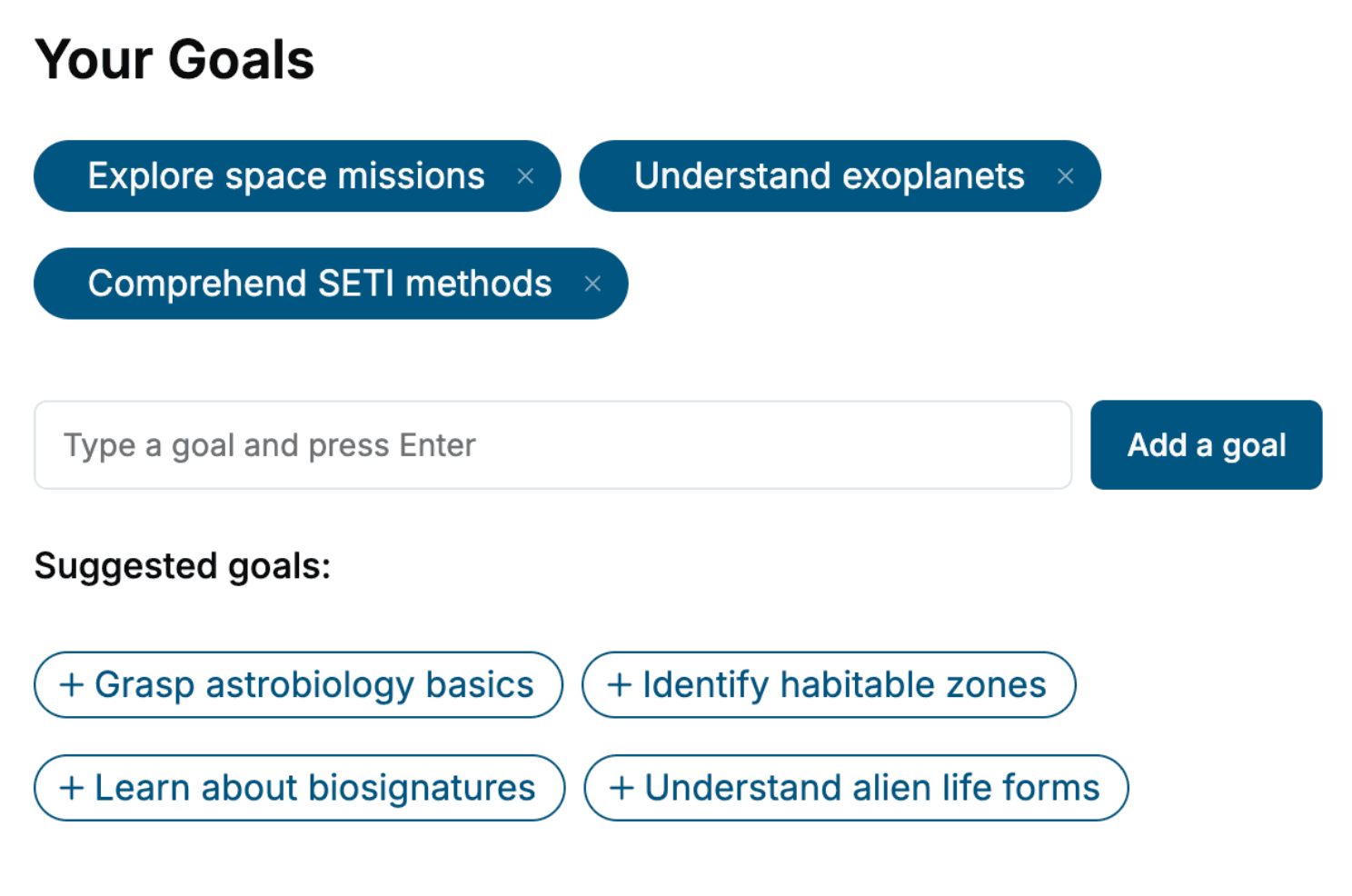
Specify your goals and choose sub-topics to include
- 3. Get your tailored book
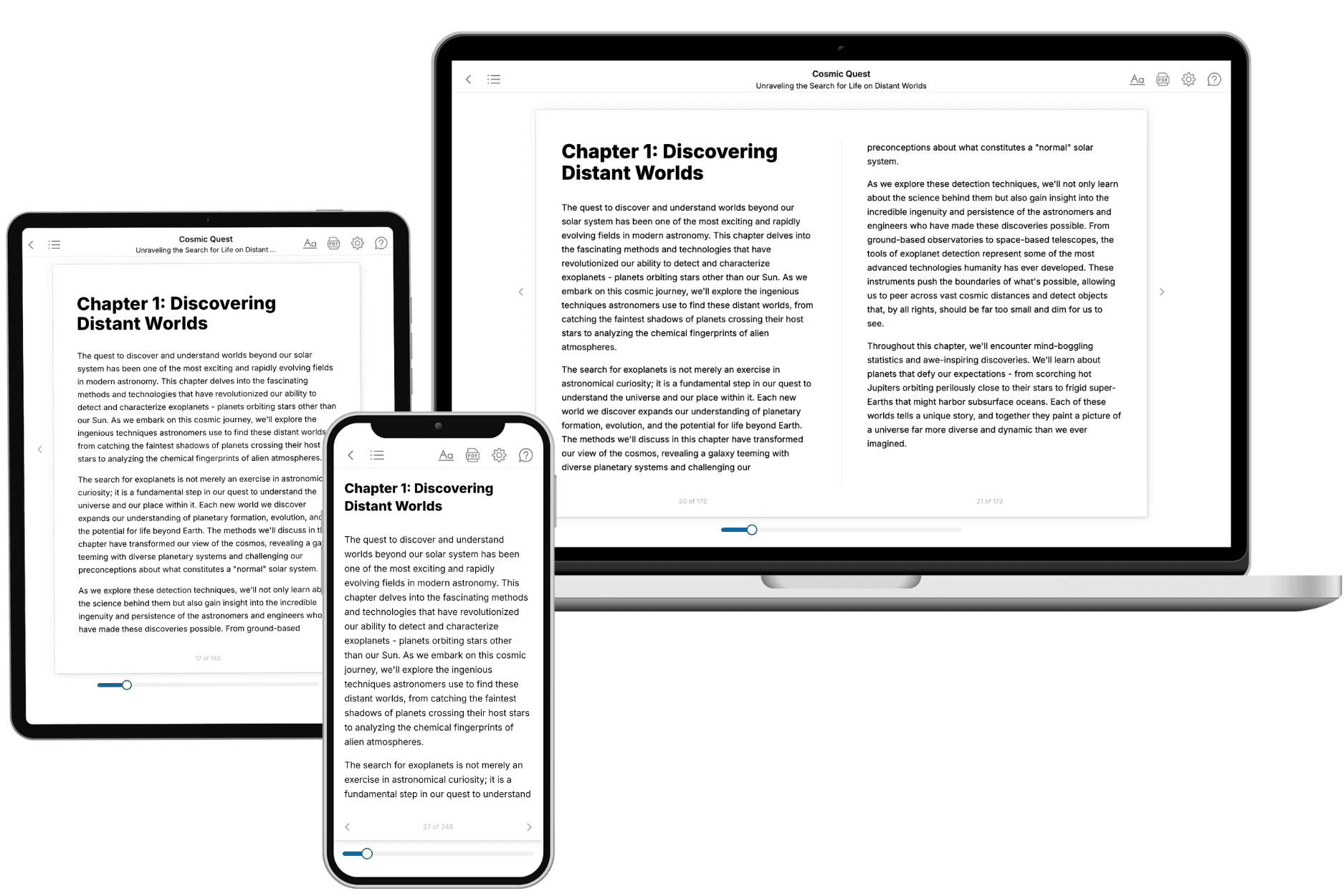
Your book is ready in 10 minutes. Read it online, download as EPUB or PDF, or send to Kindle.

Frequently asked questions
- What is TailoredRead?
TailoredRead creates complete, full-length nonfiction ebooks, written specifically for you. Tell us what you want to learn and why, and TailoredRead writes you a complete ebook on it, with charts, tables, and diagrams throughout. Read it online, on Kindle, or on any e-reader, or download it as a PDF or EPUB. Every book is written fresh the day you order it.
- How is the book tailored to me?
Before anything is written, you answer a few short questions about your goals, your background, and the topics you care about. Your book is then planned around your answers: written at your level, focused on your goals, and covering the topics you chose, instead of the one-size-fits-all book a store sells everyone.
- Will it read like generic AI content?
No. Your book isn't a chat transcript: it's planned chapter by chapter before a single word is written, told in a clear book voice, and explains ideas visually with charts, tables, and diagrams. After writing, every book goes through an editorial pass that polishes chapters so the book reads consistent from start to finish. Judge for yourself: browse thousands of sample books on our Explore Books page.
- How accurate is the content?
Our AI first checks whether your subject needs live research. Niche and fast-moving subjects are researched before writing, and the book plan and chapters are grounded in what it finds. After writing, every book goes through a quality pass that checks its facts and consistency, and researched books list their sources in a Notes section at the back.
- How long is the book?
You choose the length: Comprehensive (250-300 pages), Detailed (150-200 pages), Essential (70-100 pages), or Short (30-50 pages).
- Does the book include visuals?
Yes. Every book includes charts, tables, and diagrams: timelines, checklists, step-by-step guides, decision trees, comparison tables, matrices, and bar charts. A typical book includes dozens of these visual elements.
- Can I read it on Kindle? What formats can I download?
Yes. Every book can be read in our online reader or downloaded as a PDF or EPUB. The EPUB can be opened with Kindle, Apple Books, Kobo, and any e-reader. The Commercial and Author licenses also include an editable Word (DOCX) and Markdown download.
- How much does it cost?
About the price of a regular ebook. The exact price depends on your book's length and complexity, from $2 for the shortest books to $35 for the most comprehensive, and it's shown when you review your book, before you commit to anything. Each book is a one-time purchase, yours to keep, no subscription. Licenses that let you share, teach, or publish your book range from $35.99 to $49.99.
- Can I preview the book before purchasing?
Before you pay, you'll see what your book will cover: the title, a detailed description, the estimated length, and the complete chapter-by-chapter table of contents, so you know what you're getting before you decide. The full text itself is written after you purchase.
- How long does it take to create a book?
About 10 minutes. You can start reading the opening chapters while the rest is still being written.