Business Law Books
Explore tailored Business Law books created by our AI
The Antitrust Paradox
How Competition Laws Shape Markets, Democracy, and Your Rights
Understand how antitrust regulations work as a critical mechanism balancing market competition, constitutional rights, and democratic governance. This book explores the intricate relationship between competition law and constitutional principles, revealing how legal frameworks designed to prevent monopolies actually shape the structure of entire industries and influence political power distribution. You'll discover why antitrust enforcement has swung dramatically between different philosophies—from trust-busting populism to consumer welfare economics to contemporary concerns about tech giants. Through clear explanations of landmark cases, constitutional tensions, and real-world applications, you'll gain insight into how these regulations affect innovation, consumer choice, and market access. Whether you're interested in understanding Big Tech regulation, healthcare consolidation, or the fundamental question of how much government should control markets, this book provides the analytical tools to evaluate competing arguments and understand the stakes involved in antitrust policy debates.
Master the sophisticated strategies and tactical frameworks essential for negotiating, structuring, and optimizing pharmaceutical licensing and collaboration agreements that drive competitive advantage and maximize shareholder value. This comprehensive guide equips you with the analytical tools, financial models, and negotiation tactics to design licensing programs that align with corporate strategy, accurately calculate royalty rates, and effectively manage risk across complex multi-jurisdictional transactions. Drawing on real-world deal structures and market benchmarks, you'll learn how to optimize intellectual property value through strategic exclusivity provisions, milestone payment architecture, and improvement rights allocation. Navigate the complexities of cross-border licensing, regulatory approval triggers, and royalty stacking mitigation while developing robust dispute resolution mechanisms tailored to pharmaceutical transactions. Whether structuring biotech collaborations, licensing patented technologies, or managing sublicensing rights, this book provides the advanced frameworks and practical insights needed to negotiate from a position of strength and create deals that deliver sustainable competitive advantage.
Many lawyers struggle to confidently apply antitrust principles because they lack a systematic framework for analyzing markets and identifying dominance. Without mastering market definition and concentration analysis, you risk misdiagnosing competitive issues, weakening client arguments, and missing critical legal opportunities. This book provides a comprehensive yet accessible guide to antitrust fundamentals tailored for legal professionals. You'll learn how to define relevant markets using modern methodologies, calculate and interpret market concentration metrics, assess monopoly power with precision, and evaluate market dominance across multiple dimensions. Each concept builds logically from foundational principles to sophisticated analytical techniques, with practical examples drawn from landmark cases and contemporary enforcement actions. By the end, you'll possess the analytical tools and conceptual clarity needed to confidently advise clients, structure arguments, and navigate complex antitrust matters with authority and precision.
Are you leaving millions in government contract opportunities on the table because federal procurement regulations feel like a foreign language? Federal government contracting represents one of the largest untapped markets for small businesses, yet most entrepreneurs avoid it entirely due to perceived complexity. This practical guide demystifies the Federal Acquisition Regulation (FAR), set-aside programs, compliance requirements, and contract management strategies that government contractors must master. You'll learn how to navigate small business set-asides, understand the Rule of Two, research FAR clauses, handle bid protests, manage contract compliance audits, and differentiate between claims and equitable adjustments. Whether you're pursuing your first government contract or scaling an existing federal business, this book provides the regulatory knowledge and strategic insights you need to compete confidently, avoid costly compliance mistakes, and build a sustainable government contracting practice.
Navigating trademark clearance and infringement analysis is one of the most critical—and complex—responsibilities of an IP paralegal. You need to identify potential conflicts before they become costly disputes, assess infringement risks accurately, and protect your organization's trademark portfolio. Yet the landscape is fragmented: federal databases, state registries, common law rights, and international considerations all demand attention, and the legal standards for infringement, dilution, and comparative advertising differ significantly. This practical guide cuts through the complexity by providing you with proven search strategies, systematic risk assessment frameworks, and step-by-step procedures for conducting clearance searches, analyzing infringement claims, managing opposition procedures, and executing due diligence in M&A transactions. You'll learn how to evaluate trademark strength, navigate the likelihood of confusion test, identify dilution risks, and ensure compliance with trademark use requirements. Whether you're protecting a new brand launch, evaluating acquisition targets, or defending against infringement claims, this book gives you the tools and knowledge to work with confidence and precision.
Cannabis businesses face a unique accounting challenge: navigating Section 280E's prohibition on deducting ordinary business expenses while managing complex federal and state regulatory requirements that traditional accounting frameworks don't address. This comprehensive guide equips you with advanced strategies to optimize your 280E position, implement bulletproof internal controls, and master revenue recognition standards specific to the cannabis industry. You'll learn sophisticated cost allocation techniques that maximize legitimate deductions, develop compliance documentation that withstands IRS scrutiny, and create financial reporting systems that satisfy both federal regulators and state licensing authorities. Whether you're strengthening audit procedures, improving cash flow forecasting, or enhancing inventory tracking methods, this book provides the practical frameworks and strategic insights that cannabis CFOs and accountants need to transform compliance from a burden into a competitive advantage.
Imagine confidently reviewing a complex enterprise software agreement and immediately identifying the critical terms, potential risks, and negotiation opportunities. Picture yourself developing a compliance framework that protects your organization from costly violations while optimizing your software investments. This comprehensive handbook equips you with the practical knowledge and strategic insights needed to master software licensing in today's complex enterprise environment. From understanding fundamental licensing concepts and negotiating favorable contracts to managing cloud computing licenses and developing robust compliance procedures, you'll gain the expertise to navigate every aspect of software licensing. Whether you're reviewing SaaS agreements, managing third-party dependencies, interpreting license restrictions, or preparing for audits, this guide provides clear, actionable guidance grounded in real-world scenarios. You'll learn how to leverage volume discounts, protect your organization through proper indemnification clauses, and stay current with evolving licensing law. This is the essential resource for compliance professionals who want to move beyond basic understanding to strategic mastery of software licensing.
Protect your medical practice from the competitive threats that keep physicians awake at night. This comprehensive guide provides the defensive strategies you need to safeguard proprietary treatment protocols, prevent employee knowledge theft, secure patient data, and defend against sabotage and defamation. Written specifically for physicians, this book translates complex legal and business concepts into practical, actionable steps you can implement immediately. You'll master trademark and patent protection, understand non-compete agreements and confidentiality protocols, learn how to identify and respond to unfair competition tactics, and discover aggressive legal remedies when competitors cross the line. From supply chain integrity audits to counterintelligence protocols, from reputation management to business continuity planning, you'll build a fortress around your practice. Whether you're a solo practitioner or lead a larger medical group, this guide equips you with the knowledge and frameworks to protect what you've built and maintain your competitive edge.
Many patent attorneys struggle with the complexity of PCT applications at the EPO, leading to unexpected rejections, missed deadlines, and inflated prosecution costs. This advanced guide cuts through the confusion by providing strategic frameworks for mastering every phase of EPO PCT prosecution. You'll learn how to draft claims that anticipate EPO examination patterns, navigate supplementary search requests with precision, optimize your regional entry strategy before EPO designation, and structure divisional applications for maximum portfolio value. The book covers priority claim documentation, EPO examination guideline interpretation, search report optimization, Rule 11 compliance strategies, formality check procedures, and fee structure navigation. Each chapter combines practical procedures with strategic decision-making frameworks, enabling you to reduce rejection rates, accelerate prosecution timelines, and deliver superior client advisory services. Whether you're managing complex international portfolios or advising clients on EPO strategy, this guide provides the advanced knowledge and tactical approaches needed to achieve consistent success.
Navigate the complexities of international patent prosecution with precision and confidence. This advanced guide takes you through every stage of the Patent Co-operation Treaty system, from initial filing strategy through national phase entry and beyond. You'll master the procedural requirements, fee structures, and strategic decision points that separate competent practitioners from expert advisors. Learn how to preserve priority dates flawlessly, select optimal International Search Authorities, craft examination responses that withstand scrutiny, and guide clients through multi-jurisdiction filing plans with clarity. Whether you're preparing for the EQE exam, seeking EPAC certification, or building specialized consulting capabilities, this handbook provides the practical knowledge and strategic frameworks you need. Discover how to optimize claim scope, manage timelines across jurisdictions, and leverage divisional and continuation tactics to strengthen patent portfolios. Each chapter combines regulatory requirements with real-world application, ensuring you can immediately implement advanced prosecution strategies that enhance client outcomes and advance your professional standing.
Ideas Under Siege
How Intellectual Property Rights Shape the Conservative-Liberal Divide
You're about to discover that intellectual property law isn't just about protecting creators—it's a battleground where fundamentally different visions of freedom, property, and progress collide. This book reveals how conservative and liberal philosophies shape every aspect of IP policy, from patent duration to copyright enforcement, and why these differences matter far beyond legal circles. You'll explore how property rights philosophy influences patent law, why copyright battles reveal deeper ideological divides, and how trade secrets raise questions about corporate transparency. Through real-world examples—from pharmaceutical patents to digital rights—you'll see how IP policy decisions affect innovation, access to knowledge, and economic opportunity. Whether you're interested in politics, business, technology, or simply understanding why people disagree so passionately about intellectual property, this book provides the framework to make sense of these conflicts. You'll finish with a clearer understanding of how your own political values shape your views on IP, and why these debates will only intensify as technology evolves.
The Joint Venture Playbook
Build Profitable Partnerships That Scale Your Business
What if the key to exponential business growth wasn't building everything yourself, but strategically partnering with the right organization? Joint ventures offer a powerful path to market expansion, risk reduction, and access to new capabilities—but only when structured and managed correctly. This guide cuts through the complexity to show you exactly how to identify promising partnership opportunities, evaluate potential partners with rigorous due diligence, negotiate terms that protect your interests, and build governance structures that keep both parties aligned. You'll learn from real-world case studies what separates thriving partnerships from costly failures, discover the legal and financial frameworks that prevent disputes, and master the relationship management skills that transform business partners into true collaborators. Whether you're exploring your first joint venture or scaling an existing partnership portfolio, this book provides the strategic insights and practical tools you need to create partnerships that deliver measurable results.
Workplace investigations are high-stakes endeavors where incomplete evidence, procedural missteps, or misunderstanding employment law can expose organizations to legal liability while failing to achieve fairness. As a labour relations investigator, you navigate complex employment law, manage competing stakeholder interests, and must maintain credibility under scrutiny. This handbook provides a practical, evidence-based framework for conducting thorough investigations, gathering admissible evidence, understanding employment law frameworks, and resolving disputes fairly. You'll master interview techniques that uncover truth, learn to assess witness credibility, develop documentation practices that withstand legal review, and understand how collective bargaining agreements and labour standards shape your investigative approach. Whether handling harassment complaints, performance disputes, or discrimination allegations, this guide equips you with the skills, knowledge, and confidence to conduct investigations that are legally sound, ethically grounded, and genuinely fair to all parties involved.
Navigate the complex world of startup partnerships with confidence and clarity. This comprehensive guide provides you with battle-tested frameworks for managing equity structures, negotiating alliance terms, and scaling collaborative ventures. Whether you're structuring founder equity distributions, designing vesting schedules, negotiating investor rights, or building governance models, you'll discover practical strategies grounded in real-world startup dynamics. Learn how to align shareholder interests across multiple stakeholder groups, implement anti-dilution protections, design effective equity compensation plans, and create exit strategies that maximize value for all parties. With clear explanations of complex concepts like liquidation preferences, drag-along rights, and earnout agreements, this book transforms equity management from a source of conflict into a strategic advantage. Perfect for finance professionals entering the startup ecosystem, this guide bridges the gap between traditional corporate finance and venture capital dynamics, giving you the tools to build sustainable, profitable partnerships.
You've built your app on Replit. Now comes the hardest part: getting it ready to launch and actually launching it successfully. This book walks you through every single step required to take your app from development to the app stores and web—no guesswork, no missed steps. You'll learn exactly what testing needs to happen, how to prepare your app store listings for maximum visibility, what legal and financial setup is required, how to plan launch day down to the minute, and how to monitor and respond to issues in real time. Whether you're launching on iOS, Android, or the web, this guide covers app store submission requirements, pre-launch testing checklists, cross-platform compatibility, security and privacy compliance, user onboarding design, customer support readiness, and post-launch optimization. Each chapter includes practical checklists and timelines you can use immediately. By the end, you'll have a complete launch plan and the confidence that your app is truly ready for the world.
Imagine launching an organization where decisions are made transparently by your community, treasury management is automated and secure, and governance happens without central authority. This handbook gives you the practical blueprint to build that reality. You'll progress from understanding how smart contracts execute organizational rules to designing token economics that align incentives across your community. You'll learn why The DAO's $70M hack happened and how modern security practices prevent similar disasters. You'll explore governance mechanisms that balance decentralization with decision-making speed, and discover organizational structures that work at any scale. Whether you're building a DeFi protocol, investment collective, or operational DAO, this guide walks you through each critical decision: choosing your blockchain, designing membership models, implementing multi-signature security, and navigating regulatory requirements. Each module builds on the previous one, giving you both conceptual understanding and actionable frameworks you can apply immediately to your DAO launch.
Navigate the complex world of private military contractors and their profound impact on global security. This book cuts through the misconceptions and provides you with a clear, evidence-based understanding of how PMCs operate, why nations employ them, and what their rise means for international stability. You'll explore the historical evolution of military privatization, examine real-world case studies from Iraq to Africa, and understand the legal frameworks—and gaps—that govern these powerful organizations. Whether you're concerned about accountability, curious about defense policy, or seeking to understand modern conflicts, this book equips you with the knowledge to engage thoughtfully with one of the most consequential trends in contemporary security. Discover how PMCs challenge traditional notions of state power, what regulations actually work, and what the future holds for private military forces in an increasingly complex world.
The TSCA Handbook
Understanding Chemical Regulation, Policy Debates, and Real-World Impact
Imagine having a clear, authoritative guide to one of America's most important—yet often misunderstood—environmental laws. The Toxic Substances Control Act shapes everything from the products in your home to the chemicals in our water supply, yet few people understand how it actually works or why it remains so controversial. This book cuts through the complexity to explain TSCA's origins, its dramatic 2016 overhaul, and the ongoing policy debates that define chemical regulation today. You'll discover how the EPA evaluates chemical safety, why certain substances remain on the market despite health concerns, and how different stakeholders—from industry to environmental advocates—influence regulatory decisions. Whether you're a professional navigating chemical regulations, a policymaker shaping environmental law, or simply someone who wants to understand the rules governing the products you use daily, this handbook provides the knowledge you need. Explore the science behind chemical assessment, the economics of regulation, and the political forces that drive policy change. Understand not just what TSCA does, but why it matters and where chemical regulation is headed.
Related books you may like:
Constitutional amendments represent the ultimate expression of democratic will—yet most Americans have little understanding of how they actually happen. The path from idea to ratified amendment is deliberately arduous, requiring supermajority support in Congress and approval from three-fourths of state legislatures. This creates a paradox: amendments are rare precisely because they're meant to be, yet understanding how they succeed—and why most fail—reveals essential truths about American politics, coalition-building, and social change. This guide walks you through the complete amendment process, from proposal mechanisms to state ratification procedures, while analyzing the political strategies that have driven successful campaigns and the missteps that have derailed others. You'll examine historical amendment timelines, study failed attempts to understand what went wrong, and learn the grassroots mobilization tactics, advocacy strategies, and coalition-building approaches that actually move the needle on constitutional change. Whether you're interested in understanding past amendments or evaluating modern proposals, this book provides the analytical framework and practical knowledge to comprehend how America's highest law gets changed.
You'll gain a sophisticated understanding of one of the most powerful yet least understood mechanisms in American democracy. This book takes you beyond the basic civics lesson to explore how constitutional amendments actually happen—and why they so rarely do. You'll discover the strategic calculations, political battles, and social movements that have shaped America's founding document across more than two centuries. Through detailed analysis of both successful and failed amendments, you'll learn to recognize the patterns that determine which proposed changes gain traction and which fade into obscurity. You'll understand how the Founders' original design has been tested, adapted, and sometimes circumvented through formal and informal means. From the Bill of Rights to Prohibition and its repeal, from voting rights expansions to contemporary proposals, you'll see how each amendment reflects the values and conflicts of its era. This book equips you with analytical frameworks to evaluate current amendment proposals and understand their likelihood of success. You'll appreciate how this deliberately difficult process has both protected fundamental rights and sometimes delayed necessary reforms, shaping the nation's trajectory in profound ways.
Navigate the rapidly evolving landscape of AI liability that now confronts every legal practice. As courts apply traditional tort, contract, and product liability frameworks to AI-assisted legal work, practitioners face unprecedented malpractice exposure—from hallucinated citations to supervisory failures to insurance coverage gaps. This book guides you through the critical decisions you must make today to protect your practice tomorrow. You'll learn how to assess AI malpractice risks using real-world case analysis, implement supervisory protocols that satisfy ABA Rules 5.1 and 5.3, design AI disclosure frameworks that withstand scrutiny, and advise clients on their own AI liability exposure. Drawing on verified research through July 2026, including Lloyd's emerging risk classifications, state AI governance statutes, and professional liability insurance trends, this resource provides the frameworks, checklists, and strategic guidance you need to deploy AI responsibly while managing the paradoxical liability landscape where both using and failing to use AI creates exposure. Whether you're building firm-wide AI governance or counseling individual clients, this book equips you with the competence and documentation standards that define professional practice in the AI era.
Understand how a single constitutional phrase has become the foundation of American civil rights protections. The Equal Protection Clause of the 14th Amendment is one of the most consequential yet misunderstood provisions in the Constitution. This book traces its journey from a Reconstruction-era guarantee to the powerful legal tool that dismantled Jim Crow segregation, expanded rights for women and minorities, and continues shaping debates about fairness today. You'll explore landmark Supreme Court cases, learn how courts determine what "equal protection" actually means, and discover why this clause remains central to contemporary civil rights struggles. Whether you're studying history, law, or simply want to understand the constitutional backbone of American equality, this accessible guide illuminates how legal principles translate into real-world protections and why the fight for equal protection remains unfinished.
Create a Business Law Book Tailored to You
Create an AI-crafted book tailored to your goals, interests, and background






Benefits of AI-tailored books
- Read one book, not ten:
- all the Business Law knowledge you need, gathered into a single book.
- Save days of learning:
- tell us your goals, choose your topics, and the whole book is built around them.
- Learn effortlessly:
- Business Law book written for your specific background and expertise.
- Understand at a glance:
- includes charts, tables, timelines, checklists, decision trees, and more.
- Stay current:
- written the day you order it, not years ago.
- Trust what you read:
- every book is checked for accuracy, with real research when your subject needs it.
Create your unique book in 3 steps
- 1. Select your focus
Select the focus of your Business Law book and share your background
- 2. Personalize your book
Specify your goals and choose sub-topics to include
- 3. Get your tailored book
Your book is ready in 10 minutes. Read it online, download as EPUB or PDF, or send to Kindle.


Start from a template
Frequently asked questions
- What is TailoredRead?
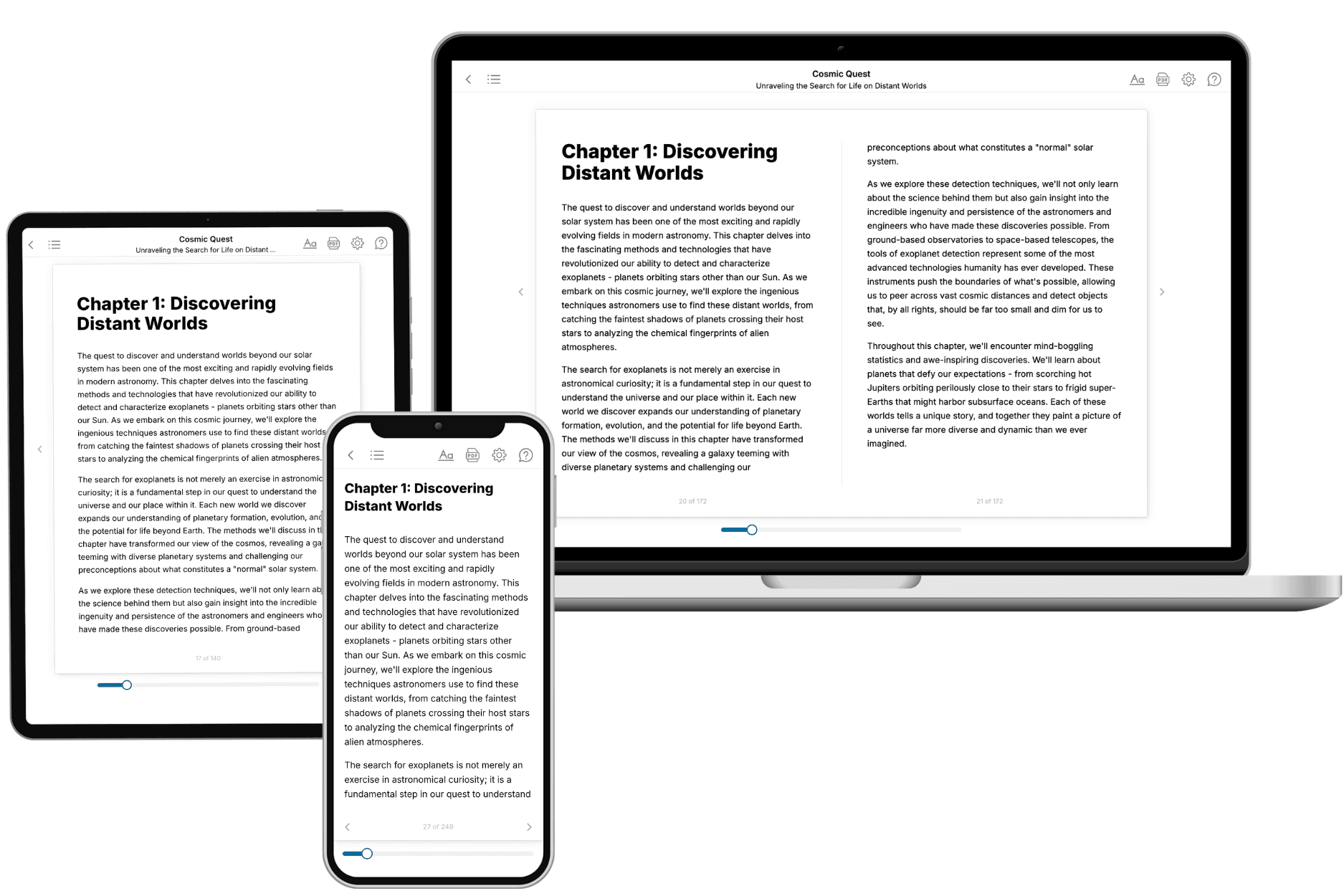
TailoredRead creates complete, full-length nonfiction ebooks, written specifically for you. Tell us what you want to learn and why, and TailoredRead writes you a complete ebook on it, with charts, tables, and diagrams throughout. Read it online, on Kindle, or on any e-reader, or download it as a PDF or EPUB. Every book is written fresh the day you order it.
- How is the book tailored to me?
Before anything is written, you answer a few short questions about your goals, your background, and the topics you care about. Your book is then planned around your answers: written at your level, focused on your goals, and covering the topics you chose, instead of the one-size-fits-all book a store sells everyone.
- Will it read like generic AI content?
No. Your book isn't a chat transcript: it's planned chapter by chapter before a single word is written, told in a clear book voice, and explains ideas visually with charts, tables, and diagrams. After writing, every book goes through an editorial pass that polishes chapters so the book reads consistent from start to finish. Judge for yourself: browse thousands of sample books on our Explore Books page.
- How accurate is the content?
Our AI first checks whether your subject needs live research. Niche and fast-moving subjects are researched before writing, and the book plan and chapters are grounded in what it finds. After writing, every book goes through a quality pass that checks its facts and consistency, and researched books list their sources in a Notes section at the back.
- How long is the book?
You choose the length: Comprehensive (250-300 pages), Detailed (150-200 pages), Essential (70-100 pages), or Short (30-50 pages).
- Does the book include visuals?
Yes. Every book includes charts, tables, and diagrams: timelines, checklists, step-by-step guides, decision trees, comparison tables, matrices, and bar charts. A typical book includes dozens of these visual elements.
- Can I read it on Kindle? What formats can I download?
Yes. Every book can be read in our online reader or downloaded as a PDF or EPUB. The EPUB can be opened with Kindle, Apple Books, Kobo, and any e-reader. The Commercial and Author licenses also include an editable Word (DOCX) and Markdown download.
- How much does it cost?
About the price of a regular ebook. The exact price depends on your book's length and complexity, from $2 for the shortest books to $35 for the most comprehensive, and it's shown when you review your book, before you commit to anything. Each book is a one-time purchase, yours to keep, no subscription. Licenses that let you share, teach, or publish your book range from $35.99 to $49.99.
- Can I preview the book before purchasing?
Before you pay, you'll see what your book will cover: the title, a detailed description, the estimated length, and the complete chapter-by-chapter table of contents, so you know what you're getting before you decide. The full text itself is written after you purchase.
- How long does it take to create a book?
About 10 minutes. You can start reading the opening chapters while the rest is still being written.