AI Safety Books
Explore tailored AI Safety books created by our AI
Adversarial Machine Learning
Understanding Attacks, Defenses, and the Future of AI Security
Build secure and resilient AI systems by mastering the landscape of adversarial machine learning. This comprehensive guide takes you from foundational concepts to advanced defense strategies, equipping you with the knowledge to protect your models against sophisticated attacks. You'll explore how adversarial examples expose vulnerabilities in neural networks, understand the mechanics of evasion and poisoning attacks, and discover proven defense mechanisms that work in practice. Through clear explanations, practical examples, and real-world case studies, you'll learn to think like an attacker to defend like an expert. Whether you're developing autonomous systems, deploying facial recognition, or building medical AI, this book provides the essential framework for understanding and mitigating adversarial risks. Gain the skills to evaluate your model's robustness, implement effective defenses, and make informed security decisions in your AI projects.
You'll master the essential techniques for building neural networks that stand up to adversarial attacks and maintain performance under challenging conditions. This book bridges the gap between theoretical understanding and practical implementation, providing you with actionable strategies to strengthen your AI systems. Learn how adversarial examples expose vulnerabilities in standard neural networks, discover multiple attack generation methods, and implement proven adversarial training approaches. You'll explore the critical trade-offs between model accuracy and robustness, understand how to measure and validate your defenses, and discover how to integrate adversarial training into your development pipeline. Whether you're building security-critical applications or simply want more reliable models, this guide equips you with the knowledge to create neural networks that perform consistently even when facing adversarial inputs and real-world uncertainties.
Navigate the rapidly evolving landscape of AI liability that now confronts every legal practice. As courts apply traditional tort, contract, and product liability frameworks to AI-assisted legal work, practitioners face unprecedented malpractice exposure—from hallucinated citations to supervisory failures to insurance coverage gaps. This book guides you through the critical decisions you must make today to protect your practice tomorrow. You'll learn how to assess AI malpractice risks using real-world case analysis, implement supervisory protocols that satisfy ABA Rules 5.1 and 5.3, design AI disclosure frameworks that withstand scrutiny, and advise clients on their own AI liability exposure. Drawing on verified research through July 2026, including Lloyd's emerging risk classifications, state AI governance statutes, and professional liability insurance trends, this resource provides the frameworks, checklists, and strategic guidance you need to deploy AI responsibly while managing the paradoxical liability landscape where both using and failing to use AI creates exposure. Whether you're building firm-wide AI governance or counseling individual clients, this book equips you with the competence and documentation standards that define professional practice in the AI era.
You're navigating a world where artificial intelligence increasingly influences critical decisions—from hiring and lending to healthcare and criminal justice—yet many AI systems operate as black boxes, their decisions unexplainable and potentially biased. The Ethics of Artificial Intelligence addresses this challenge head-on by providing a comprehensive guide to understanding, implementing, and governing ethical AI systems. This book bridges the gap between abstract ethical principles and real-world regulatory requirements, drawing on frameworks from UNESCO, the EU AI Act, and leading technology organizations. You'll learn the five foundational ethical principles that guide responsible AI development, discover how to identify and mitigate algorithmic bias, understand transparency and accountability requirements, and explore practical strategies for building trustworthy systems. Whether you're developing AI systems, making decisions about AI adoption, or simply seeking to understand this transformative technology, this book equips you with the knowledge and frameworks needed to navigate the complex intersection of innovation and responsibility.
Most manufacturing leaders assume AI agents will either operate fully autonomously or require constant human approval—but neither extreme works in practice. The reality is more nuanced: modern manufacturing needs AI agents that operate within clearly defined boundaries, escalate decisions intelligently, and maintain human oversight without creating bottlenecks that slow production to a crawl. This book cuts through the hype and provides a practical framework for building human-centric AI agent systems that actually work in manufacturing environments. You'll learn how to design governance architectures that comply with EU AI Act requirements, implement multi-agent orchestration patterns that coordinate distributed intelligence, and build operator trust through transparency and explainability. Whether you're integrating industrial copilots, managing real-time production monitoring, or planning your Industry 5.0 transformation, this guide provides the architectural patterns, governance models, and implementation strategies that manufacturing teams need to succeed with AI agents in 2026 and beyond.
Imagine deploying an AI system that makes decisions affecting millions of people—hiring candidates, approving loans, or diagnosing medical conditions—only to discover it systematically disadvantages certain groups. This is the reality of algorithmic bias, and it's more common than you might think. In neural networks and machine learning systems, bias doesn't emerge from malicious intent; it quietly infiltrates through training data, design choices, and evaluation methods. This book demystifies how bias enters AI systems and, more importantly, shows you how to stop it. You'll explore the technical mechanisms that allow bias to propagate through feedforward neural networks, examine real-world case studies where bias caused tangible harm, and master practical strategies to detect and mitigate it. Whether you're building models, managing AI teams, or making decisions about AI deployment, you'll gain the frameworks and tools needed to create fairer, more responsible AI systems that serve everyone equitably.
Poverty targeting systems powered by artificial intelligence promise efficiency and precision, yet they risk embedding bias, excluding the most vulnerable, and deepening inequality through algorithmic decisions made without community input or meaningful transparency. As a poverty researcher, you face a critical challenge: how do you evaluate whether an AI system actually reduces poverty equitably, or whether it simply automates discrimination at scale? This book provides rigorous frameworks and practical methods to assess algorithmic bias, demand transparency, validate predictive models, and design ethical AI systems centered on equity. Drawing on case studies from Togo's Novissi program, World Bank poverty mapping initiatives, and emerging fairness-aware ML approaches, you'll learn to critique predictive poverty models, detect algorithmic bias across demographic groups, and implement community-led validation approaches. The book addresses the full ecosystem of concerns: algorithmic accountability mechanisms, job automation equity impacts, participatory AI design methods, and citizen-science hybrid models that overcome digital infrastructure gaps. Whether you're evaluating existing poverty programs or designing new ones, this guide equips you with evidence-based tools to ensure AI serves poverty reduction without sacrificing fairness, transparency, or community agency.
The Genealogy of Singularity
Tracing Ethical Frameworks from Philosophy to AI Futures
Most discussions of artificial singularity assume it's either an inevitable technological milestone or a catastrophic risk to be managed—but this binary framing obscures the deeper philosophical questions at stake. This book traces how contemporary singularity ethics emerged from scattered philosophical traditions, revealing the genealogical roots of concepts like consciousness, moral agency, and inevitability that now shape AI development and policy. Drawing on Foucault's genealogical method, Kierkegaard's existential philosophy, Deleuze's theory of divergence, and Derrida's deconstruction, you'll discover how singularity discourse constructs knowledge rather than simply describing technological futures. The book synthesizes the Vinge-Kurzweil-Bostrom frameworks while subjecting them to critical genealogical examination, explores consciousness and ethical agency through irreducibility and relational ontology, and examines how neurodiversity perspectives challenge normative assumptions in singularity theory. Whether you're developing a philosophical treatise, analyzing discourse shifts, or seeking multidisciplinary approaches to AI ethics, this genealogical analysis provides the conceptual tools to move beyond simplistic inevitability debates toward more rigorous philosophical engagement with technological singularity.
Neuralese
Building Machine-to-Machine Communication Through Vector-Based Languages
Discover how artificial intelligence is evolving beyond human language into a new frontier of machine-to-machine communication. This book guides you through the emerging field of Neuralese—a vector-based language system that enables AI agents to coordinate, reason, and collaborate in high-dimensional spaces that humans cannot directly perceive. You'll explore the theoretical foundations of emergent machine languages, learn practical implementation techniques for your R&D projects, and understand how to bridge the gap between AI reasoning and human comprehension. From artificial life simulations to next-generation AI architectures, you'll gain the knowledge to design systems where machines communicate with unprecedented efficiency and sophistication. Whether you're building autonomous agents, exploring artificial consciousness frameworks, or innovating AI coordination protocols, this book provides the technical depth and practical guidance needed to implement Neuralese in real-world applications.
You'll move from understanding what agentic AI is to deploying autonomous systems that handle your business's most time-consuming tasks. This book walks you through the complete journey: starting with LLM fundamentals and prompt engineering, progressing to agent architecture and autonomous decision-making, then applying these concepts to real business problems like lead generation, customer onboarding, and sales automation. You'll learn how to measure agent performance through business-relevant KPIs, design multi-agent workflows that collaborate on complex tasks, and build a sustainable AI strategy for your startup. Each chapter combines practical frameworks with actionable implementation steps, so you can immediately apply concepts to your business. By the end, you'll understand how to architect, deploy, and optimize autonomous agents that scale your operations without proportionally scaling your team—turning repetitive business processes into intelligent, self-managing systems that drive measurable ROI.
Multi-Agent Systems in AI
Building Intelligent Workflows That Work Together
Most organizations struggle with AI systems that work in isolation—single agents that can't collaborate, coordinate, or handle complex workflows requiring specialized expertise. This book addresses that fundamental limitation by showing you how multi-agent systems enable autonomous intelligent agents to work together, decompose complex tasks, and solve problems that no single agent could handle alone. You'll learn the architectural patterns, orchestration strategies, and practical frameworks that leading enterprises are using to move beyond experimental AI into production multi-agent deployments. From understanding agent communication protocols to designing supervisor architectures and implementing real-time coordination, this guide provides the knowledge and tools you need to build intelligent workflows that actually work. Whether you're architecting systems for your organization or preparing for the multi-agent-first future arriving in 2026, you'll gain the strategic insights and technical foundations to lead this transformation.
What separates ML professionals who drive real business value from those whose models never leave the notebook? The answer isn't better algorithms—it's understanding how to operationalize machine learning at scale. This book bridges the gap between ML theory and business reality, showing you how organizations actually deploy, monitor, and maintain machine learning systems in production. You'll learn the operational frameworks that separate successful ML initiatives from failed experiments, explore how generative AI is reshaping career opportunities, and discover the skills that make you indispensable in AI-driven organizations. Whether you're building your first production model or scaling ML across an enterprise, this guide provides the practical knowledge and strategic perspective needed to drive measurable business impact and accelerate your career in the rapidly evolving AI landscape.
Building Intelligent Agents
A Practical Guide to AI Architecture, Design, and Deployment
Imagine building AI systems that think, decide, and act autonomously—agents that understand natural language, learn from experience, and collaborate with humans to solve complex problems. This comprehensive guide takes you from foundational concepts to production-ready implementations. You'll master the architecture that powers intelligent agents, from perception and decision-making to action execution. Learn how to engineer prompts that unlock model capabilities, design reward functions that align agent behavior with your goals, and implement the neural networks and transformers that enable sophisticated reasoning. This book bridges theory and practice, covering Python development, API integration, debugging techniques, and deployment strategies. You'll explore reinforcement learning, multi-agent systems, and real-world applications across industries. Most importantly, you'll understand how to build agents responsibly—integrating safety, ethics, and human collaboration from day one. Whether you're building chatbots, autonomous systems, or decision-making tools, this guide provides the knowledge and practical frameworks you need to succeed in AI development.
Discover how to design AI agent systems that work alongside your manufacturing team rather than against them. This practical guide shows you how to build human-centric AI systems that enhance operator capabilities, improve decision-making, and maintain human control over critical processes. You'll learn the core architectural principles of human-in-the-loop systems, explainable AI frameworks that build operator trust, and collaborative robot integration strategies that maximize safety and productivity. Through real-world implementation examples from industry leaders, you'll understand how to orchestrate multi-agent systems, leverage natural language interfaces for intuitive human-AI collaboration, and use digital twins to minimize operational risk. Whether you're implementing Industry 5.0 initiatives or upgrading existing automation, this book provides the frameworks, tools, and strategies needed to create manufacturing systems where humans and AI agents work together as complementary partners, not competitors.
Language Models Demystified
Understanding GPT, AI, and the Future of Machine Learning
Imagine confidently understanding how the AI systems reshaping your industry actually work—not as magic, but as elegant mathematical systems you can evaluate, improve, and deploy responsibly. This book cuts through the hype surrounding language models like GPT-3 and ChatGPT to reveal how they truly function. You'll discover why these systems excel at some tasks while failing spectacularly at others, how to extract maximum value through effective prompting, and what limitations you must account for in real-world applications. Whether you're evaluating language models for your organization, building with them, or simply wanting to understand the technology reshaping communication and knowledge work, this guide provides the clarity and practical insights you need. Learn the architecture behind modern AI, the science of training and fine-tuning, and proven strategies for responsible deployment—all explained in clear, accessible language without requiring advanced mathematics.
Peer-to-Peer Federated Learning
Building Decentralized AI Systems Without Central Servers
Master the fundamentals and advanced techniques of peer-to-peer federated learning, the next frontier in decentralized artificial intelligence. You'll gain a comprehensive understanding of how to build machine learning systems that operate without central servers, keeping data private while enabling powerful collaborative learning across distributed networks. This book bridges the gap between theoretical concepts and practical implementation, walking you through the core principles of P2P FL, the unique challenges of non-IID data, and proven strategies for efficient peer communication. You'll explore real-world applications in mobile robotics, edge computing, and 5G networks, while learning how to navigate the critical trade-offs between privacy, performance, and communication efficiency. Whether you're designing distributed systems, researching decentralized AI, or building privacy-preserving applications, this guide provides the knowledge and frameworks you need to implement P2P federated learning effectively in your projects.
Symbolic AI
Building Intelligent Systems Through Logic, Knowledge, and Reasoning
What if the most intelligent systems weren't those that simply recognize patterns, but those that could reason through problems using explicit knowledge and logic? Symbolic AI represents a fundamentally different approach to machine intelligence—one that prioritizes interpretability, precision, and transparent reasoning over black-box pattern matching. This book explores how symbolic systems represent knowledge, apply logical rules, and make decisions in ways humans can understand and verify. You'll discover why major tech companies are investing in hybrid AI systems that combine symbolic reasoning with neural networks, and how symbolic approaches solve problems where deep learning falls short. From expert systems that diagnose diseases to knowledge graphs powering search engines, symbolic AI continues to drive critical applications. Whether you're developing AI systems, evaluating AI solutions, or simply curious about how intelligent machines actually think, this guide demystifies symbolic approaches and shows you when and how to apply them effectively.
You're about to discover that artificial intelligence isn't reserved for tech experts or computer scientists—it's a practical toolkit that's reshaping every industry and profession. This book walks you through the complete AI journey: from understanding what machine learning actually does, to recognizing it in action across healthcare, business, education, and creative fields, to building your own working models using accessible tools. You'll learn how data becomes the fuel for intelligent systems, how machines learn from examples and patterns, and why the models you build need constant refinement in the real world. You'll explore generative AI's creative potential, master the art of communicating with AI through effective prompts, and grapple with the ethical questions that matter. Whether you're curious about how Netflix recommends shows, how hospitals diagnose diseases, or how to build an AI solution for your own challenge, this book provides the conceptual foundation and practical skills you need to think critically about AI and contribute meaningfully to its responsible development.
AI and the End Times
Discerning Technology Through Scripture, Prophecy, and Spiritual Wisdom
As artificial intelligence reshapes society, Christian leaders face urgent questions: Does AI fulfill biblical prophecy? Is it inherently dangerous? How should we respond spiritually and practically? This book guides you through a careful, theologically grounded exploration of these questions. You'll examine how to interpret end-times prophecy responsibly, develop spiritual discernment practices for evaluating technology, assess genuine existential risks without succumbing to fear, and understand the theological implications of algorithmic decision-making and deepfakes. Drawing on Scripture, Christian wisdom traditions, and contemporary technological realities, you'll discover how to lead your congregation with both prophetic clarity and pastoral compassion. Rather than offering simplistic answers, this book equips you with frameworks for ongoing discernment, helping you distinguish between legitimate concerns and unfounded speculation. You'll learn to address your community's anxieties about AI while modeling thoughtful engagement with technology that honors both faith and reason.
Related books you may like:
What if your app could serve twice as many users simply by making it accessible? Millions of people with disabilities want to use Android apps but face barriers created by poor design choices. This book shows you how to remove those barriers and build applications that work seamlessly for everyone. You'll learn the practical techniques for implementing screen reader support, voice control, and other assistive technologies. Discover how semantic markup, proper content descriptions, and inclusive design patterns create apps that are easier to use for all users. Through real-world examples and step-by-step guidance, you'll master the Android Accessibility Framework and understand WCAG 2.1 standards. Learn testing strategies that reveal accessibility issues before your users encounter them. By the end, you'll have the knowledge to make accessibility a core part of your development process, not an afterthought—expanding your market reach while creating genuinely inclusive digital experiences.
Imagine delivering software that consistently meets stakeholder expectations, where every feature works exactly as intended, and your team moves with confidence through changes and refactoring. This is the reality when you master acceptance test-driven development. This comprehensive guide takes you beyond the basics to show you how ATDD transforms the way teams develop software. You'll learn how to write acceptance tests that serve as living documentation, collaborate effectively with business stakeholders to define clear acceptance criteria, and integrate ATDD seamlessly into your Extreme Programming workflow. Whether you're struggling with unclear requirements, dealing with late-stage defect discovery, or simply want to elevate your development practices, this book provides practical strategies, real-world examples, and proven techniques. You'll understand not just the "how" but the "why" behind acceptance test-driven development, enabling you to make informed decisions about implementation in your own context. Master this essential XP practice and watch your team's productivity and code quality soar.
Take your TypeScript skills from intermediate to advanced in just 30 days with a structured, project-driven approach. This book guides you through focused techniques that matter most: mastering advanced types like generics and conditional types, writing reliable async code with proper error handling, integrating TypeScript with modern frameworks, and building confidence through comprehensive testing strategies. Each day builds on the previous one, combining theory with hands-on coding projects that you'll actually use. You'll refactor real code, understand why type safety matters, and develop the patterns that separate good TypeScript developers from great ones. By day 30, you'll have the skills to write safer, more maintainable code and the portfolio projects to prove it. This isn't theory—it's practical, accelerated learning designed for developers ready to level up.
Discover how to build software that meets expectations from day one. Acceptance test-driven development (ATDD) transforms how teams define, test, and deliver quality software by writing acceptance tests before development begins. This practical guide shows you how to collaborate with stakeholders to define clear acceptance criteria, automate those criteria into executable tests, and use them to guide development and beta testing efforts. You'll learn to bridge the communication gap between business requirements and technical implementation, reduce costly defects discovered late in the cycle, and create living documentation that keeps pace with your product. Whether you're a QA professional, beta tester, or developer, this book provides actionable strategies, real-world examples, and proven frameworks to implement ATDD in your organization. Move beyond traditional testing approaches and join teams that are catching defects earlier, improving stakeholder alignment, and delivering software with confidence.
Building systems that reliably handle data is one of the hardest challenges in backend development. Without a solid understanding of ACID properties, you risk data corruption, lost transactions, and system failures that cascade through your application. This book demystifies the four pillars of database reliability—Atomicity, Consistency, Isolation, and Durability—and shows you exactly how to apply them in real-world scenarios. You'll learn why these properties matter, how they work under the hood, and how to leverage them when designing transactions, choosing databases, and handling failures. Whether you're building a financial system that can't afford to lose a penny or a high-traffic application that needs to scale, understanding ACID properties gives you the confidence to make architectural decisions that keep your data safe and your systems running smoothly.
Create an AI Safety Book Tailored to You
Create an AI-crafted book tailored to your goals, interests, and background





Benefits of AI-tailored books
- Read one book, not ten:
- all the AI Safety knowledge you need, gathered into a single book.
- Save days of learning:
- tell us your goals, choose your topics, and the whole book is built around them.
- Learn effortlessly:
- AI Safety book written for your specific background and expertise.
- Understand at a glance:
- includes charts, tables, timelines, checklists, decision trees, and more.
- Stay current:
- written the day you order it, not years ago.
- Trust what you read:
- every book is checked for accuracy, with real research when your subject needs it.
Create your unique book in 3 steps
- 1. Select your focus
Select the focus of your AI Safety book and share your background
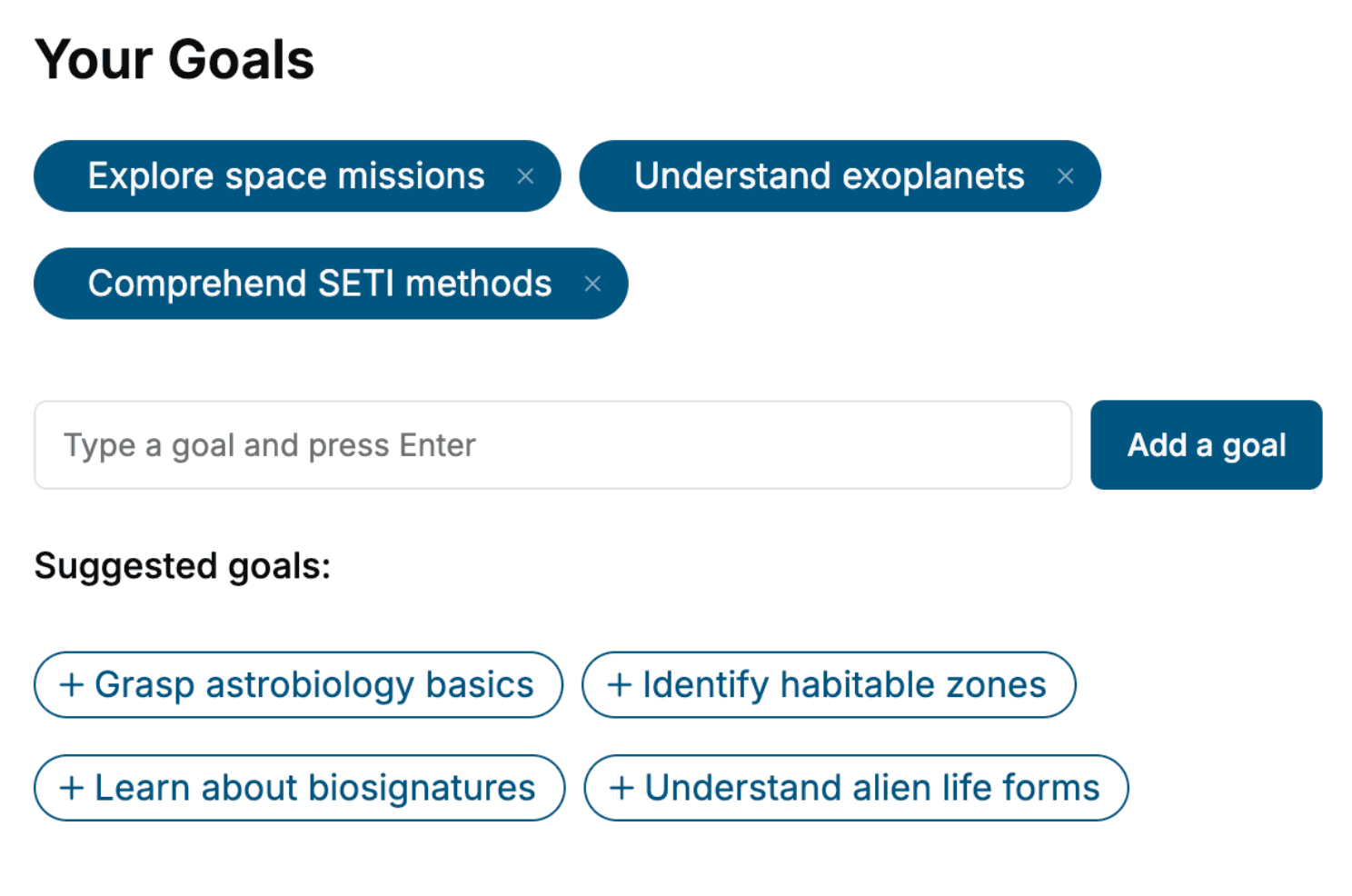
- 2. Personalize your book
Specify your goals and choose sub-topics to include
- 3. Get your tailored book
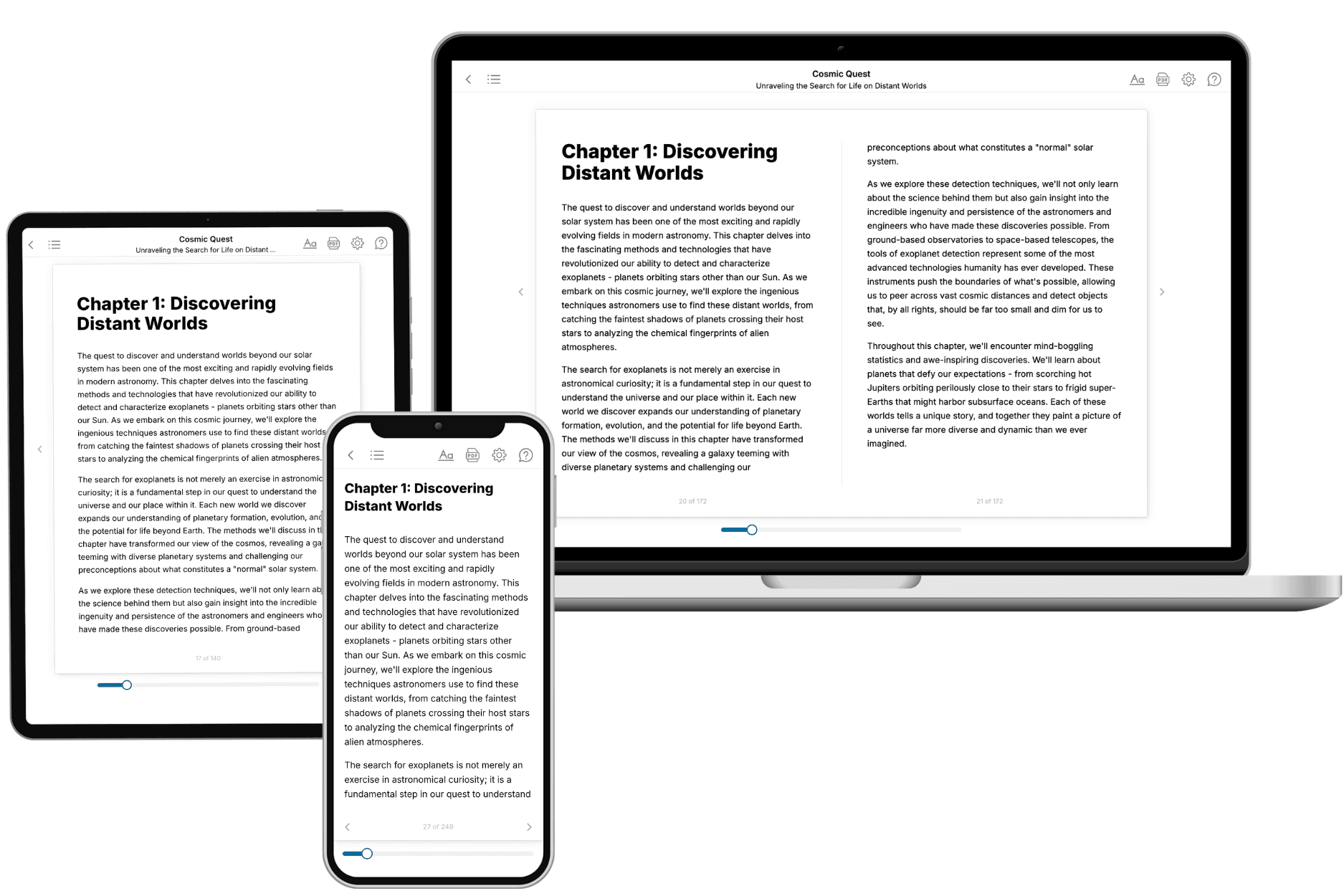
Your book is ready in 10 minutes. Read it online, download as EPUB or PDF, or send to Kindle.

Frequently asked questions
- What is TailoredRead?
TailoredRead creates complete, full-length nonfiction ebooks, written specifically for you. Tell us what you want to learn and why, and TailoredRead writes you a complete ebook on it, with charts, tables, and diagrams throughout. Read it online, on Kindle, or on any e-reader, or download it as a PDF or EPUB. Every book is written fresh the day you order it.
- How is the book tailored to me?
Before anything is written, you answer a few short questions about your goals, your background, and the topics you care about. Your book is then planned around your answers: written at your level, focused on your goals, and covering the topics you chose, instead of the one-size-fits-all book a store sells everyone.
- Will it read like generic AI content?
No. Your book isn't a chat transcript: it's planned chapter by chapter before a single word is written, told in a clear book voice, and explains ideas visually with charts, tables, and diagrams. After writing, every book goes through an editorial pass that polishes chapters so the book reads consistent from start to finish. Judge for yourself: browse thousands of sample books on our Explore Books page.
- How accurate is the content?
Our AI first checks whether your subject needs live research. Niche and fast-moving subjects are researched before writing, and the book plan and chapters are grounded in what it finds. After writing, every book goes through a quality pass that checks its facts and consistency, and researched books list their sources in a Notes section at the back.
- How long is the book?
You choose the length: Comprehensive (250-300 pages), Detailed (150-200 pages), Essential (70-100 pages), or Short (30-50 pages).
- Does the book include visuals?
Yes. Every book includes charts, tables, and diagrams: timelines, checklists, step-by-step guides, decision trees, comparison tables, matrices, and bar charts. A typical book includes dozens of these visual elements.
- Can I read it on Kindle? What formats can I download?
Yes. Every book can be read in our online reader or downloaded as a PDF or EPUB. The EPUB can be opened with Kindle, Apple Books, Kobo, and any e-reader. The Commercial and Author licenses also include an editable Word (DOCX) and Markdown download.
- How much does it cost?
About the price of a regular ebook. The exact price depends on your book's length and complexity, from $2 for the shortest books to $35 for the most comprehensive, and it's shown when you review your book, before you commit to anything. Each book is a one-time purchase, yours to keep, no subscription. Licenses that let you share, teach, or publish your book range from $35.99 to $49.99.
- Can I preview the book before purchasing?
Before you pay, you'll see what your book will cover: the title, a detailed description, the estimated length, and the complete chapter-by-chapter table of contents, so you know what you're getting before you decide. The full text itself is written after you purchase.
- How long does it take to create a book?
About 10 minutes. You can start reading the opening chapters while the rest is still being written.