AI Governance and Regulation Books
Explore tailored AI Governance and Regulation books created by our AI
Most manufacturing leaders assume AI agents will either operate fully autonomously or require constant human approval—but neither extreme works in practice. The reality is more nuanced: modern manufacturing needs AI agents that operate within clearly defined boundaries, escalate decisions intelligently, and maintain human oversight without creating bottlenecks that slow production to a crawl. This book cuts through the hype and provides a practical framework for building human-centric AI agent systems that actually work in manufacturing environments. You'll learn how to design governance architectures that comply with EU AI Act requirements, implement multi-agent orchestration patterns that coordinate distributed intelligence, and build operator trust through transparency and explainability. Whether you're integrating industrial copilots, managing real-time production monitoring, or planning your Industry 5.0 transformation, this guide provides the architectural patterns, governance models, and implementation strategies that manufacturing teams need to succeed with AI agents in 2026 and beyond.
Poverty targeting systems powered by artificial intelligence promise efficiency and precision, yet they risk embedding bias, excluding the most vulnerable, and deepening inequality through algorithmic decisions made without community input or meaningful transparency. As a poverty researcher, you face a critical challenge: how do you evaluate whether an AI system actually reduces poverty equitably, or whether it simply automates discrimination at scale? This book provides rigorous frameworks and practical methods to assess algorithmic bias, demand transparency, validate predictive models, and design ethical AI systems centered on equity. Drawing on case studies from Togo's Novissi program, World Bank poverty mapping initiatives, and emerging fairness-aware ML approaches, you'll learn to critique predictive poverty models, detect algorithmic bias across demographic groups, and implement community-led validation approaches. The book addresses the full ecosystem of concerns: algorithmic accountability mechanisms, job automation equity impacts, participatory AI design methods, and citizen-science hybrid models that overcome digital infrastructure gaps. Whether you're evaluating existing poverty programs or designing new ones, this guide equips you with evidence-based tools to ensure AI serves poverty reduction without sacrificing fairness, transparency, or community agency.
You're navigating a world where artificial intelligence increasingly influences critical decisions—from hiring and lending to healthcare and criminal justice—yet many AI systems operate as black boxes, their decisions unexplainable and potentially biased. The Ethics of Artificial Intelligence addresses this challenge head-on by providing a comprehensive guide to understanding, implementing, and governing ethical AI systems. This book bridges the gap between abstract ethical principles and real-world regulatory requirements, drawing on frameworks from UNESCO, the EU AI Act, and leading technology organizations. You'll learn the five foundational ethical principles that guide responsible AI development, discover how to identify and mitigate algorithmic bias, understand transparency and accountability requirements, and explore practical strategies for building trustworthy systems. Whether you're developing AI systems, making decisions about AI adoption, or simply seeking to understand this transformative technology, this book equips you with the knowledge and frameworks needed to navigate the complex intersection of innovation and responsibility.
What separates ML professionals who drive real business value from those whose models never leave the notebook? The answer isn't better algorithms—it's understanding how to operationalize machine learning at scale. This book bridges the gap between ML theory and business reality, showing you how organizations actually deploy, monitor, and maintain machine learning systems in production. You'll learn the operational frameworks that separate successful ML initiatives from failed experiments, explore how generative AI is reshaping career opportunities, and discover the skills that make you indispensable in AI-driven organizations. Whether you're building your first production model or scaling ML across an enterprise, this guide provides the practical knowledge and strategic perspective needed to drive measurable business impact and accelerate your career in the rapidly evolving AI landscape.
The Genealogy of Singularity
Tracing Ethical Frameworks from Philosophy to AI Futures
Most discussions of artificial singularity assume it's either an inevitable technological milestone or a catastrophic risk to be managed—but this binary framing obscures the deeper philosophical questions at stake. This book traces how contemporary singularity ethics emerged from scattered philosophical traditions, revealing the genealogical roots of concepts like consciousness, moral agency, and inevitability that now shape AI development and policy. Drawing on Foucault's genealogical method, Kierkegaard's existential philosophy, Deleuze's theory of divergence, and Derrida's deconstruction, you'll discover how singularity discourse constructs knowledge rather than simply describing technological futures. The book synthesizes the Vinge-Kurzweil-Bostrom frameworks while subjecting them to critical genealogical examination, explores consciousness and ethical agency through irreducibility and relational ontology, and examines how neurodiversity perspectives challenge normative assumptions in singularity theory. Whether you're developing a philosophical treatise, analyzing discourse shifts, or seeking multidisciplinary approaches to AI ethics, this genealogical analysis provides the conceptual tools to move beyond simplistic inevitability debates toward more rigorous philosophical engagement with technological singularity.
You'll move from understanding what agentic AI is to deploying autonomous systems that handle your business's most time-consuming tasks. This book walks you through the complete journey: starting with LLM fundamentals and prompt engineering, progressing to agent architecture and autonomous decision-making, then applying these concepts to real business problems like lead generation, customer onboarding, and sales automation. You'll learn how to measure agent performance through business-relevant KPIs, design multi-agent workflows that collaborate on complex tasks, and build a sustainable AI strategy for your startup. Each chapter combines practical frameworks with actionable implementation steps, so you can immediately apply concepts to your business. By the end, you'll understand how to architect, deploy, and optimize autonomous agents that scale your operations without proportionally scaling your team—turning repetitive business processes into intelligent, self-managing systems that drive measurable ROI.
The Thinking City
Philosophy, Technology, and the Future of Urban Life
Discover how the cities we're building today are reshaping what it means to be human. Smart cities promise efficiency, safety, and convenience through interconnected technology and data-driven decision-making. But beneath the surface lies a profound philosophical question: at what cost? This book examines the deeper implications of smart city development, moving beyond hype to explore the real tensions between technological optimization and human values. You'll learn how data collection shapes urban life, why algorithmic governance raises ethical concerns, and how communities can reclaim agency in an increasingly automated world. By understanding the philosophical foundations of smart cities—the assumptions about human nature, progress, and the good life—you'll be equipped to engage critically with the urban future being built around you. This isn't a rejection of technology, but an invitation to think more deeply about the kind of cities, and the kind of lives, we actually want to create.
Most consultants recognize AI's potential but struggle to integrate it meaningfully into their practice. You face a critical gap: traditional consulting methodologies weren't designed for AI-augmented workflows, and generic AI training doesn't address the unique challenges of client-facing strategy work. This book bridges that gap by providing a practical, frameworks-based approach to AI-powered consulting. You'll learn how to master prompt engineering for strategic analysis, conduct AI-driven competitive assessments, design organizational readiness evaluations, and automate change management processes. More importantly, you'll discover how to align organizational culture with AI adoption—the overlooked factor that determines success or failure. Through real-world scenarios and step-by-step methodologies, you'll develop the skills to transform your consulting offerings, accelerate client outcomes, and establish competitive advantage in an AI-driven market. This isn't about replacing human judgment; it's about amplifying your strategic impact through intelligent technology integration.
Symbolic AI
Building Intelligent Systems Through Logic, Knowledge, and Reasoning
What if the most intelligent systems weren't those that simply recognize patterns, but those that could reason through problems using explicit knowledge and logic? Symbolic AI represents a fundamentally different approach to machine intelligence—one that prioritizes interpretability, precision, and transparent reasoning over black-box pattern matching. This book explores how symbolic systems represent knowledge, apply logical rules, and make decisions in ways humans can understand and verify. You'll discover why major tech companies are investing in hybrid AI systems that combine symbolic reasoning with neural networks, and how symbolic approaches solve problems where deep learning falls short. From expert systems that diagnose diseases to knowledge graphs powering search engines, symbolic AI continues to drive critical applications. Whether you're developing AI systems, evaluating AI solutions, or simply curious about how intelligent machines actually think, this guide demystifies symbolic approaches and shows you when and how to apply them effectively.
Related books you may like:
What if your app could serve twice as many users simply by making it accessible? Millions of people with disabilities want to use Android apps but face barriers created by poor design choices. This book shows you how to remove those barriers and build applications that work seamlessly for everyone. You'll learn the practical techniques for implementing screen reader support, voice control, and other assistive technologies. Discover how semantic markup, proper content descriptions, and inclusive design patterns create apps that are easier to use for all users. Through real-world examples and step-by-step guidance, you'll master the Android Accessibility Framework and understand WCAG 2.1 standards. Learn testing strategies that reveal accessibility issues before your users encounter them. By the end, you'll have the knowledge to make accessibility a core part of your development process, not an afterthought—expanding your market reach while creating genuinely inclusive digital experiences.
Imagine delivering software that consistently meets stakeholder expectations, where every feature works exactly as intended, and your team moves with confidence through changes and refactoring. This is the reality when you master acceptance test-driven development. This comprehensive guide takes you beyond the basics to show you how ATDD transforms the way teams develop software. You'll learn how to write acceptance tests that serve as living documentation, collaborate effectively with business stakeholders to define clear acceptance criteria, and integrate ATDD seamlessly into your Extreme Programming workflow. Whether you're struggling with unclear requirements, dealing with late-stage defect discovery, or simply want to elevate your development practices, this book provides practical strategies, real-world examples, and proven techniques. You'll understand not just the "how" but the "why" behind acceptance test-driven development, enabling you to make informed decisions about implementation in your own context. Master this essential XP practice and watch your team's productivity and code quality soar.
Take your TypeScript skills from intermediate to advanced in just 30 days with a structured, project-driven approach. This book guides you through focused techniques that matter most: mastering advanced types like generics and conditional types, writing reliable async code with proper error handling, integrating TypeScript with modern frameworks, and building confidence through comprehensive testing strategies. Each day builds on the previous one, combining theory with hands-on coding projects that you'll actually use. You'll refactor real code, understand why type safety matters, and develop the patterns that separate good TypeScript developers from great ones. By day 30, you'll have the skills to write safer, more maintainable code and the portfolio projects to prove it. This isn't theory—it's practical, accelerated learning designed for developers ready to level up.
Discover how to build software that meets expectations from day one. Acceptance test-driven development (ATDD) transforms how teams define, test, and deliver quality software by writing acceptance tests before development begins. This practical guide shows you how to collaborate with stakeholders to define clear acceptance criteria, automate those criteria into executable tests, and use them to guide development and beta testing efforts. You'll learn to bridge the communication gap between business requirements and technical implementation, reduce costly defects discovered late in the cycle, and create living documentation that keeps pace with your product. Whether you're a QA professional, beta tester, or developer, this book provides actionable strategies, real-world examples, and proven frameworks to implement ATDD in your organization. Move beyond traditional testing approaches and join teams that are catching defects earlier, improving stakeholder alignment, and delivering software with confidence.
Building systems that reliably handle data is one of the hardest challenges in backend development. Without a solid understanding of ACID properties, you risk data corruption, lost transactions, and system failures that cascade through your application. This book demystifies the four pillars of database reliability—Atomicity, Consistency, Isolation, and Durability—and shows you exactly how to apply them in real-world scenarios. You'll learn why these properties matter, how they work under the hood, and how to leverage them when designing transactions, choosing databases, and handling failures. Whether you're building a financial system that can't afford to lose a penny or a high-traffic application that needs to scale, understanding ACID properties gives you the confidence to make architectural decisions that keep your data safe and your systems running smoothly.
Create an AI Governance and Regulation Book Tailored to You
Create an AI-crafted book tailored to your goals, interests, and background






Benefits of AI-tailored books
- Read one book, not ten:
- all the AI Governance and Regulation knowledge you need, gathered into a single book.
- Save days of learning:
- tell us your goals, choose your topics, and the whole book is built around them.
- Learn effortlessly:
- AI Governance and Regulation book written for your specific background and expertise.
- Understand at a glance:
- includes charts, tables, timelines, checklists, decision trees, and more.
- Stay current:
- written the day you order it, not years ago.
- Trust what you read:
- every book is checked for accuracy, with real research when your subject needs it.
Create your unique book in 3 steps
- 1. Select your focus
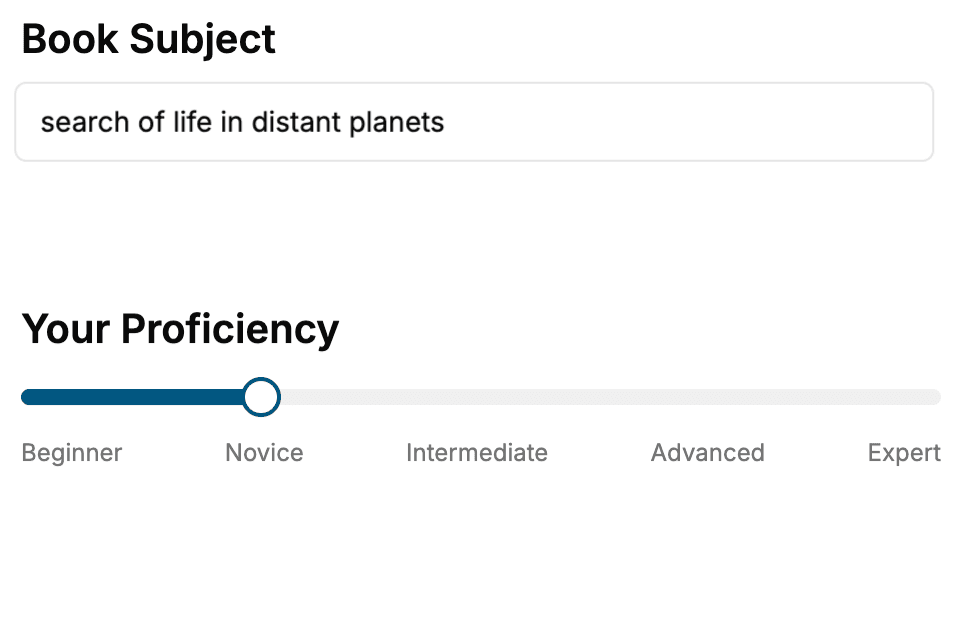
Select the focus of your AI Governance and Regulation book and share your background
- 2. Personalize your book
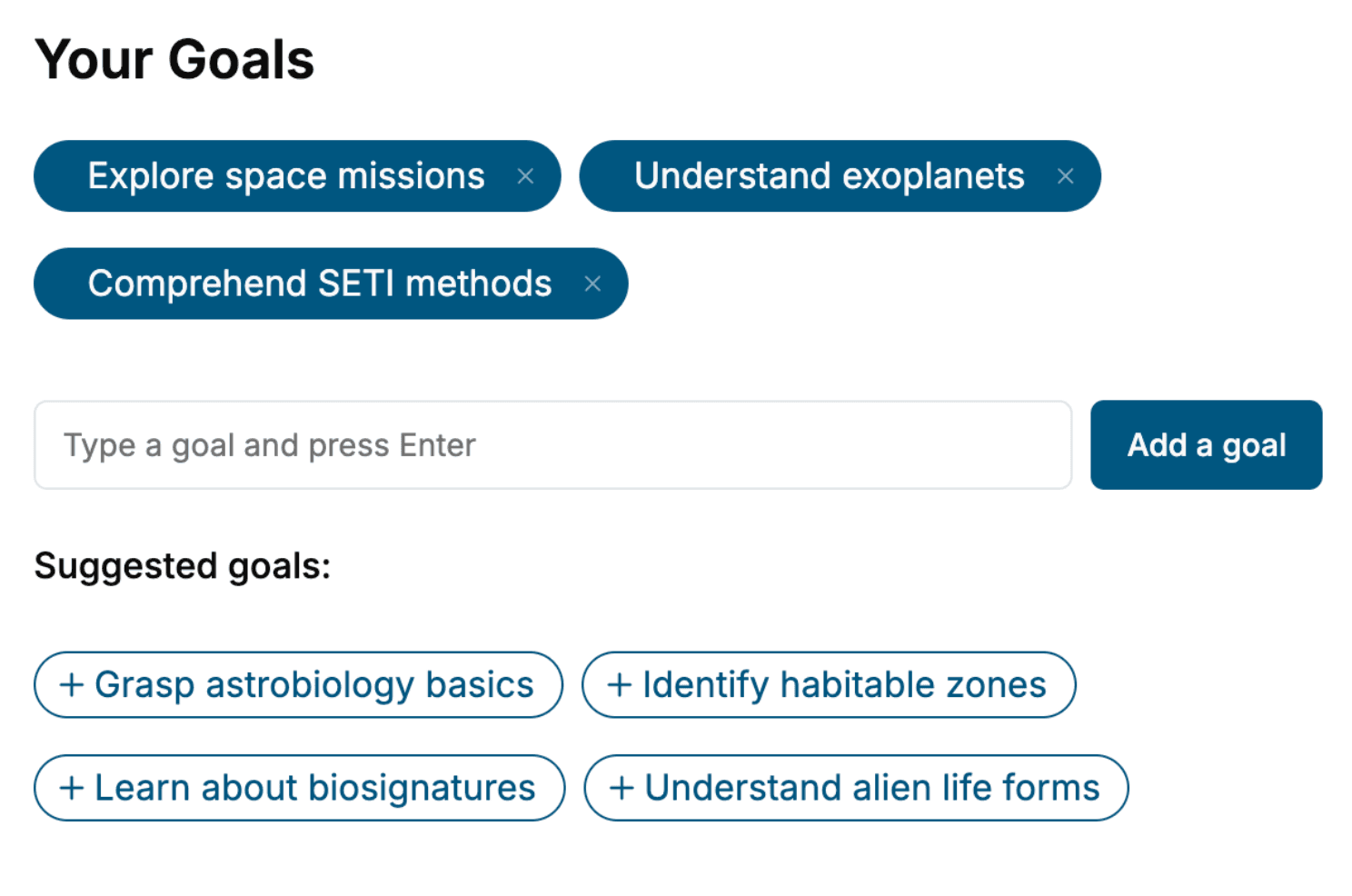
Specify your goals and choose sub-topics to include
- 3. Get your tailored book
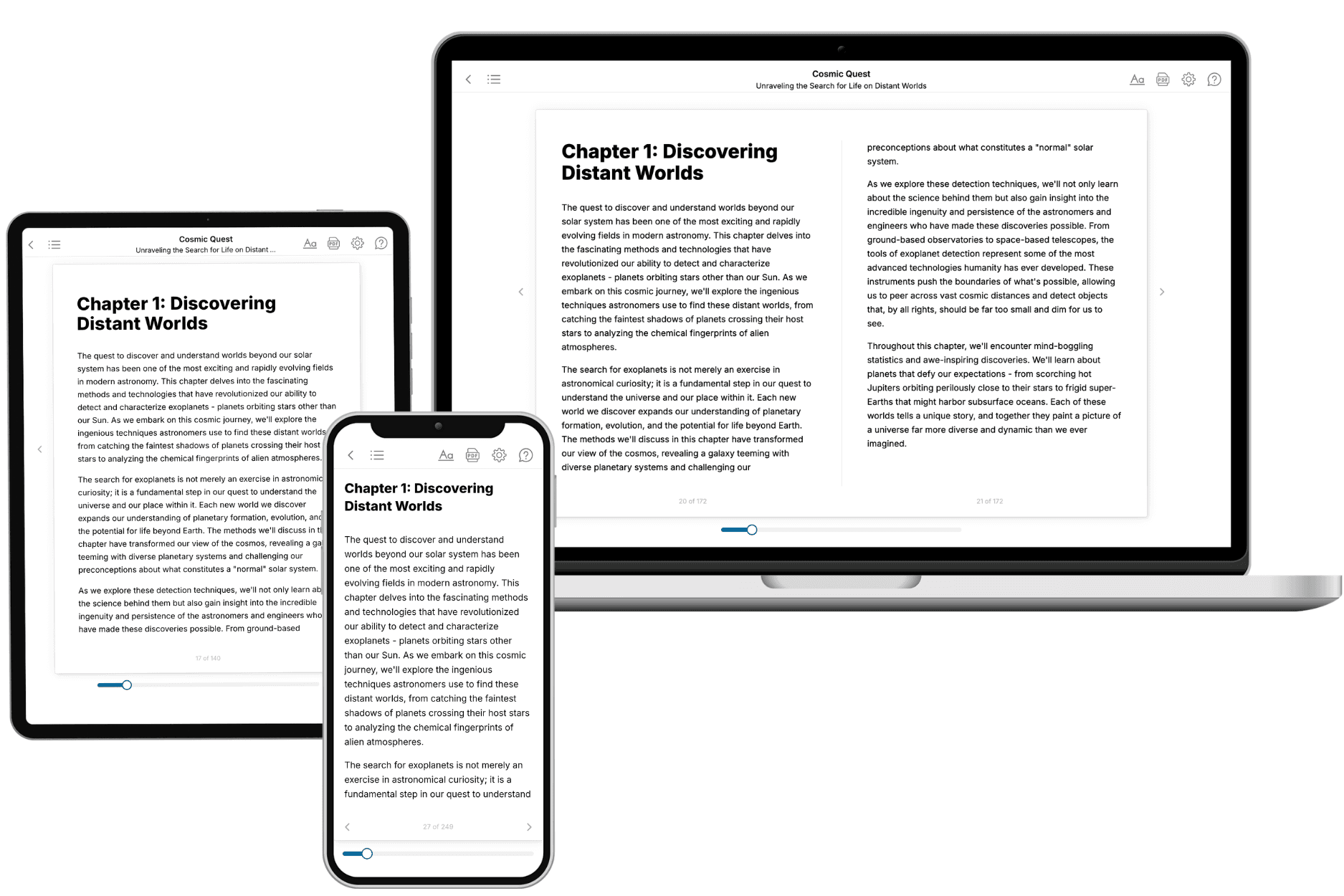
Your book is ready in 10 minutes. Read it online, download as EPUB or PDF, or send to Kindle.
Frequently asked questions
- What is TailoredRead?
TailoredRead creates complete, full-length nonfiction ebooks, written specifically for you. Tell us what you want to learn and why, and TailoredRead writes you a complete ebook on it, with charts, tables, and diagrams throughout. Read it online, on Kindle, or on any e-reader, or download it as a PDF or EPUB. Every book is written fresh the day you order it.
- How is the book tailored to me?
Before anything is written, you answer a few short questions about your goals, your background, and the topics you care about. Your book is then planned around your answers: written at your level, focused on your goals, and covering the topics you chose, instead of the one-size-fits-all book a store sells everyone.
- Will it read like generic AI content?
No. Your book isn't a chat transcript: it's planned chapter by chapter before a single word is written, told in a clear book voice, and explains ideas visually with charts, tables, and diagrams. After writing, every book goes through an editorial pass that polishes chapters so the book reads consistent from start to finish. Judge for yourself: browse thousands of sample books on our Explore Books page.
- How accurate is the content?
Our AI first checks whether your subject needs live research. Niche and fast-moving subjects are researched before writing, and the book plan and chapters are grounded in what it finds. After writing, every book goes through a quality pass that checks its facts and consistency, and researched books list their sources in a Notes section at the back.
- How long is the book?
You choose the length: Comprehensive (250-300 pages), Detailed (150-200 pages), Essential (70-100 pages), or Short (30-50 pages).
- Does the book include visuals?
Yes. Every book includes charts, tables, and diagrams: timelines, checklists, step-by-step guides, decision trees, comparison tables, matrices, and bar charts. A typical book includes dozens of these visual elements.
- Can I read it on Kindle? What formats can I download?
Yes. Every book can be read in our online reader or downloaded as a PDF or EPUB. The EPUB can be opened with Kindle, Apple Books, Kobo, and any e-reader. The Commercial and Author licenses also include an editable Word (DOCX) and Markdown download.
- How much does it cost?
About the price of a regular ebook. The exact price depends on your book's length and complexity, from $2 for the shortest books to $35 for the most comprehensive, and it's shown when you review your book, before you commit to anything. Each book is a one-time purchase, yours to keep, no subscription. Licenses that let you share, teach, or publish your book range from $35.99 to $49.99.
- Can I preview the book before purchasing?
Before you pay, you'll see what your book will cover: the title, a detailed description, the estimated length, and the complete chapter-by-chapter table of contents, so you know what you're getting before you decide. The full text itself is written after you purchase.
- How long does it take to create a book?
About 10 minutes. You can start reading the opening chapters while the rest is still being written.