Human-Computer Interaction Books
Explore tailored Human-Computer Interaction books created by our AI
The Gesture Revolution
How Touchless Technology Is Reshaping Human-Machine Interaction
You're watching technology evolve faster than ever, but gesture control remains a mystery—is it hype or the future? The challenge is separating real innovation from marketing noise while understanding how this technology will reshape the products you use, the businesses you work in, and the decisions you need to make today. This book cuts through the complexity to reveal what gesture control actually is, how it works, and why it matters. You'll discover the science behind touchless sensing, explore real-world applications transforming industries from automotive to healthcare, and understand the genuine opportunities and limitations that define this technology. Whether you're evaluating gesture control for your organization, curious about emerging tech trends, or simply want to understand the forces reshaping human-machine interaction, this guide provides the clarity and insight you need to navigate the gesture revolution with confidence.
The rapid evolution of technology continually challenges our understanding of human-computer interaction (HCI). As an experienced HCI professor, you face the daunting task of staying at the forefront of this dynamic field while simultaneously innovating in research, improving teaching methodologies, and developing practical applications. This comprehensive guide delves into the latest advancements in HCI design, offering you a multifaceted approach to push the boundaries of the field. You'll discover cutting-edge frameworks for developing adaptive interfaces, explore the integration of AI and VR/AR technologies in HCI, and learn how to craft more effective usability metrics and research methodologies. From enhancing your HCI curriculum to optimizing user testing procedures, this book provides you with the tools to excel in both academic and practical realms of HCI. You'll gain insights into creating compelling case studies, refining your approach to mentoring students, and collaborating on groundbreaking HCI projects. With a focus on ethical considerations and best practices, you'll be equipped to lead the next generation of HCI professionals and drive innovation in this ever-evolving field.
The Player's Interface
Mastering Human-Computer Interaction in Gaming and Digital Experiences
Imagine playing a game where every button press feels perfectly responsive, every menu is intuitive, and you're completely immersed in the experience. That's the power of exceptional human-computer interaction design. This book reveals the principles and practices behind the most engaging gaming interfaces you've ever used. You'll discover how designers create intuitive controls, craft satisfying feedback systems, and build interfaces that adapt to different players' needs. Whether you're a gamer curious about what makes your favorite games feel great, a developer looking to improve your designs, or someone interested in how technology shapes human experience, you'll gain practical insights into the psychology and mechanics of interactive design. Learn the real-world techniques used by industry professionals, understand why certain design choices work, and explore how emerging technologies are reshaping what's possible in gaming interfaces. By the end, you'll see every game you play through a new lens—understanding the thoughtful design decisions that make digital experiences truly exceptional.
You'll move beyond surface-level design trends to master the principles that separate products people love from those they abandon. This book teaches you how to genuinely understand your users—not through assumptions, but through structured research and empathy. You'll learn the complete user-centered design process: from discovering real problems to testing solutions with actual users. Whether you're designing software, services, or physical products, you'll discover how to balance user needs with business goals, involve stakeholders effectively, and measure what actually matters. Through practical frameworks, real-world examples, and actionable techniques, you'll develop the skills to lead design decisions with confidence. This is the guide for anyone ready to stop guessing what users want and start building solutions that create lasting value.
Human-Centered AI
Making Smarter Decisions When Humans and Machines Work Together
Most AI systems fail not because of flawed algorithms, but because they don't account for how humans actually think and make decisions. You face a critical challenge: deploying machine learning and AI tools that people will trust, understand, and use effectively—without blindly following their recommendations or ignoring their insights. This book bridges the gap between decision theory, artificial intelligence, and human psychology. You'll learn how cognitive biases affect both human judgment and machine learning outcomes, why transparency matters more than accuracy alone, and how to design interfaces that help people make better decisions with AI assistance. Through practical frameworks and real-world examples, discover how to build systems where humans and machines genuinely complement each other, where users understand what they're relying on, and where ethical considerations shape every design choice. Whether you're developing AI products, implementing machine learning in organizations, or simply trying to make better decisions with AI tools, this book provides the insights you need to create human-centered intelligent systems.
You're standing at the intersection of human capability and robotic potential, where the machines we create are becoming true partners in our daily lives. From factory floors where collaborative robots work alongside human operators, to homes that anticipate your needs before you voice them, to digital assistants that understand context and nuance—the landscape of human-robot interaction is evolving rapidly. This book guides you through the principles, practices, and possibilities of effective human-robot interaction across three critical domains. You'll explore how Industry 4.0 is reshaping manufacturing through collaborative robotics, discover the design principles that make smart homes genuinely intelligent rather than merely automated, and understand what makes conversational assistants truly helpful versus frustratingly limited. Drawing on research from cognitive science, engineering, and design, you'll gain practical frameworks for evaluating, implementing, and optimizing robotic systems. Whether you're designing these systems, implementing them in your organization, or simply seeking to understand the technology shaping our future, you'll develop the knowledge to navigate this rapidly evolving field with confidence and insight.
Discover how to design AI agent systems that work alongside your manufacturing team rather than against them. This practical guide shows you how to build human-centric AI systems that enhance operator capabilities, improve decision-making, and maintain human control over critical processes. You'll learn the core architectural principles of human-in-the-loop systems, explainable AI frameworks that build operator trust, and collaborative robot integration strategies that maximize safety and productivity. Through real-world implementation examples from industry leaders, you'll understand how to orchestrate multi-agent systems, leverage natural language interfaces for intuitive human-AI collaboration, and use digital twins to minimize operational risk. Whether you're implementing Industry 5.0 initiatives or upgrading existing automation, this book provides the frameworks, tools, and strategies needed to create manufacturing systems where humans and AI agents work together as complementary partners, not competitors.
Design Thinking in Practice
Master User-Centered Design for Graphic Design and UX
Many designers believe that great design comes from personal creativity and aesthetic intuition alone. But the most effective solutions emerge from understanding your users first. Design Thinking in Practice bridges the gap between design theory and real-world application, showing you how to systematically approach design challenges through a user-centered lens. Whether you're creating a brand identity, designing an app interface, or developing a marketing campaign, this book teaches you the proven design thinking methodology used by leading companies worldwide. You'll learn how to conduct meaningful user research, define problems clearly, generate innovative ideas, and test your solutions with actual users. Through practical examples, case studies, and step-by-step frameworks, you'll discover how to apply design thinking to both graphic design and UX projects. This isn't about following rigid rules—it's about developing a mindset that puts users at the center of every decision you make, leading to designs that truly resonate and solve real problems.
Imagine building a development tool where every interaction feels natural, where experienced developers can work at lightning speed while newcomers quickly find their way. This book reveals the UI design patterns that make this possible. You'll discover why the patterns that work for consumer apps often fail for developer tools, and learn the specific patterns that have proven successful across IDEs, code editors, and specialized development software. From command palettes and workspace management to real-time feedback systems and keyboard-driven workflows, you'll understand not just what these patterns are, but why developers expect them and how to implement them effectively. Whether you're building a new development tool, improving an existing one, or designing features within a larger platform, this guide provides practical, battle-tested patterns grounded in how developers actually work. You'll learn to balance power with usability, discoverability with efficiency, and customization with sensible defaults—the core tensions that define great developer tool design.
What if the reason users can't find what they need isn't because your design is ugly—it's because your information is organized in a way that contradicts how they think? Information architecture is the strategic foundation that determines whether users navigate effortlessly or abandon your product in frustration. This book teaches you how to organize digital information in ways that align with user mental models, reduce cognitive load, and create intuitive experiences. You'll learn practical frameworks for structuring content, designing navigation systems, creating effective labeling strategies, and testing your architecture with real users. Whether you're designing a website, mobile app, or complex digital product, these principles and techniques will help you create systems where users find what they need without thinking twice.
The Persona Blueprint
Creating Authentic User Profiles That Drive Better Design Decisions
Creating user personas feels straightforward until you realize your designs aren't resonating with actual users. Many designers and product professionals struggle with the gap between who they think their users are and who they actually are—leading to designs that miss the mark, features nobody uses, and wasted development resources. This book provides a comprehensive, practical guide to developing personas that truly represent your users and drive better design decisions. You'll learn how to move beyond demographic stereotypes to create rich, data-informed personas grounded in real user research. Discover proven methodologies for gathering insights, synthesizing findings, and translating them into actionable personas that your entire team will actually use. Whether you're designing software interfaces, digital products, or visual experiences, this guide walks you through each stage of persona development—from research planning and data collection through validation and ongoing refinement. You'll gain frameworks for creating personas that inform everything from information architecture to visual design, and learn how to keep your personas relevant as your product and market evolve.
Most 3D designers focus on aesthetics and functionality, but overlook a critical factor: whether their products actually feel good to use. This gap between design intent and user experience leads to products that frustrate users, cause discomfort, or worse—create safety hazards. This book bridges that gap by teaching you how to embed ergonomic principles directly into your IronCAD workflow. You'll learn to analyze human movement patterns, apply anthropometric data to your models, and use IronCAD's powerful tools to simulate real-world user interactions. From grip design and reach optimization to accessibility considerations, each chapter builds your ability to create products that users genuinely enjoy using. Whether you're designing tools, consumer products, or industrial equipment, these principles will elevate your work from merely functional to genuinely user-centered. Practical examples and step-by-step guidance show you exactly how to implement these concepts in IronCAD, making ergonomic design an integral part of your creative process.
Design for All
A Designer's Guide to Creating Accessible and Inclusive Digital Experiences
Imagine a world where every digital interface you create is effortlessly usable by everyone, regardless of their abilities or circumstances. In "Design for All," you'll discover how to turn this vision into reality, elevating your design skills to new heights of inclusivity and user-centricity. As a designer, you have the power to shape digital experiences that truly serve all users. This comprehensive guide will take you on a journey through the multifaceted world of accessibility design, from mastering screen reader compatibility to crafting intuitive keyboard navigation. You'll learn to see your designs through the eyes of diverse users, including those with visual, auditory, motor, or cognitive differences. Packed with practical techniques, real-world examples, and expert insights, "Design for All" will empower you to create designs that not only meet accessibility standards but also delight users with their thoughtfulness and usability. By the end of this book, you'll have the knowledge and tools to confidently tackle any accessibility challenge, ensuring that your designs are truly inclusive and user-friendly for all.
Mobile App Interface Design
Create Intuitive, Beautiful, and User-Centered Mobile Experiences
Creating a mobile app that users love requires more than just good ideas—it demands a deep understanding of how people interact with small screens, touch interfaces, and mobile contexts. This book guides you through the complete process of designing mobile app interfaces that are intuitive, beautiful, and genuinely useful. You'll learn how to conduct user research that reveals real needs, establish information architecture that makes sense, design touch interactions that feel natural, and create visual systems that guide users effortlessly through your app. Whether you're refining an existing app or launching something new, you'll discover practical frameworks, proven patterns, and real-world examples that show how successful apps solve common design challenges. By the end, you'll have the knowledge and confidence to make design decisions that prioritize user needs, create cohesive experiences, and build apps that people actually want to use.
Creating a mobile app that users love requires more than just making it look good—it demands a deep understanding of how people interact with small screens, touch interfaces, and limited attention spans. This book walks you through the complete mobile UI design process, from foundational principles to advanced techniques that separate exceptional apps from forgettable ones. You'll learn how to design intuitive navigation systems, create visual hierarchies that guide users effortlessly, and build interfaces that work seamlessly across different devices and screen sizes. Discover the psychology behind effective design choices, master the tools and frameworks that professional designers use daily, and understand how to validate your designs through user testing. Whether you're refining your existing skills or taking your design practice to the next level, this guide provides the frameworks, patterns, and real-world insights you need to create mobile experiences that users actually want to use.
Most designers treat timelines as simple chronological lists, missing the opportunity to create powerful narrative experiences. The truth is that timeline design is far more sophisticated—it's about orchestrating how users perceive, understand, and interact with sequences of information, events, or steps. Whether you're designing a product onboarding flow, a historical timeline, a project roadmap, or a user journey visualization, the principles remain consistent. This book teaches you how to design timelines that feel intuitive, guide users effortlessly through complex information, and create meaningful connections between sequential elements. You'll learn the foundational principles of temporal design, discover proven patterns used by leading companies, and develop a systematic approach to timeline design that works across different contexts and mediums. By the end, you'll understand how to leverage timeline design as a strategic tool to improve user comprehension, engagement, and satisfaction.
Motion in Design
Master Animation Principles to Create Intuitive, Engaging Digital Products
Elevate your design practice by mastering the science and art of motion. This guide bridges the gap between traditional animation principles and modern product design, showing you how to use motion strategically to create interfaces that feel responsive, intuitive, and delightful. You'll discover how timing, easing, and sequencing transform static designs into experiences that guide users naturally through your products. Learn the practical frameworks that separate amateur animations from professional-grade motion design, including when to animate, how to choose the right duration, and how to ensure your motion enhances rather than distracts. Whether you're designing micro-interactions, page transitions, or complex state changes, this book provides the principles, techniques, and real-world examples you need to implement animation that actually improves usability. Includes practical exercises, performance optimization strategies, and accessibility guidelines to ensure your motion design works for everyone.
Plugin UX Design
Creating Intuitive Experiences for Software Extensions
Most plugins fail not because of poor functionality, but because users can't figure out how to use them or don't even know they exist. Plugin UX design presents unique challenges that differ significantly from traditional software design—your users are already committed to a host application, and your plugin must integrate seamlessly into their existing workflow without disrupting it. This book provides practical, actionable guidance for designing plugins that users genuinely want to use. You'll learn how to navigate the constraints of plugin environments, create interfaces that feel native to the host application, and solve the critical problem of plugin discoverability. Whether you're building extensions for browsers, IDEs, content management systems, or other platforms, you'll discover proven strategies for understanding user context, simplifying complex features, and testing your UX decisions with real users. By applying these principles, you'll create plugins that don't just work—they delight users and become indispensable parts of their daily workflow.
The Dashboard Design Playbook
Create Data Visualizations That Drive Decisions and Engagement
Create dashboards that people actually use and that drive real business decisions. This practical guide teaches you how to design data visualization interfaces that cut through complexity and communicate insights with clarity and impact. You'll learn to understand your users' needs, structure information hierarchically, choose the right visualizations for different data types, and implement interactive features that enhance rather than distract. Whether you're designing executive scorecards, operational monitoring systems, or analytical tools, this book provides frameworks, best practices, and real-world examples to help you move beyond aesthetics to create dashboards that inform decisions and deliver measurable value. Discover how to balance visual design with functional usability, test your designs with actual users, and continuously improve based on feedback and usage patterns.
The 2025 UI Revolution
Master Cutting-Edge User Interface Trends and Tools for the Future
Level up your UI design skills and become a trailblazer in the field with "The 2025 UI Revolution." This comprehensive guide takes you on an exhilarating exploration of the most innovative user interface trends and tools that will shape the digital landscape in 2025 and beyond. Dive into a world where AI seamlessly integrates with design, where responsive layouts adapt to any device, and where accessibility is not just a feature but a fundamental principle. You'll discover how to create immersive user experiences that push the boundaries of interaction design and visual aesthetics. From mastering advanced prototyping techniques to conducting insightful UX research, this book equips you with the knowledge and skills to stay ahead of the curve. Learn how to develop cutting-edge UI design patterns, harness the power of emerging technologies, and create interfaces that are not just functional, but truly transformative. Whether you're looking to enhance your current projects or revolutionize your approach to UI design, "The 2025 UI Revolution" is your essential guide to shaping the future of digital interfaces.
Interaction Design Patterns
Building Intuitive Interfaces Through Proven Design Solutions
Create interfaces that feel natural and intuitive by mastering the design patterns that guide user behavior. This book teaches you how to recognize, apply, and adapt proven interaction patterns to solve real-world design challenges. You'll learn how design patterns connect to software architecture, enabling you to build systems that scale without sacrificing user experience. From navigation structures to feedback mechanisms, form interactions to accessibility considerations, you'll discover the principles behind effective patterns and when to use each one. Whether you're designing a mobile app, web platform, or complex enterprise system, these patterns provide a shared language with your team and a foundation for making consistent, user-centered decisions. Move beyond copying interfaces and start understanding the reasoning behind great design.
Master the art of guiding users through your digital products with confidence. Breadcrumb navigation, when designed thoughtfully, becomes an invisible hand that helps users understand where they are, how they got there, and how to navigate forward. This comprehensive guide takes you beyond basic implementation to show you how breadcrumbs function as a strategic design element that reduces friction, improves user satisfaction, and strengthens your overall information architecture. You'll discover how to choose the right breadcrumb type for your product, implement them within design systems, optimize for mobile experiences, and measure their real-world impact. Whether you're designing e-commerce platforms, content-heavy websites, or complex applications, you'll learn the principles and practices that separate effective navigation from mere decoration. This book combines practical frameworks with real-world examples to help you make informed design decisions that keep users oriented and confident.
In today's rapidly evolving digital landscape, even seasoned UI designers face the challenge of keeping pace with emerging technologies and user expectations. Visual Interface Mastery: Advanced Principles and Innovative Techniques for Next-Generation UI Design is your comprehensive guide to conquering this challenge and elevating your expertise to new heights. This book delves deep into the intricacies of visual interface design, offering a treasure trove of advanced concepts, from the nuances of color theory and typography to the complexities of AR/VR interface design and UI for voice interfaces. You'll explore cutting-edge topics such as micro-interactions, haptic feedback, and UI motion design, gaining the knowledge to create interfaces that are not just visually stunning, but also intuitive and engaging. With a focus on practical application, Visual Interface Mastery equips you with the tools to optimize UI performance, enhance accessibility, and create scalable design systems. You'll learn how to apply Gestalt principles in innovative ways, master the art of visual hierarchy, and create responsive designs that seamlessly adapt across devices. Whether you're designing for mobile, wearables, or emerging technologies, this book will empower you to push the boundaries of what's possible in UI design.
Imagine building desktop applications that users love to interact with—interfaces that feel intuitive, look polished, and work flawlessly across devices. Angular Material Design makes this possible. This comprehensive guide takes you beyond basic component usage to show you how to architect professional-grade desktop applications using Material Design principles and Angular's powerful component library. You'll master theming and customization, implement responsive layouts, ensure accessibility compliance, and optimize performance. Whether you're building internal tools, enterprise applications, or consumer-facing software, you'll learn proven patterns and best practices that experienced developers use daily. From form handling to advanced component composition, this book equips you with the knowledge to create applications that stand out in quality and user experience. Stop settling for mediocre interfaces—learn to build desktop applications that your users will genuinely appreciate.
CAD Criticism
How to Evaluate Digital Design Tools and Workflows in Architecture
Imagine confidently evaluating whether your CAD tools are truly serving your design vision—or subtly constraining it. You'll move beyond simply operating software to understanding how digital design systems shape architectural thinking itself. This book provides a critical framework for examining CAD workflows, recognizing how tool choices influence design outcomes, and making deliberate decisions about when and how to use digital methods. You'll explore the philosophical implications of digital representation, learn to identify hidden assumptions in your design process, and discover how to integrate CAD strategically within your broader architectural practice. Whether you're questioning your current workflow, evaluating new software, or seeking to enhance your design thinking, you'll gain practical insights and analytical tools to make more intentional choices about technology in your work.
Many developers assume that if their design looks good on their monitor, it works for everyone. The reality is starkly different. Millions of users experience color vision deficiencies that make standard color palettes confusing, inaccessible, or completely unusable. This book bridges the gap between color science and practical development, showing you exactly how to create graphics and interfaces that work beautifully for all users. You'll learn how color spaces affect perception, why certain color combinations fail for people with color blindness, and how to implement accessible design patterns without sacrificing aesthetics. Through real-world examples, testing strategies, and proven techniques, you'll discover that accessibility isn't a constraint—it's an opportunity to build better products. Whether you're developing games, data visualizations, or web applications, this guide provides the knowledge and tools to ensure your work is truly inclusive.
Less is More
The Art and Science of Minimalist User Interface Design
Creating a user interface that feels effortless is harder than it looks. Most designers struggle with the paradox of minimalism: how do you remove elements without removing functionality? How do you create visual interest without clutter? This book cuts through the confusion and teaches you the proven principles behind minimalist UI design that actually works. You'll discover why removing elements often requires adding more thought, not less. Learn how to use white space strategically, master the psychology of visual hierarchy, and build interfaces that guide users intuitively. Through real-world examples and practical frameworks, you'll understand when minimalism serves users and when it doesn't. This isn't about following trends—it's about designing with intention, clarity, and purpose. Whether you're refining an existing product or starting from scratch, these principles will help you create interfaces that users love because they're simple to understand and effortless to use.
Most developers treat CSS tabs as a simple styling problem, but this approach leads to inaccessible, fragile components that fail in real-world scenarios. This book reveals why tabs are more complex than they appear and provides a comprehensive roadmap for building them correctly. You'll start with the fundamentals of semantic HTML and accessibility standards, then progress through modern CSS layout techniques, JavaScript integration, and advanced optimization strategies. Each chapter builds on previous concepts, ensuring you understand not just how to build tabs, but why each decision matters. Whether you're creating a simple tabbed interface or a complex multi-level tab system, you'll discover practical patterns, real-world examples, and proven techniques used by professional developers. Learn how to handle edge cases, optimize performance, ensure keyboard accessibility, and maintain code that scales. By the end, you'll have the knowledge and confidence to build tab interfaces that work beautifully for every user, on every device.
Imagine your app standing out in the App Store not just for its features, but for the seamless, delightful experience users feel with every interaction. Professional animations transform ordinary interfaces into engaging experiences that users love to interact with. This comprehensive guide teaches you how to harness SwiftUI's powerful animation system to create fluid, responsive animations that enhance your app's usability and aesthetic appeal. You'll progress from fundamental animation concepts through advanced techniques like gesture-driven interactions, physics-based motion, and performance optimization. Each chapter builds practical skills with real-world examples and patterns you can immediately apply to your projects. Whether you're creating subtle transitions or complex interactive sequences, you'll learn the principles and techniques that separate polished apps from amateur ones. By the end, you'll have the expertise to design animations that feel natural, perform smoothly, and delight your users on every interaction.
Most designers think responsive web design is simply about making websites fit smaller screens. In reality, it's a fundamental shift in how you approach design itself. This book moves beyond the myth that responsive design is just a technical afterthought, showing you how to design with intention from the very first sketch. You'll discover why mobile-first thinking produces better results for everyone, learn the core technical principles that make responsive layouts work, and master practical techniques for creating interfaces that adapt beautifully across devices. Whether you're designing navigation systems, image galleries, or complex dashboards, you'll find actionable strategies grounded in real-world examples. This guide bridges the gap between design theory and implementation, helping you make informed decisions about breakpoints, typography, spacing, and performance—all while maintaining visual consistency and user experience quality across the entire device spectrum.
Imagine confidently creating game environments and UI designs where every color choice serves both aesthetic and functional purposes—even with protanomaly. This book bridges the gap between color theory and your lived experience as someone with red-green color blindness, giving you the science, tools, and workflows to design with intention rather than guesswork. You'll explore the neuroscience of cone cell sensitivity, discover why certain colors clash in your vision while harmonizing for others, and learn to validate your palettes using protan-specific testing methods. More importantly, you'll master practical techniques for color contrast, harmony, and mixing that account for your unique perception. Whether you're designing game interfaces, environments, or marketing materials, this guide transforms protanomaly from a constraint into a competitive advantage—helping you create genuinely inclusive designs that work for everyone, not just those with typical color vision. Built on color science and real-world design workflows, this is the resource you've been looking for.
Visual Hierarchy Mastery
The Complete Guide to Guiding Attention Through Strategic Typography
You'll transform your design work by learning to orchestrate typography as a system rather than treating individual type choices in isolation. This guide reveals how the most effective designers use size, weight, color, spacing, and positioning to create invisible pathways that guide viewers through content naturally and intuitively. You'll discover why some designs feel effortless to read while others create visual chaos, and you'll gain practical frameworks for making hierarchy decisions that serve your specific audience and medium. Through real-world examples, common pitfalls, and actionable techniques, you'll develop the strategic thinking needed to create designs where every typographic choice reinforces your message and respects your viewer's cognitive capacity.
Console UI Mastery
Design Interfaces That Players Love on Gaming Consoles and Gadgets
Create gaming interfaces that players instinctively understand and love. This comprehensive guide teaches you how to design console and gadget UIs that work seamlessly with controller input, respect screen distances, and enhance rather than interrupt gameplay. You'll learn the specific constraints and opportunities of console design—from navigation patterns optimized for button presses to visual hierarchies that communicate instantly. Discover how to implement accessibility features that expand your audience, integrate haptic and audio feedback that makes interfaces feel responsive, and maintain consistency that builds player trust. Through practical frameworks, real-world examples, and proven testing methodologies, you'll develop the skills to create interfaces that feel intuitive, look polished, and perform flawlessly. Whether you're designing menus, settings, HUDs, or companion apps, this book provides the knowledge to make every interaction count.
Accessible Android
Building Mobile Apps That Work for Everyone
What if your app could serve twice as many users simply by making it accessible? Millions of people with disabilities want to use Android apps but face barriers created by poor design choices. This book shows you how to remove those barriers and build applications that work seamlessly for everyone. You'll learn the practical techniques for implementing screen reader support, voice control, and other assistive technologies. Discover how semantic markup, proper content descriptions, and inclusive design patterns create apps that are easier to use for all users. Through real-world examples and step-by-step guidance, you'll master the Android Accessibility Framework and understand WCAG 2.1 standards. Learn testing strategies that reveal accessibility issues before your users encounter them. By the end, you'll have the knowledge to make accessibility a core part of your development process, not an afterthought—expanding your market reach while creating genuinely inclusive digital experiences.
The Visual Mind
Master Color, Composition, and Perception to Design with Purpose
What if the designs you create could influence how people think and feel before they even consciously register what they're looking at? The truth is, visual perception isn't passive—it's an active psychological process shaped by color, contrast, composition, and spatial relationships. This book reveals the science behind why certain designs work while others fall flat, and more importantly, how to apply these principles intentionally. You'll discover how color psychology triggers emotional responses, how visual hierarchy controls attention flow, and how contrast creates emphasis that commands focus. Learn the spatial perception techniques that create depth and clarity, master composition methods that feel balanced and intentional, and understand the eye-tracking patterns that reveal how viewers actually navigate your designs. Whether you're designing digital interfaces, marketing materials, or visual communications, these principles transform you from someone who makes designs to someone who architects experiences. This is practical psychology applied to visual communication—the missing link between intuition and mastery.
Related books you may like:
What if the colors you choose could completely transform how viewers feel when they look at your painting—before they even understand what they're seeing? Abstract painting isn't about random marks on canvas; it's a sophisticated language of color, composition, and expression that you can learn and master. This book bridges the gap between artistic intuition and technical skill, giving you practical frameworks for making intentional decisions about color harmony, composition balance, and layering techniques. You'll discover how complementary colors create visual tension, how brushstrokes convey emotion, and how spatial depth emerges from thoughtful color and value relationships. Whether you're struggling with muddy color mixing, uncertain about composition balance, or wanting to paint with more confidence and purpose, this guide provides clear, actionable techniques grounded in color theory and composition principles. Through step-by-step explorations of acrylic methods, texture building, and intuitive processes, you'll develop the skills to create dynamic, cohesive abstract works that resonate with viewers and reflect your authentic artistic vision.
Your passion for dance has led you to become a certified Zumba instructor, and now it's time to elevate your choreography skills to the next level. In just 30 days, you'll transform your approach to dance composition, infusing your routines with creativity, musicality, and captivating energy. This comprehensive guide is tailored specifically for new Zumba instructors like you, blending your diverse dance background with cutting-edge choreography techniques. You'll learn to craft engaging warm-ups, design thematic routines, and create cohesive sequences that will keep your students coming back for more. From mastering the art of improvisation to developing your unique choreographic voice, this book will push your boundaries and expand your artistic horizons. You'll discover how to seamlessly integrate various dance styles, incorporate level changes, and create visually stunning formations that will leave your class breathless.
You've been painting with acrylics for a while, but your work still lacks the depth, richness, and professional quality you see in gallery pieces. The paint seems to fight against you, colors turn muddy when mixed, and achieving smooth blends feels impossible. Your brushwork appears amateur, and you struggle to create the textures and effects that would elevate your art from hobby-level to something truly compelling. This comprehensive guide transforms your relationship with acrylic paint through systematic mastery of fundamental and advanced techniques. You'll discover how to control paint consistency, timing, and application methods to achieve exactly the effects you envision. From understanding pigment properties and color mixing principles to mastering complex layering, glazing, and blending techniques, every aspect of acrylic painting becomes clear and achievable. Through detailed explanations, step-by-step processes, and targeted exercises, you'll develop the technical skills that separate amateur work from professional artistry. You'll learn to prepare surfaces properly, select the right brushes and mediums, and apply paint with confidence and precision. Advanced techniques like wet-on-wet blending, glazing, underpainting, and scumbling will become natural extensions of your artistic vocabulary. By the end of this book, you'll possess the technical foundation and artistic confidence to create paintings with depth, luminosity, and professional polish. Your understanding of acrylic paint will be so thorough that you can tackle any subject or style with the assurance that your technique will support your creative vision.
Transform your woodcraft projects from plain wood into stunning, professionally finished pieces. This practical guide teaches you everything you need to paint acrylics with confidence and skill, even if you've never picked up a brush before. You'll master essential brush techniques, learn how to mix colors that pop, and discover how to create realistic wood textures and grain effects that elevate your scroll saw work. Whether you're painting intricate details on small pieces or finishing larger projects, you'll find step-by-step tutorials, daily practice exercises, and proven methods for using traceables and stencils to achieve precision without frustration. This book addresses the specific challenges woodcrafters face—painting on wood surfaces, working with scroll saw designs, and creating finishes that look professionally done. You'll overcome artistic fear through practical techniques and build the creative confidence to express your unique artistic vision in every project you create.
Are you ready to revolutionize the way players experience your games? "Adaptive Horizons: Mastering AI Personalization in Video Game Design" challenges you to rethink the boundaries of artificial intelligence in gaming. This comprehensive guide delves deep into the cutting-edge world of AI personalization, offering you the tools and knowledge to create truly responsive and engaging game environments. You'll explore advanced techniques in player modeling, adaptive storytelling, and dynamic difficulty scaling that will set your games apart in an increasingly competitive industry. From implementing sophisticated behavior trees to designing emotionally intelligent NPCs, this book covers the full spectrum of AI personalization. By the time you finish, you'll have the skills to craft games that not only adapt to individual players but anticipate their needs, creating unforgettable experiences that keep them coming back for more. Don't just make games – create living, breathing worlds that evolve with every player interaction.
Create a Human-Computer Interaction Book Tailored to You
Create an AI-crafted book tailored to your goals, interests, and background






Benefits of AI-tailored books
- Read one book, not ten:
- all the Human-Computer Interaction knowledge you need, gathered into a single book.
- Save days of learning:
- tell us your goals, choose your topics, and the whole book is built around them.
- Learn effortlessly:
- Human-Computer Interaction book written for your specific background and expertise.
- Understand at a glance:
- includes charts, tables, timelines, checklists, decision trees, and more.
- Stay current:
- written the day you order it, not years ago.
- Trust what you read:
- every book is checked for accuracy, with real research when your subject needs it.
Create your unique book in 3 steps
- 1. Select your focus
Select the focus of your Human-Computer Interaction book and share your background
- 2. Personalize your book
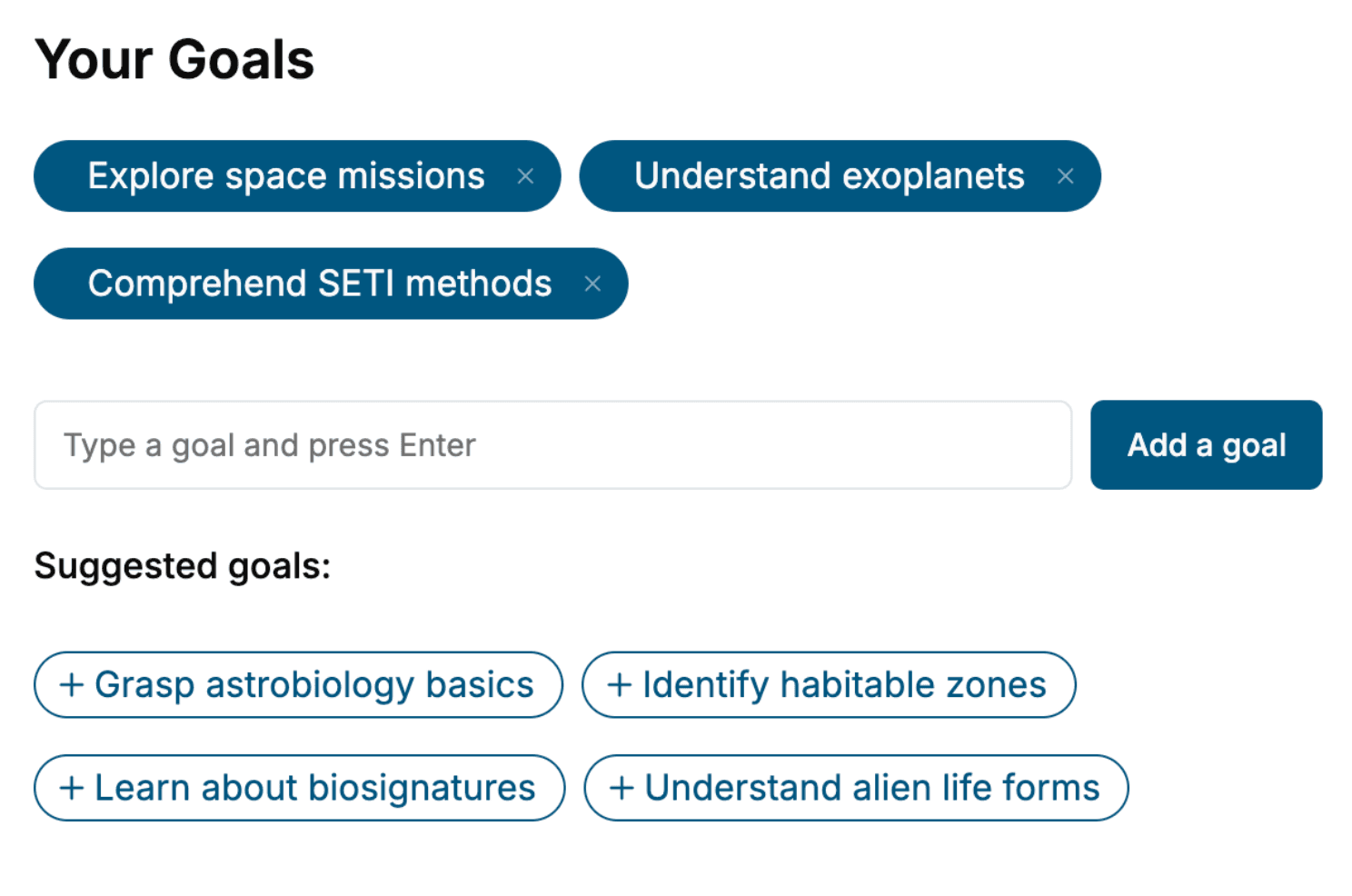
Specify your goals and choose sub-topics to include
- 3. Get your tailored book
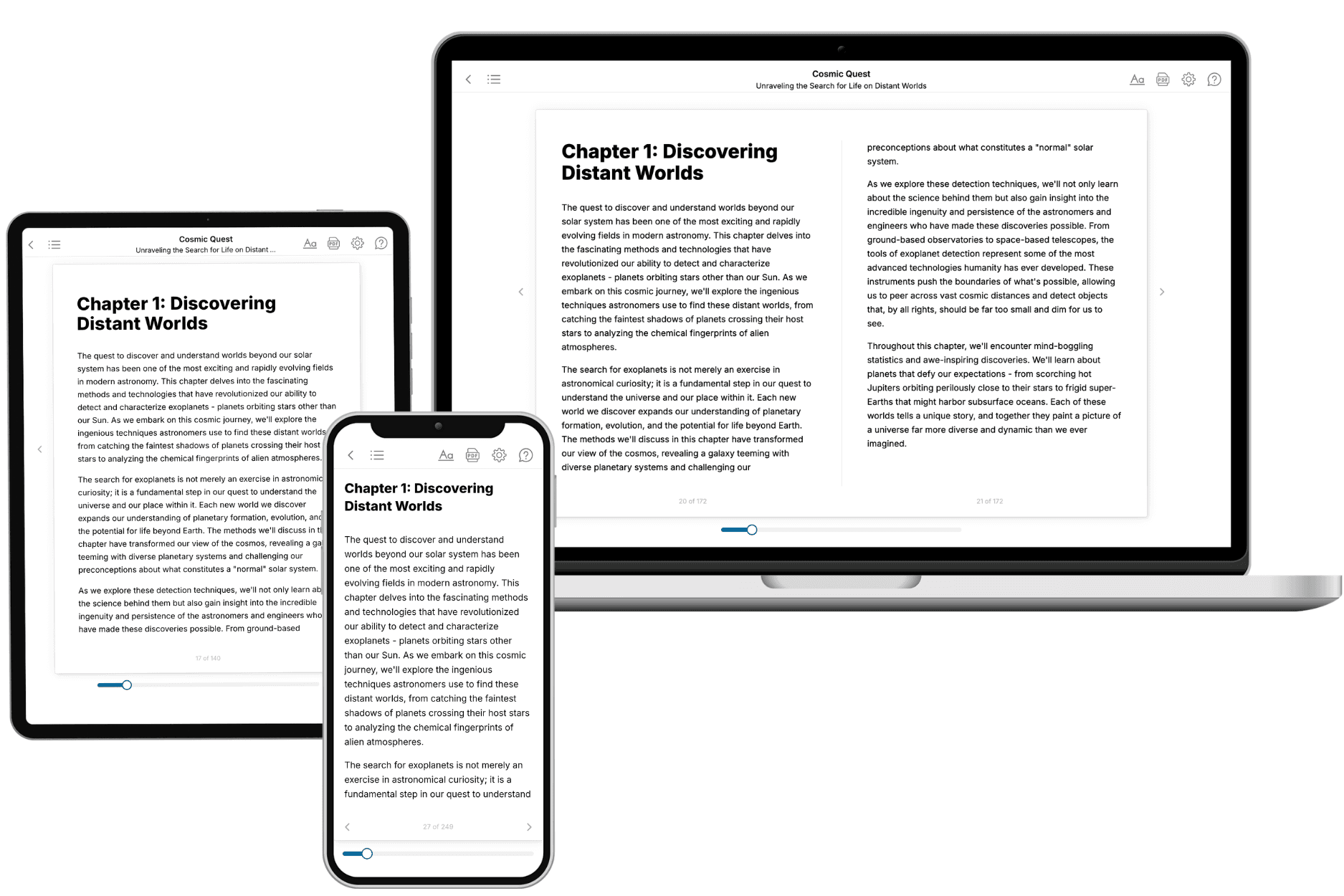
Your book is ready in 10 minutes. Read it online, download as EPUB or PDF, or send to Kindle.

Start from a template
Frequently asked questions
- What is TailoredRead?
TailoredRead creates complete, full-length nonfiction ebooks, written specifically for you. Tell us what you want to learn and why, and TailoredRead writes you a complete ebook on it, with charts, tables, and diagrams throughout. Read it online, on Kindle, or on any e-reader, or download it as a PDF or EPUB. Every book is written fresh the day you order it.
- How is the book tailored to me?
Before anything is written, you answer a few short questions about your goals, your background, and the topics you care about. Your book is then planned around your answers: written at your level, focused on your goals, and covering the topics you chose, instead of the one-size-fits-all book a store sells everyone.
- Will it read like generic AI content?
No. Your book isn't a chat transcript: it's planned chapter by chapter before a single word is written, told in a clear book voice, and explains ideas visually with charts, tables, and diagrams. After writing, every book goes through an editorial pass that polishes chapters so the book reads consistent from start to finish. Judge for yourself: browse thousands of sample books on our Explore Books page.
- How accurate is the content?
Our AI first checks whether your subject needs live research. Niche and fast-moving subjects are researched before writing, and the book plan and chapters are grounded in what it finds. After writing, every book goes through a quality pass that checks its facts and consistency, and researched books list their sources in a Notes section at the back.
- How long is the book?
You choose the length: Comprehensive (250-300 pages), Detailed (150-200 pages), Essential (70-100 pages), or Short (30-50 pages).
- Does the book include visuals?
Yes. Every book includes charts, tables, and diagrams: timelines, checklists, step-by-step guides, decision trees, comparison tables, matrices, and bar charts. A typical book includes dozens of these visual elements.
- Can I read it on Kindle? What formats can I download?
Yes. Every book can be read in our online reader or downloaded as a PDF or EPUB. The EPUB can be opened with Kindle, Apple Books, Kobo, and any e-reader. The Commercial and Author licenses also include an editable Word (DOCX) and Markdown download.
- How much does it cost?
About the price of a regular ebook. The exact price depends on your book's length and complexity, from $2 for the shortest books to $35 for the most comprehensive, and it's shown when you review your book, before you commit to anything. Each book is a one-time purchase, yours to keep, no subscription. Licenses that let you share, teach, or publish your book range from $35.99 to $49.99.
- Can I preview the book before purchasing?
Before you pay, you'll see what your book will cover: the title, a detailed description, the estimated length, and the complete chapter-by-chapter table of contents, so you know what you're getting before you decide. The full text itself is written after you purchase.
- How long does it take to create a book?
About 10 minutes. You can start reading the opening chapters while the rest is still being written.