Civil Rights History Books
Explore tailored Civil Rights History books created by our AI
Gain a deeper understanding of one of America's most transformative yet misunderstood movements. This comprehensive exploration takes you beyond stereotypes and headlines to reveal the Black Panther Party's true origins, ideology, and impact on American society. You'll discover how a group of young activists responded to systemic racism and police brutality with both armed self-defense and groundbreaking community programs—from free breakfast initiatives to health clinics that served thousands. Explore the Party's Ten-Point Program, its international connections, and the sophisticated political organizing that challenged the status quo. Learn how FBI operations deliberately undermined the movement and why internal conflicts ultimately contributed to its decline. This book examines the Party's complex legacy, its influence on contemporary activism, and its enduring relevance to ongoing struggles for racial justice. Whether you're studying civil rights history, understanding modern protest movements, or seeking a nuanced perspective on Black liberation ideology, you'll emerge with a richer, more accurate understanding of this pivotal chapter in American history.
Discover how a single law transformed American society and established the legal framework that continues to protect civil rights today. The Civil Rights Act of 1964 stands as one of the most consequential pieces of legislation in U.S. history, yet many people don't fully understand what it accomplished or why it mattered so much. This book takes you through the dramatic events, key figures, and political battles that led to its passage, then explores how it fundamentally changed employment, education, and public life across the nation. You'll learn about the resistance it faced, the creative ways people found to work around it, and how courts and activists fought to make its promises real. Whether you're studying American history, interested in how social change happens, or want to understand the legal foundations of modern civil rights protections, this comprehensive guide provides the context and insights you need to grasp this pivotal moment in American history.
The Montgomery Bus Boycott
How One City's Courage Changed America
Discover how a single act of defiance sparked a movement that transformed America. The Montgomery Bus Boycott stands as one of the most pivotal moments in Civil Rights history, yet many don't fully understand the strategic planning, community sacrifice, and moral courage that made it succeed. This book takes you beyond the headlines to reveal the real story: the decades of organizing that preceded Rosa Parks' arrest, the 381 days of economic hardship endured by an entire community, and the emergence of Dr. Martin Luther King Jr. as a national leader. You'll learn how ordinary citizens—maids, teachers, ministers, and workers—organized carpools, walked miles daily, and maintained unity against fierce opposition. Through detailed accounts of key figures, strategic decisions, and the broader context of segregation in the Jim Crow South, you'll understand how this boycott didn't just desegregate buses—it fundamentally changed the trajectory of American race relations and proved that nonviolent resistance could achieve what seemed impossible.
The March on Washington
How a Movement Changed America and Why It Still Matters Today
Discover how a single day in August 1963 became a turning point in American history. The March on Washington brought a quarter-million people together in an unprecedented display of peaceful protest that reshaped the nation's civil rights landscape and influenced generations of activists to come. This book takes you beyond the famous "I Have a Dream" speech to reveal the intricate planning, diverse coalition-building, and personal sacrifices that made the march possible. You'll meet the organizers, strategists, and everyday citizens who risked their safety for change, understand the competing visions within the movement, and trace how this single event catalyzed landmark legislation and inspired social movements worldwide. By examining both the march's remarkable achievements and the challenges that remained, you'll gain insight into how ordinary people can create extraordinary change through organized, nonviolent action—and why this moment continues to matter in today's America.
The Black Panther Movement
From Revolutionary Origins to Modern Activism and Social Change
Gain a nuanced understanding of one of America's most transformative and misunderstood social movements. This book traces the Black Panther Party from its founding in 1966 through its evolution and lasting impact on contemporary activism. You'll explore the historical conditions that sparked the movement, the ideological foundations that guided its members, and the practical programs that served Black communities. Discover how government surveillance and internal dynamics shaped the Party's trajectory, and examine the direct connections between Panther activism and modern movements for racial justice. By examining primary sources, historical analysis, and contemporary perspectives, you'll develop a comprehensive understanding of how revolutionary activism challenged systemic racism and continues to influence social movements today. This book moves beyond stereotypes to reveal the Panthers' complex legacy—their achievements, contradictions, and enduring relevance to ongoing struggles for Black liberation and social equity.
Imagine a life defined not by the chains that bound you, but by the freedom you fought to secure for others. Harriet Tubman's story is one of extraordinary transformation—from a woman born into slavery's cruelest circumstances to a legendary figure who guided approximately 70 enslaved people to freedom and served as a military strategist during America's Civil War. This biography explores the remarkable woman behind the legend, examining her early years of brutal servitude, her daring escape, and her dangerous work on the Underground Railroad where she earned the nickname "Moses." You'll discover how her unwavering faith, strategic brilliance, and moral conviction shaped not only her own destiny but influenced the course of American history. Beyond the famous tales, this book reveals Tubman's lesser-known contributions as a nurse, cook, and laundress during the war, her leadership in the Combahee River Raid, and her tireless advocacy for the elderly and for women's rights. Through carefully researched accounts and historical context, you'll understand why Harriet Tubman remains one of America's most inspiring figures and what her life teaches us about courage, justice, and the power of individual action.
Discover how a single piece of legislation fundamentally altered the course of American history and the lives of thousands of Native Americans. This book traces the origins, implementation, and devastating consequences of the Indian Removal Act of 1830—a federal policy that forcibly displaced Native nations from their ancestral homelands. You'll explore the political motivations behind the act, the harrowing experiences of those forced westward on the Trail of Tears, and the profound ways this policy violated treaties and constitutional principles. Through careful examination of primary sources, historical accounts, and contemporary perspectives, you'll understand how this act represents a critical chapter in American civil rights history. You'll also discover how Native nations resisted removal, adapted to new territories, and continue to fight for justice and sovereignty today. This comprehensive exploration reveals the human cost of westward expansion and provides essential context for understanding ongoing Native American struggles and the importance of honoring indigenous rights and self-determination.
The Reconstruction Amendments
How the 13th, 14th, and 15th Amendments Reshaped America
Imagine understanding the constitutional foundation of modern American rights—the very amendments that abolished slavery, guaranteed citizenship, and protected voting rights. The Reconstruction Amendments represent one of the most transformative moments in U.S. constitutional history, yet their full significance often remains unclear. This book demystifies the 13th, 14th, and 15th Amendments by exploring their historical context, the fierce political battles surrounding their passage, and their profound impact on American law and society. You'll discover how these amendments shifted power from states to the federal government, created the legal basis for civil rights protections, and continue to shape contemporary constitutional debates. Through clear analysis and compelling historical narratives, you'll gain the knowledge to understand why these amendments matter today—from voting rights controversies to equal protection debates. Whether you're a student, educator, or engaged citizen, this book provides the comprehensive foundation needed to grasp how Reconstruction amendments fundamentally reshaped the American constitutional order.
Black Codes
The Laws That Built American Slavery and Their Lasting Legacy
Many assume slavery in America developed gradually and naturally from economic necessity. The reality is far more deliberate. Black Codes were systematic, written laws that transformed slavery from a temporary labor arrangement into a permanent, race-based institution that would define American society for centuries. These weren't informal customs—they were carefully constructed legal frameworks that controlled every aspect of Black life, from movement and labor to family relationships and property rights. This book traces how colonial legislatures, beginning in 17th-century Virginia, methodically crafted these codes to maximize control and profit while minimizing the humanity of enslaved people. You'll discover how these laws spread across colonies, how they evolved over time, and how they created the legal foundation for both slavery and Jim Crow. More importantly, you'll understand how the mechanisms established by Black Codes continue to shape American institutions today. By examining the specific language, enforcement, and resistance to these laws, you'll gain insight into how legal systems have been weaponized to create racial inequality—and why understanding this history is crucial for addressing systemic racism in the present.
Equal Protection Under Law
How the 14th Amendment Shaped American Civil Rights
Understand how a single constitutional phrase has become the foundation of American civil rights protections. The Equal Protection Clause of the 14th Amendment is one of the most consequential yet misunderstood provisions in the Constitution. This book traces its journey from a Reconstruction-era guarantee to the powerful legal tool that dismantled Jim Crow segregation, expanded rights for women and minorities, and continues shaping debates about fairness today. You'll explore landmark Supreme Court cases, learn how courts determine what "equal protection" actually means, and discover why this clause remains central to contemporary civil rights struggles. Whether you're studying history, law, or simply want to understand the constitutional backbone of American equality, this accessible guide illuminates how legal principles translate into real-world protections and why the fight for equal protection remains unfinished.
Grant's Reconstruction
How Ulysses S. Grant Shaped the Nation's Rebirth After the Civil War
Discover how one of America's greatest military commanders navigated the treacherous political landscape of Reconstruction and fundamentally shaped the nation's future. This comprehensive examination reveals Grant's presidency as a pivotal moment when federal power, civil rights, and political ideology collided. You'll gain insight into how Grant's determination to preserve the Union and protect freedmen's rights clashed with powerful opposition, economic crises, and the limits of military governance. Through detailed analysis of key policies, scandals, and decisions, you'll understand why Reconstruction ultimately fell short of its promise and how Grant's era established patterns that would define American race relations for generations. Whether you're studying this critical period or seeking to understand the roots of modern political divisions, this book provides the context and clarity needed to grasp why Grant's presidency remains one of history's most consequential and contested administrations.
The Chinese Exclusion Act
America's First Racial Immigration Law and Its Lasting Legacy
Discover how America's first racial immigration law fundamentally transformed the nation's approach to citizenship, belonging, and civil rights. The Chinese Exclusion Act of 1882 stands as a watershed moment in U.S. history—a federal law that explicitly banned an entire nationality from entering the country based on race. This book traces the political, economic, and social forces that made such legislation possible, examines how it was enforced through a vast bureaucratic apparatus, and reveals the remarkable resistance strategies employed by Chinese immigrants and their communities. Through detailed historical analysis and compelling narratives, you'll understand how this act shaped immigration policy for generations, influenced subsequent discriminatory laws, and left scars that persist in contemporary debates about immigration and belonging. This is essential reading for anyone seeking to understand American civil rights history, the roots of modern immigration policy, and the resilience of communities facing systemic exclusion.
The Johnson Impeachment
How a President's Clash with Congress Shaped American Democracy
Many assume Andrew Johnson's impeachment was simply a partisan power grab by vengeful Republicans. In reality, it was a constitutional crisis rooted in fundamentally different visions for America's future. This book examines the Andrew Johnson impeachment within the broader context of Reconstruction, revealing how a president's refusal to protect the rights of formerly enslaved people triggered a constitutional confrontation that nearly removed him from office. You'll discover the political calculations, personal conflicts, and constitutional questions that defined the trial, understand why Johnson's acquittal by a single vote had devastating consequences for civil rights, and learn how this pivotal moment shaped the balance of power between the executive and legislative branches. Through detailed analysis of key figures, speeches, and votes, this book illuminates how Reconstruction-era politics continue to influence American democracy today.
Maryland holds a crucial but often overlooked chapter in the story of American freedom. As the birthplace of Harriet Tubman's legendary escape and her subsequent work as a conductor on the Underground Railroad, the state's landscape is dotted with sites that tell stories of courage, resistance, and hope. Yet many travelers pass through Maryland without realizing they're walking on ground where some of history's most remarkable acts of liberation took place. This guide connects you to those places and stories. You'll discover the plantations where Tubman endured slavery, the safe houses that sheltered freedom seekers, the routes that led north, and the communities that risked everything to help. Each location comes alive with historical context, practical travel information, and the human stories that make history real. Whether you're a history enthusiast, a cultural tourist, or someone seeking to understand America's struggle for freedom, this guide transforms Maryland into an open-air classroom where you can walk in the footsteps of heroes and witness the geography of liberation.
Imagine understanding the true origins of America's greatest conflict—not as a sudden political disagreement, but as the inevitable collision between a nation built on slavery and a nation claiming to be founded on freedom. This book traces how the transatlantic slave trade created the economic foundation of the United States, enriching Northern merchants and Southern planters alike while binding millions in chains. You'll discover how this system of human exploitation became so deeply woven into American life that compromise became impossible. Through vivid historical narratives and clear analysis, you'll see how ordinary people—enslaved Africans resisting bondage, abolitionists fighting for justice, and politicians struggling with irreconcilable visions—shaped the events leading to civil war. This is not a distant historical account but an exploration of how economic greed, moral conviction, and human resilience collided to transform a nation. By understanding this history, you'll gain insight into how systems of oppression are built, defended, and ultimately challenged.
Discover how one president's decisions reshaped the trajectory of a nation. Andrew Johnson's presidency stands as one of the most consequential and controversial periods in American history, yet remains widely misunderstood. This comprehensive examination takes you through the critical years of 1865-1869, revealing how Johnson's policies during Reconstruction fundamentally altered the course of race relations, federal power, and constitutional governance. You'll gain insight into the political battles that defined an era, the personal convictions that drove Johnson's controversial decisions, and the far-reaching consequences that echoed through generations. By exploring the clash between Johnson's vision and that of Congressional Republicans, you'll understand how the seeds of Jim Crow were sown and why Reconstruction's failure remains central to understanding modern America. This book provides the context, analysis, and perspective needed to grasp why Johnson's presidency matters today.
What made Muhammad Ali more than just a boxer? This comprehensive biography explores the extraordinary life of a man who refused to be confined by expectations, challenged the status quo, and became one of the most influential figures of the 20th century. From his early days as Cassius Clay in Louisville to his transformation into The Greatest, Ali's story is one of relentless ambition, spiritual awakening, and unwavering conviction. Discover how his lightning-fast footwork and psychological mastery revolutionized boxing, why his stand against the Vietnam War cost him his prime years, and how his activism shaped the civil rights movement. This book reveals the man behind the myth—his relationships, his struggles, his contradictions, and his enduring impact on sports, culture, and social justice. Whether you're a boxing enthusiast, history buff, or simply curious about how one person's courage can change the world, Ali's journey offers timeless lessons about identity, purpose, and the power of standing firm in your beliefs.
The Trail of Tears
Understanding America's Forced Removal of Native Nations
Gain a deeper understanding of one of America's most consequential and tragic historical events. This comprehensive examination of the Trail of Tears moves beyond surface-level narratives to explore the complex political, legal, and social forces that drove the forced removal of Native American nations from their ancestral lands. You'll discover how federal policy, westward expansion, and the ideology of Manifest Destiny converged to displace thousands of Native Americans in the 1830s and beyond. Through detailed accounts of the Cherokee, Creek, Chickasaw, Choctaw, and Seminole experiences, you'll understand the human cost of removal—the deaths, suffering, and cultural disruption—alongside stories of resistance and resilience. This book contextualizes the Trail of Tears within broader American history, examining the legal mechanisms that enabled removal, the diverse responses of Native nations, and the lasting legacy that continues to shape Native American communities today. Whether you're a student, educator, or history enthusiast, this accessible yet authoritative account provides the knowledge needed to understand this pivotal moment and its enduring significance.
Discover how a single executive order reshaped the course of American history and liberated millions from bondage. The Emancipation Proclamation stands as one of the most consequential documents ever issued by a U.S. president, yet its true story is far more complex than the popular narrative suggests. This comprehensive exploration reveals how President Lincoln navigated the treacherous political landscape of the Civil War era, balancing military strategy with moral conviction to issue this transformative decree. You'll uncover the constitutional debates that surrounded the Proclamation, the resistance it faced from unexpected quarters, and the crucial role enslaved people themselves played in forcing emancipation onto the national agenda. From the preliminary announcement to its final implementation, this book traces the document's journey and examines how it fundamentally altered the war's purpose and America's future. Whether you're a history student, educator, or curious citizen, you'll gain a nuanced understanding of how this pivotal moment emerged from compromise, necessity, and the relentless pursuit of human freedom.
Imagine understanding the full power and scope of your constitutional rights—knowing exactly what you can say, write, and do without government interference, and recognizing when those freedoms are under threat. This book traces the First Amendment from its origins through pivotal moments in American history, showing how ordinary citizens used these rights to challenge injustice and reshape society. You'll explore landmark Supreme Court decisions that defined free speech boundaries, discover how the Civil Rights Movement weaponized assembly and petition, and learn why protecting unpopular speech matters for everyone. Whether you're concerned about censorship, curious about constitutional law, or seeking to understand how social change happens, this book provides the historical context and legal clarity you need. By the end, you'll see the First Amendment not as abstract principle but as a living, breathing right that continues to evolve with American society.
Discover how a single legislative agreement nearly tore the young American republic apart and set the stage for decades of escalating conflict. The Missouri Compromise of 1820 stands as one of the most consequential political moments in American history, yet its significance extends far beyond the immediate crisis it addressed. This book traces the origins of the sectional tensions that made compromise necessary, examines the political maneuvering that produced the agreement, and analyzes how this temporary solution ultimately accelerated the nation toward civil war. You'll explore the competing interests of North and South, the constitutional questions that divided lawmakers, and the ways that slavery became increasingly central to American political identity. By understanding this pivotal moment, you'll gain insight into how political compromises can mask deeper societal fractures and why some conflicts cannot be resolved through negotiation alone. This is essential reading for anyone seeking to understand the roots of American sectional conflict and the long shadow slavery cast over the nation's founding ideals.
America's Pastime
The Complete History of Baseball from Origins to Modern Era
What if the sport you think you know is actually a window into America's soul? Baseball isn't just a game of statistics and championships—it's a living chronicle of American history, ambition, and social change. This book traces baseball's remarkable journey from its humble origins in 19th-century America through its evolution into a global phenomenon. You'll discover how the sport emerged from folk games, how legendary players challenged conventions, and how baseball became intertwined with pivotal moments in civil rights and cultural transformation. Whether you're curious about the business innovations that shaped modern sports, the personalities who defined eras, or how a simple game became woven into the fabric of American identity, this comprehensive history reveals the forces that made baseball truly America's pastime. Explore the stadiums, the rivalries, the records, and the remarkable stories that explain why baseball continues to captivate millions.
Discover how a single morning in December 1941 transformed the United States from a reluctant observer into a global military power. This comprehensive examination of the Pearl Harbor attack goes beyond the headlines to reveal the complex geopolitical tensions, strategic miscalculations, and human stories that defined this pivotal moment in American history. You'll explore the decades of U.S.-Japan relations that made conflict inevitable, understand the military tactics and intelligence failures that left America vulnerable, and trace how this attack reshaped American foreign policy, military organization, and society for generations. From the perspectives of military leaders and ordinary sailors to the broader implications for civil liberties and international relations, this book provides the context and analysis needed to truly understand why Pearl Harbor matters. Whether you're a history student, a curious citizen, or someone seeking to understand how historical events shape national identity, you'll gain valuable insights into how one attack changed the course of American history and the world.
Architects of Innovation
The Untold Stories of African American Inventors Who Changed America
Discover the brilliant minds and groundbreaking innovations that shaped modern America—stories that have been largely erased from history books. From the traffic light to the pacemaker, from improved cotton gins to revolutionary medical devices, African American inventors have fundamentally transformed how we live, work, and communicate. Yet their names and achievements remain overshadowed by a historical narrative that failed to acknowledge their genius. This book brings these remarkable innovators out of the shadows, revealing how they overcame systemic racism, limited resources, and institutional barriers to create technologies that changed the world. You'll meet the visionaries who refused to be silenced, the entrepreneurs who built empires against impossible odds, and the scientists whose discoveries saved countless lives. Through their stories, you'll gain a deeper appreciation for American innovation and understand how diversity of thought and experience drives progress. This is history that matters—not just for understanding the past, but for inspiring the future.
The Mob Mind
Understanding Mass Hysteria, Collective Violence, and the Psychology of Lynching
Imagine understanding the invisible forces that transform ordinary people into participants in extraordinary violence. Throughout history, communities have erupted into mob violence, with individuals committing acts they would never perpetrate alone. This book examines the psychological mechanisms behind these collective phenomena, using historical lynching as a lens to understand universal patterns of mass hysteria and group behavior. You'll discover how social identity, dehumanization, fear, and conformity pressure create conditions where violence becomes normalized. Through psychological research, historical analysis, and case studies, you'll learn how ordinary citizens become capable of extraordinary cruelty—and more importantly, how recognizing these patterns can help prevent such violence in modern contexts. Whether you're interested in history, psychology, or understanding contemporary social phenomena, this exploration of the mob mind reveals uncomfortable truths about human nature and collective behavior that remain deeply relevant today.
Lincoln's Second Inaugural
Understanding the Speech That Redefined American Purpose
What if the most important speech in American history wasn't primarily about politics at all, but about moral reckoning? Lincoln's Second Inaugural Address, delivered just weeks before his assassination, stands as a masterpiece of rhetoric and philosophy that transformed how Americans understood their nation's purpose. This book explores the speech's historical context, its revolutionary theological framework, and its enduring influence on American thought. You'll discover how Lincoln crafted a message that acknowledged the nation's collective guilt for slavery while charting a path toward reconciliation rather than retribution. Through careful analysis of the text, examination of the Civil War's final chapter, and exploration of the speech's legacy, you'll gain deeper appreciation for how one leader used language to address humanity's deepest moral questions. Whether you're a history student, a political leader, or simply someone seeking to understand pivotal moments in American democracy, this book illuminates why Lincoln's words continue to resonate more than 150 years later.
The Progressive Era
How America Transformed in the Early 20th Century
Discover how America transformed from a nation plagued by corruption and inequality into a modern state with robust regulatory systems and expanded democratic participation. The Progressive Era fundamentally reshaped American society between roughly 1890 and 1920, introducing reforms that still govern our lives today. This book explores the movement's origins in public outrage over monopolies and political corruption, the crusading journalists who exposed wrongdoing, and the reformers who fought for change. You'll understand how Progressives tackled business monopolies, improved working conditions, protected consumers, expanded voting rights, and conserved natural resources. Through compelling stories of key figures and pivotal moments, you'll see how ordinary citizens and determined leaders challenged entrenched power and created lasting institutions. Whether you're studying American history, interested in how reform movements work, or curious about the roots of modern government regulation, this book provides essential context for understanding contemporary America and the ongoing tension between business freedom and public protection.
Many aspiring citizens approach the citizenship exam as a memorization challenge, cramming facts and dates without understanding the deeper principles that make America's government work. This leaves them unprepared for interview questions that require genuine comprehension and vulnerable to forgetting information under exam pressure. This guide takes a different approach—building your citizenship knowledge systematically from constitutional foundations upward, so you understand not just what to memorize, but why it matters. You'll progress through constitutional principles, government structure, historical context, and practical exam strategies in a logical sequence designed for professionals who learn best through structured, progressive skill-building. Each module builds on previous knowledge, connecting abstract principles to real-world applications and exam requirements. Whether you're preparing for the civics test, English language assessment, or citizenship interview, this guide provides the comprehensive foundation you need to pass with confidence and truly understand the rights and responsibilities you're assuming.
Rookie of the Year
The Stories, Legends, and Impact of Baseball's Most Promising Newcomers
Discover the remarkable stories behind baseball's most prestigious award for newcomers. This book traces the complete history of the Rookie of the Year award from its creation in 1949 through today's modern era, exploring how it has shaped the sport and celebrated its brightest emerging talents. You'll learn about legendary winners like Jackie Robinson, whose award transcended baseball to become a pivotal moment in American civil rights history, alongside contemporary stars who've redefined what it means to be a rookie in the age of analytics and global competition. Through detailed profiles, historical context, and analysis of the award's evolution, you'll understand why some rookies became Hall of Famers while others faded into obscurity. This book reveals the pressures, expectations, and personal journeys of players who've earned baseball's most coveted newcomer honor, and examines how the award itself has transformed the sport's culture and values over seven decades.
Related books you may like:
Embark on a captivating journey through one of the most pivotal moments in British history with "1066: The Year That Changed England." This meticulously researched account of the Battle of Hastings offers you a front-row seat to the events that reshaped the course of European history. Delve into the complex web of political intrigue, military strategy, and cultural shifts that led to this momentous clash. You'll gain a deep understanding of the key players - William the Conqueror, Harold Godwinson, and Harald Hardrada - and the high-stakes game of thrones they played. Through vivid storytelling and expert analysis, you'll experience the tension of the battlefield, the clash of Anglo-Saxon and Norman cultures, and the far-reaching consequences of William's victory. Discover how this single event transformed England's language, laws, and social structure, leaving an indelible mark on the nation's identity. Whether you're a history buff or simply curious about this transformative period, this book offers fresh insights and a comprehensive overview that will enrich your understanding of medieval Europe and the foundations of modern Britain.
Many assume the French Revolution ended in 1799 with Napoleon's rise to power. In reality, the struggle for democracy and social justice continued to convulse France throughout the nineteenth century. The 1848 Revolution represents a pivotal moment when ordinary people—workers, students, intellectuals, and the poor—rose up against an entrenched monarchy and demanded fundamental change. This book explores the dramatic events of that revolutionary year, from the February uprising that toppled King Louis-Philippe to the violent June Days that exposed the revolution's internal contradictions. You'll discover how economic crisis, industrial transformation, and competing political ideologies collided to reshape not just France, but the entire European continent. Through vivid narratives and careful analysis, this account reveals why 1848 mattered then and why its lessons remain relevant today for understanding how societies change, how revolutions succeed and fail, and how the pursuit of liberty continues to define our world.
Discover how a single year transformed global history and set the stage for the modern world. The Russian Revolutions of 1917 were pivotal moments that toppled an empire, established the first communist state, and triggered consequences that rippled across the entire 20th century. This book walks you through the complex web of causes—from centuries of imperial rule and industrialization to the devastating impact of World War I—that made revolution possible. You'll explore the dramatic events of both the February and October revolutions, meet the key figures who shaped these upheavals, and understand how ordinary Russians experienced these extraordinary times. Beyond the headlines and heroic narratives, you'll examine the real economic hardships, military failures, and social tensions that drove millions to support radical change. This comprehensive account reveals why 1917 matters today, how it reshaped global politics and ideology, and what it teaches us about revolution, power, and historical change. Whether you're a history student, curious learner, or someone seeking to understand the roots of modern geopolitics, this book provides the context and clarity needed to grasp one of history's most consequential moments.
Discover the pivotal events and complex forces that shaped one of the 20th century's most consequential moments. This comprehensive examination takes you through the centuries of Jewish diaspora, the rise of Zionism, and the dramatic final years leading to Israel's establishment in 1948. You'll understand how the Holocaust transformed international politics, why the British Mandate created irreconcilable tensions, and how the UN Partition Plan became a flashpoint for conflict. Through careful analysis of key figures, military campaigns, and political negotiations, you'll gain insight into how a new nation emerged from centuries of displacement and persecution—while grappling with the displacement of another people. This book presents the historical evidence, competing narratives, and lasting consequences of 1948, enabling you to understand not just what happened, but why it matters for the modern Middle East and global politics today.
Most people think the Norman Conquest was simply a military victory that happened in a single day. In reality, 1066 marked the beginning of a decades-long transformation that would fundamentally reshape English society, language, and identity. This book reveals how William the Conqueror's invasion wasn't inevitable—it emerged from a disputed succession, political intrigue, and the ambitions of ambitious leaders. Beyond the famous Battle of Hastings, you'll discover how Norman rulers consolidated power through feudalism, how the French language permanently altered English, and how a new ruling class gradually integrated with the existing population. Through vivid storytelling and careful analysis, you'll understand how this single conquest rippled across centuries, influencing everything from English law and governance to the very words we speak today. Whether you're exploring medieval history for the first time or deepening your existing knowledge, this book illuminates why 1066 remains one of history's most consequential moments—and how its effects continue to shape our world.
Create a Civil Rights History Book Tailored to You
Create an AI-crafted book tailored to your goals, interests, and background






Benefits of AI-tailored books
- Read one book, not ten:
- all the Civil Rights History knowledge you need, gathered into a single book.
- Save days of learning:
- tell us your goals, choose your topics, and the whole book is built around them.
- Learn effortlessly:
- Civil Rights History book written for your specific background and expertise.
- Understand at a glance:
- includes charts, tables, timelines, checklists, decision trees, and more.
- Stay current:
- written the day you order it, not years ago.
- Trust what you read:
- every book is checked for accuracy, with real research when your subject needs it.
Create your unique book in 3 steps
- 1. Select your focus
Select the focus of your Civil Rights History book and share your background
- 2. Personalize your book
Specify your goals and choose sub-topics to include
- 3. Get your tailored book
Your book is ready in 10 minutes. Read it online, download as EPUB or PDF, or send to Kindle.


Frequently asked questions
- What is TailoredRead?
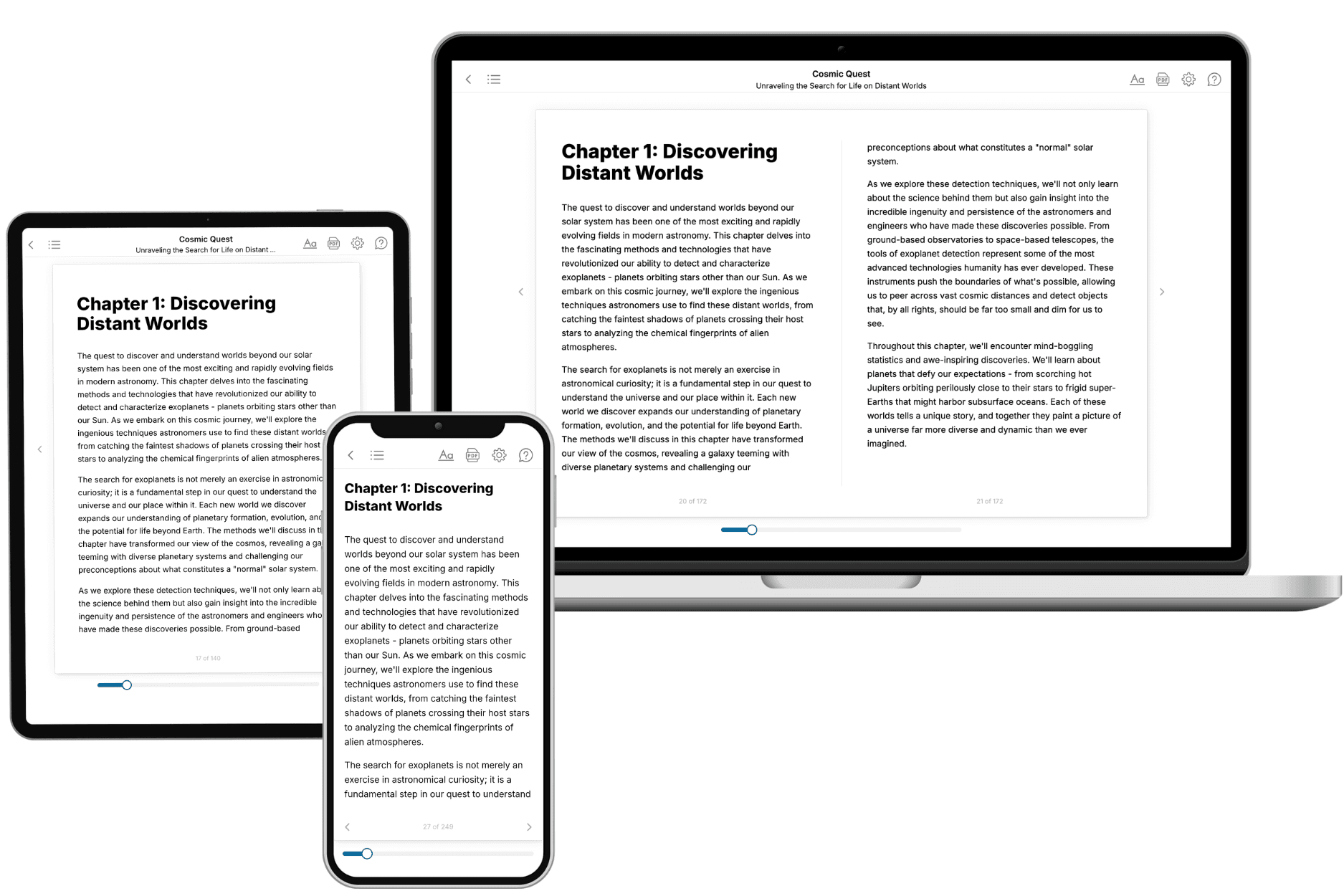
TailoredRead creates complete, full-length nonfiction ebooks, written specifically for you. Tell us what you want to learn and why, and TailoredRead writes you a complete ebook on it, with charts, tables, and diagrams throughout. Read it online, on Kindle, or on any e-reader, or download it as a PDF or EPUB. Every book is written fresh the day you order it.
- How is the book tailored to me?
Before anything is written, you answer a few short questions about your goals, your background, and the topics you care about. Your book is then planned around your answers: written at your level, focused on your goals, and covering the topics you chose, instead of the one-size-fits-all book a store sells everyone.
- Will it read like generic AI content?
No. Your book isn't a chat transcript: it's planned chapter by chapter before a single word is written, told in a clear book voice, and explains ideas visually with charts, tables, and diagrams. After writing, every book goes through an editorial pass that polishes chapters so the book reads consistent from start to finish. Judge for yourself: browse thousands of sample books on our Explore Books page.
- How accurate is the content?
Our AI first checks whether your subject needs live research. Niche and fast-moving subjects are researched before writing, and the book plan and chapters are grounded in what it finds. After writing, every book goes through a quality pass that checks its facts and consistency, and researched books list their sources in a Notes section at the back.
- How long is the book?
You choose the length: Comprehensive (250-300 pages), Detailed (150-200 pages), Essential (70-100 pages), or Short (30-50 pages).
- Does the book include visuals?
Yes. Every book includes charts, tables, and diagrams: timelines, checklists, step-by-step guides, decision trees, comparison tables, matrices, and bar charts. A typical book includes dozens of these visual elements.
- Can I read it on Kindle? What formats can I download?
Yes. Every book can be read in our online reader or downloaded as a PDF or EPUB. The EPUB can be opened with Kindle, Apple Books, Kobo, and any e-reader. The Commercial and Author licenses also include an editable Word (DOCX) and Markdown download.
- How much does it cost?
About the price of a regular ebook. The exact price depends on your book's length and complexity, from $2 for the shortest books to $35 for the most comprehensive, and it's shown when you review your book, before you commit to anything. Each book is a one-time purchase, yours to keep, no subscription. Licenses that let you share, teach, or publish your book range from $35.99 to $49.99.
- Can I preview the book before purchasing?
Before you pay, you'll see what your book will cover: the title, a detailed description, the estimated length, and the complete chapter-by-chapter table of contents, so you know what you're getting before you decide. The full text itself is written after you purchase.
- How long does it take to create a book?
About 10 minutes. You can start reading the opening chapters while the rest is still being written.