Migration Books
Explore tailored Migration books created by our AI
Books readers created
23 Migration books, each written for the reader who ordered it. Read its introduction, then personalize it to get a book of your own.
The Great Migration
How African Americans Reshaped America Through Movement and Resilience
Millions of African Americans left the Jim Crow South seeking better lives in Northern cities, yet many discovered that freedom came with unexpected challenges. The Great Migration stands as one of the most significant demographic shifts in American history, yet its full story remains underappreciated. This book examines the forces that compelled African Americans to abandon ancestral homes, the perilous journeys they undertook, and the communities they built in unfamiliar cities. You'll discover how economic desperation, racial violence, and the promise of industrial work combined to spark this movement. Through personal narratives and historical analysis, you'll understand how migrants navigated housing discrimination, workplace exploitation, and cultural displacement while simultaneously creating vibrant neighborhoods that became centers of Black culture, music, and political power. This exploration reveals how the Great Migration reshaped American cities, influenced the Civil Rights Movement, and established patterns of segregation and inequality that persist today. By understanding this pivotal movement, you'll gain deeper insight into modern America's racial geography and the resilience of African American communities.
Shattered Homelands
Understanding Demographic Change and Displacement in the Syrian Civil War
Gain a clear, evidence-based understanding of how the Syrian Civil War fundamentally reshaped an entire nation's demographic landscape. This book examines the mechanisms of displacement, the strategic use of sectarian cleansing, and the complex realities of return migration in post-Assad Syria. You'll learn how 13 million people were displaced across internal and external populations, how demographic engineering became a tool of state policy, and why millions remain unable to return home despite the regime's collapse. Through accessible analysis grounded in verified data, you'll understand the difference between IDPs and refugees, the role of international actors in displacement patterns, and the multifaceted obstacles facing returnees. Whether you're a student, policy professional, or engaged citizen, this book provides the context needed to comprehend one of the 21st century's largest humanitarian crises and the ongoing challenges of rebuilding a fractured society.
Many people think geography is just about memorizing capitals and drawing maps, but this couldn't be further from the truth. Human geography is the fascinating study of how we, as humans, create meaning through our relationships with places, spaces, and each other across the globe. This comprehensive guide takes you beyond basic location facts to explore the profound ways geography shapes every aspect of human experience. You'll discover how migration patterns tell stories of hope and survival, how cities become laboratories of human innovation, and how cultural landscapes preserve the memories and values of entire civilizations. From the bustling markets of global cities to the quiet rhythms of rural communities, you'll learn to read the geographic signatures that reveal how societies organize themselves across space and time. Through clear explanations, real-world examples, and practical analytical frameworks, you'll develop the skills to understand complex spatial relationships that influence everything from where people choose to live to how cultures spread and adapt. Whether you're examining the geography of language, religion, economic systems, or political boundaries, you'll gain invaluable insights into the spatial logic that underlies human behavior and social organization. By the end of this book, you'll possess a geographic lens for understanding our interconnected world, enabling you to analyze current events, social trends, and cultural phenomena with greater depth and nuance than ever before.
Imagine having the ability to read the story of human societies through numbers, patterns, and trends that reveal how populations grow, move, age, and transform over time. You'll discover the fascinating world of demography, where data becomes a powerful lens for understanding the forces that shape our communities and predict future social changes. This comprehensive guide takes you beyond basic population statistics to explore the intricate relationships between birth rates, death rates, migration patterns, and social development. You'll learn to interpret demographic data with confidence, understanding how population pyramids tell stories of war, prosperity, and cultural shifts, and how migration flows reveal the human response to opportunity and challenge. Through clear explanations and practical examples, you'll master the tools demographers use to analyze population trends and make projections. From understanding why some countries face aging populations while others experience youth bulges, to exploring how urbanization reshapes societies, you'll gain insights that illuminate current events and future possibilities. Whether you're seeking to enhance your analytical skills, understand global trends, or simply satisfy your curiosity about human population patterns, this book provides the knowledge and perspective to see the world through a demographic lens, revealing the hidden patterns that drive social change and human development.
Climate change isn't just melting ice caps and rising temperatures—it's fundamentally reshaping where people live, how they work, and whether their communities can survive. The challenge is that most discussions treat climate change as a purely environmental problem, missing the human dimension entirely. This book bridges that gap by exploring climate change through the lens of human geography and social sciences, revealing how shifting climate patterns disrupt migration, destabilize economies, deepen inequality, and reshape societies. You'll discover why some communities are far more vulnerable than others, how climate impacts ripple through global supply chains, and why traditional adaptation strategies often fail. More importantly, you'll learn how understanding these geographic and social dimensions opens pathways to meaningful resilience and action. Whether you're concerned about your own community's future or seeking to understand global climate justice, this book provides the frameworks and evidence you need to grasp climate change as the human crisis it truly is.
What if a single discovery could reshape an entire nation's destiny? The California Gold Rush of 1848 was far more than a treasure hunt—it was a transformative moment that redefined America's identity, economy, and territorial ambitions. This book explores how the discovery of gold in California's Sierra Nevada foothills triggered one of history's largest mass migrations, bringing fortune seekers, families, and entrepreneurs from every corner of the globe. You'll discover how this rush accelerated westward expansion, fueled debates that pushed the nation toward civil war, and created both unprecedented opportunities and devastating consequences. Through vivid accounts of miners, merchants, and the indigenous peoples whose lands were invaded, you'll understand how a few ounces of gold fundamentally altered the course of American history. Whether you're interested in economic history, westward expansion, or the human stories behind historical events, this comprehensive exploration reveals why the Gold Rush remains one of America's most consequential moments.
The Geography of Culture
How Places Shape Identity, Beliefs, and Communities
Discover how the places you inhabit shape far more than your address—they fundamentally influence your identity, beliefs, and community connections. This book reveals the intricate relationships between geography and culture, showing you how physical locations, regional histories, and spatial relationships create the cultural worlds we live in. You'll explore how landscapes become meaningful through human interaction, how migration and diaspora reshape cultural boundaries, and why understanding place is essential to understanding people. From sacred sites to urban neighborhoods, from colonial legacies to digital communities, you'll gain practical insights into how geography and culture intertwine. Whether you're interested in understanding your own cultural roots, analyzing global communities, or simply curious about why cultures differ across regions, this book provides the frameworks and knowledge to see the world through a cultural-geographical lens. Perfect for students, professionals, and anyone seeking to understand the complex relationship between where we are and who we become.
Discover how the world's great civilizations rose and fell based on their geographical circumstances, and how the places we inhabit continue to shape our identities, economies, and futures. This exploration takes you through the interconnected story of human geography—examining why certain regions became centers of power, how trade routes transformed societies, and why borders drawn on maps have sparked centuries of conflict. You'll learn how geography isn't just background scenery to human history, but an active force that determines where people settle, what they grow, how they trade, and ultimately who they become. From ancient river valleys to modern megacities, from colonial empires to contemporary climate crises, this book reveals the geographical patterns underlying human civilization. By understanding these spatial relationships and historical processes, you'll gain new insight into why the world looks the way it does today and what geographical forces will shape our collective future.
The Great Divide
Understanding the Partition of India and Its Place in World History
Many people believe the Partition of India was simply an inevitable religious conflict that naturally divided Hindus and Muslims. This oversimplified view misses the complex web of political maneuvering, colonial policies, and strategic decisions that actually shaped one of history's most consequential events. The Great Divide takes you beyond surface-level explanations to explore how the partition of British India in 1947 fundamentally altered not just South Asia, but the entire trajectory of world history. You'll discover how colonial administrative choices, key personality conflicts, and international pressures converged to create a perfect storm that displaced over 14 million people and established patterns of conflict that continue today. Through careful analysis of primary sources and historical evidence, you'll gain insight into the roles played by Gandhi, Nehru, Jinnah, and Mountbatten, while understanding how their decisions reverberated across continents. You'll explore how Partition influenced decolonization movements worldwide, shaped Cold War dynamics, and created lasting impacts on global migration patterns. By the end of this comprehensive examination, you'll possess a nuanced understanding of how local events can reshape world history, and why the lessons of Partition remain critically relevant for understanding contemporary geopolitics, religious nationalism, and the ongoing challenges of nation-building in our interconnected world.
Imagine understanding the hidden forces that shape how populations grow, move, and change across the globe. Religion isn't just a matter of personal belief—it's a powerful demographic force that influences whether families have children, where people choose to live, how long they live, and how societies organize themselves. This book reveals the intricate connections between religious traditions and population dynamics, showing you how faith shapes fertility decisions, migration patterns, mortality rates, and social structures. You'll discover why some regions experience population booms while others face decline, how religious institutions serve as demographic anchors in communities, and why one-size-fits-all population policies often fail. Through real-world examples and data-driven analysis, you'll gain the analytical tools to interpret demographic trends through a religious and cultural lens, understanding the world's population not as abstract statistics but as communities shaped by deeply held beliefs and values.
The gap between demographic data and meaningful understanding has never been wider. Fertility rates are plummeting in some regions while remaining stubbornly high in others, yet the underlying mechanisms driving these patterns remain obscure to most observers. This book cuts through the confusion to reveal the intricate web of factors—economic, cultural, political, and social—that determine how many children people have and why those decisions matter for our collective future. You'll discover how the demographic transition unfolds across different societies, why women's empowerment fundamentally alters reproductive patterns, and what below-replacement fertility means for aging nations. Through clear analysis of historical trends, contemporary case studies, and emerging challenges, you'll gain the tools to interpret population dynamics and their far-reaching consequences. From the effectiveness of family policies to the role of migration in demographic balance, this book provides the comprehensive framework you need to understand one of the most consequential trends shaping our world today.
Scattered Seeds
The Epic Saga of the Jewish Diaspora and Its Global Legacy
Have you ever wondered how a small group of people, scattered across the globe, managed to shape world history in profound and lasting ways? "Scattered Seeds" takes you on an illuminating journey through time and space, exploring the remarkable story of the Jewish diaspora. From ancient Babylonia to modern-day New York, this book uncovers the triumphs, struggles, and enduring spirit of Jewish communities worldwide. You'll discover how exile and dispersion became catalysts for cultural innovation, religious evolution, and intellectual achievement. Through vivid narratives and insightful analysis, you'll gain a deeper appreciation for the resilience of Jewish identity and its impact on art, science, philosophy, and social progress. Whether you're a history enthusiast or simply curious about the forces that have shaped our world, "Scattered Seeds" offers a fresh perspective on the power of cultural preservation and the universal human experience of finding home away from home.
Reading the Landscape
A Practical Guide to Spatial Analysis in Cultural Geography
What stories do the spaces around you tell about power, culture, and belonging? Spatial analysis is far more than plotting points on a map—it's a way of thinking critically about how people, cultures, and environments are organized across the Earth. This book teaches you to read landscapes like texts, uncovering the patterns, relationships, and inequalities embedded in geographic space. Whether you're examining migration patterns, cultural boundaries, resource distribution, or urban development, spatial analysis provides the frameworks and tools to move beyond surface observations. You'll learn how to work with maps, data, and spatial concepts to answer meaningful questions about the world. This practical guide bridges theory and application, showing how spatial thinking applies to real challenges in cultural geography, environmental management, and social understanding. By the end, you'll see familiar places with new depth and understand how spatial analysis reveals the complex interplay between culture, nature, and human society.
Imagine a world where your morning coffee connects you to farmers in Ethiopia, your smartphone contains minerals from conflict zones, and your job competes with workers across the globe. This is the reality of globalization—a force that has fundamentally reshaped how we live, work, and relate to one another. Yet most of us experience globalization's effects without truly understanding its mechanisms or implications. This book cuts through the complexity to reveal how globalization actually works: the economic systems driving it, the cultural transformations it triggers, the winners and losers it creates, and the environmental consequences we all face. You'll discover why some communities thrive while others struggle, how your personal choices connect to global systems, and what the future might hold as globalization continues to evolve. By the end, you'll possess a clearer, more nuanced understanding of the interconnected world you inhabit—and the power you have to shape it.
Imagine a landscape so transformed by wind and dust that day becomes indistinguishable from night, where families lose everything they've built and must choose between staying or abandoning their ancestral homes. The Dust Bowl of the 1930s was one of America's most devastating environmental catastrophes, yet it emerged not from nature alone but from the collision of human ambition, economic desperation, and ecological fragility. This book takes you through the dramatic story of how the Great Plains became a wasteland and how millions of Americans endured unimaginable hardship. You'll discover the agricultural practices that backfired, the economic forces that trapped farmers in impossible situations, and the federal government's bold—and sometimes controversial—response. Through vivid accounts and historical analysis, you'll understand how this crisis reshaped American agriculture, sparked mass migration, and fundamentally changed how we think about land stewardship. The Dust Bowl's lessons remain vital today as we grapple with climate change and sustainable farming.
The Loyalists
America's Forgotten Revolutionaries and the Fight for the Crown
The American Revolution is typically told as a triumphant story of patriots fighting for freedom. But what about those who opposed independence? Loyalists—roughly one-third of the colonial population—have been largely erased from popular memory, dismissed as traitors or forgotten entirely. Yet their story is essential to understanding America's founding. This book restores Loyalists to their rightful place in Revolutionary history. You'll discover who they really were: merchants and farmers, enslaved people and Native Americans, religious minorities and political philosophers. You'll explore their genuine concerns about independence, their experiences during the war, and the devastating consequences they faced in defeat. From property confiscation to exile, from family separation to cultural displacement, the Loyalist experience reveals uncomfortable truths about the Revolution's human cost. By examining Loyalist perspectives on constitutional governance, imperial unity, and political legitimacy, you'll gain deeper insight into the Founders' own thinking. This balanced, nuanced exploration challenges simplistic narratives and shows why understanding the Loyalists matters for understanding America itself.
Neolithic Foundations
A 30-Day Accelerated Guide to Understanding the Neolithic Age
Master the Neolithic period in just 30 days with this structured, evidence-based guide designed for graduate-level learners. You'll progress from foundational concepts to sophisticated archaeological analysis, understanding how the shift from hunting-gathering to agriculture fundamentally reshaped human civilization. Each day builds systematically on previous knowledge, covering stone tool technology, settlement patterns, gender roles, ritual practices, and the archaeological methods that reveal these ancient worlds. Explore regional variations across Neolithic France, analyze burial practices and symbolic expression, and examine the trade networks that connected distant communities. This book combines clear explanations of complex concepts with practical frameworks for analyzing archaeological evidence, making it ideal for students, researchers, and anyone seeking rigorous, rapid mastery of this transformative historical period. By the end, you'll understand not just what happened during the Neolithic, but how we know it and why it matters.
Discover how the invisible forces of geography have shaped every aspect of human civilization—from the foods we eat to the languages we speak. This book reveals the profound connections between biogeography and cultural geography, showing you how the distribution of plants, animals, and ecosystems directly influences where cultures develop, how societies organize themselves, and why certain regions become centers of innovation and diversity. You'll learn why tropical rainforests harbor both the greatest biodiversity and the richest cultural traditions, how mountain ranges create natural boundaries that define distinct peoples and practices, and why understanding these patterns is essential for addressing modern challenges like climate change and cultural preservation. Through compelling examples spanning continents and centuries, this exploration demonstrates that geography is not merely backdrop—it's the fundamental force that explains human diversity, economic development, and our shared future on a changing planet.
The Irish Exodus
How Millions of Irish Built America While Transforming Their Homeland
What if the story of Irish immigration to America isn't primarily about seeking the American Dream, but about escaping centuries of systematic oppression? This book reveals how Irish immigration fundamentally reshaped both nations. From the colonial policies that impoverished Ireland to the discrimination Irish immigrants faced in American cities, you'll discover the complex forces that drove millions across the Atlantic. You'll explore how Irish communities built political machines, transformed labor movements, and created a distinct Irish-American identity that influenced American culture for generations. This narrative connects the dots between Irish history, European context, and American development, showing how one group's struggle became central to America's story. Whether you're interested in immigration history, Irish heritage, or understanding how marginalized groups achieve social mobility, this book provides the historical depth and analytical clarity you need to grasp this pivotal chapter in both nations' histories.
The Great Population Shift
Understanding Demographic Transition and Its Impact on Our World
Population patterns shape everything around us—from the schools in your neighborhood to the retirement systems supporting aging societies. This comprehensive exploration takes you through the fascinating process of demographic transition, the predictable yet complex shift that every society experiences as it develops from traditional to modern population structures. You'll discover how countries move through distinct stages of population change, why some regions experience explosive growth while others face declining birth rates, and what these patterns mean for future generations. Through detailed analysis of global case studies, you'll understand the driving forces behind fertility and mortality changes, from urbanization and education to cultural evolution and technological advancement. The book reveals how demographic shifts create both opportunities and challenges, examining the demographic dividend that can fuel economic growth and the population aging that requires innovative solutions. You'll explore migration patterns, regional variations, and the interconnected nature of population dynamics across different societies. By the end, you'll possess a thorough understanding of demographic transition theory and its practical applications, enabling you to interpret population trends, anticipate future changes, and appreciate the profound ways that demographic forces shape our social, economic, and cultural landscapes.
Picture Ireland in the 1840s: a nation of eight million people, most dependent on a single crop for survival. Then imagine that crop failing—not once, but repeatedly, for years. This is the story of the Irish Potato Famine, one of history's most devastating humanitarian crises. But this wasn't simply nature's cruelty. It was the collision of agricultural vulnerability, colonial policies, and systemic inequality that transformed a crop failure into a catastrophe claiming over a million lives. Through meticulous research and compelling narrative, this book reveals how the famine unfolded, why it became so deadly, and how it forever changed Ireland and the world. You'll discover the complex interplay of factors that made the famine possible, the government responses that often worsened conditions, and the massive wave of emigration that reshaped nations. More than a historical account, this is an exploration of how societies fail their most vulnerable members—and what we can learn from this tragedy about resilience, justice, and human dignity.
Discover how anthropology reveals the hidden patterns that shape human behavior, belief systems, and social organization across the world. This book takes you beyond stereotypes and surface-level observations to show you the deeper logic underlying cultural practices—from kinship systems and economic exchanges to religious rituals and digital communities. You'll learn how anthropologists actually study culture through ethnographic fieldwork, and how their insights apply to understanding everything from workplace dynamics to global inequality. By exploring real-world examples and case studies, you'll develop the analytical tools to interpret cultural differences with nuance and respect. Whether you're interested in understanding your own culture more deeply or making sense of an increasingly interconnected world, this book equips you with anthropological perspectives that transform how you see human society. Gain practical knowledge about how cultures adapt, resist change, and create meaning in the face of globalization and social transformation.
The Dragon Boat Festival
Understanding China's Most Vibrant Cultural Celebration
Many people view the Dragon Boat Festival as simply a colorful sporting event with boats and paddles, missing the profound cultural depths beneath the surface. This book reveals the true essence of one of China's most important celebrations—a festival woven into the fabric of Chinese civilization for over two thousand years. You'll discover how a tragic historical figure became immortalized through ritual, why dragon boats carry spiritual significance beyond competition, and how zongzi dumplings connect families across generations. Through exploring the festival's origins, social structures, symbolic meanings, and global evolution, you'll gain a nuanced understanding of Chinese values, community dynamics, and the ways ancient traditions remain vital in the modern world. Whether you're interested in cultural history, social practices, or the intersection of tradition and modernity, this comprehensive guide illuminates why the Dragon Boat Festival continues to captivate millions worldwide.
Related books you may like:
You're about to supercharge your animal advocacy efforts and nonprofit management skills with the power of AI. This groundbreaking guide is tailored specifically for leaders in the animal rights movement who are ready to harness cutting-edge technology to make a bigger impact. Discover how to leverage AI tools to streamline your operations, enhance your strategic planning, and amplify your advocacy campaigns. You'll learn practical techniques for automating administrative tasks, optimizing your workflow, and making data-driven decisions that will take your organization to the next level. From improving time management and task delegation to enhancing donor engagement and project tracking, this book offers a comprehensive roadmap for integrating AI into every aspect of your work. You'll gain insights into AI-driven research methods, problem-solving techniques, and productivity metrics that will revolutionize the way you approach animal advocacy.
Discover how air sign energy shapes your thinking, communication style, and approach to relationships. Whether you have a Gemini, Libra, or Aquarius placement in your birth chart, this guide reveals the intellectual and social gifts these signs bring—along with the blind spots worth understanding. You'll learn why air signs are natural communicators and idea-generators, how each sign expresses itself uniquely, and how your specific air sign placements influence your personality across different life areas. Through practical insights and real-world examples, you'll recognize air sign patterns in yourself and others, harness your natural strengths in connection and innovation, and navigate the challenges of overthinking and emotional detachment. Whether you're exploring your Sun, Moon, Rising, or other planetary placements, this book provides the clarity you need to work with your air sign energy authentically and effectively.
What if you could resolve years of trauma in just a handful of therapy sessions instead of months or years of traditional talk therapy? Accelerated Resolution Therapy (ART) offers a scientifically-grounded approach that harnesses your brain's natural healing capacity to process traumatic memories and emotional distress rapidly. This book demystifies how ART works at the neurological level, explains why it's so effective for conditions like PTSD, anxiety, and phobias, and explores how it differs from conventional therapeutic approaches. Whether you're a mental health professional considering adding ART to your practice, someone exploring treatment options for yourself or a loved one, or simply curious about innovative psychological interventions, this guide provides practical insights into one of the most promising developments in modern therapy. Discover how guided imagery and eye movement can facilitate profound emotional healing, what the research shows about its effectiveness, and whether ART might be the breakthrough approach you've been seeking.
The assumption that political parties are natural, inevitable, or even desirable features of democracy is surprisingly recent. For most of Western political history, the most sophisticated thinkers viewed organized factions as corrupting forces that distorted the pursuit of the common good. This book traces the genealogy of anti-party political thought from Plato's critique of democratic factionalism through contemporary populist movements, examining how philosophers, statesmen, and theorists have conceptualized the dangers of partisanship and imagined alternatives. You'll encounter Rousseau's vision of a general will transcending faction, the Federalist Papers' constitutional anxiety about party machinery, Tocqueville's ambivalent analysis of American partisanship, and the radical rejection of parties by socialist and anarchist movements. Rather than treating anti-party sentiment as mere nostalgia or populist demagoguery, this analysis reveals it as a coherent intellectual tradition grappling with enduring tensions between democratic participation and organized political competition. By understanding how different historical periods and ideological traditions have confronted the problem of faction, you gain critical perspective on contemporary debates about party reform, populism, and democratic alternatives.
Many people believe that behavior is determined either by our genetics or by direct rewards and punishments we experience. However, Albert Bandura's groundbreaking research revealed a more nuanced truth: we learn by watching others. This book explores the life and work of one of psychology's most influential figures and the revolutionary theory that transformed our understanding of human behavior. You'll discover how Bandura's concept of self-efficacy explains why some people persevere through challenges while others give up, how observational learning shapes everything from aggression to prosocial behavior, and why the environment, our thoughts, and our actions are constantly influencing each other. Whether you're an educator seeking to improve student outcomes, a professional interested in behavior change, or simply curious about the science of learning, this comprehensive guide illuminates the principles that govern human development and provides practical insights into how these theories apply to everyday life.
Create a Migration Book Tailored to You
Create an AI-crafted book tailored to your goals, interests, and background






Benefits of AI-tailored books
- Read one book, not ten:
- all the Migration knowledge you need, gathered into a single book.
- Save days of learning:
- tell us your goals, choose your topics, and the whole book is built around them.
- Learn effortlessly:
- Migration book written for your specific background and expertise.
- Understand at a glance:
- includes charts, tables, timelines, checklists, decision trees, and more.
- Stay current:
- written the day you order it, not years ago.
- Trust what you read:
- every book is checked for accuracy, with real research when your subject needs it.
Create your unique book in 3 steps
- 1. Select your focus
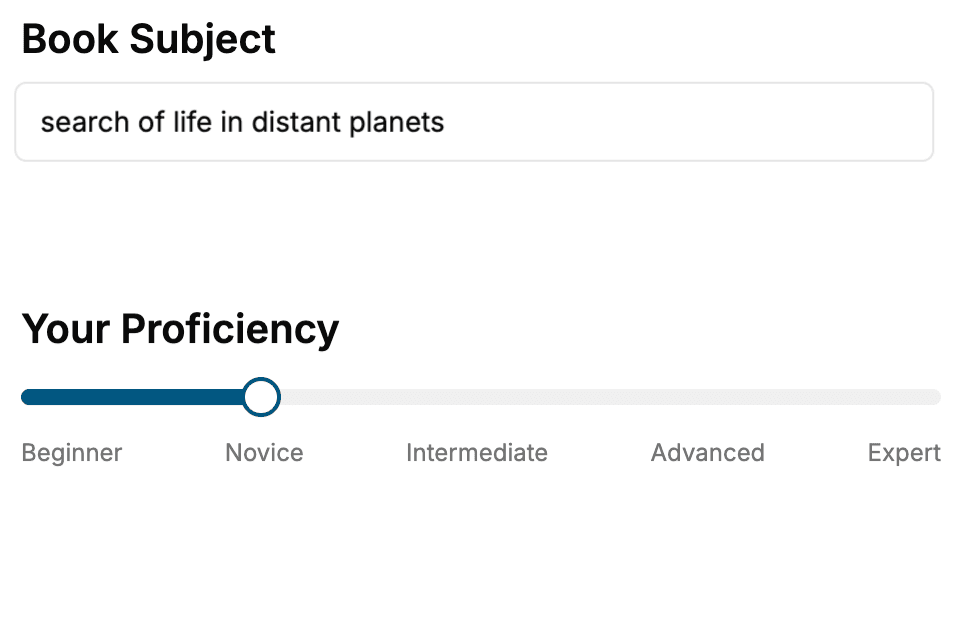
Select the focus of your Migration book and share your background
- 2. Personalize your book
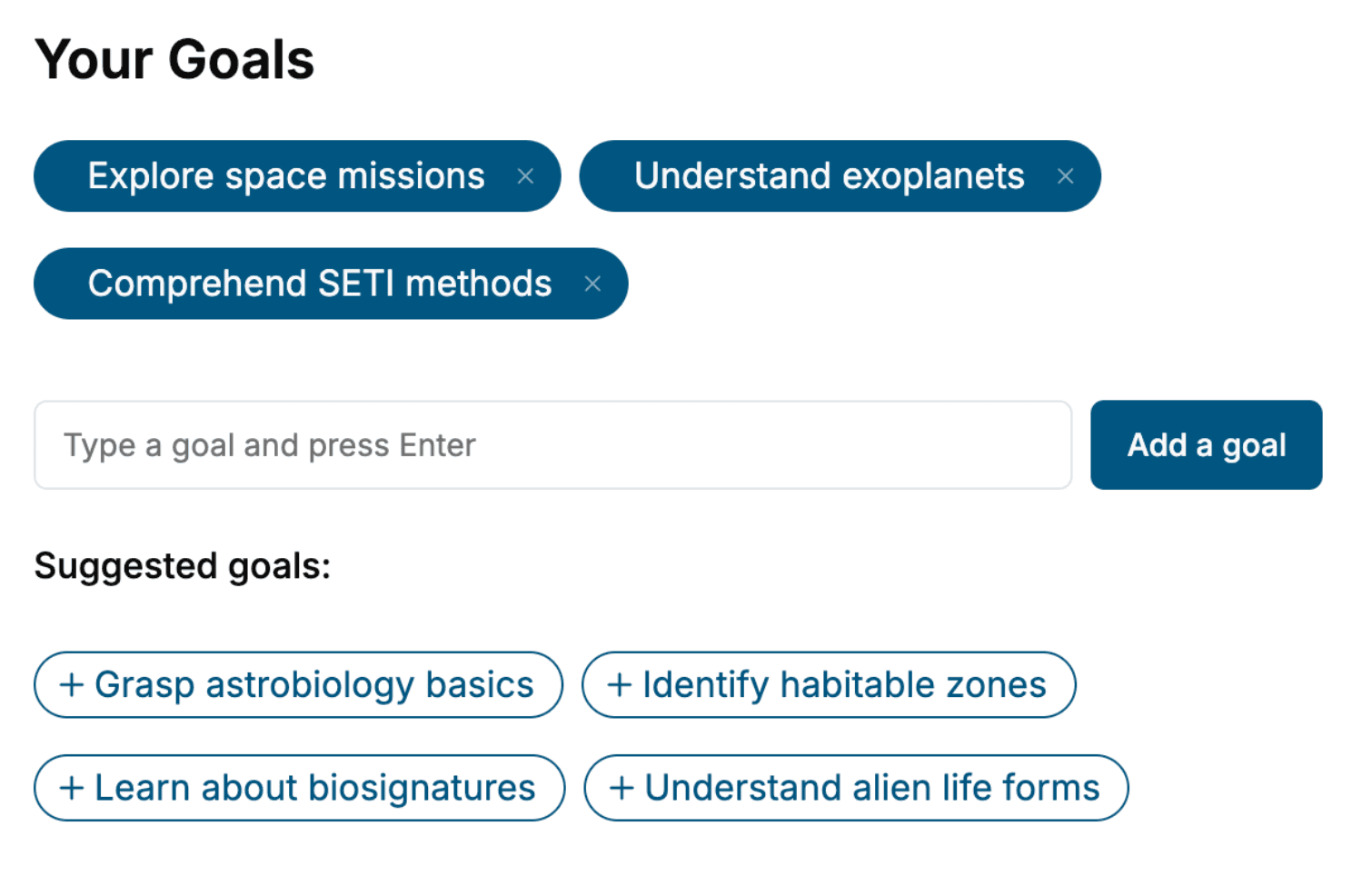
Specify your goals and choose sub-topics to include
- 3. Get your tailored book
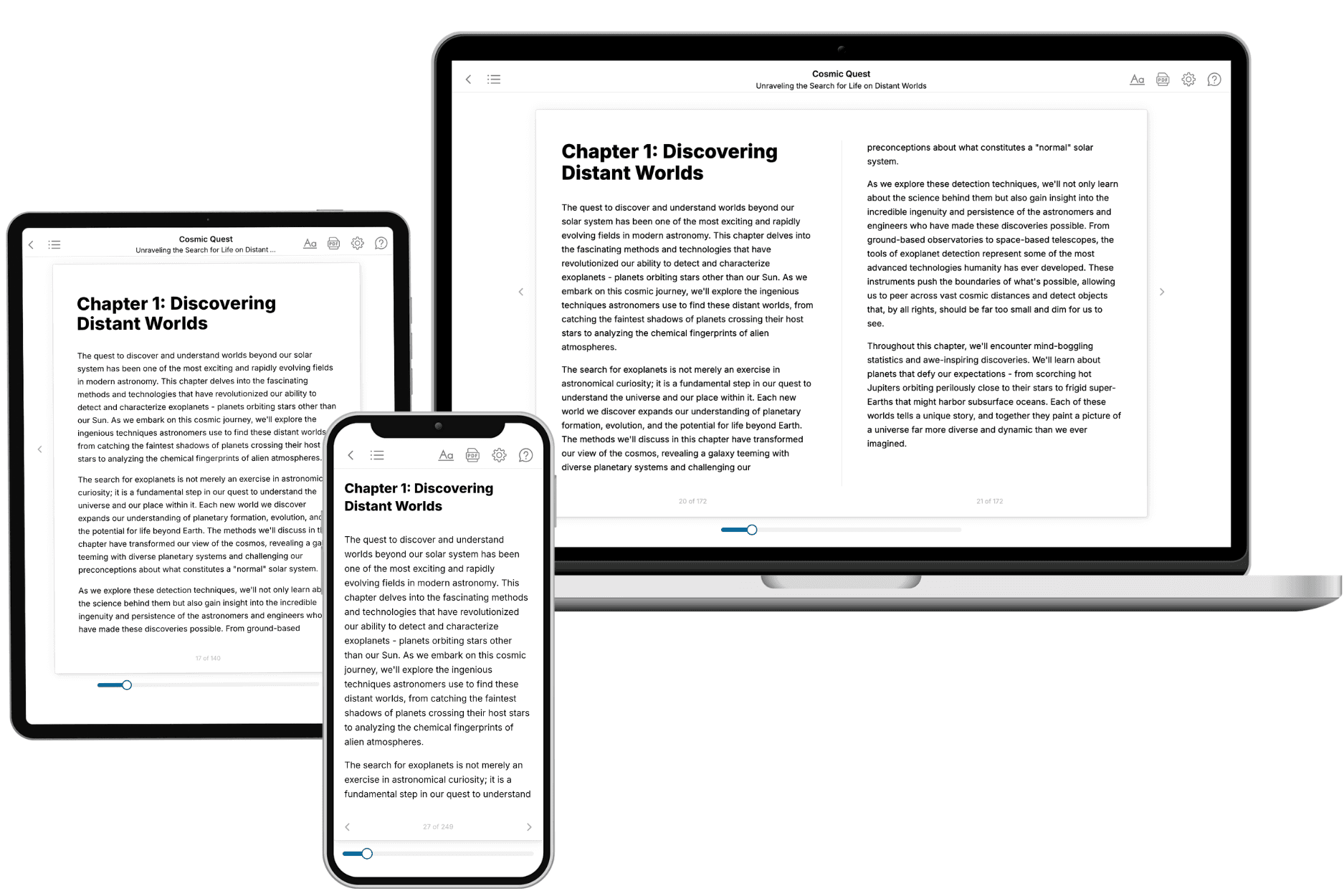
Your book is ready in 10 minutes. Read it online, download as EPUB or PDF, or send to Kindle.
Frequently asked questions
- What is TailoredRead?
TailoredRead creates complete, full-length nonfiction ebooks, written specifically for you. Tell us what you want to learn and why, and TailoredRead writes you a complete ebook on it, with charts, tables, and diagrams throughout. Read it online, on Kindle, or on any e-reader, or download it as a PDF or EPUB. Every book is written fresh the day you order it.
- How is the book tailored to me?
Before anything is written, you answer a few short questions about your goals, your background, and the topics you care about. Your book is then planned around your answers: written at your level, focused on your goals, and covering the topics you chose, instead of the one-size-fits-all book a store sells everyone.
- Will it read like generic AI content?
No. Your book isn't a chat transcript: it's planned chapter by chapter before a single word is written, told in a clear book voice, and explains ideas visually with charts, tables, and diagrams. After writing, every book goes through an editorial pass that polishes chapters so the book reads consistent from start to finish. Judge for yourself: browse thousands of sample books on our Explore Books page.
- How accurate is the content?
Our AI first checks whether your subject needs live research. Niche and fast-moving subjects are researched before writing, and the book plan and chapters are grounded in what it finds. After writing, every book goes through a quality pass that checks its facts and consistency, and researched books list their sources in a Notes section at the back.
- How long is the book?
You choose the length: Comprehensive (250-300 pages), Detailed (150-200 pages), Essential (70-100 pages), or Short (30-50 pages).
- Does the book include visuals?
Yes. Every book includes charts, tables, and diagrams: timelines, checklists, step-by-step guides, decision trees, comparison tables, matrices, and bar charts. A typical book includes dozens of these visual elements.
- Can I read it on Kindle? What formats can I download?
Yes. Every book can be read in our online reader or downloaded as a PDF or EPUB. The EPUB can be opened with Kindle, Apple Books, Kobo, and any e-reader. The Commercial and Author licenses also include an editable Word (DOCX) and Markdown download.
- How much does it cost?
About the price of a regular ebook. The exact price depends on your book's length and complexity, from $2 for the shortest books to $35 for the most comprehensive, and it's shown when you review your book, before you commit to anything. Each book is a one-time purchase, yours to keep, no subscription. Licenses that let you share, teach, or publish your book range from $35.99 to $49.99.
- Can I preview the book before purchasing?
Before you pay, you'll see what your book will cover: the title, a detailed description, the estimated length, and the complete chapter-by-chapter table of contents, so you know what you're getting before you decide. The full text itself is written after you purchase.
- How long does it take to create a book?
About 10 minutes. You can start reading the opening chapters while the rest is still being written.