The Fertility Transition
Understanding the Forces Shaping Population Change in the Modern World
The gap between demographic data and meaningful understanding has never been wider.
238 pages12 chaptersEnglishOct 20, 2025Demography
About this book
Fertility rates are plummeting in some regions while remaining stubbornly high in others, yet the underlying mechanisms driving these patterns remain obscure to most observers. This book cuts through the confusion to reveal the intricate web of factors—economic, cultural, political, and social—that determine how many children people have and why those decisions matter for our collective future. You'll discover how the demographic transition unfolds across different societies, why women's empowerment fundamentally alters reproductive patterns, and what below-replacement fertility means for aging nations. Through clear analysis of historical trends, contemporary case studies, and emerging challenges, you'll gain the tools to interpret population dynamics and their far-reaching consequences. From the effectiveness of family policies to the role of migration in demographic balance, this book provides the comprehensive framework you need to understand one of the most consequential trends shaping our world today.
Table of contents
- IntroductionWhy Fertility Matters Now More Than Ever, At the Demographic Crossroads, How This Book Approaches FertilityRead below
- Chapter 1: Measuring FertilityKey Fertility Indicators and Metrics, Data Sources and Collection Methods, Interpreting Fertility Statistics
- Chapter 2: The Demographic Transition TheoryThe Five Stages of Demographic Transition, Historical Patterns in Europe and North America, Transition Dynamics in the Developing World, Critiques and Limitations of the Model
- Chapter 3: Economic Drivers of Fertility ChangeEconomic Development and Fertility Decline, The Rising Opportunity Cost of Children, Income Effects and Fertility Decisions, Economic Uncertainty and Postponement
- Chapter 4: Education, Gender Equality, and FertilityFemale Education as a Fertility Determinant, Women's Labor Force Participation, Gender Equity and Family Formation
- Chapter 5: Cultural and Religious InfluencesCultural Norms and Family Size Ideals, Religious Beliefs and Reproductive Behavior, Secularization and Changing Values, Navigating Tradition and Modernity
- Chapter 6: Contraception and Reproductive TechnologyThe Contraceptive Revolution, Access, Availability, and Barriers, Assisted Reproductive Technologies
- Chapter 7: Policy Interventions and Their EffectivenessPronatalist Policies Around the World, Family Support Systems and Childcare, Evaluating Policy Outcomes, Unintended Consequences of Population Policies
- Chapter 8: Below-Replacement FertilityDefining and Measuring Below-Replacement Fertility, The Global Spread of Low Fertility, Implications for Aging Societies
- Chapter 9: Persistent High Fertility ContextsSub-Saharan Africa's Demographic Profile, Barriers to Fertility Decline, The Youth Bulge and Its Consequences, Development Challenges and Opportunities
- Chapter 10: Migration and Demographic BalanceMigration as a Demographic Solution, Immigrant Fertility Patterns, Integration and Social Cohesion
- Chapter 11: Regional Fertility PatternsEast Asia's Ultra-Low Fertility, European Variations, Diversity Across the Americas, Middle East and North Africa in Transition
- Chapter 12: Future Trends and ProjectionsUnderstanding Population Projections, Uncertainty and Alternative Scenarios, Emerging Factors Shaping Future Fertility
- ConclusionKey Takeaways, Navigating Our Demographic Future
- Further Reading
Introduction
The world stands at a remarkable demographic inflection point. For the first time in human history, more than half of the global population lives in countries where fertility rates have fallen below the replacement level of 2.1 children per woman. This shift represents one of the most profound transformations in human society, yet it unfolds largely unnoticed in daily life. Unlike sudden economic crises or dramatic political upheavals, demographic change moves slowly and steadily, reshaping the foundations of societies in ways that become apparent only when viewed across decades. The consequences of these shifts touch every aspect of modern life, from the viability of pension systems to the structure of families, from urban planning to environmental sustainability.
Understanding fertility trends requires moving beyond simple statistics to grasp the complex web of factors that influence reproductive decisions. When a couple decides whether to have a child, or how many children to have, they respond to a constellation of economic pressures, cultural expectations, personal aspirations, and institutional constraints. These individual decisions, multiplied across millions of households, create the demographic patterns that define our era. The fertility transition is not merely a matter of numbers declining on a chart. It represents fundamental changes in how people live, work, love, and plan their futures. It reflects shifting gender roles, evolving economic structures, changing values about family and individual fulfillment, and new possibilities created by technology and policy.
This book provides a comprehensive framework for understanding fertility dynamics in the modern world. You will explore the mechanisms driving fertility change, examine regional variations and their causes, and consider the implications of different demographic trajectories. The goal is not to advocate for higher or lower fertility rates, but to equip you with the analytical tools needed to understand this critical dimension of social change. Whether you approach this topic from academic interest, professional necessity, or personal curiosity, you will find that fertility patterns offer a unique window into the forces shaping contemporary societies. The demographic transition is not simply something that happens to populations—it emerges from millions of individual choices made within specific social, economic, and cultural contexts.
The chapters ahead will take you on a journey through the landscape of fertility research and demographic analysis. You will encounter societies grappling with the challenges of ultra-low fertility, regions where high fertility persists despite modernization, and nations experimenting with policies to influence reproductive behavior. You will examine the theories demographers use to explain fertility patterns, the data sources that inform our understanding, and the debates that animate this field of study. Throughout, the emphasis remains on practical understanding rather than abstract theory, on patterns you can observe and analyze rather than speculation about unknowable futures. By the end, you will possess a sophisticated understanding of one of the most consequential trends shaping the twenty-first century.
Why Fertility Matters Now More Than Ever
Fertility rates shape the age structure of populations, which in turn determines the fundamental challenges societies face. A country with high fertility and a young population confronts very different issues than one with low fertility and an aging population. The former must provide education, employment, and opportunity for large cohorts of young people entering adulthood. The latter must sustain pension systems, healthcare infrastructure, and economic productivity with a shrinking workforce supporting a growing number of retirees. These are not abstract concerns but practical challenges that affect government budgets, tax rates, housing markets, and the daily experiences of citizens. The demographic structure created by fertility patterns decades ago determines the options available to policymakers today.
Consider the contrast between Japan and Niger, two countries at opposite ends of the fertility spectrum. Japan's total fertility rate hovers around 1.3 children per woman, a level sustained for decades. The result is a society where nearly 30 percent of the population is over 65 years old, and the working-age population shrinks each year. Schools close for lack of students while demand for elder care facilities grows. The government faces mounting pressure to maintain social services with a declining tax base. Meanwhile, Niger maintains one of the world's highest fertility rates at approximately 6.7 children per woman. More than half the population is under 15 years old. The challenge here is providing education, healthcare, and eventually employment for a rapidly growing young population. Both situations create profound policy challenges, though of entirely different natures.
The economic implications of fertility patterns extend far beyond government budgets. Labor markets, consumer demand, innovation rates, and economic growth all respond to demographic structure. A society with many young workers and few retirees can invest heavily in infrastructure and education, building foundations for future prosperity. This demographic dividend helped fuel rapid economic growth in East Asia during the late twentieth century. Conversely, aging societies face what economists call the demographic burden—a high ratio of dependents to workers that constrains economic dynamism. Understanding these patterns helps explain why some economies surge while others stagnate, why some housing markets boom while others contract, and why some nations attract immigrants while others experience emigration.
Fertility trends also reshape family structures and intergenerational relationships in profound ways. When fertility rates were high, most people grew up with multiple siblings, numerous cousins, and extended family networks. As fertility declines, family structures become more vertical than horizontal. A child might have two parents, four grandparents, and even eight great-grandparents, but few or no siblings or cousins. This beanpole family
structure changes the nature of family support systems, inheritance patterns, and caregiving arrangements. The traditional expectation that adult children will care for aging parents becomes more challenging when each elderly person has fewer descendants to share that responsibility. These shifts in family structure have emotional, social, and practical consequences that ripple through societies.
Environmental considerations add another dimension to why fertility matters. Population size and growth rates directly affect resource consumption, carbon emissions, land use, and environmental degradation. A world of 8 billion people places different demands on the planet than one of 10 or 12 billion. However, the relationship between population and environmental impact is not straightforward. High-fertility regions often have low per-capita consumption and emissions, while low-fertility developed nations consume resources at much higher rates. The environmental implications of fertility patterns depend on consumption patterns, technology, and economic development, not just population numbers. Still, understanding fertility trends is essential for projecting future environmental pressures and planning sustainable development pathways.
The political dimensions of fertility change deserve attention as well. Demographic shifts alter the balance of power between generations, regions, and nations. Aging societies tend to develop political systems that prioritize the interests of older voters, potentially at the expense of younger generations. Countries with youthful populations face different political pressures, including demands for education, employment, and political participation. At the global level, differential fertility rates mean that the relative populations of different regions and nations will shift dramatically over the coming decades. Africa's share of global population will rise substantially while Europe's declines. These shifts will reshape geopolitical dynamics, migration patterns, and international relations in ways we are only beginning to understand.
Perhaps most fundamentally, fertility patterns reflect and reinforce changing values about gender, family, and individual autonomy. The transition from high to low fertility is inseparable from women's increasing access to education, employment, and control over their reproductive lives. Societies where women have limited autonomy and few opportunities outside motherhood tend to maintain higher fertility. Those where women enjoy greater equality and more diverse life options typically see fertility decline. This connection means that fertility trends serve as a barometer of social progress in gender equality, even as they create new challenges and tensions. Understanding fertility requires grappling with fundamental questions about gender roles, family structures, and the balance between individual choice and collective needs.
The urgency of understanding fertility stems from the long time horizons involved in demographic change. Unlike economic policies that can be adjusted quarterly or annually, demographic patterns unfold over generations. A fertility decline that begins today will not affect the size of the working-age population for two decades. An aging crisis that emerges today reflects fertility decisions made thirty or forty years ago. This temporal lag means that societies must anticipate demographic challenges well in advance, making informed projections and implementing policies whose effects will not be fully apparent for decades. The decisions societies make today about family policy, immigration, education, and economic structure will shape demographic outcomes for generations to come. Understanding fertility dynamics is essential for making those decisions wisely.
At the Demographic Crossroads
The contemporary world exhibits unprecedented demographic diversity. Some nations have completed the fertility transition and now grapple with sustained below-replacement fertility. Others remain in the early stages of transition with fertility rates still well above replacement level. Still others occupy intermediate positions, with fertility declining but not yet reaching the low levels seen in East Asia or Southern Europe. This diversity means that demographic challenges vary enormously across regions. What works as policy in one context may fail completely in another. The demographic crossroads we face is not a single fork in the road but a complex intersection where different societies travel different paths toward uncertain destinations.
Europe exemplifies the challenges of sustained low fertility. Most European countries have maintained fertility rates below replacement level for several decades, with some nations experiencing rates as low as 1.2 to 1.3 children per woman. The result is rapid population aging and, in many cases, population decline. Germany's population would be shrinking significantly without immigration. Italy faces similar dynamics, with some rural regions experiencing dramatic depopulation. These trends create fiscal pressures as pension and healthcare costs rise while the working-age population shrinks. European nations have experimented with various pronatalist policies—parental leave, childcare subsidies, child allowances—with mixed results. Some countries, like France and Sweden, have achieved modest fertility increases through comprehensive family support systems. Others have seen little response to policy interventions.
East Asia presents an even more dramatic picture of fertility decline. South Korea's total fertility rate fell to approximately 0.72 in 2023, the lowest ever recorded for a major nation. Japan, Taiwan, Singapore, and Hong Kong all maintain fertility rates well below 1.5. These ultra-low rates emerged despite strong cultural emphasis on family and relatively recent histories of high fertility. The speed and depth of fertility decline in East Asia surprised demographers and policymakers alike. Various factors contribute to this pattern, including intense educational competition, high housing costs, demanding work cultures, and persistent gender inequality in domestic labor. Young people, especially women, increasingly delay or forgo marriage and childbearing in response to these pressures. The demographic consequences are profound, with these societies aging faster than any in history.
Sub-Saharan Africa stands at the opposite end of the fertility spectrum. While fertility has declined from the very high levels of the mid-twentieth century, it remains well above replacement in most countries. Niger, Somalia, Chad, and the Democratic Republic of Congo maintain fertility rates above 5 children per woman. Even countries experiencing economic growth and social development, like Nigeria and Ethiopia, have fertility rates around 4 to 5 children per woman. This sustained high fertility creates a youth bulge—a large proportion of the population under age 25. The challenge is providing education, healthcare, and employment for rapidly growing young populations. If managed well, this demographic structure could provide a dividend of economic growth. If managed poorly, it could contribute to unemployment, instability, and emigration pressure.
Latin America and the Caribbean occupy an intermediate position in the fertility transition. Most countries in the region have experienced substantial fertility decline over recent decades, with rates now approaching or below replacement level. Brazil's fertility rate has fallen from over 6 children per woman in the 1960s to around 1.6 today. Mexico, Colombia, and Chile show similar patterns. However, significant variation exists within the region. Guatemala and Bolivia maintain higher fertility rates, while Cuba and Puerto Rico have very low fertility. The region also exhibits substantial internal variation, with urban, educated populations having much lower fertility than rural, less-educated populations. This diversity within countries creates distinct demographic challenges for different regions and social groups.
The Middle East and North Africa present a complex and varied demographic landscape. Some countries, like Iran and Tunisia, have experienced rapid fertility decline, with rates now below or near replacement level. Iran's fertility transition was particularly dramatic, falling from around 7 children per woman in the 1980s to below 2 today. Other countries, like Iraq, Yemen, and Palestine, maintain higher fertility rates above 3 children per woman. The region's demographic patterns reflect diverse political systems, economic conditions, and social policies. Oil-rich Gulf states have unique demographic profiles shaped by large expatriate populations. Countries affected by conflict face disrupted demographic transitions. The region's future demographic trajectory remains uncertain, with different countries following divergent paths.
South and Southeast Asia exhibit remarkable diversity in fertility patterns. India recently reached replacement-level fertility nationally, though substantial variation exists between states. Kerala has fertility rates comparable to Europe, while Bihar and Uttar Pradesh maintain rates above 3 children per woman. Bangladesh achieved a dramatic fertility decline despite remaining a low-income country, demonstrating that economic development is not the only path to lower fertility. Pakistan maintains higher fertility, around 3.3 children per woman. Southeast Asian nations show similar diversity. Thailand and Vietnam have below-replacement fertility, while the Philippines maintains rates around 2.5. Indonesia sits near replacement level. These variations reflect different policy approaches, cultural contexts, and development trajectories.
This global diversity in fertility patterns means that demographic challenges and opportunities vary enormously across regions. Some societies must adapt to population aging and potential decline. Others must manage rapid population growth and youth bulges. Still others navigate the transition between these states. No single policy prescription or theoretical framework applies universally. Understanding fertility requires appreciating this diversity and recognizing that different contexts demand different analytical approaches and policy responses. The demographic crossroads is not a single moment of decision but an ongoing process of adaptation to changing population dynamics. Societies that understand these dynamics and plan accordingly will be better positioned to navigate the challenges ahead.
The interconnections between regions add further complexity to the demographic landscape. Migration flows link high-fertility and low-fertility regions, with people moving from areas of population growth to areas of population decline. These flows help balance demographic pressures but also create social and political tensions. International development assistance, trade relationships, and geopolitical dynamics all respond to demographic patterns. A comprehensive understanding of fertility must account for these global interconnections, recognizing that demographic change in one region affects others through multiple channels. The demographic crossroads is not just a national or regional phenomenon but a global one, requiring analysis that spans borders and considers the full complexity of our interconnected world.
How This Book Approaches Fertility
This book takes a systematic, multi-dimensional approach to understanding fertility dynamics. Rather than privileging any single theoretical perspective or disciplinary lens, it draws on insights from demography, economics, sociology, anthropology, and public policy. Fertility patterns emerge from the interaction of multiple factors operating at different levels—individual decisions, family dynamics, community norms, institutional structures, and national policies. No single factor determines fertility outcomes. Instead, various influences combine in context-specific ways to produce the patterns we observe. This book provides frameworks for understanding these interactions and tools for analyzing fertility patterns in different settings.
The structure of the book moves from foundational concepts to specific applications. Early chapters establish the basic tools of fertility analysis—how fertility is measured, what data sources exist, and what theoretical frameworks demographers use to understand fertility change. The demographic transition theory receives particular attention as the dominant paradigm for understanding fertility decline, along with critical examination of its limitations and alternatives. These foundational chapters equip you with the conceptual vocabulary and analytical frameworks needed to engage with fertility research and demographic analysis. Understanding how demographers think about fertility is essential for interpreting the patterns and debates discussed in later chapters.
Middle chapters examine the major drivers of fertility change in depth. Separate chapters address economic factors, education and gender equality, cultural and religious influences, contraceptive technology, and policy interventions. Each chapter explores both theoretical mechanisms and empirical evidence, drawing on research from multiple disciplines and diverse geographic contexts. The goal is to understand not just that these factors matter, but how they matter—through what mechanisms, under what conditions, and with what variations across contexts. For example, the chapter on economic factors examines not just the correlation between development and fertility decline, but the specific pathways through which economic change affects reproductive decisions.
The book then turns to examining specific demographic contexts and challenges. Chapters on below-replacement fertility and persistent high fertility explore the distinct issues facing societies at different stages of the demographic transition. A chapter on migration examines how population movements interact with fertility patterns to shape demographic outcomes. Regional chapters provide detailed analysis of fertility patterns in major world regions, highlighting both common patterns and distinctive features. These chapters move from abstract analysis to concrete examination of real demographic situations, showing how the concepts and frameworks introduced earlier apply to understanding actual fertility patterns around the world.
Throughout the book, emphasis falls on evidence and examples rather than abstract theory. Each major concept is illustrated with specific cases, data, and research findings. When discussing the relationship between female education and fertility, for instance, the text provides specific examples of countries where this relationship is strong, cases where it is weak, and analysis of why these variations occur. When examining policy interventions, the book presents evidence on what has worked, what has failed, and what remains uncertain. This evidence-based approach helps ground abstract concepts in observable reality and provides the empirical foundation needed for informed analysis.
The book also emphasizes practical application and analytical skills. Rather than simply presenting information, it aims to develop your ability to analyze fertility patterns, evaluate demographic arguments, and understand policy debates. This means not just learning what fertility rates are in different countries, but understanding how to interpret those rates, what factors might explain them, and what implications they carry. It means developing the ability to critically evaluate claims about demographic trends, to recognize the limitations of data and projections, and to appreciate the complexity and uncertainty inherent in demographic analysis. These analytical skills have value beyond understanding fertility specifically—they transfer to analyzing other social phenomena and evaluating evidence-based arguments.
Several themes recur throughout the book, providing continuity across chapters. One is the tension between individual autonomy and collective interests in reproductive decisions. Fertility is ultimately determined by individual choices, yet those choices have profound collective consequences. Societies have legitimate interests in demographic outcomes, yet also must respect individual reproductive rights. This tension animates many policy debates and ethical discussions around fertility. Another recurring theme is the importance of gender equality. Women's status, opportunities, and autonomy emerge repeatedly as central factors in fertility patterns. The fertility transition is inseparable from changing gender roles and women's empowerment. A third theme is the long time horizon of demographic change and the importance of anticipating future challenges based on current trends.
The book maintains a balanced, analytical perspective on normative questions about fertility. It does not advocate for higher or lower fertility rates, nor does it prescribe specific policies. Different societies face different demographic challenges and have different values and priorities. What constitutes an optimal fertility rate depends on context, values, and goals. The book's purpose is to provide the understanding needed to make informed judgments about these questions, not to impose particular answers. This means presenting evidence on the consequences of different fertility levels, examining the effectiveness of various policy approaches, and exploring the trade-offs involved in demographic choices. You will develop the tools to form your own informed views rather than being told what to think.
Finally, the book acknowledges uncertainty and limitations in demographic knowledge. While demographers have developed sophisticated tools for analyzing fertility patterns, much remains uncertain or contested. Projections of future fertility carry substantial uncertainty. The relative importance of different factors in driving fertility change remains debated. The effectiveness of policy interventions varies across contexts in ways not fully understood. Rather than presenting a false certainty, the book acknowledges these limitations while still providing the best available understanding of fertility dynamics. This honest engagement with uncertainty is essential for developing realistic expectations about what demographic analysis can and cannot tell us. It also highlights areas where further research is needed and where policy must proceed despite incomplete knowledge.
As you progress through the chapters ahead, you will build a comprehensive understanding of fertility dynamics and their implications. You will gain familiarity with the data, concepts, and debates that define demographic analysis of fertility. You will develop the ability to interpret fertility statistics, evaluate demographic arguments, and understand policy discussions. Most importantly, you will come to appreciate fertility change as one of the most consequential transformations shaping contemporary societies—a transformation that touches every aspect of social, economic, and political life. The demographic transition is not merely a technical matter for specialists but a fundamental feature of the modern world that everyone should understand. This book provides the foundation for that understanding.
This is the end of the free sample. The full book has 12 chapters.
Want this book written for you?
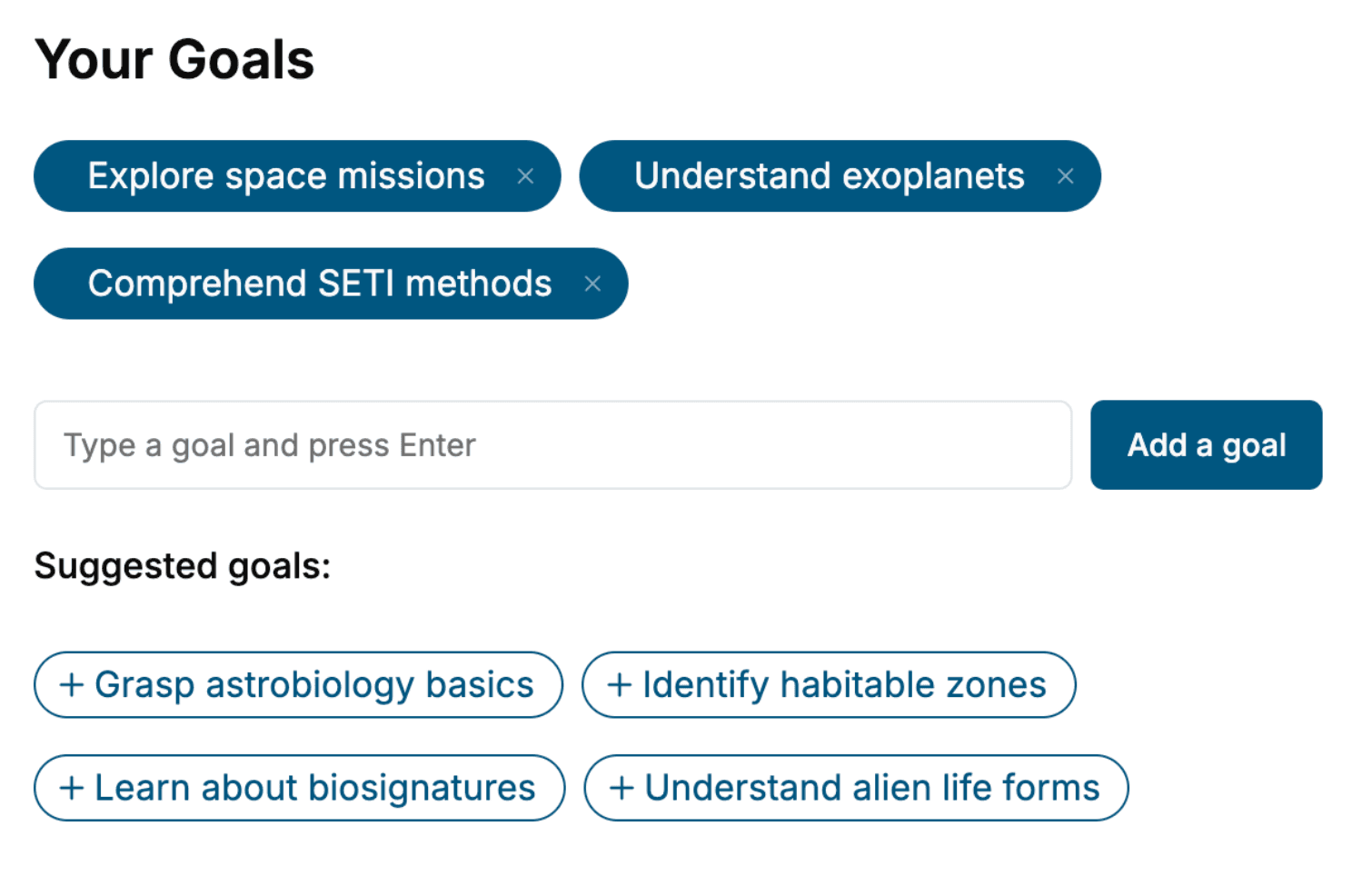
Tell us your goals and background, and get your own version of this book, tailored by AI to you.


Benefits of AI-tailored books
- Read one book, not ten:
- all the Demography knowledge you need, gathered into a single book.
- Save days of learning:
- tell us your goals, choose your topics, and the whole book is built around them.
- Learn effortlessly:
- Demography book written for your specific background and expertise.
- Understand at a glance:
- includes charts, tables, timelines, checklists, decision trees, and more.
- Stay current:
- written the day you order it, not years ago.
- Trust what you read:
- every book is checked for accuracy, with real research when your subject needs it.
Create your unique book in 3 steps
- 1. Select your focus
Select the focus of your Demography book and share your background
- 2. Personalize your book
Specify your goals and choose sub-topics to include
- 3. Get your tailored book
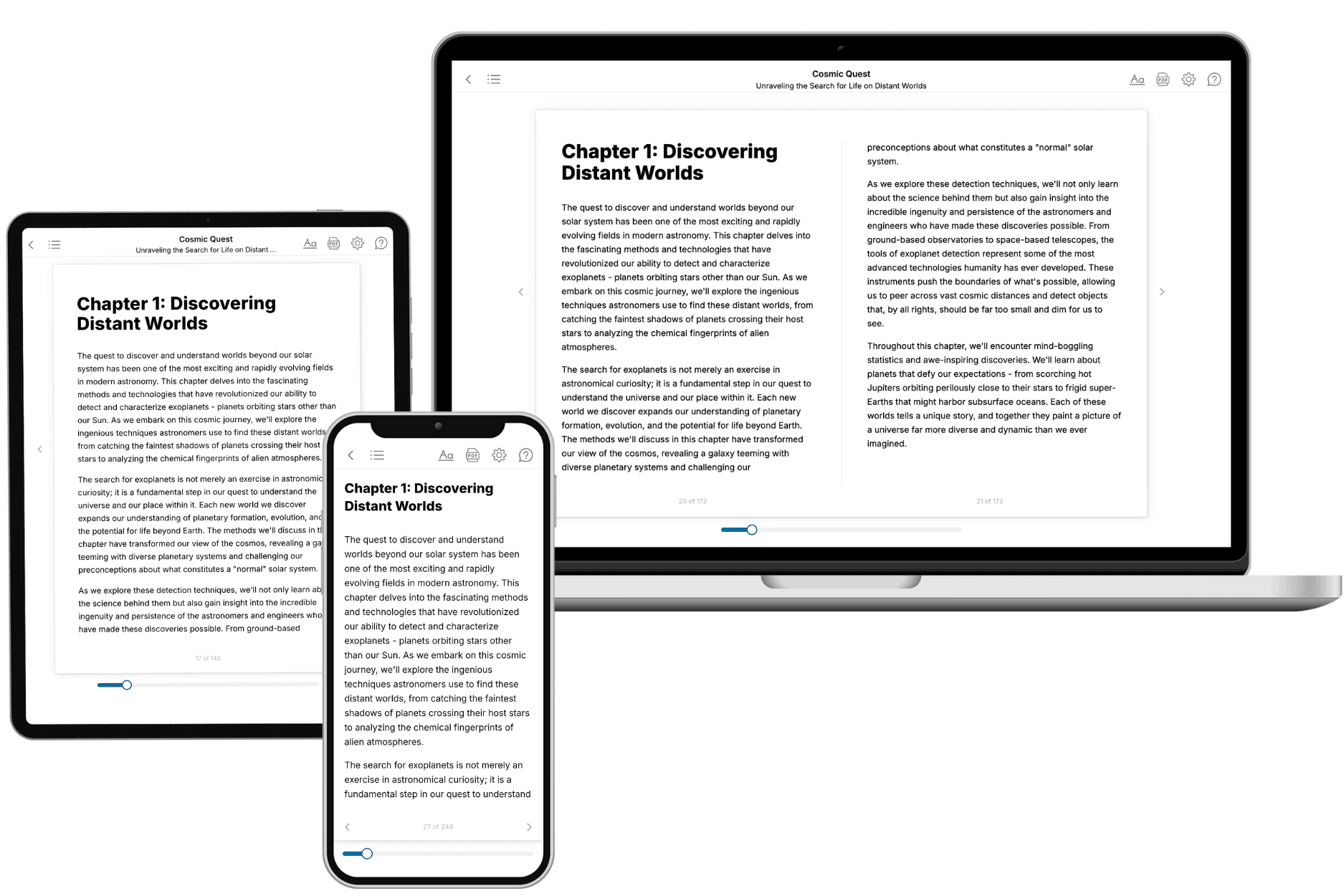
Your book is ready in 10 minutes. Read it online, download as EPUB or PDF, or send to Kindle.

Frequently asked questions
- What is TailoredRead?
TailoredRead creates complete, full-length nonfiction ebooks, written specifically for you. Tell us what you want to learn and why, and TailoredRead writes you a complete ebook on it, with charts, tables, and diagrams throughout. Read it online, on Kindle, or on any e-reader, or download it as a PDF or EPUB. Every book is written fresh the day you order it.
- How is the book tailored to me?
Before anything is written, you answer a few short questions about your goals, your background, and the topics you care about. Your book is then planned around your answers: written at your level, focused on your goals, and covering the topics you chose, instead of the one-size-fits-all book a store sells everyone.
- Will it read like generic AI content?
No. Your book isn't a chat transcript: it's planned chapter by chapter before a single word is written, told in a clear book voice, and explains ideas visually with charts, tables, and diagrams. After writing, every book goes through an editorial pass that polishes chapters so the book reads consistent from start to finish. Judge for yourself: browse thousands of sample books on our Explore Books page.
- How accurate is the content?
Our AI first checks whether your subject needs live research. Niche and fast-moving subjects are researched before writing, and the book plan and chapters are grounded in what it finds. After writing, every book goes through a quality pass that checks its facts and consistency, and researched books list their sources in a Notes section at the back.
- How long is the book?
You choose the length: Comprehensive (250-300 pages), Detailed (150-200 pages), Essential (70-100 pages), or Short (30-50 pages).
- Does the book include visuals?
Yes. Every book includes charts, tables, and diagrams: timelines, checklists, step-by-step guides, decision trees, comparison tables, matrices, and bar charts. A typical book includes dozens of these visual elements.
- Can I read it on Kindle? What formats can I download?
Yes. Every book can be read in our online reader or downloaded as a PDF or EPUB. The EPUB can be opened with Kindle, Apple Books, Kobo, and any e-reader. The Commercial and Author licenses also include an editable Word (DOCX) and Markdown download.
- How much does it cost?
About the price of a regular ebook. The exact price depends on your book's length and complexity, from $2 for the shortest books to $35 for the most comprehensive, and it's shown when you review your book, before you commit to anything. Each book is a one-time purchase, yours to keep, no subscription. Licenses that let you share, teach, or publish your book range from $35.99 to $49.99.
- Can I preview the book before purchasing?
Before you pay, you'll see what your book will cover: the title, a detailed description, the estimated length, and the complete chapter-by-chapter table of contents, so you know what you're getting before you decide. The full text itself is written after you purchase.
- How long does it take to create a book?
About 10 minutes. You can start reading the opening chapters while the rest is still being written.