Development Economics Books
Explore tailored Development Economics books created by our AI
Macroeconomics Essentials
From Agricultural Development to Global Economic Policy
Understanding how entire economies work seems overwhelming when you're drowning in theories, models, and competing policy perspectives. You struggle to connect abstract concepts like aggregate demand and supply to real-world decisions about agricultural development, trade policy, and employment. This book cuts through the complexity by building macroeconomic principles from the ground up, using agricultural economics and development policy as your practical anchor. You'll master GDP accounting, inflation measurement, and unemployment concepts before progressing to fiscal and monetary policy mechanisms. The book then applies these foundations to agricultural sectors, showing how government spending multipliers, exchange rates, and trade barriers directly impact farming communities and rural development. By the end, you'll understand not just the theories—you'll see how they explain real economic outcomes, from business cycles to stagflation to long-run growth. You'll be equipped to analyze policy trade-offs, predict economic consequences, and contribute meaningfully to development economics discussions.
Master the demographic foundations that drive economic development and policy decisions. This 30-day system breaks down complex population concepts into daily, actionable lessons designed specifically for economics students. You'll progress from demographic fundamentals to advanced forecasting techniques, learning to interpret fertility data, analyze mortality patterns, evaluate age structures, and project population changes with confidence. Each day builds systematically on the previous, connecting demographic trends to economic outcomes through real-world examples and practical applications. By day 30, you'll understand how population dynamics shape labor markets, economic growth, and policy effectiveness—the insights that separate top performers in economics courses from the rest. This isn't theoretical knowledge divorced from reality; it's the demographic literacy that economists, policymakers, and development professionals use daily to make decisions affecting millions of people.
Building Rural Futures
Strategies for Sustainable Development in Agricultural Communities
Discover how to create meaningful, lasting change in rural communities by mastering the interconnected dimensions of sustainable development. This comprehensive guide moves beyond theory to show you the practical realities of rural transformation—from infrastructure challenges to agricultural innovation, from community engagement to institutional reform. You'll learn why one-size-fits-all solutions fail and how to assess local contexts to design interventions that actually work. Explore proven strategies for building economic resilience, improving access to education and healthcare, and fostering environmental stewardship. Whether you're a development professional, policymaker, educator, or community leader, you'll gain the frameworks and insights needed to navigate the complexities of rural development. This book equips you with evidence-based approaches, real-world examples, and practical tools to drive sustainable progress in agricultural communities worldwide.
Prospera Unveiled
A Sociologist's Guide to Honduras' Innovative Economic Zone
Gain a deep understanding of Prospera, Honduras' groundbreaking economic zone, and its potential to reshape the landscape of tech innovation and startup ecosystems. This book offers you a sociologist's perspective on the unique experiment unfolding in Central America, providing critical insights into its structure, impact, and future prospects. You'll explore the intricate dynamics of Prospera's development, from its inception to its current state as an emerging hub for technological advancement and entrepreneurial growth. Through a blend of data-driven analysis and real-world case studies, you'll uncover the socio-economic factors driving this innovative project and its implications for both local communities and the global tech industry. Whether you're a researcher, policy maker, or simply curious about alternative models of economic development, this book equips you with the knowledge to form your own informed opinions about Prospera's role in shaping the future of special economic zones and tech-driven growth in developing regions.
The gap between demographic data and meaningful understanding has never been wider. Fertility rates are plummeting in some regions while remaining stubbornly high in others, yet the underlying mechanisms driving these patterns remain obscure to most observers. This book cuts through the confusion to reveal the intricate web of factors—economic, cultural, political, and social—that determine how many children people have and why those decisions matter for our collective future. You'll discover how the demographic transition unfolds across different societies, why women's empowerment fundamentally alters reproductive patterns, and what below-replacement fertility means for aging nations. Through clear analysis of historical trends, contemporary case studies, and emerging challenges, you'll gain the tools to interpret population dynamics and their far-reaching consequences. From the effectiveness of family policies to the role of migration in demographic balance, this book provides the comprehensive framework you need to understand one of the most consequential trends shaping our world today.
The Great Population Shift
Understanding Demographic Transition and Its Impact on Our World
Population patterns shape everything around us—from the schools in your neighborhood to the retirement systems supporting aging societies. This comprehensive exploration takes you through the fascinating process of demographic transition, the predictable yet complex shift that every society experiences as it develops from traditional to modern population structures. You'll discover how countries move through distinct stages of population change, why some regions experience explosive growth while others face declining birth rates, and what these patterns mean for future generations. Through detailed analysis of global case studies, you'll understand the driving forces behind fertility and mortality changes, from urbanization and education to cultural evolution and technological advancement. The book reveals how demographic shifts create both opportunities and challenges, examining the demographic dividend that can fuel economic growth and the population aging that requires innovative solutions. You'll explore migration patterns, regional variations, and the interconnected nature of population dynamics across different societies. By the end, you'll possess a thorough understanding of demographic transition theory and its practical applications, enabling you to interpret population trends, anticipate future changes, and appreciate the profound ways that demographic forces shape our social, economic, and cultural landscapes.
From Poverty to Prosperity
How South Korea Built an Economic Miracle in a Single Generation
South Korea's rise from war-torn devastation to global economic powerhouse represents one of history's most remarkable transformations. This book traces the strategic decisions, bold policies, and cultural forces that enabled a nation with virtually no natural resources to build the world's 12th largest economy in just 60 years. You'll discover how visionary leaders implemented export-driven industrialization, how massive investments in education created a highly skilled workforce, and how the unique chaebol system mobilized capital at unprecedented scale. Through detailed analysis of each development phase—from labor-intensive manufacturing to heavy industry to cutting-edge technology—you'll understand the specific mechanisms that drove growth. You'll also explore the human dimension: the sacrifices workers made, the role of Confucian values in driving ambition, and how national unity transformed economic policy into collective purpose. Whether you're studying economic development, Asian history, or seeking lessons for emerging economies, this book provides both the big-picture narrative and the granular details that explain how South Korea achieved what many thought impossible.
You'll gain a comprehensive understanding of how colonial power structures persist in the 21st century, shaping global economics, culture, and geography long after formal empires dissolved. This book examines the invisible mechanisms through which former colonial powers and new global actors maintain influence over developing nations—from debt dependency and resource extraction to cultural imperialism and territorial control. Through rigorous analysis grounded in cultural geography and earth sciences, you'll explore how neocolonialism manifests in land use patterns, environmental degradation, migration flows, and the unequal distribution of natural resources. You'll discover the spatial dimensions of economic exploitation, the role of international institutions in perpetuating dependency, and how indigenous knowledge systems are marginalized in favor of Western paradigms. Whether you're studying international development, environmental justice, or global power dynamics, this book equips you with the analytical frameworks to recognize neocolonial patterns in contemporary geopolitics. You'll learn to critically assess development projects, trade agreements, and conservation initiatives through a decolonial lens, understanding both historical continuities and emerging forms of domination in our interconnected world.
The Belt and Road Initiative
Understanding China's Global Strategy for the 21st Century
Imagine a world where infrastructure connects continents, where trade flows along ancient routes reimagined for the modern era, and where a single nation's vision reshapes global development patterns. This is the reality of China's Belt and Road Initiative—one of the most ambitious and consequential projects of our time. This book cuts through the complexity and controversy to give you a clear understanding of what BRI actually is, how it works, and why it matters. You'll discover the historical roots of this initiative in China's past, explore the mechanics of how projects are financed and implemented, and examine real-world impacts across Asia, Africa, Europe, and beyond. Whether you're concerned about debt sustainability, curious about geopolitical implications, or interested in how infrastructure shapes international relations, you'll find balanced analysis grounded in evidence. By the end, you'll understand not just the facts of BRI, but the deeper strategic thinking behind it and what it means for the future of global development and power dynamics.
Related books you may like:
Imagine launching a blockchain game that players genuinely want to play—not because of token rewards, but because the gameplay is compelling, the economy is sustainable, and the community thrives. This is the reality of blockchain gaming in 2026. This book cuts through the hype and speculation to show you how the industry has evolved from the 2022 GameFi crash into a mature, gameplay-first sector. You'll learn how to design tokenomics that actually work, architect smart contracts that scale, and integrate blockchain mechanics so seamlessly that players never think about wallets or gas fees. Whether you're a game developer exploring Web3 integration, a software engineer building blockchain infrastructure, or an entrepreneur launching your first blockchain game, you'll discover practical frameworks for sustainable economies, player retention strategies, and the technical architecture that powers today's successful blockchain games. Grounded in real-world examples from studios like Big Time, Axie Infinity, and emerging AAA entries, this book provides the knowledge you need to build games that last.
What if you could identify your most promising prospects before they even realize they're ready to buy? In today's competitive insurance market, the difference between thriving advisors and struggling ones isn't luck—it's data. AI tools have fundamentally changed how top-performing insurance professionals qualify leads, predict close probability, and convert prospects into clients. This book reveals the exact strategies, tools, and workflows that leading life insurance advisors use to increase conversion rates and productivity. You'll discover how predictive analytics identifies high-potential prospects, how conversation intelligence coaches you to close more deals, and how workflow automation reclaims hours of your week. Whether you're managing a small book of business or leading a team, you'll learn to build a modern GTM tech stack that turns data into revenue. The insurance industry is shifting—and the advisors who master AI-powered lead qualification will dominate their markets.
Master the intricacies of blockchain technology and revolutionize your data engineering practices. This comprehensive guide takes you on a deep dive into the world of blockchain, unraveling its complex architecture and showcasing its transformative potential in business landscapes. You'll gain a solid understanding of blockchain's fundamental principles and explore its practical applications across various industries. Discover the most powerful blockchain platforms available today and learn how to leverage them effectively in your projects. As artificial intelligence continues to reshape the tech landscape, this book bridges the gap between blockchain and AI, revealing innovative ways to combine these cutting-edge technologies. By the end of your reading journey, you'll be equipped with the knowledge and skills to implement blockchain solutions, optimize data processes, and drive technological innovation in your organization.
Discover how blockchain technology works beneath the surface and why it matters far beyond cryptocurrency. This book takes you through the fundamental principles that make blockchain systems secure and trustworthy, explaining the cryptographic foundations, consensus mechanisms, and distributed architecture that enable decentralized networks to function without intermediaries. You'll explore how smart contracts automate complex agreements, examine real-world applications transforming industries from supply chain to healthcare, and understand the genuine challenges the technology faces today. Whether you're curious about the technical architecture, interested in practical implementations, or concerned about scalability and environmental impact, this guide provides the knowledge you need to understand blockchain's role in shaping the future of digital systems. By the end, you'll have a clear grasp of what blockchain can and cannot do, and how it's being applied to solve real-world problems across multiple sectors.
Navigate the practical landscape of blockchain technology with a clear-eyed approach to real-world implementation. This guide moves beyond theoretical concepts to show you how organizations are actually deploying blockchain solutions across supply chains, financial systems, healthcare networks, and governance structures. You'll discover the methodologies that separate successful projects from failed experiments, including how to evaluate blockchain platforms, design smart contracts that work reliably, manage organizational change, and ensure compliance with regulatory requirements. Whether you're assessing blockchain's fit for your organization, leading an implementation team, or optimizing existing systems, this book provides the frameworks, case studies, and practical strategies you need to make informed decisions and execute effectively. Learn from real implementations, understand the trade-offs between different approaches, and develop the expertise to guide your organization through blockchain adoption with confidence.
Create a Development Economics Book Tailored to You
Create an AI-crafted book tailored to your goals, interests, and background






Benefits of AI-tailored books
- Read one book, not ten:
- all the Development Economics knowledge you need, gathered into a single book.
- Save days of learning:
- tell us your goals, choose your topics, and the whole book is built around them.
- Learn effortlessly:
- Development Economics book written for your specific background and expertise.
- Understand at a glance:
- includes charts, tables, timelines, checklists, decision trees, and more.
- Stay current:
- written the day you order it, not years ago.
- Trust what you read:
- every book is checked for accuracy, with real research when your subject needs it.
Create your unique book in 3 steps
- 1. Select your focus
Select the focus of your Development Economics book and share your background
- 2. Personalize your book
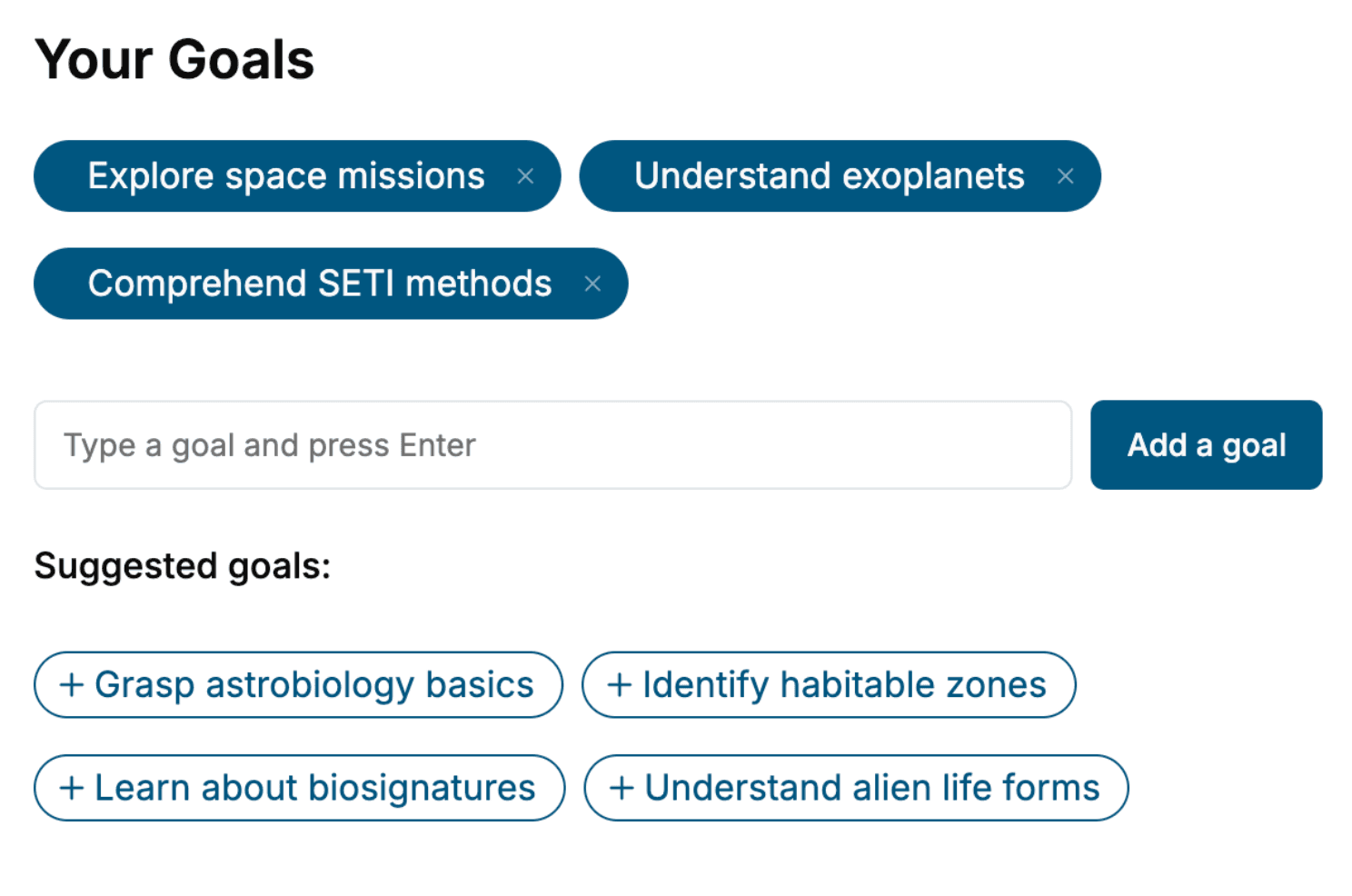
Specify your goals and choose sub-topics to include
- 3. Get your tailored book
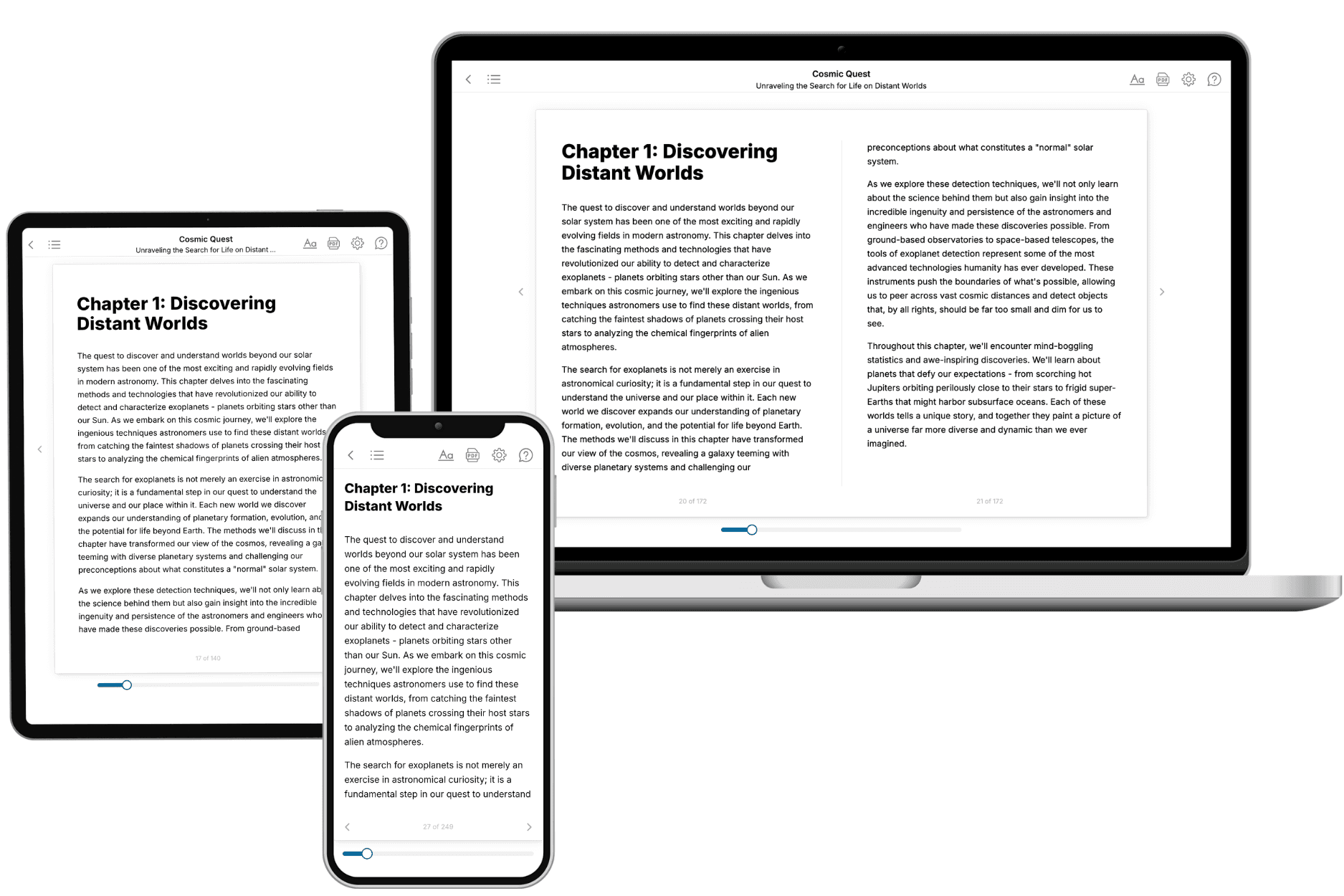
Your book is ready in 10 minutes. Read it online, download as EPUB or PDF, or send to Kindle.

Start from a template
Frequently asked questions
- What is TailoredRead?
TailoredRead creates complete, full-length nonfiction ebooks, written specifically for you. Tell us what you want to learn and why, and TailoredRead writes you a complete ebook on it, with charts, tables, and diagrams throughout. Read it online, on Kindle, or on any e-reader, or download it as a PDF or EPUB. Every book is written fresh the day you order it.
- How is the book tailored to me?
Before anything is written, you answer a few short questions about your goals, your background, and the topics you care about. Your book is then planned around your answers: written at your level, focused on your goals, and covering the topics you chose, instead of the one-size-fits-all book a store sells everyone.
- Will it read like generic AI content?
No. Your book isn't a chat transcript: it's planned chapter by chapter before a single word is written, told in a clear book voice, and explains ideas visually with charts, tables, and diagrams. After writing, every book goes through an editorial pass that polishes chapters so the book reads consistent from start to finish. Judge for yourself: browse thousands of sample books on our Explore Books page.
- How accurate is the content?
Our AI first checks whether your subject needs live research. Niche and fast-moving subjects are researched before writing, and the book plan and chapters are grounded in what it finds. After writing, every book goes through a quality pass that checks its facts and consistency, and researched books list their sources in a Notes section at the back.
- How long is the book?
You choose the length: Comprehensive (250-300 pages), Detailed (150-200 pages), Essential (70-100 pages), or Short (30-50 pages).
- Does the book include visuals?
Yes. Every book includes charts, tables, and diagrams: timelines, checklists, step-by-step guides, decision trees, comparison tables, matrices, and bar charts. A typical book includes dozens of these visual elements.
- Can I read it on Kindle? What formats can I download?
Yes. Every book can be read in our online reader or downloaded as a PDF or EPUB. The EPUB can be opened with Kindle, Apple Books, Kobo, and any e-reader. The Commercial and Author licenses also include an editable Word (DOCX) and Markdown download.
- How much does it cost?
About the price of a regular ebook. The exact price depends on your book's length and complexity, from $2 for the shortest books to $35 for the most comprehensive, and it's shown when you review your book, before you commit to anything. Each book is a one-time purchase, yours to keep, no subscription. Licenses that let you share, teach, or publish your book range from $35.99 to $49.99.
- Can I preview the book before purchasing?
Before you pay, you'll see what your book will cover: the title, a detailed description, the estimated length, and the complete chapter-by-chapter table of contents, so you know what you're getting before you decide. The full text itself is written after you purchase.
- How long does it take to create a book?
About 10 minutes. You can start reading the opening chapters while the rest is still being written.