The Great Population Shift
Understanding Demographic Transition and Its Impact on Our World
Population patterns shape everything around us—from the schools in your neighborhood to the retirement systems supporting aging societies.
300 pages17 chaptersSep 21, 2025Demography
About this book
This comprehensive exploration takes you through the fascinating process of demographic transition, the predictable yet complex shift that every society experiences as it develops from traditional to modern population structures. You'll discover how countries move through distinct stages of population change, why some regions experience explosive growth while others face declining birth rates, and what these patterns mean for future generations. Through detailed analysis of global case studies, you'll understand the driving forces behind fertility and mortality changes, from urbanization and education to cultural evolution and technological advancement. The book reveals how demographic shifts create both opportunities and challenges, examining the demographic dividend that can fuel economic growth and the population aging that requires innovative solutions. You'll explore migration patterns, regional variations, and the interconnected nature of population dynamics across different societies. By the end, you'll possess a thorough understanding of demographic transition theory and its practical applications, enabling you to interpret population trends, anticipate future changes, and appreciate the profound ways that demographic forces shape our social, economic, and cultural landscapes.
Table of contents
- IntroductionThe Population Puzzle, Why Demographics Matter, The Transition Framework, A Global PerspectiveRead below
- Chapter 1: Foundations of Demographic ChangePopulation Dynamics Basics, Birth and Death Rates Explained, Measuring Population Change, Historical Population Patterns
- Chapter 2: Demographic Transition TheoryOrigins of the Theory, Core Principles and Assumptions, The Stage Framework, Criticisms and Refinements
- Chapter 3: Stage One: Traditional SocietiesHigh Mortality and High Fertility, Survival Strategies and Family Size, Population Stability Mechanisms, Historical and Contemporary Examples
- Chapter 4: Stage Two: Early TransitionThe Great Mortality Decline, Population Explosion Dynamics, Public Health Revolution, Social and Economic Consequences
- Chapter 5: Stage Three: Late TransitionWhen Fertility Decline Begins, Changing Family Values and Structures, Urbanization's Impact on Reproduction, Education and Women's Empowerment
- Chapter 6: Stage Four: Modern SocietiesLow Fertility and Low Mortality, Population Stabilization, The Challenge of Aging Societies, Below Replacement Level Fertility
- Chapter 7: Stage Five: Post-Transition ScenariosPopulation Decline Realities, Ultra-Low Fertility Patterns, Demographic Momentum Effects, Future Population Projections
- Chapter 8: The Mortality TransformationCauses of Mortality Decline, Infant and Child Mortality Changes, Life Expectancy Gains, Changing Disease Patterns
- Chapter 9: The Fertility RevolutionKey Drivers of Fertility Change, Contraception and Family Planning, Economic Factors in Fertility Decisions, Cultural and Social Shifts
- Chapter 10: Regional Variations and PatternsThe European Experience, Asian Demographic Transitions, African Population Patterns, Latin American Trends
- Chapter 11: The Demographic DividendUnderstanding the Dividend Concept, The Window of Opportunity, Economic Growth Potential, Policy Requirements for Success
- Chapter 12: Population Aging and Its ConsequencesThe Aging Process Explained, Changing Dependency Ratios, Impact on Social Systems, Intergenerational Dynamics
- Chapter 13: Migration and Demographic ChangeMigration-Transition Linkages, Internal Migration Patterns, International Migration Flows, Demographic Impact of Migration
- Chapter 14: Urbanization and Population ChangeThe Urban Transition, City Population Dynamics, Rural-Urban Demographic Differences, Megacities and Population Growth
- Chapter 15: Technology and Demographic ChangeMedical Technology Impact, Communication Technology Effects, Reproductive Technologies, Demographics in the Digital Age
- Chapter 16: Environmental Factors and Population DynamicsClimate-Population Interactions, Resource Availability and Population, Environmental Migration Patterns, Sustainability and Demographics
- Chapter 17: Future Demographic TrendsPopulation Projection Methods, Global Population Future, Emerging Demographic Patterns, Uncertainty and Alternative Scenarios
- ConclusionKey Insights and Takeaways, The Ongoing Relevance of Demographic Transition
Introduction
Population change shapes the world around us in ways both visible and invisible. The number of children in classrooms, the demand for housing in growing cities, the strain on pension systems in aging societies—all these phenomena stem from fundamental demographic forces that follow surprisingly predictable patterns. Across the globe, societies undergo a remarkable transformation known as demographic transition, shifting from traditional patterns of high birth and death rates to modern patterns of low birth and death rates. This transition represents one of the most significant social changes in human history, yet it remains poorly understood by many who witness its effects daily.
The demographic transition unfolds differently across regions and time periods, but its basic structure remains consistent. Countries move through distinct stages of population change, each characterized by specific combinations of fertility and mortality rates that create unique challenges and opportunities. Understanding these patterns provides crucial insights into past social developments, current population dynamics, and future demographic trends. Whether examining the population boom in sub-Saharan Africa, the aging crisis in Japan, or the urbanization patterns in China, the framework of demographic transition offers essential tools for comprehension and analysis.
This exploration takes you through the complete journey of demographic transition, from its theoretical foundations to its practical implications for societies worldwide. You will discover how population structures evolve, why certain demographic patterns emerge, and what these changes mean for economic development, social planning, and cultural evolution. By examining real-world examples and analyzing specific data, you will gain the knowledge needed to interpret population trends, anticipate future changes, and understand the profound ways demographic forces influence human societies.
The Population Puzzle
Consider the striking demographic contrasts visible across the world today. Niger, a landlocked country in West Africa, maintains a total fertility rate of approximately 6.8 children per woman, meaning the average woman gives birth to nearly seven children during her lifetime[1]. Meanwhile, South Korea records a fertility rate of just 0.81 children per woman, far below the 2.1 children needed to maintain a stable population without immigration. These dramatic differences reflect societies at opposite ends of the demographic transition spectrum, each facing distinct challenges related to their population dynamics.
The puzzle deepens when examining historical trends within individual countries. England experienced a population explosion during the 18th and 19th centuries, with its population growing from approximately 5.2 million in 1700 to over 16 million by 1850. This growth occurred despite limited improvements in living standards for much of the population, challenging simple assumptions about the relationship between prosperity and population change. The demographic patterns that emerged during this period—declining death rates followed by declining birth rates—would later be observed in societies across the globe, suggesting underlying universal processes at work.
Modern demographic puzzles continue to emerge as societies navigate unprecedented population changes. Japan faces a rapidly aging population with over 28% of its citizens aged 65 or older, creating challenges for economic growth and social support systems[2]. Simultaneously, countries like Nigeria project massive population growth, with estimates suggesting the population could reach 400 million by 2050. These contrasting trajectories raise fundamental questions about the forces driving population change and the implications for global development patterns.
The demographic puzzle extends beyond simple numbers to encompass complex interactions between population structure and social organization. Age pyramids—graphical representations of population by age and gender—reveal the demographic history and future challenges of societies. A country with a broad base of young people faces different educational and employment pressures than one with a narrow base and expanding elderly population. These structural differences influence everything from consumer markets to political priorities, making demographic analysis essential for understanding contemporary social dynamics.
Population momentum adds another layer of complexity to the demographic puzzle. Even when fertility rates decline rapidly, populations can continue growing for decades due to the large number of women entering their reproductive years. This phenomenon explains why countries like India continue experiencing population growth despite fertility rates approaching replacement level. Understanding these momentum effects requires grasping the intricate relationships between past demographic patterns and future population trends.
Regional variations in demographic transition timing and intensity create additional puzzles for researchers and policymakers. While European countries generally experienced gradual demographic transitions over 150-200 years, many Asian countries compressed similar changes into 50-75 years. These accelerated transitions create unique challenges and opportunities, from rapid economic growth potential to sudden aging crises. The demographic puzzle thus encompasses not only what changes occur but also when and how quickly they unfold across different cultural and economic contexts.
Migration patterns further complicate the population puzzle by redistributing demographic characteristics across geographic boundaries. Countries experiencing population decline may offset these trends through immigration, while emigration can accelerate demographic challenges in origin countries. The interconnected nature of global migration means that demographic transitions in one region influence population dynamics elsewhere, creating complex webs of demographic interdependence that require sophisticated analytical frameworks to understand fully.
Technology and social change introduce new variables into traditional demographic equations. Advances in reproductive technology, changing gender roles, evolving family structures, and shifting cultural values all influence fertility and mortality patterns in ways that may not fit historical demographic models. The population puzzle thus remains dynamic, requiring continuous refinement of theoretical frameworks and analytical approaches to capture emerging demographic realities in an interconnected and rapidly changing world.
Why Demographics Matter
Demographics influence virtually every aspect of human society, from economic growth patterns to political stability and cultural evolution. Population structure determines the size of the workforce relative to dependents, directly affecting economic productivity and social support systems. Countries with large working-age populations relative to children and elderly citizens—a situation known as the demographic dividend—can experience accelerated economic growth if appropriate policies and investments are in place. South Korea and Taiwan leveraged their demographic dividends during the 1970s and 1980s to achieve remarkable economic transformations, demonstrating the powerful connection between population structure and development outcomes.
Educational systems must adapt continuously to demographic changes, with enrollment patterns reflecting underlying population trends. The post-World War II baby boom in the United States created massive demand for schools and teachers during the 1950s and 1960s, followed by declining enrollment and school closures as birth rates fell in subsequent decades. Today, many developed countries face teacher shortages and school consolidations due to declining birth rates, while rapidly growing populations in sub-Saharan Africa struggle to build educational infrastructure fast enough to serve expanding youth populations. These examples illustrate how demographic trends create long-term planning challenges that require decades of foresight and preparation.
Healthcare systems experience profound impacts from demographic transitions, with changing age structures altering disease patterns and care requirements. Traditional societies with young populations focus primarily on maternal and child health, infectious disease control, and injury treatment. As populations age, healthcare priorities shift toward chronic disease management, long-term care, and age-related conditions like dementia and cardiovascular disease. Japan's healthcare system exemplifies these challenges, with rapidly rising costs for elderly care and a shrinking workforce to support expanding healthcare needs. Understanding demographic trends enables healthcare planners to anticipate future requirements and develop appropriate service delivery models.
Urban planning and infrastructure development depend heavily on demographic projections and population distribution patterns. Cities experiencing rapid population growth must expand transportation networks, housing stock, water systems, and waste management facilities to accommodate new residents. Conversely, cities facing population decline may need to consolidate services, repurpose abandoned buildings, and maintain infrastructure for smaller populations. Detroit's demographic decline from 1.8 million residents in 1950 to approximately 670,000 today illustrates the challenges of managing infrastructure in shrinking cities[3]. Demographic analysis helps urban planners make informed decisions about infrastructure investments and service provision.
Political systems and governance structures reflect demographic realities through representation patterns, policy priorities, and electoral dynamics. Countries with young populations typically prioritize education, employment creation, and economic opportunity, while aging societies focus more on healthcare, pensions, and social security. Electoral outcomes often correlate with demographic characteristics, as different age groups, ethnic communities, and socioeconomic segments vote in distinct patterns. The growing political influence of elderly voters in developed countries has shifted policy attention toward age-related issues, sometimes at the expense of investments in education and youth development programs.
Economic markets and consumer behavior patterns closely track demographic trends, with population structure influencing demand for different goods and services. Young populations drive demand for education, housing, and family-related products, while aging populations increase demand for healthcare, leisure services, and age-appropriate housing options. The global baby product market reflects demographic trends, with declining birth rates in developed countries reducing demand while growing populations in developing countries create new market opportunities. Understanding demographic transitions helps businesses anticipate market changes and develop appropriate product strategies.
Social security and pension systems face particular challenges from demographic transitions, as the ratio of workers to retirees determines system sustainability. Pay-as-you-go pension systems, where current workers fund current retirees, become strained when birth rates decline and life expectancy increases. Germany's pension system illustrates these pressures, with the ratio of workers to pensioners declining from 4:1 in 1960 to approximately 2:1 today[4]. Many countries are reforming pension systems, raising retirement ages, and encouraging private savings to address demographic pressures on public retirement programs.
Environmental sustainability and resource consumption patterns connect directly to demographic trends, with population size, structure, and distribution affecting ecological footprints and resource demands. Rapidly growing populations in developing countries increase pressure on natural resources, while aging populations in developed countries may reduce overall consumption but increase per-capita resource use in certain sectors like healthcare. Climate change adaptation and mitigation strategies must account for demographic projections, as population distribution and growth patterns influence vulnerability to environmental risks and capacity for sustainable development initiatives.
Cultural preservation and social cohesion face challenges from demographic transitions, particularly when rapid population changes alter community composition and traditional social structures. Rural depopulation in many developed countries threatens cultural traditions and community institutions, while rapid urbanization in developing countries can disrupt traditional family structures and social support networks. Immigration and emigration patterns associated with demographic transitions create multicultural societies that must balance diversity with social integration. Understanding demographic forces helps societies develop policies that support cultural continuity while adapting to changing population realities.
The Transition Framework
The demographic transition framework provides a systematic approach to understanding how populations change over time, organizing complex demographic patterns into identifiable stages that societies typically experience during development. This framework emerged from observations of European population changes during the 18th and 19th centuries but has proven applicable to societies worldwide, albeit with important variations in timing, speed, and specific characteristics. The basic model describes four primary stages, though some demographers now recognize a fifth stage characterized by below-replacement fertility and potential population decline.
Stage One represents traditional societies with high birth rates and high death rates, resulting in slow population growth and young age structures. Pre-industrial England, medieval Europe, and many contemporary least-developed countries exemplify this stage, where large families serve as economic assets and insurance against high child mortality. Death rates fluctuate significantly due to famines, epidemics, and wars, while birth rates remain consistently high due to cultural norms, limited contraception, and economic incentives for large families. Population pyramids in Stage One societies show broad bases reflecting high fertility and narrow tops indicating high mortality at all ages.
Stage Two begins when death rates decline significantly while birth rates remain high, creating rapid population growth and demographic momentum that can persist for generations. This stage typically coincides with improvements in food security, basic sanitation, and disease control, often occurring before major economic development or social modernization. Countries like Kenya, Nigeria, and Afghanistan currently experience Stage Two dynamics, with annual population growth rates exceeding 2-3% and median ages below 20 years. The population explosion during Stage Two creates both opportunities through expanding workforces and challenges through increased dependency ratios and resource pressures.
Stage Three emerges when fertility rates begin declining while mortality rates continue falling, leading to slower population growth and gradual aging of population structures. This stage often accompanies urbanization, increased education levels, changing economic structures, and evolving social values regarding family size and gender roles. Countries like India, Brazil, and Mexico demonstrate Stage Three characteristics, with fertility rates declining toward replacement level while maintaining relatively young populations due to demographic momentum from previous high fertility periods. The transition through Stage Three typically takes several decades and involves significant social and economic adjustments.
Stage Four represents modern developed societies with low birth rates and low death rates, resulting in slow population growth or stability and aging population structures. Most European countries, Japan, and North America exemplify Stage Four demographics, with total fertility rates near or below replacement level and life expectancies exceeding 75-80 years. Population pyramids in Stage Four societies show relatively uniform age distributions with narrow bases reflecting low fertility and expanding tops indicating population aging. These societies face challenges related to workforce shortages, pension sustainability, and healthcare costs for aging populations.
The proposed Stage Five describes post-transition societies experiencing below-replacement fertility and potential population decline, creating inverted population pyramids with more elderly than young people. Countries like Germany, Italy, and Japan may represent early Stage Five dynamics, with total fertility rates well below 2.1 children per woman and rapidly aging populations. This stage raises questions about economic sustainability, social support systems, and cultural continuity in societies with declining and aging populations. Some demographers debate whether Stage Five represents a temporary phenomenon or a permanent feature of highly developed societies.
The transition framework incorporates several key mechanisms that drive demographic change across stages. Mortality decline typically initiates the transition through improvements in nutrition, sanitation, medical care, and disease control, reducing death rates across all age groups but particularly among infants and children. Fertility decline follows mortality decline with varying time lags, driven by urbanization, education, economic development, changing social values, and increased access to contraception. The timing and speed of these changes create different demographic trajectories and policy challenges for societies at various transition stages.
Regional and cultural variations within the basic transition framework reflect different historical experiences, development patterns, and social contexts. European countries generally experienced gradual transitions over 150-200 years, allowing time for social and economic adaptation to demographic changes. Many Asian countries compressed similar transitions into 50-75 years through rapid economic development and active population policies, creating accelerated demographic changes with compressed adjustment periods. African countries show diverse transition patterns, with some experiencing rapid mortality decline while others maintain high fertility rates, creating varied demographic trajectories across the continent.
The transition framework serves multiple analytical purposes, from understanding historical population patterns to projecting future demographic trends and planning appropriate policy responses. Demographers use transition models to classify countries by demographic stage, compare development experiences across regions, and identify factors that accelerate or delay demographic transitions. Policymakers apply transition frameworks to anticipate future population challenges, plan infrastructure investments, and design social programs appropriate for their demographic contexts. The framework also helps explain migration patterns, as people often move from high-fertility to low-fertility regions, and economic development patterns, as demographic transitions create different labor market conditions and dependency ratios.
Contemporary applications of the transition framework must account for new factors that may alter traditional demographic patterns, including climate change, technological advances, changing gender roles, and global economic integration. Modern contraceptive technologies enable more rapid fertility transitions than historically observed, while improved healthcare extends life expectancy beyond levels experienced by earlier transition societies. Global migration patterns redistribute demographic characteristics across national boundaries, while cultural globalization may accelerate social changes that influence fertility and family formation patterns. These evolving factors require continuous refinement of transition models to maintain their relevance for understanding contemporary demographic realities.
A Global Perspective
The global demographic landscape today presents a complex mosaic of societies at different stages of demographic transition, creating unprecedented diversity in population dynamics and development challenges. While some countries grapple with rapid population growth and youthful age structures, others confront population decline and accelerated aging. This demographic diversity reflects varying historical experiences, cultural contexts, economic development patterns, and policy approaches that have shaped population trends across regions and nations. Understanding these global patterns requires examining both common transition elements and unique regional characteristics that influence demographic outcomes.
Sub-Saharan Africa currently experiences the most dramatic demographic changes globally, with many countries in early stages of transition characterized by declining mortality but persistently high fertility. The region's population is projected to grow from approximately 1.1 billion in 2020 to over 2.4 billion by 2050, representing more than half of global population growth during this period[5]. Countries like Niger, Chad, and Mali maintain total fertility rates above 6 children per woman, while simultaneously experiencing rapid mortality decline due to improved healthcare and disease control. This combination creates explosive population growth rates exceeding 3% annually in some countries, doubling populations every 20-25 years.
Asia presents diverse demographic patterns reflecting the continent's economic and cultural heterogeneity. East Asian countries like Japan, South Korea, and Taiwan have completed demographic transitions and now face ultra-low fertility and rapid aging, with total fertility rates below 1.5 children per woman and over 25% of populations aged 65 or older. China's demographic trajectory reflects the impact of the one-child policy, creating rapid fertility decline and accelerated aging that will challenge economic growth and social support systems in coming decades. Meanwhile, South Asian countries like India and Bangladesh are transitioning through Stage Three, with declining but still above-replacement fertility rates and gradually aging populations.
Europe exemplifies completed demographic transition with regional variations in fertility patterns and population dynamics. Northern and Western European countries generally maintain fertility rates closer to replacement level through supportive family policies and gender equality measures, while Southern and Eastern European countries experience ultra-low fertility and population decline. Germany's population would decline without immigration, while France maintains slight population growth through higher fertility rates and immigration. These differences reflect varying policy approaches, cultural attitudes toward family formation, and economic conditions that influence reproductive decisions.
North America demonstrates how immigration can alter demographic transition outcomes, with the United States maintaining near-replacement fertility and continued population growth through both natural increase and immigration. Canada and the United States attract millions of immigrants annually, many from countries with younger age structures, helping offset aging trends and maintain economic dynamism. Mexico illustrates rapid demographic transition, with fertility rates declining from over 6 children per woman in the 1970s to approximately 2.1 today, while simultaneously serving as a major source of emigrants to the United States.
Latin America shows accelerated demographic transitions with fertility rates declining rapidly across most countries during the past 30 years. Brazil's fertility rate fell from 4.4 children per woman in 1980 to 1.7 today, while countries like Chile and Uruguay approach European fertility levels. However, significant variations exist within the region, with countries like Guatemala and Bolivia maintaining higher fertility rates while Argentina and Uruguay experience below-replacement fertility. These differences reflect varying levels of economic development, urbanization, education, and cultural factors that influence family formation patterns.
The Middle East and North Africa region presents complex demographic patterns influenced by cultural traditions, economic conditions, and political instability. Gulf countries like UAE and Qatar experience unique demographics due to large expatriate populations that skew age and gender distributions, while countries like Yemen and Iraq maintain relatively high fertility rates despite economic challenges. Iran demonstrates rapid fertility decline from over 6 children per woman in the 1980s to below replacement level today, illustrating how demographic transitions can occur even in traditional societies under appropriate policy conditions.
Global migration patterns increasingly connect demographic transitions across regions, with people moving from high-fertility to low-fertility areas and from economically struggling to prosperous regions. International migration flows exceed 280 million people annually, redistributing demographic characteristics and creating multicultural societies in destination countries[6]. These movements help address labor shortages in aging societies while creating brain drain challenges in origin countries, demonstrating the interconnected nature of global demographic dynamics.
Climate change and environmental degradation add new dimensions to global demographic patterns, potentially influencing migration flows, mortality patterns, and fertility decisions in ways not captured by traditional transition models. Rising sea levels threaten island nations and coastal populations, while changing precipitation patterns affect agricultural productivity and food security in vulnerable regions. Environmental migration may become increasingly important in shaping global population distribution, while climate-related health impacts could alter mortality patterns in affected areas.
The COVID-19 pandemic illustrated how global events can temporarily disrupt demographic patterns, affecting mortality rates, fertility decisions, and migration flows worldwide. Many countries experienced increased mortality among elderly populations, delayed childbearing, and reduced international migration during pandemic periods. These disruptions highlight the dynamic nature of demographic processes and the importance of considering external shocks when analyzing population trends and projecting future demographic outcomes.
Future global demographic patterns will likely feature continued diversity, with some regions experiencing rapid population growth while others face decline and aging. Africa's population boom will create both opportunities through expanding workforces and challenges through resource pressures and urbanization demands. Asia's demographic maturity will require innovative approaches to aging societies and economic sustainability. Europe and North America will need immigration and family-friendly policies to maintain population stability and economic vitality. Understanding these global patterns and their interconnections becomes essential for addressing 21st-century challenges from climate change to economic development and social stability.
Notes
Introduction
- 1. United Nations Population Division, World Population Prospects 2022, UN Department of Economic and Social Affairs, 2022
- 2. Statistics Bureau of Japan, Population Estimates, Ministry of Internal Affairs and Communications, 2023
- 3. U.S. Census Bureau, Decennial Census Data, U.S. Department of Commerce, 2020
- 4. German Federal Pension Insurance, Annual Report on Pension Statistics, Deutsche Rentenversicherung, 2023
- 5. United Nations Population Division, World Population Prospects 2022, UN Department of Economic and Social Affairs, 2022
- 6. International Organization for Migration, World Migration Report 2022, IOM Publications, 2022
This is the end of the free sample. The full book has 17 chapters.
Want this book written for you?
Tell us your goals and background, and get your own version of this book, tailored by AI to you.


Benefits of AI-tailored books
- Read one book, not ten:
- all the Demography knowledge you need, gathered into a single book.
- Save days of learning:
- tell us your goals, choose your topics, and the whole book is built around them.
- Learn effortlessly:
- Demography book written for your specific background and expertise.
- Understand at a glance:
- includes charts, tables, timelines, checklists, decision trees, and more.
- Stay current:
- written the day you order it, not years ago.
- Trust what you read:
- every book is checked for accuracy, with real research when your subject needs it.
Create your unique book in 3 steps
- 1. Select your focus
Select the focus of your Demography book and share your background
- 2. Personalize your book
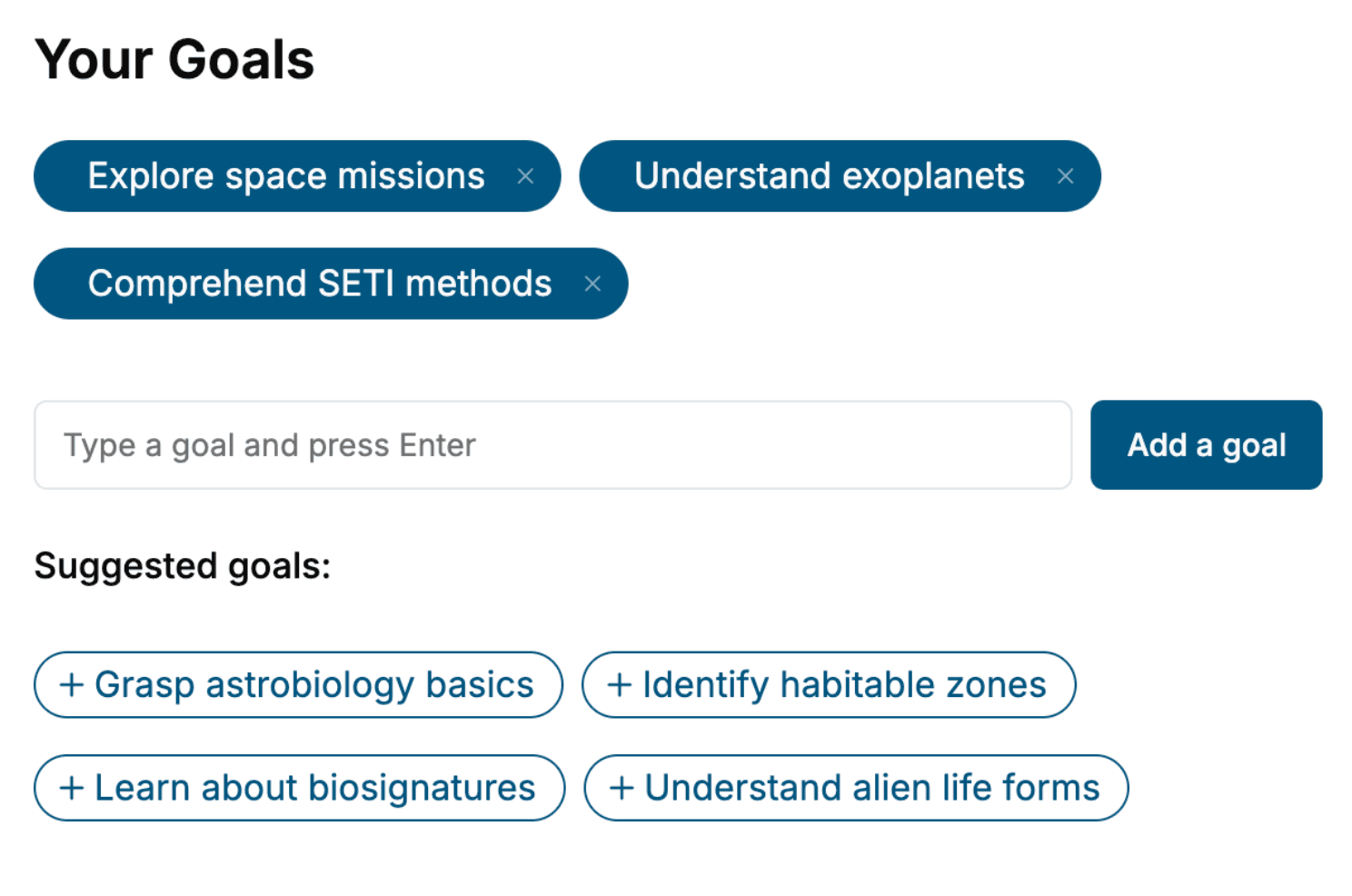
Specify your goals and choose sub-topics to include
- 3. Get your tailored book
Your book is ready in 10 minutes. Read it online, download as EPUB or PDF, or send to Kindle.

Frequently asked questions
- What is TailoredRead?
TailoredRead creates complete, full-length nonfiction ebooks, written specifically for you. Tell us what you want to learn and why, and TailoredRead writes you a complete ebook on it, with charts, tables, and diagrams throughout. Read it online, on Kindle, or on any e-reader, or download it as a PDF or EPUB. Every book is written fresh the day you order it.
- How is the book tailored to me?
Before anything is written, you answer a few short questions about your goals, your background, and the topics you care about. Your book is then planned around your answers: written at your level, focused on your goals, and covering the topics you chose, instead of the one-size-fits-all book a store sells everyone.
- Will it read like generic AI content?
No. Your book isn't a chat transcript: it's planned chapter by chapter before a single word is written, told in a clear book voice, and explains ideas visually with charts, tables, and diagrams. After writing, every book goes through an editorial pass that polishes chapters so the book reads consistent from start to finish. Judge for yourself: browse thousands of sample books on our Explore Books page.
- How accurate is the content?
Our AI first checks whether your subject needs live research. Niche and fast-moving subjects are researched before writing, and the book plan and chapters are grounded in what it finds. After writing, every book goes through a quality pass that checks its facts and consistency, and researched books list their sources in a Notes section at the back.
- How long is the book?
You choose the length: Comprehensive (250-300 pages), Detailed (150-200 pages), Essential (70-100 pages), or Short (30-50 pages).
- Does the book include visuals?
Yes. Every book includes charts, tables, and diagrams: timelines, checklists, step-by-step guides, decision trees, comparison tables, matrices, and bar charts. A typical book includes dozens of these visual elements.
- Can I read it on Kindle? What formats can I download?
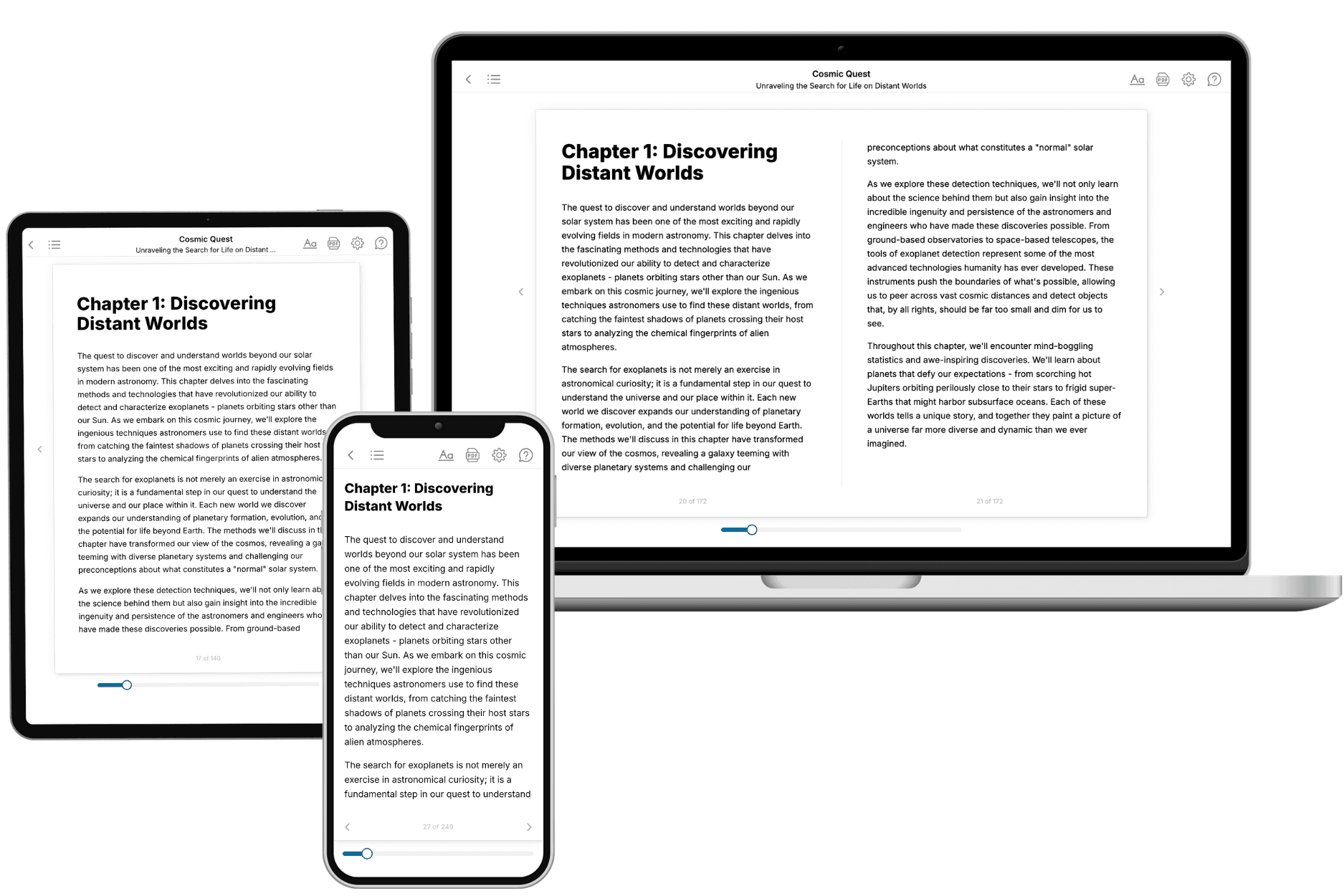
Yes. Every book can be read in our online reader or downloaded as a PDF or EPUB. The EPUB can be opened with Kindle, Apple Books, Kobo, and any e-reader. The Commercial and Author licenses also include an editable Word (DOCX) and Markdown download.
- How much does it cost?
About the price of a regular ebook. The exact price depends on your book's length and complexity, from $2 for the shortest books to $35 for the most comprehensive, and it's shown when you review your book, before you commit to anything. Each book is a one-time purchase, yours to keep, no subscription. Licenses that let you share, teach, or publish your book range from $35.99 to $49.99.
- Can I preview the book before purchasing?
Before you pay, you'll see what your book will cover: the title, a detailed description, the estimated length, and the complete chapter-by-chapter table of contents, so you know what you're getting before you decide. The full text itself is written after you purchase.
- How long does it take to create a book?
About 10 minutes. You can start reading the opening chapters while the rest is still being written.