Immigration Books
Explore tailored Immigration books created by our AI
Many Americans believe temporary foreign worker programs are a recent invention designed to replace domestic workers. In reality, these programs have shaped American labor markets for over a century, evolving through wars, economic booms, and recessions. This book cuts through the misconceptions to reveal the true history and current reality of guest worker programs in the United States. You'll discover how these programs originated, why they persist despite ongoing controversy, and how they affect workers, employers, and communities across America. From agricultural workers to tech professionals, temporary foreign worker programs touch nearly every sector of the economy. This comprehensive guide examines the major programs operating today, their economic impacts, the challenges faced by foreign workers, and the legitimate concerns raised by labor advocates. Whether you're interested in immigration policy, labor economics, or American history, this book provides the context and evidence you need to understand one of the most debated aspects of U.S. immigration policy.
Between 1948 and 1973, Britain invited thousands of Caribbean citizens to help rebuild the nation after World War II. These workers—the Windrush generation—became integral to British society, working as nurses, bus drivers, teachers, and construction workers. Yet in 2017, many discovered they faced deportation, despite having lived legally in Britain for decades. This book traces the extraordinary story of how a government policy designed to create a "hostile environment" for undocumented immigrants instead ensnared thousands of legal residents and citizens in a nightmare of bureaucratic cruelty. You'll discover how institutional failures, lost records, and a culture of disbelief combined to create one of modern Britain's greatest injustices. Through personal stories, policy analysis, and historical context, this account examines what the scandal reveals about immigration, citizenship, belonging, and accountability in contemporary Britain. The Windrush Scandal is not just a historical reckoning—it's a vital examination of how systems of power can fail ordinary people and what it takes to demand justice.
The Irish Exodus
How Millions of Irish Built America While Transforming Their Homeland
What if the story of Irish immigration to America isn't primarily about seeking the American Dream, but about escaping centuries of systematic oppression? This book reveals how Irish immigration fundamentally reshaped both nations. From the colonial policies that impoverished Ireland to the discrimination Irish immigrants faced in American cities, you'll discover the complex forces that drove millions across the Atlantic. You'll explore how Irish communities built political machines, transformed labor movements, and created a distinct Irish-American identity that influenced American culture for generations. This narrative connects the dots between Irish history, European context, and American development, showing how one group's struggle became central to America's story. Whether you're interested in immigration history, Irish heritage, or understanding how marginalized groups achieve social mobility, this book provides the historical depth and analytical clarity you need to grasp this pivotal chapter in both nations' histories.
Imagine understanding Canada not as a simple story of two founding nations, but as a complex tapestry woven from hundreds of cultures, languages, and traditions spanning centuries. This book reveals how Canada became one of the world's most multicultural nations—and what that really means for its past, present, and future. From the Indigenous peoples who inhabited the land for millennia to the waves of immigrants who arrived seeking opportunity, you'll discover the real history behind Canada's multicultural identity. You'll learn how discriminatory policies once excluded entire groups, how official multiculturalism emerged as a national policy, and how diversity shapes everything from politics to economics to daily life. Whether you're curious about your own heritage, seeking to understand Canadian society more deeply, or exploring how nations can navigate cultural diversity, this book provides the historical context and contemporary insights you need. It challenges myths, celebrates achievements, and honestly addresses the ongoing work required to build a truly inclusive nation.
Shattered Homelands
Understanding Demographic Change and Displacement in the Syrian Civil War
Gain a clear, evidence-based understanding of how the Syrian Civil War fundamentally reshaped an entire nation's demographic landscape. This book examines the mechanisms of displacement, the strategic use of sectarian cleansing, and the complex realities of return migration in post-Assad Syria. You'll learn how 13 million people were displaced across internal and external populations, how demographic engineering became a tool of state policy, and why millions remain unable to return home despite the regime's collapse. Through accessible analysis grounded in verified data, you'll understand the difference between IDPs and refugees, the role of international actors in displacement patterns, and the multifaceted obstacles facing returnees. Whether you're a student, policy professional, or engaged citizen, this book provides the context needed to comprehend one of the 21st century's largest humanitarian crises and the ongoing challenges of rebuilding a fractured society.
Argentina's history is not a linear progression but a complex interplay of competing visions, cultural syntheses, and structural contradictions. This book guides you through the key events and identities that shaped a nation caught between European aspirations and Latin American realities. You'll examine how indigenous peoples, Spanish colonizers, African slaves, and European immigrants created a unique mestizaje culture that defies simple categorization. Explore the Jesuit missions' lasting impact on religious syncretism, trace how immigration waves transformed Buenos Aires into a cosmopolitan capital, and understand how Peronism revolutionized political consciousness. Discover how tango and milonga encode collective memory and urban identity, analyze the economic cycles that produced both prosperity and hyperinflation, and confront the military conflicts that fractured Argentine society. This comprehensive exploration reveals how Argentina's cultural identities—from shamanic indigenous practices to anarchist labor movements—emerged from specific historical moments and continue to shape contemporary debates about national belonging and memory.
Beyond the Melting Pot
Understanding Multiculturalism in Theory and Practice
Many people assume that multiculturalism simply means celebrating different cultures at festivals and embracing diversity as an inherently positive force. This surface-level understanding misses the profound complexities and real challenges that diverse societies face every day. Multiculturalism is far more nuanced than popular discourse suggests. It involves intricate questions about how different groups can coexist while maintaining their distinct identities, how societies can balance unity with diversity, and how institutions can fairly accommodate varying cultural needs without fragmenting social cohesion. This comprehensive exploration takes you through the theoretical foundations of multiculturalism while examining its practical applications across different contexts. You'll discover how successful multicultural societies navigate tensions between individual rights and group recognition, explore the mechanisms that foster genuine intercultural understanding, and understand why some multicultural initiatives succeed while others fail. From examining historical models to analyzing contemporary challenges, this book provides the analytical framework you need to understand one of the most significant social and political phenomena of our time. You'll gain insights into how multiculturalism shapes everything from education and urban planning to cultural policy and social integration, equipping you with a sophisticated understanding of how diverse societies can thrive.
Picture Ireland in the 1840s: a nation of eight million people, most dependent on a single crop for survival. Then imagine that crop failing—not once, but repeatedly, for years. This is the story of the Irish Potato Famine, one of history's most devastating humanitarian crises. But this wasn't simply nature's cruelty. It was the collision of agricultural vulnerability, colonial policies, and systemic inequality that transformed a crop failure into a catastrophe claiming over a million lives. Through meticulous research and compelling narrative, this book reveals how the famine unfolded, why it became so deadly, and how it forever changed Ireland and the world. You'll discover the complex interplay of factors that made the famine possible, the government responses that often worsened conditions, and the massive wave of emigration that reshaped nations. More than a historical account, this is an exploration of how societies fail their most vulnerable members—and what we can learn from this tragedy about resilience, justice, and human dignity.
Imagine leading a nation while fully understanding how pseudoscientific ideologies can capture institutions, distort policy, and cause immense human suffering. This book provides that critical understanding by examining how Madison Grant's racial theories became embedded in American law, medicine, and politics—and how similar patterns of ideological capture continue to threaten democratic institutions today. You'll trace the direct lineage from Grant's "The Passing of the Great Race" through the Immigration Restriction Act of 1924, American eugenics programs, and into the ideological foundations of extremist movements worldwide. More importantly, you'll learn the mechanisms: how scientific authority gets weaponized, how demographic anxieties fuel restrictive policies, how propaganda shapes public opinion, and how institutional leaders rationalize harmful decisions. This is not historical curiosity—it's essential preparation for leadership. By understanding exactly how ideology corrupted American medicine, policy, and politics in the early 20th century, you gain the analytical tools to recognize and prevent such capture in your own era. The book examines rhetoric patterns, policy justification frameworks, and belief crystallization processes that remain relevant to contemporary political challenges.
The Bridge Between Islands
Understanding Cuban-American Relations from Columbus to Today
Imagine understanding the full story behind one of the world's most complex and consequential relationships—not through headlines or political rhetoric, but through the actual history, decisions, and human experiences that created it. This book traces Cuban-American relations from the earliest colonial encounters through today's evolving landscape, revealing how geography, economics, ideology, and culture have intertwined to create both deep connections and profound divisions. You'll discover why this relationship matters far beyond the Caribbean, how ordinary people on both sides have been affected by political decisions, and what the future might hold. Whether you're interested in history, politics, international relations, or simply understanding a crucial part of American and Caribbean identity, this comprehensive yet accessible guide provides the context and clarity needed to grasp why Cuban-American relations remain so vital to understanding our world.
Voices of French Canada
The History, Culture, and Identity of Francophones Shaping a Nation
Discover the rich and complex history of Francophones in Canada—a story that has fundamentally shaped the nation's identity, politics, and culture. This comprehensive guide takes you through centuries of French-Canadian experience, from early colonial settlement through the modern era, revealing how Francophone communities have navigated conquest, cultural preservation, and social change. You'll explore the pivotal moments that defined French-Canadian identity, understand the language debates that continue to influence Canadian policy, and learn about the remarkable contributions Francophones have made to politics, arts, literature, and society. Beyond Quebec's borders, you'll discover thriving French-speaking communities across Canada and the unique challenges they face. Whether you're interested in understanding Canada's founding cultures, exploring the roots of contemporary political tensions, or appreciating the depth of Francophone influence on Canadian life, this book provides the context and insights needed to grasp one of Canada's most important and often misunderstood communities.
What if a single discovery could reshape an entire nation's destiny? The California Gold Rush of 1848 was far more than a treasure hunt—it was a transformative moment that redefined America's identity, economy, and territorial ambitions. This book explores how the discovery of gold in California's Sierra Nevada foothills triggered one of history's largest mass migrations, bringing fortune seekers, families, and entrepreneurs from every corner of the globe. You'll discover how this rush accelerated westward expansion, fueled debates that pushed the nation toward civil war, and created both unprecedented opportunities and devastating consequences. Through vivid accounts of miners, merchants, and the indigenous peoples whose lands were invaded, you'll understand how a few ounces of gold fundamentally altered the course of American history. Whether you're interested in economic history, westward expansion, or the human stories behind historical events, this comprehensive exploration reveals why the Gold Rush remains one of America's most consequential moments.
Discover how a remote ridge in Central Pennsylvania became the epicenter of an industrial empire that transformed American steel production. Orviston Ridge reveals the complete story of clay mining, fire brick manufacturing, and the intricate systems of corporate control that bound thousands of workers to a single company's interests. From the geological surveys that identified valuable clay deposits to the mechanized extraction processes, from the innovative kiln technologies that produced fire bricks to the railroad networks that delivered them to steel mills across Pennsylvania, this book traces the entire industrial ecosystem. More importantly, it exposes how the company town system—encompassing worker housing, company stores, wage systems, and surveillance—created an all-encompassing control mechanism that left workers with virtually no escape. Through detailed examination of labor practices, immigrant recruitment, child labor, occupational hazards, and systematic denial of accident compensation, you'll understand how industrial capitalism functioned at ground level. The narrative culminates in the post-1950s decline, revealing how corporations abandoned communities once profitability waned, leaving environmental devastation and economic collapse in their wake. This is essential reading for understanding how American industrial development was built on systematic labor exploitation and resource extraction.
The Architects of Australian Identity
How Historians Shaped Our Understanding of the Nation
Discover how Australian historians have fundamentally shaped the way we understand our nation's past and identity. This book explores the pivotal role historians play in constructing national narratives, examining how biographical and ethnic histories have evolved to reflect Australia's complex, multicultural reality. You'll learn how historians select, interpret, and present evidence to build compelling historical arguments, and why their perspectives matter in understanding Australian society. Through examining key historiographical debates, influential historians, and shifting interpretive frameworks, you'll gain insight into how historical knowledge is created and contested. Whether you're a student of history, a curious citizen, or someone seeking to understand Australia's diverse heritage, this book equips you with the critical tools to evaluate historical claims, appreciate the complexity of our past, and recognize how historians continue to shape our national conversation about who we are and where we've come from.
The Canadian Pacific Railway
Building a Nation Across the Continent
Discover how a single railway transformed Canada from a fragmented collection of provinces into a cohesive nation spanning an entire continent. This comprehensive exploration reveals the Canadian Pacific Railway's pivotal role in Canadian history, from its ambitious conception through its construction challenges to its enduring legacy. You'll understand how engineering breakthroughs conquered the Rocky Mountains, how diverse immigrant workers built the line under harsh conditions, and how the CPR's operations reshaped settlement patterns, economic development, and regional identities across Canada. Through detailed accounts of key figures, technological innovations, and the railway's profound impact on Indigenous communities and the broader Canadian landscape, you'll gain insight into how infrastructure shapes national destiny. This book illuminates the human stories, economic forces, and historical decisions that made the CPR one of the most significant achievements in Canadian history.
What if the most ambitious political experiment in modern history could be explained in a way that actually makes sense? The European Union is often portrayed as either a bureaucratic nightmare or a visionary achievement—but the reality is far more nuanced and fascinating. This book cuts through the complexity to show you how a continent devastated by war transformed itself into an unprecedented union of 27 democracies. You'll discover the historical forces that drove integration, the ingenious (and sometimes frustrating) institutions that make it work, and the real tensions that threaten its future. From the Coal and Steel Community's modest beginnings to today's debates over sovereignty and identity, this book reveals why the EU matters—not just for Europeans, but for understanding how nations can choose cooperation over conflict. Whether you're curious about how Brussels actually functions, puzzled by Brexit, or wondering what Europe's future holds, you'll find clear answers grounded in history and contemporary reality.
Many aspiring citizens approach the citizenship exam as a memorization challenge, cramming facts and dates without understanding the deeper principles that make America's government work. This leaves them unprepared for interview questions that require genuine comprehension and vulnerable to forgetting information under exam pressure. This guide takes a different approach—building your citizenship knowledge systematically from constitutional foundations upward, so you understand not just what to memorize, but why it matters. You'll progress through constitutional principles, government structure, historical context, and practical exam strategies in a logical sequence designed for professionals who learn best through structured, progressive skill-building. Each module builds on previous knowledge, connecting abstract principles to real-world applications and exam requirements. Whether you're preparing for the civics test, English language assessment, or citizenship interview, this guide provides the comprehensive foundation you need to pass with confidence and truly understand the rights and responsibilities you're assuming.
What if the most transformative cultural movement in American history emerged not from wealth or institutional power, but from the determination of artists who refused to be silenced? The Harlem Renaissance of the 1920s and 1930s was far more than a literary trend—it was a revolutionary assertion of Black identity, creativity, and cultural authority. Through the interconnected lives of its most influential artists, this book reveals how writers, musicians, painters, and performers collaborated to reshape American culture from the ground up. You'll discover how Langston Hughes's poetry challenged literary conventions, how Aaron Douglas pioneered a visual language for Black modernity, how Duke Ellington elevated jazz to an art form, and how Zora Neale Hurston preserved African American folklore. These weren't isolated geniuses—they were part of a vibrant community that supported, influenced, and sometimes challenged one another. This book brings their stories to life, showing how ordinary people in Harlem created extraordinary art that continues to resonate today.
Related books you may like:
You're about to supercharge your animal advocacy efforts and nonprofit management skills with the power of AI. This groundbreaking guide is tailored specifically for leaders in the animal rights movement who are ready to harness cutting-edge technology to make a bigger impact. Discover how to leverage AI tools to streamline your operations, enhance your strategic planning, and amplify your advocacy campaigns. You'll learn practical techniques for automating administrative tasks, optimizing your workflow, and making data-driven decisions that will take your organization to the next level. From improving time management and task delegation to enhancing donor engagement and project tracking, this book offers a comprehensive roadmap for integrating AI into every aspect of your work. You'll gain insights into AI-driven research methods, problem-solving techniques, and productivity metrics that will revolutionize the way you approach animal advocacy.
Discover how air sign energy shapes your thinking, communication style, and approach to relationships. Whether you have a Gemini, Libra, or Aquarius placement in your birth chart, this guide reveals the intellectual and social gifts these signs bring—along with the blind spots worth understanding. You'll learn why air signs are natural communicators and idea-generators, how each sign expresses itself uniquely, and how your specific air sign placements influence your personality across different life areas. Through practical insights and real-world examples, you'll recognize air sign patterns in yourself and others, harness your natural strengths in connection and innovation, and navigate the challenges of overthinking and emotional detachment. Whether you're exploring your Sun, Moon, Rising, or other planetary placements, this book provides the clarity you need to work with your air sign energy authentically and effectively.
What if you could resolve years of trauma in just a handful of therapy sessions instead of months or years of traditional talk therapy? Accelerated Resolution Therapy (ART) offers a scientifically-grounded approach that harnesses your brain's natural healing capacity to process traumatic memories and emotional distress rapidly. This book demystifies how ART works at the neurological level, explains why it's so effective for conditions like PTSD, anxiety, and phobias, and explores how it differs from conventional therapeutic approaches. Whether you're a mental health professional considering adding ART to your practice, someone exploring treatment options for yourself or a loved one, or simply curious about innovative psychological interventions, this guide provides practical insights into one of the most promising developments in modern therapy. Discover how guided imagery and eye movement can facilitate profound emotional healing, what the research shows about its effectiveness, and whether ART might be the breakthrough approach you've been seeking.
The assumption that political parties are natural, inevitable, or even desirable features of democracy is surprisingly recent. For most of Western political history, the most sophisticated thinkers viewed organized factions as corrupting forces that distorted the pursuit of the common good. This book traces the genealogy of anti-party political thought from Plato's critique of democratic factionalism through contemporary populist movements, examining how philosophers, statesmen, and theorists have conceptualized the dangers of partisanship and imagined alternatives. You'll encounter Rousseau's vision of a general will transcending faction, the Federalist Papers' constitutional anxiety about party machinery, Tocqueville's ambivalent analysis of American partisanship, and the radical rejection of parties by socialist and anarchist movements. Rather than treating anti-party sentiment as mere nostalgia or populist demagoguery, this analysis reveals it as a coherent intellectual tradition grappling with enduring tensions between democratic participation and organized political competition. By understanding how different historical periods and ideological traditions have confronted the problem of faction, you gain critical perspective on contemporary debates about party reform, populism, and democratic alternatives.
Many people believe that behavior is determined either by our genetics or by direct rewards and punishments we experience. However, Albert Bandura's groundbreaking research revealed a more nuanced truth: we learn by watching others. This book explores the life and work of one of psychology's most influential figures and the revolutionary theory that transformed our understanding of human behavior. You'll discover how Bandura's concept of self-efficacy explains why some people persevere through challenges while others give up, how observational learning shapes everything from aggression to prosocial behavior, and why the environment, our thoughts, and our actions are constantly influencing each other. Whether you're an educator seeking to improve student outcomes, a professional interested in behavior change, or simply curious about the science of learning, this comprehensive guide illuminates the principles that govern human development and provides practical insights into how these theories apply to everyday life.
Create an Immigration Book Tailored to You
Create an AI-crafted book tailored to your goals, interests, and background






Benefits of AI-tailored books
- Read one book, not ten:
- all the Immigration knowledge you need, gathered into a single book.
- Save days of learning:
- tell us your goals, choose your topics, and the whole book is built around them.
- Learn effortlessly:
- Immigration book written for your specific background and expertise.
- Understand at a glance:
- includes charts, tables, timelines, checklists, decision trees, and more.
- Stay current:
- written the day you order it, not years ago.
- Trust what you read:
- every book is checked for accuracy, with real research when your subject needs it.
Create your unique book in 3 steps
- 1. Select your focus
Select the focus of your Immigration book and share your background
- 2. Personalize your book
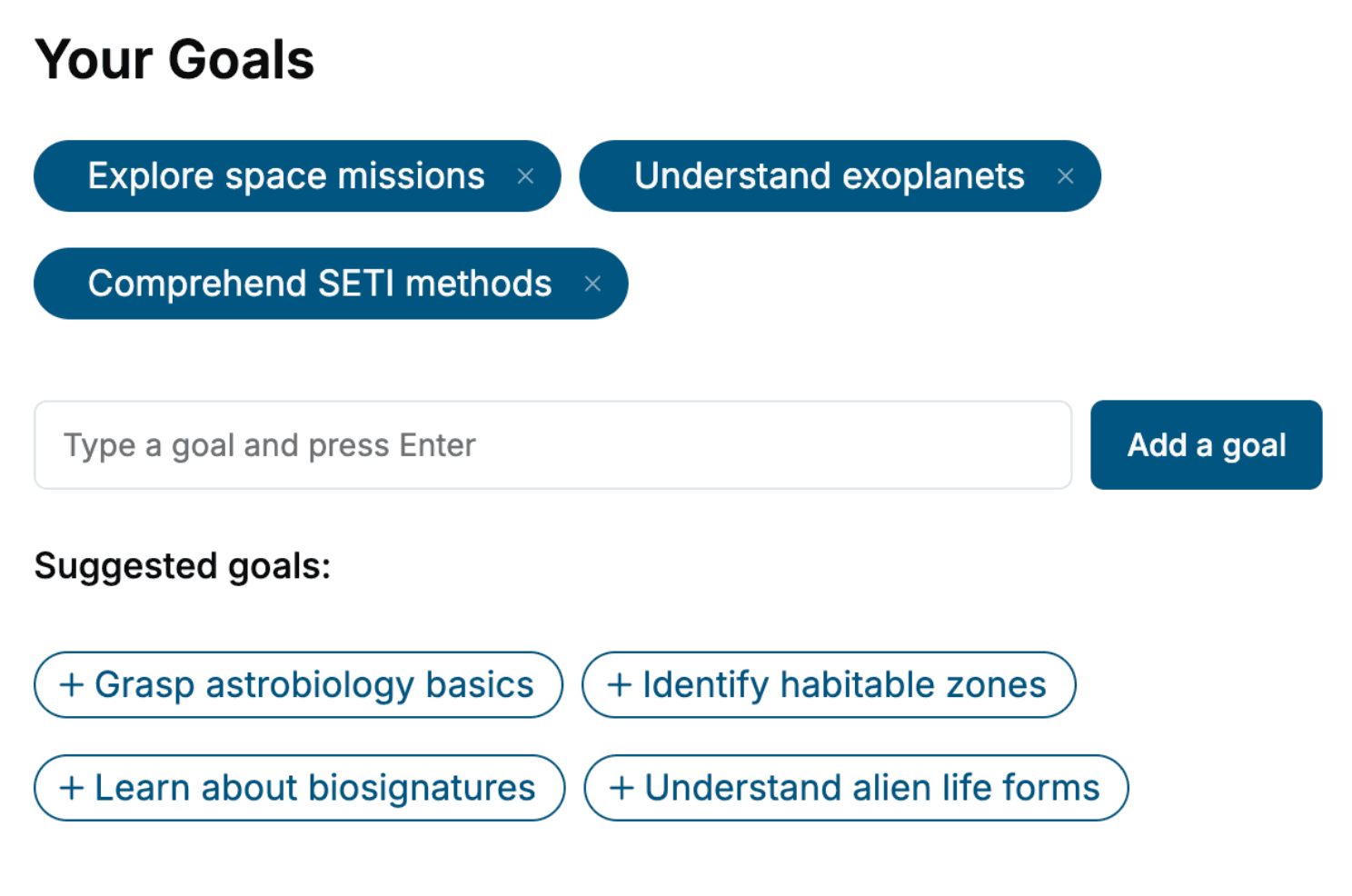
Specify your goals and choose sub-topics to include
- 3. Get your tailored book
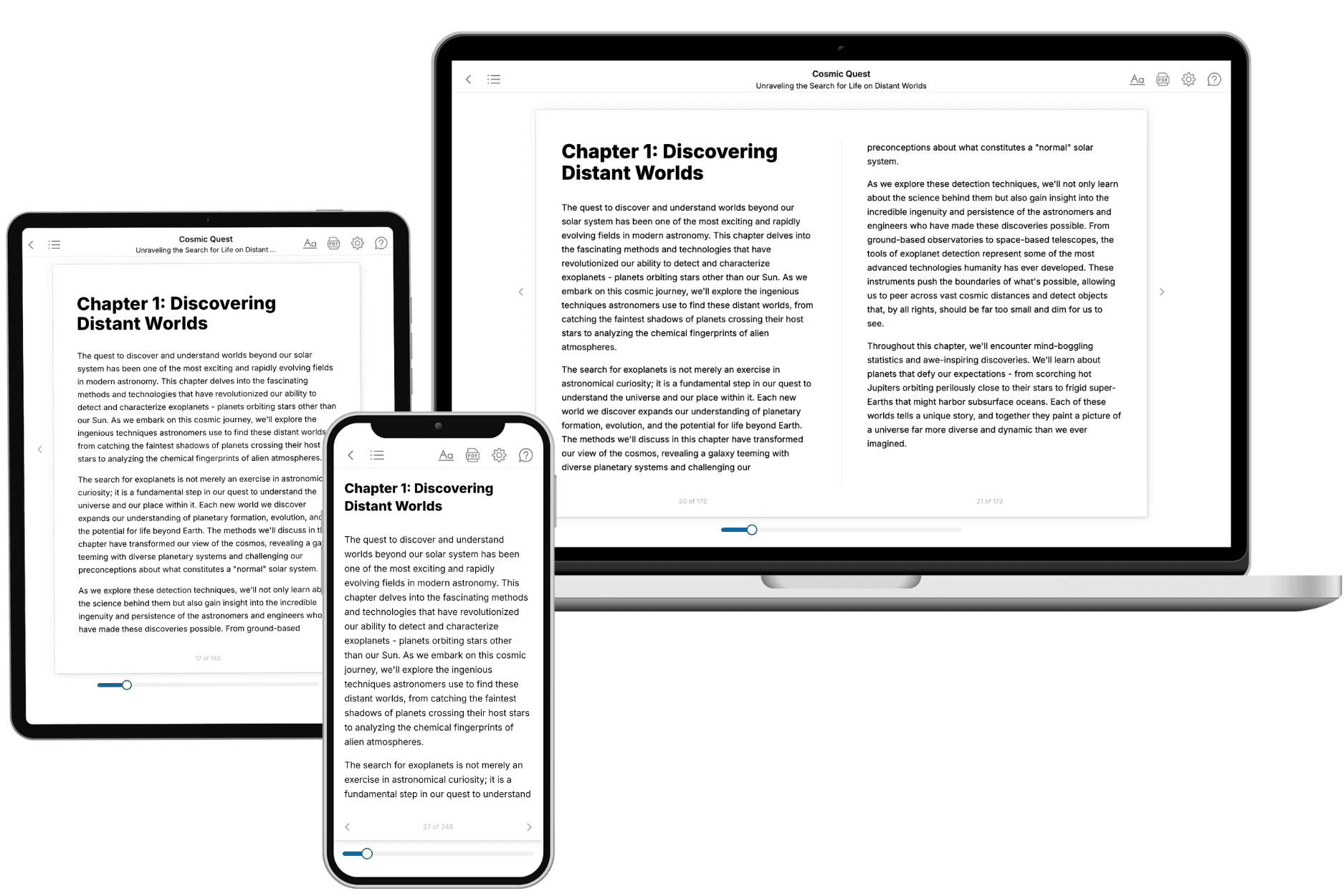
Your book is ready in 10 minutes. Read it online, download as EPUB or PDF, or send to Kindle.

Start from a template
Frequently asked questions
- What is TailoredRead?
TailoredRead creates complete, full-length nonfiction ebooks, written specifically for you. Tell us what you want to learn and why, and TailoredRead writes you a complete ebook on it, with charts, tables, and diagrams throughout. Read it online, on Kindle, or on any e-reader, or download it as a PDF or EPUB. Every book is written fresh the day you order it.
- How is the book tailored to me?
Before anything is written, you answer a few short questions about your goals, your background, and the topics you care about. Your book is then planned around your answers: written at your level, focused on your goals, and covering the topics you chose, instead of the one-size-fits-all book a store sells everyone.
- Will it read like generic AI content?
No. Your book isn't a chat transcript: it's planned chapter by chapter before a single word is written, told in a clear book voice, and explains ideas visually with charts, tables, and diagrams. After writing, every book goes through an editorial pass that polishes chapters so the book reads consistent from start to finish. Judge for yourself: browse thousands of sample books on our Explore Books page.
- How accurate is the content?
Our AI first checks whether your subject needs live research. Niche and fast-moving subjects are researched before writing, and the book plan and chapters are grounded in what it finds. After writing, every book goes through a quality pass that checks its facts and consistency, and researched books list their sources in a Notes section at the back.
- How long is the book?
You choose the length: Comprehensive (250-300 pages), Detailed (150-200 pages), Essential (70-100 pages), or Short (30-50 pages).
- Does the book include visuals?
Yes. Every book includes charts, tables, and diagrams: timelines, checklists, step-by-step guides, decision trees, comparison tables, matrices, and bar charts. A typical book includes dozens of these visual elements.
- Can I read it on Kindle? What formats can I download?
Yes. Every book can be read in our online reader or downloaded as a PDF or EPUB. The EPUB can be opened with Kindle, Apple Books, Kobo, and any e-reader. The Commercial and Author licenses also include an editable Word (DOCX) and Markdown download.
- How much does it cost?
About the price of a regular ebook. The exact price depends on your book's length and complexity, from $2 for the shortest books to $35 for the most comprehensive, and it's shown when you review your book, before you commit to anything. Each book is a one-time purchase, yours to keep, no subscription. Licenses that let you share, teach, or publish your book range from $35.99 to $49.99.
- Can I preview the book before purchasing?
Before you pay, you'll see what your book will cover: the title, a detailed description, the estimated length, and the complete chapter-by-chapter table of contents, so you know what you're getting before you decide. The full text itself is written after you purchase.
- How long does it take to create a book?
About 10 minutes. You can start reading the opening chapters while the rest is still being written.