Social Policy Books
Explore tailored Social Policy books created by our AI
Words That Matter
How Language Policy Shapes Communication, Culture, and Society
What if the languages we choose to speak, teach, and protect in our institutions actually determine who succeeds and who gets left behind? Language policy—the decisions governments, organizations, and communities make about language use—shapes far more than just communication. It influences educational achievement, economic mobility, cultural identity, and social equity. Yet most people never consider how these policies affect their daily lives. This book explores the real-world impact of language policy decisions, from classroom instruction to workplace communication to national identity. You'll discover why some multilingual societies thrive while others struggle, how language policies can either bridge or widen social divides, and what principles guide effective policy-making. Whether you're an educator, administrator, parent, or simply curious about how language shapes society, this book provides practical insights into one of the most consequential yet overlooked forces shaping our world.
Many Canadians take their healthcare system for granted, assuming it has always existed as a public service. The reality is far more complex and fascinating. This book traces the remarkable journey of how Canada transformed healthcare from a privilege of the wealthy into a system based on the principle that medical care should be a right, not a commodity. You'll discover how colonial-era medicine gave way to private practice, how the economic devastation of the Depression forced new thinking, and how visionary leaders like Tommy Douglas proved that universal healthcare was possible. Through engaging historical narratives and clear explanations, you'll understand the key decisions, political battles, and social movements that created Medicare and shaped the system you know today. Whether you're curious about Canadian history, interested in how healthcare systems develop, or simply want to understand the roots of a national institution, this book reveals the human stories and pivotal moments behind one of Canada's greatest achievements.
Discover how societies can genuinely address historical injustices and build more equitable futures through reparations. This comprehensive exploration examines reparations not as a political slogan but as a serious framework for justice rooted in philosophy, economics, and human dignity. You'll explore the philosophical foundations of why reparations matter, examine historical examples from around the world, and understand the practical mechanisms for implementation. The book addresses tough questions: How do we measure harm? Who bears responsibility? What forms can reparations take? By combining rigorous analysis with real-world case studies, this book equips you to understand reparations as both a moral imperative and a practical policy tool. Whether you're seeking to understand this pivotal debate or develop informed perspectives on justice and reconciliation, you'll gain clarity on one of society's most important conversations about fairness, accountability, and healing.
Imagine understanding Canada not as a simple story of two founding nations, but as a complex tapestry woven from hundreds of cultures, languages, and traditions spanning centuries. This book reveals how Canada became one of the world's most multicultural nations—and what that really means for its past, present, and future. From the Indigenous peoples who inhabited the land for millennia to the waves of immigrants who arrived seeking opportunity, you'll discover the real history behind Canada's multicultural identity. You'll learn how discriminatory policies once excluded entire groups, how official multiculturalism emerged as a national policy, and how diversity shapes everything from politics to economics to daily life. Whether you're curious about your own heritage, seeking to understand Canadian society more deeply, or exploring how nations can navigate cultural diversity, this book provides the historical context and contemporary insights you need. It challenges myths, celebrates achievements, and honestly addresses the ongoing work required to build a truly inclusive nation.
The gap between demographic data and meaningful understanding has never been wider. Fertility rates are plummeting in some regions while remaining stubbornly high in others, yet the underlying mechanisms driving these patterns remain obscure to most observers. This book cuts through the confusion to reveal the intricate web of factors—economic, cultural, political, and social—that determine how many children people have and why those decisions matter for our collective future. You'll discover how the demographic transition unfolds across different societies, why women's empowerment fundamentally alters reproductive patterns, and what below-replacement fertility means for aging nations. Through clear analysis of historical trends, contemporary case studies, and emerging challenges, you'll gain the tools to interpret population dynamics and their far-reaching consequences. From the effectiveness of family policies to the role of migration in demographic balance, this book provides the comprehensive framework you need to understand one of the most consequential trends shaping our world today.
Duterte's War on Drugs
The Philippines' Most Controversial Campaign and Its Global Impact
Understand one of the 21st century's most controversial and consequential drug enforcement campaigns. Duterte's War on Drugs fundamentally reshaped Philippine society and sparked international debate about the limits of state power and the effectiveness of punitive drug policy. This book examines the campaign's origins in Duterte's political rise, its brutal implementation across the archipelago, the documented human rights violations, and the ongoing international investigations. You'll explore the social, economic, and political factors that enabled such an extreme approach, analyze the campaign's actual impact on drug trafficking and addiction rates, and consider the lessons it offers for drug policy globally. Through careful analysis of primary sources, investigative reports, and expert perspectives, this book provides the context necessary to understand how a democratic nation embraced extrajudicial violence and what that reveals about contemporary politics in Asia and beyond.
Imagine leading a nation while fully understanding how pseudoscientific ideologies can capture institutions, distort policy, and cause immense human suffering. This book provides that critical understanding by examining how Madison Grant's racial theories became embedded in American law, medicine, and politics—and how similar patterns of ideological capture continue to threaten democratic institutions today. You'll trace the direct lineage from Grant's "The Passing of the Great Race" through the Immigration Restriction Act of 1924, American eugenics programs, and into the ideological foundations of extremist movements worldwide. More importantly, you'll learn the mechanisms: how scientific authority gets weaponized, how demographic anxieties fuel restrictive policies, how propaganda shapes public opinion, and how institutional leaders rationalize harmful decisions. This is not historical curiosity—it's essential preparation for leadership. By understanding exactly how ideology corrupted American medicine, policy, and politics in the early 20th century, you gain the analytical tools to recognize and prevent such capture in your own era. The book examines rhetoric patterns, policy justification frameworks, and belief crystallization processes that remain relevant to contemporary political challenges.
Most nations measure success through GDP and economic growth, assuming that higher numbers automatically translate to happier, healthier citizens. Bhutan rejected this assumption entirely. In 1972, this small Himalayan kingdom introduced Gross National Happiness—a revolutionary framework that prioritizes citizen well-being over economic expansion. Rather than asking "How much are we producing?" Bhutan asks "Are our people truly happy?" This book explores how a nation transformed this philosophical concept into concrete policy, creating measurable improvements in environmental protection, cultural preservation, and social stability. You'll discover how Bhutan's four-pillar approach—sustainable development, cultural preservation, good governance, and environmental conservation—challenges everything you thought you knew about national progress. Through compelling stories, policy analysis, and practical insights, you'll understand why global leaders, economists, and development experts are increasingly looking to Bhutan's model. Whether you're interested in alternative development paradigms, Asian philosophy, or reimagining what success means, this exploration of GNH offers both intellectual depth and actionable perspectives for our interconnected world.
Discover how Franklin D. Roosevelt's New Deal fundamentally reshaped American government and society during the nation's darkest economic hour. This comprehensive guide walks you through the origins of the Great Depression, the bold programs that emerged from it, and the lasting changes that continue to define America today. You'll understand the "Three Rs"—Relief, Recovery, and Reform—that guided New Deal policy, explore iconic programs like Social Security and the Works Progress Administration, and examine the fierce debates about federal power that surrounded these initiatives. Whether you're studying American history, seeking context for modern political debates, or simply curious about how government responded to crisis, this book provides the clarity and insight you need to grasp this pivotal era and its enduring influence on American institutions and values.
Policy in Practice
How Public Policy Shapes Society and What You Need to Know
This book takes you through the complete landscape of public policy, revealing how decisions made in government offices ripple through society and affect your daily life. You'll discover the structured process behind policy creation—from the moment a problem reaches the political agenda to the final evaluation of whether a policy actually worked. Rather than treating policy as abstract theory, this guide grounds each concept in real examples and practical applications, showing you how different policy tools work, why implementation often fails, and what separates successful policies from well-intentioned failures. You'll learn to read policy critically, understand the competing interests at stake, and recognize how institutional structures and political realities shape what's possible. Whether you're a professional seeking deeper expertise, a student building foundational knowledge, or a citizen wanting to engage more meaningfully in democratic processes, this book equips you with the frameworks and insights needed to understand and evaluate the policies that shape our world.
Beyond the Melting Pot
Understanding Multiculturalism in Theory and Practice
Many people assume that multiculturalism simply means celebrating different cultures at festivals and embracing diversity as an inherently positive force. This surface-level understanding misses the profound complexities and real challenges that diverse societies face every day. Multiculturalism is far more nuanced than popular discourse suggests. It involves intricate questions about how different groups can coexist while maintaining their distinct identities, how societies can balance unity with diversity, and how institutions can fairly accommodate varying cultural needs without fragmenting social cohesion. This comprehensive exploration takes you through the theoretical foundations of multiculturalism while examining its practical applications across different contexts. You'll discover how successful multicultural societies navigate tensions between individual rights and group recognition, explore the mechanisms that foster genuine intercultural understanding, and understand why some multicultural initiatives succeed while others fail. From examining historical models to analyzing contemporary challenges, this book provides the analytical framework you need to understand one of the most significant social and political phenomena of our time. You'll gain insights into how multiculturalism shapes everything from education and urban planning to cultural policy and social integration, equipping you with a sophisticated understanding of how diverse societies can thrive.
Many people understand reproductive rights as primarily about abortion access, but this narrow framing misses the full picture of what it means to have genuine reproductive freedom. The reality is that millions of people face barriers to making their own reproductive choices—whether that's accessing contraception, receiving quality prenatal care, affording childcare, or simply being believed by their doctors. These barriers don't affect everyone equally. Women of color, low-income women, disabled women, and LGBTQ+ individuals face compounded obstacles rooted in systemic racism, economic inequality, and medical discrimination. This book introduces you to reproductive justice, a framework developed by Black women activists that centers the experiences of the most marginalized while addressing the interconnected systems that constrain reproductive freedom. You'll explore the history of reproductive coercion, understand how current policies and practices perpetuate inequality, and discover how communities are building alternatives grounded in mutual care and self-determination. Whether you're an advocate, a student, or simply someone seeking to understand your own reproductive autonomy more deeply, this book provides the analysis and inspiration to engage with reproductive justice as both a personal and political practice.
What if the most prosperous and content societies in the world have already discovered a political model that balances individual freedom with collective welfare? Social democracy offers a compelling alternative to both unregulated capitalism and authoritarian socialism, yet remains poorly understood in many parts of the world. This book explores the philosophical foundations, historical evolution, and practical applications of social democracy—a system that prioritizes democratic governance, economic fairness, and universal social protection. You'll discover how social democratic principles have shaped some of the world's most successful economies, examine the specific policies that distinguish this approach from other political systems, and understand both its achievements and contemporary challenges. Whether you're interested in political theory, economic policy, or the future of democratic societies, this comprehensive guide provides the knowledge needed to engage meaningfully with one of the most influential political movements of our time.
Christian Democracy
Faith, Justice, and the Democratic Tradition
Discover how Christian faith has profoundly shaped democratic thought and governance throughout history. This comprehensive exploration traces the intellectual and spiritual roots of Christian Democracy—a movement that bridges theology and politics in ways that continue to influence societies worldwide. You'll gain insight into how Christian principles of human dignity, justice, and the common good have been translated into concrete political philosophies and policies. From medieval theological foundations through the Reformation and into contemporary debates, you'll understand the key thinkers, movements, and historical moments that defined this tradition. Whether you're studying religious history, political philosophy, or seeking to understand the role of faith in public life, this book provides the context and analysis needed to grasp how Christianity has contributed to democratic development. Explore the tensions, achievements, and ongoing relevance of Christian Democracy in our increasingly pluralistic world.
FDR and the New Deal
How One President Reshaped America During Its Darkest Hour
Discover how Franklin D. Roosevelt transformed a nation in crisis into a beacon of hope and progress. This comprehensive exploration reveals the political genius, personal determination, and bold vision that enabled FDR to reshape America during the Great Depression. You'll gain insight into the strategic decisions that created the New Deal—a revolutionary set of programs that fundamentally altered the relationship between government and citizens. Through detailed analysis of FDR's leadership style, political maneuvering, and communication strategies, you'll understand how one president navigated economic collapse, political opposition, and personal adversity to build the modern American state. This book examines the lasting impact of his policies, the controversies they sparked, and why the New Deal remains central to contemporary debates about government's proper role. Whether you're studying American history, exploring presidential leadership, or understanding the roots of modern politics, this account provides the context and insight needed to grasp how FDR's era fundamentally changed America.
The Great Population Shift
Understanding Demographic Transition and Its Impact on Our World
Population patterns shape everything around us—from the schools in your neighborhood to the retirement systems supporting aging societies. This comprehensive exploration takes you through the fascinating process of demographic transition, the predictable yet complex shift that every society experiences as it develops from traditional to modern population structures. You'll discover how countries move through distinct stages of population change, why some regions experience explosive growth while others face declining birth rates, and what these patterns mean for future generations. Through detailed analysis of global case studies, you'll understand the driving forces behind fertility and mortality changes, from urbanization and education to cultural evolution and technological advancement. The book reveals how demographic shifts create both opportunities and challenges, examining the demographic dividend that can fuel economic growth and the population aging that requires innovative solutions. You'll explore migration patterns, regional variations, and the interconnected nature of population dynamics across different societies. By the end, you'll possess a thorough understanding of demographic transition theory and its practical applications, enabling you to interpret population trends, anticipate future changes, and appreciate the profound ways that demographic forces shape our social, economic, and cultural landscapes.
The Green City
How Urban Green Spaces Shape Community, Health, and Social Connection
Discover how the parks, gardens, and green corridors woven through our cities shape far more than just the landscape—they fundamentally influence who we are as communities. This book examines the intricate relationship between urban green spaces and social life, revealing how access to nature affects health outcomes, builds social bonds, and either reduces or reinforces inequality in cities. You'll explore the science behind why green spaces matter, the complex social dynamics they create, and the real challenges cities face in distributing these vital resources fairly. Through concrete examples and research-backed insights, you'll understand how green spaces can be powerful tools for community building—and how they can inadvertently contribute to displacement. Whether you're a community advocate, urban planner, or simply someone who cares about making cities more livable, this book provides the knowledge and perspective needed to think critically about green space in your own community and contribute meaningfully to creating more equitable, healthy, and connected cities.
Poverty is far more than a statistical measure of income—it's a profound philosophical challenge that forces us to confront fundamental questions about justice, human worth, and social responsibility. This book examines how philosophers across centuries have grappled with poverty, moving beyond economic definitions to explore its deeper meaning and implications. You'll discover how different philosophical traditions—from Aristotle to contemporary thinkers—have conceptualized deprivation and what it means to live with dignity. The book connects poverty to essential philosophical concepts like justice, freedom, capability, and human flourishing, revealing how our understanding of poverty shapes our moral obligations to society. By engaging with philosophical frameworks, you'll gain tools to think critically about poverty's causes, challenge common assumptions, and explore what genuine solutions might look like. This exploration bridges historical philosophy with contemporary concerns, offering insights that inform both personal ethics and public policy discussions about inequality and social justice.
The Me Too Movement
Understanding Power, Accountability, and Social Change
Imagine a world where workplace harassment is not an open secret, where power imbalances are openly acknowledged and actively addressed, and where survivors' voices shape institutional policy. The Me Too movement has fundamentally altered conversations about sexual harassment, assault, and accountability across industries and cultures. This book examines how a social movement becomes a force for change, exploring the historical foundations that made Me Too possible, the mechanisms through which it spread and gained influence, and the concrete transformations it has catalyzed. You'll discover how individual stories became collective action, how digital platforms amplified marginalized voices, and how institutions have—or haven't—responded to demands for accountability. Through rigorous analysis of the movement's origins, key moments, and ongoing evolution, this book provides the context and insights needed to understand one of the most significant social movements of our time. Whether you're interested in activism, organizational change, gender studies, or simply understanding the forces reshaping contemporary society, you'll gain a nuanced perspective on how social movements create lasting impact.
Breaking Barriers
The Stories, Science, and Struggle of Transgender Athletes
This book takes you through the multifaceted world of transgender athletes—their personal stories, the scientific realities, and the ongoing debates shaping their participation in sports. You'll discover how transgender individuals navigate the intersection of identity and athletic passion, often facing unprecedented challenges while pursuing their dreams. Through real accounts and evidence-based analysis, you'll explore the biological complexities of hormone therapy and athletic performance, the evolving landscape of sports policies across different organizations, and the profound impact of inclusion on both athletes and communities. You'll examine how different countries and sports bodies approach eligibility, learn from athletes who've broken barriers, and understand the broader implications of these conversations for fairness, dignity, and belonging in athletics. This comprehensive exploration moves beyond headlines to reveal the human stories and scientific nuances that define this important conversation.
The Power of Systems
How Economic and Political Forces Shape Society and Your Life
You're about to discover how the invisible forces of politics and economics shape everything from your job prospects to global conflicts. This book pulls back the curtain on political economy—the study of how power, money, and institutions interact to create the world we live in. Rather than treating politics and economics as separate domains, you'll learn how they're fundamentally intertwined, with political decisions determining economic rules and economic power influencing political outcomes. Through clear explanations and real-world examples, you'll explore different economic systems, understand how institutions function as the machinery of society, and recognize the power dynamics embedded in everyday transactions and policies. You'll examine how globalization, technology, and finance have reshaped political-economic relationships, and discover how ordinary people can influence these systems through collective action. By the end, you'll possess a sophisticated framework for analyzing current events, evaluating policy proposals, and understanding your place within larger economic and political structures.
Imagine understanding the hidden forces that shape how populations grow, move, and change across the globe. Religion isn't just a matter of personal belief—it's a powerful demographic force that influences whether families have children, where people choose to live, how long they live, and how societies organize themselves. This book reveals the intricate connections between religious traditions and population dynamics, showing you how faith shapes fertility decisions, migration patterns, mortality rates, and social structures. You'll discover why some regions experience population booms while others face decline, how religious institutions serve as demographic anchors in communities, and why one-size-fits-all population policies often fail. Through real-world examples and data-driven analysis, you'll gain the analytical tools to interpret demographic trends through a religious and cultural lens, understanding the world's population not as abstract statistics but as communities shaped by deeply held beliefs and values.
Justice as Fairness
Understanding Rawls' Theory of a Just Society
What makes a society truly fair? Is it enough to have equal laws, or must we also ensure equal opportunity and resources? This book explores John Rawls' groundbreaking theory of justice as fairness—one of the most influential frameworks for thinking about social justice in the modern world. You'll discover how the "veil of ignorance" thought experiment reveals what fair principles we'd choose if we didn't know our place in society. Through clear explanations and real-world examples, you'll learn how Rawls' two principles of justice address inequality, opportunity, and the structure of institutions. Whether you're interested in political philosophy, social policy, or simply understanding the foundations of a just society, this book provides the conceptual tools to evaluate fairness in everything from economic systems to educational access. Engage with both the power and limitations of this influential theory.
Beyond Biology
How Humanity Redefined Purpose in the Age of Technology and Choice
Discover why billions of people are choosing not to have children—and what this means for your future. For millennia, reproduction was humanity's biological imperative. Today, it's a choice. This book traces how we escaped the tyranny of biology through contraception, education, and technology, and explores the profound consequences reshaping our world. You'll understand why birth rates are collapsing in developed nations, how aging populations threaten economic stability, and why artificial intelligence will make traditional family structures obsolete. More importantly, you'll see how this isn't a crisis of values but a rational response to modern economics and individual autonomy. By examining demographic trends, geopolitical shifts, and technological disruption, this book reveals the real challenges ahead: migration crises, pension system collapse, and the concentration of wealth. But it also offers a vision of hope—a future where humanity consciously defines purpose beyond reproduction, where non-reproductive lives are valued, and where technology serves human flourishing rather than replacing it. Essential reading for anyone seeking to understand the forces reshaping society.
Pension systems are breaking. Across the developed world, aging populations, longer lifespans, and unsustainable funding models are forcing governments and policymakers to confront hard truths about retirement security. This book cuts through the complexity to show you what's actually happening in pension reform—and why it matters to your financial future. You'll discover how governance failures and political pressures are reshaping retirement systems in the UK, US, and OECD countries. Learn the critical difference between Defined Benefit and Defined Contribution pensions, understand why fiduciary duty matters, and explore the real-world consequences of shifting retirement risk from employers to workers. This book examines the equity challenges facing women and older workers, the dangers of politicizing pension funds, and the regulatory innovations driving change. Whether you're planning retirement, managing pension assets, or simply trying to understand the headlines, this guide provides the clarity and context you need to make informed decisions in an era of unprecedented pension system transformation.
Cities by Design
How Land Use Shapes Livable, Sustainable Urban Communities
Discover how the decisions made about land use shape the cities where we live, work, and thrive. This book reveals the direct connection between urban planning choices and the livability, sustainability, and ecological health of our communities. You'll learn how zoning regulations, development patterns, and design principles either enable or undermine walkable neighborhoods, environmental resilience, and equitable access to opportunity. Through real-world examples and practical frameworks, you'll understand why some cities feel vibrant and connected while others sprawl and fragment. Whether you're a professional in planning, real estate, or environmental fields, or simply someone who wants to understand the forces shaping your city, this book provides the knowledge to recognize good planning when you see it—and advocate for better decisions in your community.
Related books you may like:
You're about to supercharge your animal advocacy efforts and nonprofit management skills with the power of AI. This groundbreaking guide is tailored specifically for leaders in the animal rights movement who are ready to harness cutting-edge technology to make a bigger impact. Discover how to leverage AI tools to streamline your operations, enhance your strategic planning, and amplify your advocacy campaigns. You'll learn practical techniques for automating administrative tasks, optimizing your workflow, and making data-driven decisions that will take your organization to the next level. From improving time management and task delegation to enhancing donor engagement and project tracking, this book offers a comprehensive roadmap for integrating AI into every aspect of your work. You'll gain insights into AI-driven research methods, problem-solving techniques, and productivity metrics that will revolutionize the way you approach animal advocacy.
Discover how air sign energy shapes your thinking, communication style, and approach to relationships. Whether you have a Gemini, Libra, or Aquarius placement in your birth chart, this guide reveals the intellectual and social gifts these signs bring—along with the blind spots worth understanding. You'll learn why air signs are natural communicators and idea-generators, how each sign expresses itself uniquely, and how your specific air sign placements influence your personality across different life areas. Through practical insights and real-world examples, you'll recognize air sign patterns in yourself and others, harness your natural strengths in connection and innovation, and navigate the challenges of overthinking and emotional detachment. Whether you're exploring your Sun, Moon, Rising, or other planetary placements, this book provides the clarity you need to work with your air sign energy authentically and effectively.
What if you could resolve years of trauma in just a handful of therapy sessions instead of months or years of traditional talk therapy? Accelerated Resolution Therapy (ART) offers a scientifically-grounded approach that harnesses your brain's natural healing capacity to process traumatic memories and emotional distress rapidly. This book demystifies how ART works at the neurological level, explains why it's so effective for conditions like PTSD, anxiety, and phobias, and explores how it differs from conventional therapeutic approaches. Whether you're a mental health professional considering adding ART to your practice, someone exploring treatment options for yourself or a loved one, or simply curious about innovative psychological interventions, this guide provides practical insights into one of the most promising developments in modern therapy. Discover how guided imagery and eye movement can facilitate profound emotional healing, what the research shows about its effectiveness, and whether ART might be the breakthrough approach you've been seeking.
The assumption that political parties are natural, inevitable, or even desirable features of democracy is surprisingly recent. For most of Western political history, the most sophisticated thinkers viewed organized factions as corrupting forces that distorted the pursuit of the common good. This book traces the genealogy of anti-party political thought from Plato's critique of democratic factionalism through contemporary populist movements, examining how philosophers, statesmen, and theorists have conceptualized the dangers of partisanship and imagined alternatives. You'll encounter Rousseau's vision of a general will transcending faction, the Federalist Papers' constitutional anxiety about party machinery, Tocqueville's ambivalent analysis of American partisanship, and the radical rejection of parties by socialist and anarchist movements. Rather than treating anti-party sentiment as mere nostalgia or populist demagoguery, this analysis reveals it as a coherent intellectual tradition grappling with enduring tensions between democratic participation and organized political competition. By understanding how different historical periods and ideological traditions have confronted the problem of faction, you gain critical perspective on contemporary debates about party reform, populism, and democratic alternatives.
Many people believe that behavior is determined either by our genetics or by direct rewards and punishments we experience. However, Albert Bandura's groundbreaking research revealed a more nuanced truth: we learn by watching others. This book explores the life and work of one of psychology's most influential figures and the revolutionary theory that transformed our understanding of human behavior. You'll discover how Bandura's concept of self-efficacy explains why some people persevere through challenges while others give up, how observational learning shapes everything from aggression to prosocial behavior, and why the environment, our thoughts, and our actions are constantly influencing each other. Whether you're an educator seeking to improve student outcomes, a professional interested in behavior change, or simply curious about the science of learning, this comprehensive guide illuminates the principles that govern human development and provides practical insights into how these theories apply to everyday life.
Create a Social Policy Book Tailored to You
Create an AI-crafted book tailored to your goals, interests, and background






Benefits of AI-tailored books
- Read one book, not ten:
- all the Social Policy knowledge you need, gathered into a single book.
- Save days of learning:
- tell us your goals, choose your topics, and the whole book is built around them.
- Learn effortlessly:
- Social Policy book written for your specific background and expertise.
- Understand at a glance:
- includes charts, tables, timelines, checklists, decision trees, and more.
- Stay current:
- written the day you order it, not years ago.
- Trust what you read:
- every book is checked for accuracy, with real research when your subject needs it.
Create your unique book in 3 steps
- 1. Select your focus
Select the focus of your Social Policy book and share your background
- 2. Personalize your book
Specify your goals and choose sub-topics to include
- 3. Get your tailored book
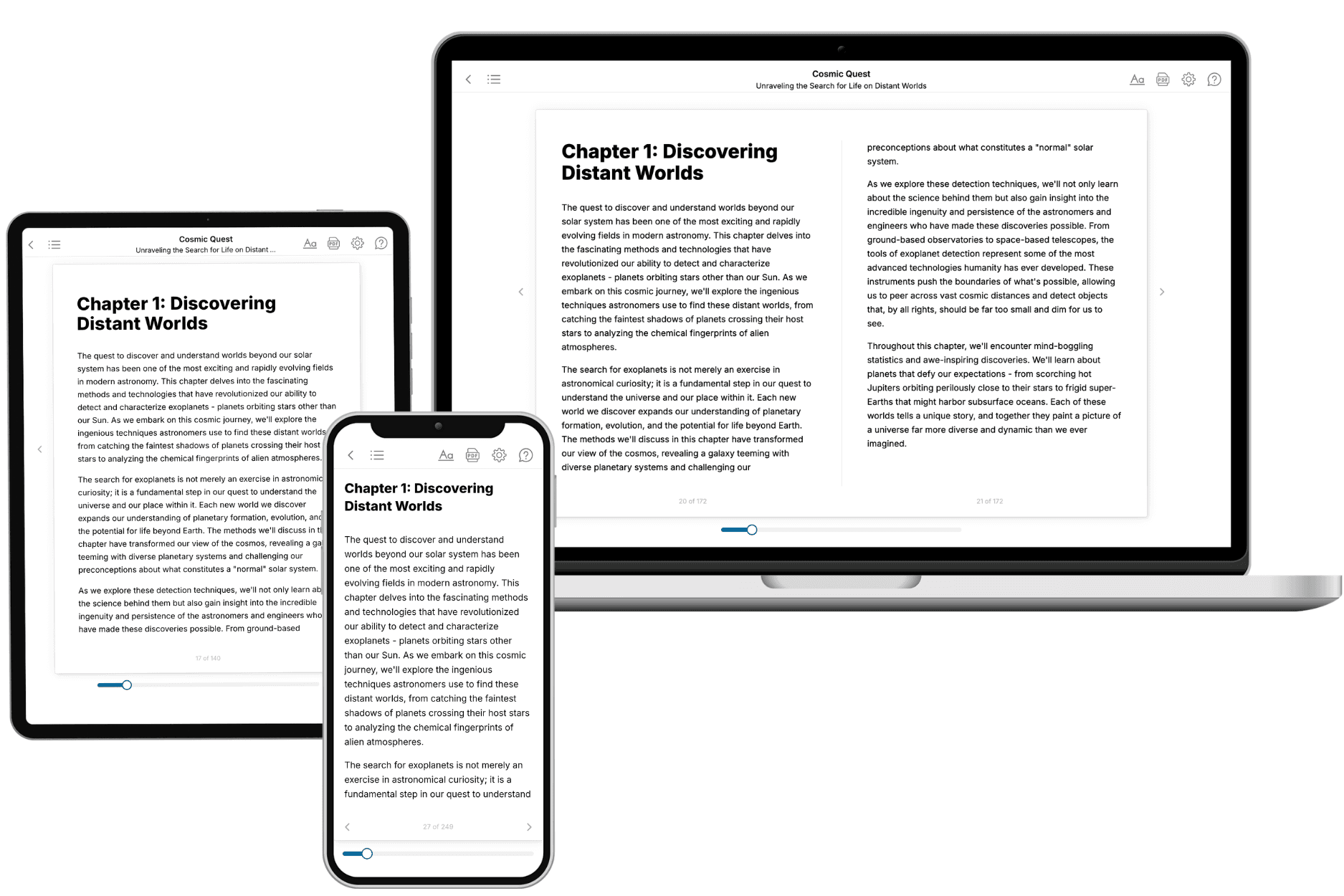
Your book is ready in 10 minutes. Read it online, download as EPUB or PDF, or send to Kindle.

Start from a template
Frequently asked questions
- What is TailoredRead?
TailoredRead creates complete, full-length nonfiction ebooks, written specifically for you. Tell us what you want to learn and why, and TailoredRead writes you a complete ebook on it, with charts, tables, and diagrams throughout. Read it online, on Kindle, or on any e-reader, or download it as a PDF or EPUB. Every book is written fresh the day you order it.
- How is the book tailored to me?
Before anything is written, you answer a few short questions about your goals, your background, and the topics you care about. Your book is then planned around your answers: written at your level, focused on your goals, and covering the topics you chose, instead of the one-size-fits-all book a store sells everyone.
- Will it read like generic AI content?
No. Your book isn't a chat transcript: it's planned chapter by chapter before a single word is written, told in a clear book voice, and explains ideas visually with charts, tables, and diagrams. After writing, every book goes through an editorial pass that polishes chapters so the book reads consistent from start to finish. Judge for yourself: browse thousands of sample books on our Explore Books page.
- How accurate is the content?
Our AI first checks whether your subject needs live research. Niche and fast-moving subjects are researched before writing, and the book plan and chapters are grounded in what it finds. After writing, every book goes through a quality pass that checks its facts and consistency, and researched books list their sources in a Notes section at the back.
- How long is the book?
You choose the length: Comprehensive (250-300 pages), Detailed (150-200 pages), Essential (70-100 pages), or Short (30-50 pages).
- Does the book include visuals?
Yes. Every book includes charts, tables, and diagrams: timelines, checklists, step-by-step guides, decision trees, comparison tables, matrices, and bar charts. A typical book includes dozens of these visual elements.
- Can I read it on Kindle? What formats can I download?
Yes. Every book can be read in our online reader or downloaded as a PDF or EPUB. The EPUB can be opened with Kindle, Apple Books, Kobo, and any e-reader. The Commercial and Author licenses also include an editable Word (DOCX) and Markdown download.
- How much does it cost?
About the price of a regular ebook. The exact price depends on your book's length and complexity, from $2 for the shortest books to $35 for the most comprehensive, and it's shown when you review your book, before you commit to anything. Each book is a one-time purchase, yours to keep, no subscription. Licenses that let you share, teach, or publish your book range from $35.99 to $49.99.
- Can I preview the book before purchasing?
Before you pay, you'll see what your book will cover: the title, a detailed description, the estimated length, and the complete chapter-by-chapter table of contents, so you know what you're getting before you decide. The full text itself is written after you purchase.
- How long does it take to create a book?
About 10 minutes. You can start reading the opening chapters while the rest is still being written.