Criminal Law Books
Explore tailored Criminal Law books created by our AI
Many assume witness protection is simply a practical tool for law enforcement—a necessary but morally straightforward solution to a security problem. Yet this perspective misses the profound philosophical questions at stake. When a society decides to protect witnesses, it makes fundamental claims about justice, fairness, and what we owe to those who speak truth to power. This book examines witness protection through the lens of philosophy and ethics, exploring the moral foundations that justify these programs, the tensions they create, and what they reveal about our commitment to justice. You'll discover how different ethical frameworks evaluate witness protection, why societies have historically struggled with these questions, and how contemporary programs grapple with balancing individual rights against collective needs. Whether you're interested in criminal justice, philosophy, or how societies maintain the rule of law, this exploration offers fresh perspectives on one of justice's most complex and consequential practices.
Discover how interrogation has shaped history's most significant cases and what makes questioning truly effective. This book takes you beyond Hollywood dramatizations to reveal the psychological principles, historical evolution, and real-world applications of interrogation methods used in espionage and criminal investigations. You'll explore how interrogators extract information, why some techniques succeed while others backfire, and how legal and ethical standards have transformed the field. Through documented case studies and expert analysis, you'll understand the delicate balance between security imperatives and human rights, the psychology of confession, and why modern evidence-based approaches outperform traditional pressure tactics. Whether you're fascinated by true crime, studying criminal justice, or seeking to understand intelligence operations, this book provides the authoritative foundation you need to comprehend one of history's most consequential practices.
What if the blood at a crime scene could tell you exactly what happened—and why? Bloodstain patterns are far more than gruesome evidence; they're a detailed record of human action, physics, and psychology frozen in time. This book reveals how forensic professionals decode these patterns to reconstruct events, challenge false narratives, and understand the psychology behind violent crime. You'll discover how different types of bloodstains form, what they reveal about movement and positioning, and how to integrate this evidence with psychological insights about perpetrator behavior and victim response. Whether you're a student of forensic science, a psychology professional, or someone fascinated by how truth emerges from evidence, this guide combines rigorous scientific methodology with the human psychology that drives criminal behavior. Learn to see crime scenes as investigators do—not as chaos, but as a coherent narrative written in blood.
Discover how insects become silent witnesses at crime scenes, revealing secrets that traditional forensic methods cannot. This guide walks you through the fascinating intersection of entomology and criminal investigation, showing how forensic entomologists use insect behavior and development to solve murders and establish timelines. You'll learn to identify key insect species, understand their life cycles, and interpret the evidence they provide. From the moment flies arrive at a body to the final larval stages, each phase tells a story. Explore real-world case studies that demonstrate how insect evidence has cracked cold cases and exonerated the innocent. Whether you're a biology student, law enforcement professional, or curious about forensic science, this book demystifies the science behind insect evidence and its critical role in the justice system. Gain practical knowledge about evidence collection, environmental factors affecting insect activity, and how to work effectively with forensic entomologists in investigations.
Duterte's War on Drugs
The Philippines' Most Controversial Campaign and Its Global Impact
Understand one of the 21st century's most controversial and consequential drug enforcement campaigns. Duterte's War on Drugs fundamentally reshaped Philippine society and sparked international debate about the limits of state power and the effectiveness of punitive drug policy. This book examines the campaign's origins in Duterte's political rise, its brutal implementation across the archipelago, the documented human rights violations, and the ongoing international investigations. You'll explore the social, economic, and political factors that enabled such an extreme approach, analyze the campaign's actual impact on drug trafficking and addiction rates, and consider the lessons it offers for drug policy globally. Through careful analysis of primary sources, investigative reports, and expert perspectives, this book provides the context necessary to understand how a democratic nation embraced extrajudicial violence and what that reveals about contemporary politics in Asia and beyond.
What does it really mean when the Constitution promises that no person shall be deprived of life, liberty, or property without due process of law? This question has shaped American jurisprudence for over 150 years, yet many citizens remain unclear about how this fundamental protection actually works in practice. This book demystifies the Fourteenth Amendment's Due Process Clause, exploring its historical roots in post-Civil War America and tracing its evolution through landmark Supreme Court decisions. You'll discover how due process protections extend far beyond courtroom procedures to encompass substantive rights affecting everything from criminal justice to personal freedoms. Through clear explanations of complex constitutional concepts and real-world examples, you'll gain the knowledge to understand how due process shapes American law, influences political debates, and protects individual rights in an ever-changing society. Whether you're a student, professional, or engaged citizen, this book provides the essential framework for understanding one of the Constitution's most powerful and contested provisions.
How Courts Work
A Practical Guide to Understanding Judicial Systems and Legal Processes
You'll discover how judicial systems function as the backbone of democratic societies, protecting rights and resolving disputes through structured legal processes. This guide walks you through the architecture of courts—from trial courts to appellate bodies—and explains how judges, lawyers, juries, and other participants work within established procedures to deliver justice. You'll learn why the separation of powers matters, how different legal traditions shape court operations, and what happens when cases move through the system. By examining real-world examples and exploring the principles underlying judicial decision-making, you'll gain insight into how courts interpret laws, balance competing interests, and maintain public trust. Whether you're curious about a specific case, interested in legal reform, or simply want to understand how your country's courts operate, this book provides the practical knowledge needed to navigate and appreciate the judicial systems that shape our societies.
The Presidential Pardon
Understanding Power, Justice, and Mercy in American Politics
Discover how one of America's most powerful and controversial executive powers shapes justice, politics, and the presidency itself. Presidential pardons represent an extraordinary authority—the ability to erase criminal convictions and overturn judicial decisions with a single signature. Yet this power remains poorly understood by most Americans, shrouded in mystery and often surrounded by scandal. This book demystifies presidential pardons by exploring their constitutional origins, examining landmark historical cases, and analyzing how different presidents have wielded this authority. You'll understand why some pardons spark national outrage while others go unnoticed, how political calculations influence mercy decisions, and what these choices reveal about American justice and governance. Through compelling case studies and clear analysis, you'll gain the knowledge to evaluate pardon decisions critically and understand their profound implications for the rule of law, executive power, and democratic accountability.
Cybercriminals hide behind screens, fake identities, and anonymous accounts—making it nearly impossible to connect digital communications to the people who wrote them. Traditional digital forensics focuses on metadata and technical artifacts, but it often misses the most revealing evidence: the language itself. Forensic linguistics fills this critical gap by analyzing writing patterns, linguistic markers, and stylistic choices that are as unique as fingerprints. This book teaches you how to identify authors of threatening emails, detect deception in ransom notes, profile cybercriminals through their language, and build stronger cases with linguistic evidence. You'll learn practical techniques used by law enforcement and security professionals worldwide, from stylometry and n-gram analysis to sociolinguistic profiling and AI-assisted threat detection. Whether you're investigating fraud, harassment, extortion, or identity theft, understanding how language reveals identity and intent transforms your investigative capabilities. This guide bridges the gap between linguistic science and digital forensics, giving you actionable methods to enhance your investigations and strengthen evidence in court.
You'll advance from competent examiner to forensic authority by mastering the complete investigative toolkit. This comprehensive guide bridges the gap between theoretical knowledge and real-world application, providing step-by-step methodologies for every major forensic domain. Learn how to recover deleted data that others miss, analyze memory to catch active threats, validate your tools to withstand legal scrutiny, and write reports that convince judges and juries. Whether you're investigating Windows systems, Linux servers, mobile devices, cloud storage, or IoT devices, you'll discover the specific techniques, tools, and procedures that separate thorough investigations from incomplete ones. Each chapter builds practical skills through detailed explanations of file systems, registry analysis, artifact identification, and timeline reconstruction. You'll understand the legal framework governing digital forensics, master chain of custody documentation, and learn how encryption and steganography affect your investigations. This is the reference guide you'll return to repeatedly throughout your career.
Black Codes
The Laws That Built American Slavery and Their Lasting Legacy
Many assume slavery in America developed gradually and naturally from economic necessity. The reality is far more deliberate. Black Codes were systematic, written laws that transformed slavery from a temporary labor arrangement into a permanent, race-based institution that would define American society for centuries. These weren't informal customs—they were carefully constructed legal frameworks that controlled every aspect of Black life, from movement and labor to family relationships and property rights. This book traces how colonial legislatures, beginning in 17th-century Virginia, methodically crafted these codes to maximize control and profit while minimizing the humanity of enslaved people. You'll discover how these laws spread across colonies, how they evolved over time, and how they created the legal foundation for both slavery and Jim Crow. More importantly, you'll understand how the mechanisms established by Black Codes continue to shape American institutions today. By examining the specific language, enforcement, and resistance to these laws, you'll gain insight into how legal systems have been weaponized to create racial inequality—and why understanding this history is crucial for addressing systemic racism in the present.
Many believe the Salem Witch Trials were driven by superstition and ignorance, but the reality is far more complex and unsettling. In 1692-1693, Salem, Massachusetts became the site of America's deadliest witch hunt, resulting in twenty executions and the imprisonment of hundreds. Yet this wasn't simply about belief in witchcraft—it was a perfect storm of social conflict, economic tension, religious extremism, and political chaos that exposed how easily communities can turn on their own. This book examines the trials through primary sources, local history, and the perspectives of the accused, the accusers, and the community caught in between. You'll discover how respected church members and property owners became targets, why the trials suddenly ended, and what the trials reveal about human psychology and the mechanisms of persecution. By understanding Salem, you'll gain insight into how mass hysteria develops, why innocent people confess to impossible crimes, and what safeguards protect us from similar injustices today.
Transnational organized crime operates in the shadows of global commerce, reshaping international relations in ways most people never see. This book pulls back the curtain on how criminal networks have become powerful actors in the international system, rivaling some nations in resources and influence. You'll discover how these organizations exploit weak governance, corrupt officials, and gaps in international law to move drugs, weapons, and contraband across continents. More importantly, you'll understand why traditional law enforcement approaches fail and what comprehensive strategies—from international cooperation to institutional reform—are actually working. Whether you're a policy professional, student of international relations, or simply curious about how the world really works, this book provides the analytical framework and concrete examples you need to grasp one of the 21st century's most consequential challenges to global stability and sovereignty.
The Red Mafia
Inside Russian Organized Crime's Global Empire
Most people believe organized crime is a relic of the Cold War, confined to history books and Hollywood films. The reality is far more dangerous: Russian Organized Crime has evolved into a transnational empire that operates across continents, infiltrates governments, and shapes global security in ways few understand. This book pulls back the curtain on how the Red Mafia actually works—not as a single hierarchy, but as a sophisticated network of autonomous criminal groups bound by ancient codes and modern ambitions. You'll discover how the Vory v Zakone emerged from Soviet labor camps to become an elite criminal designation, how the 1991 Soviet collapse unleashed a criminal pandemic, and how today's ROC has become an extension of Kremlin power itself. From the Odessa Mafia's dominance in America to Chechen networks operating across Europe, from cyberattacks to sanctions evasion, this book reveals the structures, players, and operations that define 21st-century organized crime. Whether you're a security professional, policy maker, or simply seeking to understand the criminal forces reshaping our world, this comprehensive guide provides the knowledge you need.
Equal Protection Under Law
Understanding the Philosophical Foundations of Justice and Rights
Discover the philosophical foundations that make equal protection one of the most powerful yet complex principles in modern society. This book explores how the concept of equality evolved from ancient philosophical debates to become a cornerstone of contemporary justice systems. You'll examine the tension between treating everyone identically and addressing real-world inequalities, understand how courts and societies determine when differential treatment is justified, and explore the distinction between formal and substantive equality. Through clear analysis of landmark cases, philosophical arguments, and practical examples, you'll gain insight into how equal protection principles shape everything from criminal justice to employment law. Whether you're studying philosophy, law, or simply seeking to understand the principles underlying fair treatment in society, this book provides the intellectual framework needed to engage critically with one of democracy's most essential commitments.
The Foundations of Justice
Understanding the Philosophy Behind Law and Legal Systems
What makes a law legitimate? Is law simply a tool for maintaining order, or does it embody deeper principles of justice and morality? These questions sit at the heart of philosophy of law—a field that examines the foundations, nature, and purpose of legal systems. This book guides you through the essential philosophical frameworks that shape how we understand law, justice, and rights. You'll explore competing theories about what law fundamentally is, examine how different cultures and traditions justify their legal systems, and discover how philosophical thinking can help you critically evaluate the laws that govern society. Whether you're interested in understanding legal theory, questioning the legitimacy of existing laws, or simply deepening your philosophical knowledge, this book provides the conceptual tools to think more clearly about one of humanity's most important institutions. By the end, you'll see law not as arbitrary rules, but as a reflection of profound philosophical choices about how we should live together.
Practical Self-Defense
Essential Techniques and Awareness Strategies for Personal Safety
Imagine moving through your day with genuine confidence—not from false bravado, but from understanding how threats actually develop and knowing exactly how to respond. This book bridges the gap between theoretical self-defense knowledge and practical, applicable skills you can rely on when it matters most. You'll discover why most self-defense training fails in real situations and what actually works. Learn the science behind situational awareness, the psychology of violence, and proven de-escalation techniques that stop conflicts before they escalate. Explore realistic physical techniques grounded in biomechanics and stress-tested scenarios, while understanding the legal framework that governs self-defense in your jurisdiction. Whether you're concerned about personal safety, want to protect your family, or seek to deepen your existing training, this comprehensive guide combines practical strategies with evidence-based insights. You'll develop a personalized safety plan, understand attacker psychology, and build the mental resilience needed to respond effectively under pressure. This isn't about becoming a fighter—it's about becoming genuinely safer.
The Constitution Alive
Understanding Your Rights and How They Shape American Democracy
Discover how the Constitution protects your fundamental freedoms and shapes your role as a citizen in American democracy. This comprehensive guide cuts through legal jargon to explain what constitutional rights actually mean for your life—from free speech and religious liberty to due process and equal protection. You'll explore the historical struggles that secured these rights, understand how courts interpret them today, and learn why they matter in contemporary debates about privacy, voting, and government power. Whether you're concerned about your personal freedoms, curious about landmark Supreme Court cases, or want to engage more meaningfully in civic life, this book provides the clarity and context you need. Understand the Constitution not as a dusty historical document, but as a living framework that protects your liberty and defines your relationship with government.
Imagine a society gripped by fear so powerful that it reshapes institutions, destroys families, and imprisons innocent people—all based on beliefs that never happened. This was the Satanic Panic, a mass hysteria that swept through America in the 1980s and 1990s, convincing millions that a vast underground network of Satanists was abusing children in ritual ceremonies. Yet despite decades of investigation, not a single verified case was ever found. This book explores how intelligent, well-meaning people became convinced of an elaborate conspiracy that existed only in their collective imagination. Through the lens of psychology, sociology, and cognitive science, you'll discover the mechanisms that make mass hysteria possible: how fear spreads, why we believe false narratives, and how institutions amplify panic. More importantly, you'll learn to recognize these patterns in today's world, where new moral panics emerge regularly. By understanding what happened during the Satanic Panic, you'll develop the critical thinking tools needed to resist manipulation and protect yourself and your community from the next wave of collective delusion.
The Lincoln Assassination
How a Nation's Tragedy Reshaped American Democracy
The assassination of Abraham Lincoln stands as one of the most consequential moments in American history, yet many of its crucial details remain misunderstood or overlooked. This book cuts through myth and misconception to reveal the true story of how a nation's leader fell to an assassin's bullet and how that single act reverberated through every aspect of American life. You'll discover the complex web of motivations behind John Wilkes Booth's conspiracy, the dramatic manhunt that followed, and the controversial trial that tested the nation's commitment to justice. More importantly, you'll understand how Lincoln's death fundamentally altered Reconstruction, reshaped presidential security, and transformed Lincoln himself into a martyr whose legacy continues to define American identity. This is not merely a historical account—it's an exploration of how tragedy, justice, and national trauma intersect to reshape a democracy.
Related books you may like:
Many lawyers struggle to confidently apply antitrust principles because they lack a systematic framework for analyzing markets and identifying dominance. Without mastering market definition and concentration analysis, you risk misdiagnosing competitive issues, weakening client arguments, and missing critical legal opportunities. This book provides a comprehensive yet accessible guide to antitrust fundamentals tailored for legal professionals. You'll learn how to define relevant markets using modern methodologies, calculate and interpret market concentration metrics, assess monopoly power with precision, and evaluate market dominance across multiple dimensions. Each concept builds logically from foundational principles to sophisticated analytical techniques, with practical examples drawn from landmark cases and contemporary enforcement actions. By the end, you'll possess the analytical tools and conceptual clarity needed to confidently advise clients, structure arguments, and navigate complex antitrust matters with authority and precision.
Constitutional amendments represent the ultimate expression of democratic will—yet most Americans have little understanding of how they actually happen. The path from idea to ratified amendment is deliberately arduous, requiring supermajority support in Congress and approval from three-fourths of state legislatures. This creates a paradox: amendments are rare precisely because they're meant to be, yet understanding how they succeed—and why most fail—reveals essential truths about American politics, coalition-building, and social change. This guide walks you through the complete amendment process, from proposal mechanisms to state ratification procedures, while analyzing the political strategies that have driven successful campaigns and the missteps that have derailed others. You'll examine historical amendment timelines, study failed attempts to understand what went wrong, and learn the grassroots mobilization tactics, advocacy strategies, and coalition-building approaches that actually move the needle on constitutional change. Whether you're interested in understanding past amendments or evaluating modern proposals, this book provides the analytical framework and practical knowledge to comprehend how America's highest law gets changed.
You'll gain a sophisticated understanding of one of the most powerful yet least understood mechanisms in American democracy. This book takes you beyond the basic civics lesson to explore how constitutional amendments actually happen—and why they so rarely do. You'll discover the strategic calculations, political battles, and social movements that have shaped America's founding document across more than two centuries. Through detailed analysis of both successful and failed amendments, you'll learn to recognize the patterns that determine which proposed changes gain traction and which fade into obscurity. You'll understand how the Founders' original design has been tested, adapted, and sometimes circumvented through formal and informal means. From the Bill of Rights to Prohibition and its repeal, from voting rights expansions to contemporary proposals, you'll see how each amendment reflects the values and conflicts of its era. This book equips you with analytical frameworks to evaluate current amendment proposals and understand their likelihood of success. You'll appreciate how this deliberately difficult process has both protected fundamental rights and sometimes delayed necessary reforms, shaping the nation's trajectory in profound ways.
Navigate the rapidly evolving landscape of AI liability that now confronts every legal practice. As courts apply traditional tort, contract, and product liability frameworks to AI-assisted legal work, practitioners face unprecedented malpractice exposure—from hallucinated citations to supervisory failures to insurance coverage gaps. This book guides you through the critical decisions you must make today to protect your practice tomorrow. You'll learn how to assess AI malpractice risks using real-world case analysis, implement supervisory protocols that satisfy ABA Rules 5.1 and 5.3, design AI disclosure frameworks that withstand scrutiny, and advise clients on their own AI liability exposure. Drawing on verified research through July 2026, including Lloyd's emerging risk classifications, state AI governance statutes, and professional liability insurance trends, this resource provides the frameworks, checklists, and strategic guidance you need to deploy AI responsibly while managing the paradoxical liability landscape where both using and failing to use AI creates exposure. Whether you're building firm-wide AI governance or counseling individual clients, this book equips you with the competence and documentation standards that define professional practice in the AI era.
Understand how a single constitutional phrase has become the foundation of American civil rights protections. The Equal Protection Clause of the 14th Amendment is one of the most consequential yet misunderstood provisions in the Constitution. This book traces its journey from a Reconstruction-era guarantee to the powerful legal tool that dismantled Jim Crow segregation, expanded rights for women and minorities, and continues shaping debates about fairness today. You'll explore landmark Supreme Court cases, learn how courts determine what "equal protection" actually means, and discover why this clause remains central to contemporary civil rights struggles. Whether you're studying history, law, or simply want to understand the constitutional backbone of American equality, this accessible guide illuminates how legal principles translate into real-world protections and why the fight for equal protection remains unfinished.
Create a Criminal Law Book Tailored to You
Create an AI-crafted book tailored to your goals, interests, and background






Benefits of AI-tailored books
- Read one book, not ten:
- all the Criminal Law knowledge you need, gathered into a single book.
- Save days of learning:
- tell us your goals, choose your topics, and the whole book is built around them.
- Learn effortlessly:
- Criminal Law book written for your specific background and expertise.
- Understand at a glance:
- includes charts, tables, timelines, checklists, decision trees, and more.
- Stay current:
- written the day you order it, not years ago.
- Trust what you read:
- every book is checked for accuracy, with real research when your subject needs it.
Create your unique book in 3 steps
- 1. Select your focus
Select the focus of your Criminal Law book and share your background
- 2. Personalize your book
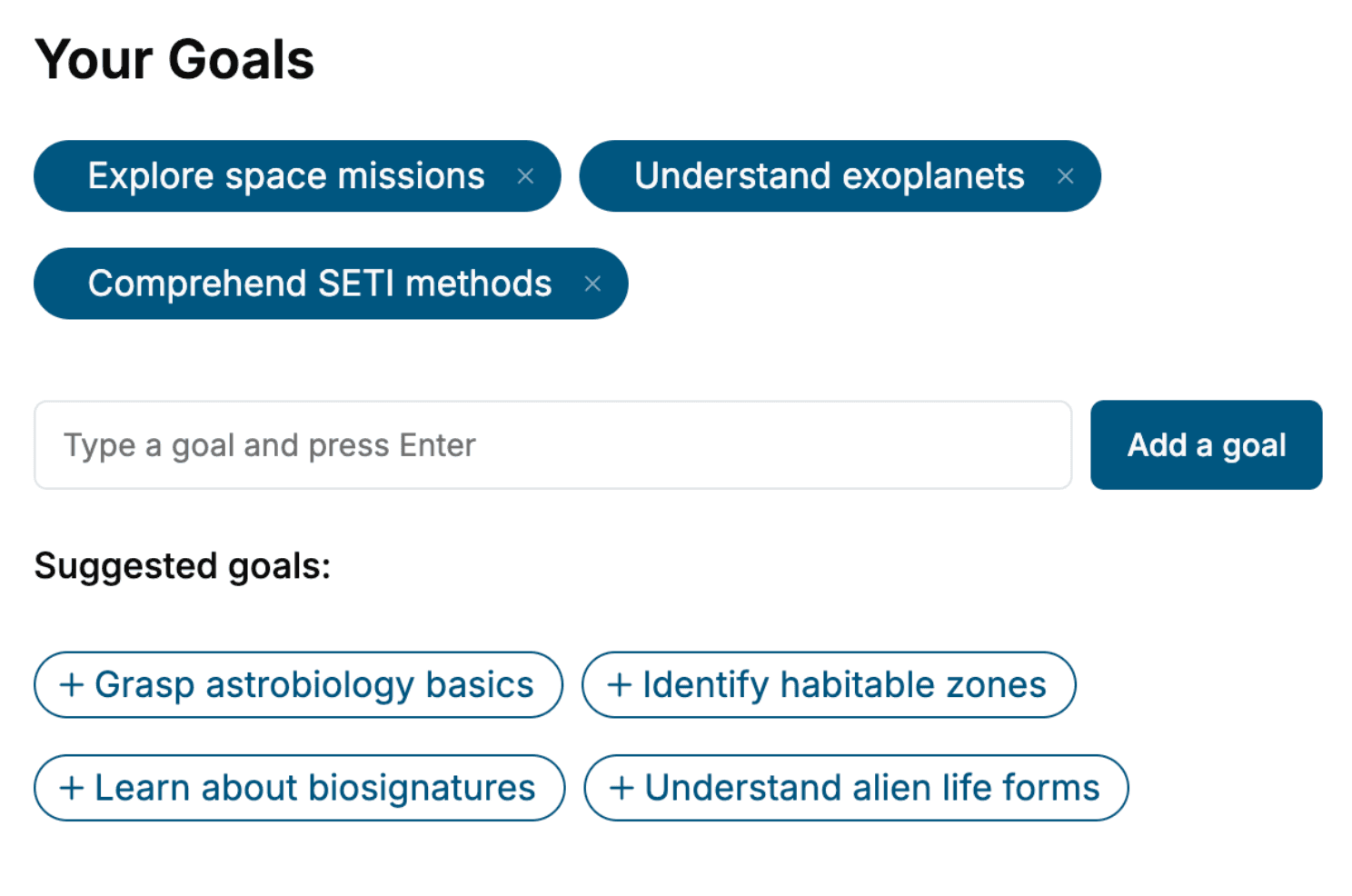
Specify your goals and choose sub-topics to include
- 3. Get your tailored book
Your book is ready in 10 minutes. Read it online, download as EPUB or PDF, or send to Kindle.

Start from a template

Frequently asked questions
- What is TailoredRead?
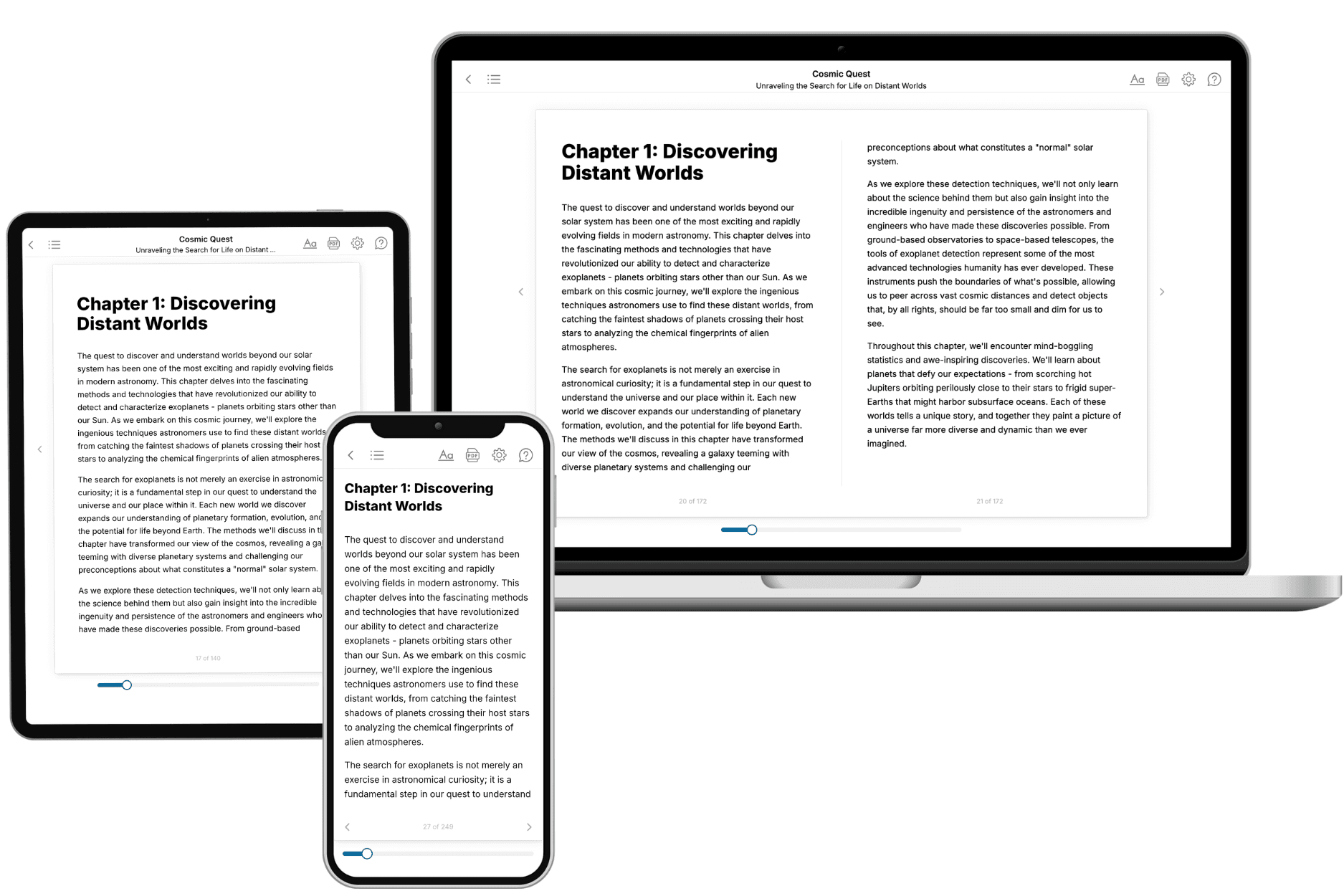
TailoredRead creates complete, full-length nonfiction ebooks, written specifically for you. Tell us what you want to learn and why, and TailoredRead writes you a complete ebook on it, with charts, tables, and diagrams throughout. Read it online, on Kindle, or on any e-reader, or download it as a PDF or EPUB. Every book is written fresh the day you order it.
- How is the book tailored to me?
Before anything is written, you answer a few short questions about your goals, your background, and the topics you care about. Your book is then planned around your answers: written at your level, focused on your goals, and covering the topics you chose, instead of the one-size-fits-all book a store sells everyone.
- Will it read like generic AI content?
No. Your book isn't a chat transcript: it's planned chapter by chapter before a single word is written, told in a clear book voice, and explains ideas visually with charts, tables, and diagrams. After writing, every book goes through an editorial pass that polishes chapters so the book reads consistent from start to finish. Judge for yourself: browse thousands of sample books on our Explore Books page.
- How accurate is the content?
Our AI first checks whether your subject needs live research. Niche and fast-moving subjects are researched before writing, and the book plan and chapters are grounded in what it finds. After writing, every book goes through a quality pass that checks its facts and consistency, and researched books list their sources in a Notes section at the back.
- How long is the book?
You choose the length: Comprehensive (250-300 pages), Detailed (150-200 pages), Essential (70-100 pages), or Short (30-50 pages).
- Does the book include visuals?
Yes. Every book includes charts, tables, and diagrams: timelines, checklists, step-by-step guides, decision trees, comparison tables, matrices, and bar charts. A typical book includes dozens of these visual elements.
- Can I read it on Kindle? What formats can I download?
Yes. Every book can be read in our online reader or downloaded as a PDF or EPUB. The EPUB can be opened with Kindle, Apple Books, Kobo, and any e-reader. The Commercial and Author licenses also include an editable Word (DOCX) and Markdown download.
- How much does it cost?
About the price of a regular ebook. The exact price depends on your book's length and complexity, from $2 for the shortest books to $35 for the most comprehensive, and it's shown when you review your book, before you commit to anything. Each book is a one-time purchase, yours to keep, no subscription. Licenses that let you share, teach, or publish your book range from $35.99 to $49.99.
- Can I preview the book before purchasing?
Before you pay, you'll see what your book will cover: the title, a detailed description, the estimated length, and the complete chapter-by-chapter table of contents, so you know what you're getting before you decide. The full text itself is written after you purchase.
- How long does it take to create a book?
About 10 minutes. You can start reading the opening chapters while the rest is still being written.