Equal Protection Under Law
Understanding the Philosophical Foundations of Justice and Rights
Discover the philosophical foundations that make equal protection one of the most powerful yet complex principles in modern society.
207 pages10 chaptersJul 23, 2026Civil Rights Law
About this book
This book explores how the concept of equality evolved from ancient philosophical debates to become a cornerstone of contemporary justice systems. You'll examine the tension between treating everyone identically and addressing real-world inequalities, understand how courts and societies determine when differential treatment is justified, and explore the distinction between formal and substantive equality. Through clear analysis of landmark cases, philosophical arguments, and practical examples, you'll gain insight into how equal protection principles shape everything from criminal justice to employment law. Whether you're studying philosophy, law, or simply seeking to understand the principles underlying fair treatment in society, this book provides the intellectual framework needed to engage critically with one of democracy's most essential commitments.
Table of contents
- IntroductionWhy Equal Protection Matters Today, What This Book Covers, How to Engage with This MaterialRead below
- Chapter 1: The Philosophical Origins of EqualityEquality in Ancient Philosophy, Natural Rights and Human Dignity, Enlightenment Thinkers and Universal Equality
- Chapter 2: From Philosophy to LawConstitutional Frameworks and Equal Protection, How Equal Protection Evolved in Legal Systems, Global Approaches to Equal Protection
- Chapter 3: Formal vs. Substantive EqualityUnderstanding Formal Equality, The Case for Substantive Equality, Tensions and Trade-offs Between the Two Approaches
- Chapter 4: Defining Discrimination and Protected ClassesWhat Constitutes Discrimination, Protected Categories and Their Justifications, Emerging Categories and Evolving Protections
- Chapter 5: Rational Basis and Scrutiny StandardsThe Rational Basis Test, Heightened Scrutiny and Strict Scrutiny, How Courts Apply These Standards in Practice
- Chapter 6: Equal Protection in Criminal JusticeEqual Access to Justice, Sentencing Disparities and Fairness, Addressing Systemic Inequalities in Criminal Systems
- Chapter 7: Equal Protection in Civil RightsEmployment and Economic Opportunity, Education and Equal Access, Housing and Public Accommodations
- Chapter 8: Affirmative Action and Remedial JusticeThe Affirmative Action Debate, Remedying Past Discrimination, Forward-Looking Approaches to Equality
- Chapter 9: Structural Inequality and Systemic BarriersMoving Beyond Individual Acts of Discrimination, Recognizing Institutional Patterns and Structures, Intersectionality and Multiple Forms of Disadvantage
- Chapter 10: Challenges and Limitations of Equal ProtectionThe Gap Between Theory and Implementation, Competing Values and Difficult Trade-offs, Emerging Challenges in a Changing World
- ConclusionSynthesizing the Principles, Equal Protection as an Ongoing Commitment
- Further Reading and Resources
Introduction
Two people walk into the same courthouse on the same day, charged with the same offense, represented by lawyers of roughly equal competence, and facing the same judge. One walks out with probation. The other receives a five-year sentence. No additional facts explain the gap. Scenarios like this one are not hypothetical curiosities. They are documented patterns that have driven legal scholars, philosophers, and ordinary citizens to ask a deceptively simple question: what does it actually mean to treat people equally under the law? That question sits at the heart of this book.
Equal Protection is one of those phrases that sounds self-evident until you try to define it precisely. Most people agree, at least in principle, that the law should not treat one person better or worse than another based on arbitrary characteristics. But agreement on the principle dissolves quickly when the details arrive. Should a law that applies identically to everyone be considered fair, even when its effects fall unevenly on different groups? Should the state take active steps to correct historical disadvantages, or does doing so create new forms of unequal treatment? These are not merely academic puzzles. They are live disputes in courtrooms, legislatures, and public debates happening right now.
This book approaches Equal Protection as both a philosophical concept and a practical framework. The philosophical side asks foundational questions about Human Dignity, fairness, and what we owe each other as members of a shared society. The practical side examines how courts, governments, and institutions have tried to translate those philosophical commitments into workable rules. Neither side makes full sense without the other. A purely abstract discussion of equality can float free of the real harms that unequal treatment causes. A purely technical survey of legal doctrine can lose sight of the moral reasoning that gives the doctrine its purpose and its limits.
The chapters ahead move through both dimensions in sequence. They trace the idea of equality from its earliest philosophical expressions through its codification in constitutional and legal systems, then examine the specific domains where Equal Protection is tested most severely: criminal justice, employment, education, housing, and the contested terrain of Affirmative Action. Along the way, the book confronts the harder questions that tidy summaries tend to skip, including what happens when equality for one group appears to conflict with equality for another, and what tools remain available when formal legal protections fail to produce genuinely equal outcomes.
Why Equal Protection Matters Today
Equal Protection is not a settled achievement. It is an ongoing argument. Across democratic societies, the question of who deserves equal treatment, and what that treatment actually requires, remains genuinely contested. Courts issue conflicting rulings. Legislatures pass laws that some citizens read as protective and others read as discriminatory. Social movements organize around claims that existing protections are either insufficient or have gone too far. Understanding the philosophical foundations of Equal Protection does not resolve these disputes, but it does make it possible to engage with them more clearly and honestly.
Consider a few concrete pressure points that have defined recent public debate. In the United States, the Supreme Court's decisions on race-conscious university admissions have forced a direct confrontation between two competing visions of equality: one that insists the Constitution must be color-blind, and one that argues genuine equality sometimes requires acknowledging race explicitly.[1] Neither position is obviously wrong. Both draw on real philosophical traditions with serious intellectual pedigrees. Without understanding those traditions, the debate looks like a simple clash of political preferences rather than a genuine disagreement about the meaning of a foundational principle.
Employment law presents a parallel set of tensions. Title VII of the Civil Rights Act prohibits discrimination based on race, color, religion, sex, and national origin. Yet decades after its passage, measurable wage gaps and hiring disparities persist across multiple demographic groups. The persistence of these gaps raises a question that formal legal equality cannot easily answer: is a law doing its job if it prohibits discriminatory intent but leaves discriminatory outcomes largely intact? The concept of Disparate Impact, which holds that neutral-seeming policies can still constitute unlawful discrimination when they produce unequal effects, represents one attempt to bridge that gap. It also generates fierce disagreement about whether outcomes alone can establish wrongdoing.
Technology has added new urgency to these old debates. Algorithmic systems now make or influence decisions about who receives a loan, who gets flagged for additional screening at an airport, and who is recommended for parole. These systems can reproduce and amplify historical patterns of discrimination without any human actor consciously intending to discriminate. The concept of Algorithmic Discrimination is still being worked out in courts and regulatory agencies, but it already illustrates a broader truth: the challenges facing Equal Protection are not static. Each generation inherits the unresolved tensions of the last and adds new ones of its own.
There is also a global dimension that purely domestic legal analysis tends to understate. Equal Protection principles appear in constitutional documents and human rights frameworks across dozens of countries, but they take different forms and carry different weights depending on the legal tradition, the political context, and the specific history of each society. Comparative Constitutional Law reveals that there is no single correct model for translating the philosophical commitment to equality into legal rules. Different societies have made different choices, and examining those choices side by side sharpens understanding of what is genuinely universal in the concept and what is contingent on particular historical circumstances.
Finally, Equal Protection matters because the stakes are not abstract. When the principle fails, real people bear the cost. They lose jobs they were qualified for, receive harsher sentences than similarly situated defendants, are denied housing in neighborhoods they could afford, or are excluded from educational opportunities that would have changed the trajectory of their lives. Keeping those concrete harms in view is essential to understanding why the philosophical debates covered in this book are worth having in the first place.
Equal Protection is not a destination that societies arrive at and then maintain without effort. It is a standard that must be actively applied, reinterpreted, and defended as circumstances change and new forms of inequality emerge.
Understanding the philosophical foundations of Equal Protection is not a luxury reserved for legal scholars. It is a practical necessity for anyone who wants to participate meaningfully in the civic conversations that shape how these principles are applied. The concepts introduced in this book appear in newspaper headlines, court opinions, policy debates, and everyday arguments about fairness. Engaging with them seriously makes those conversations more productive and less prone to the kind of talking-past-each-other that happens when people use the same words to mean very different things.
What This Book Covers
The book is organized to build understanding progressively. Each chapter introduces concepts that the following chapters assume and extend. Starting with philosophical foundations and moving toward practical applications is not just a pedagogical choice. It reflects the actual relationship between the ideas. Legal doctrines like the Tiered Scrutiny Framework or the Rational Basis Test did not emerge from nowhere. They are attempts to operationalize philosophical commitments about Human Dignity, fairness, and the proper limits of government power. Understanding those commitments makes the doctrines more intelligible and their limitations more visible.
The opening chapters examine the philosophical origins of equality as a concept. Ancient Greek and Roman thinkers grappled with questions about natural hierarchy and the basis of just treatment long before modern legal systems existed. The tradition of Natural Rights, developed most fully in the seventeenth and eighteenth centuries, provided the philosophical vocabulary that later constitutional framers drew on directly. Enlightenment Philosophy of Equality, associated with thinkers like John Locke, Jean-Jacques Rousseau, and Immanuel Kant, established the idea that all human beings possess inherent worth that the state is obligated to respect. These are not merely historical curiosities. They are the conceptual building blocks of every Equal Protection argument made in a courtroom today.
The middle chapters move from philosophy to law. They examine how the Fourteenth Amendment to the U.S. Constitution translated philosophical commitments into enforceable legal obligations, and how Comparative Constitutional Law reveals the variety of approaches that different legal systems have taken to the same underlying challenge. A central focus of these chapters is the distinction between Formal Equality and Substantive Equality, which is arguably the most important conceptual divide in the entire field. Formal Equality holds that the law should treat everyone identically, without regard to their circumstances or group membership. Substantive Equality holds that genuinely equal treatment sometimes requires taking those circumstances and memberships into account. The tension between these two visions runs through virtually every major Equal Protection controversy.
The chapters on Discrimination and Protected Classes address the legal mechanics of how Equal Protection works in practice. They explain:
- How courts and legislatures define what counts as discrimination
- Why certain groups receive heightened legal protection while others do not
- What criteria, including the Immutability Criterion and the concept of Discrete and Insular Minorities, have been used to justify extending or withholding protected status
- How the category of Protected Classes has expanded over time and where its boundaries remain contested
The Tiered Scrutiny Framework, covered in its own dedicated chapter, is the primary tool that U.S. courts use to evaluate whether a law or government action violates Equal Protection. The framework distinguishes between the Rational Basis Test, which applies to most laws and is relatively easy for the government to satisfy, and Strict Scrutiny, which applies to laws that classify people by race or other suspect categories and is very difficult to survive. Intermediate Scrutiny occupies the middle ground, applying to classifications based on sex and a few other categories. Understanding how courts decide which level of scrutiny to apply, and why, is essential to following any serious Equal Protection analysis.
The applied chapters examine Equal Protection in specific domains. Criminal justice receives extended attention because it is where the gap between the formal promise of equal treatment and the reality of unequal outcomes is most stark and most consequential. Sentencing Disparities, Selective Prosecution, and the role of Implicit Bias in policing and adjudication all illustrate the ways that formally neutral systems can produce deeply unequal results. The civil rights chapters cover Employment Discrimination Law, including Title VII and Title IX, as well as the Fair Housing Act and the landmark ruling in Brown v. Board of Education, which remains the most cited Equal Protection decision in American legal history.
Affirmative Action receives its own chapter because it sits at the intersection of nearly every major tension in Equal Protection theory. It raises questions about Remedial Justice (whether the state can and should correct the effects of past discrimination), the Diversity Rationale (whether diversity itself is a compelling government interest that justifies race-conscious policies), and the debate between Color-Blindness vs. Color-Consciousness as competing constitutional visions. The chapter on Structural Inequality and Intersectionality extends the analysis beyond individual acts of discrimination to examine how institutions and systems can perpetuate disadvantage even in the absence of identifiable discriminatory intent. The concept of Intersectionality, developed by legal scholar Kimberlé Crenshaw, is introduced here as a framework for understanding how overlapping identities can compound disadvantage in ways that single-axis legal analysis misses.[2]
The final chapter confronts the Implementation Gap between Equal Protection's formal guarantees and its real-world effects, as well as the Limits of Judicial Enforcement as a mechanism for achieving genuine equality. It also addresses the emerging challenges posed by technology, globalization, and shifting political contexts. The conclusion does not offer a tidy resolution to the tensions the book has traced. Instead, it frames Equal Protection as an ongoing commitment that requires continuous engagement rather than a problem that can be solved once and set aside.
How to Engage with This Material
This book is written for readers who bring some familiarity with philosophy and law but do not necessarily have formal training in either field. The goal is to make rigorous ideas accessible without oversimplifying them. That means some concepts will require careful reading and, in some cases, re-reading. The philosophical arguments in the early chapters are foundational to everything that follows, so spending time with them pays dividends later. If a concept feels abstract on first encounter, the applied chapters will usually provide concrete examples that make it click.
One of the most useful habits to develop while reading is distinguishing between descriptive and normative claims. A descriptive claim says what is the case: courts currently apply Strict Scrutiny to racial classifications. A normative claim says what ought to be the case: courts should apply Strict Scrutiny to racial classifications. Much of the confusion in public debates about Equal Protection comes from treating descriptive claims as if they settled normative questions, or from asserting normative positions as if they were simply factual observations. The book tries to keep this distinction clear, and developing the habit of noticing it will make the arguments easier to evaluate.
A second useful habit is tracking the level of abstraction at which an argument operates. Equal Protection debates happen simultaneously at several levels:
- Philosophical level: What does equality require in principle, and why does Human Dignity ground a claim to equal treatment?
- Constitutional level: What does the Fourteenth Amendment actually prohibit, and how should courts interpret its text and history?
- Doctrinal level: How do specific legal tests like the Rational Basis Test or Intermediate Scrutiny work in practice?
- Policy level: What laws and institutional practices best advance equal treatment in specific domains like employment or education?
Arguments that are compelling at one level do not automatically transfer to another. A philosophical argument for Substantive Equality does not by itself establish that any particular affirmative action policy is constitutionally required or practically wise. Keeping track of which level a given argument is operating at prevents a great deal of confusion.
The book also asks you to hold competing positions seriously rather than dismissing the ones you find initially less persuasive. The debate between Formal Equality and Substantive Equality, for example, is not a debate between people who care about fairness and people who do not. Both positions reflect genuine moral commitments, and both face genuine objections. The same is true of the debate between Color-Blindness vs. Color-Consciousness in constitutional interpretation. Engaging honestly with the strongest version of a position you disagree with is not just an intellectual courtesy. It is the only way to understand why the disagreement persists and what it would actually take to resolve it.
Where the book cites legal cases, the goal is not to provide a comprehensive legal education but to use specific decisions as windows into broader philosophical and doctrinal questions. Brown v. Board of Education matters here not primarily as a historical milestone but as an illustration of how courts reason about the relationship between formal legal equality and the social reality of segregation. Similarly, discussions of Title VII or the Fair Housing Act are meant to illuminate the conceptual architecture of anti-discrimination law, not to serve as a practitioner's guide to filing a claim.
Some readers will come to this material with strong prior views about specific controversies, whether about Affirmative Action, criminal justice reform, or the proper scope of anti-discrimination law. Those prior views are not a problem. They are actually useful, because they give you a stake in the arguments and a reason to test them carefully. What the book asks is that you hold those views provisionally while working through the material, remaining open to the possibility that the philosophical and legal analysis might complicate, refine, or occasionally challenge what you already believe. That kind of productive discomfort is a sign that genuine learning is happening.
Finally, the concepts in this book connect to each other in ways that are not always obvious on first reading. The Immutability Criterion introduced in the chapter on Protected Classes reappears in the discussion of Affirmative Action. The distinction between Formal Equality and Substantive Equality runs through the criminal justice chapter as much as it does the chapter explicitly devoted to it. Intersectionality, introduced in the chapter on Structural Inequality, casts a retrospective light on the earlier discussions of discrimination and protected categories. Reading with an eye toward these connections will produce a richer understanding than treating each chapter as a self-contained unit.
Equal Protection is, at its deepest level, a question about what kind of society we want to live in and what we owe each other as members of it. That question does not have a final answer. But it has better and worse answers, and distinguishing between them requires exactly the kind of careful, philosophically informed analysis that this book is designed to support. The argument begins with the oldest question in the tradition: what did ancient thinkers actually mean when they said that human beings are, in some morally relevant sense, equal?
This is the end of the free sample. The full book has 10 chapters.
Want this book written for you?
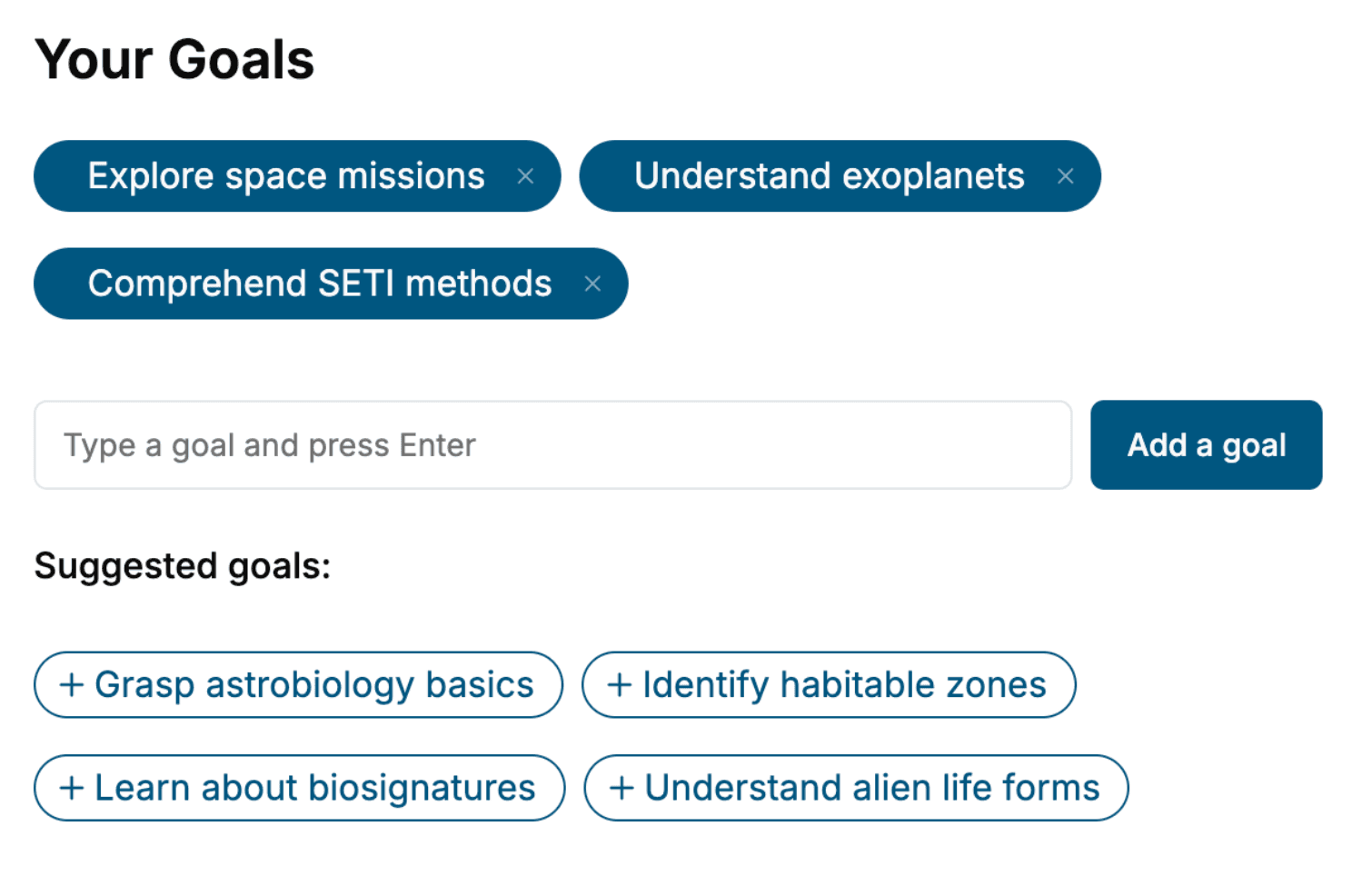
Tell us your goals and background, and get your own version of this book, tailored by AI to you.


Benefits of AI-tailored books
- Read one book, not ten:
- all the Civil Rights Law knowledge you need, gathered into a single book.
- Save days of learning:
- tell us your goals, choose your topics, and the whole book is built around them.
- Learn effortlessly:
- Civil Rights Law book written for your specific background and expertise.
- Understand at a glance:
- includes charts, tables, timelines, checklists, decision trees, and more.
- Stay current:
- written the day you order it, not years ago.
- Trust what you read:
- every book is checked for accuracy, with real research when your subject needs it.
Create your unique book in 3 steps
- 1. Select your focus
Select the focus of your Civil Rights Law book and share your background
- 2. Personalize your book
Specify your goals and choose sub-topics to include
- 3. Get your tailored book
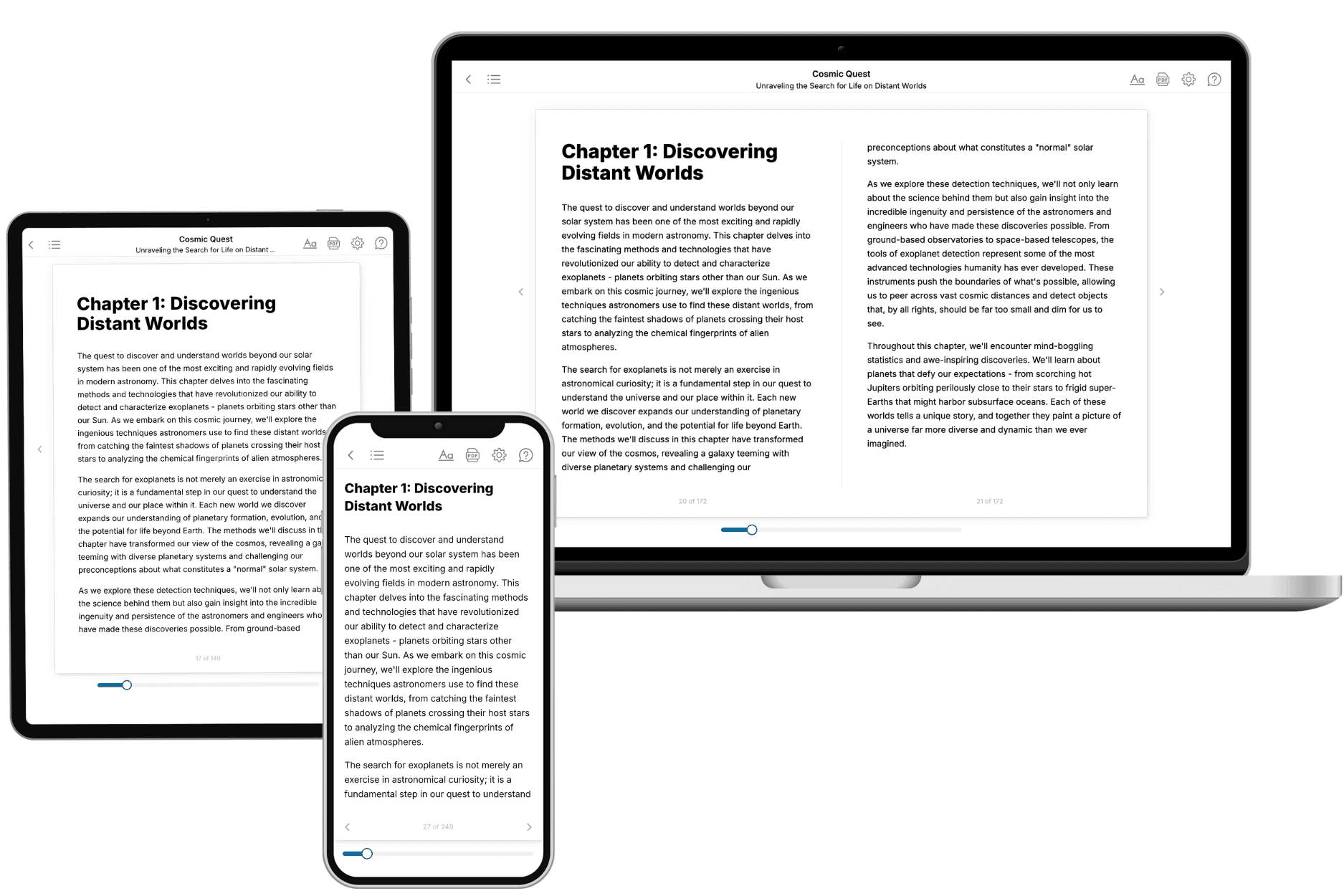
Your book is ready in 10 minutes. Read it online, download as EPUB or PDF, or send to Kindle.

Frequently asked questions
- What is TailoredRead?
TailoredRead creates complete, full-length nonfiction ebooks, written specifically for you. Tell us what you want to learn and why, and TailoredRead writes you a complete ebook on it, with charts, tables, and diagrams throughout. Read it online, on Kindle, or on any e-reader, or download it as a PDF or EPUB. Every book is written fresh the day you order it.
- How is the book tailored to me?
Before anything is written, you answer a few short questions about your goals, your background, and the topics you care about. Your book is then planned around your answers: written at your level, focused on your goals, and covering the topics you chose, instead of the one-size-fits-all book a store sells everyone.
- Will it read like generic AI content?
No. Your book isn't a chat transcript: it's planned chapter by chapter before a single word is written, told in a clear book voice, and explains ideas visually with charts, tables, and diagrams. After writing, every book goes through an editorial pass that polishes chapters so the book reads consistent from start to finish. Judge for yourself: browse thousands of sample books on our Explore Books page.
- How accurate is the content?
Our AI first checks whether your subject needs live research. Niche and fast-moving subjects are researched before writing, and the book plan and chapters are grounded in what it finds. After writing, every book goes through a quality pass that checks its facts and consistency, and researched books list their sources in a Notes section at the back.
- How long is the book?
You choose the length: Comprehensive (250-300 pages), Detailed (150-200 pages), Essential (70-100 pages), or Short (30-50 pages).
- Does the book include visuals?
Yes. Every book includes charts, tables, and diagrams: timelines, checklists, step-by-step guides, decision trees, comparison tables, matrices, and bar charts. A typical book includes dozens of these visual elements.
- Can I read it on Kindle? What formats can I download?
Yes. Every book can be read in our online reader or downloaded as a PDF or EPUB. The EPUB can be opened with Kindle, Apple Books, Kobo, and any e-reader. The Commercial and Author licenses also include an editable Word (DOCX) and Markdown download.
- How much does it cost?
About the price of a regular ebook. The exact price depends on your book's length and complexity, from $2 for the shortest books to $35 for the most comprehensive, and it's shown when you review your book, before you commit to anything. Each book is a one-time purchase, yours to keep, no subscription. Licenses that let you share, teach, or publish your book range from $35.99 to $49.99.
- Can I preview the book before purchasing?
Before you pay, you'll see what your book will cover: the title, a detailed description, the estimated length, and the complete chapter-by-chapter table of contents, so you know what you're getting before you decide. The full text itself is written after you purchase.
- How long does it take to create a book?
About 10 minutes. You can start reading the opening chapters while the rest is still being written.