Law History Books
Explore tailored Law History books created by our AI
The Roman Law Blueprint
How Ancient Legal Principles Still Shape Modern Justice
What if the legal system protecting your rights today was built on foundations laid nearly two thousand years ago? Ancient Roman law wasn't just a historical curiosity—it's the blueprint underlying modern justice systems across the globe. This book explores how Roman jurists developed revolutionary concepts like written legal codes, property rights, and the presumption of innocence that transformed society. You'll discover how the Romans created legal frameworks flexible enough to govern an empire spanning three continents, and how those same principles guide courtrooms today. From the earliest laws of the Kingdom through the sophisticated legal reasoning of the Empire, you'll trace the evolution of ideas that shaped Western civilization. Whether you're fascinated by history, interested in how law works, or curious about the origins of justice itself, this exploration reveals the timeless wisdom embedded in Roman legal thought and its profound influence on the world we inhabit.
What does it really mean when the Constitution promises that no person shall be deprived of life, liberty, or property without due process of law? This question has shaped American jurisprudence for over 150 years, yet many citizens remain unclear about how this fundamental protection actually works in practice. This book demystifies the Fourteenth Amendment's Due Process Clause, exploring its historical roots in post-Civil War America and tracing its evolution through landmark Supreme Court decisions. You'll discover how due process protections extend far beyond courtroom procedures to encompass substantive rights affecting everything from criminal justice to personal freedoms. Through clear explanations of complex constitutional concepts and real-world examples, you'll gain the knowledge to understand how due process shapes American law, influences political debates, and protects individual rights in an ever-changing society. Whether you're a student, professional, or engaged citizen, this book provides the essential framework for understanding one of the Constitution's most powerful and contested provisions.
Master the constitutional framework that governs American law and politics by understanding its historical origins, foundational principles, and evolution through landmark judicial decisions. This comprehensive guide traces the Constitution from its 1787 origins through contemporary jurisprudence, examining the philosophical debates that shaped its structure, the amendment process that has transformed it, and the Supreme Court decisions that have defined its meaning. You'll explore how federalism balances national and state power, how the separation of powers constrains executive authority, and how judicial interpretation has adapted constitutional principles to modern circumstances. By analyzing the Federalist Papers, studying pivotal Supreme Court cases, and examining the political conflicts that have driven constitutional change, you'll develop the analytical framework needed to understand current legal debates and constitutional controversies. Whether you're seeking to grasp the legal foundations of American governance or connect historical constitutional principles to today's political landscape, this guide provides the focused, evidence-based knowledge you need to engage confidently with constitutional law and history.
The Reconstruction Amendments
How the 13th, 14th, and 15th Amendments Reshaped America
Discover how three constitutional amendments fundamentally reshaped the American legal system and the nation's understanding of freedom, citizenship, and equality. The 13th, 14th, and 15th Amendments emerged from the Civil War's ashes to abolish slavery, guarantee citizenship rights, and protect voting access—yet their implementation proved far more complex than their words suggest. This book traces the political battles, constitutional interpretations, and historical consequences of these transformative amendments. You'll explore the fierce debates between Republicans and Democrats, the creative resistance of Southern states through Black Codes and violence, and the Supreme Court decisions that narrowed the amendments' protections. From Reconstruction's promise to Jim Crow's betrayal, from the Civil Rights Movement's revival to modern constitutional controversies, you'll understand how these amendments continue to shape American law and society. Whether you're studying constitutional history, exploring civil rights evolution, or understanding contemporary legal debates, this comprehensive guide illuminates the amendments' original intent, their contested meanings, and their enduring relevance to American democracy.
The Presidential Pardon
Understanding Power, Justice, and Mercy in American Politics
Discover how one of America's most powerful and controversial executive powers shapes justice, politics, and the presidency itself. Presidential pardons represent an extraordinary authority—the ability to erase criminal convictions and overturn judicial decisions with a single signature. Yet this power remains poorly understood by most Americans, shrouded in mystery and often surrounded by scandal. This book demystifies presidential pardons by exploring their constitutional origins, examining landmark historical cases, and analyzing how different presidents have wielded this authority. You'll understand why some pardons spark national outrage while others go unnoticed, how political calculations influence mercy decisions, and what these choices reveal about American justice and governance. Through compelling case studies and clear analysis, you'll gain the knowledge to evaluate pardon decisions critically and understand their profound implications for the rule of law, executive power, and democratic accountability.
Imagine understanding the foundational document that protects your freedom to speak, worship, and live without fear of government tyranny. The Bill of Rights stands as America's most vital promise—yet many people know only fragments of what these ten amendments actually guarantee. This book takes you on a journey through the revolutionary thinking that created these protections, the historical struggles that made them necessary, and the ongoing debates that define their meaning today. You'll discover how the Founders' experiences with oppression shaped each amendment, why James Madison fought to include them in the Constitution, and how courts continue to interpret these rights in modern cases. From the First Amendment's protection of free speech to the Tenth Amendment's reservation of powers to the states, each chapter illuminates the real-world impact of these amendments on your life. Whether you're a history enthusiast, a civics student, or simply curious about the rights you exercise daily, this book provides the clarity and context you need to understand why the Bill of Rights remains America's most powerful shield against tyranny.
Discover how a single law transformed American society and established the legal framework that continues to protect civil rights today. The Civil Rights Act of 1964 stands as one of the most consequential pieces of legislation in U.S. history, yet many people don't fully understand what it accomplished or why it mattered so much. This book takes you through the dramatic events, key figures, and political battles that led to its passage, then explores how it fundamentally changed employment, education, and public life across the nation. You'll learn about the resistance it faced, the creative ways people found to work around it, and how courts and activists fought to make its promises real. Whether you're studying American history, interested in how social change happens, or want to understand the legal foundations of modern civil rights protections, this comprehensive guide provides the context and insights you need to grasp this pivotal moment in American history.
Equal Protection Under Law
How the 14th Amendment Shaped American Civil Rights
Understand how a single constitutional phrase has become the foundation of American civil rights protections. The Equal Protection Clause of the 14th Amendment is one of the most consequential yet misunderstood provisions in the Constitution. This book traces its journey from a Reconstruction-era guarantee to the powerful legal tool that dismantled Jim Crow segregation, expanded rights for women and minorities, and continues shaping debates about fairness today. You'll explore landmark Supreme Court cases, learn how courts determine what "equal protection" actually means, and discover why this clause remains central to contemporary civil rights struggles. Whether you're studying history, law, or simply want to understand the constitutional backbone of American equality, this accessible guide illuminates how legal principles translate into real-world protections and why the fight for equal protection remains unfinished.
Discover how Spain's colonial conquest of Mexico created legal, social, and cultural systems that fundamentally shaped a nation. This exploration examines Mexico's first century of colonialism through the lens of law, power, and resistance—revealing how indigenous peoples, women, and mestizos navigated and challenged colonial structures. You'll trace the evolution of the caste system that legally classified people by race and ethnicity, explore how indigenous communities maintained agency through legal petitions and spiritual resistance, and understand how women leveraged convents as centers of intellectual and economic power. The book examines the Inquisition's dual role as religious enforcer and political tool, analyzes how religious syncretism preserved indigenous cosmologies within Catholic frameworks, and investigates the viceregal court's complex patronage networks. With focus on Durango's frontier dynamics and the first transformative hundred years of Spanish rule, this work connects colonial foundations to contemporary Mexican identity, legal traditions, and ongoing struggles for indigenous rights and social justice.
Imagine understanding the full power and scope of your constitutional rights—knowing exactly what you can say, write, and do without government interference, and recognizing when those freedoms are under threat. This book traces the First Amendment from its origins through pivotal moments in American history, showing how ordinary citizens used these rights to challenge injustice and reshape society. You'll explore landmark Supreme Court decisions that defined free speech boundaries, discover how the Civil Rights Movement weaponized assembly and petition, and learn why protecting unpopular speech matters for everyone. Whether you're concerned about censorship, curious about constitutional law, or seeking to understand how social change happens, this book provides the historical context and legal clarity you need. By the end, you'll see the First Amendment not as abstract principle but as a living, breathing right that continues to evolve with American society.
Black Codes
The Laws That Built American Slavery and Their Lasting Legacy
Many assume slavery in America developed gradually and naturally from economic necessity. The reality is far more deliberate. Black Codes were systematic, written laws that transformed slavery from a temporary labor arrangement into a permanent, race-based institution that would define American society for centuries. These weren't informal customs—they were carefully constructed legal frameworks that controlled every aspect of Black life, from movement and labor to family relationships and property rights. This book traces how colonial legislatures, beginning in 17th-century Virginia, methodically crafted these codes to maximize control and profit while minimizing the humanity of enslaved people. You'll discover how these laws spread across colonies, how they evolved over time, and how they created the legal foundation for both slavery and Jim Crow. More importantly, you'll understand how the mechanisms established by Black Codes continue to shape American institutions today. By examining the specific language, enforcement, and resistance to these laws, you'll gain insight into how legal systems have been weaponized to create racial inequality—and why understanding this history is crucial for addressing systemic racism in the present.
How Courts Work
A Practical Guide to Understanding Judicial Systems and Legal Processes
You'll discover how judicial systems function as the backbone of democratic societies, protecting rights and resolving disputes through structured legal processes. This guide walks you through the architecture of courts—from trial courts to appellate bodies—and explains how judges, lawyers, juries, and other participants work within established procedures to deliver justice. You'll learn why the separation of powers matters, how different legal traditions shape court operations, and what happens when cases move through the system. By examining real-world examples and exploring the principles underlying judicial decision-making, you'll gain insight into how courts interpret laws, balance competing interests, and maintain public trust. Whether you're curious about a specific case, interested in legal reform, or simply want to understand how your country's courts operate, this book provides the practical knowledge needed to navigate and appreciate the judicial systems that shape our societies.
The Constitutional Convention
How America's Founders Designed a Nation in 1787
The Constitutional Convention of 1787 stands as one of history's most consequential moments, yet many people struggle to understand what actually happened in Philadelphia that summer. You may know the Constitution exists, but do you understand how it was created, why the Founders made the choices they did, or what fierce debates nearly derailed the entire project? This book takes you inside the Convention hall, where delegates from twelve states grappled with seemingly impossible questions: How should representation work? What powers should the president have? How could a nation founded on liberty accommodate slavery? Through vivid storytelling and clear analysis, you'll discover how compromises—some brilliant, some troubling—shaped the document that still governs America today. Whether you're preparing for a history exam, seeking deeper civic understanding, or simply curious about your nation's origins, this book reveals the human drama, political tensions, and practical problem-solving that created the framework for American democracy.
The Foundations of Justice
Understanding the Philosophy Behind Law and Legal Systems
What makes a law legitimate? Is law simply a tool for maintaining order, or does it embody deeper principles of justice and morality? These questions sit at the heart of philosophy of law—a field that examines the foundations, nature, and purpose of legal systems. This book guides you through the essential philosophical frameworks that shape how we understand law, justice, and rights. You'll explore competing theories about what law fundamentally is, examine how different cultures and traditions justify their legal systems, and discover how philosophical thinking can help you critically evaluate the laws that govern society. Whether you're interested in understanding legal theory, questioning the legitimacy of existing laws, or simply deepening your philosophical knowledge, this book provides the conceptual tools to think more clearly about one of humanity's most important institutions. By the end, you'll see law not as arbitrary rules, but as a reflection of profound philosophical choices about how we should live together.
The Northwest Ordinance of 1787
How America's Forgotten Law Shaped a Nation
Many Americans have heard of the Constitution, but few realize that one of the most consequential laws in U.S. history was passed just months before it was drafted. The Northwest Ordinance of 1787 solved a problem that threatened to tear the young nation apart: how to govern and settle the vast western territories without creating a colonial empire. This book reveals how a relatively obscure law became the blueprint for American expansion and shaped the nation's fundamental character. You'll discover how the Ordinance's anti-slavery clause created the geographic divide that would lead to the Civil War, how it established the principle that new states would be equals rather than subordinates, and how it proved the Articles of Confederation could work—influencing the decision to write the Constitution itself. Through clear analysis and compelling historical narrative, this book shows why understanding the Northwest Ordinance is essential to understanding America's founding, westward expansion, and the ideological conflicts that defined the nineteenth century.
Andrew Johnson's impeachment stands as one of the most consequential constitutional crises in American history, yet many people misunderstand its true causes and significance. The central challenge is separating the personal animosity between Johnson and the Republican Congress from the genuine constitutional questions at stake. This book cuts through the political theater to reveal why Johnson was impeached, how the trial unfolded, and why his narrow acquittal fundamentally shaped American democracy. You'll discover how the clash between a stubborn president and a determined Congress over Reconstruction policy created the first presidential impeachment, how the controversial Tenure of Office Act became the legal battleground, and why Johnson's survival actually represented a defeat for his political agenda. By examining the trial's key moments, the senators who cast deciding votes, and the constitutional principles in dispute, you'll gain insight into how this 19th-century crisis established precedents that still influence presidential power today.
The Founding Architects
How Hamilton, Madison, and Jay Built America's Foundation
What if the American Revolution had produced three different leaders with three competing visions for the nation's future? That's exactly what happened with Alexander Hamilton, James Madison, and John Jay—three brilliant architects whose ideas clashed, merged, and ultimately shaped the United States we know today. This book explores how these three men navigated the chaos of revolution and nation-building, each bringing unique perspectives on power, economics, and governance. From Hamilton's bold financial innovations to Madison's constitutional genius to Jay's diplomatic acumen, discover how their collaboration on the Federalist Papers and their subsequent conflicts defined American political thought. Their story reveals that the founding of America wasn't predetermined—it was forged through intellectual struggle, strategic compromise, and the determination of men who believed they were building something unprecedented. Whether you're curious about constitutional history or want to understand the roots of modern political debates, this exploration of Hamilton, Madison, and Jay offers essential insights into how America's foundation was truly built.
The Federalist Papers Explained
Understanding the Arguments That Shaped American Democracy
Discover why the Federalist Papers matter far beyond their 18th-century origins. These 85 essays, written to defend the newly proposed Constitution, contain some of the most influential political thinking in American history. You'll explore the brilliant arguments Hamilton, Madison, and Jay crafted to address skeptics' concerns about a strong national government. Through clear explanations and historical context, you'll understand how they tackled fundamental questions: How should power be divided between states and the federal government? What prevents elected officials from becoming tyrants? How can a republic function across a vast territory? These aren't abstract philosophical debates—they directly shaped the government you live under today and continue to influence Supreme Court decisions, congressional debates, and political conflicts. By the end, you'll see how 18th-century wisdom speaks to 21st-century governance challenges and gain deeper insight into why the American system works the way it does.
Discover how a collection of Germanic tribes transformed into one of history's most influential civilizations. This book traces the Anglo-Saxon journey from their initial settlement in post-Roman Britain through their emergence as a dominant European power. You'll explore how these remarkable people built kingdoms, developed sophisticated legal systems, embraced Christianity, and created a cultural legacy that continues to shape the English-speaking world today. Through clear explanations of their social structures, governance systems, religious transformations, and daily life, you'll gain a deep understanding of why the Anglo-Saxon period remains foundational to Western civilization. Whether you're interested in history, governance, or cultural development, this comprehensive guide reveals how ordinary people and extraordinary leaders navigated the challenges of building civilization from the ground up.
Related books you may like:
Many lawyers struggle to confidently apply antitrust principles because they lack a systematic framework for analyzing markets and identifying dominance. Without mastering market definition and concentration analysis, you risk misdiagnosing competitive issues, weakening client arguments, and missing critical legal opportunities. This book provides a comprehensive yet accessible guide to antitrust fundamentals tailored for legal professionals. You'll learn how to define relevant markets using modern methodologies, calculate and interpret market concentration metrics, assess monopoly power with precision, and evaluate market dominance across multiple dimensions. Each concept builds logically from foundational principles to sophisticated analytical techniques, with practical examples drawn from landmark cases and contemporary enforcement actions. By the end, you'll possess the analytical tools and conceptual clarity needed to confidently advise clients, structure arguments, and navigate complex antitrust matters with authority and precision.
Constitutional amendments represent the ultimate expression of democratic will—yet most Americans have little understanding of how they actually happen. The path from idea to ratified amendment is deliberately arduous, requiring supermajority support in Congress and approval from three-fourths of state legislatures. This creates a paradox: amendments are rare precisely because they're meant to be, yet understanding how they succeed—and why most fail—reveals essential truths about American politics, coalition-building, and social change. This guide walks you through the complete amendment process, from proposal mechanisms to state ratification procedures, while analyzing the political strategies that have driven successful campaigns and the missteps that have derailed others. You'll examine historical amendment timelines, study failed attempts to understand what went wrong, and learn the grassroots mobilization tactics, advocacy strategies, and coalition-building approaches that actually move the needle on constitutional change. Whether you're interested in understanding past amendments or evaluating modern proposals, this book provides the analytical framework and practical knowledge to comprehend how America's highest law gets changed.
You'll gain a sophisticated understanding of one of the most powerful yet least understood mechanisms in American democracy. This book takes you beyond the basic civics lesson to explore how constitutional amendments actually happen—and why they so rarely do. You'll discover the strategic calculations, political battles, and social movements that have shaped America's founding document across more than two centuries. Through detailed analysis of both successful and failed amendments, you'll learn to recognize the patterns that determine which proposed changes gain traction and which fade into obscurity. You'll understand how the Founders' original design has been tested, adapted, and sometimes circumvented through formal and informal means. From the Bill of Rights to Prohibition and its repeal, from voting rights expansions to contemporary proposals, you'll see how each amendment reflects the values and conflicts of its era. This book equips you with analytical frameworks to evaluate current amendment proposals and understand their likelihood of success. You'll appreciate how this deliberately difficult process has both protected fundamental rights and sometimes delayed necessary reforms, shaping the nation's trajectory in profound ways.
Navigate the rapidly evolving landscape of AI liability that now confronts every legal practice. As courts apply traditional tort, contract, and product liability frameworks to AI-assisted legal work, practitioners face unprecedented malpractice exposure—from hallucinated citations to supervisory failures to insurance coverage gaps. This book guides you through the critical decisions you must make today to protect your practice tomorrow. You'll learn how to assess AI malpractice risks using real-world case analysis, implement supervisory protocols that satisfy ABA Rules 5.1 and 5.3, design AI disclosure frameworks that withstand scrutiny, and advise clients on their own AI liability exposure. Drawing on verified research through July 2026, including Lloyd's emerging risk classifications, state AI governance statutes, and professional liability insurance trends, this resource provides the frameworks, checklists, and strategic guidance you need to deploy AI responsibly while managing the paradoxical liability landscape where both using and failing to use AI creates exposure. Whether you're building firm-wide AI governance or counseling individual clients, this book equips you with the competence and documentation standards that define professional practice in the AI era.
Create a Law History Book Tailored to You
Create an AI-crafted book tailored to your goals, interests, and background






Benefits of AI-tailored books
- Read one book, not ten:
- all the Law History knowledge you need, gathered into a single book.
- Save days of learning:
- tell us your goals, choose your topics, and the whole book is built around them.
- Learn effortlessly:
- Law History book written for your specific background and expertise.
- Understand at a glance:
- includes charts, tables, timelines, checklists, decision trees, and more.
- Stay current:
- written the day you order it, not years ago.
- Trust what you read:
- every book is checked for accuracy, with real research when your subject needs it.
Create your unique book in 3 steps
- 1. Select your focus
Select the focus of your Law History book and share your background
- 2. Personalize your book
Specify your goals and choose sub-topics to include
- 3. Get your tailored book
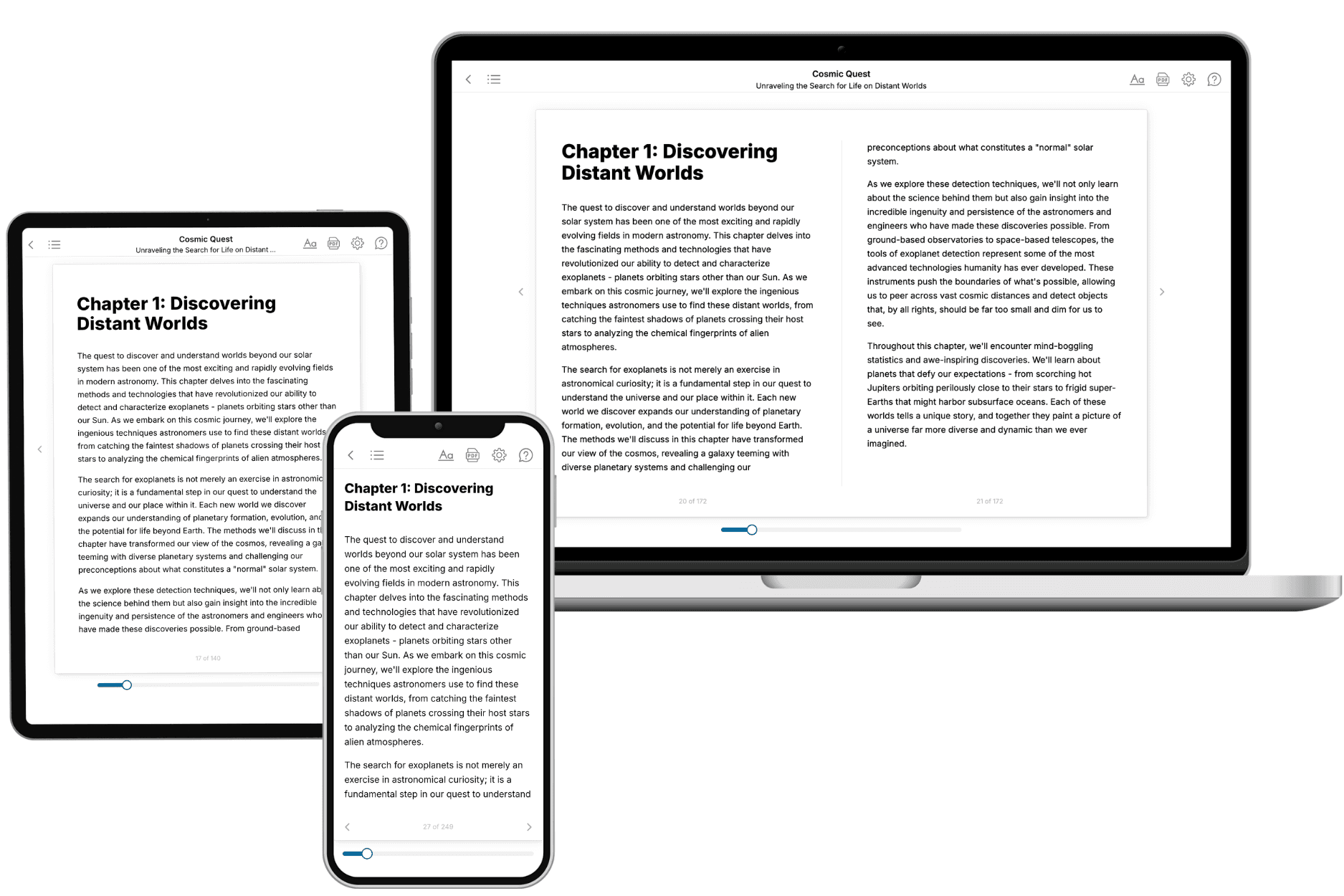
Your book is ready in 10 minutes. Read it online, download as EPUB or PDF, or send to Kindle.

Frequently asked questions
- What is TailoredRead?
TailoredRead creates complete, full-length nonfiction ebooks, written specifically for you. Tell us what you want to learn and why, and TailoredRead writes you a complete ebook on it, with charts, tables, and diagrams throughout. Read it online, on Kindle, or on any e-reader, or download it as a PDF or EPUB. Every book is written fresh the day you order it.
- How is the book tailored to me?
Before anything is written, you answer a few short questions about your goals, your background, and the topics you care about. Your book is then planned around your answers: written at your level, focused on your goals, and covering the topics you chose, instead of the one-size-fits-all book a store sells everyone.
- Will it read like generic AI content?
No. Your book isn't a chat transcript: it's planned chapter by chapter before a single word is written, told in a clear book voice, and explains ideas visually with charts, tables, and diagrams. After writing, every book goes through an editorial pass that polishes chapters so the book reads consistent from start to finish. Judge for yourself: browse thousands of sample books on our Explore Books page.
- How accurate is the content?
Our AI first checks whether your subject needs live research. Niche and fast-moving subjects are researched before writing, and the book plan and chapters are grounded in what it finds. After writing, every book goes through a quality pass that checks its facts and consistency, and researched books list their sources in a Notes section at the back.
- How long is the book?
You choose the length: Comprehensive (250-300 pages), Detailed (150-200 pages), Essential (70-100 pages), or Short (30-50 pages).
- Does the book include visuals?
Yes. Every book includes charts, tables, and diagrams: timelines, checklists, step-by-step guides, decision trees, comparison tables, matrices, and bar charts. A typical book includes dozens of these visual elements.
- Can I read it on Kindle? What formats can I download?
Yes. Every book can be read in our online reader or downloaded as a PDF or EPUB. The EPUB can be opened with Kindle, Apple Books, Kobo, and any e-reader. The Commercial and Author licenses also include an editable Word (DOCX) and Markdown download.
- How much does it cost?
About the price of a regular ebook. The exact price depends on your book's length and complexity, from $2 for the shortest books to $35 for the most comprehensive, and it's shown when you review your book, before you commit to anything. Each book is a one-time purchase, yours to keep, no subscription. Licenses that let you share, teach, or publish your book range from $35.99 to $49.99.
- Can I preview the book before purchasing?
Before you pay, you'll see what your book will cover: the title, a detailed description, the estimated length, and the complete chapter-by-chapter table of contents, so you know what you're getting before you decide. The full text itself is written after you purchase.
- How long does it take to create a book?
About 10 minutes. You can start reading the opening chapters while the rest is still being written.