Indigenous Knowledge Books
Explore tailored Indigenous Knowledge books created by our AI
The Sami People of Sweden
History, Culture, and Identity in the Nordic North
Discover the rich and complex world of the Sami people, Sweden's indigenous inhabitants whose presence in the Nordic North spans millennia. This comprehensive exploration takes you through the historical foundations of Sami society, from their early settlement patterns and traditional economies to their encounters with Swedish expansion and modernization. You'll learn how the Sami maintained their distinct language, customs, and way of life despite centuries of external pressures, and how contemporary communities continue to navigate the balance between honoring ancestral traditions and participating in modern Swedish society. Through detailed examination of Sami culture—including their distinctive music, art, traditional dress, and spiritual practices—you'll gain insight into what makes this indigenous culture unique. The book also addresses the contemporary challenges and achievements of Sami communities, including their ongoing efforts to secure land rights, political representation, and educational opportunities. By the end, you'll understand not just who the Sami are, but why their story matters for understanding Nordic history, indigenous resilience, and cultural diversity in Europe.
Discover the rich and complex world of the Sami people, Norway's indigenous inhabitants whose heritage spans thousands of years. This comprehensive guide takes you beyond surface-level knowledge to reveal the depth of Sami culture, history, and contemporary life. You'll explore how the Sami maintained distinct traditions and livelihoods across the Arctic landscape, understand the profound impact of historical assimilation policies, and learn about their remarkable cultural renaissance. From traditional reindeer herding practices to modern artistic expressions, from language revitalization efforts to political advocacy for indigenous rights, this book illuminates how the Sami continue to shape Norwegian society while preserving their unique identity. Whether you're interested in indigenous cultures, Nordic history, or human resilience, you'll gain essential insights into a people whose story challenges conventional narratives and inspires contemporary movements for cultural preservation and self-determination.
What if the most powerful healing knowledge on Earth exists in ecosystems that are disappearing faster than we can document them? Cloud forests in the South Pacific and Costa Rica harbor indigenous medicinal plant traditions refined over centuries—yet these forests are shrinking, and the knowledge holders are aging without successors. This guide is designed for shamanic practitioners ready to move beyond surface-level plant tourism toward authentic, reciprocal relationships with indigenous healing traditions. You'll discover how to navigate cloud forest regions with cultural respect, identify legitimate teachers and ceremonies, plan meaningful itineraries that support local communities, and deepen your understanding of how geography shapes healing practices. Learn the ethical frameworks that distinguish authentic engagement from exploitative bioprospecting, explore the specific plant knowledge systems of Fiji, Solomon Islands, and Costa Rican cloud forests, and understand the urgent conservation challenges threatening these irreplaceable ecosystems. This is not a guidebook for casual travelers—it's a resource for practitioners committed to honoring indigenous wisdom while contributing to its preservation.
Head-Smashed-In Buffalo Jump
A Complete Guide to Alberta's Most Iconic Archaeological Site
Many visitors to Alberta pass by Head-Smashed-In Buffalo Jump without fully grasping why this remote cliff holds such profound historical and cultural importance. This guide transforms your visit from a simple photo stop into a deep understanding of one of North America's most significant archaeological sites. You'll discover how Indigenous hunters engineered a hunting system that sustained their communities for over 6,000 years, learn the intricate details of buffalo jump methodology, and understand the spiritual and cultural dimensions of this sacred place. Through detailed descriptions of the landscape, the interpretive center's exhibits, and the stories of the Blackfoot Confederacy, you'll gain insight into the ingenuity and resilience of Plains peoples. Whether you're planning a visit or simply curious about Alberta's heritage, this guide provides the context, practical information, and historical perspective needed to truly appreciate Head-Smashed-In Buffalo Jump as more than just a tourist destination—as a testament to Indigenous knowledge and survival.
Discover how Spain's colonial conquest of Mexico created legal, social, and cultural systems that fundamentally shaped a nation. This exploration examines Mexico's first century of colonialism through the lens of law, power, and resistance—revealing how indigenous peoples, women, and mestizos navigated and challenged colonial structures. You'll trace the evolution of the caste system that legally classified people by race and ethnicity, explore how indigenous communities maintained agency through legal petitions and spiritual resistance, and understand how women leveraged convents as centers of intellectual and economic power. The book examines the Inquisition's dual role as religious enforcer and political tool, analyzes how religious syncretism preserved indigenous cosmologies within Catholic frameworks, and investigates the viceregal court's complex patronage networks. With focus on Durango's frontier dynamics and the first transformative hundred years of Spanish rule, this work connects colonial foundations to contemporary Mexican identity, legal traditions, and ongoing struggles for indigenous rights and social justice.
This book takes you through a critical examination of settler colonialism—one of the most consequential yet often misunderstood political systems shaping our world. You'll discover how settler colonialism differs fundamentally from other forms of colonialism, and why this distinction matters for understanding everything from contemporary land disputes to indigenous rights movements. Through concrete historical examples and contemporary case studies, you'll see how settler colonial logic operates: the systematic replacement of indigenous populations, the legal frameworks that legitimize dispossession, and the cultural narratives that normalize these processes. You'll explore how settler colonialism persists in modern nation-states long after formal independence, embedded in property laws, educational systems, and political institutions. By examining specific regions—from North America to Australia to the Middle East—you'll recognize patterns while appreciating how settler colonialism manifests uniquely in different contexts. This book equips you with analytical tools to understand ongoing conflicts over land, sovereignty, and justice, while introducing you to indigenous perspectives and resistance movements that challenge settler colonial authority. Whether you're studying politics, engaged in activism, or simply seeking to understand the world's most pressing conflicts, this book provides essential context for making sense of our settler colonial present.
Tjibaou Cultural Center
Your Complete Guide to New Caledonia's Premier Cultural Destination
Many travelers visit New Caledonia without truly understanding the cultural forces that shaped the islands. The Tjibaou Cultural Center stands as the gateway to authentic Kanak heritage, yet most visitors approach it as just another museum stop. This guide reveals how the center's architecture, collections, and programs work together to tell the story of an indigenous people reclaiming their narrative. You'll discover the historical context behind each exhibition, learn how to navigate the center's unique layout designed by renowned architect Renzo Piano, and understand what makes this institution fundamentally different from conventional museums. Whether you're a first-time visitor or returning to deepen your knowledge, this guide equips you with the insights needed to engage meaningfully with Kanak culture, appreciate the center's role in Pacific indigenous movements, and leave with a transformed understanding of New Caledonia's identity and future.
Imagine understanding Canada not as a simple story of two founding nations, but as a complex tapestry woven from hundreds of cultures, languages, and traditions spanning centuries. This book reveals how Canada became one of the world's most multicultural nations—and what that really means for its past, present, and future. From the Indigenous peoples who inhabited the land for millennia to the waves of immigrants who arrived seeking opportunity, you'll discover the real history behind Canada's multicultural identity. You'll learn how discriminatory policies once excluded entire groups, how official multiculturalism emerged as a national policy, and how diversity shapes everything from politics to economics to daily life. Whether you're curious about your own heritage, seeking to understand Canadian society more deeply, or exploring how nations can navigate cultural diversity, this book provides the historical context and contemporary insights you need. It challenges myths, celebrates achievements, and honestly addresses the ongoing work required to build a truly inclusive nation.
Many Canadians lack a clear understanding of Indigenous peoples' complex histories, distinct cultures, and ongoing struggles for sovereignty and recognition. This gap in knowledge perpetuates misconceptions and hinders genuine reconciliation. This book provides a comprehensive yet accessible exploration of First Nations, Métis, and Inuit peoples across Canada, examining their pre-contact societies, the impact of colonization, and their resilience through centuries of adversity. You'll discover how the Indian Act shaped modern Indigenous life, learn about residential schools' lasting trauma, and understand contemporary movements for self-determination. Through provincial and local examples, you'll see how Indigenous histories connect to your own community. This book equips you with the knowledge to engage respectfully with Indigenous peoples, support reconciliation efforts, and recognize the invaluable contributions Indigenous cultures continue to make to Canadian society.
Discover how maps tell the stories of civilizations and reveal the hidden assumptions embedded in how we see the world. This book takes you through the fascinating history of cartography across cultures, showing you how Indigenous peoples, Islamic scholars, Chinese dynasties, African societies, Aboriginal Australians, and Pacific navigators each developed unique and sophisticated ways of mapping their worlds. You'll explore the mathematical precision of medieval Islamic mapmaking, the artistic mastery of Chinese cartography, the spiritual dimensions of Aboriginal land mapping, and the remarkable navigational knowledge encoded in Polynesian stick charts. More importantly, you'll learn how to bring these diverse perspectives into your classroom, helping your students understand that maps are never neutral—they reflect power, culture, and values. This book provides practical frameworks for teaching map literacy critically, analyzing geopolitical representations, and building geographic awareness that honors multiple ways of knowing and understanding space.
Many people assume ethnobotany is simply about identifying wild plants or using herbs for home remedies. In reality, it's a sophisticated science that reveals how human cultures have developed profound relationships with the plant world over millennia. This book explores the fascinating intersection of botany, anthropology, chemistry, and ecology—showing how indigenous communities have created sustainable systems of plant use that continue to inform modern medicine, agriculture, and conservation efforts. You'll discover how traditional knowledge systems work, why certain plants became central to specific cultures, and how ethnobotanists conduct research ethically and responsibly. From the rainforests of South America to the deserts of Africa, from ancient healing practices to cutting-edge pharmaceutical discoveries, this guide illuminates the remarkable ways plants and people have co-evolved. Whether you're interested in ethnobotany as an academic pursuit, a conservation concern, or simply a deeper appreciation for human ingenuity, you'll gain practical knowledge and analytical frameworks that transform how you understand the natural world and cultural diversity.
Discover how a single piece of legislation fundamentally altered the course of American history and the lives of thousands of Native Americans. This book traces the origins, implementation, and devastating consequences of the Indian Removal Act of 1830—a federal policy that forcibly displaced Native nations from their ancestral homelands. You'll explore the political motivations behind the act, the harrowing experiences of those forced westward on the Trail of Tears, and the profound ways this policy violated treaties and constitutional principles. Through careful examination of primary sources, historical accounts, and contemporary perspectives, you'll understand how this act represents a critical chapter in American civil rights history. You'll also discover how Native nations resisted removal, adapted to new territories, and continue to fight for justice and sovereignty today. This comprehensive exploration reveals the human cost of westward expansion and provides essential context for understanding ongoing Native American struggles and the importance of honoring indigenous rights and self-determination.
The Rainforest Reckoning
Understanding Deforestation and Reclaiming Our Planet's Lungs
Discover how the destruction of rainforests reshapes our world in ways you may never have considered. This book takes you beyond the headlines to reveal the intricate connections between deforestation and global climate, biodiversity collapse, and human survival. You'll learn why rainforests matter far beyond their borders, how economic systems drive forest loss, and what role indigenous communities play in conservation. More importantly, you'll understand the concrete actions—from consumer choices to policy advocacy—that can slow and reverse deforestation. Whether you're concerned about climate change, species extinction, or future generations, this guide provides the knowledge and perspective needed to engage meaningfully with one of our planet's most critical challenges. Grounded in science yet accessible to all, it transforms abstract environmental concerns into understandable, actionable insights.
Ecological Consciousness
Awakening to Your Place in the Living World
This book guides you through a profound reorientation of how you understand yourself in relation to the natural world. You'll explore the philosophical roots of our current environmental crisis, tracing how Western thought separated humans from nature and created the conditions for ecological destruction. Through examining diverse philosophical traditions—from indigenous wisdom to contemporary environmental ethics—you'll discover frameworks for recognizing your deep interdependence with all living systems. Rather than presenting ecology as a burden, this book reveals how ecological consciousness aligns with your deepest interests and values. You'll learn to see beyond the illusion of human separation and dominion, understanding instead how your wellbeing is inseparable from the health of the ecosystems that sustain you. By the end, you'll possess both the intellectual foundation and practical perspective needed to live with genuine ecological awareness, making choices that reflect your true place within the living world.
Nature-Based Solutions
How Ecosystems Can Solve Our Climate and Environmental Challenges
Discover how the world's most powerful environmental solutions are already working in forests, wetlands, and grasslands across the globe. This book walks you through the science and practice of nature-based solutions—an internationally recognized framework that harnesses ecosystem protection and restoration to tackle climate change, biodiversity loss, and environmental degradation simultaneously. You'll learn why over 130 countries have adopted these approaches, how different ecosystems sequester carbon and build resilience, and what makes implementation succeed or fail. From understanding the IUCN standards to recognizing the critical role of Indigenous knowledge, you'll gain the practical insights needed to evaluate projects, support effective initiatives, and understand the real-world trade-offs involved. Whether you're evaluating environmental investments, supporting conservation efforts, or simply seeking to understand how nature can be part of the climate solution, this guide provides the clarity and depth you need to engage meaningfully with one of today's most important environmental strategies.
Many people assume that natural resource management is primarily a technical or environmental challenge—a matter of applying the right science and conservation strategies. However, the reality is far more complex. The biggest obstacle you face in understanding resource management is recognizing that it's fundamentally about people, power, and competing interests. This book reveals how social structures, economic systems, and political decisions shape every aspect of how we use and protect natural resources. You'll discover why some communities thrive while others are left vulnerable, how historical injustices continue to influence resource access today, and why top-down management approaches often fail. Through real-world examples and practical frameworks, you'll learn to analyze resource conflicts from multiple perspectives, understand the role of local knowledge and indigenous practices, and recognize the interconnections between social equity and environmental sustainability. By the end, you'll have the tools to think critically about resource management decisions and understand the human geography that shapes our world.
What if the most crucial member of America's most famous expedition has been largely misunderstood? Sacagawea's story is far more complex and consequential than the simplified narratives found in textbooks. This book moves beyond the myths to reveal how a Shoshone woman, captured as a child and enslaved, became indispensable to one of history's greatest journeys. Discover how her linguistic abilities, cultural knowledge, and diplomatic skills opened doors that would have remained closed to Lewis and Clark. Explore the fragmented historical record that obscures her true contributions and the challenges of separating fact from legend. From her early life on the Great Plains to her mysterious final years, this biography examines Sacagawea as a fully realized person—not merely a supporting character in someone else's story. You'll gain insight into Shoshone culture, the fur trade economy, and how indigenous women shaped American exploration in ways that history has only recently begun to acknowledge.
The Architects of Australian Identity
How Historians Shaped Our Understanding of the Nation
Discover how Australian historians have fundamentally shaped the way we understand our nation's past and identity. This book explores the pivotal role historians play in constructing national narratives, examining how biographical and ethnic histories have evolved to reflect Australia's complex, multicultural reality. You'll learn how historians select, interpret, and present evidence to build compelling historical arguments, and why their perspectives matter in understanding Australian society. Through examining key historiographical debates, influential historians, and shifting interpretive frameworks, you'll gain insight into how historical knowledge is created and contested. Whether you're a student of history, a curious citizen, or someone seeking to understand Australia's diverse heritage, this book equips you with the critical tools to evaluate historical claims, appreciate the complexity of our past, and recognize how historians continue to shape our national conversation about who we are and where we've come from.
This book guides you through Peru's rich and complex history, beginning with the geographical foundations that shaped human settlement and civilization. You'll explore the sophisticated pre-Incan coastal societies, then examine the Incan Empire's remarkable administrative systems, engineering achievements, and cultural innovations. Moving into the colonial period, you'll understand how Spanish conquest transformed Peru's economy, society, and religion while indigenous cultures adapted and persisted. Finally, you'll trace the independence movements that emerged from colonial tensions and indigenous resistance. Throughout, you'll discover how Peru's diverse regions, from the Pacific coast to the high Andes to the Amazon basin, developed distinct yet interconnected cultures. By the end, you'll have a comprehensive understanding of how Peru evolved from multiple pre-Columbian civilizations into a unified nation, and how its indigenous heritage continues to define its identity today.
Stones of Empire
How Colonial Architecture Shaped Power, Identity, and Resistance
What if the buildings around you were designed not to shelter you, but to control you? Colonial architecture stands as one of history's most powerful yet overlooked tools of political domination. From grand administrative centers to segregated urban layouts, these structures encoded the ideology of empire into stone, steel, and space. This book reveals how colonizers weaponized architecture to establish hierarchies, erase indigenous cultures, and consolidate power—and how colonized peoples resisted through adaptation and cultural persistence. You'll discover how the cities you inhabit today still bear the imprint of colonial thinking, from property systems to infrastructure patterns. By understanding how architecture functioned as an instrument of control, you'll gain critical insight into how power operates through the spaces we inhabit, and why decolonizing our built environment matters for creating more equitable futures.
What if the map you've been looking at your entire life has been subtly distorting your understanding of the world? Maps are everywhere—on our phones, in classrooms, hanging on office walls—yet we rarely stop to ask who created them, why they made certain choices, or what those choices reveal about power and culture. This book takes you on a visual journey through centuries of cartography, exploring how maps have shaped exploration, colonization, trade, and identity. You'll discover how the Mercator projection became the global standard despite its significant distortions, learn about the sophisticated territorial systems Indigenous peoples developed, and uncover the mythical geographies that captured human imagination. From the Silk Road trade routes to forgotten cities, from urban planning visions to environmental transformations, maps tell stories that go far beyond geography. By the end, you'll see maps as cultural documents that reveal the values, fears, and ambitions of the societies that created them—and you'll never look at a map the same way again.
Argentina's history is not a linear progression but a complex interplay of competing visions, cultural syntheses, and structural contradictions. This book guides you through the key events and identities that shaped a nation caught between European aspirations and Latin American realities. You'll examine how indigenous peoples, Spanish colonizers, African slaves, and European immigrants created a unique mestizaje culture that defies simple categorization. Explore the Jesuit missions' lasting impact on religious syncretism, trace how immigration waves transformed Buenos Aires into a cosmopolitan capital, and understand how Peronism revolutionized political consciousness. Discover how tango and milonga encode collective memory and urban identity, analyze the economic cycles that produced both prosperity and hyperinflation, and confront the military conflicts that fractured Argentine society. This comprehensive exploration reveals how Argentina's cultural identities—from shamanic indigenous practices to anarchist labor movements—emerged from specific historical moments and continue to shape contemporary debates about national belonging and memory.
The Art and Spirit of Hula
Mastering Hawaiian Dance Traditions and Cultural Significance
Master the authentic techniques and cultural depth of Hawaiian hula dance while honoring its sacred traditions. This comprehensive guide takes you beyond basic steps to develop a genuine understanding of hula's history, spiritual significance, and technical foundations. You'll explore the essential movements that form hula's vocabulary, learn how to interpret mele (chants) through your body, and discover the cultural protocols that make hula meaningful rather than merely performative. Whether you're deepening your existing practice or approaching hula with fresh perspective, you'll gain the knowledge to dance with authenticity, respect, and true cultural understanding. Discover how hula connects you to Hawaiian heritage, storytelling traditions, and a living cultural practice that continues to evolve while honoring its ancient roots.
Most people think of territory as simply lines on a map—political boundaries that divide nations and define property ownership. But territory is far more complex and consequential than that. Territory shapes how we identify ourselves, organize our communities, compete for resources, and understand our place in the world. From the invisible boundaries of a neighborhood to the contested borders of nations, from indigenous sacred lands to digital spaces we claim online, territoriality influences nearly every aspect of human culture and society. This book explores how geography and culture intertwine through territorial behavior, examining why humans claim space, how these claims create meaning and identity, and what happens when territorial interests collide. By understanding territoriality through a cultural and geographic lens, you'll gain insight into conflicts, cultural preservation, urban development, and the fundamental ways humans organize themselves across the planet.
Many Americans learn a sanitized version of Native American history—one that glosses over the systematic destruction of Indigenous peoples and cultures. The reality is far more complex and consequential. This book examines the deliberate policies and actions that constituted genocide against Native Americans, from colonial contact through the twentieth century. You'll explore the Indian Removal Act, the devastating Trail of Tears, the boarding school system designed to erase Indigenous identity, and the broken treaties that shaped the American West. Rather than presenting Native history as a tragic past, this book demonstrates how Native nations survived, adapted, and continue to fight for sovereignty and cultural preservation today. By understanding these historical realities—the policies, the people, and the persistence—you gain essential context for comprehending contemporary Native American issues, ongoing disparities, and the ongoing struggle for justice and self-determination in America.
Words That Matter
How Language Policy Shapes Communication, Culture, and Society
What if the languages we choose to speak, teach, and protect in our institutions actually determine who succeeds and who gets left behind? Language policy—the decisions governments, organizations, and communities make about language use—shapes far more than just communication. It influences educational achievement, economic mobility, cultural identity, and social equity. Yet most people never consider how these policies affect their daily lives. This book explores the real-world impact of language policy decisions, from classroom instruction to workplace communication to national identity. You'll discover why some multilingual societies thrive while others struggle, how language policies can either bridge or widen social divides, and what principles guide effective policy-making. Whether you're an educator, administrator, parent, or simply curious about how language shapes society, this book provides practical insights into one of the most consequential yet overlooked forces shaping our world.
Imagine confidently conversing with Yoruba speakers, understanding the cultural nuances embedded in every phrase, and accessing a language that connects you to millions across West Africa and the diaspora. This comprehensive guide takes you beyond basic vocabulary to genuine fluency, revealing how Yoruba's tonal system, rich grammar, and cultural depth create a uniquely expressive language. You'll discover why mastering Yoruba opens doors to understanding African philosophy, history, and contemporary culture. Through practical exercises, authentic dialogues, and cultural insights, you'll develop the skills to navigate real-world conversations, appreciate Yoruba literature and music, and engage meaningfully with Yoruba-speaking communities. Whether you're reconnecting with heritage, pursuing professional opportunities, or deepening your linguistic knowledge, this book equips you with the tools and understanding needed to speak Yoruba with confidence and cultural awareness.
Many travelers dream of exploring Australia's legendary national parks but feel overwhelmed by the sheer size of the country and the abundance of options. Without proper guidance, you might miss the most spectacular destinations, waste time on lengthy drives, or visit parks during suboptimal seasons. This comprehensive guide cuts through the confusion by providing everything you need to plan and execute remarkable park adventures. Discover detailed information about Australia's most iconic national parks, from Uluru-Kata Tjuta's red desert majesty to the Great Barrier Reef's underwater wonders. Learn insider tips on the best times to visit, what wildlife you'll encounter, which trails match your fitness level, and how to navigate logistics across this vast continent. Whether you're seeking dramatic landscapes, unique wildlife encounters, or spiritual connections to ancient lands, this guide equips you with the knowledge to create unforgettable experiences while respecting the natural and cultural significance of these extraordinary places.
Culture, Health, and Healing
Understanding How Societies Shape Medicine and Wellness
Discover how culture fundamentally shapes every aspect of health, illness, and healing. This book reveals that medicine is far more than biology—it's a reflection of how societies understand the body, interpret suffering, and organize care. You'll explore how different cultures define health and disease, why people choose particular healing practices, and how historical power dynamics continue to influence global health today. From traditional healers to modern hospitals, from mental health to reproductive medicine, you'll see how anthropological perspectives illuminate the hidden cultural assumptions embedded in all medical systems. Whether you're studying anthropology, working in healthcare, or simply curious about why health practices vary so dramatically across the world, this book provides the frameworks and real-world examples you need to understand medicine as a fundamentally human and cultural endeavor.
Discover how anthropology reveals the hidden patterns that shape human behavior, belief systems, and social organization across the world. This book takes you beyond stereotypes and surface-level observations to show you the deeper logic underlying cultural practices—from kinship systems and economic exchanges to religious rituals and digital communities. You'll learn how anthropologists actually study culture through ethnographic fieldwork, and how their insights apply to understanding everything from workplace dynamics to global inequality. By exploring real-world examples and case studies, you'll develop the analytical tools to interpret cultural differences with nuance and respect. Whether you're interested in understanding your own culture more deeply or making sense of an increasingly interconnected world, this book equips you with anthropological perspectives that transform how you see human society. Gain practical knowledge about how cultures adapt, resist change, and create meaning in the face of globalization and social transformation.
Imagine writing Caribbean fiction that resonates with historical authenticity—where your characters inhabit a world you truly understand, where the landscape carries the weight of real history, and where cultural details ring true to readers who know this region intimately. This book provides the historical foundation you need. You'll explore the Caribbean from the sophisticated agricultural systems of the Taíno peoples through the brutal machinery of colonialism, the explosive energy of revolutionary movements, and the complex negotiations of postcolonial nations. You'll discover how oral traditions preserved history when written records were controlled by colonizers, how religious syncretism became an act of cultural resistance, and how trade networks made the Caribbean central—not peripheral—to global history. Each chapter connects historical events and themes directly to the creative challenges fiction writers face: developing authentic characters, building believable settings, understanding cultural context, and avoiding stereotypes. Whether you're crafting a novel set in 1492, during the Haitian Revolution, or in contemporary Caribbean society, this book equips you with the knowledge to write with confidence and integrity.
The Inca Empire
Rise, Reign, and Legacy of South America's Greatest Civilization
Imagine standing atop Machu Picchu, surrounded by the architectural marvels of a civilization that once controlled an empire stretching across an entire continent. The Inca Empire represents one of history's most extraordinary achievements—a vast, sophisticated society that flourished in the challenging terrain of the Andes Mountains without the wheel, iron tools, or written language as we know them. This book takes you on a comprehensive journey through the rise, reign, and enduring legacy of this remarkable civilization. From the humble origins of the Inca people in the Cusco Valley to their expansion into the largest pre-Columbian empire in the Americas, you'll discover how they built an intricate administrative system, engineered breathtaking structures, and created a complex society that functioned with remarkable efficiency. You'll also explore the dramatic collision with Spanish conquistadors and understand how this encounter transformed both the Inca world and the course of South American history. Whether you're a history enthusiast or simply curious about one of humanity's greatest civilizations, this book provides the insights and context you need to truly understand the Inca Empire's place in world history.
The Geography of Culture
How Places Shape Identity, Beliefs, and Communities
Discover how the places you inhabit shape far more than your address—they fundamentally influence your identity, beliefs, and community connections. This book reveals the intricate relationships between geography and culture, showing you how physical locations, regional histories, and spatial relationships create the cultural worlds we live in. You'll explore how landscapes become meaningful through human interaction, how migration and diaspora reshape cultural boundaries, and why understanding place is essential to understanding people. From sacred sites to urban neighborhoods, from colonial legacies to digital communities, you'll gain practical insights into how geography and culture intertwine. Whether you're interested in understanding your own cultural roots, analyzing global communities, or simply curious about why cultures differ across regions, this book provides the frameworks and knowledge to see the world through a cultural-geographical lens. Perfect for students, professionals, and anyone seeking to understand the complex relationship between where we are and who we become.
Many Canadians take their healthcare system for granted, assuming it has always existed as a public service. The reality is far more complex and fascinating. This book traces the remarkable journey of how Canada transformed healthcare from a privilege of the wealthy into a system based on the principle that medical care should be a right, not a commodity. You'll discover how colonial-era medicine gave way to private practice, how the economic devastation of the Depression forced new thinking, and how visionary leaders like Tommy Douglas proved that universal healthcare was possible. Through engaging historical narratives and clear explanations, you'll understand the key decisions, political battles, and social movements that created Medicare and shaped the system you know today. Whether you're curious about Canadian history, interested in how healthcare systems develop, or simply want to understand the roots of a national institution, this book reveals the human stories and pivotal moments behind one of Canada's greatest achievements.
Colonialism Mastery
A Customized Guide to Colonial History, Theory, and Global Legacies
You'll navigate the complex architecture of colonialism—from its emergence in 15th-century Europe through its transformation into contemporary neocolonial systems. This guide systematically deconstructs how imperial powers consolidated control through administrative hierarchies, economic monopolies, and ideological frameworks that justified domination. You'll examine the sophisticated mechanisms of extraction—mercantilism, plantation economies, and resource capitalism—that generated wealth for empires while impoverishing colonized regions. Critically, you'll explore how indigenous peoples resisted through cultural preservation, political organization, and armed struggle, ultimately forcing decolonization. The book connects historical analysis to present-day realities: global inequality structures, institutional legacies, and ongoing sovereignty struggles. You'll engage with postcolonial theory frameworks that explain how colonial power persists through economic dependency and cultural narratives. By centering indigenous perspectives and subaltern voices, you'll develop a comprehensive understanding of how colonialism shaped—and continues to shape—global systems of power, knowledge production, and resource distribution.
Akan Essentials
Master the Language of West Africa's Most Influential Cultures
What if the language you're learning could simultaneously unlock an entirely different way of thinking about community, respect, and identity? Akan is far more than a collection of words and grammar rules—it's a gateway to understanding one of West Africa's most vibrant and influential cultures. This book guides you through the essential foundations of Akan language learning, from mastering its unique tonal system to understanding the cultural values woven throughout its grammar. You'll discover practical strategies for pronunciation, build conversational confidence through real-world scenarios, and learn how Akan's structure reflects the worldview of millions of speakers across Ghana and beyond. Whether you're reconnecting with heritage, preparing for travel, or deepening your cultural knowledge, this guide provides the tools and insights needed to progress from intermediate understanding to genuine communicative competence. Explore the language's dialects, master essential phrases, and develop the cultural awareness that transforms language learning from academic exercise into meaningful human connection.
Related books you may like:
You're about to supercharge your animal advocacy efforts and nonprofit management skills with the power of AI. This groundbreaking guide is tailored specifically for leaders in the animal rights movement who are ready to harness cutting-edge technology to make a bigger impact. Discover how to leverage AI tools to streamline your operations, enhance your strategic planning, and amplify your advocacy campaigns. You'll learn practical techniques for automating administrative tasks, optimizing your workflow, and making data-driven decisions that will take your organization to the next level. From improving time management and task delegation to enhancing donor engagement and project tracking, this book offers a comprehensive roadmap for integrating AI into every aspect of your work. You'll gain insights into AI-driven research methods, problem-solving techniques, and productivity metrics that will revolutionize the way you approach animal advocacy.
Discover how air sign energy shapes your thinking, communication style, and approach to relationships. Whether you have a Gemini, Libra, or Aquarius placement in your birth chart, this guide reveals the intellectual and social gifts these signs bring—along with the blind spots worth understanding. You'll learn why air signs are natural communicators and idea-generators, how each sign expresses itself uniquely, and how your specific air sign placements influence your personality across different life areas. Through practical insights and real-world examples, you'll recognize air sign patterns in yourself and others, harness your natural strengths in connection and innovation, and navigate the challenges of overthinking and emotional detachment. Whether you're exploring your Sun, Moon, Rising, or other planetary placements, this book provides the clarity you need to work with your air sign energy authentically and effectively.
What if you could resolve years of trauma in just a handful of therapy sessions instead of months or years of traditional talk therapy? Accelerated Resolution Therapy (ART) offers a scientifically-grounded approach that harnesses your brain's natural healing capacity to process traumatic memories and emotional distress rapidly. This book demystifies how ART works at the neurological level, explains why it's so effective for conditions like PTSD, anxiety, and phobias, and explores how it differs from conventional therapeutic approaches. Whether you're a mental health professional considering adding ART to your practice, someone exploring treatment options for yourself or a loved one, or simply curious about innovative psychological interventions, this guide provides practical insights into one of the most promising developments in modern therapy. Discover how guided imagery and eye movement can facilitate profound emotional healing, what the research shows about its effectiveness, and whether ART might be the breakthrough approach you've been seeking.
The assumption that political parties are natural, inevitable, or even desirable features of democracy is surprisingly recent. For most of Western political history, the most sophisticated thinkers viewed organized factions as corrupting forces that distorted the pursuit of the common good. This book traces the genealogy of anti-party political thought from Plato's critique of democratic factionalism through contemporary populist movements, examining how philosophers, statesmen, and theorists have conceptualized the dangers of partisanship and imagined alternatives. You'll encounter Rousseau's vision of a general will transcending faction, the Federalist Papers' constitutional anxiety about party machinery, Tocqueville's ambivalent analysis of American partisanship, and the radical rejection of parties by socialist and anarchist movements. Rather than treating anti-party sentiment as mere nostalgia or populist demagoguery, this analysis reveals it as a coherent intellectual tradition grappling with enduring tensions between democratic participation and organized political competition. By understanding how different historical periods and ideological traditions have confronted the problem of faction, you gain critical perspective on contemporary debates about party reform, populism, and democratic alternatives.
Many people believe that behavior is determined either by our genetics or by direct rewards and punishments we experience. However, Albert Bandura's groundbreaking research revealed a more nuanced truth: we learn by watching others. This book explores the life and work of one of psychology's most influential figures and the revolutionary theory that transformed our understanding of human behavior. You'll discover how Bandura's concept of self-efficacy explains why some people persevere through challenges while others give up, how observational learning shapes everything from aggression to prosocial behavior, and why the environment, our thoughts, and our actions are constantly influencing each other. Whether you're an educator seeking to improve student outcomes, a professional interested in behavior change, or simply curious about the science of learning, this comprehensive guide illuminates the principles that govern human development and provides practical insights into how these theories apply to everyday life.
Create an Indigenous Knowledge Book Tailored to You
Create an AI-crafted book tailored to your goals, interests, and background






Benefits of AI-tailored books
- Read one book, not ten:
- all the Indigenous Knowledge knowledge you need, gathered into a single book.
- Save days of learning:
- tell us your goals, choose your topics, and the whole book is built around them.
- Learn effortlessly:
- Indigenous Knowledge book written for your specific background and expertise.
- Understand at a glance:
- includes charts, tables, timelines, checklists, decision trees, and more.
- Stay current:
- written the day you order it, not years ago.
- Trust what you read:
- every book is checked for accuracy, with real research when your subject needs it.
Create your unique book in 3 steps
- 1. Select your focus
Select the focus of your Indigenous Knowledge book and share your background
- 2. Personalize your book
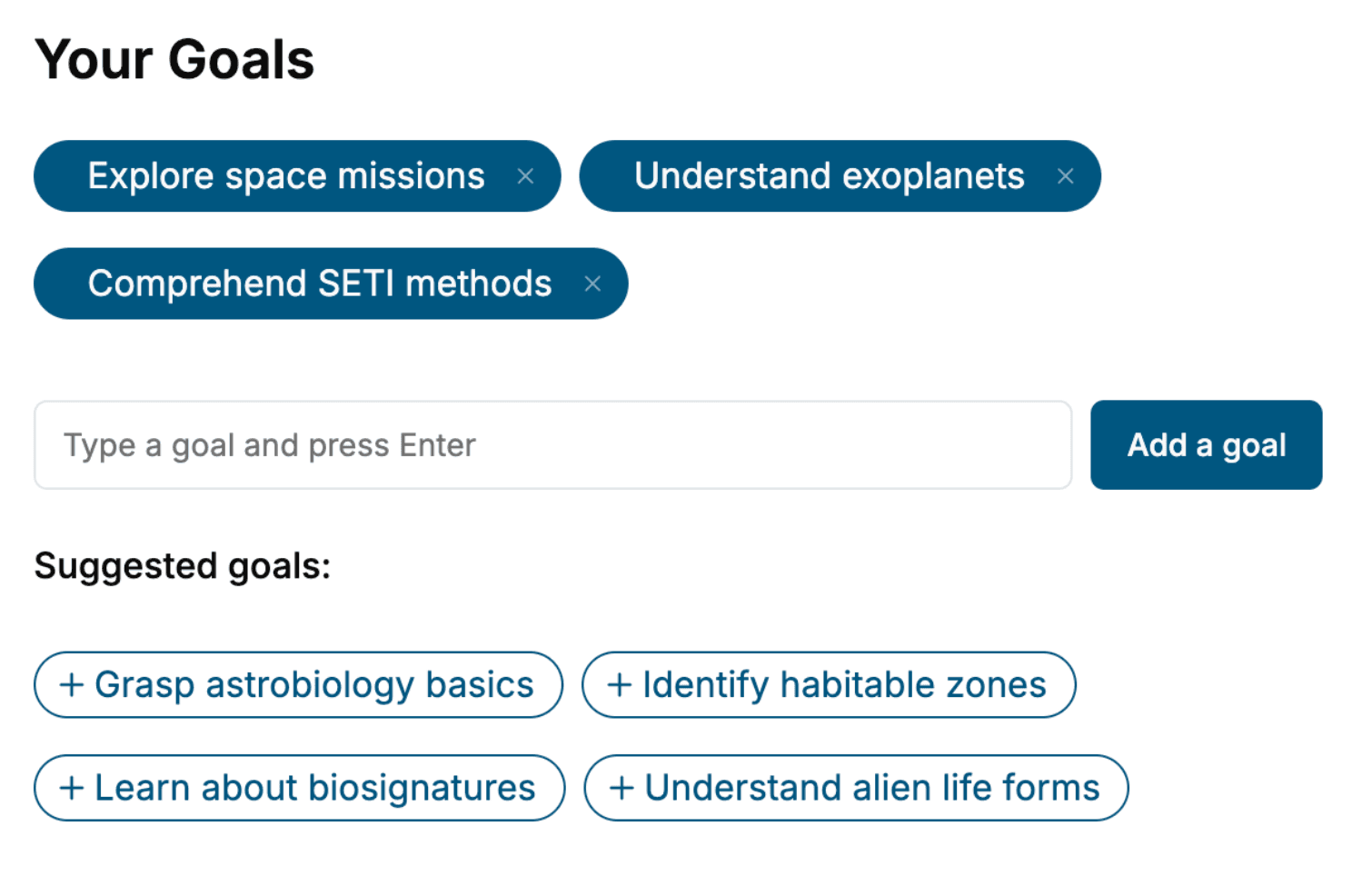
Specify your goals and choose sub-topics to include
- 3. Get your tailored book
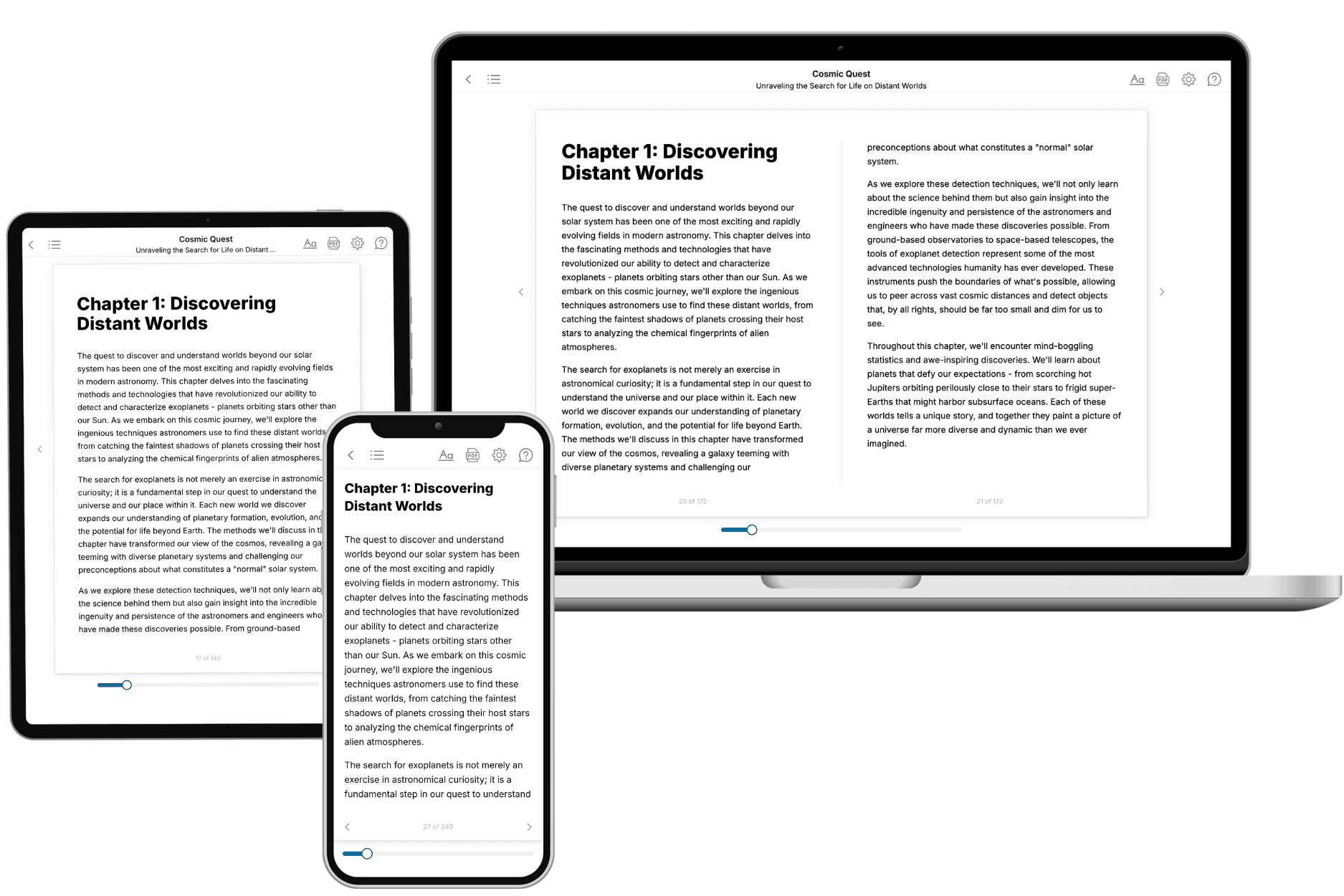
Your book is ready in 10 minutes. Read it online, download as EPUB or PDF, or send to Kindle.

Frequently asked questions
- What is TailoredRead?
TailoredRead creates complete, full-length nonfiction ebooks, written specifically for you. Tell us what you want to learn and why, and TailoredRead writes you a complete ebook on it, with charts, tables, and diagrams throughout. Read it online, on Kindle, or on any e-reader, or download it as a PDF or EPUB. Every book is written fresh the day you order it.
- How is the book tailored to me?
Before anything is written, you answer a few short questions about your goals, your background, and the topics you care about. Your book is then planned around your answers: written at your level, focused on your goals, and covering the topics you chose, instead of the one-size-fits-all book a store sells everyone.
- Will it read like generic AI content?
No. Your book isn't a chat transcript: it's planned chapter by chapter before a single word is written, told in a clear book voice, and explains ideas visually with charts, tables, and diagrams. After writing, every book goes through an editorial pass that polishes chapters so the book reads consistent from start to finish. Judge for yourself: browse thousands of sample books on our Explore Books page.
- How accurate is the content?
Our AI first checks whether your subject needs live research. Niche and fast-moving subjects are researched before writing, and the book plan and chapters are grounded in what it finds. After writing, every book goes through a quality pass that checks its facts and consistency, and researched books list their sources in a Notes section at the back.
- How long is the book?
You choose the length: Comprehensive (250-300 pages), Detailed (150-200 pages), Essential (70-100 pages), or Short (30-50 pages).
- Does the book include visuals?
Yes. Every book includes charts, tables, and diagrams: timelines, checklists, step-by-step guides, decision trees, comparison tables, matrices, and bar charts. A typical book includes dozens of these visual elements.
- Can I read it on Kindle? What formats can I download?
Yes. Every book can be read in our online reader or downloaded as a PDF or EPUB. The EPUB can be opened with Kindle, Apple Books, Kobo, and any e-reader. The Commercial and Author licenses also include an editable Word (DOCX) and Markdown download.
- How much does it cost?
About the price of a regular ebook. The exact price depends on your book's length and complexity, from $2 for the shortest books to $35 for the most comprehensive, and it's shown when you review your book, before you commit to anything. Each book is a one-time purchase, yours to keep, no subscription. Licenses that let you share, teach, or publish your book range from $35.99 to $49.99.
- Can I preview the book before purchasing?
Before you pay, you'll see what your book will cover: the title, a detailed description, the estimated length, and the complete chapter-by-chapter table of contents, so you know what you're getting before you decide. The full text itself is written after you purchase.
- How long does it take to create a book?
About 10 minutes. You can start reading the opening chapters while the rest is still being written.