Tjibaou Cultural Center
Your Complete Guide to New Caledonia's Premier Cultural Destination
Many travelers visit New Caledonia without truly understanding the cultural forces that shaped the islands.
191 pages9 chaptersJan 25, 2026Museum Guide
About this book
The Tjibaou Cultural Center stands as the gateway to authentic Kanak heritage, yet most visitors approach it as just another museum stop. This guide reveals how the center's architecture, collections, and programs work together to tell the story of an indigenous people reclaiming their narrative. You'll discover the historical context behind each exhibition, learn how to navigate the center's unique layout designed by renowned architect Renzo Piano, and understand what makes this institution fundamentally different from conventional museums. Whether you're a first-time visitor or returning to deepen your knowledge, this guide equips you with the insights needed to engage meaningfully with Kanak culture, appreciate the center's role in Pacific indigenous movements, and leave with a transformed understanding of New Caledonia's identity and future.
Table of contents
- IntroductionWhy the Tjibaou Cultural Center Matters, What You'll Discover in This Guide, How to Use This Book for Maximum ImpactRead below
- Chapter 1: New Caledonia's Cultural LandscapeUnderstanding Kanak Heritage and Identity, Colonial History and Its Lasting Impact, The Movement for Cultural Sovereignty
- Chapter 2: The Birth of an IconVision and Mission Behind the Center, Renzo Piano's Architectural Vision, Opening, Growth, and Evolution
- Chapter 3: Architectural MasterpieceDesign Philosophy and Cultural Integration, Building Layout and How to Navigate, Symbolic Elements and Their Meanings
- Chapter 4: Collections and ExhibitionsPermanent Collections and Their Stories, Rotating Exhibitions and Special Programs, Contemporary Art and Modern Perspectives
- Chapter 5: Traditional Kanak CultureArtifacts, Craftsmanship, and Traditional Arts, Oral Traditions and Storytelling, Spiritual Beliefs and Cultural Practices
- Chapter 6: Planning Your VisitPractical Information and Logistics, Best Times to Visit and What to Expect, Admission, Hours, and Accessibility Options
- Chapter 7: Making the Most of Your ExperienceGuided Tours and Educational Programs, Interactive Exhibits and Multimedia Experiences, Workshops and Hands-On Cultural Activities
- Chapter 8: Beyond the CenterExploring the Surrounding Village and Landscape, Related Cultural Sites and Attractions, Local Dining, Shopping, and Community Engagement
- Chapter 9: The Center's Global SignificanceA Model for Indigenous Cultural Institutions, International Collaborations and Partnerships, Impact on Pacific Culture and Identity
- ConclusionYour Transformative Experience Awaits
- Further Reading and Resources
Introduction
Standing on the Tina Peninsula, overlooking the turquoise waters of New Caledonia's southeastern coast, the Tjibaou Cultural Center rises from the landscape like a series of traditional Kanak huts reimagined for the modern world. This is not simply another museum where artifacts sit behind glass, disconnected from the living culture they represent. Instead, the center functions as a breathing, evolving testament to the resilience and creativity of the Kanak people, the indigenous inhabitants of New Caledonia who have maintained their cultural identity through centuries of colonial pressure. When you walk through its doors, you enter a space where architecture, art, history, and contemporary life converge to tell a story that extends far beyond these islands into the broader narrative of indigenous peoples reclaiming their heritage in the twenty-first century.
Most travelers arrive in New Caledonia drawn by pristine beaches, world-class diving, and French-influenced cuisine. These attractions certainly have their place, but they represent only the surface layer of what makes these islands remarkable. Beneath the tourist-friendly veneer lies a complex cultural landscape shaped by thousands of years of Kanak civilization, followed by French colonization, political struggle, and an ongoing negotiation between tradition and modernity. The Tjibaou Cultural Center serves as the essential key to unlocking this deeper understanding. Without grasping what this institution represents and the cultural forces it embodies, your experience of New Caledonia remains incomplete, like reading only the first chapter of a compelling novel and never discovering how the story unfolds.
This guide exists to transform your visit from a casual museum stop into a meaningful cultural encounter. Whether you have three hours or three days to spend at the center, the insights contained in these pages will help you recognize the significance of what you're seeing, understand the historical context behind each exhibition, and appreciate how the center's very existence represents a victory for cultural preservation and indigenous self-determination. You'll learn to read the architectural language that Renzo Piano developed in collaboration with Kanak elders, discover the stories embedded in traditional artifacts, and understand how contemporary Kanak artists are using their work to address modern challenges while honoring ancestral wisdom. By the time you finish this book, you'll possess the knowledge needed to engage with the Tjibaou Cultural Center not as an outsider looking in, but as an informed visitor ready to participate in the cultural dialogue the center was designed to facilitate.
The journey ahead requires no specialized academic background or prior knowledge of Pacific cultures. What it does require is openness to perspectives that may challenge conventional narratives about colonialism, cultural preservation, and what museums can accomplish when they're designed by and for the communities they represent. The Tjibaou Cultural Center stands as proof that indigenous cultures are not relics of the past to be preserved in amber, but living traditions capable of adapting, innovating, and thriving in the contemporary world. This guide will show you how to recognize that vitality in everything from the center's soaring architecture to the workshops where Kanak artisans teach traditional techniques to new generations. Your visit to the Tjibaou Cultural Center has the potential to reshape how you think about cultural heritage, indigenous rights, and the role of institutions in supporting communities rather than simply displaying their artifacts.
Why the Tjibaou Cultural Center Matters
The Tjibaou Cultural Center represents something fundamentally different from traditional museums built by colonial powers to house indigenous artifacts. Named after Jean-Marie Tjibaou, the Kanak independence leader assassinated in 1989, the center emerged from the Matignon Accords, a peace agreement that sought to address decades of tension between the Kanak independence movement and French authorities. This origin story matters because it means the center was conceived not as a repository for dead cultures, but as a living institution designed to support Kanak cultural continuity and self-determination. When the center opened its doors in 1998, it signaled a shift in how indigenous heritage could be presented, moving away from the anthropological gaze that had long dominated museum displays toward a model where indigenous communities control their own narratives.
Understanding the center's significance requires recognizing the broader context of Pacific indigenous movements. Throughout the twentieth century, indigenous peoples across the Pacific region fought to reclaim cultural practices that colonial authorities had suppressed or dismissed as primitive. In New Caledonia, this struggle took on particular intensity because the Kanak people had become a minority in their own land due to colonial settlement policies. The Tjibaou Cultural Center emerged as a tangible expression of cultural sovereignty, a space where Kanak identity could be celebrated, explored, and transmitted to future generations without requiring permission from or mediation by colonial institutions. This makes the center a political statement as much as a cultural one, though its politics are expressed through architecture, art, and education rather than confrontation.
The center's architectural design by Renzo Piano, developed through extensive consultation with Kanak communities, demonstrates how physical space can honor indigenous worldviews. Piano's ten pavilions echo the form of traditional Kanak huts while incorporating modern materials and engineering techniques. The structures breathe with the wind, their wooden slats allowing air to flow through in ways that connect interior spaces with the surrounding landscape. This design philosophy reflects Kanak concepts of the relationship between people and environment, where boundaries between built and natural spaces remain permeable. By creating architecture that embodies rather than merely represents Kanak cultural values, Piano and his Kanak collaborators produced a building that functions as a teaching tool in itself, demonstrating how traditional wisdom can inform contemporary design.
Beyond its architectural significance, the center matters because of its role in preserving and revitalizing Kanak languages, arts, and cultural practices. Many indigenous communities worldwide face the challenge of cultural transmission as younger generations become increasingly disconnected from traditional knowledge. The Tjibaou Cultural Center addresses this challenge through multiple strategies:
- Educational programs that bring Kanak elders together with young people to teach traditional skills like weaving, carving, and navigation
- Documentation projects that record oral histories, traditional songs, and cultural practices before they're lost
- Contemporary art exhibitions that show how Kanak artists are adapting traditional forms to address modern concerns
- Cultural festivals and performances that keep traditional practices alive as living traditions rather than museum pieces
- Research facilities that support scholarly work on Kanak culture conducted by Kanak researchers
The center's international significance extends beyond New Caledonia to influence how indigenous cultural institutions operate worldwide. Museums in Australia, New Zealand, Canada, and the United States have studied the Tjibaou model as they work to decolonize their own collections and practices. The center demonstrates that indigenous communities can maintain control over how their cultures are presented while still creating institutions that welcome and educate visitors from outside those communities. This balance between cultural integrity and accessibility represents a significant achievement in museum practice. The center proves that respecting indigenous sovereignty over cultural heritage doesn't mean closing doors to outsiders, but rather opening them on terms defined by the communities themselves.
For travelers, the center matters because it provides essential context for understanding everything else you'll encounter in New Caledonia. The traditional huts you might see in rural areas, the contemporary art in Nouméa galleries, the political discussions about independence and autonomy, the relationship between Kanak and non-Kanak communities—all of these become more comprehensible after spending time at the Tjibaou Cultural Center. The center functions as a lens that brings the rest of New Caledonia into focus, revealing patterns and connections you might otherwise miss. Without this foundation, you risk experiencing New Caledonia as a series of disconnected impressions rather than as a coherent cultural landscape shaped by specific historical forces and ongoing negotiations between different communities.
The center also matters as a model for how tourism can support rather than exploit indigenous communities. Too often, indigenous cultures become commodified for tourist consumption, reduced to performances and souvenirs that bear little relationship to living cultural practices. The Tjibaou Cultural Center offers an alternative approach where tourism revenue supports cultural preservation and education, where visitors are invited to learn rather than simply consume, and where indigenous communities maintain control over how their culture is presented. This model demonstrates that cultural tourism and cultural integrity need not be in conflict. By visiting the center and engaging seriously with what it offers, you participate in an economic model that benefits Kanak communities while expanding your own understanding of Pacific cultures.
Finally, the center matters because it challenges visitors to reconsider their assumptions about indigenous cultures, colonialism, and cultural preservation. Many people arrive with unconscious expectations shaped by colonial narratives that position indigenous peoples as either noble savages frozen in time or tragic victims whose cultures are inevitably disappearing. The Tjibaou Cultural Center disrupts both these stereotypes by presenting Kanak culture as dynamic, adaptive, and thoroughly contemporary while remaining rooted in ancestral traditions. This more complex and accurate picture requires visitors to abandon simplistic narratives and engage with the messy, fascinating reality of how cultures actually evolve and persist. The intellectual and emotional work this requires is precisely what makes a visit to the center transformative rather than merely informative.
What You'll Discover in This Guide
This guide is structured to build your understanding progressively, starting with the broader cultural and historical context before moving into specific aspects of the center itself. The first chapter examines New Caledonia's cultural landscape, providing the historical background you need to understand why the Tjibaou Cultural Center exists and what it represents. You'll learn about Kanak heritage and identity, the impact of French colonization, and the movement for cultural sovereignty that led to the center's creation. This foundation proves essential because the center cannot be properly understood in isolation from the political and cultural forces that shaped it. Without grasping the history of Kanak resistance and cultural persistence, the center appears as simply an impressive building with interesting exhibits rather than as the profound statement of cultural survival and self-determination it actually represents.
The second and third chapters focus on the center's creation and architectural significance. You'll discover the vision behind the center's founding, learn about the collaborative process between Renzo Piano and Kanak communities that produced its distinctive design, and understand how the architecture itself communicates cultural values. These chapters include practical information about navigating the center's layout, but more importantly, they teach you to read the building as a text that expresses Kanak relationships with land, community, and tradition. You'll learn to recognize symbolic elements in the architecture and understand how Piano's design creates spaces that facilitate different types of cultural engagement. This architectural literacy transforms your physical experience of moving through the center, allowing you to appreciate how the building's form supports its cultural mission.
Chapters four and five dive deep into the center's collections and exhibitions, both permanent and rotating. You'll gain insight into how to interpret traditional artifacts, understand the stories they tell about Kanak life and values, and appreciate the craftsmanship they represent. These chapters also explore how the center presents contemporary Kanak art, showing how modern artists engage with traditional forms while addressing current concerns. You'll discover:
- The significance of specific artifact types and what they reveal about Kanak social organization
- How to recognize different regional styles within Kanak artistic traditions
- The role of oral traditions and storytelling in Kanak culture and how the center preserves these practices
- Contemporary artistic movements that blend traditional techniques with modern media and concerns
- The spiritual beliefs and cultural practices that inform both traditional and contemporary Kanak art
- How temporary exhibitions connect Kanak culture to broader Pacific and global indigenous movements
The sixth and seventh chapters shift to practical matters, helping you plan and maximize your visit. You'll find detailed information about logistics including admission prices, opening hours, accessibility options, and the best times to visit based on your interests and schedule. More importantly, these chapters explain how to structure your time at the center to align with your particular interests and energy levels. Not everyone will want to spend an entire day at the center, and not everyone needs to see everything to have a meaningful experience. These chapters help you identify priorities, understand what different tours and programs offer, and make strategic choices about how to allocate your time. You'll also learn about interactive exhibits, multimedia experiences, and hands-on workshops that allow you to engage with Kanak culture actively rather than passively observing.
Chapter eight expands your perspective beyond the center's buildings to explore the surrounding landscape and related cultural sites. The Tjibaou Cultural Center sits within a carefully designed environment that includes traditional plants, walking paths, and spaces for outdoor cultural activities. Understanding how to experience this broader setting adds depth to your visit and provides opportunities for reflection and integration of what you've learned inside the exhibition spaces. This chapter also guides you to related cultural sites in the Nouméa area and beyond, helping you build a comprehensive cultural itinerary if you have time to explore further. You'll discover local dining options that offer authentic Kanak cuisine, shops where you can purchase authentic crafts directly from artisans, and opportunities for community engagement that extend your cultural learning beyond the center itself.
The ninth chapter examines the center's global significance and its role as a model for indigenous cultural institutions worldwide. This broader perspective helps you understand how your visit connects to larger conversations about indigenous rights, cultural preservation, and decolonization. You'll learn about the center's international collaborations, its influence on museum practice globally, and its impact on Pacific cultural identity and indigenous movements. This chapter positions your visit within a global context, showing how the Tjibaou Cultural Center participates in and contributes to worldwide efforts by indigenous peoples to reclaim control over their cultural heritage and narratives. Understanding this broader significance enriches your appreciation of what the center has accomplished and why it matters beyond New Caledonia's shores.
Throughout the guide, you'll find practical examples, specific recommendations, and actionable advice rather than abstract theory. Each chapter includes concrete details that help you translate information into action. For instance, rather than simply stating that guided tours are available, the guide explains what different tour options cover, how to choose between them based on your interests, and what questions to ask guides to deepen your understanding. Instead of merely listing exhibitions, the guide provides frameworks for interpreting what you see and connecting individual displays to broader cultural themes. This practical orientation ensures the guide serves as a useful companion during your visit rather than just background reading to complete beforehand.
The guide also addresses common misconceptions and challenges that visitors face when engaging with indigenous cultural institutions. Many people feel uncertain about appropriate behavior, worry about saying or doing something offensive, or struggle to move beyond tourist-mode observation into genuine cultural engagement. These chapters acknowledge these concerns directly and provide guidance for navigating them. You'll learn about cultural protocols to observe, how to ask questions respectfully, and ways to engage with Kanak culture that honor its integrity while satisfying your curiosity. This attention to the emotional and social dimensions of cultural tourism helps you approach your visit with confidence rather than anxiety, creating space for authentic learning and connection.
How to Use This Book for Maximum Impact
This guide is designed to be useful at multiple stages of your journey, from initial trip planning through your actual visit and even afterward as you reflect on what you experienced. The most effective approach involves reading the entire guide before your visit to build a comprehensive understanding of the center's significance and offerings. This advance preparation allows you to make informed decisions about how to structure your time, which tours or programs to book in advance, and what aspects of the center align most closely with your interests. However, the guide is also structured so you can use individual chapters as reference material during your visit, looking up specific information about exhibitions, architectural features, or practical logistics as questions arise. Consider reading chapters one through five before your trip to build contextual knowledge, then using chapters six through eight as active references during your visit.
Different readers will naturally gravitate toward different aspects of the center based on their backgrounds and interests. If you're primarily interested in architecture and design, pay special attention to chapters two and three, which explore Renzo Piano's design philosophy and the symbolic elements embedded in the building's structure. If contemporary indigenous art is your focus, chapter four's section on modern perspectives and rotating exhibitions will be particularly valuable. Those interested in traditional cultures and anthropology should spend extra time with chapter five's exploration of artifacts, craftsmanship, and spiritual practices. The guide's modular structure allows you to emphasize sections that match your interests while still maintaining the broader contextual understanding that makes any visit more meaningful. Don't skip the historical and cultural context chapters even if they seem less immediately relevant to your interests—this foundation proves essential for understanding everything else.
To maximize the practical value of this guide during your visit, consider these strategies:
- Mark key pages with bookmarks or notes so you can quickly reference information about specific exhibitions or architectural features while at the center
- Create a personalized itinerary using the planning chapter's recommendations, noting which exhibitions or programs are highest priority for your interests
- Bring the guide with you in physical or digital form so you can consult it as questions arise during your visit
- Use the architectural descriptions as a self-guided tour, moving through the center while reading about the spaces you're experiencing
- Review relevant sections before entering each major exhibition area to prime your understanding of what you're about to see
- Take notes in the margins or in a separate journal about your observations and questions, creating a dialogue between the guide's information and your direct experience
The guide includes numerous specific examples, case studies, and detailed descriptions that serve multiple purposes. First, they illustrate abstract concepts with concrete instances, making cultural and historical information more accessible and memorable. Second, they help you recognize what you're seeing when you encounter similar elements during your visit. For example, when the guide describes specific artifact types and their cultural significance, you'll be able to identify those items in the collections and understand their meaning rather than seeing them as generic indigenous objects. Third, these examples provide conversation starters if you participate in guided tours or workshops, allowing you to ask informed questions that lead to deeper discussions with guides and cultural practitioners. Pay attention to these specific details rather than skimming past them—they contain much of the guide's practical value.
Consider using this guide as part of a broader learning strategy that extends beyond the book itself. The guide references various aspects of Kanak culture, Pacific history, and indigenous movements that you might want to explore further through additional reading, documentaries, or online resources. The "Further Reading and Resources" section at the end of the book provides curated recommendations for deepening your knowledge. Additionally, the guide's explanations of cultural concepts and historical events can serve as starting points for conversations with Kanak guides, artists, and community members you might meet during your visit. When you demonstrate genuine interest and some baseline knowledge, people often share insights and stories that go far beyond what any guidebook can provide. Use this guide as a foundation for learning rather than as a comprehensive encyclopedia that contains everything you need to know.
The guide's effectiveness also depends on your willingness to engage critically with the information it presents. While the guide strives for accuracy and cultural sensitivity, it represents one perspective on the Tjibaou Cultural Center and Kanak culture. Your own observations and experiences during your visit may lead you to different interpretations or raise questions the guide doesn't address. This is not a limitation but an opportunity. Use discrepancies between the guide's descriptions and your direct experience as prompts for deeper inquiry. Ask guides about aspects that confuse you or seem different from what you expected. Recognize that Kanak culture, like all living cultures, contains internal diversity and ongoing debates about tradition, identity, and the future. The guide provides a framework for understanding, but your visit should expand and complicate that framework rather than simply confirming it.
After your visit, return to the guide to consolidate and reflect on what you experienced. Reread sections about exhibitions you saw, architectural features you moved through, or cultural concepts you encountered. This post-visit review helps integrate your direct experience with the contextual information the guide provides, often revealing connections and significance you missed during the visit itself. Many visitors report that their understanding of what they saw deepens considerably when they review educational materials after the fact, once they have concrete memories to attach to abstract information. Consider writing your own reflections in response to different chapters, noting how your experience confirmed, contradicted, or complicated what the guide described. This reflective practice transforms your visit from a single event into an ongoing learning process that continues to yield insights long after you've left New Caledonia.
Finally, consider how this guide and your visit to the Tjibaou Cultural Center might influence your engagement with indigenous cultures and cultural institutions elsewhere. The frameworks for understanding cultural sovereignty, the questions about museum practice and representation, and the insights into how indigenous communities maintain cultural continuity in the modern world all have relevance beyond this specific context. As you travel to other destinations or visit museums in your home community, you can apply the critical perspectives this guide develops. Ask who controls the narrative in cultural institutions you visit. Notice whether indigenous communities have agency in how their cultures are presented. Consider whether tourism supports or exploits the communities it claims to celebrate. The Tjibaou Cultural Center offers a model for how these things can be done well, and your experience there can sharpen your ability to recognize when they're done poorly elsewhere. In this way, your visit and engagement with this guide contribute to your development as a more thoughtful, culturally aware traveler and global citizen.
This is the end of the free sample. The full book has 9 chapters.
Want this book written for you?
Tell us your goals and background, and get your own version of this book, tailored by AI to you.


Benefits of AI-tailored books
- Read one book, not ten:
- all the Museum Guide knowledge you need, gathered into a single book.
- Save days of learning:
- tell us your goals, choose your topics, and the whole book is built around them.
- Learn effortlessly:
- Museum Guide book written for your specific background and expertise.
- Understand at a glance:
- includes charts, tables, timelines, checklists, decision trees, and more.
- Stay current:
- written the day you order it, not years ago.
- Trust what you read:
- every book is checked for accuracy, with real research when your subject needs it.
Create your unique book in 3 steps
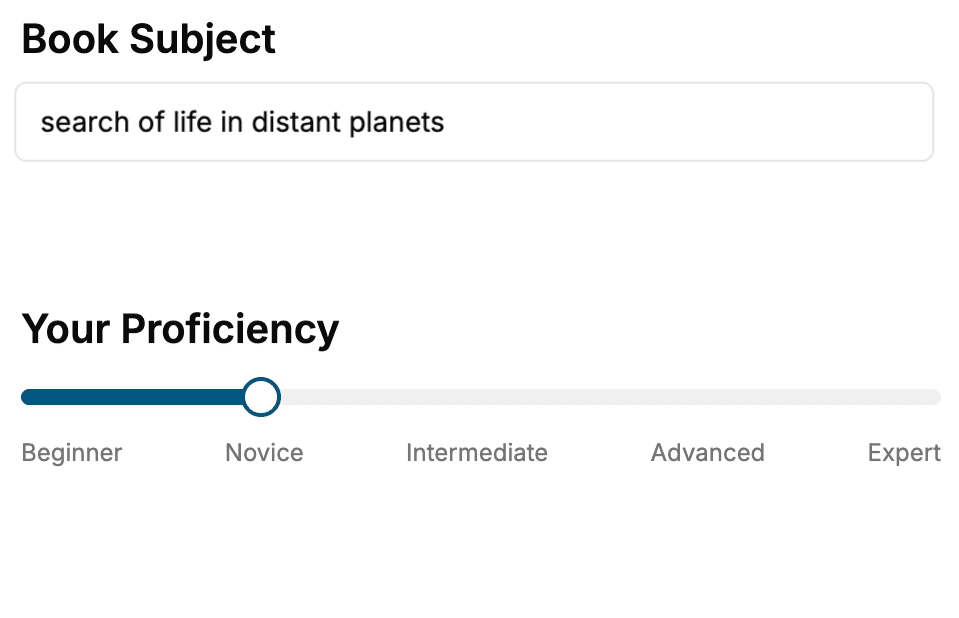
- 1. Select your focus
Select the focus of your Museum Guide book and share your background
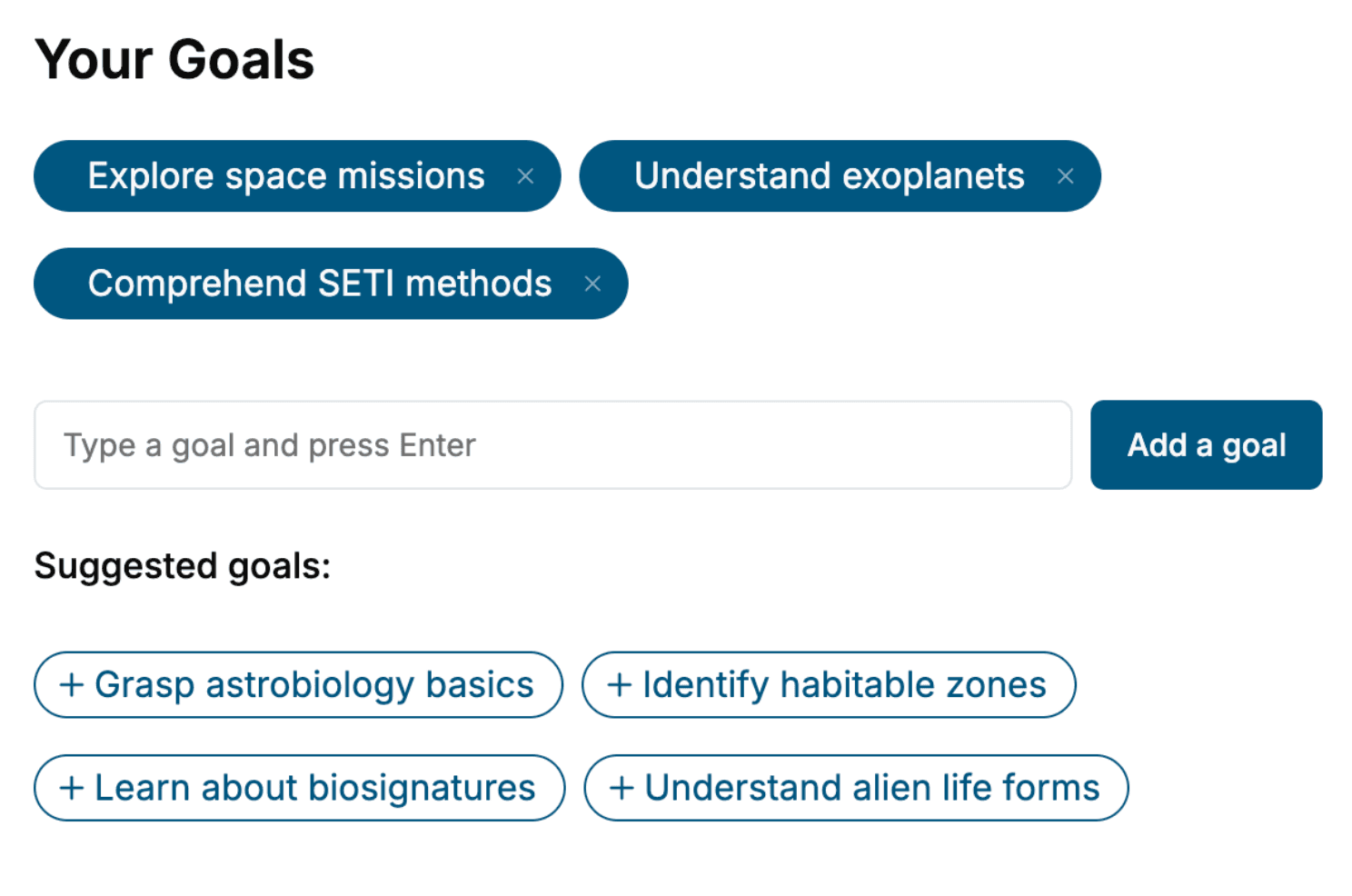
- 2. Personalize your book
Specify your goals and choose sub-topics to include
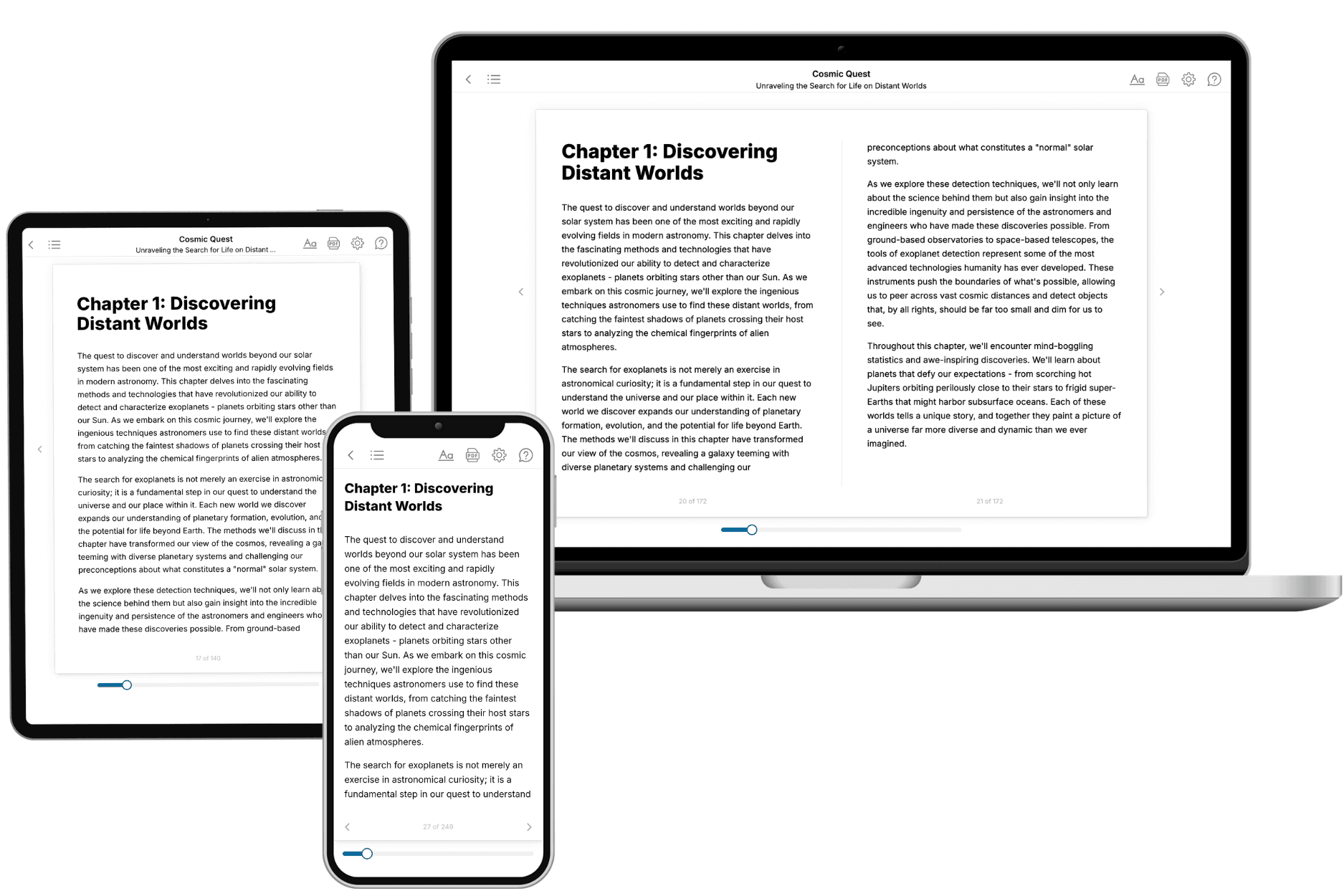
- 3. Get your tailored book
Your book is ready in 10 minutes. Read it online, download as EPUB or PDF, or send to Kindle.
Frequently asked questions
- What is TailoredRead?
TailoredRead creates complete, full-length nonfiction ebooks, written specifically for you. Tell us what you want to learn and why, and TailoredRead writes you a complete ebook on it, with charts, tables, and diagrams throughout. Read it online, on Kindle, or on any e-reader, or download it as a PDF or EPUB. Every book is written fresh the day you order it.
- How is the book tailored to me?
Before anything is written, you answer a few short questions about your goals, your background, and the topics you care about. Your book is then planned around your answers: written at your level, focused on your goals, and covering the topics you chose, instead of the one-size-fits-all book a store sells everyone.
- Will it read like generic AI content?
No. Your book isn't a chat transcript: it's planned chapter by chapter before a single word is written, told in a clear book voice, and explains ideas visually with charts, tables, and diagrams. After writing, every book goes through an editorial pass that polishes chapters so the book reads consistent from start to finish. Judge for yourself: browse thousands of sample books on our Explore Books page.
- How accurate is the content?
Our AI first checks whether your subject needs live research. Niche and fast-moving subjects are researched before writing, and the book plan and chapters are grounded in what it finds. After writing, every book goes through a quality pass that checks its facts and consistency, and researched books list their sources in a Notes section at the back.
- How long is the book?
You choose the length: Comprehensive (250-300 pages), Detailed (150-200 pages), Essential (70-100 pages), or Short (30-50 pages).
- Does the book include visuals?
Yes. Every book includes charts, tables, and diagrams: timelines, checklists, step-by-step guides, decision trees, comparison tables, matrices, and bar charts. A typical book includes dozens of these visual elements.
- Can I read it on Kindle? What formats can I download?
Yes. Every book can be read in our online reader or downloaded as a PDF or EPUB. The EPUB can be opened with Kindle, Apple Books, Kobo, and any e-reader. The Commercial and Author licenses also include an editable Word (DOCX) and Markdown download.
- How much does it cost?
About the price of a regular ebook. The exact price depends on your book's length and complexity, from $2 for the shortest books to $35 for the most comprehensive, and it's shown when you review your book, before you commit to anything. Each book is a one-time purchase, yours to keep, no subscription. Licenses that let you share, teach, or publish your book range from $35.99 to $49.99.
- Can I preview the book before purchasing?
Before you pay, you'll see what your book will cover: the title, a detailed description, the estimated length, and the complete chapter-by-chapter table of contents, so you know what you're getting before you decide. The full text itself is written after you purchase.
- How long does it take to create a book?
About 10 minutes. You can start reading the opening chapters while the rest is still being written.