Legal History Books
Explore tailored Legal History books created by our AI
The Hammurabi Code Decoded
Ancient Justice, Modern Lessons from Babylon's Most Famous Laws
The Hammurabi Code stands as one of history's most misunderstood legal documents. Many assume it was simply brutal and primitive, yet the reality is far more sophisticated. This book cuts through misconceptions to reveal what the Code actually says, why King Hammurabi created it, and how it functioned within ancient Babylonian society. You'll discover how a ruler used written law as a tool for establishing order and legitimacy across a diverse empire. Through careful examination of specific laws—from commerce and property to family relations and labor disputes—you'll see how ancient Babylonians grappled with the same fundamental questions about justice that societies face today. By understanding the Code's historical context, social structure, and underlying principles, you'll gain insight into how civilizations organize themselves and how legal systems evolve. This exploration reveals not a primitive relic, but a sophisticated attempt to balance power, protect the vulnerable, and create predictable rules for living together.
The Roman Law Blueprint
How Ancient Legal Principles Still Shape Modern Justice
What if the legal system protecting your rights today was built on foundations laid nearly two thousand years ago? Ancient Roman law wasn't just a historical curiosity—it's the blueprint underlying modern justice systems across the globe. This book explores how Roman jurists developed revolutionary concepts like written legal codes, property rights, and the presumption of innocence that transformed society. You'll discover how the Romans created legal frameworks flexible enough to govern an empire spanning three continents, and how those same principles guide courtrooms today. From the earliest laws of the Kingdom through the sophisticated legal reasoning of the Empire, you'll trace the evolution of ideas that shaped Western civilization. Whether you're fascinated by history, interested in how law works, or curious about the origins of justice itself, this exploration reveals the timeless wisdom embedded in Roman legal thought and its profound influence on the world we inhabit.
What does it really mean when the Constitution promises that no person shall be deprived of life, liberty, or property without due process of law? This question has shaped American jurisprudence for over 150 years, yet many citizens remain unclear about how this fundamental protection actually works in practice. This book demystifies the Fourteenth Amendment's Due Process Clause, exploring its historical roots in post-Civil War America and tracing its evolution through landmark Supreme Court decisions. You'll discover how due process protections extend far beyond courtroom procedures to encompass substantive rights affecting everything from criminal justice to personal freedoms. Through clear explanations of complex constitutional concepts and real-world examples, you'll gain the knowledge to understand how due process shapes American law, influences political debates, and protects individual rights in an ever-changing society. Whether you're a student, professional, or engaged citizen, this book provides the essential framework for understanding one of the Constitution's most powerful and contested provisions.
The Dred Scott Decision stands as one of the most controversial and consequential Supreme Court rulings in American history, yet many people struggle to understand its full significance and impact. This book provides a clear, comprehensive examination of the case that declared enslaved people had no constitutional rights and no standing to sue in federal court. You'll discover how a Missouri slave's quest for freedom became a national crisis, how the Supreme Court's attempt to settle the slavery question backfired spectacularly, and why this decision remains relevant to modern debates about citizenship and constitutional interpretation. Through careful analysis of the legal arguments, political context, and historical consequences, you'll gain insight into how judicial decisions shape national destiny and how unresolved constitutional contradictions can tear a nation apart. This is essential reading for understanding the Civil War's origins and the constitutional amendments that followed.
Many believe the Salem Witch Trials were driven by superstition and ignorance, but the reality is far more complex and unsettling. In 1692-1693, Salem, Massachusetts became the site of America's deadliest witch hunt, resulting in twenty executions and the imprisonment of hundreds. Yet this wasn't simply about belief in witchcraft—it was a perfect storm of social conflict, economic tension, religious extremism, and political chaos that exposed how easily communities can turn on their own. This book examines the trials through primary sources, local history, and the perspectives of the accused, the accusers, and the community caught in between. You'll discover how respected church members and property owners became targets, why the trials suddenly ended, and what the trials reveal about human psychology and the mechanisms of persecution. By understanding Salem, you'll gain insight into how mass hysteria develops, why innocent people confess to impossible crimes, and what safeguards protect us from similar injustices today.
The Alien and Sedition Acts
Controversy and Constitution in Early America
Political turmoil and fear of foreign influence threatened to tear apart the fragile fabric of the young United States. In this tumultuous atmosphere, the Alien and Sedition Acts emerged as a contentious response to perceived threats, both internal and external. This book delves deep into the historical context, motivations, and consequences of these controversial laws that tested the limits of American democracy in its infancy. You'll explore the complex web of events that led to the Acts' creation, from international tensions with France to domestic political rivalries. Through vivid narratives and insightful analysis, you'll gain a nuanced understanding of how these laws challenged the very foundations of free speech and civil liberties in America. Discover how the Alien and Sedition Acts shaped public discourse, influenced the balance of power between federal and state governments, and left an indelible mark on American jurisprudence. This book offers a thought-provoking examination of a pivotal moment in US history, providing valuable lessons on the delicate balance between national security and individual rights that continue to resonate today.
Reading the Law
How Statutes Mean What They Say and Why It Matters
Most people assume laws mean what they plainly say. But statutes are written in language, and language is inherently ambiguous. When courts interpret statutes, they're not simply reading off obvious meanings—they're making choices that reshape how laws apply to real situations. This book explores the philosophy and practice of statutory construction: the methods judges use to determine what written laws actually mean. You'll discover why the same statute can support opposite conclusions, how legislative history influences interpretation, what "plain meaning" really means, and why different interpretive philosophies lead to different outcomes. Whether you're studying law, working in the legal field, or simply curious about how the legal system actually works, this book reveals the interpretive reasoning that lies beneath every court decision. Understanding statutory construction transforms how you read laws and recognize the human judgment embedded in legal interpretation.
How Courts Work
A Practical Guide to Understanding Judicial Systems and Legal Processes
You'll discover how judicial systems function as the backbone of democratic societies, protecting rights and resolving disputes through structured legal processes. This guide walks you through the architecture of courts—from trial courts to appellate bodies—and explains how judges, lawyers, juries, and other participants work within established procedures to deliver justice. You'll learn why the separation of powers matters, how different legal traditions shape court operations, and what happens when cases move through the system. By examining real-world examples and exploring the principles underlying judicial decision-making, you'll gain insight into how courts interpret laws, balance competing interests, and maintain public trust. Whether you're curious about a specific case, interested in legal reform, or simply want to understand how your country's courts operate, this book provides the practical knowledge needed to navigate and appreciate the judicial systems that shape our societies.
Master the constitutional framework that governs American law and politics by understanding its historical origins, foundational principles, and evolution through landmark judicial decisions. This comprehensive guide traces the Constitution from its 1787 origins through contemporary jurisprudence, examining the philosophical debates that shaped its structure, the amendment process that has transformed it, and the Supreme Court decisions that have defined its meaning. You'll explore how federalism balances national and state power, how the separation of powers constrains executive authority, and how judicial interpretation has adapted constitutional principles to modern circumstances. By analyzing the Federalist Papers, studying pivotal Supreme Court cases, and examining the political conflicts that have driven constitutional change, you'll develop the analytical framework needed to understand current legal debates and constitutional controversies. Whether you're seeking to grasp the legal foundations of American governance or connect historical constitutional principles to today's political landscape, this guide provides the focused, evidence-based knowledge you need to engage confidently with constitutional law and history.
Amending America
How the Constitution Changes and Why It Matters
You'll gain a sophisticated understanding of one of the most powerful yet least understood mechanisms in American democracy. This book takes you beyond the basic civics lesson to explore how constitutional amendments actually happen—and why they so rarely do. You'll discover the strategic calculations, political battles, and social movements that have shaped America's founding document across more than two centuries. Through detailed analysis of both successful and failed amendments, you'll learn to recognize the patterns that determine which proposed changes gain traction and which fade into obscurity. You'll understand how the Founders' original design has been tested, adapted, and sometimes circumvented through formal and informal means. From the Bill of Rights to Prohibition and its repeal, from voting rights expansions to contemporary proposals, you'll see how each amendment reflects the values and conflicts of its era. This book equips you with analytical frameworks to evaluate current amendment proposals and understand their likelihood of success. You'll appreciate how this deliberately difficult process has both protected fundamental rights and sometimes delayed necessary reforms, shaping the nation's trajectory in profound ways.
Many people have heard of Critical Race Theory, but few truly understand what it is. Popular discourse often presents it as either a revolutionary framework for justice or a dangerous ideology—rarely as what it actually is: a philosophical and legal approach to analyzing how institutions perpetuate racial inequality. This book cuts through the noise to explain CRT's genuine intellectual foundations, its evolution from legal scholarship to broader cultural influence, and the legitimate debates surrounding its claims and applications. You'll discover how CRT emerged from scholars questioning why civil rights legislation failed to eliminate systemic racism, explore its core concepts like intersectionality and structural inequality, and understand why it remains so contested. Whether you're encountering CRT in academic settings, policy discussions, or cultural debates, this guide provides the clarity needed to think critically about race, power, and social institutions—and to participate meaningfully in conversations about how society should address racial inequality.
WIPO Unveiled
Navigating the Global Intellectual Property Landscape
Are you aware of how profoundly the World Intellectual Property Organization shapes our global innovation ecosystem? WIPO Unveiled: Navigating the Global Intellectual Property Landscape offers an in-depth exploration of this crucial yet often misunderstood UN agency. This book demystifies WIPO's complex structure and operations, providing you with essential insights into its role in shaping international IP policies and practices. You'll gain a nuanced understanding of WIPO's impact on innovation, creativity, and economic development worldwide. From patent harmonization efforts to copyright in the digital age, this comprehensive guide equips you with the knowledge to navigate the intricate world of global intellectual property governance. Whether you're a policy professional, researcher, or simply curious about the forces driving our knowledge-based economy, WIPO Unveiled is your roadmap to understanding the organization at the heart of the global IP system.
The Antitrust Paradox
How Competition Laws Shape Markets, Democracy, and Your Rights
Understand how antitrust regulations work as a critical mechanism balancing market competition, constitutional rights, and democratic governance. This book explores the intricate relationship between competition law and constitutional principles, revealing how legal frameworks designed to prevent monopolies actually shape the structure of entire industries and influence political power distribution. You'll discover why antitrust enforcement has swung dramatically between different philosophies—from trust-busting populism to consumer welfare economics to contemporary concerns about tech giants. Through clear explanations of landmark cases, constitutional tensions, and real-world applications, you'll gain insight into how these regulations affect innovation, consumer choice, and market access. Whether you're interested in understanding Big Tech regulation, healthcare consolidation, or the fundamental question of how much government should control markets, this book provides the analytical tools to evaluate competing arguments and understand the stakes involved in antitrust policy debates.
Amending the Constitution
A History and Guide to Amendment Campaigns
Constitutional amendments represent the ultimate expression of democratic will—yet most Americans have little understanding of how they actually happen. The path from idea to ratified amendment is deliberately arduous, requiring supermajority support in Congress and approval from three-fourths of state legislatures. This creates a paradox: amendments are rare precisely because they're meant to be, yet understanding how they succeed—and why most fail—reveals essential truths about American politics, coalition-building, and social change. This guide walks you through the complete amendment process, from proposal mechanisms to state ratification procedures, while analyzing the political strategies that have driven successful campaigns and the missteps that have derailed others. You'll examine historical amendment timelines, study failed attempts to understand what went wrong, and learn the grassroots mobilization tactics, advocacy strategies, and coalition-building approaches that actually move the needle on constitutional change. Whether you're interested in understanding past amendments or evaluating modern proposals, this book provides the analytical framework and practical knowledge to comprehend how America's highest law gets changed.
The Constitution Alive
Understanding Your Rights and How They Shape American Democracy
Discover how the Constitution protects your fundamental freedoms and shapes your role as a citizen in American democracy. This comprehensive guide cuts through legal jargon to explain what constitutional rights actually mean for your life—from free speech and religious liberty to due process and equal protection. You'll explore the historical struggles that secured these rights, understand how courts interpret them today, and learn why they matter in contemporary debates about privacy, voting, and government power. Whether you're concerned about your personal freedoms, curious about landmark Supreme Court cases, or want to engage more meaningfully in civic life, this book provides the clarity and context you need. Understand the Constitution not as a dusty historical document, but as a living framework that protects your liberty and defines your relationship with government.
Many people believe they understand free speech, but few grasp its true complexity. You likely know it's a fundamental right, yet struggle to answer critical questions: Where exactly does free speech end? Why do democracies protect offensive speech? How do we balance free expression with other important values like security and equality? This book cuts through the confusion by exploring freedom of speech not as a simple absolute, but as a carefully balanced principle that has evolved across centuries and continues to shape our world. You'll discover the historical battles that established this right, examine how different democracies protect it differently, and understand the real-world tensions between free speech and other democratic values. Whether you're concerned about censorship, social media moderation, or simply want to engage more thoughtfully in political discourse, this book provides the clarity and context you need to think critically about one of democracy's most essential—and most misunderstood—freedoms.
The Amendment Process
How Constitutional Change Shapes Democracy and Political Power
Constitutional amendments stand at the intersection of law, politics, and social change. When you understand how these fundamental alterations work, you gain insight into the very DNA of democratic governance. This book takes you through the intricate world of constitutional change, examining why some democracies amend their founding documents frequently while others preserve them for centuries. You'll explore the political forces that drive amendment campaigns, the procedural hurdles that protect constitutions from hasty changes, and the lasting consequences of both successful and failed attempts. Through comparative analysis of amendment processes across different nations and historical periods, you'll discover how societies negotiate their most fundamental disagreements and enshrine new values into their governing frameworks. Whether you're analyzing current political debates or seeking to understand how democracies adapt over time, this book provides the analytical tools and historical context you need. You'll come away with a deeper appreciation for how constitutional design shapes political possibilities and how the amendment process itself reflects the balance between stability and progress.
Many assume witness protection is simply a practical tool for law enforcement—a necessary but morally straightforward solution to a security problem. Yet this perspective misses the profound philosophical questions at stake. When a society decides to protect witnesses, it makes fundamental claims about justice, fairness, and what we owe to those who speak truth to power. This book examines witness protection through the lens of philosophy and ethics, exploring the moral foundations that justify these programs, the tensions they create, and what they reveal about our commitment to justice. You'll discover how different ethical frameworks evaluate witness protection, why societies have historically struggled with these questions, and how contemporary programs grapple with balancing individual rights against collective needs. Whether you're interested in criminal justice, philosophy, or how societies maintain the rule of law, this exploration offers fresh perspectives on one of justice's most complex and consequential practices.
Related books you may like:
Many lawyers struggle to confidently apply antitrust principles because they lack a systematic framework for analyzing markets and identifying dominance. Without mastering market definition and concentration analysis, you risk misdiagnosing competitive issues, weakening client arguments, and missing critical legal opportunities. This book provides a comprehensive yet accessible guide to antitrust fundamentals tailored for legal professionals. You'll learn how to define relevant markets using modern methodologies, calculate and interpret market concentration metrics, assess monopoly power with precision, and evaluate market dominance across multiple dimensions. Each concept builds logically from foundational principles to sophisticated analytical techniques, with practical examples drawn from landmark cases and contemporary enforcement actions. By the end, you'll possess the analytical tools and conceptual clarity needed to confidently advise clients, structure arguments, and navigate complex antitrust matters with authority and precision.
Navigate the rapidly evolving landscape of AI liability that now confronts every legal practice. As courts apply traditional tort, contract, and product liability frameworks to AI-assisted legal work, practitioners face unprecedented malpractice exposure—from hallucinated citations to supervisory failures to insurance coverage gaps. This book guides you through the critical decisions you must make today to protect your practice tomorrow. You'll learn how to assess AI malpractice risks using real-world case analysis, implement supervisory protocols that satisfy ABA Rules 5.1 and 5.3, design AI disclosure frameworks that withstand scrutiny, and advise clients on their own AI liability exposure. Drawing on verified research through July 2026, including Lloyd's emerging risk classifications, state AI governance statutes, and professional liability insurance trends, this resource provides the frameworks, checklists, and strategic guidance you need to deploy AI responsibly while managing the paradoxical liability landscape where both using and failing to use AI creates exposure. Whether you're building firm-wide AI governance or counseling individual clients, this book equips you with the competence and documentation standards that define professional practice in the AI era.
Understand how a single constitutional phrase has become the foundation of American civil rights protections. The Equal Protection Clause of the 14th Amendment is one of the most consequential yet misunderstood provisions in the Constitution. This book traces its journey from a Reconstruction-era guarantee to the powerful legal tool that dismantled Jim Crow segregation, expanded rights for women and minorities, and continues shaping debates about fairness today. You'll explore landmark Supreme Court cases, learn how courts determine what "equal protection" actually means, and discover why this clause remains central to contemporary civil rights struggles. Whether you're studying history, law, or simply want to understand the constitutional backbone of American equality, this accessible guide illuminates how legal principles translate into real-world protections and why the fight for equal protection remains unfinished.
Create a Legal History Book Tailored to You
Create an AI-crafted book tailored to your goals, interests, and background






Benefits of AI-tailored books
- Read one book, not ten:
- all the Legal History knowledge you need, gathered into a single book.
- Save days of learning:
- tell us your goals, choose your topics, and the whole book is built around them.
- Learn effortlessly:
- Legal History book written for your specific background and expertise.
- Understand at a glance:
- includes charts, tables, timelines, checklists, decision trees, and more.
- Stay current:
- written the day you order it, not years ago.
- Trust what you read:
- every book is checked for accuracy, with real research when your subject needs it.
Create your unique book in 3 steps
- 1. Select your focus
Select the focus of your Legal History book and share your background
- 2. Personalize your book
Specify your goals and choose sub-topics to include
- 3. Get your tailored book
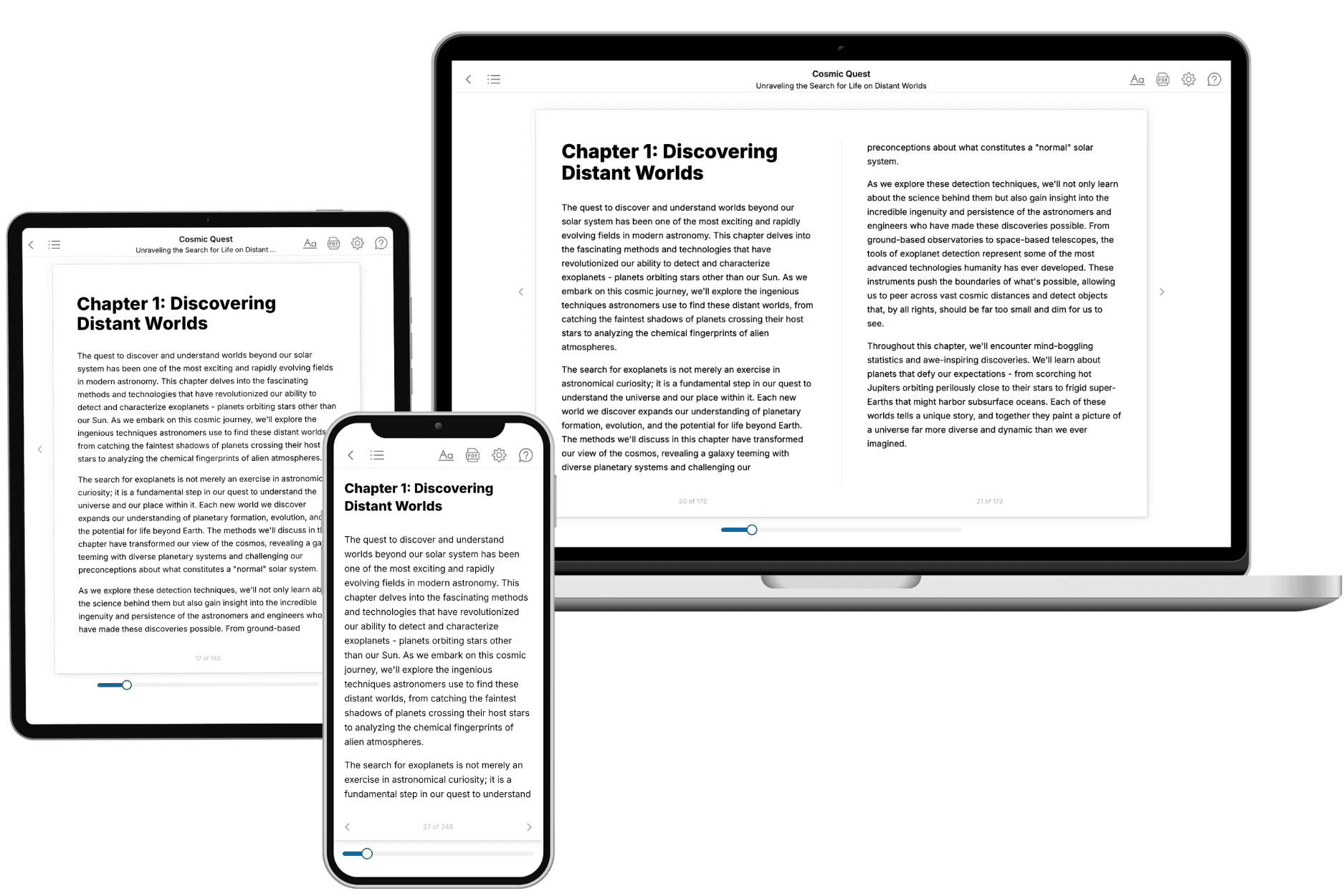
Your book is ready in 10 minutes. Read it online, download as EPUB or PDF, or send to Kindle.

Start from a template
Frequently asked questions
- What is TailoredRead?
TailoredRead creates complete, full-length nonfiction ebooks, written specifically for you. Tell us what you want to learn and why, and TailoredRead writes you a complete ebook on it, with charts, tables, and diagrams throughout. Read it online, on Kindle, or on any e-reader, or download it as a PDF or EPUB. Every book is written fresh the day you order it.
- How is the book tailored to me?
Before anything is written, you answer a few short questions about your goals, your background, and the topics you care about. Your book is then planned around your answers: written at your level, focused on your goals, and covering the topics you chose, instead of the one-size-fits-all book a store sells everyone.
- Will it read like generic AI content?
No. Your book isn't a chat transcript: it's planned chapter by chapter before a single word is written, told in a clear book voice, and explains ideas visually with charts, tables, and diagrams. After writing, every book goes through an editorial pass that polishes chapters so the book reads consistent from start to finish. Judge for yourself: browse thousands of sample books on our Explore Books page.
- How accurate is the content?
Our AI first checks whether your subject needs live research. Niche and fast-moving subjects are researched before writing, and the book plan and chapters are grounded in what it finds. After writing, every book goes through a quality pass that checks its facts and consistency, and researched books list their sources in a Notes section at the back.
- How long is the book?
You choose the length: Comprehensive (250-300 pages), Detailed (150-200 pages), Essential (70-100 pages), or Short (30-50 pages).
- Does the book include visuals?
Yes. Every book includes charts, tables, and diagrams: timelines, checklists, step-by-step guides, decision trees, comparison tables, matrices, and bar charts. A typical book includes dozens of these visual elements.
- Can I read it on Kindle? What formats can I download?
Yes. Every book can be read in our online reader or downloaded as a PDF or EPUB. The EPUB can be opened with Kindle, Apple Books, Kobo, and any e-reader. The Commercial and Author licenses also include an editable Word (DOCX) and Markdown download.
- How much does it cost?
About the price of a regular ebook. The exact price depends on your book's length and complexity, from $2 for the shortest books to $35 for the most comprehensive, and it's shown when you review your book, before you commit to anything. Each book is a one-time purchase, yours to keep, no subscription. Licenses that let you share, teach, or publish your book range from $35.99 to $49.99.
- Can I preview the book before purchasing?
Before you pay, you'll see what your book will cover: the title, a detailed description, the estimated length, and the complete chapter-by-chapter table of contents, so you know what you're getting before you decide. The full text itself is written after you purchase.
- How long does it take to create a book?
About 10 minutes. You can start reading the opening chapters while the rest is still being written.