The Salem Witch Trials
Understanding America's Most Infamous Persecution Through Primary Sources and Local History
Many believe the Salem Witch Trials were driven by superstition and ignorance, but the reality is far more complex and unsettling.
191 pages8 chaptersMar 13, 2026United States History
About this book
In 1692-1693, Salem, Massachusetts became the site of America's deadliest witch hunt, resulting in twenty executions and the imprisonment of hundreds. Yet this wasn't simply about belief in witchcraft—it was a perfect storm of social conflict, economic tension, religious extremism, and political chaos that exposed how easily communities can turn on their own. This book examines the trials through primary sources, local history, and the perspectives of the accused, the accusers, and the community caught in between. You'll discover how respected church members and property owners became targets, why the trials suddenly ended, and what the trials reveal about human psychology and the mechanisms of persecution. By understanding Salem, you'll gain insight into how mass hysteria develops, why innocent people confess to impossible crimes, and what safeguards protect us from similar injustices today.
Table of contents
- IntroductionWhy Salem Matters Today, Separating Fact from Fiction, How to Use This BookRead below
- Chapter 1: The World of 1692 SalemGeography and Settlement Patterns, The Divide Between Salem Village and Salem Town, Puritanism and Religious Anxiety, Political Instability and Uncertainty
- Chapter 2: The First AccusationsBetty Parris and Ann Putnam Jr.: The First Afflicted, Sarah Good, Sarah Osborne, and Tituba, The Power of Spectral Evidence, How Accusations Spread Through the Community
- Chapter 3: The Accused: Who and WhyThe Profile of the Accused, Economic Disputes and Property Conflicts, Family Feuds and Personal Rivalries, Gender, Age, and Social Status
- Chapter 4: The Trials and ExecutionsLegal Procedures and Court Processes, Confessions, Denials, and Coerced Testimony, The Twenty Who Were Executed, Giles Corey and Pressing to Death
- Chapter 5: The Psychology of Mass HysteriaUnderstanding the Afflictions, The Contagion Effect and Group Dynamics, How Authority Figures Validated False Claims, Modern Understanding of Mass Hysteria
- Chapter 6: The Trials UnravelWhen Accusations Reached the Powerful, Doubts and Dissent Among the Community, The Role of Clergy in Stopping the Trials, Why the Trials Suddenly Ended
- Chapter 7: Aftermath and AccountabilityImmediate Consequences for the Community, Apologies, Restitution, and Exonerations, Legal Reforms and Changes to Evidence Standards, Personal Stories of Survivors and Their Families
- Chapter 8: Lessons for Modern SocietyRecognizing Warning Signs of Persecution, The Importance of Due Process and Evidence, Protecting Vulnerable Populations, Contemporary Examples of Scapegoating and Hysteria
- ConclusionRemembering Salem: Why History Matters, Moving Forward with Wisdom
- Further Reading and Resources
- Glossary of Key Terms
Introduction
In the winter of 1692, a small farming community in Massachusetts descended into one of the most disturbing episodes in American history. What began with a handful of young girls displaying strange, convulsive behavior quickly spiraled into a wave of accusations, arrests, trials, and executions that consumed an entire region. By the time the hysteria finally burned itself out, twenty people had been executed, one man had been pressed to death under heavy stones, and hundreds more had been imprisoned, accused, or had their lives permanently shattered. The Salem Witch Trials left a wound on the American conscience that has never fully healed.
Most people have heard of Salem. The name alone carries a kind of dark gravity, conjuring images of pointed hats, burning stakes, and superstitious Puritans lashing out at innocent neighbors. But those images are largely wrong, and the real story is far more disturbing precisely because it is so much more human. The people who accused their neighbors were not simply ignorant or evil. The judges who sentenced the condemned were not cartoon villains. The community that allowed it all to happen was made up of ordinary men and women navigating extraordinary pressures. Understanding why Salem happened requires looking honestly at the social, economic, religious, and psychological forces that made it possible.
This book approaches the Salem Witch Trials not as a curiosity from a distant, superstitious past but as a case study in how communities break down under pressure. The trials offer a remarkably well-documented window into the mechanics of persecution: how accusations spread, how authority figures validate false claims, how innocent people come to confess to impossible crimes, and how entire communities can abandon their own values when fear takes hold. These are not ancient problems. They are patterns that repeat across history, and recognizing them is one of the most valuable things a study of Salem can teach.
Throughout these pages, you will encounter the real people at the center of this story. You will meet the accusers, many of them young girls under enormous social and psychological pressure. You will meet the accused, who ranged from social outcasts to respected church members and prosperous landowners. You will meet the judges, the clergy, the skeptics, and the survivors. Primary sources, including court records, personal letters, sermons, and petitions, form the backbone of this account, grounding every claim in the historical record rather than in legend or assumption. Where historians disagree, those disagreements are acknowledged honestly.
Why Salem Matters Today
It would be easy to treat the Salem Witch Trials as a relic, a strange artifact from a time when people believed in literal witchcraft and had no modern understanding of psychology, medicine, or law. But that framing lets us off the hook too easily. The conditions that produced Salem, including social division, economic anxiety, political instability, and the search for someone to blame, are not unique to 1692. They are recognizable features of human societies across centuries and cultures. Salem matters today because it shows us what those conditions can produce when left unchecked.
The trials also matter because of their direct influence on American legal and political thought. The abuses of the Salem court, particularly its reliance on spectral evidence (the claim that a person's spirit could torment others while their body was elsewhere), helped shape later thinking about what kinds of evidence courts should and should not accept. The disaster of Salem contributed to a growing awareness that accusation is not proof, that the accused deserve a genuine opportunity to defend themselves, and that courts must be insulated from public panic. These ideas eventually found their way into the foundations of American jurisprudence.[1]
Beyond law, Salem shaped American attitudes toward religious authority and its relationship to government. The trials were conducted by a court that operated with the blessing of Puritan clergy, and the eventual backlash against the trials contributed to a broader cultural shift away from theocratic governance. The idea that religious belief should not be sufficient grounds for legal prosecution, and that church and state must maintain some separation, gained significant cultural momentum in the years following 1692. Salem is, in this sense, part of the intellectual prehistory of the First Amendment.
There is also a deeply personal reason why Salem matters. The trials destroyed real lives. Families were torn apart. Reputations were ruined. People died. Some of the accused spent months in filthy, overcrowded jails before the hysteria ended, and many never fully recovered their health or their standing in the community. Remembering these individuals by name, understanding their stories, and refusing to reduce them to statistics is an act of historical justice. It is also a reminder that the victims of persecution are always specific human beings, not abstractions.
Salem also serves as a powerful case study in what scholars now call mass psychogenic illness, a phenomenon in which groups of people develop shared physical or psychological symptoms without an identifiable organic cause. The afflictions displayed by the accusers in 1692 fit patterns that have been documented in communities around the world and across centuries. Understanding Salem through this lens does not dismiss the suffering of those involved. It helps explain how genuine distress can be channeled into devastating social harm when the right conditions are present.[2]
Finally, Salem matters because it is a story about the courage of dissent. Not everyone in 1692 went along with the hysteria. A small number of individuals, including merchants, clergy, and ordinary community members, spoke out against the trials at considerable personal risk. Some were accused themselves for doing so. Their voices were eventually heard, and their resistance helped bring the trials to an end. Their example is worth remembering, because every era produces moments when speaking an uncomfortable truth requires real courage.
More weight.These were reportedly the last words of Giles Corey, an 81-year-old farmer who was pressed to death over two days in September 1692 after refusing to enter a plea. His defiance in the face of an unjust system became one of the most enduring symbols of resistance in American history.
The story of Salem is ultimately a story about what happens when a community loses its moral bearings. It is a story about fear, power, and the human capacity for both cruelty and courage. It is also, crucially, a story with lessons that remain urgently relevant. Understanding those lessons is the purpose of this book.
Separating Fact from Fiction
Few historical events have been as thoroughly mythologized as the Salem Witch Trials. Centuries of novels, plays, films, and popular retellings have layered so much fiction over the historical record that many people carry a mental image of Salem that bears little resemblance to what actually happened. Before diving into the history itself, it is worth clearing away some of the most persistent misconceptions, because understanding what Salem was not is just as important as understanding what it was.
The first and most widespread misconception is that the accused were burned at the stake. They were not. In Salem, those who were convicted and executed were hanged, not burned. Burning at the stake was more common in European witch trials, particularly in continental Europe, but it was not the method used in Massachusetts. The image of burning is so deeply embedded in popular culture that it surprises many people to learn the truth, but the historical record is unambiguous on this point. Nineteen people were hanged on Gallows Hill, and one, Giles Corey, was pressed to death.[3]
A second common misconception is that the accused were primarily poor, marginalized, or socially isolated individuals. In reality, the profile of the accused was remarkably diverse. Among those charged were:
- Respected church members with long records of community service
- Prosperous landowners and merchants
- A former minister, George Burroughs, who was accused and executed
- The wife of the governor of Massachusetts, Lady Phips, who was briefly named as a suspect
- Elderly men and women with no prior history of conflict with their neighbors
A third misconception is that the trials were driven purely by religious fanaticism. Religion was certainly a central feature of Puritan life in 1692, and the belief in an active, intervening Devil was genuine and widespread. But reducing the trials to religious hysteria misses the many other forces at work. Land disputes between Salem Village and Salem Town, political instability following the loss of the Massachusetts Bay Colony charter, tensions between established families and newer settlers, and the psychological pressures of a community that had recently experienced war, disease, and economic hardship all contributed to the crisis. Religion provided the framework through which people interpreted events, but it was not the only engine driving the accusations.
Another persistent myth is that the accusers were simply lying for personal gain or entertainment. Some historians have argued that the young accusers were consciously fabricating their symptoms, and there is evidence that some accusations were shaped by personal grudges. But the picture is more complicated than simple deception. Many of the accusers appear to have genuinely believed what they were experiencing, and the social and psychological dynamics of the group reinforced and amplified their symptoms. The concept of mass psychogenic illness helps explain how real distress can produce dramatic physical symptoms without any deliberate fraud being involved, though deliberate manipulation by some individuals cannot be ruled out entirely.
It is also commonly believed that Salem was unique in American history. In fact, witch trials occurred in other parts of colonial America before and after 1692, though none reached the scale or intensity of Salem. What made Salem distinctive was the combination of factors that converged at a single moment: a new and inexperienced court, a community under severe stress, a legal framework that admitted spectral evidence, and a social environment in which accusation carried enormous weight. Salem was an extreme case, but it was not an isolated aberration in an otherwise rational society.
Finally, many people assume that the Salem Witch Trials ended because the community suddenly came to its senses and recognized the accusations as false. The reality is more complicated and, in some ways, more troubling. The trials began to unravel primarily when accusations started reaching people with significant social and political power, including the wife of the governor and prominent Boston merchants. It was the threat to the powerful, not a sudden awakening of collective conscience, that most directly triggered the end of the court. This detail matters because it reveals something important about how power operates in moments of crisis.
A useful rule of thumb when approaching Salem: if the image comes from a Halloween decoration, a Hollywood film, or a stage production, treat it with skepticism. The real history is stranger, sadder, and more instructive than any dramatization.
Clearing away these misconceptions is not just an academic exercise. It is essential preparation for understanding the real lessons of Salem. A mythologized Salem is easy to dismiss as a product of a primitive, superstitious age. The real Salem, with all its complexity and its recognizable human dynamics, is much harder to dismiss and much more worth studying.
How to Use This Book
This book is designed to be read from beginning to end, but it is also structured so that individual chapters can stand on their own for those who want to focus on specific aspects of the trials. The chapters move roughly chronologically through the events of 1692 and 1693, but they also pause regularly to examine the broader context, the underlying causes, and the lasting consequences of what happened. Whether you are coming to this topic for the first time or returning to it with prior knowledge, the structure is intended to support both approaches.
The book is organized into eight main chapters, each addressing a distinct dimension of the Salem story:
- The World of 1692 Salem sets the scene, examining the geography, social structure, religious culture, and political climate of the community before the crisis began.
- The First Accusations traces the origins of the hysteria, from the initial afflictions to the first arrests and the emergence of spectral evidence as a legal tool.
- The Accused: Who and Why examines the patterns behind the accusations, including economic disputes, family feuds, and the role of gender and social status.
- The Trials and Executions walks through the legal proceedings, the treatment of the accused, and the fates of those who were convicted.
- The Psychology of Mass Hysteria explores the psychological and social mechanisms that drove the crisis, drawing on both historical analysis and modern research.
- The Trials Unravel examines how and why the hysteria eventually collapsed, including the role of dissent and the impact of accusations against powerful figures.
- Aftermath and Accountability covers the immediate and long-term consequences of the trials, including legal reforms, apologies, and the slow process of exoneration.
- Lessons for Modern Society draws out the broader implications of Salem for contemporary questions of justice, civil liberties, and the dangers of scapegoating.
Primary sources are woven throughout the text. Court records, personal letters, sermons, and petitions from 1692 are quoted directly wherever they illuminate the human reality of the events being described. These documents are remarkable for their detail and their immediacy. Reading the actual words of the accusers, the accused, and the judges brings the history to life in a way that no secondary account can fully replicate. Where primary sources are quoted, the original spelling and phrasing have been lightly modernized for readability, but the meaning has not been altered.
Footnotes throughout the text point to specific sources for claims that might be surprising, contested, or particularly important. A Further Reading and Resources section at the end of the book provides a curated list of books, articles, and online archives for those who want to go deeper. The Glossary of Key Terms at the back defines specialized vocabulary, including legal terms from the period, Puritan theological concepts, and psychological terminology used in the analysis of mass hysteria. If you encounter an unfamiliar term in the text, the glossary is a good first stop.
A note on names and places: the spelling of names in 1692 was not standardized, and the same person's name might appear in different documents with different spellings. This book uses the most commonly accepted modern spellings for consistency. Similarly, the geography of the Salem area can be confusing because "Salem Village" and "Salem Town" were distinct communities with different characters and interests, and the distinction matters enormously for understanding the trials. Chapter 1 explains this geography in detail, and it is worth reading carefully even if you are already familiar with the broad outlines of the story.
Maps, timelines, and other visual aids are referenced at key points in the text to help orient you within the events and geography of the crisis. The timeline of events from January 1692 through May 1693 is particularly useful for keeping track of the rapid sequence of accusations, arrests, and trials that unfolded over those months. The pace of events was genuinely dizzying for the people living through them, and the timeline helps convey that sense of acceleration.
One of the goals of this book is to treat every person in the story, accuser, accused, judge, and bystander, as a full human being rather than a symbol or a type. That means resisting the temptation to sort everyone into simple categories of villain and victim. Some of the accusers were themselves under genuine psychological distress. Some of the judges were sincere men who believed they were doing the right thing. Some of the accused had complicated histories with their neighbors that shaped how their cases unfolded. Holding that complexity is not the same as excusing what happened. It is the only way to understand it honestly.
Above all, this book is an invitation to think carefully about the conditions that make persecution possible and the values that protect against it. Salem is not just a story about 1692. It is a story about human nature, about the fragility of justice, and about the courage it takes to stand against a crowd when the crowd is wrong. Those themes are as alive today as they were three centuries ago, and engaging with them seriously is one of the most valuable things history can offer.
The court records from the Salem trials, including examination transcripts, petitions, and depositions, are preserved at the Peabody Essex Museum in Salem, Massachusetts, and have been digitized through the Salem Witch Trials Documentary Archive and Transcription Project at the University of Virginia. These primary sources are freely accessible online and are an extraordinary resource for anyone who wants to read the historical record firsthand.[4]
The story of Salem begins not with the first accusation but with the world that made the accusation possible. To understand what happened in 1692, you need to understand the community that existed before the crisis, its geography, its social tensions, its religious anxieties, and its political vulnerabilities. That is where this book begins.
Notes
Introduction
- 1. Marilynne K. Roach, The Salem Witch Trials, Taylor Trade Publishing, 2002
- 2. Robert E. Bartholomew and Simon Wessely, "Protean Nature of Mass Sociogenic Illness," British Journal of Psychiatry, 2002
- 3. Mary Beth Norton, In the Devil's Snare, Alfred A. Knopf, 2002
- 4. Salem Witch Trials Documentary Archive and Transcription Project, University of Virginia. Available at: salem.lib.virginia.edu
This is the end of the free sample. The full book has 8 chapters.
Want this book written for you?
Tell us your goals and background, and get your own version of this book, tailored by AI to you.


Benefits of AI-tailored books
- Read one book, not ten:
- all the United States History knowledge you need, gathered into a single book.
- Save days of learning:
- tell us your goals, choose your topics, and the whole book is built around them.
- Learn effortlessly:
- United States History book written for your specific background and expertise.
- Understand at a glance:
- includes charts, tables, timelines, checklists, decision trees, and more.
- Stay current:
- written the day you order it, not years ago.
- Trust what you read:
- every book is checked for accuracy, with real research when your subject needs it.
Create your unique book in 3 steps
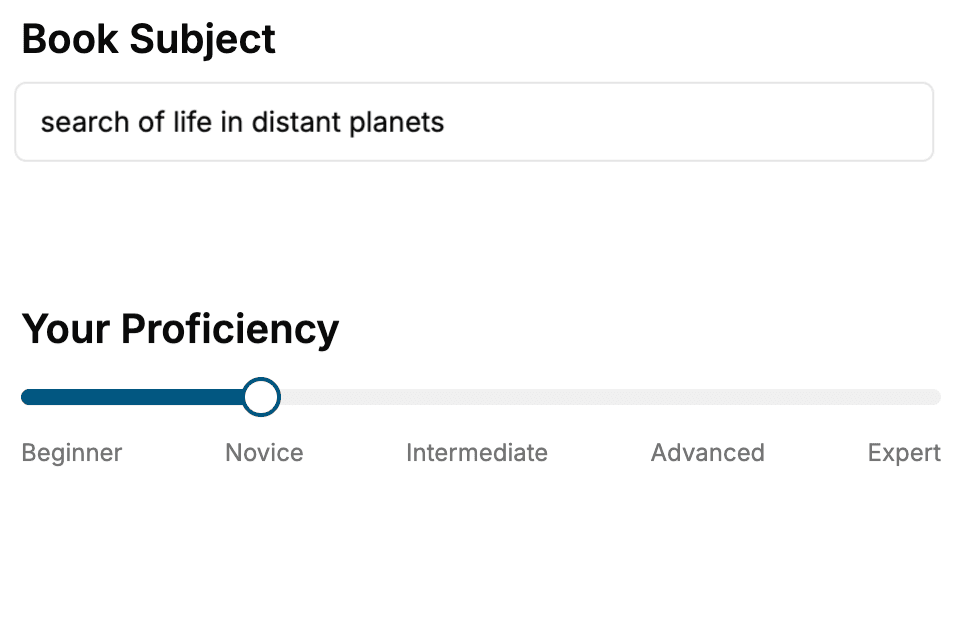
- 1. Select your focus
Select the focus of your United States History book and share your background
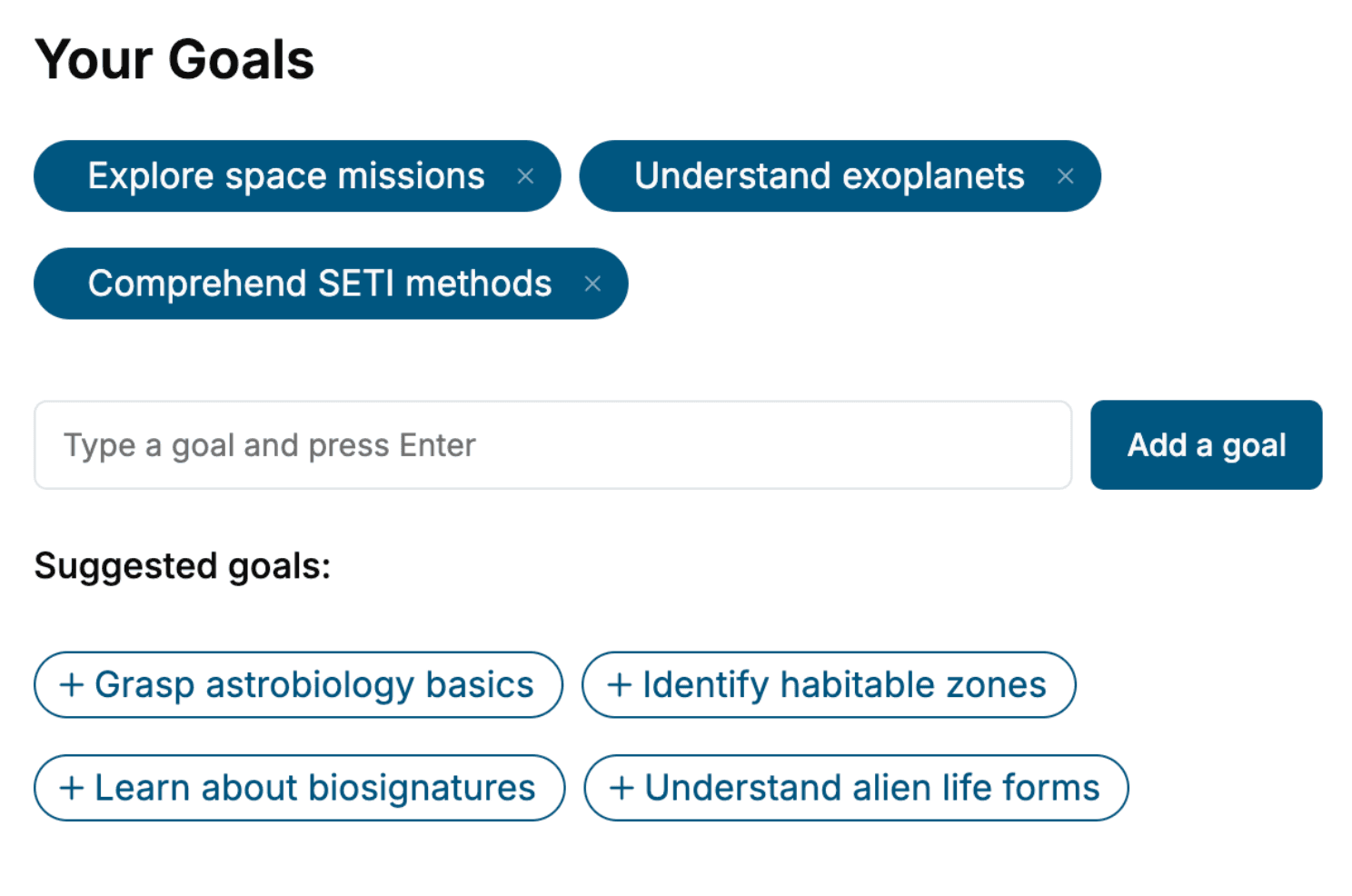
- 2. Personalize your book
Specify your goals and choose sub-topics to include
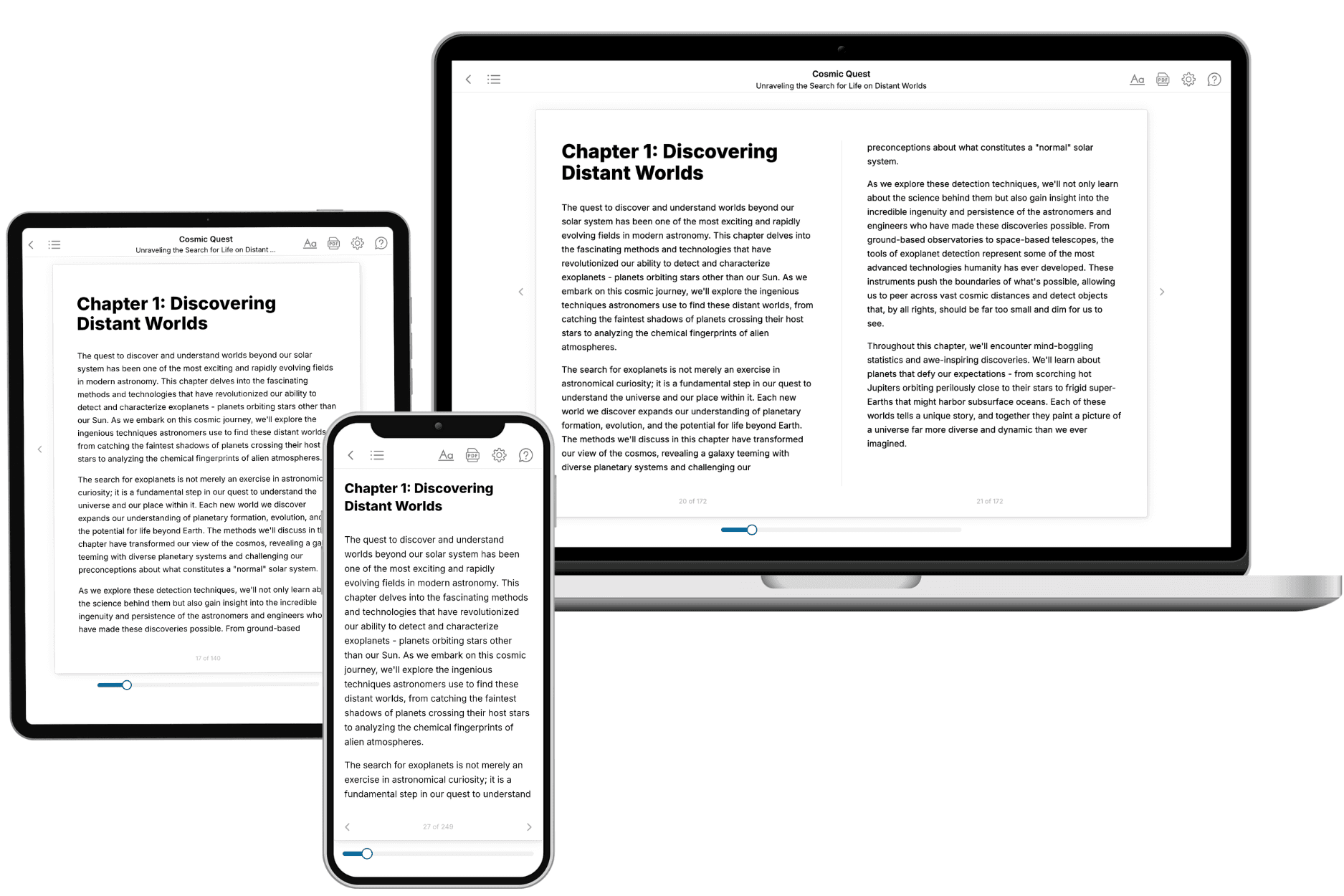
- 3. Get your tailored book
Your book is ready in 10 minutes. Read it online, download as EPUB or PDF, or send to Kindle.
Frequently asked questions
- What is TailoredRead?
TailoredRead creates complete, full-length nonfiction ebooks, written specifically for you. Tell us what you want to learn and why, and TailoredRead writes you a complete ebook on it, with charts, tables, and diagrams throughout. Read it online, on Kindle, or on any e-reader, or download it as a PDF or EPUB. Every book is written fresh the day you order it.
- How is the book tailored to me?
Before anything is written, you answer a few short questions about your goals, your background, and the topics you care about. Your book is then planned around your answers: written at your level, focused on your goals, and covering the topics you chose, instead of the one-size-fits-all book a store sells everyone.
- Will it read like generic AI content?
No. Your book isn't a chat transcript: it's planned chapter by chapter before a single word is written, told in a clear book voice, and explains ideas visually with charts, tables, and diagrams. After writing, every book goes through an editorial pass that polishes chapters so the book reads consistent from start to finish. Judge for yourself: browse thousands of sample books on our Explore Books page.
- How accurate is the content?
Our AI first checks whether your subject needs live research. Niche and fast-moving subjects are researched before writing, and the book plan and chapters are grounded in what it finds. After writing, every book goes through a quality pass that checks its facts and consistency, and researched books list their sources in a Notes section at the back.
- How long is the book?
You choose the length: Comprehensive (250-300 pages), Detailed (150-200 pages), Essential (70-100 pages), or Short (30-50 pages).
- Does the book include visuals?
Yes. Every book includes charts, tables, and diagrams: timelines, checklists, step-by-step guides, decision trees, comparison tables, matrices, and bar charts. A typical book includes dozens of these visual elements.
- Can I read it on Kindle? What formats can I download?
Yes. Every book can be read in our online reader or downloaded as a PDF or EPUB. The EPUB can be opened with Kindle, Apple Books, Kobo, and any e-reader. The Commercial and Author licenses also include an editable Word (DOCX) and Markdown download.
- How much does it cost?
About the price of a regular ebook. The exact price depends on your book's length and complexity, from $2 for the shortest books to $35 for the most comprehensive, and it's shown when you review your book, before you commit to anything. Each book is a one-time purchase, yours to keep, no subscription. Licenses that let you share, teach, or publish your book range from $35.99 to $49.99.
- Can I preview the book before purchasing?
Before you pay, you'll see what your book will cover: the title, a detailed description, the estimated length, and the complete chapter-by-chapter table of contents, so you know what you're getting before you decide. The full text itself is written after you purchase.
- How long does it take to create a book?
About 10 minutes. You can start reading the opening chapters while the rest is still being written.