World War I Books
Explore tailored World War I books created by our AI
Verdun: The Crucible of Modern Warfare
A Pivotal Moment in French and European History
The thunderous roar of artillery and the acrid smell of gunpowder hang heavy in the air. Before you lies the scarred landscape of Verdun, where one of the most brutal and defining battles of World War I unfolded. This book plunges you into the heart of this pivotal moment in history, offering a vivid and comprehensive exploration of the Battle of Verdun. Through meticulous research and compelling narratives, you'll gain a deep understanding of the strategic decisions, technological advancements, and human experiences that shaped this grueling 10-month conflict. Discover how Verdun became a symbol of French resistance and a turning point in modern warfare. From the muddy trenches to the highest levels of military command, this book brings to life the courage, sacrifice, and strategic brilliance that defined the Battle of Verdun. You'll explore its far-reaching consequences on French society, European politics, and the course of World War I. Whether you're a history enthusiast or simply curious about this crucial chapter in European history, this book offers invaluable insights into one of the most significant military engagements of the 20th century.
Britain's Great War
How World War I Transformed a Nation and Shaped the Modern World
What if the alliance system that pulled Europe into war in 1914 had been different? World War I stands as one of history's most transformative yet tragic events, reshaping Britain and the entire world in ways that still echo today. This book takes you through the origins of the conflict, the brutal realities of trench warfare, and the home front mobilization that sustained Britain's four-year struggle. You'll discover how a regional crisis in the Balkans spiraled into global catastrophe, how new technologies made warfare deadlier than ever before, and how the war's aftermath created the conditions for future conflict. By understanding Britain's role in the Great War—from the initial decision to fight through the peace settlement—you'll gain insight into how modern Europe was forged in the trenches and how the decisions made between 1914 and 1918 continue to influence our world today.
Gallipoli: The Crucible of Nations
A Pivotal Moment in French and European History
Dive into the heart of one of the most consequential campaigns of World War I. "Gallipoli: The Crucible of Nations" takes you on an immersive exploration of a battle that reshaped the course of European history. From the shores of the Dardanelles to the heights of Achi Baba, you'll witness the clash of empires and the birth of national identities. This meticulously researched account brings to life the strategic decisions, heroic actions, and tragic miscalculations that defined the Gallipoli campaign. You'll gain insight into the complex web of alliances and rivalries that led to this pivotal confrontation, and understand its far-reaching impact on the political landscape of Europe and beyond. Through vivid narratives and analytical depth, you'll explore the roles of key figures like Winston Churchill and Mustafa Kemal Atatürk, and understand how their actions at Gallipoli influenced their future leadership. You'll also delve into the experiences of the soldiers on both sides, from the trenches of Cape Helles to the ridges of Chunuk Bair, gaining a profound appreciation for the human cost of this grueling campaign. As you progress through the book, you'll uncover how the Battle of Gallipoli became a crucible for national identities, particularly for Australia and New Zealand, and how it contributed to the fall of empires and the reshaping of the Middle East. This comprehensive examination will leave you with a nuanced understanding of a campaign that continues to resonate in military strategy, international relations, and cultural memory to this day.
The Double Crisis
How the 1918 Influenza Pandemic and World War I Reshaped the Modern World
The greatest challenge facing historians studying 1918 is understanding how two catastrophic events—World War I and the deadliest pandemic in human history—collided to create unprecedented global chaos. Most accounts treat these crises separately, missing the crucial ways they amplified each other's devastating effects. This comprehensive examination reveals how the influenza pandemic of 1918 was inextricably linked to the Great War, creating a perfect storm that killed more people than any conflict in human history. You'll discover how military camps became breeding grounds for the deadly virus, how troop movements spread the disease across continents in mere weeks, and how wartime censorship initially concealed the pandemic's true scope from the public. Through detailed analysis of military records, personal accounts, and government documents, you'll understand how flu outbreaks directly influenced major battles, altered military strategies, and ultimately affected the war's outcome. The book explores how this dual crisis overwhelmed governments, collapsed social systems, and accelerated political changes that would define the twentieth century. You'll gain insight into the human cost of these intersecting disasters, from the trenches of France to the home fronts of America, and understand why the lessons of 1918 remain critically relevant for comprehending how global crises can compound and reshape civilization itself.
What if everything you thought you knew about World War I warfare was just scratching the surface of one of history's most complex military innovations? The trenches of the Western Front weren't just muddy ditches—they were sophisticated underground cities that revolutionized military strategy forever. This comprehensive exploration takes you deep into the intricate world of trench warfare, revealing how these defensive networks evolved from desperate improvisation into masterful engineering marvels that defined an entire generation of conflict. You'll discover the tactical brilliance behind trench design, from the zigzag patterns that deflected blast waves to the elaborate communication tunnels that kept armies connected beneath enemy fire. Through detailed analysis of battlefield innovations, technological breakthroughs, and strategic adaptations, you'll understand how commanders on both sides developed increasingly sophisticated methods to break the deadly stalemate of no man's land. Beyond the tactical elements, this book illuminates the human dimension of trench warfare—the daily routines, survival strategies, and psychological adaptations that enabled millions of soldiers to endure conditions that would reshape military thinking for decades to come. You'll gain insights into how weather, terrain, and logistics influenced every aspect of trench operations, and how these lessons continue to inform modern military strategy and defensive architecture.
Discover how a single maritime disaster reshaped the course of world history. On May 7, 1915, the RMS Lusitania sank off the Irish coast, killing nearly 1,200 people and shocking the world. This book examines the events leading to that fateful day, the immediate aftermath, and the profound consequences that rippled across continents and decades. You'll understand the military strategies behind Germany's submarine campaign, the geopolitical tensions that made the sinking so consequential, and how public reaction to the tragedy accelerated America's path toward entering World War I. Through detailed historical analysis and compelling narratives, you'll explore the complex questions the sinking raised about civilian casualties, maritime law, and the ethics of modern warfare. Whether you're a history student, a World War I enthusiast, or simply curious about pivotal moments that changed history, this book provides the context, evidence, and perspective needed to fully grasp why the Lusitania matters today.
The Battle of the Somme stands as one of history's most devastating conflicts, yet many struggle to understand why it happened, what made it so catastrophic, and why it still matters today. This book cuts through the complexity to reveal how a single battle reshaped European history, military strategy, and national identity. You'll discover the political tensions and military miscalculations that led to the offensive, follow the experiences of soldiers across multiple nations, and explore how the Somme's unprecedented scale of destruction forced the world to reconsider warfare itself. From the trenches of northern France to the halls of power in Paris and London, this account examines both the grand strategy and the human reality of industrial-scale conflict. Whether you're interested in military history, European politics, or understanding how societies cope with catastrophic loss, this book provides the context, analysis, and narrative you need to grasp why the Somme remains a pivotal moment in human history.
The sinking of the RMS Lusitania on May 7, 1915, stands as one of history's most consequential maritime disasters—yet many Americans don't fully understand why this single event mattered so profoundly. Over 1,200 people perished when a German U-boat torpedoed the British passenger liner off the Irish coast, including 128 American citizens. This tragedy didn't just claim lives; it fundamentally altered the course of American history and World War I itself. This book examines the Lusitania disaster from multiple angles: the geopolitical tensions that made it inevitable, the immediate chaos and heroism of that fateful day, the diplomatic firestorm that followed, and the long-term consequences that reshaped American foreign policy. You'll discover how this single event mobilized American public opinion, influenced political decisions, and ultimately contributed to the nation's entry into the Great War. Through detailed accounts, primary sources, and historical analysis, you'll understand not just what happened, but why it mattered—and how it continues to echo through American history today.
The Weimar Experiment
Democracy, Crisis, and the Making of Modern Germany
What if Germany's first democracy was doomed not by inevitability, but by a series of critical choices that could have gone differently? The Weimar Republic stands as one of history's most fascinating and tragic experiments in democratic governance, emerging from the ruins of World War I only to collapse fourteen years later under the weight of economic crisis and political extremism. This comprehensive exploration takes you deep into the heart of Germany's tumultuous interwar period, revealing how a nation attempted to reinvent itself as a modern democracy while grappling with defeat, revolution, and social upheaval. You'll discover how the republic's founders crafted a progressive constitution that promised equality and freedom, yet contained fatal flaws that would ultimately contribute to its downfall. From the revolutionary chaos of 1918-1919 through the golden age of the mid-1920s to the final crisis years, you'll witness how ordinary Germans navigated extraordinary circumstances. The book illuminates the vibrant cultural renaissance that flourished alongside political instability, the economic disasters that shattered public confidence, and the rise of extremist movements that exploited democratic freedoms to destroy democracy itself. Through careful analysis of key events, personalities, and social forces, you'll gain essential insights into how democracies can both thrive and fail, making this historical study remarkably relevant to understanding political challenges in our own time. The Weimar Republic's story is not just German history—it's a crucial chapter in the broader narrative of modern democracy's struggles and possibilities.
The Divided Land
How the Sykes-Picot Agreement Ignited Kurdish Rebellions in Turkey
The most significant challenge in understanding Middle Eastern conflicts today lies in grasping how arbitrary lines drawn on maps over a century ago continue to fuel rebellions and resistance movements. The Sykes-Picot Agreement of 1916 didn't just redraw borders—it shattered communities, divided peoples, and created the conditions for decades of conflict that persist to this day. This comprehensive examination reveals how the secret wartime agreement between Britain and France fundamentally altered the Kurdish experience in Turkey. You'll discover how the artificial borders imposed after World War I ignored centuries of Kurdish cultural and territorial heritage, setting the stage for a series of rebellions that would define Turkish-Kurdish relations for generations. Through detailed analysis of historical documents, military campaigns, and political developments, you'll gain insight into the complex web of causes and consequences that emerged from this pivotal moment in history. From the Sheikh Said Rebellion of 1925 to the broader patterns of resistance that followed, this book connects the dots between colonial decision-making and its lasting impact on regional stability. Whether you're seeking to understand the roots of contemporary Middle Eastern conflicts or exploring the broader implications of imposed borders on ethnic communities, this book provides the historical foundation necessary to comprehend one of the region's most enduring challenges.
Discover how a single year transformed global history and set the stage for the modern world. The Russian Revolutions of 1917 were pivotal moments that toppled an empire, established the first communist state, and triggered consequences that rippled across the entire 20th century. This book walks you through the complex web of causes—from centuries of imperial rule and industrialization to the devastating impact of World War I—that made revolution possible. You'll explore the dramatic events of both the February and October revolutions, meet the key figures who shaped these upheavals, and understand how ordinary Russians experienced these extraordinary times. Beyond the headlines and heroic narratives, you'll examine the real economic hardships, military failures, and social tensions that drove millions to support radical change. This comprehensive account reveals why 1917 matters today, how it reshaped global politics and ideology, and what it teaches us about revolution, power, and historical change. Whether you're a history student, curious learner, or someone seeking to understand the roots of modern geopolitics, this book provides the context and clarity needed to grasp one of history's most consequential moments.
Britain Between the Wars
The Interwar Years That Shaped Modern Europe
What if the decisions made in the 1920s and 1930s could have prevented the catastrophe of World War II? The interwar period in Britain was far more than a quiet interval between conflicts—it was a crucible of economic crisis, political upheaval, and cultural renaissance that fundamentally reshaped the modern world. This book explores how Britain navigated the treacherous waters of post-war recovery, economic collapse, and the rise of totalitarianism across Europe. You'll discover how the Treaty of Versailles sowed the seeds of future conflict, why the gold standard became an economic straitjacket, and how British appeasement policies inadvertently enabled fascism's rise. Through vivid accounts of political leaders, social movements, and everyday struggles, you'll understand how this turbulent era transformed Britain from imperial superpower to a nation grappling with its diminished role. Essential reading for anyone seeking to understand how the past shapes our present.
The Balfour Declaration
Britain's Pivotal Promise and Its Enduring Impact on History
Gain a deep understanding of one of the most consequential documents in modern history and its far-reaching implications for international relations. This comprehensive examination reveals how a brief 67-word letter fundamentally altered the trajectory of Middle Eastern politics and British foreign policy. You'll discover the intricate web of wartime diplomacy, imperial strategy, and competing national interests that led to the Declaration's creation in 1917. Through careful analysis of primary sources and diplomatic correspondence, you'll understand how key British officials navigated complex international pressures while pursuing strategic advantages during World War I. The book illuminates the Declaration's immediate aftermath and long-term consequences, showing how its deliberately ambiguous language created lasting tensions and competing interpretations. You'll explore how this single document reflected broader patterns of European imperialism, the decline of the Ottoman Empire, and the rise of nationalist movements. By examining the Declaration within its full historical context, you'll develop a nuanced understanding of how diplomatic decisions made during wartime can shape international relations for generations. This analysis provides essential insights into the complexities of foreign policy-making and the unintended consequences of seemingly straightforward political statements.
The Easter Rising of 1916
Ireland's Rebellion and the Birth of a Nation
What if a small group of rebels, armed with idealism and determination, could fundamentally reshape the course of a nation's history? The Easter Rising of 1916 stands as one of history's most transformative moments—a six-day rebellion that changed Ireland forever. This book explores the intricate web of political movements, personal sacrifices, and historical circumstances that converged in Dublin during Easter week. You'll discover how decades of failed constitutional reform, the pressures of World War I, and the vision of Irish independence combined to spark an uprising that seemed doomed from the start. Through vivid accounts of the key figures, the street-by-street fighting, and the dramatic executions that followed, you'll understand how a military defeat became a moral victory that galvanized an entire nation. Whether you're exploring Irish history, European politics, or the nature of revolutionary change, this comprehensive examination reveals why the Easter Rising remains a defining moment in the struggle for self-determination.
Discover the fascinating life of John Buchan, a man whose adventures rivaled those of his fictional heroes. This captivating biography takes you on a journey through the Scottish borders, the halls of Oxford, the battlefields of World War I, and the corridors of power in both Britain and Canada. You'll explore Buchan's multifaceted career as a novelist, historian, politician, and statesman. Uncover the inspirations behind his most famous works, including "The Thirty-Nine Steps," and gain insight into how his experiences shaped his writing. From his humble beginnings to his role as Governor General of Canada, you'll witness Buchan's unwavering dedication to public service and his enduring impact on literature. This book offers a nuanced portrait of a complex man who balanced his love for adventure with his sense of duty, his Scottish heritage with his role in the British Empire. Through Buchan's story, you'll gain a deeper understanding of early 20th century politics, literature, and Scottish identity. Prepare to be inspired by the life of a true Renaissance man whose legacy continues to influence writers and thinkers today.
Discover the extraordinary life of John Maclean, the Scottish schoolteacher who became a revolutionary force in early 20th-century politics. This biography traces his journey from a modest background in Lanarkshire to becoming one of Britain's most formidable socialist voices, a champion of Scottish independence, and a figure whose defiance of wartime authorities earned him imprisonment and lasting notoriety. Through meticulous research and engaging narrative, you'll explore how Maclean synthesized Marxist theory with Scottish nationalism, creating a political vision that challenged the establishment on multiple fronts. Witness his tireless organizing efforts in Glasgow's industrial heartland, his courageous anti-war stance during World War I, and his unwavering commitment to workers' rights despite personal sacrifice. This comprehensive biography reveals not just the man behind the legend, but the historical forces that shaped him and the enduring influence his ideas continue to exert on Scottish politics and identity today.
Related books you may like:
Embark on a captivating journey through one of the most pivotal moments in British history with "1066: The Year That Changed England." This meticulously researched account of the Battle of Hastings offers you a front-row seat to the events that reshaped the course of European history. Delve into the complex web of political intrigue, military strategy, and cultural shifts that led to this momentous clash. You'll gain a deep understanding of the key players - William the Conqueror, Harold Godwinson, and Harald Hardrada - and the high-stakes game of thrones they played. Through vivid storytelling and expert analysis, you'll experience the tension of the battlefield, the clash of Anglo-Saxon and Norman cultures, and the far-reaching consequences of William's victory. Discover how this single event transformed England's language, laws, and social structure, leaving an indelible mark on the nation's identity. Whether you're a history buff or simply curious about this transformative period, this book offers fresh insights and a comprehensive overview that will enrich your understanding of medieval Europe and the foundations of modern Britain.
Many assume the French Revolution ended in 1799 with Napoleon's rise to power. In reality, the struggle for democracy and social justice continued to convulse France throughout the nineteenth century. The 1848 Revolution represents a pivotal moment when ordinary people—workers, students, intellectuals, and the poor—rose up against an entrenched monarchy and demanded fundamental change. This book explores the dramatic events of that revolutionary year, from the February uprising that toppled King Louis-Philippe to the violent June Days that exposed the revolution's internal contradictions. You'll discover how economic crisis, industrial transformation, and competing political ideologies collided to reshape not just France, but the entire European continent. Through vivid narratives and careful analysis, this account reveals why 1848 mattered then and why its lessons remain relevant today for understanding how societies change, how revolutions succeed and fail, and how the pursuit of liberty continues to define our world.
Discover the pivotal events and complex forces that shaped one of the 20th century's most consequential moments. This comprehensive examination takes you through the centuries of Jewish diaspora, the rise of Zionism, and the dramatic final years leading to Israel's establishment in 1948. You'll understand how the Holocaust transformed international politics, why the British Mandate created irreconcilable tensions, and how the UN Partition Plan became a flashpoint for conflict. Through careful analysis of key figures, military campaigns, and political negotiations, you'll gain insight into how a new nation emerged from centuries of displacement and persecution—while grappling with the displacement of another people. This book presents the historical evidence, competing narratives, and lasting consequences of 1948, enabling you to understand not just what happened, but why it matters for the modern Middle East and global politics today.
Most people think the Norman Conquest was simply a military victory that happened in a single day. In reality, 1066 marked the beginning of a decades-long transformation that would fundamentally reshape English society, language, and identity. This book reveals how William the Conqueror's invasion wasn't inevitable—it emerged from a disputed succession, political intrigue, and the ambitions of ambitious leaders. Beyond the famous Battle of Hastings, you'll discover how Norman rulers consolidated power through feudalism, how the French language permanently altered English, and how a new ruling class gradually integrated with the existing population. Through vivid storytelling and careful analysis, you'll understand how this single conquest rippled across centuries, influencing everything from English law and governance to the very words we speak today. Whether you're exploring medieval history for the first time or deepening your existing knowledge, this book illuminates why 1066 remains one of history's most consequential moments—and how its effects continue to shape our world.
Create a World War I Book Tailored to You
Create an AI-crafted book tailored to your goals, interests, and background






Benefits of AI-tailored books
- Read one book, not ten:
- all the World War I knowledge you need, gathered into a single book.
- Save days of learning:
- tell us your goals, choose your topics, and the whole book is built around them.
- Learn effortlessly:
- World War I book written for your specific background and expertise.
- Understand at a glance:
- includes charts, tables, timelines, checklists, decision trees, and more.
- Stay current:
- written the day you order it, not years ago.
- Trust what you read:
- every book is checked for accuracy, with real research when your subject needs it.
Create your unique book in 3 steps
- 1. Select your focus
Select the focus of your World War I book and share your background
- 2. Personalize your book
Specify your goals and choose sub-topics to include
- 3. Get your tailored book
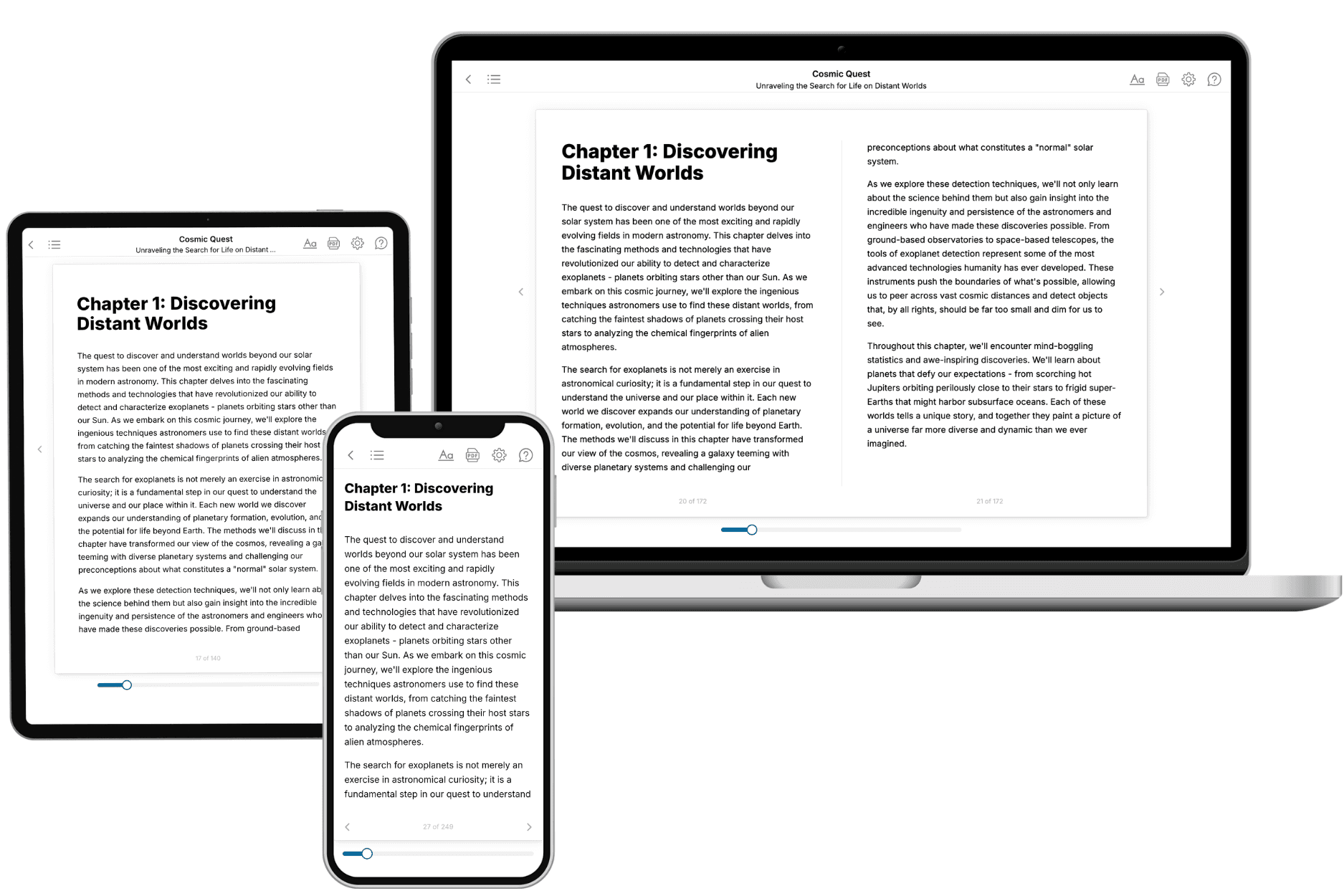
Your book is ready in 10 minutes. Read it online, download as EPUB or PDF, or send to Kindle.

Start from a template
Frequently asked questions
- What is TailoredRead?
TailoredRead creates complete, full-length nonfiction ebooks, written specifically for you. Tell us what you want to learn and why, and TailoredRead writes you a complete ebook on it, with charts, tables, and diagrams throughout. Read it online, on Kindle, or on any e-reader, or download it as a PDF or EPUB. Every book is written fresh the day you order it.
- How is the book tailored to me?
Before anything is written, you answer a few short questions about your goals, your background, and the topics you care about. Your book is then planned around your answers: written at your level, focused on your goals, and covering the topics you chose, instead of the one-size-fits-all book a store sells everyone.
- Will it read like generic AI content?
No. Your book isn't a chat transcript: it's planned chapter by chapter before a single word is written, told in a clear book voice, and explains ideas visually with charts, tables, and diagrams. After writing, every book goes through an editorial pass that polishes chapters so the book reads consistent from start to finish. Judge for yourself: browse thousands of sample books on our Explore Books page.
- How accurate is the content?
Our AI first checks whether your subject needs live research. Niche and fast-moving subjects are researched before writing, and the book plan and chapters are grounded in what it finds. After writing, every book goes through a quality pass that checks its facts and consistency, and researched books list their sources in a Notes section at the back.
- How long is the book?
You choose the length: Comprehensive (250-300 pages), Detailed (150-200 pages), Essential (70-100 pages), or Short (30-50 pages).
- Does the book include visuals?
Yes. Every book includes charts, tables, and diagrams: timelines, checklists, step-by-step guides, decision trees, comparison tables, matrices, and bar charts. A typical book includes dozens of these visual elements.
- Can I read it on Kindle? What formats can I download?
Yes. Every book can be read in our online reader or downloaded as a PDF or EPUB. The EPUB can be opened with Kindle, Apple Books, Kobo, and any e-reader. The Commercial and Author licenses also include an editable Word (DOCX) and Markdown download.
- How much does it cost?
About the price of a regular ebook. The exact price depends on your book's length and complexity, from $2 for the shortest books to $35 for the most comprehensive, and it's shown when you review your book, before you commit to anything. Each book is a one-time purchase, yours to keep, no subscription. Licenses that let you share, teach, or publish your book range from $35.99 to $49.99.
- Can I preview the book before purchasing?
Before you pay, you'll see what your book will cover: the title, a detailed description, the estimated length, and the complete chapter-by-chapter table of contents, so you know what you're getting before you decide. The full text itself is written after you purchase.
- How long does it take to create a book?
About 10 minutes. You can start reading the opening chapters while the rest is still being written.