The Renaissance Unveiled
How Art, Ideas, and Innovation Transformed Europe
Many people struggle to understand why the Renaissance matters or how it differs from the Middle Ages that preceded it.
207 pages10 chaptersNov 8, 2025European History
About this book
This book cuts through the confusion by revealing how a deliberate revival of classical learning sparked one of history's most transformative periods. You'll discover how Renaissance thinkers, artists, and innovators fundamentally changed European society—from the revolutionary techniques that made paintings come alive to the scientific methods that challenged centuries of accepted wisdom. Through compelling stories of patrons, artists, and scholars, you'll see how the printing press spread ideas across continents, how merchant cities became cultural powerhouses, and how the period's emphasis on human potential reshaped Western civilization. By the end, you'll understand not just what happened during the Renaissance, but why it remains essential to understanding the modern world we inhabit today.
Table of contents
- IntroductionWhy the Renaissance Still Matters Today, Defining the Renaissance: More Than Just Art, How to Use This BookRead below
- Chapter 1: The Medieval Foundation: Understanding What Came BeforeContinuity, Not Rupture: The Medieval Legacy, Seeds of Change in the Late Medieval Period, Economic Shifts That Made the Renaissance Possible
- Chapter 2: Humanism: The Intellectual Heart of the RenaissanceRediscovering Classical Texts and Ideas, Petrarch and the Birth of Humanism, The Celebration of Human Potential and Achievement, Education and the Spread of Humanist Learning
- Chapter 3: Italy's City-States: Where the Renaissance BeganFlorence: The Cradle of Renaissance Culture, Venice: Trade, Wealth, and Artistic Patronage, Rome and the Papal Court's Role in Renaissance Revival, The Patronage System: Funding Genius
- Chapter 4: Artistic Revolution: Seeing the World AnewPerspective and the Illusion of Depth, Anatomy and the Pursuit of Realism, The Masters: Leonardo, Michelangelo, and Raphael, Northern Renaissance: Art Beyond Italy
- Chapter 5: The Printing Press: Knowledge UnleashedGutenberg's Revolutionary Invention, Democratizing Knowledge and Information, How Printing Spread Renaissance Ideas Across Europe, The Impact on Literacy and Public Discourse
- Chapter 6: Science and Observation: A New Way of KnowingChallenging Medieval Authority and Tradition, The Rise of Empirical Observation and Experimentation, Copernicus, Galileo, and the Cosmos Reimagined, Advances in Anatomy and Medical Understanding
- Chapter 7: Literature and Philosophy: Words That Changed MindsDante, Petrarch, and Boccaccio: Vernacular Literature, Machiavelli and the Birth of Modern Political Thought, Erasmus and Northern European Humanism, Shakespeare and the Flowering of Renaissance Drama
- Chapter 8: Religion and Reformation: Questioning AuthorityHumanist Criticism of Church Authority, Martin Luther and the Protestant Reformation, The Catholic Counter-Reformation, Religious Conflict and Its Cultural Consequences
- Chapter 9: Exploration and Expansion: Renaissance HorizonsThe Age of Exploration and Renaissance Curiosity, Portuguese and Spanish Voyages of Discovery, The New World and Its Impact on European Thought, Global Trade Networks and Cultural Exchange
- Chapter 10: The Renaissance Legacy: From Past to PresentThe Bridge to the Enlightenment, Renaissance Ideas in Modern Western Values, How Renaissance Achievements Still Shape Our World
- ConclusionBringing It All Together: The Renaissance as Turning Point, Reflecting on What We've Learned
- Further Reading and Resources
Introduction
The Renaissance stands as one of history's most captivating periods, yet it remains widely misunderstood. Many people imagine it as a sudden explosion of genius that appeared from nowhere, transforming medieval darkness into enlightened modernity overnight. This misconception obscures the period's true significance and the complex forces that shaped it. The reality is far more nuanced and, ultimately, more fascinating than the simplified version often presented in popular culture. Understanding the Renaissance requires looking beyond famous paintings and sculptures to examine the economic, social, and intellectual currents that made this transformation possible.
This book takes you on a journey through the European Renaissance, revealing how a deliberate revival of classical learning sparked profound changes across every aspect of society. You'll discover how merchant wealth in Italian city-states created opportunities for artistic patronage, how the printing press democratized knowledge in unprecedented ways, and how humanist scholars challenged centuries of accepted wisdom. Rather than treating the Renaissance as an isolated phenomenon, we'll explore its deep connections to the medieval period that preceded it and trace its lasting influence on the modern world. Each chapter builds upon the previous one, creating a comprehensive picture of this transformative era.
Whether you're approaching the Renaissance for the first time or seeking to deepen your existing knowledge, this book offers fresh perspectives on familiar topics and introduces lesser-known aspects of the period. You'll encounter not just the famous figures like Leonardo da Vinci and Michelangelo, but also the merchants, printers, and scholars whose contributions were equally essential to the Renaissance transformation. By the end, you'll understand why this period matters far beyond art history and how its emphasis on human potential, empirical observation, and individual achievement continues to shape Western civilization today. The Renaissance wasn't just about looking backward to classical antiquity—it was about reimagining what humanity could become.
Why the Renaissance Still Matters Today
The Renaissance fundamentally altered how Europeans understood themselves and their place in the world, establishing patterns of thought that persist in contemporary Western culture. When Renaissance humanists placed human dignity and potential at the center of their philosophy, they laid the groundwork for modern concepts of individual rights, personal achievement, and human agency. These ideas seem self-evident today, but they represented a radical departure from medieval thinking that emphasized collective identity and divine predestination. The Renaissance conviction that humans could shape their own destinies through education, effort, and creativity became a cornerstone of Western identity that influences everything from educational systems to entrepreneurial culture.
The period's emphasis on empirical observation and evidence-based reasoning created the intellectual foundation for modern science. Before the Renaissance, European scholars relied heavily on ancient authorities and religious doctrine to explain natural phenomena. Renaissance thinkers began to question these authorities, conducting experiments and making observations that sometimes contradicted established wisdom. This shift from accepting tradition to demanding evidence transformed not just science but also medicine, engineering, and technology. When Galileo pointed his telescope at the heavens and reported what he actually saw rather than what ancient texts claimed he should see, he embodied a new approach to knowledge that remains central to scientific method today.
Renaissance innovations in art and architecture continue to influence visual culture across the globe. The techniques developed during this period—linear perspective, anatomical accuracy, chiaroscuro lighting, and naturalistic representation—became the foundation of Western artistic tradition for centuries. Even as modern and contemporary art movements have challenged these conventions, they remain the baseline against which artistic innovation is measured. Walk into any art museum, examine advertising imagery, or analyze film composition, and you'll encounter visual principles first systematized during the Renaissance. The period established aesthetic standards and technical approaches that shaped how Western culture represents reality itself.
The printing press, perfected by Johannes Gutenberg around 1440, initiated an information revolution comparable to the internet's impact on contemporary society. Before printing, books were rare, expensive, and accessible only to wealthy elites and religious institutions. The printing press democratized knowledge, making texts available to a broader audience and enabling ideas to spread across Europe with unprecedented speed. This transformation didn't just increase literacy—it fundamentally changed how information circulated, how communities formed around shared ideas, and how individuals could access knowledge independently. Understanding the printing press's impact helps us comprehend our own information revolution and its social consequences.
Renaissance political philosophy, particularly the work of Niccolò Machiavelli, established frameworks for understanding power that remain influential in contemporary political analysis. Machiavelli's willingness to examine politics as it actually functioned rather than as it ideally should function created a new, more realistic approach to political science. His insights into leadership, statecraft, and the relationship between ethics and effectiveness continue to provoke debate and inform political strategy. Beyond Machiavelli, Renaissance thinkers grappled with questions about governance, citizenship, and the relationship between individual liberty and collective order that remain central to political discourse today.
The period's legacy extends into economic thought and practice as well. Renaissance merchant republics like Venice and Florence developed sophisticated banking systems, accounting methods, and commercial practices that laid the groundwork for modern capitalism. The double-entry bookkeeping system, perfected during this period, remains the foundation of contemporary accounting. Renaissance merchants pioneered insurance, letters of credit, and international trade networks that connected distant regions in increasingly complex economic relationships. Understanding these developments helps explain how modern global capitalism emerged and why certain economic institutions took the forms they did.
Perhaps most importantly, the Renaissance demonstrated that societies can deliberately choose to transform themselves through education, cultural investment, and intellectual engagement. The period wasn't an accident or a mysterious flowering of genius—it resulted from conscious decisions by patrons, scholars, and artists to revive classical learning and apply it to contemporary challenges. This recognition that culture can be actively shaped rather than passively inherited offers hope and guidance for addressing contemporary challenges. When we study how Renaissance societies invested in education, supported creative innovation, and fostered intellectual exchange, we gain insights applicable to our own efforts at cultural and social transformation.
The Renaissance also matters because it reveals the complex relationship between tradition and innovation. Renaissance thinkers didn't reject the past—they engaged with it critically, preserving what seemed valuable while adapting it to new circumstances. This balanced approach to cultural inheritance offers an alternative to both uncritical traditionalism and wholesale rejection of the past. In an era when societies struggle to balance respect for tradition with the need for change, the Renaissance model of creative engagement with historical legacy provides valuable guidance. The period shows that looking backward and moving forward aren't contradictory impulses but can work together productively.
Defining the Renaissance: More Than Just Art
The term "Renaissance" literally means "rebirth" in French, referring to the revival of classical Greek and Roman learning that characterized the period. However, defining the Renaissance's precise boundaries proves challenging because the transformation occurred gradually and unevenly across Europe. Most historians place the Italian Renaissance's beginning in the fourteenth century, with figures like Petrarch and Giotto, and extend it through the sixteenth century. The Northern Renaissance, encompassing regions like the Netherlands, Germany, and England, began later and continued into the seventeenth century. These chronological boundaries remain somewhat arbitrary, as Renaissance characteristics emerged at different times in different places and coexisted with medieval traditions for extended periods.
Geographically, the Renaissance began in the Italian peninsula, particularly in wealthy city-states like Florence, Venice, Rome, and Milan. These urban centers possessed the economic resources, political independence, and cultural sophistication necessary for the Renaissance to flourish. From Italy, Renaissance ideas and practices spread northward across the Alps, adapting to different cultural contexts as they traveled. The Northern Renaissance developed its own distinctive characteristics while maintaining connections to Italian innovations. By the sixteenth century, Renaissance influence extended throughout Western Europe, though its manifestations varied considerably based on local conditions, religious contexts, and political structures.
While Renaissance art receives the most attention in popular culture, the period encompassed transformations across virtually every field of human endeavor. Renaissance innovations included:
- Intellectual life: The development of humanism, with its emphasis on classical texts, rhetoric, and human dignity
- Science: New approaches to observation, experimentation, and mathematical description of natural phenomena
- Literature: The flourishing of vernacular writing and new literary forms that explored human psychology and social relationships
- Political thought: Realistic analysis of power and governance that departed from medieval idealism
- Religion: Critical examination of church practices that contributed to the Protestant Reformation
- Technology: Innovations in printing, navigation, engineering, and military technology
- Economics: Sophisticated banking, accounting, and commercial practices that facilitated international trade
The Renaissance represented a shift in worldview as much as a collection of specific achievements. Medieval European culture emphasized collective identity, divine authority, and the transience of earthly existence compared to eternal salvation. Renaissance culture, while remaining Christian, placed greater emphasis on individual achievement, human potential, and the value of earthly life. This shift didn't happen suddenly or completely—medieval and Renaissance attitudes coexisted and blended in complex ways. However, the overall trajectory moved toward greater confidence in human reason, increased interest in the natural world, and stronger belief in the possibility of human improvement through education and effort.
One crucial aspect of defining the Renaissance involves understanding what it was not. The period wasn't a complete break from the Middle Ages, despite how it's sometimes portrayed. Medieval scholars had preserved classical texts, developed sophisticated philosophical systems, and created impressive artistic and architectural achievements. The Renaissance built upon these medieval foundations rather than rejecting them entirely. Additionally, the Renaissance wasn't uniformly progressive or enlightened—it coexisted with religious intolerance, political violence, and social inequality. Romanticized versions of the period often obscure these darker aspects, but a complete understanding requires acknowledging both the period's achievements and its limitations.
The Renaissance also involved significant changes in how knowledge was organized and transmitted. Medieval universities had developed around the study of theology, law, and medicine, with curricula based on established authorities and formal logic. Renaissance education expanded to include rhetoric, poetry, history, and moral philosophy—subjects collectively known as the studia humanitatis or humanities. This educational reform reflected changing ideas about what knowledge mattered most and how it should be acquired. Rather than focusing exclusively on abstract reasoning and theological questions, Renaissance education emphasized eloquence, practical wisdom, and engagement with classical texts in their original languages.
Understanding the Renaissance requires recognizing its fundamentally urban character. Unlike the medieval period, when monasteries and feudal courts served as primary cultural centers, the Renaissance flourished in cities where merchants, bankers, and artisans created new forms of wealth and social organization. Urban environments fostered competition, innovation, and cultural exchange in ways that rural settings couldn't match. The concentration of wealth in cities enabled patronage systems that supported artists and scholars. Urban workshops became centers of technical innovation where masters trained apprentices in increasingly sophisticated techniques. This urban context shaped Renaissance culture in profound ways, from its emphasis on civic virtue to its celebration of individual achievement.
Finally, defining the Renaissance requires acknowledging ongoing scholarly debates about the period's nature and significance. Some historians emphasize continuity with the Middle Ages, arguing that the Renaissance represented evolution rather than revolution. Others stress the period's distinctive characteristics and transformative impact. Debates continue about whether the Renaissance was primarily an elite phenomenon or had broader social impact, whether it represented genuine progress or merely different cultural preferences, and how its legacy should be evaluated. These debates don't diminish the Renaissance's importance—they demonstrate its complexity and continued relevance to understanding European history and Western culture's development.
How to Use This Book
This book is structured to build your understanding progressively, with each chapter exploring a different dimension of the Renaissance while connecting to broader themes. The chapters are designed to be read sequentially, as later chapters assume familiarity with concepts and context established earlier. However, if you have specific interests, you can focus on particular chapters after reading the introduction and Chapter 1, which provides essential background. Each chapter concludes by connecting its specific topic to the Renaissance's broader significance, helping you see how individual developments contributed to the period's overall transformation of European society.
Chapter 1 examines the medieval foundations that made the Renaissance possible, challenging the common misconception that the Renaissance emerged from nowhere. Understanding medieval economic, intellectual, and cultural developments is essential for grasping why the Renaissance began when and where it did. This chapter establishes that the Renaissance represented evolution as much as revolution, building upon existing foundations while transforming them in significant ways. If you're tempted to skip background material and jump directly to Renaissance achievements, resist that impulse—the context provided here will deepen your appreciation of everything that follows.
Chapters 2 through 5 explore the Renaissance's core innovations across different domains:
- Chapter 2 examines humanism, the intellectual movement that drove Renaissance thought across all disciplines
- Chapter 3 investigates Italian city-states and the patronage systems that funded Renaissance achievements
- Chapter 4 analyzes artistic innovations and the revolutionary techniques that transformed visual representation
- Chapter 5 explores the printing press and its profound impact on knowledge dissemination
Chapters 6 through 9 examine how Renaissance principles transformed specific fields and extended beyond Italy's borders. Chapter 6 explores scientific developments and the emergence of empirical methods. Chapter 7 investigates literature and philosophy, showing how Renaissance ideas found expression in various languages and literary forms. Chapter 8 examines the complex relationship between Renaissance thought and religious reform, including the Protestant Reformation. Chapter 9 explores how Renaissance curiosity and commercial ambition drove European exploration and global expansion. These chapters demonstrate the Renaissance's breadth and its extension into areas beyond art and classical scholarship.
Chapter 10 and the Conclusion synthesize the book's themes, examining the Renaissance's lasting legacy and its connections to subsequent historical developments. These sections help you understand why the Renaissance matters beyond historical interest, showing how the period's innovations and ideas continue to shape contemporary culture, thought, and institutions. The Conclusion also provides guidance for further exploration, suggesting how you might deepen your understanding of topics that particularly interest you. These final sections transform the book from a historical survey into a framework for understanding Western culture's development and contemporary characteristics.
Throughout the book, you'll encounter several recurring themes that connect different chapters and topics:
- The tension between tradition and innovation, and how Renaissance thinkers navigated this relationship
- The role of patronage and economic resources in enabling cultural achievement
- The gradual nature of historical change and the coexistence of old and new ideas
- The importance of urban environments and commercial culture in fostering innovation
- The complex relationship between Renaissance achievements and their medieval foundations
- The spread of ideas across geographical and social boundaries
The book includes specific examples, case studies, and concrete details to illustrate abstract concepts and general trends. When you encounter these examples, consider them not just as interesting anecdotes but as windows into broader patterns. For instance, when we examine how the Medici family patronized artists in Florence, we're not just learning about one family's activities—we're seeing how patronage systems functioned more generally and why they mattered for Renaissance culture. Similarly, detailed discussions of specific artworks or texts serve to illustrate broader artistic and intellectual movements. Engaging deeply with these examples will enhance your understanding of the Renaissance's general characteristics.
As you read, you might find it helpful to keep certain questions in mind: How did this development connect to others occurring simultaneously? What medieval foundations made this innovation possible? How did this idea or practice spread beyond its point of origin? What resistance or obstacles did innovators face? How did this achievement influence subsequent developments? These questions will help you engage actively with the material rather than passively absorbing information. They'll also help you develop a more nuanced understanding of historical causation and change.
The book assumes you have basic familiarity with European geography and general historical chronology, but it doesn't require specialized knowledge of art history, philosophy, or Renaissance studies. Technical terms are explained when introduced, and concepts are presented in accessible language without sacrificing accuracy or nuance. If you encounter unfamiliar terms or concepts, the context should clarify their meaning. The goal is to make Renaissance history accessible to general readers while providing enough depth and sophistication to satisfy those with more background knowledge. Whether you're approaching this material for the first time or revisiting it with greater maturity, you should find insights and perspectives that enhance your understanding.
Finally, remember that history is an ongoing conversation rather than a fixed body of facts. Historians continue to debate Renaissance interpretations, discover new evidence, and develop fresh perspectives on familiar topics. This book presents current scholarly consensus while acknowledging areas of disagreement and uncertainty. Where significant debates exist, they're noted so you can appreciate the complexity of historical interpretation. Your own engagement with Renaissance history doesn't end with this book—it provides a foundation for further exploration, whether through additional reading, museum visits, or simply more informed appreciation of the Renaissance's continuing influence on contemporary culture. The Renaissance remains endlessly fascinating because it speaks to fundamental questions about human potential, cultural change, and the relationship between past and present.
This is the end of the free sample. The full book has 10 chapters.
Want this book written for you?
Tell us your goals and background, and get your own version of this book, tailored by AI to you.


Benefits of AI-tailored books
- Read one book, not ten:
- all the European History knowledge you need, gathered into a single book.
- Save days of learning:
- tell us your goals, choose your topics, and the whole book is built around them.
- Learn effortlessly:
- European History book written for your specific background and expertise.
- Understand at a glance:
- includes charts, tables, timelines, checklists, decision trees, and more.
- Stay current:
- written the day you order it, not years ago.
- Trust what you read:
- every book is checked for accuracy, with real research when your subject needs it.
Create your unique book in 3 steps
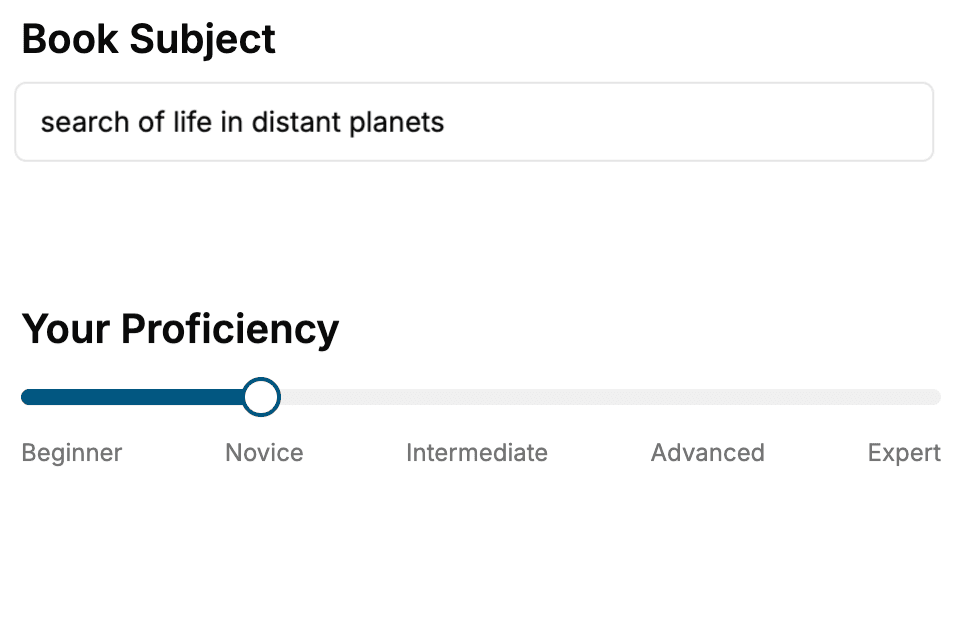
- 1. Select your focus
Select the focus of your European History book and share your background
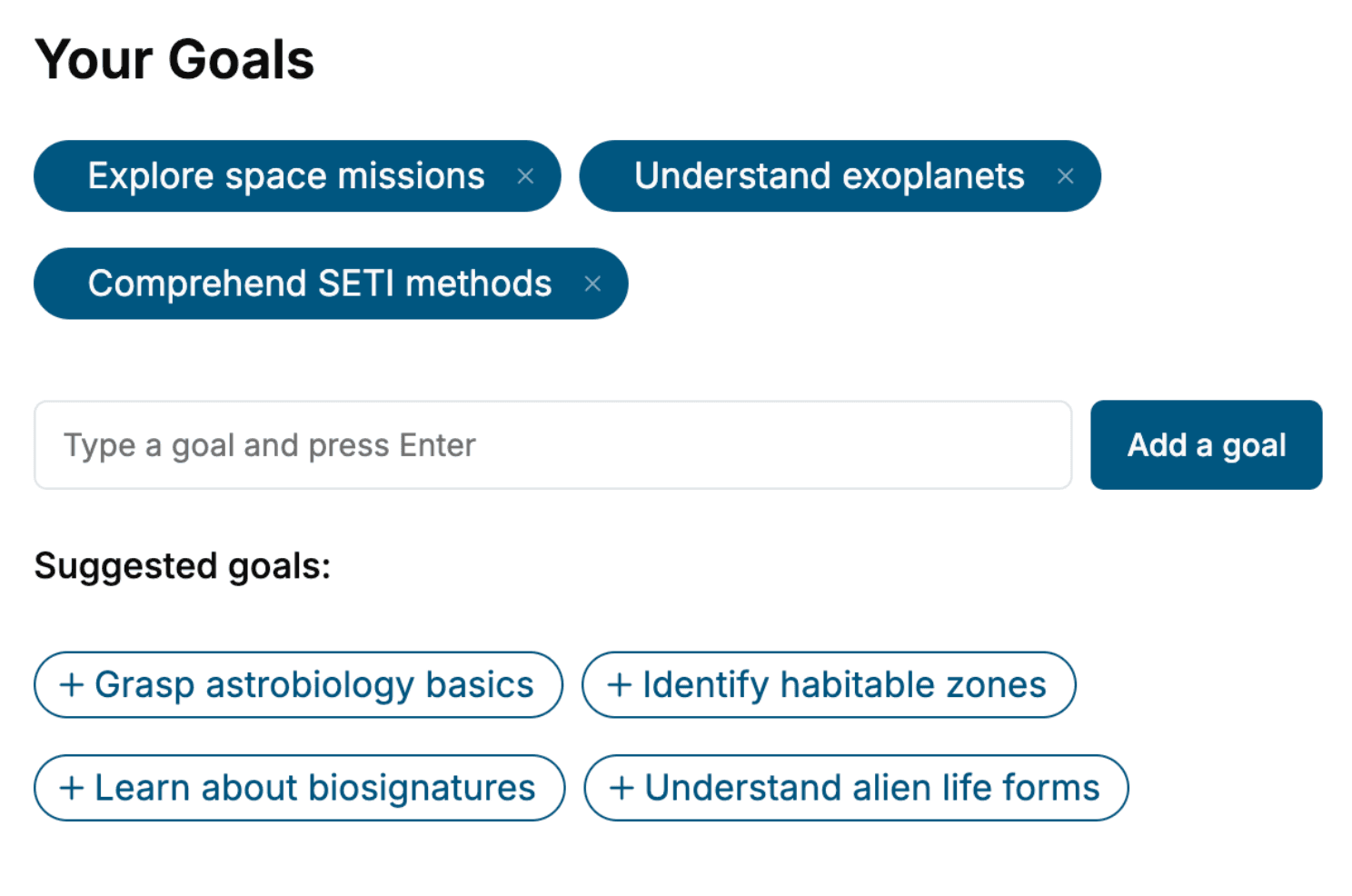
- 2. Personalize your book
Specify your goals and choose sub-topics to include
- 3. Get your tailored book
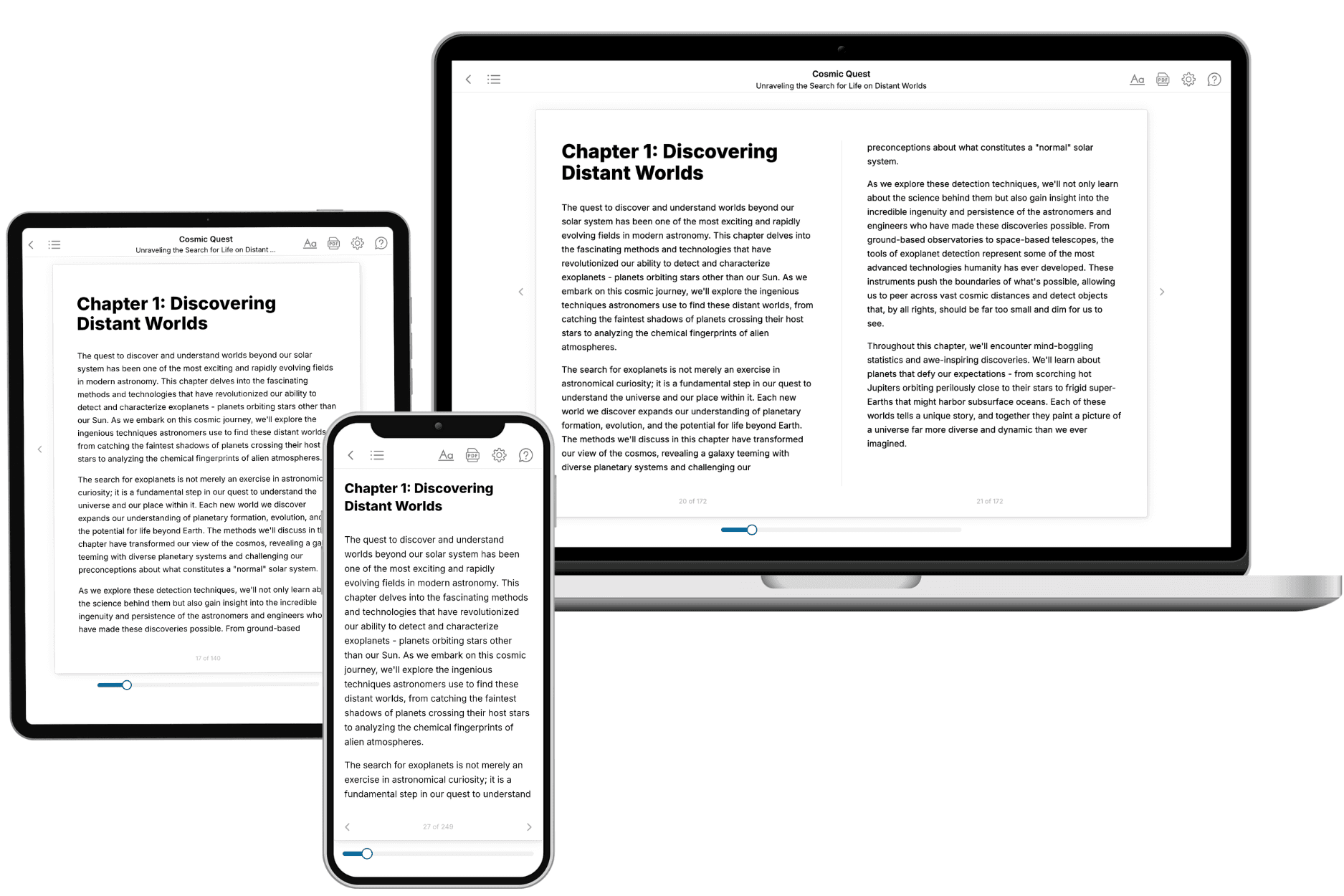
Your book is ready in 10 minutes. Read it online, download as EPUB or PDF, or send to Kindle.
Frequently asked questions
- What is TailoredRead?
TailoredRead creates complete, full-length nonfiction ebooks, written specifically for you. Tell us what you want to learn and why, and TailoredRead writes you a complete ebook on it, with charts, tables, and diagrams throughout. Read it online, on Kindle, or on any e-reader, or download it as a PDF or EPUB. Every book is written fresh the day you order it.
- How is the book tailored to me?
Before anything is written, you answer a few short questions about your goals, your background, and the topics you care about. Your book is then planned around your answers: written at your level, focused on your goals, and covering the topics you chose, instead of the one-size-fits-all book a store sells everyone.
- Will it read like generic AI content?
No. Your book isn't a chat transcript: it's planned chapter by chapter before a single word is written, told in a clear book voice, and explains ideas visually with charts, tables, and diagrams. After writing, every book goes through an editorial pass that polishes chapters so the book reads consistent from start to finish. Judge for yourself: browse thousands of sample books on our Explore Books page.
- How accurate is the content?
Our AI first checks whether your subject needs live research. Niche and fast-moving subjects are researched before writing, and the book plan and chapters are grounded in what it finds. After writing, every book goes through a quality pass that checks its facts and consistency, and researched books list their sources in a Notes section at the back.
- How long is the book?
You choose the length: Comprehensive (250-300 pages), Detailed (150-200 pages), Essential (70-100 pages), or Short (30-50 pages).
- Does the book include visuals?
Yes. Every book includes charts, tables, and diagrams: timelines, checklists, step-by-step guides, decision trees, comparison tables, matrices, and bar charts. A typical book includes dozens of these visual elements.
- Can I read it on Kindle? What formats can I download?
Yes. Every book can be read in our online reader or downloaded as a PDF or EPUB. The EPUB can be opened with Kindle, Apple Books, Kobo, and any e-reader. The Commercial and Author licenses also include an editable Word (DOCX) and Markdown download.
- How much does it cost?
About the price of a regular ebook. The exact price depends on your book's length and complexity, from $2 for the shortest books to $35 for the most comprehensive, and it's shown when you review your book, before you commit to anything. Each book is a one-time purchase, yours to keep, no subscription. Licenses that let you share, teach, or publish your book range from $35.99 to $49.99.
- Can I preview the book before purchasing?
Before you pay, you'll see what your book will cover: the title, a detailed description, the estimated length, and the complete chapter-by-chapter table of contents, so you know what you're getting before you decide. The full text itself is written after you purchase.
- How long does it take to create a book?
About 10 minutes. You can start reading the opening chapters while the rest is still being written.