Soviet History Books
Explore tailored Soviet History books created by our AI
Books readers created
16 Soviet History books, each written for the reader who ordered it. Read its introduction, then personalize it to get a book of your own.
The Holodomor
Understanding the Great Famine in Soviet History and Its Lasting Impact
You will explore one of the most devastating yet under-discussed tragedies of the 20th century through a comprehensive examination of the Holodomor famine of 1932-1933. This systematic investigation takes you through the complex web of Soviet policies, agricultural collectivization, and political decisions that led to the deaths of millions in Ukraine and other Soviet regions. Drawing from extensive historical documentation, survivor accounts, and scholarly research, you'll gain insight into how this man-made disaster unfolded within the broader context of Stalin's Soviet Union. The narrative reveals the intricate connections between agricultural policy, political control, and human suffering, while examining how information about the famine was suppressed both domestically and internationally. You'll discover the long-term consequences of the Holodomor on Ukrainian society, culture, and collective memory, as well as its significance in understanding Soviet history and European developments of the era. The book provides essential context for comprehending how this tragedy fits into the larger patterns of 20th-century European history. Through careful analysis of primary sources and historical evidence, you'll develop a nuanced understanding of this critical period, its causes, and its enduring impact on the regions and peoples affected. This examination offers valuable insights into the intersection of politics, agriculture, and human tragedy in one of history's most significant famines.
Discover the pivotal era that reshaped the Soviet Union and changed the course of European history. "Unveiling the Iron Curtain" takes you on an illuminating journey through the transformative policies of Glasnost and Perestroika. You'll gain a deep understanding of the social, political, and economic forces that led to these reforms and their far-reaching consequences. Delve into the intricacies of Mikhail Gorbachev's leadership and the bold steps taken to reform a stagnating system. You'll explore how these policies of openness and restructuring challenged decades of Soviet ideology and practice, ultimately leading to unexpected outcomes that reshaped the global political landscape. Through engaging narratives and insightful analysis, you'll witness the unraveling of censorship, the emergence of new freedoms, and the complex challenges faced during this period of rapid change. This book offers a nuanced perspective on a crucial chapter of 20th-century history, providing you with the context to understand its lasting impact on contemporary Europe and beyond.
The Soviet Collapse
How Ideology, Economics, and Human Choice Ended a Superpower
Discover how the world's second superpower unraveled in less than a decade, and why this transformation still shapes global politics today. This book takes you beyond Cold War clichés to reveal the genuine forces that dismantled the Soviet Union—from the mathematical impossibility of central planning to the nationalist movements that shattered communist unity. You'll understand how Gorbachev's well-intentioned reforms backfired, why economic stagnation proved more destabilizing than military competition, and how ordinary citizens and bold leaders made choices that redirected history. Through carefully documented analysis and compelling narratives, you'll see how the Soviet collapse wasn't predetermined but rather the result of cascading decisions, structural contradictions, and the human desire for freedom. This comprehensive examination equips you with historical perspective essential for understanding contemporary Russia, regional conflicts, and the fragility of even the most powerful systems.
Uprising in Budapest
The Hungarian Revolution of 1956 and Its Impact on the Cold War
The streets of Budapest erupt in chaos as ordinary citizens rise up against Soviet oppression. It's October 1956, and the world watches in awe as Hungarians fight for freedom against overwhelming odds. This pivotal moment in Cold War history would reshape the political landscape of Europe and challenge the very foundations of the Iron Curtain. "Uprising in Budapest" takes you to the heart of the Hungarian Revolution, offering a gripping account of the events that unfolded over those fateful autumn days. You'll witness the courage of students and workers who dared to dream of a different future, and the brutal response that crushed their hopes. Through vivid storytelling and meticulous research, this book brings to life the personal stories of revolutionaries, political leaders, and ordinary citizens caught in the crossfire of history. Delve into the complex web of international relations that surrounded the uprising, from the calculated responses of Western powers to the internal struggles within the Soviet bloc. Discover how this short-lived rebellion sent shockwaves through the Cold War world, influencing policy decisions and public opinion for decades to come. "Uprising in Budapest" not only chronicles a defining moment in Hungarian history but also provides crucial insights into the nature of resistance, the limits of superpower influence, and the human cost of ideological conflict.
The Fall of the Soviet Empire
How the Cold War's Superpower Collapsed from Within
The Soviet Union's collapse remains one of history's most puzzling events—how did a nuclear superpower that seemed permanent simply cease to exist? You've likely encountered simplified explanations that credit a single leader or event, but the reality is far more complex and fascinating. This book cuts through the confusion by examining the interconnected economic, political, ideological, and social forces that converged to bring down the Soviet empire. You'll discover how structural weaknesses dating back to the system's founding combined with Cold War pressures, leadership miscalculations, and the awakening of nationalist movements to create an irreversible cascade of events. Through clear analysis of key moments—from Brezhnev's stagnation to Gorbachev's reforms, from the fall of the Berlin Wall to the failed coup of 1991—you'll gain a nuanced understanding of why the collapse happened when and how it did. More importantly, you'll see how this pivotal event reshaped our world and continues to influence global politics today. Whether you're deepening your Cold War knowledge or seeking to understand modern geopolitics, this book provides the comprehensive perspective you need.
The Hungarian Flame
A Detailed Account of the 1956 Uprising and Its Impact on Cold War Europe
Imagine standing on the streets of Budapest in 1956, witnessing a nation's cry for freedom echoing through history. "The Hungarian Flame" transports you to this pivotal moment, offering a vivid and comprehensive exploration of the Hungarian Uprising that shook the foundations of the Cold War world. This meticulously researched account brings to life the passion, courage, and tragedy of those fateful days in October and November 1956. You'll gain deep insights into the complex web of political, social, and cultural factors that ignited the uprising against Soviet control. Through compelling narratives and expert analysis, you'll understand how this brief but powerful revolution sent shockwaves through the Iron Curtain and reshaped the landscape of Cold War Europe. From the streets of Budapest to the halls of power in Moscow and Washington, "The Hungarian Flame" illuminates the human stories behind the headlines. You'll explore the uprising's origins, its dramatic unfolding, and its far-reaching consequences that continue to influence Hungarian society and European politics today. This book doesn't just recount history; it brings you into the heart of a nation's struggle for self-determination, offering lessons that resonate in our contemporary world.
The Unraveling
How the Soviet Union Collapsed and Reshaped the Modern World
The Soviet Union's dissolution in 1991 stands as one of the most consequential events of the twentieth century, yet its causes and implications remain widely misunderstood. This book takes you through the intricate web of economic failures, political miscalculations, and social upheavals that brought down a superpower without a single shot fired in its defense. You'll discover how decades of systemic problems converged in the late 1980s, how Gorbachev's well-intentioned reforms backfired spectacularly, and why nationalist movements proved impossible to contain once unleashed. Through careful analysis of key events, decisions, and turning points, you'll gain insight into the human drama behind the headlines—from Kremlin power struggles to independence movements in the Baltic states. More than a historical account, this book illuminates how the Soviet collapse continues to reverberate through contemporary politics, shaping everything from European security to Russia's current trajectory. Whether you're seeking to understand the past or make sense of today's geopolitical landscape, you'll find the context and clarity you need.
Master the complex dynamics of Putin's Russia through systematic analysis of power structures, governance mechanisms, and strategic doctrine. This comprehensive examination provides the analytical framework you need to understand how Putin consolidated authority, how the Kremlin operates through overlapping elite networks, and how Russia projects power domestically and internationally. You'll explore the security apparatus's dual role in governance and constraint, decode the mechanisms of authoritarian consolidation, and analyze the information warfare strategies that sustain regime control. By examining factional competition, oligarchic relationships, and institutional power dynamics, you'll gain the tailored insights necessary to interpret Russian political intrigue and geopolitical strategy. Whether assessing regime stability, evaluating foreign policy intentions, or understanding domestic opposition control, this book equips you with the analytical tools to decode Russia's complex political architecture and anticipate strategic behavior.
What separates Marx's theoretical vision from the totalitarian regimes that claimed to implement it? This comprehensive exploration examines communism not as a monolithic ideology but as a complex intellectual tradition with profound historical consequences. Drawing on your legal and sociological background, this book provides rigorous analysis of communism's philosophical foundations, tracing how dialectical materialism shaped revolutionary movements and state structures across the globe. You'll examine the Soviet Union's rise and collapse, analyze how communist constitutions attempted to institutionalize revolutionary ideals, and evaluate the gap between theory and practice. Through critical examination of key thinkers—Marx, Lenin, Stalin, and Gramsci—and their influence on Cold War politics, you'll develop sophisticated frameworks for understanding how ideology translates into policy, law, and human experience. This is not advocacy or condemnation, but intellectual mastery of one of history's most consequential political movements.
The Red Mafia
Inside Russian Organized Crime's Global Empire
Most people believe organized crime is a relic of the Cold War, confined to history books and Hollywood films. The reality is far more dangerous: Russian Organized Crime has evolved into a transnational empire that operates across continents, infiltrates governments, and shapes global security in ways few understand. This book pulls back the curtain on how the Red Mafia actually works—not as a single hierarchy, but as a sophisticated network of autonomous criminal groups bound by ancient codes and modern ambitions. You'll discover how the Vory v Zakone emerged from Soviet labor camps to become an elite criminal designation, how the 1991 Soviet collapse unleashed a criminal pandemic, and how today's ROC has become an extension of Kremlin power itself. From the Odessa Mafia's dominance in America to Chechen networks operating across Europe, from cyberattacks to sanctions evasion, this book reveals the structures, players, and operations that define 21st-century organized crime. Whether you're a security professional, policy maker, or simply seeking to understand the criminal forces reshaping our world, this comprehensive guide provides the knowledge you need.
The Russian Revolution Unraveled
A Comprehensive Guide to the Upheaval that Reshaped Europe
Many believe the Russian Revolution was a sudden, isolated event that came out of nowhere. In reality, it was the culmination of centuries of social, political, and economic tensions that had been building in Russia and across Europe. "The Russian Revolution Unraveled" takes you on a captivating journey through one of the most transformative periods in modern history. You'll discover how the fall of the Romanov dynasty and the rise of the Soviet state sent shockwaves through the continent, forever altering the course of European and world affairs. From the streets of St. Petersburg to the halls of power in Moscow, this book brings to life the key figures, pivotal moments, and complex ideologies that shaped the revolution. You'll gain a nuanced understanding of how this seismic shift in Russian society influenced art, culture, and political thought across Europe and beyond. Whether you're a history buff or simply curious about the events that shaped our modern world, "The Russian Revolution Unraveled" offers a fresh perspective on this crucial chapter of European history. Prepare to challenge your assumptions and gain a deeper appreciation for the intricate web of causes and effects that continue to resonate in today's geopolitical landscape.
The Nuclear Standoff
How the Cold War Arms Race Shaped Modern America
Many people think the Cold War arms race was simply about building bigger bombs and more missiles. In reality, it was a complex competition rooted in fear, ideology, and technological ambition that reshaped American society in profound ways. This book explores how the nuclear standoff between the United States and Soviet Union emerged from the ashes of World War II, escalated through decades of competition, and ultimately influenced everything from American education and infrastructure to consumer technology and popular culture. You'll discover how close the world came to nuclear war, why leaders on both sides pursued strategies that seemed irrational, and how the arms race eventually wound down. By examining declassified documents, historical events, and the human decisions behind military strategy, this book reveals how the threat of mutual destruction paradoxically created a fragile peace. Whether you're interested in history, politics, or understanding today's nuclear challenges, this comprehensive account shows why the Cold War arms race remains one of the most consequential competitions in human history.
Revolution in Budapest
The Hungarian Uprising of 1956 and Its Impact on European History
The streets of Budapest erupt in chaos as ordinary citizens rise against an oppressive regime. The year is 1956, and Hungary is about to change the course of European history. But what led to this moment of defiance, and how did it shape the future of a nation and a continent? In "Revolution in Budapest," you'll be transported to the heart of Cold War Europe, where tensions between East and West reached a boiling point. This book offers a vivid account of the Hungarian Uprising, from its roots in post-World War II politics to its dramatic unfolding and lasting consequences. You'll gain insights into the key players, the international response, and the human stories that defined this pivotal moment. Through meticulous research and compelling narratives, you'll discover how the Hungarian people's brave stand against Soviet dominance resonated far beyond their borders. This book not only chronicles the events of 1956 but also explores their significance in the broader tapestry of European history, offering a fresh perspective on the Cold War era and its impact on modern geopolitics.
The Budapest Beacon
How the Hungarian Uprising Illuminated America's Cold War Strategy
Have you ever wondered how a single event in a distant country could reshape America's global strategy? The Hungarian Uprising of 1956 was more than just a failed revolution—it was a turning point that cast a long shadow over US foreign policy during the Cold War. In "The Budapest Beacon," you'll discover how this pivotal moment became a litmus test for American values and Cold War tactics. This book takes you beyond the iron curtain, revealing the intricate web of international relations, covert operations, and moral dilemmas that defined an era. You'll gain insight into the decision-making processes of key US figures as they grappled with the implications of Soviet aggression and the limits of American power. Through meticulously researched accounts and compelling narratives, you'll explore how the Hungarian Uprising influenced public opinion, shaped diplomatic strategies, and ultimately contributed to the long-term policies that would define America's stance against communism. This isn't just a retelling of historical events—it's an invitation to understand the complexities of Cold War politics and their lasting impact on our world today.
Berlin's Last Stand
The Dramatic Fall of Nazi Germany's Capital in World War II
Have you ever wondered what it was like to witness the fall of one of history's most notorious regimes? "Berlin's Last Stand" takes you to the heart of the action as the Allied forces converge on the German capital in the final days of World War II. This gripping account brings to life the intensity, chaos, and human drama of urban warfare on an unprecedented scale. You'll experience the relentless advance of Soviet troops from the east and the determined push of Western Allies from the west. Through vivid storytelling and meticulous research, you'll gain a deeper understanding of the strategic decisions, tactical maneuvers, and personal sacrifices that shaped this crucial moment in history. From the desperate defense mounted by the remaining German forces to the plight of civilians caught in the crossfire, this book offers a 360-degree view of the battle that brought the European theater of World War II to its climactic end. You'll explore the political implications of Berlin's capture, the race between Allied powers to reach the city first, and the far-reaching consequences of this momentous event. "Berlin's Last Stand" is not just a military history; it's a compelling narrative that brings the past to life, offering valuable insights into leadership, strategy, and the human spirit in times of extreme adversity. Whether you're a history buff or simply curious about one of the 20th century's defining moments, this book will leave you with a profound understanding of the forces that shaped our modern world.
Solidarity's Triumph
The Polish Movement That Reshaped Europe
In "Solidarity's Triumph: The Polish Movement That Reshaped Europe," you'll be transported to the heart of one of the most pivotal moments in modern European history. This compelling narrative traces the birth, growth, and ultimate victory of the Solidarity movement in Poland, a force that would play a crucial role in dismantling the Iron Curtain and reshaping the political landscape of Europe. As you delve into the pages of this book, you'll gain a deep understanding of the social, economic, and political conditions that gave rise to Solidarity. You'll witness the courage of ordinary workers who dared to challenge an oppressive regime, and the strategic brilliance of leaders who navigated treacherous waters to bring about peaceful change. From the Gdańsk shipyards to the halls of power in Warsaw and beyond, this book offers a front-row seat to the dramatic events that unfolded in Poland during the 1980s. You'll explore the movement's innovative tactics, its complex relationship with the Catholic Church, and its profound impact on international relations during the Cold War era. "Solidarity's Triumph" is not just a historical account; it's a testament to the power of collective action and the enduring human spirit. By the end of this journey, you'll have gained not only knowledge about a crucial chapter in history but also inspiration from the ordinary people who achieved extraordinary things in their quest for freedom and dignity.
Related books you may like:
Embark on a captivating journey through one of the most pivotal moments in British history with "1066: The Year That Changed England." This meticulously researched account of the Battle of Hastings offers you a front-row seat to the events that reshaped the course of European history. Delve into the complex web of political intrigue, military strategy, and cultural shifts that led to this momentous clash. You'll gain a deep understanding of the key players - William the Conqueror, Harold Godwinson, and Harald Hardrada - and the high-stakes game of thrones they played. Through vivid storytelling and expert analysis, you'll experience the tension of the battlefield, the clash of Anglo-Saxon and Norman cultures, and the far-reaching consequences of William's victory. Discover how this single event transformed England's language, laws, and social structure, leaving an indelible mark on the nation's identity. Whether you're a history buff or simply curious about this transformative period, this book offers fresh insights and a comprehensive overview that will enrich your understanding of medieval Europe and the foundations of modern Britain.
Many assume the French Revolution ended in 1799 with Napoleon's rise to power. In reality, the struggle for democracy and social justice continued to convulse France throughout the nineteenth century. The 1848 Revolution represents a pivotal moment when ordinary people—workers, students, intellectuals, and the poor—rose up against an entrenched monarchy and demanded fundamental change. This book explores the dramatic events of that revolutionary year, from the February uprising that toppled King Louis-Philippe to the violent June Days that exposed the revolution's internal contradictions. You'll discover how economic crisis, industrial transformation, and competing political ideologies collided to reshape not just France, but the entire European continent. Through vivid narratives and careful analysis, this account reveals why 1848 mattered then and why its lessons remain relevant today for understanding how societies change, how revolutions succeed and fail, and how the pursuit of liberty continues to define our world.
Discover how a single year transformed global history and set the stage for the modern world. The Russian Revolutions of 1917 were pivotal moments that toppled an empire, established the first communist state, and triggered consequences that rippled across the entire 20th century. This book walks you through the complex web of causes—from centuries of imperial rule and industrialization to the devastating impact of World War I—that made revolution possible. You'll explore the dramatic events of both the February and October revolutions, meet the key figures who shaped these upheavals, and understand how ordinary Russians experienced these extraordinary times. Beyond the headlines and heroic narratives, you'll examine the real economic hardships, military failures, and social tensions that drove millions to support radical change. This comprehensive account reveals why 1917 matters today, how it reshaped global politics and ideology, and what it teaches us about revolution, power, and historical change. Whether you're a history student, curious learner, or someone seeking to understand the roots of modern geopolitics, this book provides the context and clarity needed to grasp one of history's most consequential moments.
Discover the pivotal events and complex forces that shaped one of the 20th century's most consequential moments. This comprehensive examination takes you through the centuries of Jewish diaspora, the rise of Zionism, and the dramatic final years leading to Israel's establishment in 1948. You'll understand how the Holocaust transformed international politics, why the British Mandate created irreconcilable tensions, and how the UN Partition Plan became a flashpoint for conflict. Through careful analysis of key figures, military campaigns, and political negotiations, you'll gain insight into how a new nation emerged from centuries of displacement and persecution—while grappling with the displacement of another people. This book presents the historical evidence, competing narratives, and lasting consequences of 1948, enabling you to understand not just what happened, but why it matters for the modern Middle East and global politics today.
Most people think the Norman Conquest was simply a military victory that happened in a single day. In reality, 1066 marked the beginning of a decades-long transformation that would fundamentally reshape English society, language, and identity. This book reveals how William the Conqueror's invasion wasn't inevitable—it emerged from a disputed succession, political intrigue, and the ambitions of ambitious leaders. Beyond the famous Battle of Hastings, you'll discover how Norman rulers consolidated power through feudalism, how the French language permanently altered English, and how a new ruling class gradually integrated with the existing population. Through vivid storytelling and careful analysis, you'll understand how this single conquest rippled across centuries, influencing everything from English law and governance to the very words we speak today. Whether you're exploring medieval history for the first time or deepening your existing knowledge, this book illuminates why 1066 remains one of history's most consequential moments—and how its effects continue to shape our world.
Create a Soviet History Book Tailored to You
Create an AI-crafted book tailored to your goals, interests, and background






Benefits of AI-tailored books
- Read one book, not ten:
- all the Soviet History knowledge you need, gathered into a single book.
- Save days of learning:
- tell us your goals, choose your topics, and the whole book is built around them.
- Learn effortlessly:
- Soviet History book written for your specific background and expertise.
- Understand at a glance:
- includes charts, tables, timelines, checklists, decision trees, and more.
- Stay current:
- written the day you order it, not years ago.
- Trust what you read:
- every book is checked for accuracy, with real research when your subject needs it.
Create your unique book in 3 steps
- 1. Select your focus
Select the focus of your Soviet History book and share your background
- 2. Personalize your book
Specify your goals and choose sub-topics to include
- 3. Get your tailored book
Your book is ready in 10 minutes. Read it online, download as EPUB or PDF, or send to Kindle.


Frequently asked questions
- What is TailoredRead?
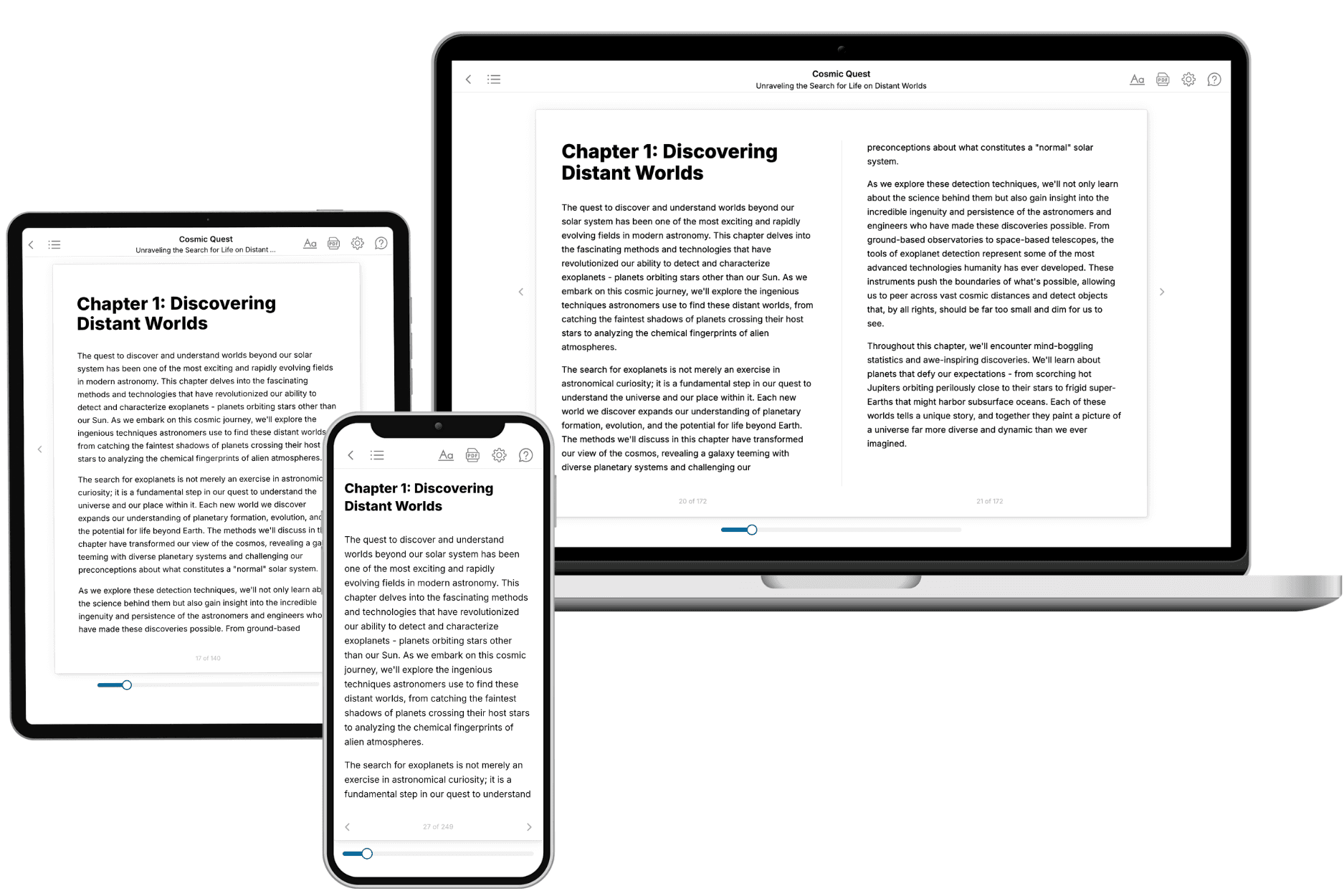
TailoredRead creates complete, full-length nonfiction ebooks, written specifically for you. Tell us what you want to learn and why, and TailoredRead writes you a complete ebook on it, with charts, tables, and diagrams throughout. Read it online, on Kindle, or on any e-reader, or download it as a PDF or EPUB. Every book is written fresh the day you order it.
- How is the book tailored to me?
Before anything is written, you answer a few short questions about your goals, your background, and the topics you care about. Your book is then planned around your answers: written at your level, focused on your goals, and covering the topics you chose, instead of the one-size-fits-all book a store sells everyone.
- Will it read like generic AI content?
No. Your book isn't a chat transcript: it's planned chapter by chapter before a single word is written, told in a clear book voice, and explains ideas visually with charts, tables, and diagrams. After writing, every book goes through an editorial pass that polishes chapters so the book reads consistent from start to finish. Judge for yourself: browse thousands of sample books on our Explore Books page.
- How accurate is the content?
Our AI first checks whether your subject needs live research. Niche and fast-moving subjects are researched before writing, and the book plan and chapters are grounded in what it finds. After writing, every book goes through a quality pass that checks its facts and consistency, and researched books list their sources in a Notes section at the back.
- How long is the book?
You choose the length: Comprehensive (250-300 pages), Detailed (150-200 pages), Essential (70-100 pages), or Short (30-50 pages).
- Does the book include visuals?
Yes. Every book includes charts, tables, and diagrams: timelines, checklists, step-by-step guides, decision trees, comparison tables, matrices, and bar charts. A typical book includes dozens of these visual elements.
- Can I read it on Kindle? What formats can I download?
Yes. Every book can be read in our online reader or downloaded as a PDF or EPUB. The EPUB can be opened with Kindle, Apple Books, Kobo, and any e-reader. The Commercial and Author licenses also include an editable Word (DOCX) and Markdown download.
- How much does it cost?
About the price of a regular ebook. The exact price depends on your book's length and complexity, from $2 for the shortest books to $35 for the most comprehensive, and it's shown when you review your book, before you commit to anything. Each book is a one-time purchase, yours to keep, no subscription. Licenses that let you share, teach, or publish your book range from $35.99 to $49.99.
- Can I preview the book before purchasing?
Before you pay, you'll see what your book will cover: the title, a detailed description, the estimated length, and the complete chapter-by-chapter table of contents, so you know what you're getting before you decide. The full text itself is written after you purchase.
- How long does it take to create a book?
About 10 minutes. You can start reading the opening chapters while the rest is still being written.