Beyond Common Sense
How Einstein's Theory of Special Relativity Reveals the Hidden Nature of Reality
Most people assume that time flows at the same rate everywhere, that space is simply the empty stage where events occur, and that these are obvious truths about reality.
207 pages10 chaptersJun 6, 2026Special Relativity
About this book
Yet Einstein's special relativity reveals something startling: these assumptions are wrong. Time actually stretches and contracts depending on how fast you're moving. Space itself is not what it seems. This book explores how one of science's most revolutionary theories fundamentally challenges our understanding of reality itself. Rather than getting lost in complex mathematics, we'll examine the philosophical implications of special relativity—what it means for causality, free will, the nature of existence, and our place in the cosmos. You'll discover how Einstein's insights forced philosophers and scientists to reconsider what we can truly know about the universe, and why this matters far beyond the laboratory. Whether you're fascinated by physics, philosophy, or the intersection of both, this exploration will reshape how you think about time, space, and reality.
Table of contents
- IntroductionWhy Relativity Matters to You, Common Misconceptions About Space and Time, What You'll Discover in This BookRead below
- Chapter 1: The Classical World: Before EinsteinNewton's Absolute Space and Time, Galilean Relativity and the Principle of Relativity, The Ether Problem: Light's Mysterious Medium
- Chapter 2: The Crisis in Physics: Experiments That Changed EverythingMaxwell's Equations and the Speed of Light, The Michelson-Morley Experiment: The Ether Doesn't Exist, The Paradox That Demanded a Solution
- Chapter 3: Einstein's Revolutionary PostulatesThe Principle of Relativity: All Motion Is Relative, The Constancy of Light Speed: A Radical Assumption, What These Postulates Really Mean
- Chapter 4: Time Dilation: Time Is Not AbsoluteHow Time Stretches at High Velocities, The Twin Paradox: A Thought Experiment, Real-World Evidence: Muons and Atomic Clocks
- Chapter 5: Length Contraction: Space Is Not What It SeemsObjects Shrink in the Direction of Motion, The Relativity of Simultaneity: Events Aren't Simultaneous for Everyone, Understanding Spacetime Geometry
- Chapter 6: E=mc²: The Equivalence of Mass and EnergyMass and Energy Are Interchangeable, What This Means for Our Understanding of Matter, From Nuclear Power to the Sun: Practical Implications
- Chapter 7: The Philosophical Foundations: Epistemology and MetaphysicsWhat Is Real? Challenging Our Intuitions, Observer-Dependent Reality: Does Observation Create Reality?, Determinism, Causality, and the Light Cone
- Chapter 8: Spacetime: A New Framework for Understanding RealityMinkowski's Spacetime: The Unified Continuum, Thinking in Four Dimensions, The Block Universe: Past, Present, and Future Coexist
- Chapter 9: Philosophical Implications: Free Will, Time, and ExistenceFree Will in a Relativistic Universe, The Nature of Time: Is It Real or an Illusion?, What Special Relativity Reveals About Existence
- Chapter 10: How Science Revolutions Happen: Lessons from EinsteinParadigm Shifts: When Theories Overturn Worldviews, The Role of Empirical Evidence in Scientific Revolutions, Why Scientists Resisted and Eventually Accepted Relativity
- ConclusionKey Takeaways: What We've Learned, Beyond Special Relativity: General Relativity and Beyond
- Further Reading and Resources
Introduction
There is a moment that many people experience when they first encounter Einstein's special relativity. It usually happens somewhere between reading that time slows down for fast-moving objects and learning that two observers can genuinely disagree about whether two events happened at the same moment. The moment is one of quiet disorientation, a feeling that the ground has shifted beneath your feet. That feeling is not confusion. It is the beginning of understanding something real and profound about the universe you live in.
Most of us carry around a set of assumptions about space and time that feel so obvious they barely register as assumptions at all. Time flows at the same rate everywhere. Space is the neutral, empty container in which things happen. A meter is a meter, a second is a second, and these measurements do not depend on who is doing the measuring or how fast they are moving. These ideas feel like common sense because they match everything we experience in daily life. The problem is that they are wrong, or at least deeply incomplete. Special relativity does not just tweak these ideas around the edges. It replaces them entirely with something stranger, more precise, and ultimately more beautiful.
This book is an invitation to follow that replacement all the way through. Not just the physics, but the philosophy. Not just the equations, but the meaning. Special relativity is one of the most thoroughly tested and confirmed theories in the history of science, and its consequences reach far beyond the laboratory. They touch questions about the nature of reality, the structure of time, the meaning of causality, and even what it means to exist. Understanding this theory changes how you think, not just about physics, but about knowledge itself and about what the universe fundamentally is.
The goal here is not to overwhelm you with mathematics. The core ideas of special relativity can be grasped conceptually, and that conceptual grasp is genuinely powerful. Where equations appear, they will be explained in plain language. Where thought experiments arise, they will be walked through carefully. The emphasis throughout is on understanding, not calculation. By the time you reach the final chapter, the aim is that you will not just know what special relativity says, but why it matters and what it reveals about the hidden nature of reality.
Why Relativity Matters to You
It is tempting to think of special relativity as something that only matters to physicists working with particle accelerators or astronomers studying distant galaxies. After all, the effects of relativity only become dramatic at speeds approaching the speed of light, roughly 300,000 kilometers per second. Nothing in ordinary human experience moves anywhere near that fast. So why should this theory matter to you personally?
The first answer is practical and surprisingly immediate. The GPS system that your phone uses to navigate depends directly on relativistic corrections. Satellites in orbit move fast enough and sit in a different gravitational environment such that their onboard clocks run at slightly different rates than clocks on the ground. Without corrections based on both special and general relativity, GPS coordinates would drift by roughly 10 kilometers per day.[1] Every time you use navigation on your phone, you are benefiting from Einstein's insights in a direct and measurable way.
The second answer is deeper. Special relativity matters because it is one of the clearest examples in human history of empirical science overturning deeply held intuitions about reality. Before Einstein, even the most sophisticated thinkers assumed that time was universal and absolute. Newton built his entire framework of mechanics on that assumption. The fact that this assumption turned out to be wrong is not just a footnote in physics history. It is a lesson about the limits of intuition and the power of careful reasoning from evidence. That lesson applies far beyond physics.
The third answer is philosophical. Special relativity raises questions that philosophers have wrestled with for over a century and have not fully resolved. Does the past still exist? Is the future already determined? What does it mean for two events to happen "at the same time" if that judgment depends on who is observing? These are not abstract puzzles. They are genuine questions about the structure of reality, and special relativity gives us precise, testable tools for thinking about them. Engaging with these questions sharpens your thinking about knowledge, reality, and existence in ways that extend well beyond physics.
There is also something personally transformative about genuinely understanding special relativity. It is one of those rare intellectual experiences that permanently changes your mental model of the world. Once you truly grasp that time is not absolute, that simultaneity is relative, and that mass and energy are two faces of the same thing, you cannot quite go back to the old picture. The universe becomes stranger and more interesting. That strangeness is not unsettling once you understand it. It is exhilarating.
Finally, special relativity is a gateway. Understanding it well prepares you to engage with general relativity, quantum mechanics, and modern cosmology. These are the theories that describe the universe at its most fundamental levels, and they are among the greatest intellectual achievements in human history. Special relativity is where that journey begins, and it is a journey worth taking.
A concrete example of why this matters: In 1971, physicists Joseph Hafele and Richard Keating flew atomic clocks around the world on commercial airplanes and compared them to stationary clocks on the ground. The flying clocks showed measurable time differences that matched the predictions of relativity precisely.[2] This was not a theoretical exercise. It was a direct demonstration that time itself behaves differently depending on motion, and it happened on ordinary commercial flights.
The effects of relativity are real, measurable, and already woven into the technology of modern life. Understanding the theory behind those effects is not just an academic exercise. It is a way of seeing the world more clearly and accurately than common sense alone allows.
Common Misconceptions About Space and Time
Before diving into what special relativity actually says, it is worth clearing away some of the most common misunderstandings that people bring to the subject. These misconceptions are not signs of ignorance. They are the natural result of living in a world where relativistic effects are too small to notice directly. But they do create real obstacles to understanding, and identifying them early makes everything that follows much clearer.
Misconception 1: Relativity means everything is relative. This is perhaps the most widespread misunderstanding. People sometimes take "relativity" to mean that all measurements are subjective, that there is no objective truth, or that reality is whatever any observer says it is. This is almost the opposite of what the theory actually claims. Special relativity identifies specific quantities that are invariant, meaning they are the same for all observers regardless of their motion. The speed of light is one such invariant. The spacetime interval between two events is another. The theory is actually about finding what is absolute beneath the apparent differences between observers.
Misconception 2: Time dilation and length contraction are just illusions or measurement artifacts. A common reaction to learning that moving clocks run slow is to assume this must be some kind of optical trick, like the way a stick looks bent when you put it in water. It is not. Time dilation is a real physical effect. A clock that travels at high speed and returns to its starting point will genuinely show less elapsed time than a clock that stayed put. The difference is physically real and has been confirmed experimentally many times. The clocks are not malfunctioning. Time itself is behaving differently for them.
Misconception 3: The speed of light being constant is just a convention. Some people assume that the constancy of the speed of light is simply a definition or a convenient choice of units. It is not. It is an empirical fact about the universe, confirmed by experiments going back to the late nineteenth century. Light travels at the same speed relative to every observer, regardless of how fast that observer is moving. This is deeply counterintuitive, and it is the single most important fact that drives all the strange consequences of special relativity.
Misconception 4: Special relativity only applies at extreme speeds. While it is true that relativistic effects become large and obvious only at speeds that are a significant fraction of the speed of light, the theory applies at all speeds. At everyday velocities, the corrections are so tiny that they are undetectable without extremely precise instruments. But they are there. Special relativity does not switch on at some threshold speed. It is always operating. Newtonian mechanics is simply a very good approximation of relativistic mechanics when speeds are small compared to light.
There is also a subtler misconception worth addressing. Many people assume that because special relativity is counterintuitive, it must be difficult to understand in any meaningful way without advanced mathematics. This is not true. The core ideas are conceptually accessible, and the thought experiments that Einstein himself used to develop the theory are elegant and followable without calculus. The mathematics of special relativity is not trivial, but the physical and philosophical meaning of the theory can be grasped clearly through careful reasoning and vivid examples.
Understanding where your intuitions go wrong is actually one of the most valuable parts of studying special relativity. Our intuitions about space and time were shaped by evolution and daily experience in a world where nothing moves faster than a few hundred meters per second. They are excellent tools for navigating that world. But they are not reliable guides to how the universe behaves at extreme scales. Recognizing this limitation is not a defeat. It is the beginning of a more accurate and more interesting picture of reality.
One more misconception deserves mention. Some people believe that special relativity has been superseded or disproven by later developments in physics, particularly quantum mechanics or general relativity. This is incorrect. Special relativity remains one of the most precisely confirmed theories in all of science. General relativity extends it to include gravity and accelerated motion, but does not contradict it. Quantum field theory, the framework that underlies particle physics, is built on a foundation that incorporates special relativity at its core. The theory is not outdated. It is foundational.
What You'll Discover in This Book
This book moves through special relativity in a way that builds understanding progressively, starting with the historical and conceptual context before Einstein, moving through the core ideas of the theory itself, and then exploring the philosophical implications that make this theory so much more than a technical achievement in physics. Each chapter is designed to stand on its own while also contributing to a larger picture that becomes clearer as you move through the book.
The journey begins with the world before Einstein. Chapter 1 examines Newton's framework of absolute space and time, which dominated physics for over two centuries and felt so obviously correct that questioning it seemed almost absurd. Understanding what Newton believed, and why those beliefs seemed so well-founded, is essential for appreciating just how radical Einstein's departure from them really was. Chapter 2 then looks at the experimental crisis that made a new theory necessary, particularly the famous Michelson-Morley experiment, which produced results that simply could not be explained within the Newtonian framework.
Chapters 3 through 6 cover the core physics of special relativity. You will encounter Einstein's two foundational postulates and trace their logical consequences step by step. The key topics include:
- Time dilation: why moving clocks run slow, and what this means for the nature of time itself
- Length contraction: why moving objects are shorter in the direction of motion, and how this connects to the relativity of simultaneity
- The relativity of simultaneity: why two observers in relative motion can genuinely disagree about whether two events happened at the same time
- Mass-energy equivalence: what
E=mc²actually means, where it comes from, and why it implies that matter and energy are two forms of the same underlying reality
Each of these topics is approached through thought experiments, real-world examples, and careful conceptual explanation. The goal is not just to tell you that these things are true, but to help you see why they must be true given the foundational principles of the theory. That kind of understanding is much more durable and satisfying than simply memorizing conclusions.
Chapters 7 through 9 shift the focus toward philosophy. This is where the book moves beyond physics into the deeper questions that special relativity raises about the nature of reality. What does it mean for reality to be observer-dependent in certain ways? What does the block universe interpretation of spacetime imply about free will and the flow of time? Is time real, or is it an emergent feature of a deeper, timeless structure? These questions do not have simple answers, but special relativity gives us precise tools for thinking about them, and engaging with them seriously changes how you understand your own existence.
Chapter 10 steps back to look at the broader lesson that special relativity offers about how science works. Einstein's theory is one of the clearest examples of a genuine paradigm shift, a moment when a new framework replaced an old one not because the old one was obviously wrong in everyday experience, but because it failed to account for precise experimental results. Understanding how that shift happened, why it was resisted, and what finally made it accepted is valuable for anyone who wants to think clearly about science, knowledge, and the relationship between theory and evidence.
The conclusion brings the threads together and points toward what lies beyond special relativity. General relativity, which extends Einstein's framework to include gravity and curved spacetime, opens up even stranger and more profound territory. Quantum mechanics raises its own deep questions about the nature of reality that intersect in fascinating ways with the relativistic picture. Understanding special relativity well is the foundation for engaging with all of it.
Throughout the book, the emphasis is on genuine understanding rather than surface familiarity. It is easy to learn to say the right words about relativity without really grasping what they mean. The aim here is different. Every concept will be examined carefully, every counterintuitive result will be traced back to its logical roots, and every philosophical implication will be taken seriously rather than glossed over. By the end, you should have a clear, accurate, and genuinely deep understanding of one of the most important ideas in the history of human thought.
A note on the approach: This book assumes you are comfortable with basic scientific concepts and have some familiarity with physics at a general level. It does not assume you remember calculus or have studied physics formally beyond high school. Where mathematical ideas appear, they will be explained in plain language. The focus is always on meaning, not calculation. If you find yourself wanting more mathematical depth after reading this book, the further reading section at the end will point you toward excellent resources that go deeper into the formalism.
One of the most important things to bring to this material is a willingness to sit with discomfort. Special relativity is genuinely strange. Some of its conclusions will feel wrong even after you understand why they must be right. That tension between intuition and understanding is not a problem to be solved quickly. It is part of the experience of learning something that genuinely expands your picture of reality. The strangeness does not go away entirely, but it transforms over time from confusion into a kind of wonder. That transformation is what this book is designed to help you achieve.
The universe is not obligated to match our intuitions. It is far more interesting than that. Special relativity is one of the clearest demonstrations of this fact, and understanding it is one of the most rewarding intellectual journeys available to anyone curious about the nature of existence. What follows is an invitation to take that journey seriously, carefully, and with open eyes.
This is the end of the free sample. The full book has 10 chapters.
Want this book written for you?
Tell us your goals and background, and get your own version of this book, tailored by AI to you.


Benefits of AI-tailored books
- Read one book, not ten:
- all the Special Relativity knowledge you need, gathered into a single book.
- Save days of learning:
- tell us your goals, choose your topics, and the whole book is built around them.
- Learn effortlessly:
- Special Relativity book written for your specific background and expertise.
- Understand at a glance:
- includes charts, tables, timelines, checklists, decision trees, and more.
- Stay current:
- written the day you order it, not years ago.
- Trust what you read:
- every book is checked for accuracy, with real research when your subject needs it.
Create your unique book in 3 steps
- 1. Select your focus
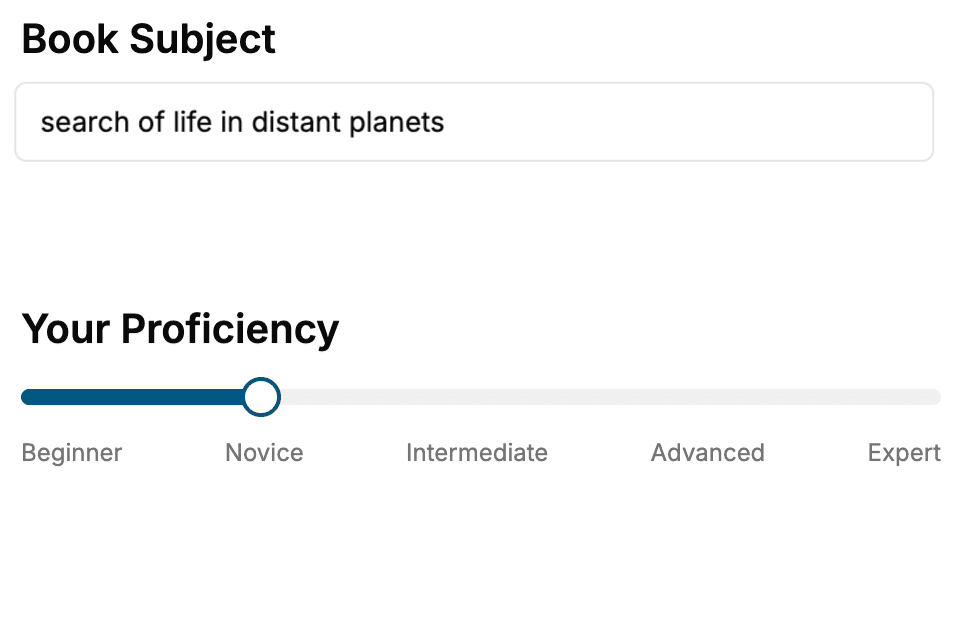
Select the focus of your Special Relativity book and share your background
- 2. Personalize your book
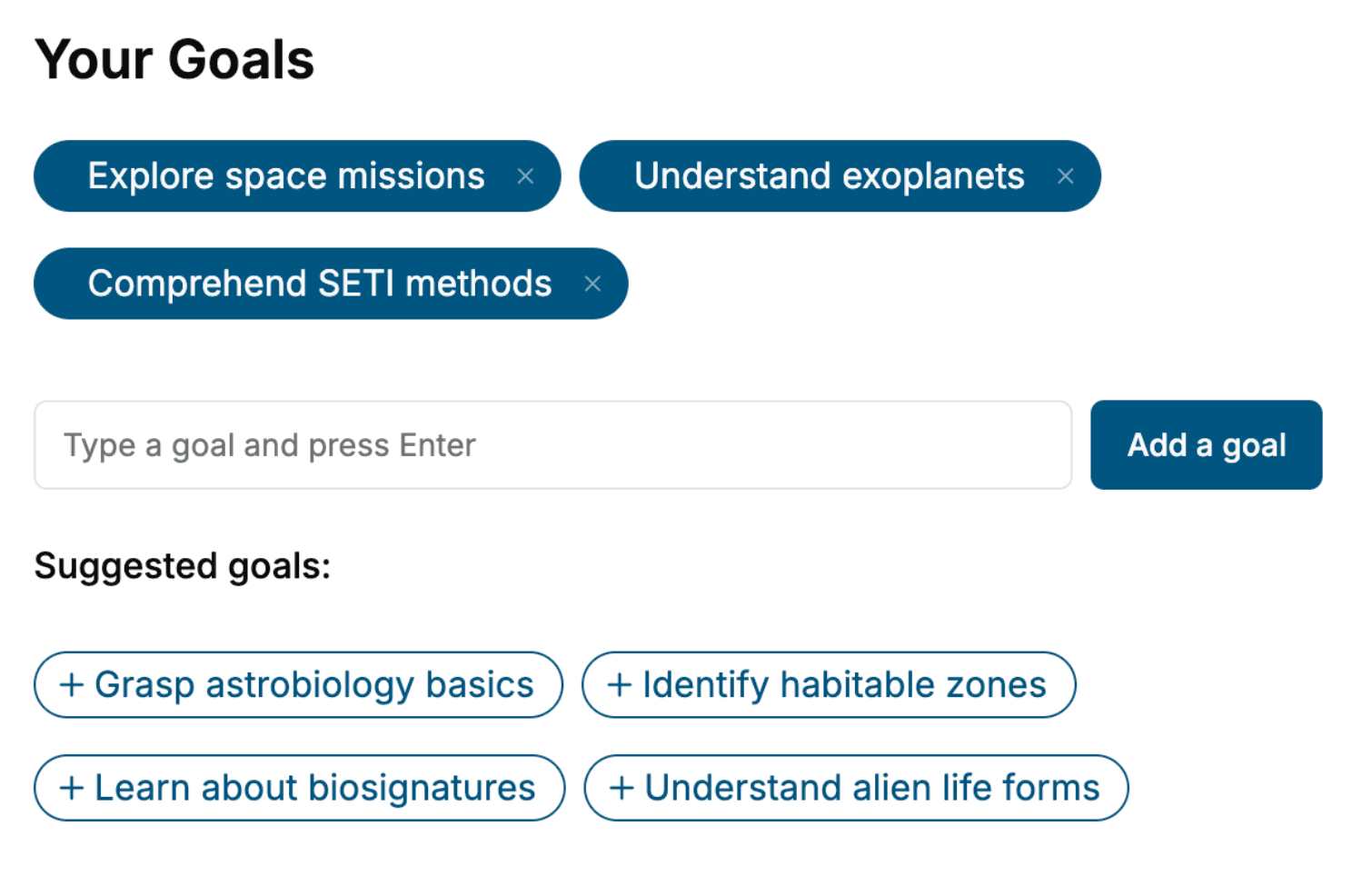
Specify your goals and choose sub-topics to include
- 3. Get your tailored book
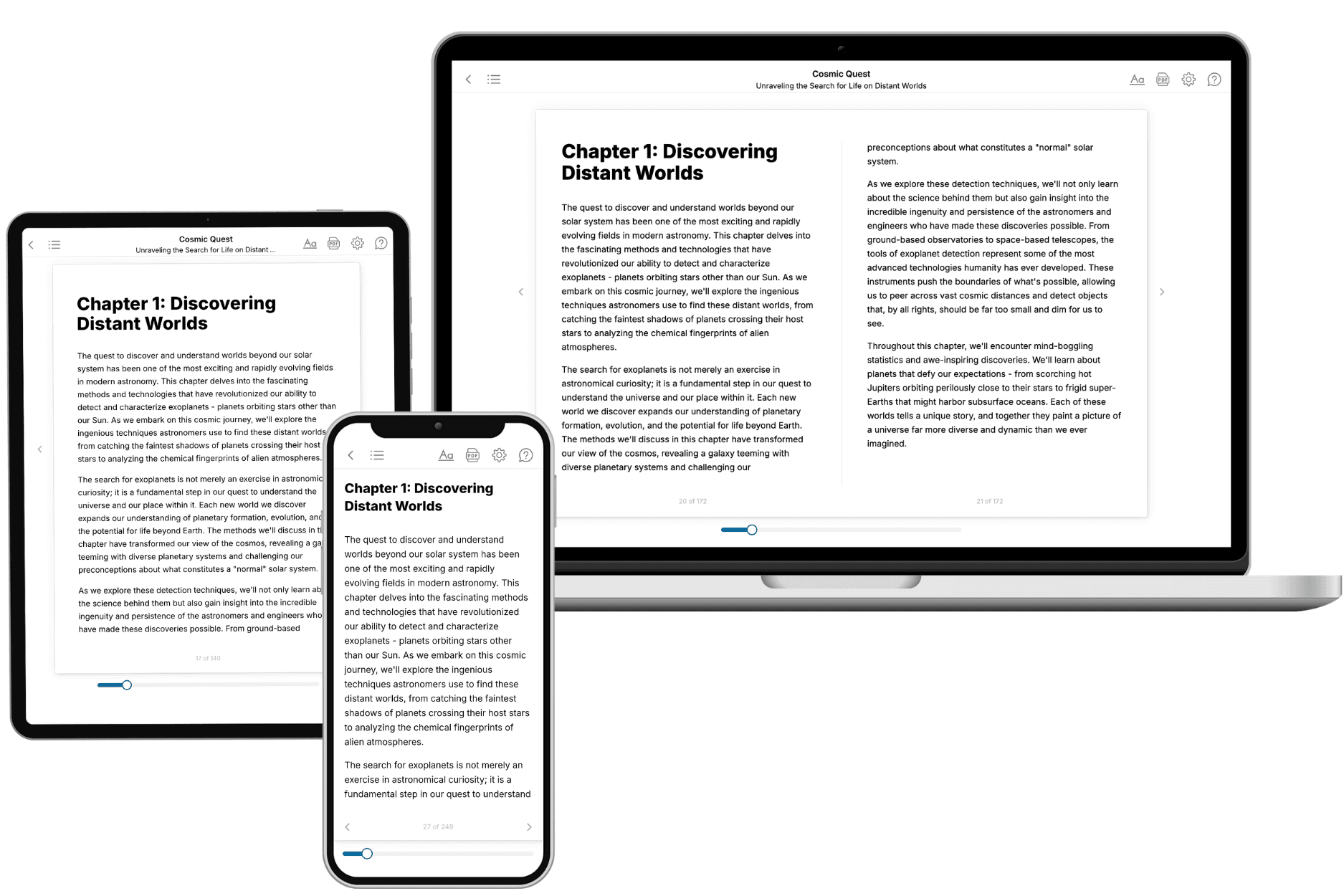
Your book is ready in 10 minutes. Read it online, download as EPUB or PDF, or send to Kindle.
Frequently asked questions
- What is TailoredRead?
TailoredRead creates complete, full-length nonfiction ebooks, written specifically for you. Tell us what you want to learn and why, and TailoredRead writes you a complete ebook on it, with charts, tables, and diagrams throughout. Read it online, on Kindle, or on any e-reader, or download it as a PDF or EPUB. Every book is written fresh the day you order it.
- How is the book tailored to me?
Before anything is written, you answer a few short questions about your goals, your background, and the topics you care about. Your book is then planned around your answers: written at your level, focused on your goals, and covering the topics you chose, instead of the one-size-fits-all book a store sells everyone.
- Will it read like generic AI content?
No. Your book isn't a chat transcript: it's planned chapter by chapter before a single word is written, told in a clear book voice, and explains ideas visually with charts, tables, and diagrams. After writing, every book goes through an editorial pass that polishes chapters so the book reads consistent from start to finish. Judge for yourself: browse thousands of sample books on our Explore Books page.
- How accurate is the content?
Our AI first checks whether your subject needs live research. Niche and fast-moving subjects are researched before writing, and the book plan and chapters are grounded in what it finds. After writing, every book goes through a quality pass that checks its facts and consistency, and researched books list their sources in a Notes section at the back.
- How long is the book?
You choose the length: Comprehensive (250-300 pages), Detailed (150-200 pages), Essential (70-100 pages), or Short (30-50 pages).
- Does the book include visuals?
Yes. Every book includes charts, tables, and diagrams: timelines, checklists, step-by-step guides, decision trees, comparison tables, matrices, and bar charts. A typical book includes dozens of these visual elements.
- Can I read it on Kindle? What formats can I download?
Yes. Every book can be read in our online reader or downloaded as a PDF or EPUB. The EPUB can be opened with Kindle, Apple Books, Kobo, and any e-reader. The Commercial and Author licenses also include an editable Word (DOCX) and Markdown download.
- How much does it cost?
About the price of a regular ebook. The exact price depends on your book's length and complexity, from $2 for the shortest books to $35 for the most comprehensive, and it's shown when you review your book, before you commit to anything. Each book is a one-time purchase, yours to keep, no subscription. Licenses that let you share, teach, or publish your book range from $35.99 to $49.99.
- Can I preview the book before purchasing?
Before you pay, you'll see what your book will cover: the title, a detailed description, the estimated length, and the complete chapter-by-chapter table of contents, so you know what you're getting before you decide. The full text itself is written after you purchase.
- How long does it take to create a book?
About 10 minutes. You can start reading the opening chapters while the rest is still being written.