Philosophy of Mind Books
Explore tailored Philosophy of Mind books created by our AI
Most people assume the mind is simply what the brain does—but philosophers have spent centuries discovering it's far more complicated than that. The relationship between your thoughts, feelings, and physical brain remains one of the deepest unsolved mysteries in human knowledge. This book explores the central questions of philosophy of mind: What is consciousness? How does the physical brain produce subjective experience? Are you the same person you were ten years ago? Can machines think? Rather than offering easy answers, this guide walks you through the major theories, historical developments, and contemporary debates that shape how we understand the mind. You'll encounter the arguments of influential philosophers, learn why certain problems have resisted solution for centuries, and discover how modern neuroscience and artificial intelligence are reshaping ancient philosophical questions. Whether you're curious about consciousness, interested in the foundations of psychology, or wondering about the nature of artificial intelligence, this book provides the conceptual tools to think clearly about the mind.
Mind Mastery Blueprint
Personalized Pathways to Master Philosophy of Mind Concepts
The mind-body problem has puzzled philosophers and scientists for centuries: how does subjective experience arise from physical matter? With your background in rigorous analytical disciplines, you're positioned to engage deeply with this question, yet the fragmented landscape of competing theories—dualism, physicalism, emergentism, functionalism—can obscure rather than clarify. This book synthesizes philosophy of mind's most important frameworks, arguments, and contemporary neuroscience findings into a coherent, intellectually rigorous exploration. You'll examine consciousness theories from multiple angles, understand the hard problem and why it resists easy solutions, explore mental representation and qualia, and discover how philosophical analysis and empirical neuroscience inform each other. Rather than advocating for one position, this book equips you with the conceptual tools to evaluate competing views critically, recognize their strengths and limitations, and develop your own informed perspective on consciousness, mind, and the nature of subjective experience.
The Enigma Within
Unraveling the Hard Problem of Consciousness
You've probably wondered why your subjective experiences feel so vivid and real. Why does the redness of a sunset or the taste of chocolate seem so fundamentally different from the physical processes in your brain? This is the essence of the Hard Problem of Consciousness, a philosophical puzzle that has confounded thinkers for centuries. In "The Enigma Within: Unraveling the Hard Problem of Consciousness," you'll dive deep into this perplexing question that lies at the heart of our understanding of mind and reality. This book doesn't just rehash old arguments; it provides a fresh, accessible approach to one of philosophy's most enduring mysteries. From the origins of the Hard Problem to cutting-edge theories in philosophy and neuroscience, you'll explore the landscape of consciousness studies. You'll grapple with thought experiments that challenge your intuitions, examine the latest scientific findings, and consider how different philosophical perspectives attempt to crack this cosmic code. Whether you're a philosophy enthusiast or simply curious about the nature of your own mind, this book will equip you with the tools to think critically about consciousness and its place in the universe. Prepare to question your assumptions, expand your mental horizons, and perhaps glimpse the outlines of one of reality's deepest secrets.
Consciousness Unbound
Exploring Altered States and the Nature of Mind
Most of us experience consciousness in a narrow band of ordinary waking awareness, assuming this is the only "real" way the mind can function. But altered states of consciousness—whether induced through meditation, dreams, psychoactive substances, or neurological conditions—reveal something profound: our everyday perception is just one possible configuration of the mind. This book explores what altered states tell us about the fundamental nature of consciousness itself. You'll discover how these states challenge our assumptions about reality, perception, and the relationship between brain and mind. Rather than treating altered consciousness as merely abnormal or recreational, this exploration examines them as legitimate windows into how consciousness actually works. By understanding the philosophical implications of altered states, you'll gain deeper insight into your own mind, the nature of subjective experience, and what it means to be conscious at all.
The Conscious Universe
Understanding Panpsychism and the Nature of Mind in Reality
Discover how consciousness might be woven into the very fabric of reality itself. This comprehensive exploration of panpsychism reveals why leading philosophers and scientists are reconsidering one of humanity's oldest ideas about the nature of mind and matter. You'll explore how panpsychism addresses the fundamental mystery of how subjective experience arises from physical processes - a puzzle that has confounded thinkers for centuries. From ancient philosophical roots to cutting-edge contemporary theories, you'll understand how this bold hypothesis suggests that consciousness exists not just in humans and animals, but as a basic feature of all matter. Through clear explanations and rigorous analysis, you'll examine the strongest arguments for and against panpsychist theories, including the notorious combination problem and recent developments in neuroscience and physics. You'll discover how different versions of panpsychism - from the idea that electrons have primitive experiences to theories that the entire cosmos is conscious - attempt to bridge the explanatory gap between brain and mind. Whether you're grappling with questions about artificial intelligence, animal consciousness, or the fundamental nature of reality, this book provides the conceptual tools to think deeply about consciousness and its place in the natural world. You'll emerge with a nuanced understanding of one of philosophy's most intriguing and controversial theories.
Most psychologists still rely on consciousness frameworks developed decades ago, missing critical 2025 breakthroughs that fundamentally reshape how we understand awareness, cognition, and the mind-brain relationship. This comprehensive guide bridges the gap between cutting-edge neuroscience, quantum physics, and philosophical inquiry to present an integrated view of consciousness that's both scientifically rigorous and clinically applicable. You'll explore how integrated information theory provides measurable frameworks for consciousness, discover the quantum mechanisms potentially underlying subjective experience, and examine evidence supporting panpsychism as a serious scientific hypothesis. The book synthesizes emerging research on consciousness measurement techniques, consciousness-brain correlations, and the bidirectional relationship between awareness and cognition. Whether you're seeking to deepen your theoretical knowledge, evaluate new research methodologies, or integrate these discoveries into your clinical practice, this book provides the conceptual tools and empirical evidence you need. Each chapter builds systematically from foundational concepts to cutting-edge discoveries, ensuring you can confidently engage with 2025 consciousness research and apply these insights professionally.
Most of us assume thinking happens exclusively in our heads—that the mind is separate from the body. But what if that's fundamentally wrong? Embodied cognition challenges this ancient assumption by demonstrating that your body isn't just a vessel for your brain; it's an integral part of how you think, understand, and make sense of the world. From the metaphors you use daily to the way you gesture while speaking, your physical experience shapes every thought you have. This book explores how movement, sensation, and bodily interaction form the foundation of human cognition. You'll discover why abstract thinking relies on concrete physical experiences, how emotions influence reasoning, and why your gestures aren't just communication—they're thinking in action. By understanding embodied cognition, you'll gain fresh insights into philosophy, psychology, and what it truly means to be human.
Beyond True and False
Understanding Fuzzy Logic and the Philosophy of Imprecision
Discover how fuzzy logic revolutionizes the way we think about truth, reasoning, and decision-making. Most of us learned that statements are either true or false—but the real world rarely works that way. This book guides you through the philosophical foundations and practical power of fuzzy logic, a system that embraces the gray areas between absolutes. You'll explore how fuzzy logic challenges classical philosophy, understand the mathematics behind degrees of truth, and see how this approach solves real-world problems in artificial intelligence, engineering, and everyday decision-making. Whether you're interested in philosophy, mathematics, or practical applications, this book reveals why fuzzy logic isn't just an academic curiosity—it's a more accurate reflection of how the world actually works and how we naturally reason about it. Move beyond binary thinking and gain a deeper understanding of complexity, nuance, and uncertainty.
What happens when the boundary between life and death becomes permeable? Thousands of people have returned from the brink of death with strikingly similar accounts of profound experiences that challenge everything we think we know about consciousness and existence. This exploration examines near-death experiences not as religious phenomena, but as philosophical puzzles that force us to reconsider fundamental questions about reality itself. You'll discover what NDEs reveal about the nature of consciousness, why these experiences are remarkably consistent across cultures and centuries, and how they challenge our materialist assumptions about mind and brain. Through careful analysis of documented cases, scientific research, and philosophical inquiry, you'll grapple with the deepest questions: Is consciousness produced by the brain, or does it exist independently? What does the persistence of identity through NDEs tell us about the self? How should we interpret experiences that seem to transcend physical reality? This book doesn't claim to have all the answers—instead, it equips you with the frameworks and evidence to think deeply about what NDEs mean for how we understand existence itself.
You sense there's more to reality than what you're currently experiencing, but you can't quite articulate what's missing. You've noticed that people seem to operate from fundamentally different worldviews, making meaningful dialogue nearly impossible at times. The problem isn't just differing opinions—it's that people appear to be perceiving entirely different realities. This book reveals the hidden architecture of consciousness itself: the distinct levels of awareness that shape how you interpret every experience, relationship, and challenge in your life. You'll discover why certain perspectives were invisible to you in the past but obvious now, and what becomes possible as you continue expanding your awareness. Through philosophical frameworks, psychological research, and practical examples, you'll gain a map of consciousness that explains human behavior, conflict, and growth in entirely new ways. Whether you're seeking personal development, trying to understand societal dynamics, or simply curious about the nature of awareness itself, this exploration will fundamentally shift how you see yourself and the world around you.
Discover what out-of-body experiences reveal about consciousness, identity, and the nature of reality itself. This comprehensive exploration moves beyond sensationalism to examine OBEs through multiple lenses—neuroscience, philosophy, phenomenology, and personal testimony. You'll gain clarity on what OBEs actually are, how they differ from related phenomena, and why they matter to our understanding of human existence. Whether you're curious about the science, interested in the philosophical implications, or seeking to understand your own experiences, this book provides the intellectual framework and evidence-based perspective you need. Explore the cutting-edge research, examine competing theories, and engage with the profound questions OBEs raise about consciousness, identity, and what lies beyond our everyday perception. By the end, you'll understand why serious thinkers across disciplines consider OBEs essential to understanding the full spectrum of human consciousness.
Explore the fascinating intersection of artificial intelligence and human consciousness. "Mind Meets Machine" delves deep into the philosophical implications of large language models, challenging long-held beliefs about cognition, consciousness, and the nature of self. You'll gain a nuanced understanding of how AI is reshaping our conception of mind and intelligence. This book equips you with the knowledge to engage in thought-provoking debates about the future of consciousness and the blurring lines between human and artificial cognition. From examining the Chinese Room argument in light of GPT models to exploring the implications of AI for theories of embodied cognition, you'll be at the forefront of contemporary philosophical discourse. Whether you're preparing for academic discussions or online debates, this book provides the critical insights needed to navigate the complex landscape of mind, machine, and meaning in the 21st century.
What if madness is not a pathology to be cured, but a complex phenomenon of consciousness that demands philosophical investigation and ethical recognition? This book offers a comprehensive framework for understanding madness through the intersecting lenses of phenomenology, disability justice, decolonial theory, and literary analysis. Rather than accepting psychiatric medicalization as the sole lens for understanding mental difference, you'll explore how historical narratives, poetic expression, and lived experience reveal alternative consciousness frameworks that challenge normative epistemologies. The book synthesizes critical disability philosophy with mad studies methodology, examining how psychiatric institutions functioned as mechanisms of power while demonstrating how narrative reconstruction and artistic creation become acts of resistance. You'll develop sophisticated tools for analyzing madness in literature and culture, understanding psychiatric colonialism, and constructing ethical frameworks that center embodied knowledge and epistemic justice. This work integrates phenomenological ethics with disability ontology, offering pathways toward decolonial approaches to mental health that honor spiritual dimensions and alternative ways of knowing. By engaging with this interdisciplinary synthesis, you'll be equipped to challenge medical model assumptions and contribute to transformative conversations about human consciousness, social justice, and the creative possibilities within mental difference.
Discover how one of humanity's most profound concepts—the Trinity—illuminates the deepest questions about existence itself. This book moves beyond religious interpretation to explore the Trinity as a philosophical principle that reveals the fundamental structure of reality. You'll examine how the Trinity appears across diverse traditions, understand its relevance to consciousness and being, and learn how this ancient wisdom applies to modern philosophical inquiry. Through clear analysis and accessible explanations, you'll develop a richer understanding of how unity and multiplicity coexist, how consciousness operates, and how the Trinity principle offers a framework for comprehending existence that transcends traditional dualistic thinking. Whether you're exploring metaphysics, seeking deeper philosophical understanding, or curious about the universal patterns underlying reality, this book provides the conceptual tools to engage with one of humanity's most enduring and transformative ideas.
The Divergent Mind
Understanding Consciousness Beyond Neurotypical Frameworks
What if the way a divergent mind experiences the world isn't a malfunction to be corrected, but a fundamentally different mode of consciousness worth understanding on its own terms? This book bridges phenomenology and neuromedicine to explore how atypical minds—including those with autism, ADHD, dyslexia, and other neurodevelopmental variations—actually experience reality. Rather than viewing divergence through the lens of deficit, you'll discover how phenomenological analysis reveals the distinct intentional structures, perceptual patterns, and cognitive architectures that characterize these minds. Drawing on both clinical neuroscience and philosophical inquiry, this work examines the lived experience of divergent consciousness: how attention operates differently, how sensory information is processed and organized, and how meaning emerges through alternative cognitive pathways. You'll gain tools to understand your patients, yourself, or your own mind with greater depth and nuance, moving beyond diagnostic categories to appreciate the rich phenomenological reality of human consciousness in all its variations.
The Genealogy of Singularity
Tracing Ethical Frameworks from Philosophy to AI Futures
Most discussions of artificial singularity assume it's either an inevitable technological milestone or a catastrophic risk to be managed—but this binary framing obscures the deeper philosophical questions at stake. This book traces how contemporary singularity ethics emerged from scattered philosophical traditions, revealing the genealogical roots of concepts like consciousness, moral agency, and inevitability that now shape AI development and policy. Drawing on Foucault's genealogical method, Kierkegaard's existential philosophy, Deleuze's theory of divergence, and Derrida's deconstruction, you'll discover how singularity discourse constructs knowledge rather than simply describing technological futures. The book synthesizes the Vinge-Kurzweil-Bostrom frameworks while subjecting them to critical genealogical examination, explores consciousness and ethical agency through irreducibility and relational ontology, and examines how neurodiversity perspectives challenge normative assumptions in singularity theory. Whether you're developing a philosophical treatise, analyzing discourse shifts, or seeking multidisciplinary approaches to AI ethics, this genealogical analysis provides the conceptual tools to move beyond simplistic inevitability debates toward more rigorous philosophical engagement with technological singularity.
Most people assume time is straightforward—it simply flows from past to future at a constant rate. Yet philosophers have spent centuries questioning this intuition, uncovering profound complexities beneath our everyday experience of temporality. This book traces how philosophical thought has fundamentally shaped our understanding of time from ancient Greece to the present day. You'll discover how Parmenides challenged the reality of change itself, how Augustine connected time to consciousness, and how Einstein's physics forced philosophers to reconsider time's very nature. Rather than presenting abstract theory divorced from reality, this exploration shows how these ideas directly impact how we understand causality, free will, memory, and mortality. Whether you're curious about why the present moment feels special, how the past can influence the future, or whether time truly flows, you'll find philosophical frameworks that illuminate these questions. This book bridges the gap between technical philosophy and lived experience, making complex ideas accessible without sacrificing depth or rigor.
The Lived Experience
A Journey Through Phenomenology and Its Impact on Modern Thought
Embark on an illuminating exploration of phenomenology, one of the most influential philosophical movements of the 20th century. "The Lived Experience" offers you a deep dive into the world of consciousness, perception, and the nature of human experience. This engaging guide takes you on a journey through the core principles of phenomenology, from its origins in the works of Edmund Husserl to its evolution and impact on contemporary philosophy and beyond. You'll discover how phenomenology challenges traditional assumptions about knowledge and reality, encouraging a fresh perspective on the world around us. Through clear explanations and thought-provoking examples, you'll gain insights into key phenomenological concepts such as intentionality, epoché, and the lifeworld. You'll also explore how this philosophical approach has influenced fields as diverse as psychology, sociology, and even artificial intelligence. Whether you're a philosophy enthusiast or simply curious about new ways of understanding human experience, "The Lived Experience" will transform your perception of consciousness and the world we inhabit.
Flowing Thoughts
Navigating the Stream of Consciousness in Philosophy and Psychology
Your mind is a constant flow of thoughts, feelings, and sensations. But have you ever wondered about the nature of this internal experience? The concept of stream of consciousness has fascinated philosophers and psychologists for centuries, yet it remains elusive and complex. In "Flowing Thoughts: Navigating the Stream of Consciousness in Philosophy and Psychology," you'll dive deep into this fascinating aspect of human cognition. From its philosophical roots to its psychological implications, this book offers a comprehensive exploration of how our minds create a continuous flow of awareness. You'll discover the key thinkers who shaped our understanding of consciousness, explore cutting-edge research in cognitive science, and gain practical insights into how awareness of your own stream of consciousness can enhance your daily life. Whether you're a student of philosophy, a psychology enthusiast, or simply curious about the workings of your own mind, this book will provide you with a rich, multifaceted understanding of one of the most intriguing aspects of human experience.
Beyond the Conscious Mind
Exploring the Dimensions of Superconsciousness and Higher Awareness
Most people operate within the narrow bandwidth of ordinary consciousness, unaware that vast dimensions of awareness exist beyond their everyday perception. You likely sense there's something more—a deeper intelligence, a higher knowing that occasionally breaks through during moments of inspiration or profound insight. Yet you lack a coherent framework to understand, access, or integrate these experiences into your life. This book bridges that gap by mapping the territory of superconsciousness with philosophical rigor and practical clarity. You'll discover what superconsciousness actually is, how it differs from ordinary consciousness and the unconscious mind, and why accessing it matters for your growth and understanding. Through evidence-based exploration of contemplative traditions, neuroscience, and philosophy, you'll learn concrete methods to cultivate higher awareness and translate transcendent experiences into tangible benefits. Whether you're seeking deeper meaning, enhanced creativity, or a more complete understanding of human potential, this guide provides the conceptual tools and practical pathways to expand your consciousness and tap into the wisdom that lies beyond your ordinary mind.
In "The Language of Thought: Exploring the Cognitive Landscape of Psycholinguistics from a Naturalist's Perspective," readers are taken on a fascinating journey through the intricate world of psycholinguistics and cognitive processes. This unique book bridges the gap between linguistics, psychology, and the natural sciences, offering a fresh perspective on how language shapes our thoughts and perceptions of the world around us. Drawing from cutting-edge research in neurolinguistics, linguistic anthropology, and cognitive science, the book explores topics such as linguistic relativity, bilingual cognition, and the biophilia hypothesis. Readers will discover how languages evolve, how the brain processes language, and how our linguistic experiences influence our cognitive flexibility and problem-solving abilities. With a special focus on the intersection of language and nature, this book offers valuable insights for horticulturalists, botanists, and anyone interested in the relationship between language, mind, and the environment. From understanding the linguistic aspects of plant nomenclature to exploring how different cultures categorize and describe the natural world, readers will gain a new appreciation for the power of language in shaping our understanding of nature. Whether you're a language enthusiast, a psychology student, or a nature lover, "The Language of Thought" provides an accessible yet comprehensive exploration of psycholinguistics that will transform the way you think about language and cognition.
Many people experience a nagging sense of dread or unease that doesn't fit neatly into traditional anxiety categories—a deep concern about existence itself, mortality, freedom, and meaning. This isn't a disorder requiring medication; it's an existential awakening. This book explores the philosophical and psychological roots of existential anxiety, examining why humans uniquely grapple with questions of purpose and mortality. You'll discover how avoidance strategies backfire, why authentic living reduces existential dread, and how to construct personal meaning in an inherently uncertain world. Through practical frameworks and philosophical insights, you'll learn to transform existential anxiety from a source of paralysis into a catalyst for deeper self-understanding and purposeful living. Rather than eliminating this anxiety, you'll develop the capacity to live meaningfully alongside it.
The Mindful Thinker
Exploring the Depths of Human Cognition and Behavior
Level up your understanding of the human mind and behavior with "The Mindful Thinker." This insightful exploration of the philosophy of psychology will equip you with the tools to analyze human behavior, grasp complex cognitive theories, and dive deep into the mysteries of consciousness. As you journey through the pages, you'll encounter fascinating concepts like phenomenology, neuroplasticity, and the extended mind theory. You'll grapple with age-old questions about free will and the mind-body problem, while also exploring cutting-edge ideas in neuroethics and creativity theories. Whether you're a curious educator or simply someone fascinated by the workings of the mind, this book offers a perfect blend of accessibility and depth. You'll develop a keen analytical eye, learning to apply psychological concepts to real-world situations and ethical dilemmas. By the end, you'll have a robust framework for understanding human cognition, empowering you to think more critically about your own mind and the world around you.
The Art of Understanding
Hermeneutics and Its Impact on Philosophical Thought
The challenge of truly understanding texts, ideas, and philosophical arguments often feels overwhelming when you realize that interpretation itself is far more complex than it initially appears. Every time you engage with a philosophical work, you bring your own assumptions, cultural background, and historical context to the reading—but how do these factors shape what you understand, and how can you become more aware of this process? This comprehensive exploration of hermeneutics reveals how the art of interpretation has evolved from biblical scholarship into one of philosophy's most influential disciplines. You'll discover how major thinkers like Schleiermacher, Dilthey, Heidegger, and Gadamer revolutionized our understanding of what it means to interpret and comprehend. Through clear explanations and practical examples, you'll learn to recognize the hermeneutical dimensions present in all philosophical inquiry. The book guides you through the key concepts that define hermeneutical thinking: the hermeneutical circle, the fusion of horizons, the role of prejudgments, and the relationship between language and understanding. You'll explore how different philosophical movements—from phenomenology to existentialism to postmodernism—have incorporated hermeneutical insights into their approaches to knowledge and reality. By the end, you'll possess a sophisticated understanding of how interpretation works and why hermeneutics matters for anyone serious about philosophical thinking. You'll be equipped with conceptual tools that will enhance your ability to engage with complex texts and ideas while remaining aware of the interpretive processes at work in your own thinking.
The Experiment
When Reality Becomes the Test and Love Becomes the Answer
Imagine waking up to discover that everything you've experienced—every triumph, every heartbreak, every choice—was orchestrated as part of an elaborate experiment. Your world isn't real in the way you believed. It's a testing ground for a superior civilization that has been observing, measuring, and manipulating human behavior for centuries. Now, two ordinary people—Kael and Mira—stumble upon this devastating truth and must navigate a dangerous landscape where nothing is certain and everyone could be a watcher. As they uncover the hidden machinery behind reality itself, they discover that their love for each other might be the only authentic thing left. Together with four unlikely allies, they must decide whether to accept their role as test subjects or risk everything to expose the experiment and reclaim their freedom. This is a story about questioning existence, finding truth in deception, and discovering that the most powerful rebellion is choosing to believe in something real.
Discover how philosophy illuminates the deepest aspects of human connection. This book moves beyond superficial understandings of love to explore what philosophers throughout history have discovered about its nature, purpose, and transformative power. You'll learn how ancient thinkers like Plato and Aristotle distinguished between different forms of love, why romantic love became culturally dominant, and how understanding love philosophically can enrich your relationships. Through accessible exploration of key philosophical concepts, you'll examine love as both an emotion and a rational commitment, explore the ethics of loving relationships, and understand how love connects to human flourishing. Whether you're seeking to deepen existing relationships, understand your own capacity for connection, or simply explore one of humanity's most profound experiences, this book provides the intellectual tools to think more clearly about love and its role in a meaningful life.
Many assume miracles are either impossible superstitions or divine interventions that bypass natural law entirely. But what if miracles reveal something deeper about the nature of reality itself? This book explores miracles not as violations of physics, but as phenomena that challenge our fundamental assumptions about existence, causality, and consciousness. You'll discover how miracles have been understood across philosophical traditions, why they matter to questions about meaning and purpose, and how examining them can expand your understanding of what's possible. Whether you approach this from faith, skepticism, or genuine curiosity, you'll find a rigorous exploration that respects both reason and experience. This is not a book about proving miracles happen—it's about understanding what miracles reveal about the nature of existence and why the question matters to how you live.
Understanding Social Science
How Philosophy Shapes the Study of Human Behavior and Society
Discover why the way we study society matters as much as what we discover. This book explores the philosophical foundations that shape social science research, from the basic questions researchers ask to the methods they use and the conclusions they draw. You'll learn how epistemology, ontology, and methodology work together to define what counts as knowledge in fields like sociology, psychology, economics, and political science. By understanding these philosophical underpinnings, you'll gain the critical tools to evaluate research claims, recognize hidden assumptions in studies, and appreciate why social scientists sometimes disagree fundamentally about their findings. Whether you're a student, researcher, or informed citizen navigating competing claims about human behavior and social trends, this book clarifies the philosophical stakes behind social science inquiry and shows why getting these foundations right matters for understanding our world.
Beyond Fixed Meaning
Understanding Structuralism and Post-Structuralism in French Philosophy
You're about to discover how two of the most influential philosophical movements transformed our understanding of meaning, culture, and human existence. This book traces the intellectual journey from structuralism's systematic search for hidden patterns in language and society to post-structuralism's radical questioning of whether meaning can ever be fixed or stable. Through clear explanations of complex ideas, you'll explore how thinkers like Lévi-Strauss, Foucault, Derrida, and Lacan challenged conventional philosophy and reshaped fields from literary criticism to psychology. Rather than treating these movements as abstract academic exercises, this book shows how their insights reveal the constructed nature of meaning, identity, and power in our world. You'll learn practical tools for analyzing texts and culture, understand why these ideas matter beyond academia, and develop a nuanced perspective on one of philosophy's most transformative periods. Whether you're encountering these concepts for the first time or seeking deeper comprehension, this guide makes the complex accessible without sacrificing intellectual rigor.
Many people assume philosophy is abstract and disconnected from real life. But existentialism is different—it's a philosophy born from the concrete struggles of human existence itself. This book cuts through the academic jargon to reveal what existentialist thinkers like Sartre, Camus, and Heidegger actually discovered about freedom, responsibility, and meaning. You'll learn why existentialists insist that existence comes before essence, what it means to live authentically in a world without predetermined purpose, and how recognizing your radical freedom can paradoxically liberate you from anxiety rather than increase it. Whether you're questioning your career path, struggling with societal expectations, or simply wondering how to live more deliberately, existentialism offers surprising insights. This guide makes these powerful ideas accessible, showing you how existentialist philosophy speaks directly to the choices you face every day and the person you're becoming through those choices.
Husserl's Vision
Unveiling Phenomenology in the Light of Renaissance Thought
Discover the revolutionary ideas of Edmund Husserl and the profound impact of phenomenology on modern philosophy. This illuminating exploration takes you on an intellectual journey through the intricate web of Husserl's thought, seamlessly connecting it to the rich tapestry of Renaissance philosophy. You'll gain a deeper understanding of how consciousness shapes our perception of reality and how Husserl's methods continue to influence contemporary thinking. Delve into the core principles of phenomenology, from the concept of intentionality to the epoché (phenomenological reduction). You'll explore how these ideas both built upon and diverged from Renaissance philosophical traditions, offering a fresh perspective on the evolution of Western thought. Through clear explanations and engaging examples, you'll develop the tools to apply phenomenological insights to your own experiences and intellectual pursuits. Whether you're a philosophy enthusiast or a curious thinker seeking to expand your intellectual horizons, this book offers a accessible yet authoritative guide to one of the most influential philosophical movements of the 20th century. By the end, you'll possess a robust understanding of Husserl's contributions and be equipped to engage in meaningful discussions about consciousness, perception, and the nature of human experience.
Imagine a universe where every possible outcome of every quantum event actually happens—not in theory, but in reality. Picture yourself existing across infinite parallel timelines, each one a branch of reality where different choices were made and different events unfolded. This isn't science fiction; it's the many-worlds interpretation of quantum mechanics, one of the most mind-bending yet scientifically grounded frameworks for understanding reality. This book takes you on a journey through the quantum realm, starting with the fundamental building blocks of quantum mechanics and gradually building toward the profound implications for consciousness, identity, and existence. You'll discover why observation changes reality, how particles can be in multiple places at once, and what quantum immortality might mean for your understanding of personal identity. Whether you're fascinated by parallel universes, curious about consciousness, or simply want to understand what physicists mean when they talk about superposition and entanglement, this book makes these complex ideas accessible without oversimplifying them. By the end, you'll have a solid grasp of quantum mechanics and be equipped to explore one of science's deepest mysteries: the nature of reality itself.
The Analytic Revolution
Unraveling the Threads of Modern Philosophical Thought
In a world inundated with information and competing ideologies, you find yourself struggling to make sense of complex philosophical arguments and their real-world implications. The Analytic Revolution: Unraveling the Threads of Modern Philosophical Thought offers a solution to this intellectual quandary. This book takes you on an illuminating journey through the landscape of analytic philosophy, from its origins to its contemporary manifestations. You'll gain a deep understanding of the key thinkers, groundbreaking ideas, and methodological approaches that have shaped this influential school of thought. As you progress through the chapters, you'll develop the tools to analyze arguments with precision, clarity, and rigor. You'll explore how analytic philosophy has influenced fields beyond philosophy itself, including linguistics, cognitive science, and even artificial intelligence. By the end of this book, you'll possess a newfound ability to engage with complex ideas, challenge assumptions, and contribute meaningfully to philosophical discussions.
The Ethics of Care
How Compassion Shaped Human Civilization and Why It Matters Today
Imagine a world where moral decisions are guided not by abstract rules, but by genuine understanding of the people affected by those decisions. Care ethics offers this vision—a framework that has quietly shaped human civilization for millennia, yet remains largely invisible in mainstream philosophy. This book traces the intellectual and historical journey of care ethics from ancient family structures and community practices through its formalization as a philosophical discipline. You'll discover how care has always been central to human survival and flourishing, and why modern philosophy overlooked it for so long. More importantly, you'll learn how care ethics applies to the real challenges you face—in relationships, work, healthcare, and society—where abstract principles often fall short. Whether you're a student of philosophy, a professional seeking ethical guidance, or simply someone interested in understanding human morality more deeply, this book reveals why caring for others isn't just emotionally satisfying—it's philosophically essential. Care ethics isn't a soft alternative to "real" ethics; it's a more complete way of understanding what it means to live responsibly in an interconnected world.
The Forms Unveiled
How Plato's Ancient Theory Shapes Modern Thinking
You struggle to understand why abstract concepts like justice, beauty, and goodness feel real and meaningful, yet cannot be touched or directly observed. Plato's Theory of Forms offers a profound answer to this puzzle that has captivated philosophers for millennia. This book makes Plato's ancient theory accessible and relevant to modern life, showing how his ideas about perfect, eternal Forms explain the patterns and universals we encounter daily. You'll discover how this 2,400-year-old framework continues to influence contemporary philosophy, mathematics, physics, and cognitive science. Rather than treating Forms as dusty historical artifacts, this book demonstrates their practical significance: how they help us understand knowledge itself, why categories matter, and what it means for something to be truly real. Whether you're exploring metaphysics, epistemology, or simply curious about foundational philosophical questions, you'll gain clarity on one of Western philosophy's most influential yet misunderstood theories.
The Moral Compass
Understanding Good and Evil in a Complex World
You'll gain a sophisticated understanding of morality that moves beyond simplistic notions of good versus evil. This book explores the philosophical foundations of ethics, examining how different cultures and thinkers have grappled with fundamental questions about right and wrong. You'll discover why moral dilemmas feel so challenging, learn multiple ethical frameworks for decision-making, and understand the psychology behind both virtuous and harmful behavior. Through real-world examples and philosophical inquiry, you'll develop the tools to navigate complex ethical situations with greater clarity and conviction. Whether you're facing personal decisions or trying to understand global conflicts, this exploration of moral philosophy will deepen your perspective and strengthen your ability to act with integrity in an ambiguous world.
The Reality of Realism
A Comprehensive Defense and Exploration of Metaphysical Realism
In "The Reality of Realism: A Comprehensive Defense and Exploration of Metaphysical Realism," readers are taken on an intellectual journey through the complex landscape of metaphysical thought. This book offers a deep dive into the principles of metaphysical realism, presenting a robust defense of this philosophical stance while also providing a fair and thorough examination of alternative theories. Beginning with a detailed explanation of metaphysical realism, the book gradually builds a strong case for its validity and importance in philosophical discourse. It then ventures into a comparative analysis, introducing and summarizing various competing metaphysical theories. Through this contrast, readers gain a nuanced understanding of the strengths and challenges associated with different metaphysical perspectives. A significant portion of the book is dedicated to defending metaphysical realism against its critics, offering compelling arguments and addressing common objections. Additionally, it explores the classical understanding of essence and existence, contrasting it with existential interpretations to provide a well-rounded view of these fundamental concepts. Concluding with a comprehensive summary, this book serves as both an in-depth exploration for the philosophically inclined and a valuable reference for students and thinkers. Whether you're new to metaphysics or looking to deepen your understanding, "The Reality of Realism" offers an accessible yet authoritative guide to one of philosophy's most enduring and significant debates.
Imagine understanding relationships not as isolated psychological events within individual minds, but as living, dynamic processes that unfold in the space between two people. This book guides you through the convergence of psychoanalytic theory, dialectical thinking, and intersubjective awareness—three powerful frameworks that together reveal how human connection actually works. You'll discover how early attachment patterns shape your relational world, how contradictions and tensions within relationships drive psychological growth, and how the mutual influence between minds creates the possibility for genuine change. Whether you're exploring these concepts for professional practice or personal understanding, this course builds your knowledge systematically, from foundational psychoanalytic principles through contemporary relational theory, equipping you to recognize the hidden dynamics that shape every human encounter. By the end, you'll see relationships not as problems to solve, but as the primary arena where psychological development unfolds.
The Zodiac Blueprint
Understanding Your Cosmic Personality and Life Path Through Astrology
Discover who you truly are beyond surface-level personality descriptions. This comprehensive guide reveals how the cosmos shapes your character, drives your decisions, and influences your relationships. By exploring the twelve zodiac signs through the lens of mysticism and philosophy, you'll gain profound insights into your unique cosmic blueprint. Learn how your sun, moon, and rising signs work together to create your complete personality profile, and understand the deeper archetypal patterns that connect you to universal human experiences. Whether you're seeking clarity on your life direction, better relationships, or simply a deeper understanding of yourself, this book provides practical wisdom grounded in ancient astrological traditions. Explore the elemental forces, planetary influences, and karmic lessons embedded in your birth chart. Move beyond stereotypes to discover the nuanced, multidimensional nature of your zodiac identity and how to harness these cosmic energies for personal growth and authentic living.
Discover how Aristotle's ancient insights into government, justice, and human nature remain profoundly relevant to understanding politics today. This book breaks down Aristotle's Politics into clear, digestible concepts that reveal why he believed humans are naturally political beings who flourish only within properly ordered communities. You'll explore his classification of governments, his theories of justice and equality, and his vision of how education and virtue shape citizens. Rather than treating Aristotle as a historical relic, this guide shows how his ideas about the common good, the dangers of extreme inequality, and the importance of civic participation speak directly to contemporary political challenges. Whether you're studying philosophy, interested in political theory, or simply curious about the intellectual foundations of Western governance, you'll gain practical understanding of concepts that have influenced thinkers for over two thousand years and continue to shape how we think about the state, justice, and the good life.
You will navigate the hidden genealogies of Western philosophy's most transgressive and marginalized voices, discovering how radical thinkers from Spinoza to contemporary theorists have fundamentally reshaped our understanding of ontology, ethics, and thought itself. This genealogical diagram traces the conceptual ruptures that separate dialectical from ontological thinking, exposing how deconstruction, schizoanalysis, and genealogical critique function as methods for exposing philosophy's hidden violences and contingencies. You will encounter the ethics of alterity, the affirmative excess of transgressive thought, and the revolutionary potential of marginalized epistemologies—from postcolonial and feminist philosophy to crip theory and biosemiotics. By mapping the plane of immanence, the body without organs, and smooth space as conceptual diagrams, you will learn to think beyond representation and capture. This book synthesizes 400 years of philosophical ruptures, revealing how vulnerability, madness, and impossible subjectivity become sites of philosophical innovation rather than exclusion, ultimately transforming how you understand the relationship between thought, ethics, and resistance.
The Modern Philosophical Mind
Essential Ideas That Shaped Contemporary Thought
You'll journey through the transformative ideas that reshaped human thought from the 17th century to today. This book traces how philosophers moved away from inherited dogma toward systematic questioning, establishing reason and experience as the pillars of knowledge. You'll encounter the revolutionary thinkers who asked fundamental questions about what we can know, how we should live, and what gives life meaning. From Descartes' radical doubt to Nietzsche's revaluation of values, from Wittgenstein's language games to Sartre's radical freedom, you'll discover how modern philosophy emerged from crisis and continues to address the deepest challenges of human existence. Whether exploring consciousness, ethics, or the nature of reality itself, this book reveals how philosophical thinking remains essential to navigating our complex contemporary world and understanding ourselves more deeply.
The Trolley Problem
Navigating Moral Paradoxes and the Art of Ethical Reasoning
Master the art of ethical reasoning and discover why moral decision-making is far more complex than it appears. This comprehensive exploration of the trolley problem and related philosophical paradoxes will sharpen your critical thinking skills and deepen your understanding of moral philosophy. You'll dive into the fascinating world of thought experiments that have puzzled philosophers for decades, examining scenarios where saving lives requires making impossible choices. Through careful analysis of utilitarian versus deontological approaches, you'll learn to recognize the hidden assumptions that guide your moral intuitions and understand why equally rational people can reach opposite conclusions about the same ethical dilemma. Each chapter builds upon the previous one, taking you from the basic trolley scenario through increasingly sophisticated variations that challenge conventional moral thinking. You'll explore how factors like intention, causation, and proximity influence our ethical judgments, and discover why the same logical principles can lead to seemingly contradictory conclusions. By the end of this book, you'll possess a robust framework for analyzing complex moral situations, whether in philosophy, everyday life, or professional contexts. You'll understand not just what different ethical theories propose, but why they matter and how to apply them thoughtfully to real-world challenges.
Echoes of the Soul
Understanding Past Life Regression and Your Eternal Journey
What if the struggles you face today are echoes of unresolved experiences from lifetimes you've forgotten? Past life regression offers a fascinating lens through which to examine your deepest patterns, relationships, and life purpose. This book explores the philosophical foundations, scientific perspectives, and practical applications of past life regression—bridging ancient wisdom with contemporary understanding. You'll discover how regression experiences can unlock hidden talents, heal emotional wounds, and reveal the soul's continuous journey across time. Whether you're seeking answers to persistent life questions, healing from unexplained fears, or simply curious about consciousness and reincarnation, this guide provides the knowledge and tools to explore your soul's history responsibly. Learn from real experiences, understand the mechanisms behind regression, and discover how to integrate these insights into meaningful personal transformation. This is not about blind belief—it's about conscious exploration of your deepest self.
Discover how octopuses, squid, and cuttlefish possess one of the most alien forms of intelligence on Earth—a mind distributed across eight arms, capable of solving puzzles, using tools, and deceiving predators with stunning sophistication. This book reveals the fascinating science behind cephalopod cognition, from their unique neural architecture to their remarkable problem-solving abilities that rival some vertebrates. You'll explore how these creatures change color and texture in milliseconds, navigate complex social hierarchies, and demonstrate individual personalities that suggest genuine consciousness. Through cutting-edge research and compelling examples, you'll understand why cephalopods represent an entirely different evolutionary path to intelligence—one that challenges everything we thought we knew about how minds work. Whether you're a biology enthusiast, a student of animal behavior, or simply curious about the ocean's most enigmatic creatures, this book offers a window into a form of intelligence that's as fascinating as it is foreign to our own.
The Superconscious Mind
Mastering the Law of Attraction Through Higher Consciousness
Many people believe the Law of Attraction is simply about positive thinking or wishful visualization. Yet this surface-level understanding often leads to frustration when desires don't materialize despite genuine effort. The missing piece is understanding how your superconscious mind—the highest dimension of your consciousness—actually orchestrates attraction and manifestation. This book reveals the philosophical and practical foundations of how consciousness shapes reality through vibrational alignment. You'll discover why some people effortlessly attract abundance while others struggle, and learn the specific techniques to activate your superconscious mind. By integrating ancient philosophical wisdom with modern consciousness research, you'll gain the tools to deliberately shift your mental frequencies, dissolve limiting beliefs, and align with your deepest desires. This isn't about forcing outcomes; it's about understanding the natural laws that govern attraction and learning to work with them intentionally.
The Bridge Between Worlds
Understanding Plato's Theory of Forms Through Eastern Philosophy
Discover how one of Western philosophy's most profound ideas connects to the deepest insights of Eastern thought. Plato's Theory of Forms has puzzled and inspired thinkers for over two thousand years, yet its core insights find remarkable parallels in Buddhist, Hindu, and Taoist traditions. This book bridges these philosophical worlds, showing you how ancient thinkers across different cultures arrived at similar conclusions about the nature of reality. You'll explore the eternal Forms that Plato believed underlie all existence, examine how Eastern philosophers approached the same fundamental questions, and uncover the practical wisdom these ideas offer for understanding your own experience. Whether you're seeking to deepen your philosophical knowledge or find connections between different wisdom traditions, this exploration reveals how timeless truths transcend cultural boundaries and speak to universal human questions about what is real, what is good, and how we should live.
The AI Odyssey
Navigating the Present and Future of Human-AI Coexistence
Embark on a thought-provoking journey through the landscape of artificial intelligence with "The AI Odyssey." This comprehensive exploration delves into the intricate relationship between humans and AI, examining its current impact and future implications across various facets of society. You'll discover how AI is revolutionizing fields such as healthcare, education, and scientific research, while also grappling with the ethical considerations that arise from these advancements. The book offers a balanced perspective on AI's potential to address global challenges like climate change and disaster response, alongside its influence on creativity, emotional intelligence, and human cognition. As you navigate through this AI odyssey, you'll be encouraged to think critically about the role of AI in shaping our future. The book presents a vision of human-AI coexistence that is both inspiring and pragmatic, addressing concerns about job displacement, privacy, and decision-making power. By the end, you'll have gained a deeper understanding of AI's capabilities, limitations, and the crucial balance between technological progress and human values.
You will deepen your understanding of why the universe must be structured as it is by integrating cutting-edge mathematics and physics with timeless philosophical insight. This book demonstrates that the 3+1 dimensional configuration of spacetime is not an arbitrary feature of reality but a metaphysically privileged condition for embodied rational existence. By synthesizing Aristotelian hylomorphism and Thomistic causality with contemporary findings in general relativity, topology, and quantum field theory, you'll discover how dimensional structure enables stable matter, causal interaction, and purposeful action. Rather than treating physics and metaphysics as competing frameworks, this work shows how they illuminate each other—revealing that the mathematical structures physicists describe are the very conditions that classical philosophy identified as necessary for beings capable of knowledge, love, and finality. Whether you're exploring the foundations of metaphysics or seeking to reconcile scientific discovery with philosophical realism, this book provides the rigorous integration you've been seeking.
Impetus Ethicus
The Force of Becoming in Ethical Subjectivity
What if ethical responsibility doesn't emerge from rational deliberation or universal principles, but from the intensive forces that drive becoming itself? This book reconceives ethics not as a system of rules but as an impetus—a dynamic force that crystallizes through the fragmented, multiplicitous conditions of subjectivity. Drawing on Foucault's genealogical method, Spinoza's affective ontology, Deleuze's immanent critique, Bergson's temporal philosophy, and Nietzsche's affirmative ethics, this work develops a comprehensive theory of how ethical agency emerges within the constraints of biopower, how subjectification simultaneously enables and limits ethical action, and how ethical becoming operates through affective intensities and micropolitical resistance. You'll explore how ethical singularities actualize from potentiality, how collective subjects emerge through deterritorialization, and how ethical pluralism coexists with singular ethical responsibility. This is not ethics as transcendent ideal but as immanent force—the impetus that drives ethical rupture, creative resistance, and the continuous becoming-ethical of fragmented, impossible subjects navigating multiplicity.
Quantum Consciousness
Unraveling the Mysteries of the Brain Through Quantum Theory
You've spent years studying the intricacies of the human brain, but something still feels missing. Traditional neuroscience alone can't explain the full complexity of consciousness and cognition. What if the key to unlocking these mysteries lies in the realm of the very small? Quantum Consciousness: Unraveling the Mysteries of the Brain Through Quantum Theory bridges the gap between neuroscience and quantum physics, offering a fresh perspective on how our minds truly work. This groundbreaking book delves into the fascinating world where neurons meet quantum particles, exploring how principles like wave-particle duality and quantum entanglement might shape our thoughts and experiences. From the foundations of quantum theory to cutting-edge research in quantum neurobiology, you'll gain a comprehensive understanding of how these two seemingly disparate fields intersect. Discover how the Heisenberg Uncertainty Principle might relate to neural activity, and explore the potential for quantum effects at the neuronal level. Whether you're a seasoned neuroscientist or a curious MD looking to expand your horizons, Quantum Consciousness will challenge your assumptions and inspire new avenues of research. Get ready to view the brain in a whole new light and potentially revolutionize your approach to understanding the most complex organ in the human body.
Most people assume that time flows at the same rate everywhere, that space is simply the empty stage where events occur, and that these are obvious truths about reality. Yet Einstein's special relativity reveals something startling: these assumptions are wrong. Time actually stretches and contracts depending on how fast you're moving. Space itself is not what it seems. This book explores how one of science's most revolutionary theories fundamentally challenges our understanding of reality itself. Rather than getting lost in complex mathematics, we'll examine the philosophical implications of special relativity—what it means for causality, free will, the nature of existence, and our place in the cosmos. You'll discover how Einstein's insights forced philosophers and scientists to reconsider what we can truly know about the universe, and why this matters far beyond the laboratory. Whether you're fascinated by physics, philosophy, or the intersection of both, this exploration will reshape how you think about time, space, and reality.
The Self Beyond Self
A Practical Guide to Understanding Advaita Vedanta and Non-Dual Reality
Imagine a life where the constant struggle between who you think you are and who you truly are finally dissolves. Where the anxiety of separation, the fear of loss, and the endless pursuit of fulfillment give way to a profound recognition of your fundamental wholeness. This is the promise of Advaita Vedanta, one of the world's most profound philosophical traditions. This book guides you through the essential teachings of Advaita Vedanta with clarity and depth, exploring how ancient Indian wisdom addresses the deepest questions of existence. You'll discover what the great sages meant by non-duality, how the illusion of separation arises, and why recognizing your true nature is the ultimate freedom. Whether you're seeking intellectual understanding or practical transformation, this exploration of Advaita Vedanta offers both—grounded in classical texts yet relevant to your contemporary life. Prepare to question your assumptions about reality, consciousness, and identity in ways that may fundamentally shift your perspective.
Kant's Revolution in Thought
How One Philosopher Reshaped the Modern World
Discover how one 18th-century philosopher fundamentally transformed human thought and continues to shape our world today. This book guides you through Kant's revolutionary ideas—from his groundbreaking theory of knowledge to his influential ethics—and shows you why his work remains essential for understanding modernity itself. You'll explore how Kant bridged centuries-old philosophical divides, established the intellectual foundations for human rights and democracy, and created a framework for understanding the limits and possibilities of human knowledge. Whether you're interested in philosophy, history, science, or politics, you'll find that Kant's insights illuminate contemporary debates about truth, morality, freedom, and human dignity. By the end, you'll understand not just what Kant thought, but why his ideas matter for how we live today and how we understand ourselves as thinking, moral beings in an increasingly complex world.
Create a Philosophy of Mind Book Tailored to You
Create an AI-crafted book tailored to your goals, interests, and background






Benefits of AI-tailored books
- Read one book, not ten:
- all the Philosophy of Mind knowledge you need, gathered into a single book.
- Save days of learning:
- tell us your goals, choose your topics, and the whole book is built around them.
- Learn effortlessly:
- Philosophy of Mind book written for your specific background and expertise.
- Understand at a glance:
- includes charts, tables, timelines, checklists, decision trees, and more.
- Stay current:
- written the day you order it, not years ago.
- Trust what you read:
- every book is checked for accuracy, with real research when your subject needs it.
Create your unique book in 3 steps
- 1. Select your focus
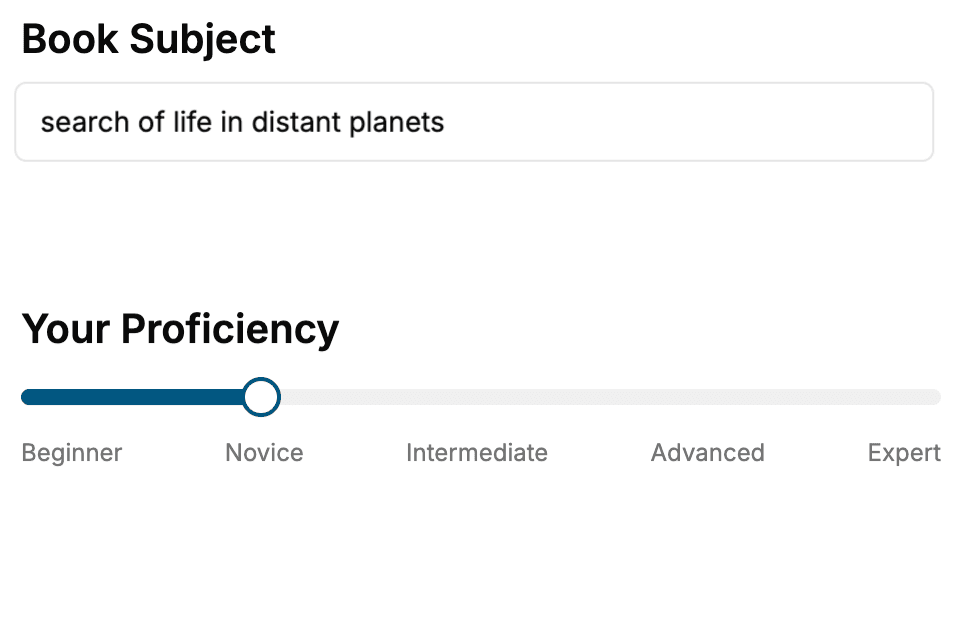
Select the focus of your Philosophy of Mind book and share your background
- 2. Personalize your book
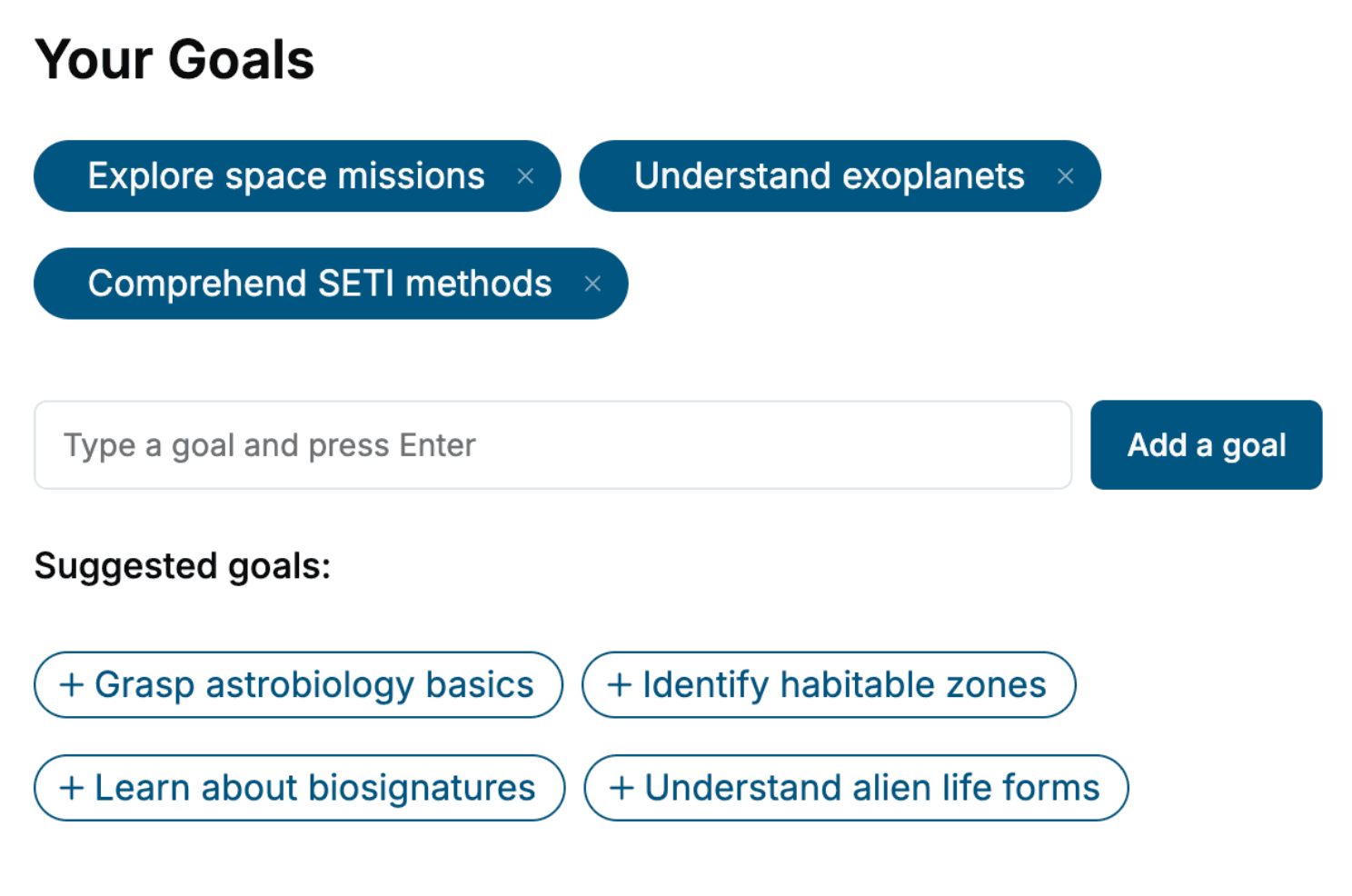
Specify your goals and choose sub-topics to include
- 3. Get your tailored book
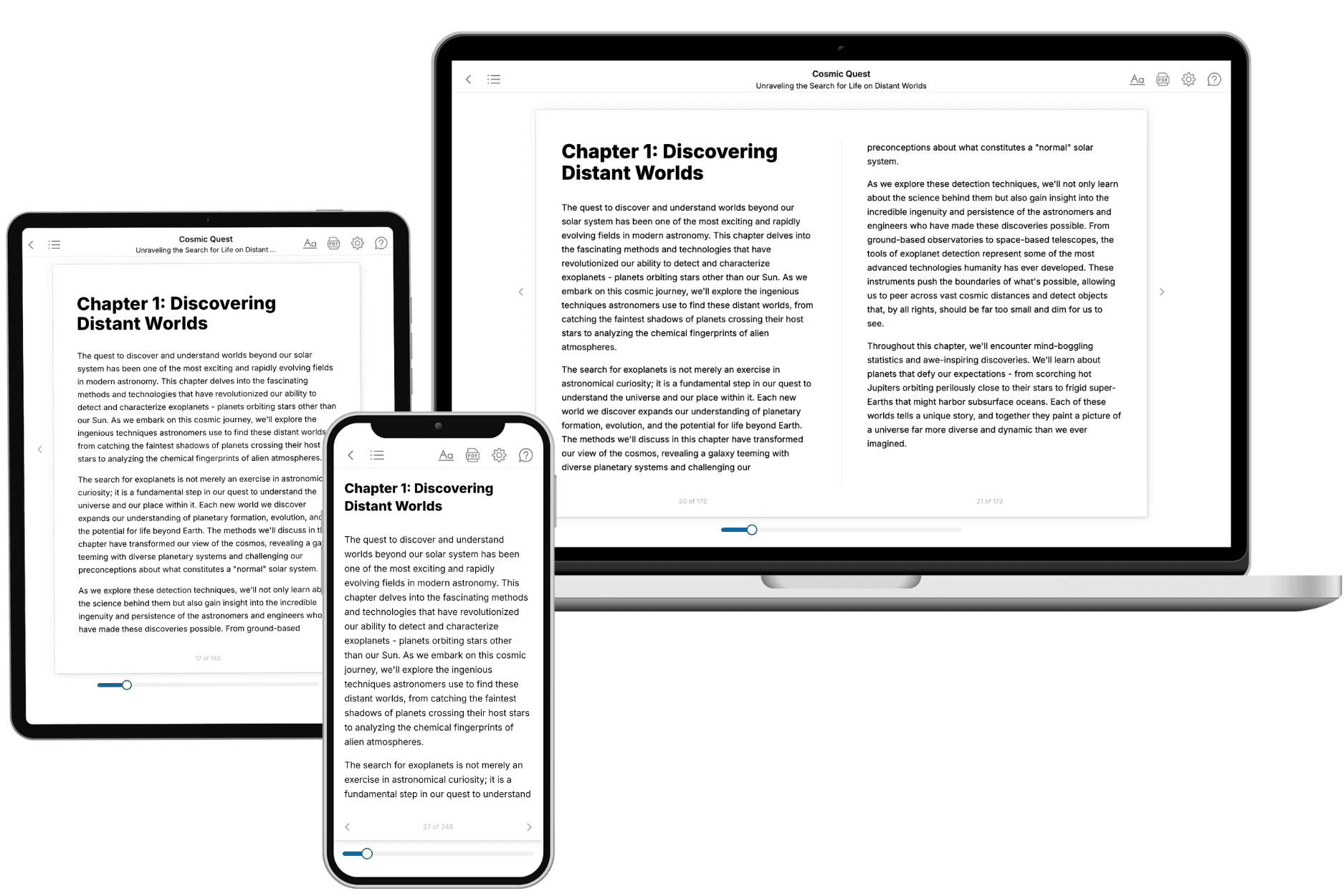
Your book is ready in 10 minutes. Read it online, download as EPUB or PDF, or send to Kindle.
Start from a template
Frequently asked questions
- What is TailoredRead?
TailoredRead creates complete, full-length nonfiction ebooks, written specifically for you. Tell us what you want to learn and why, and TailoredRead writes you a complete ebook on it, with charts, tables, and diagrams throughout. Read it online, on Kindle, or on any e-reader, or download it as a PDF or EPUB. Every book is written fresh the day you order it.
- How is the book tailored to me?
Before anything is written, you answer a few short questions about your goals, your background, and the topics you care about. Your book is then planned around your answers: written at your level, focused on your goals, and covering the topics you chose, instead of the one-size-fits-all book a store sells everyone.
- Will it read like generic AI content?
No. Your book isn't a chat transcript: it's planned chapter by chapter before a single word is written, told in a clear book voice, and explains ideas visually with charts, tables, and diagrams. After writing, every book goes through an editorial pass that polishes chapters so the book reads consistent from start to finish. Judge for yourself: browse thousands of sample books on our Explore Books page.
- How accurate is the content?
Our AI first checks whether your subject needs live research. Niche and fast-moving subjects are researched before writing, and the book plan and chapters are grounded in what it finds. After writing, every book goes through a quality pass that checks its facts and consistency, and researched books list their sources in a Notes section at the back.
- How long is the book?
You choose the length: Comprehensive (250-300 pages), Detailed (150-200 pages), Essential (70-100 pages), or Short (30-50 pages).
- Does the book include visuals?
Yes. Every book includes charts, tables, and diagrams: timelines, checklists, step-by-step guides, decision trees, comparison tables, matrices, and bar charts. A typical book includes dozens of these visual elements.
- Can I read it on Kindle? What formats can I download?
Yes. Every book can be read in our online reader or downloaded as a PDF or EPUB. The EPUB can be opened with Kindle, Apple Books, Kobo, and any e-reader. The Commercial and Author licenses also include an editable Word (DOCX) and Markdown download.
- How much does it cost?
About the price of a regular ebook. The exact price depends on your book's length and complexity, from $2 for the shortest books to $35 for the most comprehensive, and it's shown when you review your book, before you commit to anything. Each book is a one-time purchase, yours to keep, no subscription. Licenses that let you share, teach, or publish your book range from $35.99 to $49.99.
- Can I preview the book before purchasing?
Before you pay, you'll see what your book will cover: the title, a detailed description, the estimated length, and the complete chapter-by-chapter table of contents, so you know what you're getting before you decide. The full text itself is written after you purchase.
- How long does it take to create a book?
About 10 minutes. You can start reading the opening chapters while the rest is still being written.