Attachment Theory Books
Explore tailored Attachment Theory books created by our AI
Understanding Attachment Disorders
A Comprehensive Guide to Recognition, Impact, and Healing
What if the most fundamental relationships in your early life shaped not just your emotions, but your entire capacity to connect with others? Attachment disorders represent a profound disruption in how people form bonds, regulate emotions, and navigate relationships. This book explores the science behind attachment, how early experiences create lasting patterns, and why some individuals struggle with trust, intimacy, and belonging. You'll discover how attachment disorders develop, the specific ways they manifest across different ages, and the evidence-based approaches that facilitate genuine healing. Whether you're a parent seeking to understand your child's behavior, a professional working with affected individuals, or someone recognizing these patterns in yourself, this guide provides practical insights grounded in neuroscience and psychology. Learn to identify the roots of attachment challenges, understand the neurobiological mechanisms at play, and explore proven therapeutic strategies that restore the capacity for secure, meaningful relationships.
What if the way you love, trust, and connect with others was largely determined before you turned five? Attachment theory reveals the profound truth that your earliest relationships created a blueprint for how you navigate intimacy, handle conflict, and regulate your emotions today. This book demystifies attachment science and shows you exactly how childhood experiences with caregivers shaped your relational patterns—and more importantly, how you can rewrite that story. Through clear explanations of secure, anxious, avoidant, and disorganized attachment styles, you'll recognize yourself and understand why certain relationship patterns keep repeating. Discover practical strategies to develop earned security, heal attachment wounds, and build the genuine connections you deserve. Whether you're struggling in relationships, parenting with intention, or simply seeking deeper self-understanding, this guide combines clinical research with actionable insights to help you break unhelpful cycles and create lasting change in how you relate to yourself and others.
Imagine understanding relationships not as isolated psychological events within individual minds, but as living, dynamic processes that unfold in the space between two people. This book guides you through the convergence of psychoanalytic theory, dialectical thinking, and intersubjective awareness—three powerful frameworks that together reveal how human connection actually works. You'll discover how early attachment patterns shape your relational world, how contradictions and tensions within relationships drive psychological growth, and how the mutual influence between minds creates the possibility for genuine change. Whether you're exploring these concepts for professional practice or personal understanding, this course builds your knowledge systematically, from foundational psychoanalytic principles through contemporary relational theory, equipping you to recognize the hidden dynamics that shape every human encounter. By the end, you'll see relationships not as problems to solve, but as the primary arena where psychological development unfolds.
Seeing the Signs
How to Recognize Relationship Red Flags Before They Become Serious Problems
You sense something is off in your relationship, but you can't quite put your finger on it. Maybe your partner's behavior feels controlling, or their words don't match their actions. Perhaps you're constantly walking on eggshells, doubting your own perceptions, or feeling isolated from friends and family. These feelings aren't paranoia—they're your internal warning system trying to protect you. This book teaches you to decode the subtle and obvious signs of unhealthy relationships before they cause lasting damage. You'll learn to identify manipulation tactics, understand why certain red flags matter, and discover how to establish boundaries that actually work. Through clear explanations, real-world examples, and practical strategies, you'll develop the confidence to trust your instincts and make decisions that prioritize your wellbeing. Whether you're in a new relationship or questioning a long-term partnership, this guide empowers you to recognize patterns, understand your own vulnerabilities, and take control of your relationship choices.
Healing from Within
Understanding and Recovering from Childhood Trauma
Many adults struggle with anxiety, relationship difficulties, or unexplained emotional reactions without realizing these challenges stem from childhood experiences. You might feel like something is "wrong" with you, not understanding that your brain developed specific survival patterns in response to early adversity. This book demystifies how childhood trauma shapes your adult mind and provides a clear roadmap for recovery. You'll learn how traumatic experiences rewire your nervous system, why certain situations trigger intense reactions, and how these patterns show up across your relationships, work, and self-perception. More importantly, you'll discover practical, evidence-based strategies to regulate your emotions, process painful memories, and gradually rewire your brain toward healing. Whether you experienced abuse, neglect, loss, or other adverse events, this guide offers compassionate, actionable guidance for understanding your past and building a more resilient, authentic future.
Discover what drives excessive reliance on others and how to reclaim your sense of self. This comprehensive guide walks you through the psychological landscape of Dependent Personality Disorder—from its roots in early relationships to its impact on your daily life and connections with others. You'll learn how childhood experiences, attachment patterns, and learned behaviors create the foundation for dependent traits, and why willpower alone rarely creates lasting change. Through evidence-based insights and practical frameworks, you'll understand the cognitive patterns that keep you stuck, explore the difference between healthy interdependence and unhealthy dependence, and gain concrete strategies for building confidence in decision-making, developing assertiveness skills, and creating more balanced relationships. Whether you're navigating this pattern personally, supporting someone who struggles with it, or studying psychology professionally, this book provides the clarity and actionable guidance you need to move toward greater autonomy while maintaining meaningful connections.
Discover how avoidant patterns develop and why they persist—and gain practical tools to reshape your relationship with connection. This comprehensive guide moves beyond surface-level understanding to explore the psychological, neurobiological, and relational roots of avoidant personality patterns. You'll learn how early experiences wire your nervous system for protection, why rejection feels catastrophic, and how cognitive distortions keep you trapped in isolation cycles. More importantly, you'll access evidence-based strategies to gradually expand your capacity for intimacy, manage social anxiety, and build the secure attachments that make meaningful relationships possible. Whether you're navigating your own avoidant tendencies or supporting someone who is, this book provides the clarity and actionable steps needed to move from fear-based withdrawal toward genuine connection. Grounded in attachment theory, neuroscience, and clinical psychology, this resource combines scientific insight with compassionate, practical guidance for sustainable change.
The 30-Day Adoption Blueprint
Navigate Every Step with Confidence, Clarity, and Compassion
Adoption is one of life's most rewarding decisions—and one of its most complex. You'll navigate legal systems, emotional terrain, family dynamics, and your own expectations while preparing to welcome a child into your home. This book walks you through a proven 30-day system that transforms adoption from an overwhelming maze into a clear, actionable plan. You'll learn exactly what legal steps to take and in what order, how to prepare emotionally for the profound changes ahead, and how to ready your family for integration. You'll discover trauma-informed parenting strategies, build a support network before you need it, and establish systems for tracking milestones and documenting progress. Whether you're working with fertility clinics, surrogates, egg donors, or pursuing domestic or international adoption, this guide provides the daily actions, checklists, and frameworks you need. By day 30, you won't just understand the adoption process—you'll have a personalized roadmap, organized legal documents, emotional preparation strategies, and a support system ready to sustain your family through the beautiful, challenging journey ahead.
Transference in Therapy
Understanding How Past Relationships Shape Your Healing
You've noticed something strange in therapy: you react to your therapist in ways that don't quite match who they actually are. You might feel defensive, seek their approval, or experience emotions that seem disproportionate to what's happening in the room. This is transference—and it's one of the most powerful tools for psychological growth available to you. Transference occurs when you unconsciously project feelings, desires, and unresolved conflicts from past relationships onto your therapist. Rather than being a problem to avoid, it's a window into your deepest patterns and a pathway to genuine healing. This book demystifies transference, explaining how it develops, why it happens, and most importantly, how to work with it productively. Whether you're a therapist seeking to deepen your clinical skills or someone in therapy wanting to understand your own experience, you'll discover how transference reveals the hidden scripts that govern your relationships. By learning to recognize and explore these projections with your therapist, you can break free from repetitive patterns and develop more authentic, fulfilling connections. This isn't about blame or shame—it's about understanding yourself more deeply and reclaiming your power in relationships.
Many healthcare providers view hoarding as a simple matter of laziness or poor decision-making, missing the psychological, emotional, and neurobiological factors that drive this complex disorder. As a nurse, you're positioned at the frontline of client care, yet may lack the specialized frameworks to assess, support, and guide individuals struggling with hoarding effectively. This comprehensive guide bridges that gap by integrating attachment psychology, cognitive-behavioral principles, trauma-informed care, and evidence-based decluttering methods into a practical clinical toolkit. You'll learn to identify cognitive distortions fueling hoarding behaviors, recognize emotional triggers, build resilient support networks, and develop personalized intervention plans that respect client autonomy. Through real-world scenarios, assessment tools, and step-by-step strategies, you'll master motivational interviewing techniques, stress management coaching, and relapse prevention protocols. Whether you're supporting clients in clinical settings, community health, or home care, this blueprint empowers you to provide compassionate, competency-based care that addresses root causes and creates lasting change.
What if the most powerful healing conversations your clients have never involve words at all? Therapeutic art journals bypass the limitations of talk therapy by engaging the brain's creative centers and accessing trauma stored beyond language. This practical guide equips you with evidence-based techniques to integrate art-making into your clinical sessions, grounded in neuroscience and attachment theory. You'll learn how to design trauma-informed prompts that honor client autonomy, implement containment strategies that keep sessions safe, and assess progress through visual documentation. Whether you're working with individual clients processing grief and attachment wounds or facilitating group art therapy, this book provides concrete frameworks for selecting materials, understanding symbolic meaning, and recognizing when art-based interventions support nervous system healing. Master the intersection of neurobiology and creativity to expand your therapeutic toolkit and help clients discover resilience through their own hands.
You survived something that should never happen to a child. A parent—someone meant to protect you—violated that sacred trust. Perhaps your mother knew and did nothing. The weight of that betrayal has likely shaped how you see yourself, trust others, and navigate relationships. You may feel shame that isn't yours to carry, struggle to understand why a parent would harm their own child, or wonder if forgiveness is even possible. This book meets you where you are. It doesn't minimize what happened or rush you toward healing. Instead, it helps you understand the psychology behind parental abuse and maternal neglect, process the specific betrayals you experienced, and gradually rebuild trust—first in yourself, then in carefully chosen relationships. You'll explore forgiveness on your own terms, learn why shame belongs with the abuser, not with you, and discover that surviving this has made you stronger than you realize. Healing isn't about returning to normal; it's about building a life where you're no longer defined by what was done to you.
Most people struggle with relationships because they were never taught the psychological skills that make them work. You might find yourself repeating the same conflicts, feeling misunderstood, or unable to express your needs without fear of rejection. The gap between wanting deeper connections and actually creating them often comes down to one thing: lacking a clear framework for understanding relationship dynamics and your role within them. This book provides that framework. Drawing on attachment theory, emotional intelligence research, and evidence-based communication practices, you'll discover why your relationships follow certain patterns and how to intentionally reshape them. You'll learn to recognize your attachment style, decode what's really happening beneath surface conflicts, and develop the emotional skills that transform relationships from sources of stress into sources of genuine support and growth. Whether you're navigating romantic partnerships, family dynamics, friendships, or workplace relationships, these principles apply universally. The goal isn't perfection—it's building connections that feel safe, authentic, and resilient enough to weather life's inevitable challenges.
Many people find themselves repeating the same emotional struggles despite their best efforts to change. You might feel perpetually unworthy, struggle to maintain healthy relationships, or experience intense anxiety that seems disproportionate to actual threats. These aren't character flaws—they're schemas: deeply ingrained patterns formed in childhood that continue shaping your thoughts, feelings, and behaviors today. Schema therapy offers a revolutionary approach to understanding why you feel and act the way you do, and more importantly, how to genuinely transform these patterns. This guide walks you through the core concepts of schema therapy in clear, relatable language. You'll discover your own schemas, understand the coping mechanisms you've developed, and learn evidence-based techniques to rewire your emotional responses. Whether you're struggling with anxiety, depression, relationship difficulties, or simply feeling stuck in old patterns, this book provides the roadmap to break free and build a more authentic, fulfilling life.
Many assume attraction is purely instinctual or entirely culturally constructed—but the reality is far more nuanced. This book bridges evolutionary psychology, neuroscience, and behavioral science to reveal how attraction actually works at biological, psychological, and social levels. You'll examine the neurochemical cascades that drive bonding, the attachment patterns that predict relationship success, and the cognitive biases that systematically distort romantic decision-making. Drawing on sexual selection theory, parental investment frameworks, and contemporary neurobiology, this exploration moves beyond pop psychology to provide clinically rigorous analysis of mating behavior. Whether examining hypergamy through behavioral economics, understanding mirror neurons in empathic connection, or analyzing how status signaling influences attraction, each chapter builds a comprehensive model of romantic dynamics. This is essential reading for clinicians seeking to understand relationship pathology, researchers exploring mating behavior, and anyone wanting to analyze attraction with scientific precision rather than intuition.
Many people struggle to build the deep, satisfying intimacy they desire in their relationships. Whether it's difficulty communicating about physical needs, emotional distance from a partner, or confusion about what healthy intimacy actually looks like, these challenges can leave you feeling disconnected and unfulfilled. This book provides a comprehensive guide to understanding and cultivating intimacy in all its dimensions—emotional, physical, and psychological. You'll explore how attachment styles shape your relationships, learn practical communication techniques for discussing sensitive topics, understand the psychology of desire and pleasure, and discover how to overcome common barriers like shame and performance anxiety. Through evidence-based insights and actionable strategies, you'll develop the tools to create deeper connections with your partner, build trust and vulnerability, and experience more fulfilling intimate relationships. Whether you're looking to strengthen an existing partnership or understand yourself better, this guide offers clarity and practical wisdom for every stage of your relationship journey.
Related books you may like:
You're about to supercharge your animal advocacy efforts and nonprofit management skills with the power of AI. This groundbreaking guide is tailored specifically for leaders in the animal rights movement who are ready to harness cutting-edge technology to make a bigger impact. Discover how to leverage AI tools to streamline your operations, enhance your strategic planning, and amplify your advocacy campaigns. You'll learn practical techniques for automating administrative tasks, optimizing your workflow, and making data-driven decisions that will take your organization to the next level. From improving time management and task delegation to enhancing donor engagement and project tracking, this book offers a comprehensive roadmap for integrating AI into every aspect of your work. You'll gain insights into AI-driven research methods, problem-solving techniques, and productivity metrics that will revolutionize the way you approach animal advocacy.
Discover how air sign energy shapes your thinking, communication style, and approach to relationships. Whether you have a Gemini, Libra, or Aquarius placement in your birth chart, this guide reveals the intellectual and social gifts these signs bring—along with the blind spots worth understanding. You'll learn why air signs are natural communicators and idea-generators, how each sign expresses itself uniquely, and how your specific air sign placements influence your personality across different life areas. Through practical insights and real-world examples, you'll recognize air sign patterns in yourself and others, harness your natural strengths in connection and innovation, and navigate the challenges of overthinking and emotional detachment. Whether you're exploring your Sun, Moon, Rising, or other planetary placements, this book provides the clarity you need to work with your air sign energy authentically and effectively.
What if you could resolve years of trauma in just a handful of therapy sessions instead of months or years of traditional talk therapy? Accelerated Resolution Therapy (ART) offers a scientifically-grounded approach that harnesses your brain's natural healing capacity to process traumatic memories and emotional distress rapidly. This book demystifies how ART works at the neurological level, explains why it's so effective for conditions like PTSD, anxiety, and phobias, and explores how it differs from conventional therapeutic approaches. Whether you're a mental health professional considering adding ART to your practice, someone exploring treatment options for yourself or a loved one, or simply curious about innovative psychological interventions, this guide provides practical insights into one of the most promising developments in modern therapy. Discover how guided imagery and eye movement can facilitate profound emotional healing, what the research shows about its effectiveness, and whether ART might be the breakthrough approach you've been seeking.
The assumption that political parties are natural, inevitable, or even desirable features of democracy is surprisingly recent. For most of Western political history, the most sophisticated thinkers viewed organized factions as corrupting forces that distorted the pursuit of the common good. This book traces the genealogy of anti-party political thought from Plato's critique of democratic factionalism through contemporary populist movements, examining how philosophers, statesmen, and theorists have conceptualized the dangers of partisanship and imagined alternatives. You'll encounter Rousseau's vision of a general will transcending faction, the Federalist Papers' constitutional anxiety about party machinery, Tocqueville's ambivalent analysis of American partisanship, and the radical rejection of parties by socialist and anarchist movements. Rather than treating anti-party sentiment as mere nostalgia or populist demagoguery, this analysis reveals it as a coherent intellectual tradition grappling with enduring tensions between democratic participation and organized political competition. By understanding how different historical periods and ideological traditions have confronted the problem of faction, you gain critical perspective on contemporary debates about party reform, populism, and democratic alternatives.
Many people believe that behavior is determined either by our genetics or by direct rewards and punishments we experience. However, Albert Bandura's groundbreaking research revealed a more nuanced truth: we learn by watching others. This book explores the life and work of one of psychology's most influential figures and the revolutionary theory that transformed our understanding of human behavior. You'll discover how Bandura's concept of self-efficacy explains why some people persevere through challenges while others give up, how observational learning shapes everything from aggression to prosocial behavior, and why the environment, our thoughts, and our actions are constantly influencing each other. Whether you're an educator seeking to improve student outcomes, a professional interested in behavior change, or simply curious about the science of learning, this comprehensive guide illuminates the principles that govern human development and provides practical insights into how these theories apply to everyday life.
Create an Attachment Theory Book Tailored to You
Create an AI-crafted book tailored to your goals, interests, and background






Benefits of AI-tailored books
- Read one book, not ten:
- all the Attachment Theory knowledge you need, gathered into a single book.
- Save days of learning:
- tell us your goals, choose your topics, and the whole book is built around them.
- Learn effortlessly:
- Attachment Theory book written for your specific background and expertise.
- Understand at a glance:
- includes charts, tables, timelines, checklists, decision trees, and more.
- Stay current:
- written the day you order it, not years ago.
- Trust what you read:
- every book is checked for accuracy, with real research when your subject needs it.
Create your unique book in 3 steps
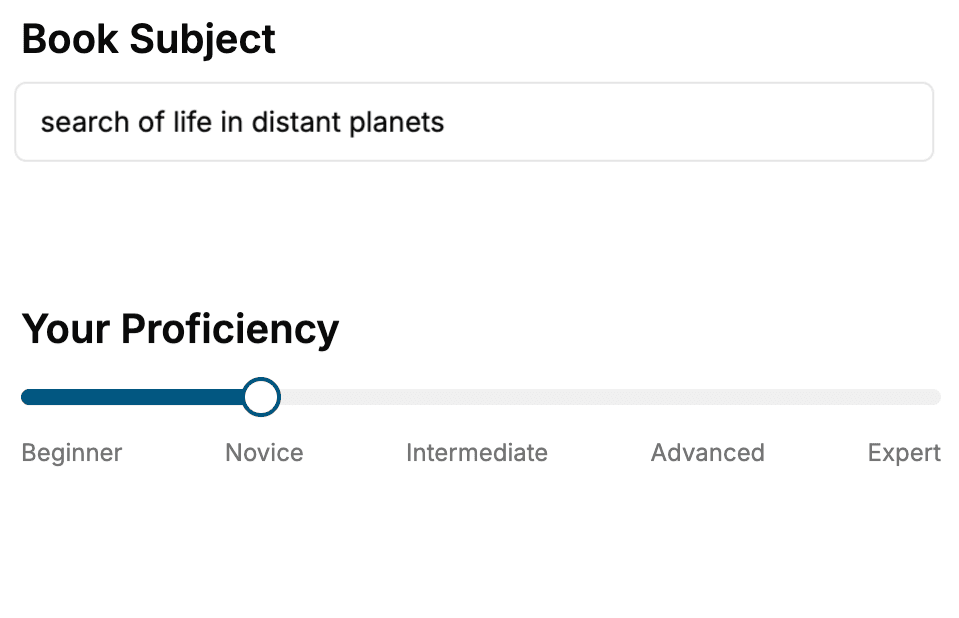
- 1. Select your focus
Select the focus of your Attachment Theory book and share your background
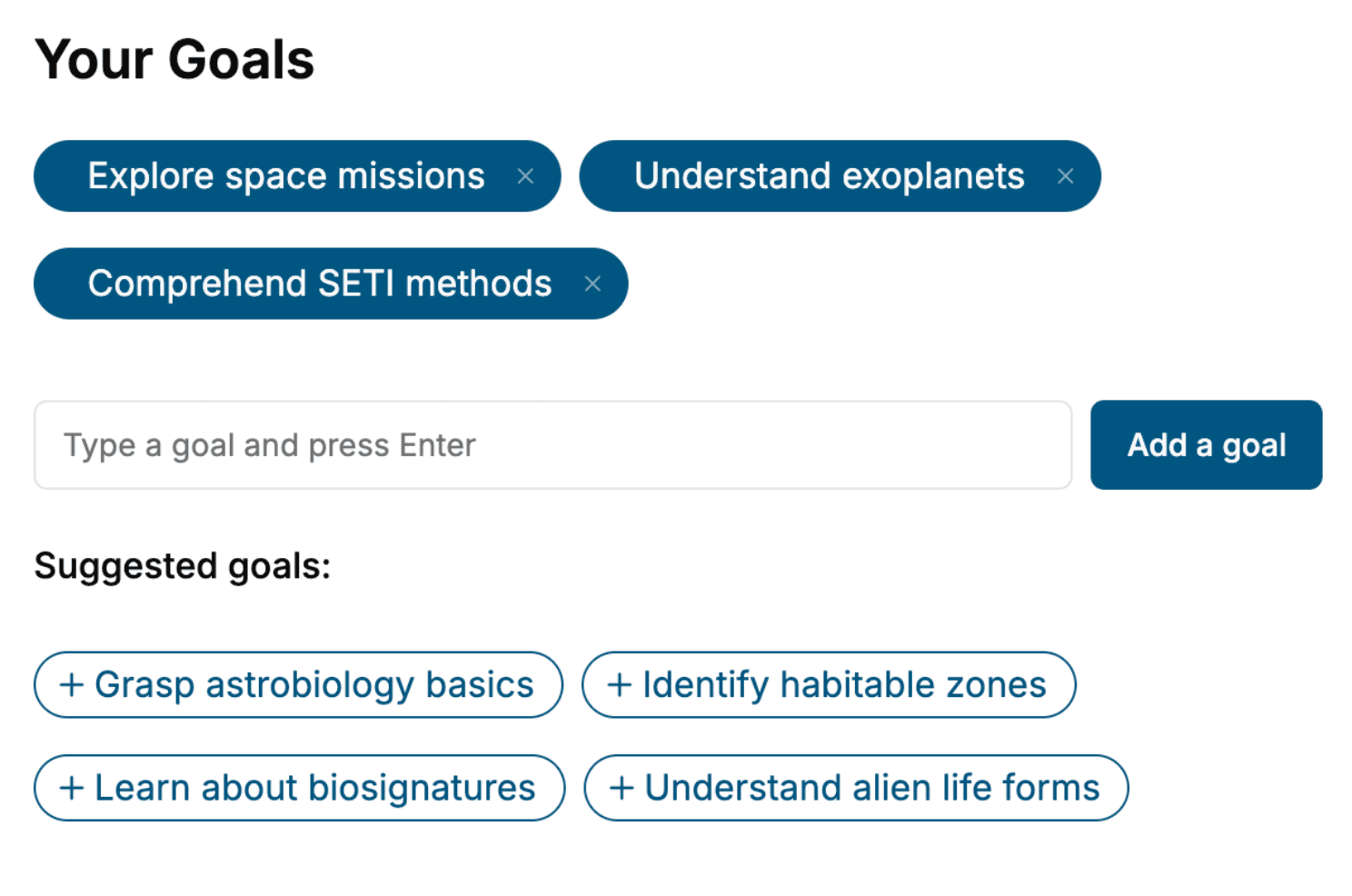
- 2. Personalize your book
Specify your goals and choose sub-topics to include
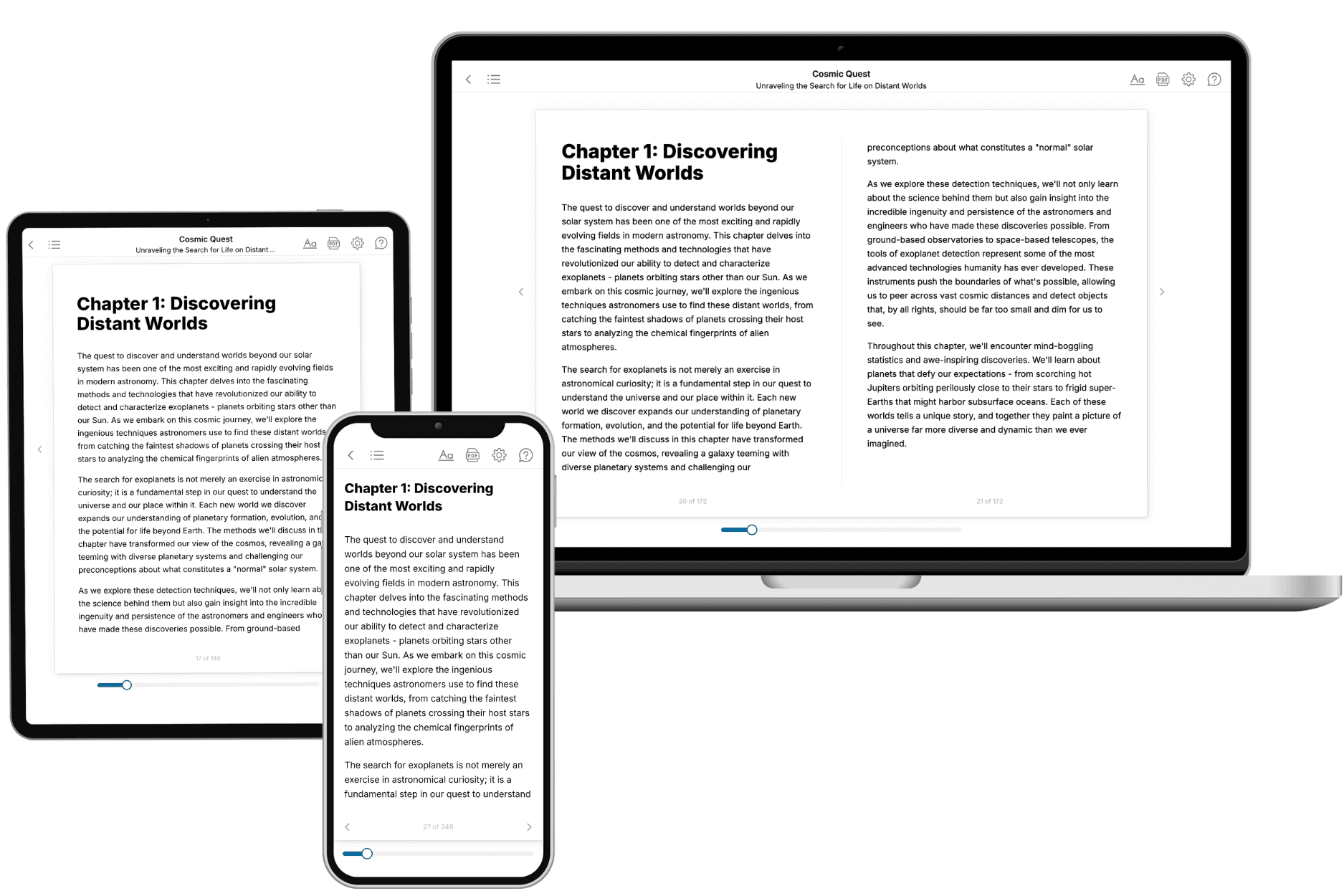
- 3. Get your tailored book
Your book is ready in 10 minutes. Read it online, download as EPUB or PDF, or send to Kindle.
Frequently asked questions
- What is TailoredRead?
TailoredRead creates complete, full-length nonfiction ebooks, written specifically for you. Tell us what you want to learn and why, and TailoredRead writes you a complete ebook on it, with charts, tables, and diagrams throughout. Read it online, on Kindle, or on any e-reader, or download it as a PDF or EPUB. Every book is written fresh the day you order it.
- How is the book tailored to me?
Before anything is written, you answer a few short questions about your goals, your background, and the topics you care about. Your book is then planned around your answers: written at your level, focused on your goals, and covering the topics you chose, instead of the one-size-fits-all book a store sells everyone.
- Will it read like generic AI content?
No. Your book isn't a chat transcript: it's planned chapter by chapter before a single word is written, told in a clear book voice, and explains ideas visually with charts, tables, and diagrams. After writing, every book goes through an editorial pass that polishes chapters so the book reads consistent from start to finish. Judge for yourself: browse thousands of sample books on our Explore Books page.
- How accurate is the content?
Our AI first checks whether your subject needs live research. Niche and fast-moving subjects are researched before writing, and the book plan and chapters are grounded in what it finds. After writing, every book goes through a quality pass that checks its facts and consistency, and researched books list their sources in a Notes section at the back.
- How long is the book?
You choose the length: Comprehensive (250-300 pages), Detailed (150-200 pages), Essential (70-100 pages), or Short (30-50 pages).
- Does the book include visuals?
Yes. Every book includes charts, tables, and diagrams: timelines, checklists, step-by-step guides, decision trees, comparison tables, matrices, and bar charts. A typical book includes dozens of these visual elements.
- Can I read it on Kindle? What formats can I download?
Yes. Every book can be read in our online reader or downloaded as a PDF or EPUB. The EPUB can be opened with Kindle, Apple Books, Kobo, and any e-reader. The Commercial and Author licenses also include an editable Word (DOCX) and Markdown download.
- How much does it cost?
About the price of a regular ebook. The exact price depends on your book's length and complexity, from $2 for the shortest books to $35 for the most comprehensive, and it's shown when you review your book, before you commit to anything. Each book is a one-time purchase, yours to keep, no subscription. Licenses that let you share, teach, or publish your book range from $35.99 to $49.99.
- Can I preview the book before purchasing?
Before you pay, you'll see what your book will cover: the title, a detailed description, the estimated length, and the complete chapter-by-chapter table of contents, so you know what you're getting before you decide. The full text itself is written after you purchase.
- How long does it take to create a book?
About 10 minutes. You can start reading the opening chapters while the rest is still being written.