Moral Reasoning Books
Explore tailored Moral Reasoning books created by our AI
The Duty-Bound Mind
Understanding Deontological Ethics and the Philosophy of Moral Obligation
Develop a sophisticated understanding of one of philosophy's most influential ethical frameworks and learn to navigate moral dilemmas with principled clarity. This comprehensive exploration of deontological ethics takes you beyond surface-level definitions into the rich intellectual tradition that places duty, obligation, and moral rules at the center of ethical life. You'll discover how deontology differs fundamentally from consequentialist approaches, why Kant's revolutionary insights continue to shape contemporary moral philosophy, and how duty-based reasoning applies to real-world ethical challenges. Through clear explanations of complex concepts, careful analysis of key arguments, and examination of both historical foundations and modern developments, you'll gain the tools to think critically about moral obligations, universal principles, and the nature of right action. Whether you're deepening your philosophical knowledge, seeking frameworks for ethical decision-making, or exploring the intellectual foundations of rights and dignity, this book provides the conceptual clarity and analytical depth you need to engage meaningfully with deontological thought.
The Trolley Problem
Navigating Moral Paradoxes and the Art of Ethical Reasoning
Master the art of ethical reasoning and discover why moral decision-making is far more complex than it appears. This comprehensive exploration of the trolley problem and related philosophical paradoxes will sharpen your critical thinking skills and deepen your understanding of moral philosophy. You'll dive into the fascinating world of thought experiments that have puzzled philosophers for decades, examining scenarios where saving lives requires making impossible choices. Through careful analysis of utilitarian versus deontological approaches, you'll learn to recognize the hidden assumptions that guide your moral intuitions and understand why equally rational people can reach opposite conclusions about the same ethical dilemma. Each chapter builds upon the previous one, taking you from the basic trolley scenario through increasingly sophisticated variations that challenge conventional moral thinking. You'll explore how factors like intention, causation, and proximity influence our ethical judgments, and discover why the same logical principles can lead to seemingly contradictory conclusions. By the end of this book, you'll possess a robust framework for analyzing complex moral situations, whether in philosophy, everyday life, or professional contexts. You'll understand not just what different ethical theories propose, but why they matter and how to apply them thoughtfully to real-world challenges.
You'll gain a comprehensive understanding of one of philosophy's most influential ethical frameworks—deontological ethics—and discover how duty-based moral reasoning provides clarity in a world of ethical complexity. This book guides you through the fundamental principles that define right action based on moral duty rather than outcomes, exploring how philosophers from Kant to contemporary thinkers have shaped our understanding of moral obligation. You'll learn to recognize the difference between actions that are inherently right or wrong and those judged solely by their consequences. Through clear explanations and practical examples, you'll explore the categorical imperative, the principle of treating humanity as an end in itself, and the role of moral rules in protecting human dignity. You'll examine real-world ethical dilemmas through a deontological lens, understanding why certain boundaries exist regardless of potential benefits. Whether you're deepening your philosophical knowledge or seeking a robust framework for ethical decision-making, this book provides the tools to think critically about moral duty, universal principles, and the nature of good and evil in human action.
The Ethical Foundation
Building a Personal Moral Framework for Modern Life
You face ethical decisions every day—from small choices about honesty and fairness to larger questions about your responsibilities to others and society. Yet most people navigate these moments without a clear moral compass, relying instead on intuition, cultural norms, or whatever feels right in the moment. This book changes that by guiding you through the major ethical frameworks that philosophers have developed over centuries, then showing you how to build your own coherent moral system. You'll explore virtue ethics, consequentialism, deontology, care ethics, and contemporary approaches, discovering how each offers unique insights into what makes an action right or wrong. More importantly, you'll learn practical strategies for applying these frameworks to real dilemmas—at work, in relationships, and in your community. By the end, you'll have the tools to make decisions aligned with your deepest values, engage thoughtfully with people who see ethics differently, and live with greater moral clarity and confidence.
The Ethical Decision Maker
A Practical Guide to Moral Frameworks and Real-World Choices
You face moral decisions every day, from small choices about honesty to complex dilemmas with no clear right answer. Without a structured approach, you're left relying on gut feelings, cultural conditioning, or whatever seems expedient in the moment. This book changes that by introducing you to the major ethical frameworks that philosophers and leaders have developed over centuries—and showing you exactly how to apply them to your real life. You'll discover why consequentialism focuses on outcomes, why deontology emphasizes duties and rules, why virtue ethics asks who you want to become, and why care ethics prioritizes relationships. More importantly, you'll learn when each framework works best, how to integrate them when they conflict, and how to navigate the gap between knowing what's right and actually doing it. Through practical exercises, real-world case studies, and honest exploration of your own values, you'll develop the moral clarity and decision-making confidence to handle whatever ethical challenges come your way.
The Moral Compass
Understanding Good and Evil in a Complex World
You'll gain a sophisticated understanding of morality that moves beyond simplistic notions of good versus evil. This book explores the philosophical foundations of ethics, examining how different cultures and thinkers have grappled with fundamental questions about right and wrong. You'll discover why moral dilemmas feel so challenging, learn multiple ethical frameworks for decision-making, and understand the psychology behind both virtuous and harmful behavior. Through real-world examples and philosophical inquiry, you'll develop the tools to navigate complex ethical situations with greater clarity and conviction. Whether you're facing personal decisions or trying to understand global conflicts, this exploration of moral philosophy will deepen your perspective and strengthen your ability to act with integrity in an ambiguous world.
The Calculus of Good
Understanding Utilitarianism and the Pursuit of Maximum Well-Being
What if the most ethical choice isn't always the one that feels right? Utilitarianism offers a radical answer: morality is fundamentally about maximizing well-being and minimizing suffering for everyone affected by our decisions. This book explores how utilitarian thinking reshapes our understanding of good and evil, moving beyond intuition to rigorous calculation. You'll discover how utilitarian principles apply to real-world dilemmas—from healthcare rationing to environmental policy—and why this framework both illuminates and challenges our deepest moral convictions. By examining the strengths and limitations of utilitarian ethics, you'll develop a more nuanced perspective on moral decision-making. Whether you're wrestling with complex ethical questions or seeking to understand one of philosophy's most influential theories, this exploration of utilitarianism will equip you with the conceptual tools to think more clearly about what we owe to each other and how to build a better world.
What if the most ethical choice isn't always the one that feels right, but the one that produces the best overall outcome for everyone involved? Utilitarian ethics offers a compelling framework for answering this question, yet many people struggle to understand how to apply it beyond abstract philosophy. This guide bridges that gap by making utilitarian thinking accessible and actionable. You'll explore the foundational principles of utilitarianism, discover how it differs from other ethical approaches, and learn practical methods for evaluating complex decisions through a utilitarian lens. Whether you're navigating personal dilemmas, professional challenges, or broader policy questions, this book equips you with the tools to think consequentially about well-being. You'll also confront the real limitations and criticisms of utilitarianism, ensuring you can apply these ideas thoughtfully rather than dogmatically. By the end, you'll have a clearer understanding of how to make decisions that genuinely improve the world around you.
The Ethics of Earth
How to Build a Moral Framework for Environmental Responsibility
You'll develop a coherent personal environmental ethics that guides your decisions with clarity and conviction. This book moves beyond surface-level environmentalism to explore the philosophical foundations of our moral relationship with nature. You'll examine multiple ethical frameworks—from human-centered approaches to nature-centered perspectives—and discover which principles align with your deepest values. Through practical analysis of real-world dilemmas, you'll learn how to navigate competing moral obligations: protecting human communities while respecting ecological systems, meeting present needs while honoring future generations, and balancing individual choices with systemic change. Whether you're wrestling with consumption decisions, career choices, or how to engage in environmental advocacy, this book equips you with the philosophical tools to act with integrity and purpose. You'll understand not just what to do, but why it matters morally.
Mill's Utilitarianism
Understanding the Greatest Happiness Principle and Its Modern Relevance
Discover how John Stuart Mill's revolutionary approach to ethics continues to shape moral reasoning in the modern world. This exploration takes you through the foundations of Mill's utilitarian philosophy, revealing why he believed that the quality of our happiness matters as much as its quantity. You'll examine the famous distinction between higher and lower pleasures, understand why Mill championed individual liberty as essential to human flourishing, and learn how his harm principle offers practical guidance for navigating complex ethical questions. From personal decision-making to public policy, you'll see how Mill's ideas illuminate contemporary debates about technology, justice, and human rights. Whether you're grappling with difficult moral choices or seeking to understand one of philosophy's most influential thinkers, this book provides the clarity and context needed to engage meaningfully with utilitarian ethics and its real-world implications.
Discover how to navigate the complex landscape of morality by moving beyond simplistic notions of good and evil. This book equips you with a sophisticated understanding of moral philosophy that bridges ancient wisdom and contemporary psychology. You'll explore how different philosophical traditions approach ethical questions, understand the psychological mechanisms that shape your moral judgments, and learn to recognize the subtle ways that good intentions can lead to harmful outcomes—and vice versa. Rather than offering prescriptive answers, this book teaches you to think critically about moral questions, examine your own biases, and develop a more nuanced ethical framework. Whether you're grappling with personal dilemmas, professional ethics, or simply seeking to understand human nature more deeply, you'll gain practical insights that transform how you approach right and wrong. This is philosophy made accessible and immediately applicable to the decisions you face every day.
Navigate the complexities of moral living with confidence by understanding the biblical and theological foundations of Christian ethics. This comprehensive guide explores how Christian moral principles have developed from Scripture through centuries of theological reflection, equipping you with the wisdom to make ethical decisions that honor God and serve others. You'll discover how the Ten Commandments and Jesus's teachings establish the framework for Christian virtue, learn why character development matters more than rule-following alone, and understand how to apply ancient wisdom to modern dilemmas. Whether you're wrestling with personal integrity, social justice, or complex ethical questions, this book provides the theological grounding and practical guidance you need. Rooted in Scripture and informed by church tradition, these principles offer a coherent vision for living ethically as a Christian in today's world.
The Ethics Compass
Navigate Complex Business Decisions with Confidence and Integrity
You face ethical dilemmas regularly at work—but you're not always sure how to navigate them. Should you report a colleague's misconduct? How do you balance profit with environmental responsibility? What do you do when your boss asks you to bend the rules? These situations test your integrity and can feel paralyzing without a clear approach. This book provides you with a practical, step-by-step framework for making ethical decisions that you can defend and live with. You'll learn how to identify the real ethical issues beneath surface problems, analyze competing stakeholder interests, and apply proven decision-making models used by business leaders. Through real-world scenarios and actionable tools, you'll develop the confidence to make principled choices even under pressure. Whether you're facing a minor ethical gray area or a major organizational challenge, you'll have the clarity and conviction to act with integrity.
Related books you may like:
You're about to supercharge your animal advocacy efforts and nonprofit management skills with the power of AI. This groundbreaking guide is tailored specifically for leaders in the animal rights movement who are ready to harness cutting-edge technology to make a bigger impact. Discover how to leverage AI tools to streamline your operations, enhance your strategic planning, and amplify your advocacy campaigns. You'll learn practical techniques for automating administrative tasks, optimizing your workflow, and making data-driven decisions that will take your organization to the next level. From improving time management and task delegation to enhancing donor engagement and project tracking, this book offers a comprehensive roadmap for integrating AI into every aspect of your work. You'll gain insights into AI-driven research methods, problem-solving techniques, and productivity metrics that will revolutionize the way you approach animal advocacy.
Discover how air sign energy shapes your thinking, communication style, and approach to relationships. Whether you have a Gemini, Libra, or Aquarius placement in your birth chart, this guide reveals the intellectual and social gifts these signs bring—along with the blind spots worth understanding. You'll learn why air signs are natural communicators and idea-generators, how each sign expresses itself uniquely, and how your specific air sign placements influence your personality across different life areas. Through practical insights and real-world examples, you'll recognize air sign patterns in yourself and others, harness your natural strengths in connection and innovation, and navigate the challenges of overthinking and emotional detachment. Whether you're exploring your Sun, Moon, Rising, or other planetary placements, this book provides the clarity you need to work with your air sign energy authentically and effectively.
What if you could resolve years of trauma in just a handful of therapy sessions instead of months or years of traditional talk therapy? Accelerated Resolution Therapy (ART) offers a scientifically-grounded approach that harnesses your brain's natural healing capacity to process traumatic memories and emotional distress rapidly. This book demystifies how ART works at the neurological level, explains why it's so effective for conditions like PTSD, anxiety, and phobias, and explores how it differs from conventional therapeutic approaches. Whether you're a mental health professional considering adding ART to your practice, someone exploring treatment options for yourself or a loved one, or simply curious about innovative psychological interventions, this guide provides practical insights into one of the most promising developments in modern therapy. Discover how guided imagery and eye movement can facilitate profound emotional healing, what the research shows about its effectiveness, and whether ART might be the breakthrough approach you've been seeking.
The assumption that political parties are natural, inevitable, or even desirable features of democracy is surprisingly recent. For most of Western political history, the most sophisticated thinkers viewed organized factions as corrupting forces that distorted the pursuit of the common good. This book traces the genealogy of anti-party political thought from Plato's critique of democratic factionalism through contemporary populist movements, examining how philosophers, statesmen, and theorists have conceptualized the dangers of partisanship and imagined alternatives. You'll encounter Rousseau's vision of a general will transcending faction, the Federalist Papers' constitutional anxiety about party machinery, Tocqueville's ambivalent analysis of American partisanship, and the radical rejection of parties by socialist and anarchist movements. Rather than treating anti-party sentiment as mere nostalgia or populist demagoguery, this analysis reveals it as a coherent intellectual tradition grappling with enduring tensions between democratic participation and organized political competition. By understanding how different historical periods and ideological traditions have confronted the problem of faction, you gain critical perspective on contemporary debates about party reform, populism, and democratic alternatives.
Many people believe that behavior is determined either by our genetics or by direct rewards and punishments we experience. However, Albert Bandura's groundbreaking research revealed a more nuanced truth: we learn by watching others. This book explores the life and work of one of psychology's most influential figures and the revolutionary theory that transformed our understanding of human behavior. You'll discover how Bandura's concept of self-efficacy explains why some people persevere through challenges while others give up, how observational learning shapes everything from aggression to prosocial behavior, and why the environment, our thoughts, and our actions are constantly influencing each other. Whether you're an educator seeking to improve student outcomes, a professional interested in behavior change, or simply curious about the science of learning, this comprehensive guide illuminates the principles that govern human development and provides practical insights into how these theories apply to everyday life.
Create a Moral Reasoning Book Tailored to You
Create an AI-crafted book tailored to your goals, interests, and background






Benefits of AI-tailored books
- Read one book, not ten:
- all the Moral Reasoning knowledge you need, gathered into a single book.
- Save days of learning:
- tell us your goals, choose your topics, and the whole book is built around them.
- Learn effortlessly:
- Moral Reasoning book written for your specific background and expertise.
- Understand at a glance:
- includes charts, tables, timelines, checklists, decision trees, and more.
- Stay current:
- written the day you order it, not years ago.
- Trust what you read:
- every book is checked for accuracy, with real research when your subject needs it.
Create your unique book in 3 steps
- 1. Select your focus
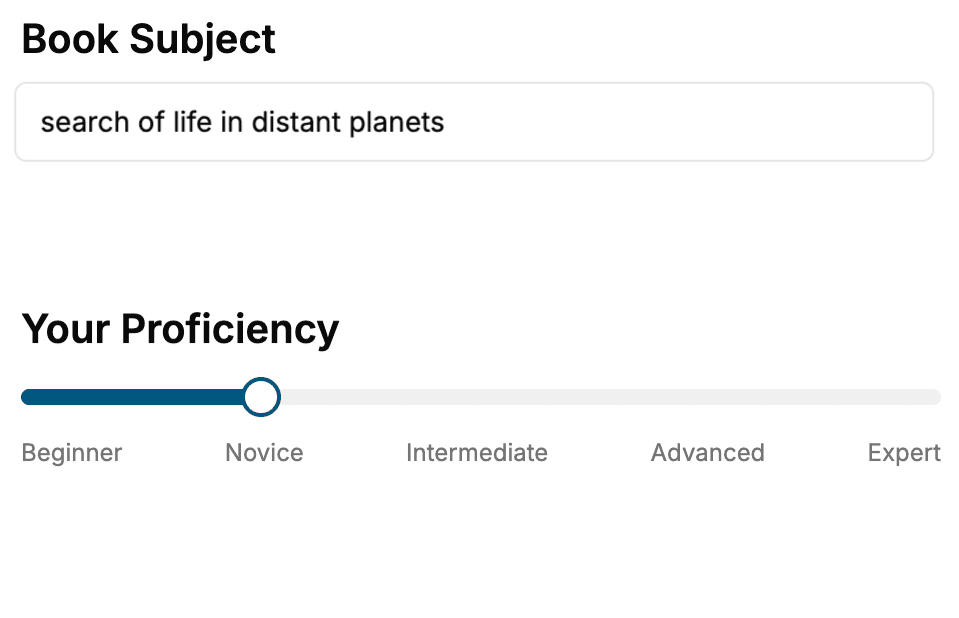
Select the focus of your Moral Reasoning book and share your background
- 2. Personalize your book
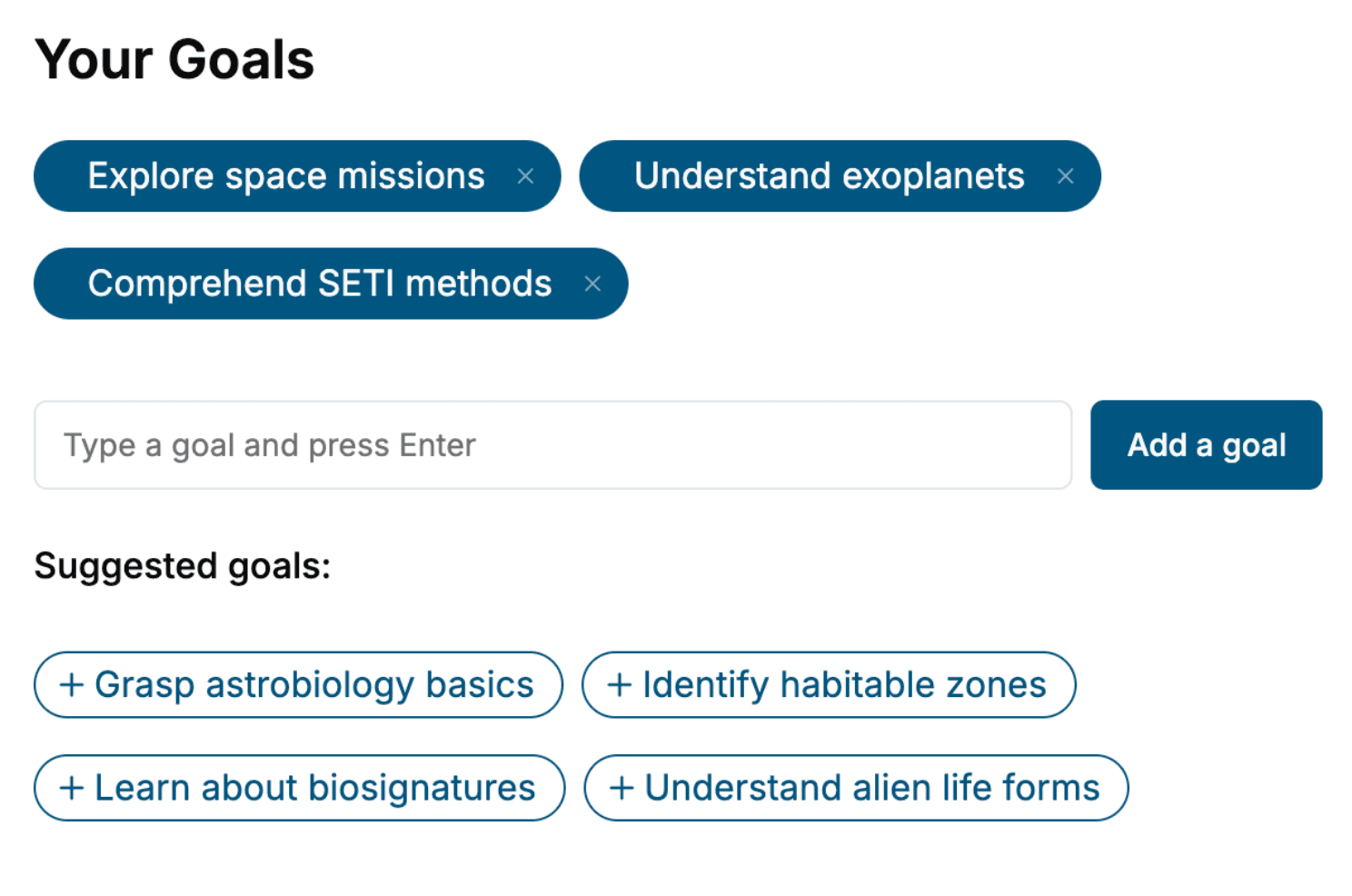
Specify your goals and choose sub-topics to include
- 3. Get your tailored book
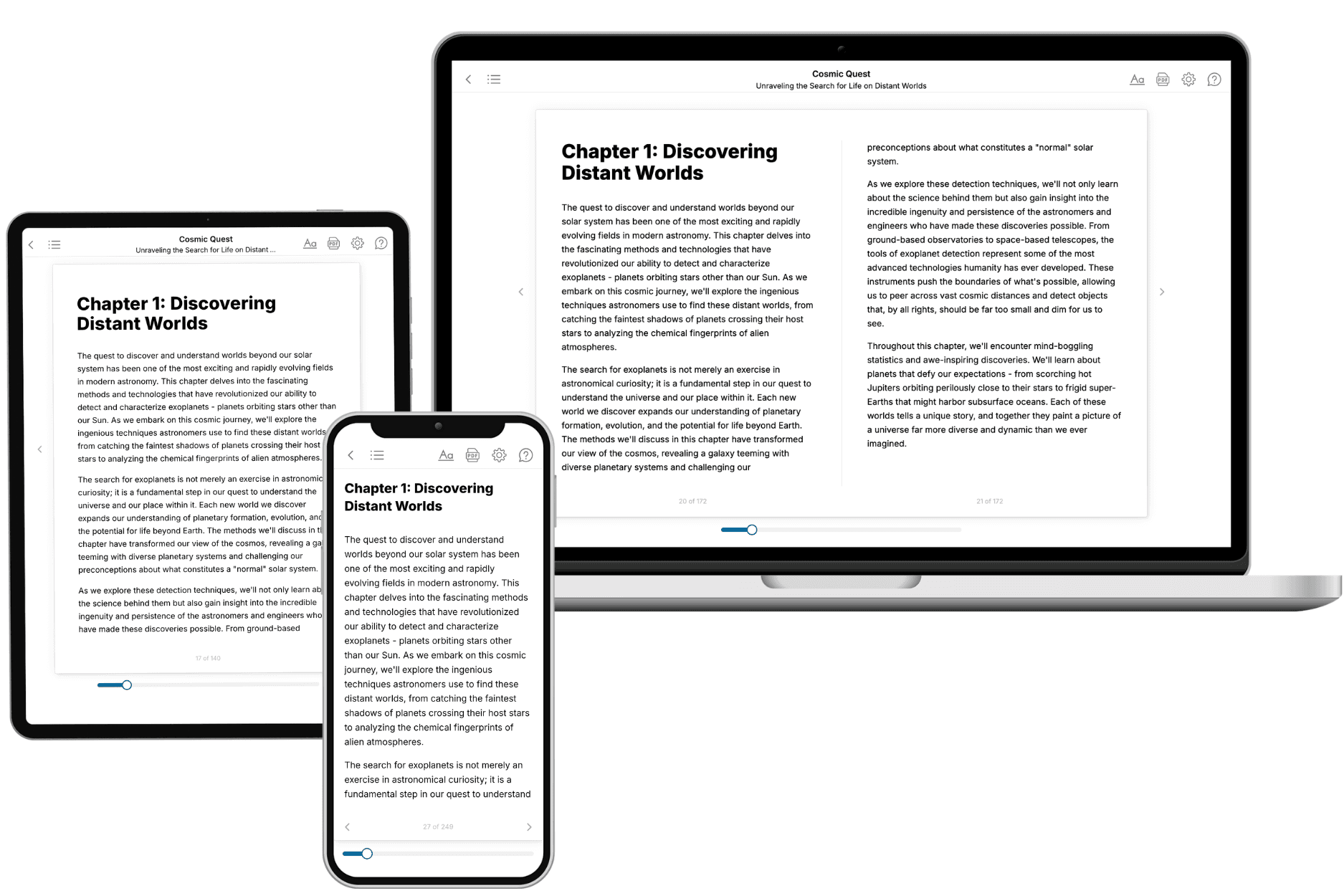
Your book is ready in 10 minutes. Read it online, download as EPUB or PDF, or send to Kindle.
Frequently asked questions
- What is TailoredRead?
TailoredRead creates complete, full-length nonfiction ebooks, written specifically for you. Tell us what you want to learn and why, and TailoredRead writes you a complete ebook on it, with charts, tables, and diagrams throughout. Read it online, on Kindle, or on any e-reader, or download it as a PDF or EPUB. Every book is written fresh the day you order it.
- How is the book tailored to me?
Before anything is written, you answer a few short questions about your goals, your background, and the topics you care about. Your book is then planned around your answers: written at your level, focused on your goals, and covering the topics you chose, instead of the one-size-fits-all book a store sells everyone.
- Will it read like generic AI content?
No. Your book isn't a chat transcript: it's planned chapter by chapter before a single word is written, told in a clear book voice, and explains ideas visually with charts, tables, and diagrams. After writing, every book goes through an editorial pass that polishes chapters so the book reads consistent from start to finish. Judge for yourself: browse thousands of sample books on our Explore Books page.
- How accurate is the content?
Our AI first checks whether your subject needs live research. Niche and fast-moving subjects are researched before writing, and the book plan and chapters are grounded in what it finds. After writing, every book goes through a quality pass that checks its facts and consistency, and researched books list their sources in a Notes section at the back.
- How long is the book?
You choose the length: Comprehensive (250-300 pages), Detailed (150-200 pages), Essential (70-100 pages), or Short (30-50 pages).
- Does the book include visuals?
Yes. Every book includes charts, tables, and diagrams: timelines, checklists, step-by-step guides, decision trees, comparison tables, matrices, and bar charts. A typical book includes dozens of these visual elements.
- Can I read it on Kindle? What formats can I download?
Yes. Every book can be read in our online reader or downloaded as a PDF or EPUB. The EPUB can be opened with Kindle, Apple Books, Kobo, and any e-reader. The Commercial and Author licenses also include an editable Word (DOCX) and Markdown download.
- How much does it cost?
About the price of a regular ebook. The exact price depends on your book's length and complexity, from $2 for the shortest books to $35 for the most comprehensive, and it's shown when you review your book, before you commit to anything. Each book is a one-time purchase, yours to keep, no subscription. Licenses that let you share, teach, or publish your book range from $35.99 to $49.99.
- Can I preview the book before purchasing?
Before you pay, you'll see what your book will cover: the title, a detailed description, the estimated length, and the complete chapter-by-chapter table of contents, so you know what you're getting before you decide. The full text itself is written after you purchase.
- How long does it take to create a book?
About 10 minutes. You can start reading the opening chapters while the rest is still being written.