Epistemic Wounds: Philosophy, Power, and the Politics of Medical Knowledge
Toward a Critical Phenomenology of Healing Beyond Biomedical Rationality
Achieve a rigorous philosophical critique of medical authority that integrates epistemology, phenomenology, and disability justice into clinical practice.
238 pages11 chaptersApr 3, 2026PhilosophyCreated by Alvaro
About this book
This book deconstructs how biomedical rationality operates as a system of power, examining epistemic injustice, hermeneutical violence, and the medicalization of human vulnerability. You'll explore how medical knowledge is socially constructed, how biopower shapes patient subjectivity, and how necropolitics determines whose suffering matters in healthcare systems. Through critical analysis of diagnosis, pain, disability, and healing, you'll develop frameworks for recognizing patients as epistemic agents, embracing medical pluralism, and resisting biomedical colonialism. Grounded in phenomenology, existentialism, and disability philosophy, this work challenges the limits of bioethical rationality and offers pathways toward more just, humble, and culturally competent medical practice that honors existential vulnerability and patient autonomy.
Table of contents
- Introduction: The Crisis of Medical AuthorityThe Epistemic Crisis in Contemporary Medicine, Why Philosophy Matters for Medical Practice, Mapping the Terrain: From Critique to Reconstruction, How to Engage with This WorkRead below
- Chapter 1: Genealogy of Medical Knowledge: Tracing Power Through HistoryFoucault's Biopower and the Medicalization of Life, The Genealogy of Normality and Abnormality, Medical Colonialism and the Erasure of Plural Epistemologies
- Chapter 2: Epistemic Injustice in Medicine: Knowledge, Power, and CredibilityDefining Epistemic Injustice: Testimonial and Hermeneutical Dimensions, Epistemic Violence in Diagnosis and Clinical Authority, Patient Credibility and the Politics of Medical Testimony, Toward Epistemic Humility: Recognizing Knowledge Limits
- Chapter 3: Hermeneutical Violence: When Medicine Silences Patient MeaningHermeneutical Injustice and Diagnostic Interpretation, Narrative Medicine as Hermeneutical Resistance, Restoring Patient Interpretive Authority
- Chapter 4: Phenomenology of Suffering: Pain, Panic, and Existential VulnerabilityThe Phenomenology of Pain: Beyond Neurobiological Reduction, Pain and Panic as Siamese Despair: The Existential Dimension, Existential Vulnerability and the Limits of Clinical Objectivity, Phenomenology of Patient Experience in Clinical Encounters
- Chapter 5: Biomedical Reductionism: Critique and AlternativesThe Limits of Biomedical Rationality, The Social Construction of Illness and Disease Categories, Medical Pluralism: Toward Epistemologically Diverse Healing
- Chapter 6: Disability Justice Philosophy: Reframing Vulnerability and Moral StatusDisability as Social Construction, Not Individual Pathology, Disability Ethics and the Moral Status of Patients, Vulnerability and Patient Rights: From Deficit to Dignity
- Chapter 7: Biopower and Clinical Practice: Governance, Subjectivity, and AutonomyBiopower and Medical Governance: How Medicine Shapes Subjects, Patient Subjectivity Under Biomedical Regimes, Patient Autonomy and Resistance to Medical Authority
- Chapter 8: Necropolitics in Healthcare: Justice, Inequality, and Whose Lives MatterNecropolitics: The Politics of Who Gets to Live, Structural Violence and Healthcare Inequalities, Toward Justice: Decolonizing Healthcare Systems
- Chapter 9: Mental Normality Reconfigured: Genealogy, Power, and Psychiatric CategoriesThe Genealogy of Mental Normality and Abnormality, Diagnostic Categories as Contingent Constructions, Toward Ethical Psychiatry: Beyond Normalization
- Chapter 10: Clinical Moral Reasoning: Beyond Bioethical AbstractionCritique of Bioethical Rationality and Its Limits, Clinical Moral Reasoning Grounded in Phenomenology, Recognizing Power Dynamics in Ethical Decision-Making
- Chapter 11: Toward Healing: Phenomenology of Hope, Care, and ReconstructionThe Phenomenology of Healing and Medical Hope, Philosophical Foundations of Ethical Care, Toward Medical Humanism: Integrating Philosophy into Practice
- Conclusion: Reconstructing Medicine Through Critical PhilosophySynthesizing Critique and Reconstruction, The Future of Philosophically Informed Medical Practice
- Glossary of Key Philosophical and Medical Terms
- Further Reading and Philosophical Resources
Introduction: The Crisis of Medical Authority
Something is wrong at the heart of modern medicine, and it is not simply a matter of funding shortfalls, administrative burden, or technological lag. The crisis runs deeper than any policy fix can reach. It is a crisis of epistemic authority: a growing, philosophically significant rupture between what medicine claims to know, how it claims to know it, and the lived realities of the patients it purports to serve. Across clinical encounters, diagnostic processes, and institutional structures, a pattern emerges with troubling consistency. Patients arrive with complex, embodied, culturally situated experiences of suffering, and medicine responds by translating those experiences into a language that often strips them of their meaning, their context, and their moral weight.
This is not an indictment of individual clinicians. Most physicians, nurses, and allied health professionals enter their fields with genuine commitments to care and healing. The problem is structural and epistemological. Biomedical rationality, the dominant framework through which Western medicine organizes knowledge, trains practitioners, and legitimizes interventions, carries within it a set of assumptions about what counts as real, what counts as evidence, and who counts as a credible knower. These assumptions are rarely examined. They are transmitted through medical education as though they were simply the natural shape of truth, rather than historically contingent, politically embedded, and philosophically contestable positions.
Philosophy has always had something important to say about medicine, and medicine has always had something important to teach philosophy. The relationship between the two disciplines is ancient, stretching from Hippocratic debates about the nature of disease to Descartes' fateful separation of mind and body, from Kant's reflections on the limits of empirical knowledge to Foucault's genealogical excavations of clinical power. What this book argues is that the conversation between philosophy and medicine has never been more urgent than it is now. The tools of critical epistemology, phenomenology, disability justice philosophy, and postcolonial theory are not academic luxuries. They are practical necessities for anyone who wants to understand why medicine so often fails the people it is meant to help, and what a more just, humble, and pluralistic approach to healing might look like.
The chapters that follow move through a series of interconnected philosophical interventions. Each one targets a specific dimension of biomedical authority: its historical genealogy, its epistemic structures, its phenomenological blind spots, its relationship to power and governance, and its capacity for reconstruction. The goal is not to dismantle medicine but to transform it, to open it up to the kinds of critical self-reflection that any institution claiming moral authority over human life must be willing to undertake. What you will find here is rigorous, demanding, and at times uncomfortable. That discomfort is not incidental. It is the point.
The Epistemic Crisis in Contemporary Medicine
The phrase epistemic crisis might sound abstract, but its consequences are concrete and measurable. Consider the well-documented phenomenon of diagnostic delay in autoimmune conditions. Research consistently shows that patients with lupus wait an average of six years before receiving an accurate diagnosis, with women and patients of color facing even longer delays.[1] During those years, their testimony about their own bodies is routinely dismissed, minimized, or reframed as anxiety, hypochondria, or psychosomatic complaint. This is not simply a diagnostic error. It is an epistemic failure: a systematic refusal to grant patients credibility as knowers of their own experience.
The crisis has multiple dimensions that reinforce one another. At the level of testimony, patients are routinely positioned as unreliable narrators of their own suffering. Their accounts are filtered through clinical frameworks that privilege measurable biomarkers over subjective experience, quantifiable symptoms over qualitative meaning. At the level of hermeneutics, medicine lacks adequate tools for interpreting the cultural, existential, and social dimensions of illness. When a patient describes pain in terms drawn from their cultural or spiritual framework, biomedicine often has no vocabulary for engaging with that description on its own terms.
At the structural level, the crisis is reproduced through medical education itself. The standard curriculum in most Western medical schools devotes enormous resources to biochemistry, pharmacology, and clinical skills, while allocating minimal time to the humanities, social sciences, or philosophy. A 2015 survey of US medical schools found that fewer than 15% required any formal coursework in medical humanities or ethics beyond a single introductory module.[2] The result is a generation of clinicians who are technically sophisticated but philosophically underprepared for the moral complexity of clinical practice.
The crisis is also visible in the growing literature on medical gaslighting, a term that has moved from patient advocacy communities into mainstream clinical discourse. Medical gaslighting refers to the pattern by which clinicians, often unintentionally, cause patients to doubt their own perceptions of their symptoms and experiences. While the term is contested in some clinical circles, its widespread adoption by patients reflects a genuine and philosophically significant phenomenon: the systematic undermining of patient epistemic agency within clinical encounters. This is not merely a communication problem. It is a power problem, rooted in the asymmetric epistemic authority that biomedicine claims over the bodies and experiences of those it treats.
What makes this crisis particularly difficult to address is that it is largely invisible to those who benefit from the existing epistemic order. Clinicians trained within biomedical rationality often cannot see its assumptions because those assumptions constitute the very lens through which they perceive clinical reality. This is what philosophers of science call a paradigm effect: the framework that enables knowledge also constrains it, making certain questions unaskable and certain forms of evidence invisible.[3] Philosophy's role here is not to replace clinical expertise but to make the paradigm visible, to hold it up to scrutiny, and to ask what it costs to maintain it.
The epistemic crisis in medicine is, at its core, a crisis of recognition. It is a failure to recognize patients as full epistemic agents, as people whose knowledge of their own bodies, experiences, and values constitutes a legitimate and irreplaceable form of medical evidence. Addressing this crisis requires more than better communication training or patient satisfaction surveys. It requires a fundamental rethinking of what medicine is, what it knows, and how it knows it. That rethinking is what this book attempts to provide.
It is worth noting that this crisis is not unique to any single national healthcare system. Whether in the fee-for-service model of the United States, the nationalized systems of the United Kingdom or Canada, or the hybrid models of continental Europe, the same epistemic structures reproduce themselves. Biomedical rationality is a global phenomenon, and its limitations are global in their consequences. The philosophical critique developed here is therefore not addressed to any particular system but to the underlying epistemological architecture that all of these systems share.
Why Philosophy Matters for Medical Practice
A common objection to philosophical engagement with medicine runs something like this: philosophy is abstract, medicine is practical, and the two should stay in their respective lanes. This objection is itself a philosophical position, and not a particularly well-examined one. Every clinical decision rests on philosophical assumptions about causation, evidence, personhood, and value. The question is not whether medicine is philosophical but whether its philosophy is examined or unexamined, explicit or hidden, open to critique or immune to it.
Consider the concept of evidence-based medicine (EBM), which has become the dominant epistemological framework in contemporary clinical practice. EBM holds that clinical decisions should be grounded in the best available research evidence, typically understood as randomized controlled trials and systematic reviews. This is a philosophically substantive position. It makes claims about what kinds of evidence are most reliable, what the relationship between population-level data and individual patients should be, and how uncertainty should be managed in clinical decision-making. These are not empirical claims. They are epistemological ones, and they are contestable.[4]
Philosophy matters for medical practice in at least four distinct ways. First, it provides tools for conceptual clarification. Terms like "health," "disease," "normal," and "pathological" are used constantly in clinical settings, but their meanings are rarely examined. When a clinician tells a patient that their cholesterol level is "abnormal," they are making a normative judgment that depends on contested statistical and value-laden criteria. Philosophy helps make those criteria explicit and open to scrutiny.
Second, philosophy provides tools for power analysis. Clinical encounters are not exchanges between equals. They are structured by profound asymmetries of knowledge, authority, and institutional power. Philosophical frameworks, particularly those drawn from critical theory, feminist epistemology, and postcolonial thought, provide systematic ways of analyzing how these asymmetries operate and what their consequences are for patient care. Without such frameworks, power dynamics remain invisible and therefore unchallenged.
Third, philosophy provides tools for ethical reasoning that go beyond the standard four-principles framework (autonomy, beneficence, non-maleficence, justice) that dominates bioethics education. While these principles are valuable, they can function as a kind of ethical checklist that obscures the deeper structural and existential dimensions of clinical moral life. Phenomenological ethics, care ethics, and disability justice philosophy offer richer, more contextually sensitive approaches to the moral complexity of clinical practice.
Fourth, and perhaps most importantly for the purposes of this book, philosophy provides tools for epistemic critique: the systematic examination of knowledge claims, their foundations, their limits, and their political implications. Miranda Fricker's work on epistemic injustice, for example, has generated a rich body of scholarship examining how social power structures shape who gets to count as a credible knower and whose testimony gets taken seriously.[5] Applied to medicine, this framework reveals patterns of systematic credibility deficit that track race, gender, class, and disability status in ways that have profound consequences for patient care.
The philosophical traditions drawn upon in this book are diverse and sometimes in tension with one another. Continental phenomenology, analytic epistemology, Foucauldian genealogy, feminist philosophy of science, disability studies, and postcolonial theory do not always speak the same language or share the same assumptions. This book does not attempt to resolve those tensions artificially. Instead, it treats them as productive: as evidence that the philosophical resources available for critiquing medical authority are rich, varied, and capable of illuminating different dimensions of a complex problem.
For medical professors and philosophers reading this work, the invitation is to bring your existing expertise into dialogue with frameworks that may be unfamiliar or challenging. If you are primarily trained in analytic philosophy, the phenomenological chapters may require a shift in orientation. If you are primarily trained in clinical medicine, the genealogical and postcolonial chapters may feel distant from everyday practice. These distances are worth crossing. The most productive philosophical work on medicine happens precisely at the intersections between disciplines, where assumptions that seem obvious within one framework become visible as assumptions when viewed from another.
Mapping the Terrain: From Critique to Reconstruction
This book is organized around a movement from critique to reconstruction. The early chapters establish the critical framework, examining how medical knowledge is produced, legitimized, and deployed as a form of power. The middle chapters apply this framework to specific domains of clinical practice, including diagnosis, pain, disability, and mental health. The later chapters turn toward reconstruction, asking what a more just, humble, and philosophically informed medicine might look like in practice.
Chapter 1 begins with genealogy, drawing on Foucault's analysis of biopower and the medicalization of life to trace how modern medicine emerged not simply as a neutral accumulation of scientific knowledge but as a historically specific regime of power-knowledge. The chapter examines how concepts of normality and abnormality were constructed through medical discourse, and how medical colonialism extended these constructions globally, erasing indigenous and non-Western healing epistemologies in the process.
Chapter 2 introduces the framework of epistemic injustice, drawing primarily on Miranda Fricker's foundational work but extending it through engagement with feminist philosophy of science and critical race theory. The chapter distinguishes between testimonial injustice (the deflation of a speaker's credibility due to identity prejudice) and hermeneutical injustice (the gap in collective interpretive resources that leaves certain experiences unnameable). Both forms operate systematically within clinical settings, with consequences that are both epistemically and morally serious.
Chapter 3 develops the concept of hermeneutical violence, arguing that medicine does not merely fail to interpret patient experience adequately but actively imposes interpretive frameworks that distort and silence patient meaning. The chapter examines narrative medicine as a form of hermeneutical resistance and explores what it would mean to restore genuine interpretive authority to patients within clinical encounters.
Chapter 4 turns to phenomenology, offering a sustained analysis of pain and panic as existential experiences that resist neurobiological reduction. Drawing on Merleau-Ponty's phenomenology of the body, Heidegger's analysis of anxiety, and more recent work in the phenomenology of illness, the chapter argues that pain and panic are inseparable dimensions of a unified existential condition that clinical objectivity systematically misrepresents.
The book's middle section, covering Chapters 5 through 9, applies these frameworks to specific domains. Chapter 5 critiques biomedical reductionism and explores alternatives rooted in medical pluralism. Chapter 6 engages disability justice philosophy, reframing vulnerability as a fundamental ontological condition rather than a deficit to be corrected. Chapter 7 examines how biopower operates through clinical practice to shape patient subjectivity and constrain autonomy. Chapter 8 introduces the concept of necropolitics, analyzing how healthcare systems determine whose lives are worth saving and whose suffering is allowed to persist. Chapter 9 offers a genealogical analysis of psychiatric categories, examining how concepts of mental normality and abnormality reflect contingent power relations rather than objective psychiatric facts.
The final section moves toward reconstruction. Chapter 10 critiques the limits of standard bioethical reasoning and proposes an approach to clinical moral reasoning grounded in phenomenology and disability justice. Chapter 11 develops a phenomenology of healing, care, and hope, offering philosophical foundations for a more humanistic and epistemically humble medical practice. The conclusion synthesizes the book's arguments and sketches a vision of what philosophically informed medicine might look like in institutional, educational, and clinical terms.
Throughout this structure, several key themes recur and develop. The relationship between knowledge and power is never far from the surface. The moral significance of patient vulnerability is a constant reference point. The inadequacy of purely technical or procedural approaches to clinical ethics is a persistent concern. And the possibility of genuine transformation, not merely reform but reconstruction, is the animating hope that runs through the entire project.
The goal of this book is not to make medicine more philosophical in a decorative sense, adding a humanities veneer to an otherwise unchanged clinical enterprise. The goal is to make medicine more philosophically honest: more aware of its own assumptions, more attentive to its own power, and more genuinely responsive to the full complexity of human suffering.
How to Engage with This Work
This book is written for readers who bring substantial expertise to the table. Medical professors will find their clinical knowledge engaged seriously and critically. Philosophers will find their theoretical frameworks applied to concrete, consequential domains. The expectation is not that you will agree with every argument but that you will engage with each one on its own terms, following the reasoning carefully before deciding where you stand. Philosophy, like medicine, requires a willingness to sit with uncertainty and to revise one's views in light of better arguments.
Several practical suggestions may help you get the most from this work. First, resist the temptation to read selectively based on your existing interests. The book is designed as a cumulative argument, and the later chapters depend on frameworks established in the earlier ones. A philosopher who skips the clinical chapters, or a clinician who skips the theoretical ones, will miss the integrative logic that gives the book its force. The connections between genealogy and phenomenology, between epistemic injustice and disability justice, between biopower and necropolitics, are not incidental. They are the argument.
Second, pay attention to the examples. Each chapter grounds its philosophical claims in specific, concrete cases drawn from clinical practice, medical history, and patient testimony. These examples are not merely illustrative. They are evidential. They show that the philosophical problems identified here are not hypothetical but actual, not marginal but central to the everyday practice of medicine. When a chapter discusses the diagnostic dismissal of chronic pain patients, for instance, it is not constructing a philosophical thought experiment. It is describing a documented, widespread, and morally serious pattern of clinical practice.
Third, engage actively with the footnotes and citations. This book draws on a wide range of philosophical and empirical literature, and the footnotes often contain important qualifications, extensions, and alternative perspectives that could not be incorporated into the main text without disrupting the flow of argument. For readers who want to pursue particular threads further, the footnotes and the further reading section at the end of the book provide a map of the relevant literature.
Fourth, consider how the arguments apply to your own institutional context. The philosophical frameworks developed here are intended to be practically useful, not merely theoretically interesting. As you read, ask yourself:
- Where do I see epistemic injustice operating in my own clinical or educational environment?
- What assumptions about normality and pathology are embedded in the diagnostic categories I use or teach?
- How does biopower operate through the institutional structures I work within?
- What would it mean to practice or teach medicine with genuine epistemic humility?
Fifth, be prepared for the discomfort of self-implication. One of the distinctive features of critical philosophy applied to medicine is that it does not allow its readers to remain comfortable observers of problems located elsewhere. If you are a medical professor, the critique of medical education is partly a critique of what you teach and how you teach it. If you are a philosopher working in bioethics, the critique of bioethical abstraction is partly a critique of the frameworks you may have spent years developing and defending. This discomfort is not a reason to disengage. It is a sign that the argument is doing its work.
A note on language and terminology is also warranted. This book uses technical vocabulary from multiple philosophical traditions, and some of these terms may be unfamiliar to readers trained primarily in one discipline. A glossary at the end of the book provides definitions of key philosophical and medical terms. Where technical terms are introduced in the main text, they are explained in context. The goal is always clarity, not obscurity. When philosophical jargon is used, it is because it captures something that ordinary language cannot capture as precisely, not because complexity is valued for its own sake.
Finally, this book takes seriously the possibility that its own arguments are incomplete, contestable, and open to revision. Critical philosophy is not a set of conclusions to be accepted but a set of practices to be engaged. The frameworks offered here are tools for thinking, not doctrines to be adopted wholesale. If you find yourself disagreeing with a particular argument, the most productive response is not to dismiss the framework but to articulate precisely where and why the argument fails, and what a better argument would look like. That kind of rigorous, self-aware engagement is exactly what the crisis of medical authority demands, and exactly what this book is designed to provoke.
What follows is an invitation to think differently about medicine: not to abandon its genuine achievements, but to hold them alongside an honest reckoning with its failures, its blind spots, and its complicity in structures of power that cause real harm to real people. That reckoning is not the end of medicine. It is the beginning of a medicine worthy of the trust that patients place in it every day, often at the most vulnerable moments of their lives. The philosophical work of this book is, in the end, an act of care: for patients, for practitioners, and for the possibility of healing understood in its fullest, most humanly adequate sense.
Notes
Introduction: The Crisis of Medical Authority
- 1. C. H. Feldman and others, "Epidemiology and sociodemographics of systemic lupus erythematosus and lupus nephritis among US adults with Medicaid coverage, 2000-2004," Arthritis & Rheumatism, 2013
- 2. D. J. Doukas and others, "Perspective: Medical education in medical ethics and humanities as the foundation for developing medical professionalism," Academic Medicine, 2015
- 3. T. S. Kuhn, The Structure of Scientific Revolutions, University of Chicago Press, 1962
- 4. T. Greenhalgh and others, "Evidence based medicine: a movement in crisis?," BMJ, 348, g3725, 2014
- 5. M. Fricker, Epistemic Injustice, Oxford University Press, 2007
This is the end of the free sample. The full book has 11 chapters.
Want this book written for you?
Tell us your goals and background, and get your own version of this book, tailored by AI to you.


Benefits of AI-tailored books
- Read one book, not ten:
- all the Philosophy knowledge you need, gathered into a single book.
- Save days of learning:
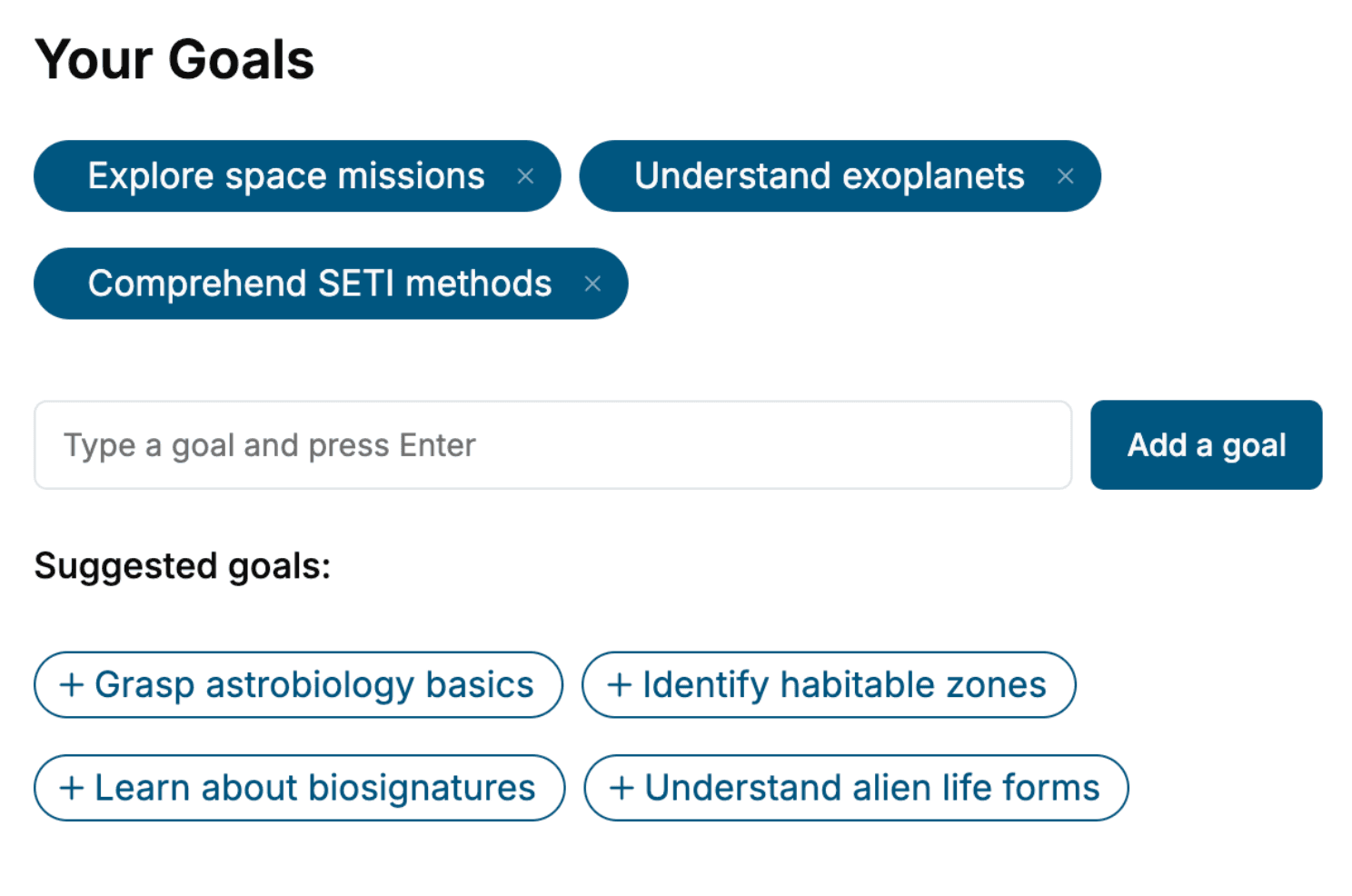
- tell us your goals, choose your topics, and the whole book is built around them.
- Learn effortlessly:
- Philosophy book written for your specific background and expertise.
- Understand at a glance:
- includes charts, tables, timelines, checklists, decision trees, and more.
- Stay current:
- written the day you order it, not years ago.
- Trust what you read:
- every book is checked for accuracy, with real research when your subject needs it.
Create your unique book in 3 steps
- 1. Select your focus
Select the focus of your Philosophy book and share your background
- 2. Personalize your book
Specify your goals and choose sub-topics to include
- 3. Get your tailored book
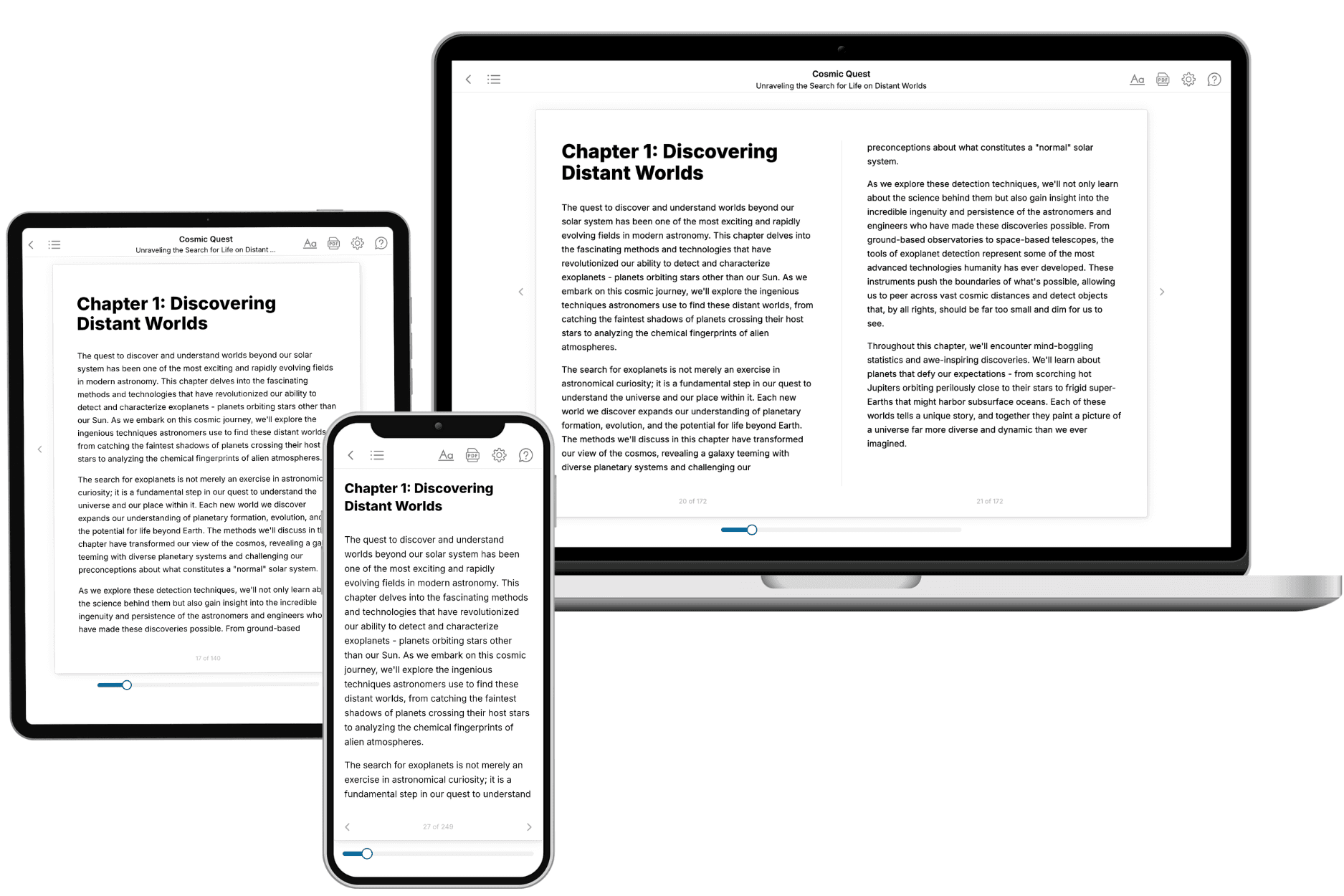
Your book is ready in 10 minutes. Read it online, download as EPUB or PDF, or send to Kindle.

Frequently asked questions
- What is TailoredRead?
TailoredRead creates complete, full-length nonfiction ebooks, written specifically for you. Tell us what you want to learn and why, and TailoredRead writes you a complete ebook on it, with charts, tables, and diagrams throughout. Read it online, on Kindle, or on any e-reader, or download it as a PDF or EPUB. Every book is written fresh the day you order it.
- How is the book tailored to me?
Before anything is written, you answer a few short questions about your goals, your background, and the topics you care about. Your book is then planned around your answers: written at your level, focused on your goals, and covering the topics you chose, instead of the one-size-fits-all book a store sells everyone.
- Will it read like generic AI content?
No. Your book isn't a chat transcript: it's planned chapter by chapter before a single word is written, told in a clear book voice, and explains ideas visually with charts, tables, and diagrams. After writing, every book goes through an editorial pass that polishes chapters so the book reads consistent from start to finish. Judge for yourself: browse thousands of sample books on our Explore Books page.
- How accurate is the content?
Our AI first checks whether your subject needs live research. Niche and fast-moving subjects are researched before writing, and the book plan and chapters are grounded in what it finds. After writing, every book goes through a quality pass that checks its facts and consistency, and researched books list their sources in a Notes section at the back.
- How long is the book?
You choose the length: Comprehensive (250-300 pages), Detailed (150-200 pages), Essential (70-100 pages), or Short (30-50 pages).
- Does the book include visuals?
Yes. Every book includes charts, tables, and diagrams: timelines, checklists, step-by-step guides, decision trees, comparison tables, matrices, and bar charts. A typical book includes dozens of these visual elements.
- Can I read it on Kindle? What formats can I download?
Yes. Every book can be read in our online reader or downloaded as a PDF or EPUB. The EPUB can be opened with Kindle, Apple Books, Kobo, and any e-reader. The Commercial and Author licenses also include an editable Word (DOCX) and Markdown download.
- How much does it cost?
About the price of a regular ebook. The exact price depends on your book's length and complexity, from $2 for the shortest books to $35 for the most comprehensive, and it's shown when you review your book, before you commit to anything. Each book is a one-time purchase, yours to keep, no subscription. Licenses that let you share, teach, or publish your book range from $35.99 to $49.99.
- Can I preview the book before purchasing?
Before you pay, you'll see what your book will cover: the title, a detailed description, the estimated length, and the complete chapter-by-chapter table of contents, so you know what you're getting before you decide. The full text itself is written after you purchase.
- How long does it take to create a book?
About 10 minutes. You can start reading the opening chapters while the rest is still being written.