Decision Making and Problem Solving Books
Explore tailored Decision Making and Problem Solving books created by our AI
Most problem-solving approaches assume the world works like a machine: identify the problem, apply the solution, get the result. But this linear thinking fails spectacularly in complex environments where systems are interconnected, constantly evolving, and full of surprises. Whether you're managing an organization, launching a product, or tackling a social challenge, you're likely dealing with a complex adaptive system—and your traditional tools aren't equipped to handle it. This book reveals how complex adaptive systems actually work and why understanding them transforms how you make decisions. You'll discover why small interventions sometimes create massive ripple effects, how feedback loops secretly drive outcomes, and why the best solutions emerge from experimentation rather than prediction. Through practical frameworks and real-world examples, you'll learn to recognize complexity, think systemically, and make decisions that account for interconnection, emergence, and adaptation. Stop fighting complexity and start working with it.
The Framing Effect
How the Way You Present Information Changes Everything
You make decisions every day, but are you really choosing what you want—or are you being subtly guided by how the choice is presented? The framing effect is one of the most powerful forces shaping your decisions, yet most people never recognize it happening. When a doctor describes a surgery as having a "90% survival rate" versus a "10% mortality rate," your comfort level shifts dramatically, even though the information is identical. This same phenomenon influences your career choices, financial decisions, relationships, and how you solve problems. This book reveals how framing works, why your brain falls for it, and most importantly, how to use this knowledge to make better decisions and communicate more effectively. You'll discover why people become risk-averse with gains but risk-seeking with losses, how to recognize when you're being manipulated through framing, and how to strategically reframe challenges to unlock new solutions. Whether you're a leader, professional, or simply someone who wants to make more intentional choices, understanding the framing effect is essential to navigating a world designed to influence your thinking.
Beyond the Point of No Return
Mastering the Sunk Cost Fallacy for Better Decision Making
Dive into the fascinating world of behavioral economics and decision-making with "Beyond the Point of No Return: Mastering the Sunk Cost Fallacy for Better Decision Making." This enlightening book unravels the complexities of the sunk cost fallacy, a cognitive bias that often leads us astray in our choices and actions. You'll explore real-world examples and cutting-edge research that illuminate how this fallacy affects our daily lives, from personal relationships to business strategies. Through engaging narratives and practical exercises, you'll learn to identify when you're falling prey to sunk cost thinking and develop strategies to overcome it. Whether you're a business professional, a student, or simply someone interested in improving your decision-making skills, this book offers invaluable insights. You'll gain a deeper understanding of human behavior and acquire tools to make more rational, forward-thinking choices. By the end, you'll be equipped to navigate complex decisions with confidence, free from the chains of past investments and emotional attachments.
Why do we believe that a coin is "due" to land on heads after several tails? Why do investors chase losses expecting a reversal? Why do we see patterns in randomness and act on them with confidence? The gambler's fallacy—the belief that past independent events influence future outcomes—shapes our decisions far more than we realize, often with costly consequences. This book reveals how this cognitive bias operates in your mind, where it appears in your daily life, and most importantly, how to overcome it. You'll discover the psychological mechanisms that make this bias feel so convincing, learn to distinguish between random and dependent events, and develop practical decision-making frameworks that protect you from faulty reasoning. Whether you're making financial choices, solving problems at work, or navigating uncertainty in life, understanding the gambler's fallacy is essential to thinking more clearly and deciding more wisely.
You'll develop the analytical rigor to spot the difference between coincidence and causation—a skill that transforms how you evaluate evidence, make decisions, and solve problems. This book cuts through the confusion that leads professionals to draw wrong conclusions from data, make ineffective business decisions, and waste resources on solutions targeting the wrong root causes. You'll learn to identify confounding variables, recognize cognitive biases that trick you into false reasoning, and apply proven frameworks for determining whether relationships are truly causal. Through real-world examples from business, science, and everyday life, you'll master the tools that separate rigorous thinkers from those who mistake patterns for proof. Whether you're analyzing market trends, evaluating research claims, or troubleshooting organizational problems, these skills will sharpen your judgment and protect you from costly analytical mistakes.
The Logic of Arguments
Master Logical Fallacies and Strengthen Your Reasoning
Strengthen your reasoning and become a more persuasive communicator by mastering the art of logical argumentation. This comprehensive guide takes you beyond surface-level understanding to show you exactly how logical fallacies work, why they're so convincing, and how to dismantle them. You'll explore the distinction between formal and informal fallacies, examine the most prevalent fallacies in everyday conversation and debate, and learn practical techniques for constructing bulletproof arguments. Whether you're engaging in professional discussions, academic writing, or casual debates, understanding these logical principles will sharpen your critical thinking and help you identify when reasoning has gone astray. With clear explanations, real-world examples, and actionable strategies, you'll develop the analytical skills needed to evaluate arguments rigorously and communicate with greater clarity and conviction.
You'll elevate your problem-solving abilities by understanding how your mind actually works and why certain approaches consistently outperform others. This book reveals the metacognitive principles that separate effective problem solvers from those who struggle, then teaches you concrete techniques to apply these insights immediately. You'll learn how to recognize and overcome the mental biases that trap you in conventional thinking, master the art of reframing problems to unlock hidden solutions, and make decisions with greater confidence and clarity. Whether you're facing workplace challenges, creative projects, or personal dilemmas, you'll discover practical frameworks that transform how you approach obstacles. The strategies here are grounded in cognitive science and tested across industries, giving you a reliable toolkit for tackling problems of any complexity. By the end, you'll think more strategically, generate more innovative solutions, and make decisions that actually stick.
The Barnum Effect
How Cognitive Bias Shapes Your Decisions and How to Think More Clearly
You believe a horoscope was written just for you. A personality test perfectly captures your essence. A life coach's generic advice feels like it was tailored to your specific situation. This is the Barnum Effect—and it's more powerful than you realize. The Barnum Effect is a cognitive bias that makes you accept vague, general statements as deeply personal and meaningful. It affects your career decisions, financial choices, relationships, and how you evaluate yourself. The problem is that you can't see it happening in real time. This book reveals how the Barnum Effect works, why your brain is wired to fall for it, and—most importantly—how to recognize and resist it. You'll discover how cold readers, marketers, and even well-meaning advisors exploit this bias, and you'll learn practical techniques to distinguish between genuine insights and clever generalizations. By understanding this cognitive vulnerability, you'll make better decisions, avoid costly mistakes, and develop a more objective view of yourself and the world around you.
Beyond True and False
Understanding Fuzzy Logic and the Philosophy of Imprecision
Discover how fuzzy logic revolutionizes the way we think about truth, reasoning, and decision-making. Most of us learned that statements are either true or false—but the real world rarely works that way. This book guides you through the philosophical foundations and practical power of fuzzy logic, a system that embraces the gray areas between absolutes. You'll explore how fuzzy logic challenges classical philosophy, understand the mathematics behind degrees of truth, and see how this approach solves real-world problems in artificial intelligence, engineering, and everyday decision-making. Whether you're interested in philosophy, mathematics, or practical applications, this book reveals why fuzzy logic isn't just an academic curiosity—it's a more accurate reflection of how the world actually works and how we naturally reason about it. Move beyond binary thinking and gain a deeper understanding of complexity, nuance, and uncertainty.
The Monty Hall Paradox
Unraveling Probability, Decision-Making, and Counterintuitive Truths
Prepare to have your mind expanded and your intuition challenged. "The Monty Hall Paradox" takes you on a fascinating journey through one of the most perplexing and counterintuitive problems in probability theory. This book delves deep into the infamous Monty Hall Problem, a puzzle that has confounded mathematicians, philosophers, and casual thinkers alike. You'll explore the problem from every angle, uncovering its hidden depths and surprising implications for how we understand probability and make decisions. But this isn't just about one problem. You'll see how the Monty Hall Paradox connects to broader themes in philosophy, cognitive psychology, and even quantum mechanics. Through clear explanations, thought-provoking examples, and engaging thought experiments, you'll gain new perspectives on how we perceive reality and make choices in an uncertain world. Whether you're a student of philosophy, a probability enthusiast, or simply someone who loves a good mental challenge, this book will transform the way you think about chance, choice, and the nature of paradox itself.
The Logic of Choice
Unraveling Rational Choice Theory in Political and Social Contexts
Is human behavior truly predictable? Many assume that people's choices are inherently chaotic and unpredictable. However, Rational Choice Theory challenges this notion, offering a framework to understand the logic behind human decision-making in political and social spheres. "The Logic of Choice: Unraveling Rational Choice Theory in Political and Social Contexts" delves deep into the fascinating world of human decision-making. This book bridges the gap between abstract theory and real-world applications, providing you with a solid foundation in Rational Choice Theory and its relevance to political theory and sociology. From voting behaviors to social movements, you'll discover how this powerful analytical tool can shed light on complex societal phenomena. Through engaging examples and thought-provoking discussions, you'll learn to apply Rational Choice Theory to analyze and predict patterns in human behavior, policy-making, and social interactions. Whether you're a student, researcher, or simply curious about the forces that shape our society, this book will equip you with valuable insights and analytical skills to better understand the world around you.
Discover how logic programming transforms the way you approach complex decision problems. Rather than writing step-by-step instructions, you'll learn to express problems as logical relationships and let the programming engine find solutions automatically. This book bridges theory and practice, showing you how declarative programming works at a fundamental level and why it's uniquely suited for problems involving search, constraint satisfaction, and knowledge representation. You'll explore unification, backtracking, and resolution—the elegant mechanisms that power logic programming—and see how they apply to real-world scenarios. Whether you're building AI systems, solving combinatorial puzzles, or reasoning about complex domains, this guide equips you with both the conceptual understanding and practical skills to leverage logic programming effectively. Perfect for programmers ready to expand beyond imperative thinking.
The Art of Logical Deduction
Master the Principles of Sound Reasoning and Critical Thinking
Most people believe that good reasoning comes naturally—that if you're smart enough, you'll automatically think logically. The reality is far different. Logical deduction is a learnable skill with specific principles, structures, and rules that can be mastered through study and practice. This book demystifies the philosophy of logic and shows you how deductive reasoning actually works. You'll discover why some arguments are valid while others fail, learn to recognize the logical fallacies that trap even intelligent thinkers, and gain practical tools for constructing sound arguments. Whether you're evaluating claims in the workplace, making important decisions, or simply wanting to think more clearly, understanding logical deduction transforms how you approach problems. This accessible guide bridges the gap between abstract philosophical concepts and real-world application, giving you the frameworks and confidence to reason your way through complex situations with clarity and precision.
The Decision Maker's Playbook
Master the Art and Science of Smart Choices in Work and Life
You face decisions every day—some routine, others life-changing. Yet most people never receive formal training in how to make them well. The result? Missed opportunities, costly mistakes, and chronic second-guessing that drains your confidence and energy. This book cuts through the complexity. You'll discover why your brain often leads you astray, how to recognize the thinking traps that sabotage your choices, and exactly what to do instead. Rather than offering vague inspiration, you'll learn battle-tested frameworks used by successful leaders, entrepreneurs, and problem-solvers across industries. Whether you're deciding between job offers, solving a persistent workplace problem, or navigating a major life transition, these practical tools work. You'll learn to separate signal from noise, evaluate options systematically, and make decisions you can stand behind. Most importantly, you'll develop the confidence that comes from knowing you've thought things through properly.
Optimization in Action
Master Operations Research Through Intermediate Algebra
You'll move beyond solving equations to solving real problems. This book bridges intermediate algebra and operations research by showing how the mathematical tools you know can optimize decisions affecting budgets, schedules, production, and resources. Each chapter builds on algebraic fundamentals while introducing optimization concepts through practical examples: maximizing profit with production constraints, minimizing costs in supply chains, allocating limited resources across competing projects, and scheduling complex operations. You'll learn to translate business problems into mathematical models, solve them using both graphical and algebraic methods, and interpret results for decision-makers. The progression from simple linear programs to more complex scenarios ensures you develop both conceptual understanding and practical problem-solving skills. By the end, you'll recognize optimization opportunities in your own work and apply systematic approaches to find better solutions.
You make hundreds of decisions every day, yet you rarely have complete information or unlimited time to analyze every option. This book explains why—and shows you how to make better decisions despite these constraints. Bounded rationality is the science of how humans and machines actually decide when facing real-world limitations. Rather than pursuing impossible perfection, you'll discover how to leverage heuristics, recognize cognitive biases, and design systems that work within practical constraints. Whether you're making personal choices, building AI models, or leading organizations, understanding bounded rationality transforms how you approach decision-making. This book bridges classical decision theory with modern machine learning, revealing the hidden logic behind choices that seem irrational but are actually quite sensible. Learn why your brain's shortcuts work, how to spot systematic errors in your thinking, and how to build AI systems that make smarter decisions by acknowledging—not ignoring—their limitations.
What if the most complex problems you face could be solved by transforming them into simpler ones you already know how to handle? Search algorithms and reductions are the computational tools that make this possible. This book bridges the gap between theoretical computer science and practical problem-solving, showing you how search algorithms work, why reductions matter, and how to combine them strategically. Whether you're optimizing database queries, developing AI systems, or tackling algorithmic challenges in interviews, you'll discover that mastery comes from understanding the fundamental patterns beneath the surface. Through clear explanations, concrete examples, and progressive complexity, you'll learn to recognize problem structures, apply appropriate search strategies, and leverage reductions to transform obstacles into opportunities. This isn't just about memorizing algorithms—it's about developing the computational intuition that separates competent programmers from exceptional problem-solvers.
Strategic Algorithms
Mastering Algorithmic Game Theory for Advanced Decision Problems
Level up your problem-solving skills with "Strategic Algorithms: Mastering Algorithmic Game Theory for Advanced Decision Problems." This comprehensive guide takes you on a deep dive into the fascinating world of algorithmic game theory, equipping you with powerful tools to tackle complex decision-making scenarios in computer science. You'll gain a thorough understanding of the fundamental concepts and advanced techniques in algorithmic game theory, learning how to apply these principles to real-world problems. From analyzing strategic interactions to designing efficient algorithms, this book covers it all. By the time you finish reading, you'll be able to model intricate decision problems, develop optimal strategies, and implement cutting-edge algorithms. Whether you're working on resource allocation, network design, or multi-agent systems, the knowledge you gain from this book will give you a significant edge in your field.
Likelihood Estimation
Master Probability, Algorithms, and Real-World Decision Making
Most people think probability is about predicting the future, but likelihood estimation is about something more fundamental: finding the best explanation for what you've already observed. Whether you're building machine learning models, analyzing experimental data, or making algorithmic decisions, likelihood estimation is the mathematical engine behind the scenes. This book cuts through the complexity to show you how likelihood estimation actually works—from foundational concepts to practical implementation. You'll discover why Maximum Likelihood Estimation has become the gold standard in statistics and machine learning, how to navigate the computational challenges of real-world problems, and when to use approximation techniques instead of exact solutions. Written for those with intermediate probability knowledge, this guide combines clear explanations with concrete examples, helping you move from understanding the theory to confidently applying these powerful techniques in your own work.
The Logic of Limits
Understanding Computational Complexity and What Computers Can Actually Do
You face a constant challenge in our digital world: distinguishing between problems that computers can solve quickly and those that will take centuries, even with perfect algorithms. This gap between what seems solvable and what actually is solvable defines computational complexity theory—the logical framework that explains why some problems are fundamentally harder than others. This book cuts through the mathematical abstraction to show you how complexity theory works and why it matters. You'll discover how to classify problems by their difficulty, understand why certain optimization challenges resist perfect solutions, and learn when to pursue exact answers versus practical approximations. Whether you're making decisions about software development, optimization strategies, or simply understanding the limits of artificial intelligence, computational complexity provides the logical foundation you need. By connecting abstract theory to concrete examples, this guide reveals how complexity thinking sharpens your logical reasoning about what's possible, what's practical, and what's fundamentally impossible—knowledge that transforms how you approach difficult problems.
Most manufacturing problems don't happen once—they happen repeatedly. You fix a quality issue, it returns three months later. You solve a production delay, another bottleneck emerges. The frustrating cycle continues because you're treating symptoms, not causes. Root cause analysis is the systematic approach that breaks this cycle by identifying why problems actually occur, not just what went wrong. This book teaches you proven methods used by leading manufacturers to dig beneath surface-level explanations and uncover the real drivers of defects, delays, and inefficiencies. You'll learn how to apply techniques like the 5 Why method, fishbone diagrams, and fault tree analysis within your production environment. More importantly, you'll discover how to trace problems through your entire production flow to understand how issues propagate and interact. With practical frameworks and real-world examples, this guide equips you to lead investigations that produce lasting solutions rather than temporary fixes.
The Logic Engine
Mastering Propositional Calculus for Clear Thinking and Better Decisions
Most people believe that logic is either something you're born with or a dry academic subject with little practical value. This misconception keeps countless individuals from developing one of the most powerful tools for clear thinking and effective decision-making: propositional calculus. You don't need to be a mathematician or philosopher to harness the precision and clarity that formal logic provides. Propositional calculus offers a systematic framework for analyzing arguments, evaluating claims, and making better decisions by breaking complex problems into their fundamental logical components. When you understand how to work with propositions, connectives, and truth conditions, you gain the ability to see through confusion and identify the core structure of any logical situation. This comprehensive guide takes you from the basic building blocks of propositional logic through advanced techniques for formal proof and logical analysis. You'll discover how to construct and evaluate truth tables, recognize common logical patterns, and apply formal reasoning methods to real-world scenarios. Each concept builds naturally on the previous one, ensuring you develop both theoretical understanding and practical skills. Whether you're looking to sharpen your analytical abilities, improve your argumentation skills, or simply think more clearly about complex issues, mastering propositional calculus will give you a reliable foundation for logical reasoning that serves you in every area of life.
Algebra in Action
Mastering Operations Research Applications in Elementary Mathematics
You're about to take your mathematical skills to the next level. "Algebra in Action" is your gateway to mastering the fascinating world of operations research applications in elementary mathematics. This book bridges the gap between abstract algebraic concepts and real-world problem-solving, providing you with the tools to tackle complex challenges with confidence. Dive into a world where algebra comes alive through practical applications. You'll discover how mathematical models can optimize decision-making, streamline processes, and uncover hidden patterns in data. From supply chain management to resource allocation, you'll see how algebraic thinking drives innovation across industries. Whether you're a student looking to excel in your studies or a professional seeking to enhance your analytical toolkit, "Algebra in Action" offers a clear, engaging approach to operations research. With hands-on examples, step-by-step explanations, and thought-provoking exercises, you'll develop a deeper understanding of how algebra shapes the world around us. Get ready to see mathematics in a whole new light and become a more versatile problem-solver.
Many people think conditional probability is just about plugging numbers into formulas, but this misconception leads to flawed algorithms, misinterpreted data, and costly errors in computational systems. The truth is that conditional probability is a way of thinking—a framework for reasoning about uncertainty, dependencies, and information flow that lies at the heart of modern computer science. This book bridges the gap between mathematical theory and algorithmic practice. You'll move beyond rote memorization to develop genuine intuition for how conditional probability shapes everything from search algorithms to machine learning models. Through carefully constructed explanations and computational examples, you'll discover how Bayes' Theorem powers spam filters, how Markov chains model web page rankings, and how probabilistic analysis predicts algorithm performance. Whether you're designing randomized algorithms, analyzing data structures, or building intelligent systems, you'll gain the tools to reason clearly about uncertainty and make probability work for you. By connecting rigorous mathematical foundations with practical algorithmic applications, this book equips you with both the conceptual understanding and technical skills to tackle complex computational challenges with confidence.
Related books you may like:
Imagine waking up feeling genuinely energized about your day, approaching challenges with clarity and purpose, and maintaining meaningful connections with those around you. This is the reality that awaits on the other side of burnout. Burnout Syndrome is more than just feeling tired—it's a psychological condition that erodes your sense of purpose, drains your emotional reserves, and diminishes your capacity to function effectively. This comprehensive guide demystifies burnout by exploring its psychological foundations, identifying its warning signs before they escalate, and providing evidence-based strategies for both prevention and recovery. Whether you're currently experiencing burnout, supporting someone who is, or seeking to understand this growing psychological challenge, you'll discover practical tools grounded in psychological research. Learn how to recognize the distinct stages of burnout, understand the interplay between personal and environmental factors, and implement sustainable changes that address root causes rather than just symptoms. This book empowers you with knowledge and actionable strategies to reclaim your well-being and build a more resilient, fulfilling life.
Struggling to remember names, dates, or important facts? You're not alone. Many believe that declining memory is an inevitable part of aging, but this couldn't be further from the truth. Your brain has an incredible capacity for growth and improvement at any age. The 30-Day Recall Accelerator is your personalized roadmap to unlocking your memory's full potential. This isn't just another collection of memory tricks—it's a comprehensive, science-based program designed to rewire your brain for enhanced recall and cognitive flexibility. Through a series of daily exercises tailored to your unique learning style, you'll discover how to: • Boost your recall speed and accuracy • Expand your retention capacity • Develop powerful memory organization techniques • Strengthen your working memory • Create effective recall triggers Whether you're a lifelong learner looking to stay sharp or someone seeking to enhance their cognitive abilities, this book offers a practical, engaging approach to memory improvement. By the end of 30 days, you'll not only notice a significant improvement in your memory but also gain a deeper understanding of how your mind works. Your journey to a sharper, more reliable memory starts here. Are you ready to transform the way you remember?
Many directors assume that technical excellence and project management certifications are sufficient for executive advancement. The reality is starkly different in 2025. The workplace has fundamentally shifted—AI is reshaping how projects are managed, remote teams require entirely new engagement strategies, and executive presence has become as critical as technical competence. This book bridges the gap between your current expertise and the executive leadership capabilities you need to thrive. You'll discover how to leverage your engineering and project management background while developing the strategic thinking, executive communication, and networking skills that separate directors from C-suite leaders. Learn how to harness AI-driven tools without losing human-centered leadership, master the nuances of remote team engagement, build authentic executive networks, and create a personal brand that opens doors. Whether you're navigating organizational politics, optimizing project portfolios, or positioning yourself for the next level, this guide provides concrete strategies grounded in 2025's emerging workplace realities.
Master the psychological forces that shape economic decisions—your own and others'. This comprehensive guide reveals how cognitive biases, mental shortcuts, and emotional responses drive choices in ways traditional economics never explained. You'll discover why people make seemingly irrational financial decisions, how the presentation of options influences choices, and what actually motivates behavior change. Through practical frameworks and real-world examples, you'll learn to recognize biases in your own decision-making, understand consumer behavior patterns, and apply behavioral economics to improve personal finance, investment choices, and health outcomes. Whether you're analyzing data, making investment decisions, or designing policies, this book equips you with evidence-based tools to navigate the gap between how people actually decide and how economists assumed they would. Gain the critical thinking skills to evaluate why incentives work, how nudges shape behavior, and where traditional economic models fall short.
You've always felt like something was missing from how people measure intelligence. Traditional tests capture only a fraction of what makes you capable, leaving you wondering about talents that don't fit neatly into conventional categories. The truth is, intelligence is far more diverse than IQ scores suggest—and your unique combination of abilities is your greatest asset. This book introduces you to Multiple Intelligence Theory and shows how combining it with a growth mindset creates a roadmap for genuine success. You'll discover the eight distinct intelligences, identify your personal profile, and learn practical strategies to develop both your natural strengths and emerging abilities. Whether you're seeking career advancement, personal growth, or simply a deeper understanding of yourself and others, this guide provides the framework and tools to move beyond limiting beliefs about what you're capable of achieving. Success isn't about being good at everything—it's about understanding and leveraging what makes you uniquely talented.
Create a Decision Making and Problem Solving Book Tailored to You
Create an AI-crafted book tailored to your goals, interests, and background





Benefits of AI-tailored books
- Read one book, not ten:
- all the Decision Making and Problem Solving knowledge you need, gathered into a single book.
- Save days of learning:
- tell us your goals, choose your topics, and the whole book is built around them.
- Learn effortlessly:
- Decision Making and Problem Solving book written for your specific background and expertise.
- Understand at a glance:
- includes charts, tables, timelines, checklists, decision trees, and more.
- Stay current:
- written the day you order it, not years ago.
- Trust what you read:
- every book is checked for accuracy, with real research when your subject needs it.
Create your unique book in 3 steps
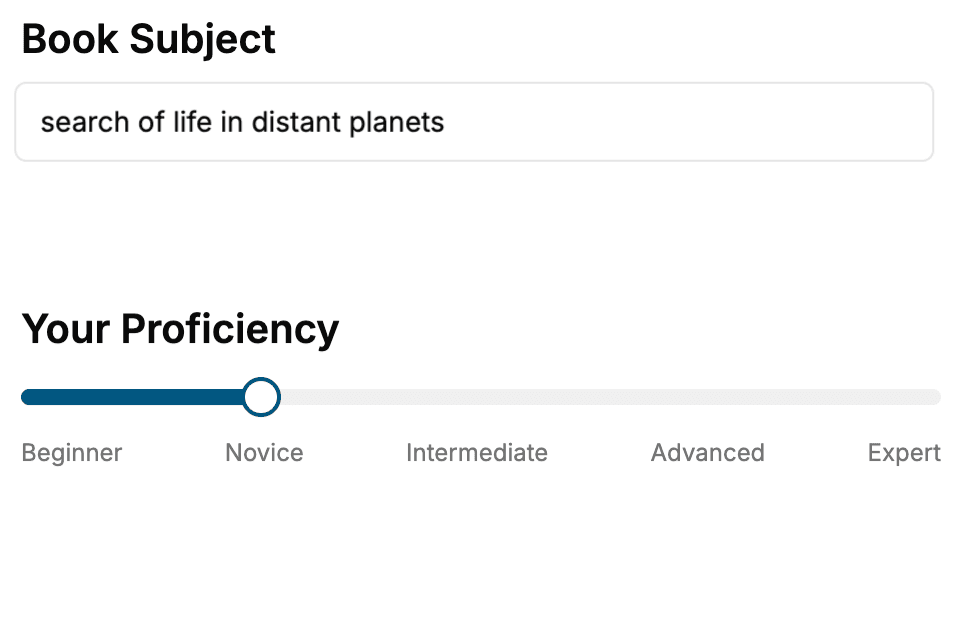
- 1. Select your focus
Select the focus of your Decision Making and Problem Solving book and share your background
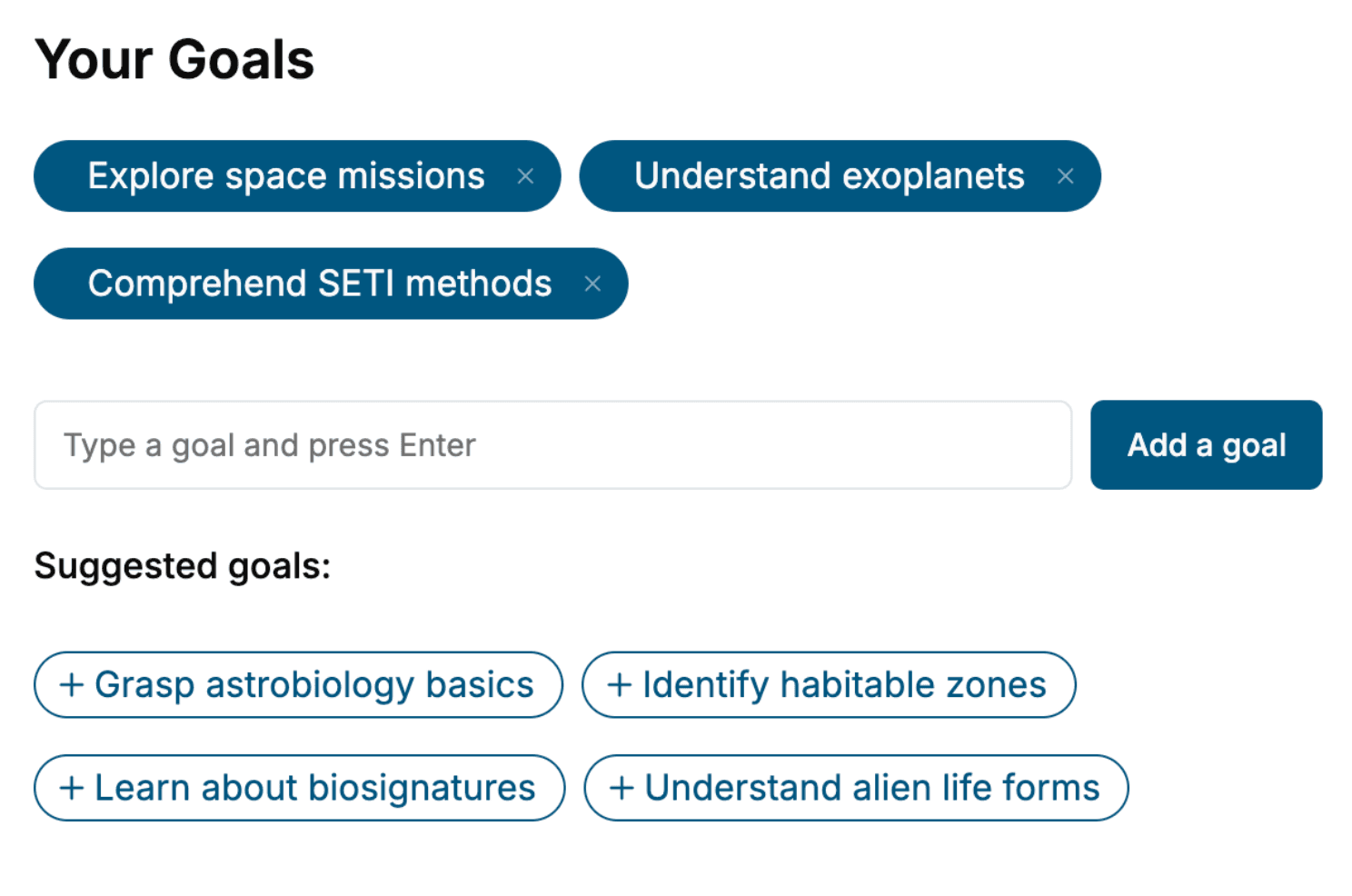
- 2. Personalize your book
Specify your goals and choose sub-topics to include
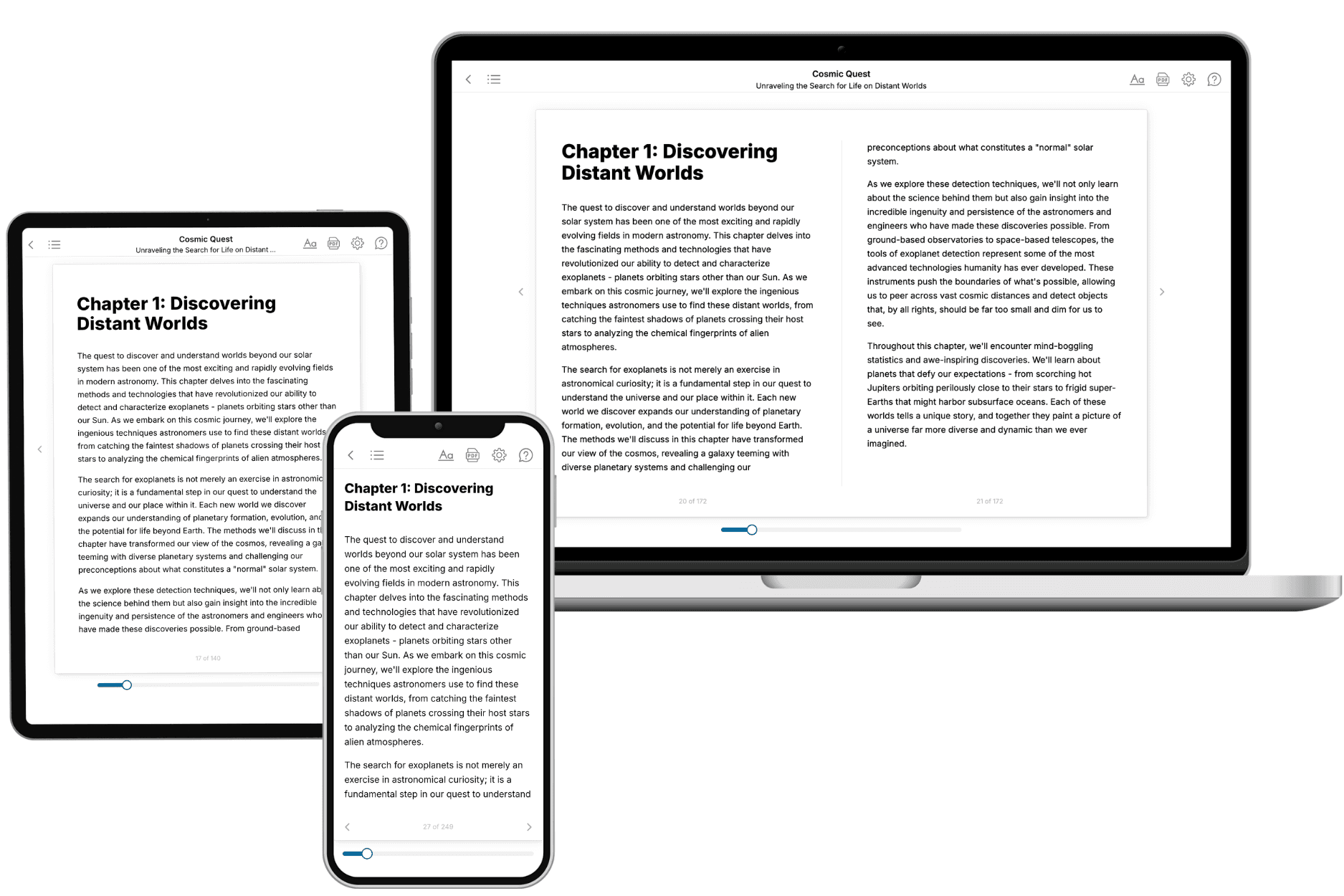
- 3. Get your tailored book
Your book is ready in 10 minutes. Read it online, download as EPUB or PDF, or send to Kindle.
Frequently asked questions
- What is TailoredRead?
TailoredRead creates complete, full-length nonfiction ebooks, written specifically for you. Tell us what you want to learn and why, and TailoredRead writes you a complete ebook on it, with charts, tables, and diagrams throughout. Read it online, on Kindle, or on any e-reader, or download it as a PDF or EPUB. Every book is written fresh the day you order it.
- How is the book tailored to me?
Before anything is written, you answer a few short questions about your goals, your background, and the topics you care about. Your book is then planned around your answers: written at your level, focused on your goals, and covering the topics you chose, instead of the one-size-fits-all book a store sells everyone.
- Will it read like generic AI content?
No. Your book isn't a chat transcript: it's planned chapter by chapter before a single word is written, told in a clear book voice, and explains ideas visually with charts, tables, and diagrams. After writing, every book goes through an editorial pass that polishes chapters so the book reads consistent from start to finish. Judge for yourself: browse thousands of sample books on our Explore Books page.
- How accurate is the content?
Our AI first checks whether your subject needs live research. Niche and fast-moving subjects are researched before writing, and the book plan and chapters are grounded in what it finds. After writing, every book goes through a quality pass that checks its facts and consistency, and researched books list their sources in a Notes section at the back.
- How long is the book?
You choose the length: Comprehensive (250-300 pages), Detailed (150-200 pages), Essential (70-100 pages), or Short (30-50 pages).
- Does the book include visuals?
Yes. Every book includes charts, tables, and diagrams: timelines, checklists, step-by-step guides, decision trees, comparison tables, matrices, and bar charts. A typical book includes dozens of these visual elements.
- Can I read it on Kindle? What formats can I download?
Yes. Every book can be read in our online reader or downloaded as a PDF or EPUB. The EPUB can be opened with Kindle, Apple Books, Kobo, and any e-reader. The Commercial and Author licenses also include an editable Word (DOCX) and Markdown download.
- How much does it cost?
About the price of a regular ebook. The exact price depends on your book's length and complexity, from $2 for the shortest books to $35 for the most comprehensive, and it's shown when you review your book, before you commit to anything. Each book is a one-time purchase, yours to keep, no subscription. Licenses that let you share, teach, or publish your book range from $35.99 to $49.99.
- Can I preview the book before purchasing?
Before you pay, you'll see what your book will cover: the title, a detailed description, the estimated length, and the complete chapter-by-chapter table of contents, so you know what you're getting before you decide. The full text itself is written after you purchase.
- How long does it take to create a book?
About 10 minutes. You can start reading the opening chapters while the rest is still being written.