Search Algorithms Books
Explore tailored Search Algorithms books created by our AI
Books readers created
16 Search Algorithms books, each written for the reader who ordered it. Read its introduction, then personalize it to get a book of your own.
Discover how search algorithms form the backbone of modern computing, from the apps on your phone to the systems powering the internet. This book takes you on a practical journey through the world of search algorithms, starting with fundamental concepts and progressing to sophisticated techniques used in production systems. You'll learn why a simple linear search fails at scale, how binary search achieves logarithmic speed, and why hash-based approaches revolutionized data retrieval. Through clear explanations, real-world examples, and hands-on insights, you'll understand not just how these algorithms work, but when and why to use them. Whether you're preparing for technical interviews, building scalable systems, or simply deepening your computer science knowledge, this book equips you with the algorithmic thinking needed to solve complex search problems efficiently. By the end, you'll see search algorithms not as abstract concepts, but as practical tools that directly impact performance, cost, and user satisfaction in the systems you build.
Lucene Mastery
Advanced Techniques for Building High-Performance Search Applications
Imagine having the power to create lightning-fast, highly accurate search applications that can handle millions of documents with ease. Picture yourself confidently implementing advanced features like geospatial search, custom analyzers, and distributed search architectures. With "Lucene Mastery: Advanced Techniques for Building High-Performance Search Applications," you'll turn these visions into reality. This comprehensive guide is tailored for experienced software engineers who are ready to take their Lucene skills to the next level. You'll dive deep into the intricacies of Lucene, exploring advanced topics such as query optimization, custom scoring algorithms, and memory management techniques that will supercharge your search applications. From fine-tuning relevance to implementing near-real-time search capabilities, this book covers the cutting-edge features that set exceptional search applications apart. You'll learn how to leverage Lucene's powerful plugin architecture, master the art of efficient indexing, and gain insights into the underlying data structures that make Lucene so performant. Whether you're building a sophisticated e-commerce platform, a content discovery system, or a large-scale analytics tool, "Lucene Mastery" will equip you with the knowledge and techniques to create search solutions that are fast, accurate, and scalable. Get ready to become the go-to Lucene expert in your organization and take your search applications to unprecedented heights.
Locality-Sensitive Hashing
Finding Similarity at Scale Without Comparing Everything
Finding similar items in massive datasets is one of the most challenging problems in computer science. Whether you're building a recommendation engine, detecting duplicate content, or searching for near-identical documents, comparing every item against every other item becomes computationally impossible at scale. Locality-sensitive hashing offers an elegant solution: hash similar items into the same buckets with high probability, then search only within those buckets. This book teaches you how LSH works, why it's fundamentally different from traditional hashing, and how to apply it to real-world problems. You'll learn the mathematical principles behind different LSH families, understand the trade-offs between accuracy and speed, and discover how to implement LSH for text, images, and high-dimensional data. With practical examples and clear explanations, you'll gain the knowledge to architect efficient similarity search systems that scale to billions of items.
Finding similar items in massive datasets is one of the biggest challenges in modern AI and machine learning. Traditional approaches that compare every vector to every other vector become impossibly slow as your data grows. Locality Sensitive Hashing (LSH) solves this problem by enabling you to find approximate nearest neighbors in high-dimensional spaces with remarkable speed and efficiency. This book demystifies LSH and shows you exactly how to apply it to real-world problems. You'll learn the core principles behind why LSH works, explore different LSH families for various distance metrics, and discover practical implementation strategies for production systems. Whether you're building recommendation engines, detecting duplicate content, powering semantic search, or scaling vector databases, this guide provides the knowledge and techniques you need to implement LSH effectively. With clear explanations, concrete examples, and actionable insights, you'll understand not just how to use LSH, but when to use it and how to optimize it for your specific use case.
Regression Algorithms Demystified
Master Search and Prediction with Practical Techniques
Most developers understand that search engines rank results, but few grasp the mathematical machinery behind those rankings. Regression algorithms are the core technology powering relevance scoring, personalization, and prediction across modern search systems—yet they're often treated as a black box. This book cuts through the complexity and shows you exactly how regression algorithms work, why they matter for search, and how to implement them effectively. You'll move beyond memorizing formulas to truly understanding the tradeoffs between different approaches, the practical challenges of overfitting and feature engineering, and how to optimize algorithms for real-world performance. Whether you're building search functionality, developing recommendation systems, or improving ranking models, this guide provides the conceptual clarity and practical techniques you need to make informed decisions and solve actual problems.
Metaheuristics Mastery
Solving Complex Problems with Intelligent Search Algorithms
Master the art of solving computationally hard problems with metaheuristic algorithms. You'll progress from understanding why traditional algorithms fail on complex optimization challenges to implementing and tuning sophisticated search strategies that deliver practical solutions. This book bridges the gap between theoretical computer science and real-world application, showing you how genetic algorithms, simulated annealing, particle swarm optimization, and other metaheuristics work under the hood. Learn to formulate decision problems effectively, select the right algorithm for your constraints, and evaluate performance rigorously. Through concrete examples and implementation guidance, you'll gain the confidence to tackle NP-hard problems, combinatorial optimization challenges, and complex search spaces that would otherwise be intractable. Whether you're optimizing logistics networks, designing machine learning hyperparameters, or solving scheduling problems, this book equips you with proven techniques and practical wisdom for making intelligent algorithmic choices.
Breadth-First Search Mastery
From Theory to Real-World Applications in Modern Computing
Many developers treat breadth-first search as just another algorithm to memorize for interviews, missing its elegant power to solve real problems efficiently. This book reveals why BFS is fundamentally different from other search approaches and when it's the right tool for the job. You'll move beyond textbook examples to understand how BFS powers social network recommendations, GPS navigation, puzzle solvers, and web crawlers. Through clear explanations, practical code examples, and step-by-step visualizations, you'll learn to implement BFS correctly, optimize it for performance, and recognize opportunities to apply it in your own projects. Whether you're preparing for technical interviews, building production systems, or simply deepening your algorithmic thinking, this guide equips you with both the conceptual foundation and practical skills to use BFS confidently and effectively.
Elevate your search applications to new heights with cutting-edge machine learning techniques. This comprehensive guide delves deep into the intricacies of building intelligent, scalable, and highly efficient search engines. You'll master advanced concepts such as vector space models, BERT embeddings, and transformer architectures, while learning to implement sophisticated NLP techniques and optimize complex ML algorithms. Designed for experienced software engineers and ML practitioners, this book offers a practical, hands-on approach to developing custom ML models, enhancing data pipelines, and automating ML workflows specifically for search applications. You'll explore the latest advancements in semantic search, query understanding, and personalization, equipping you with the skills to create search experiences that are both powerful and intuitive. From distributed indexing to MLOps best practices, this guide covers every aspect of building production-ready ML search applications. You'll learn how to leverage techniques like federated learning and transfer learning to improve your models, implement attention mechanisms for better relevance, and utilize knowledge graphs for enhanced entity recognition. By the end of this book, you'll have the expertise to architect, develop, and deploy sophisticated ML-powered search solutions that push the boundaries of what's possible in information retrieval.
Depth-First Search
Mastering the Fundamental Algorithm That Powers Modern Computing
What if the algorithm you learned in your first data structures course holds the key to solving some of computing's most challenging problems? Depth-first search appears deceptively simple, yet it powers everything from web crawlers and compiler design to game AI and network topology analysis. This book takes you beyond the textbook definition to explore how DFS actually works in practice. You'll discover why this traversal strategy excels at certain problems while struggling with others, master both recursive and iterative implementations, and learn to recognize the hidden DFS patterns in complex computational challenges. Through clear explanations, practical examples, and real-world applications, you'll develop an intuitive understanding of when and how to apply DFS effectively. Whether you're preparing for technical interviews, building sophisticated software systems, or simply want to think more algorithmically, this comprehensive guide provides the depth and clarity you need to truly master one of computer science's most versatile algorithms.
Why do some algorithms feel intuitive while others remain mysterious, even after you've implemented them dozens of times? Depth-first search stands at the intersection of elegant simplicity and profound computational power, yet many practitioners never fully grasp its time complexity implications or recognize its hidden applications. This book bridges that gap by building your understanding from foundational graph theory through advanced algorithmic applications. You'll discover why DFS behaves the way it does, when to choose it over alternative approaches, and how to analyze its performance across different scenarios. Through clear explanations and practical examples, you'll develop an intuitive sense for recognizing DFS-solvable problems and implementing efficient solutions. Whether you're preparing for technical interviews, optimizing production code, or simply deepening your algorithmic knowledge, this comprehensive guide provides the insights you need to think like an expert about one of computer science's most versatile techniques.
Breadth First Search Mastery
Navigate Graphs Like a Pro with BFS Algorithms
You'll progress from understanding the fundamental mechanics of Breadth First Search to confidently applying it to complex graph problems. This book starts with the core concepts—how BFS explores graphs level-by-level using a queue—and builds toward practical implementation strategies and real-world applications. You'll learn why BFS is the optimal choice for shortest path problems in unweighted graphs, how to implement it correctly while avoiding common pitfalls, and when to use BFS versus competing algorithms. Through detailed code examples, complexity analysis, and step-by-step walkthroughs, you'll develop the intuition needed to recognize BFS opportunities in technical interviews and production systems. Whether you're solving social network problems, optimizing game AI, or building web crawlers, this book equips you with the knowledge and confidence to leverage BFS effectively in any scenario.
Picture yourself confidently tackling any pathfinding challenge that comes your way. Whether you're building a GPS navigation system, optimizing network routes, or creating intelligent game AI, you'll have the algorithmic foundation to solve complex routing problems with elegance and efficiency. This comprehensive guide takes you deep into Dijkstra's Algorithm and the broader world of graph-based pathfinding. You'll discover how this fundamental algorithm powers everything from Google Maps to internet routing protocols, and learn to implement it from scratch with confidence. Through clear explanations, practical examples, and hands-on coding exercises, you'll build an intuitive understanding of how shortest path algorithms work and when to apply them. Beyond the core algorithm, you'll explore advanced variations like A*, bidirectional search, and specialized techniques for different graph types. You'll learn to optimize performance using priority queues, handle edge cases gracefully, and avoid common implementation pitfalls that trip up even experienced developers. By the end of this book, you'll possess a complete toolkit for solving pathfinding problems across domains. You'll understand not just how these algorithms work, but why they work, giving you the insight to adapt and extend them for your specific needs. Whether you're preparing for technical interviews, building production systems, or simply expanding your algorithmic knowledge, this book provides the depth and practical focus you need to truly master shortest path algorithms.
Mastering Quicksort
A Deep Dive into Efficient Sorting and Search Algorithms
Embark on a journey to master one of the most efficient and widely used sorting algorithms in computer science. "Mastering Quicksort: A Deep Dive into Efficient Sorting and Search Algorithms" is your comprehensive guide to understanding, implementing, and optimizing the Quicksort algorithm. This book takes you beyond the basics, exploring the intricacies of Quicksort and its pivotal role in search algorithms. You'll gain insights into its inner workings, learn various implementation techniques, and discover how to analyze its performance in different scenarios. Through clear explanations and practical examples, you'll see how Quicksort compares to other sorting algorithms and why it's often the preferred choice in real-world applications. Whether you're looking to ace your algorithms course, prepare for technical interviews, or enhance your software development skills, this book equips you with the knowledge and tools to leverage Quicksort effectively. By the end, you'll have a solid grasp of this powerful algorithm and be able to apply it confidently in your own projects and problem-solving endeavors.
Mastering Regular Expressions
A Deep Dive into Pattern Matching for Search Algorithms
Think regular expressions are just for simple text searches? Think again. Regular expressions are a powerful tool that can revolutionize the way you approach pattern matching and search algorithms in computer science. In "Mastering Regular Expressions: A Deep Dive into Pattern Matching for Search Algorithms," you'll discover the true potential of this often underestimated technique. From basic syntax to advanced implementations, this book guides you through the intricacies of regular expressions and their applications in modern computing. You'll learn how to harness the power of regular expressions to solve complex pattern matching problems, optimize search algorithms, and enhance your overall programming skills. With practical examples and in-depth explanations, you'll gain the confidence to tackle challenging scenarios in text processing, data validation, and information retrieval. Whether you're a seasoned developer looking to refine your skills or an aspiring computer scientist eager to expand your knowledge, this book will equip you with the tools and insights needed to become a regular expression master.
This book guides you through the essential landscape of classification algorithms and reduction techniques that form the backbone of modern computer science. You'll start by understanding how problems are categorized and why this matters, then progress through increasingly sophisticated classification strategies. The journey takes you from fundamental concepts like problem structure and complexity analysis into practical reduction techniques that transform hard problems into manageable ones. Along the way, you'll discover how to recognize patterns across different domains, implement algorithms efficiently, and make informed decisions about which approach fits your specific challenge. By the end, you'll have internalized the mental models that expert computer scientists use daily—the ability to see connections between problems, understand trade-offs, and select optimal solutions. Whether you're preparing for technical interviews, building production systems, or advancing your algorithmic thinking, this book provides both the theoretical foundation and practical tools you need to excel.
Your path to becoming a more effective programmer starts with understanding how data flows through your applications and how algorithms shape performance. This comprehensive guide takes you beyond basic JavaScript syntax into the fundamental concepts that separate good developers from great ones. You'll discover how to implement and optimize essential data structures using ES5 JavaScript, from simple arrays and objects to complex trees and graphs. Each concept builds naturally on the previous one, with practical examples that demonstrate real-world applications. Rather than memorizing abstract theories, you'll learn to recognize patterns and choose the right tools for specific programming challenges. The book emphasizes hands-on learning through progressive exercises that reinforce core concepts. You'll explore time and space complexity analysis, master recursive problem-solving techniques, and understand when different approaches offer the best trade-offs. Every algorithm and data structure is presented with clear ES5 implementations that you can immediately apply to your projects. By the end of this journey, you'll possess the analytical skills to evaluate algorithmic efficiency, the practical knowledge to implement sophisticated data structures, and the confidence to tackle complex programming problems with elegant, performant solutions.
Related books you may like:
What if your app could serve twice as many users simply by making it accessible? Millions of people with disabilities want to use Android apps but face barriers created by poor design choices. This book shows you how to remove those barriers and build applications that work seamlessly for everyone. You'll learn the practical techniques for implementing screen reader support, voice control, and other assistive technologies. Discover how semantic markup, proper content descriptions, and inclusive design patterns create apps that are easier to use for all users. Through real-world examples and step-by-step guidance, you'll master the Android Accessibility Framework and understand WCAG 2.1 standards. Learn testing strategies that reveal accessibility issues before your users encounter them. By the end, you'll have the knowledge to make accessibility a core part of your development process, not an afterthought—expanding your market reach while creating genuinely inclusive digital experiences.
Imagine delivering software that consistently meets stakeholder expectations, where every feature works exactly as intended, and your team moves with confidence through changes and refactoring. This is the reality when you master acceptance test-driven development. This comprehensive guide takes you beyond the basics to show you how ATDD transforms the way teams develop software. You'll learn how to write acceptance tests that serve as living documentation, collaborate effectively with business stakeholders to define clear acceptance criteria, and integrate ATDD seamlessly into your Extreme Programming workflow. Whether you're struggling with unclear requirements, dealing with late-stage defect discovery, or simply want to elevate your development practices, this book provides practical strategies, real-world examples, and proven techniques. You'll understand not just the "how" but the "why" behind acceptance test-driven development, enabling you to make informed decisions about implementation in your own context. Master this essential XP practice and watch your team's productivity and code quality soar.
Take your TypeScript skills from intermediate to advanced in just 30 days with a structured, project-driven approach. This book guides you through focused techniques that matter most: mastering advanced types like generics and conditional types, writing reliable async code with proper error handling, integrating TypeScript with modern frameworks, and building confidence through comprehensive testing strategies. Each day builds on the previous one, combining theory with hands-on coding projects that you'll actually use. You'll refactor real code, understand why type safety matters, and develop the patterns that separate good TypeScript developers from great ones. By day 30, you'll have the skills to write safer, more maintainable code and the portfolio projects to prove it. This isn't theory—it's practical, accelerated learning designed for developers ready to level up.
Discover how to build software that meets expectations from day one. Acceptance test-driven development (ATDD) transforms how teams define, test, and deliver quality software by writing acceptance tests before development begins. This practical guide shows you how to collaborate with stakeholders to define clear acceptance criteria, automate those criteria into executable tests, and use them to guide development and beta testing efforts. You'll learn to bridge the communication gap between business requirements and technical implementation, reduce costly defects discovered late in the cycle, and create living documentation that keeps pace with your product. Whether you're a QA professional, beta tester, or developer, this book provides actionable strategies, real-world examples, and proven frameworks to implement ATDD in your organization. Move beyond traditional testing approaches and join teams that are catching defects earlier, improving stakeholder alignment, and delivering software with confidence.
Building systems that reliably handle data is one of the hardest challenges in backend development. Without a solid understanding of ACID properties, you risk data corruption, lost transactions, and system failures that cascade through your application. This book demystifies the four pillars of database reliability—Atomicity, Consistency, Isolation, and Durability—and shows you exactly how to apply them in real-world scenarios. You'll learn why these properties matter, how they work under the hood, and how to leverage them when designing transactions, choosing databases, and handling failures. Whether you're building a financial system that can't afford to lose a penny or a high-traffic application that needs to scale, understanding ACID properties gives you the confidence to make architectural decisions that keep your data safe and your systems running smoothly.
Create a Search Algorithms Book Tailored to You
Create an AI-crafted book tailored to your goals, interests, and background






Benefits of AI-tailored books
- Read one book, not ten:
- all the Search Algorithms knowledge you need, gathered into a single book.
- Save days of learning:
- tell us your goals, choose your topics, and the whole book is built around them.
- Learn effortlessly:
- Search Algorithms book written for your specific background and expertise.
- Understand at a glance:
- includes charts, tables, timelines, checklists, decision trees, and more.
- Stay current:
- written the day you order it, not years ago.
- Trust what you read:
- every book is checked for accuracy, with real research when your subject needs it.
Create your unique book in 3 steps
- 1. Select your focus
Select the focus of your Search Algorithms book and share your background
- 2. Personalize your book
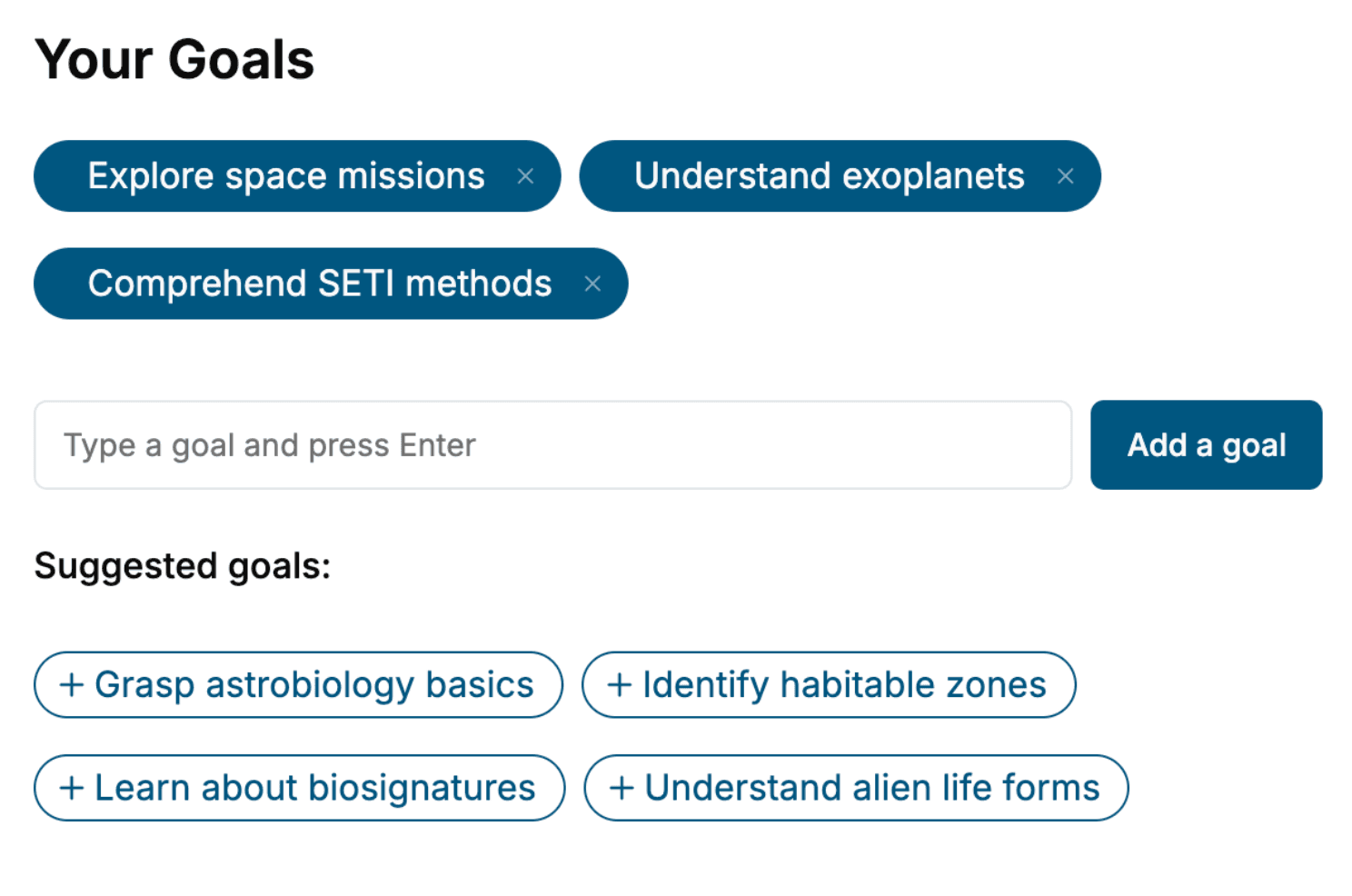
Specify your goals and choose sub-topics to include
- 3. Get your tailored book
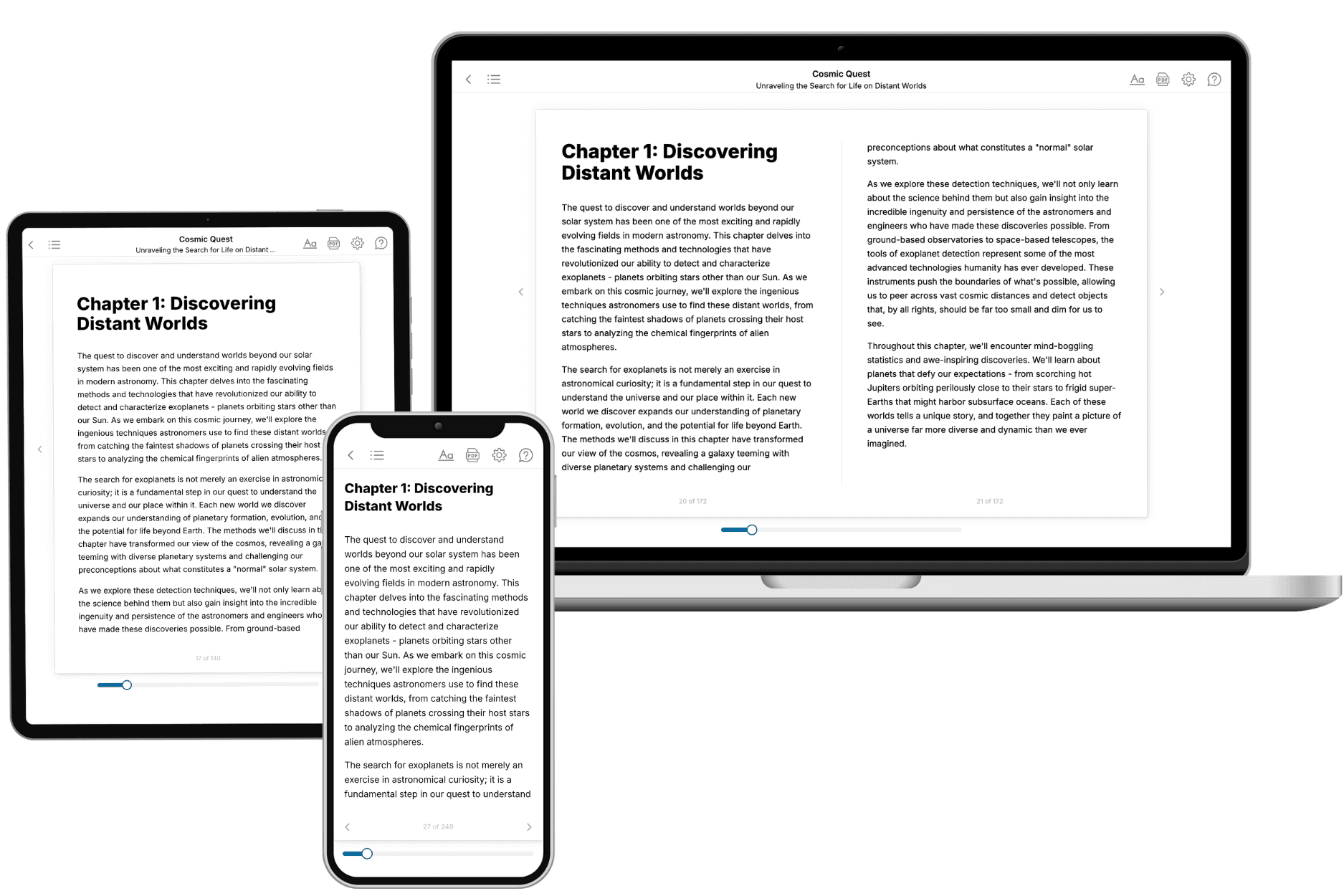
Your book is ready in 10 minutes. Read it online, download as EPUB or PDF, or send to Kindle.

Start from a template
Frequently asked questions
- What is TailoredRead?
TailoredRead creates complete, full-length nonfiction ebooks, written specifically for you. Tell us what you want to learn and why, and TailoredRead writes you a complete ebook on it, with charts, tables, and diagrams throughout. Read it online, on Kindle, or on any e-reader, or download it as a PDF or EPUB. Every book is written fresh the day you order it.
- How is the book tailored to me?
Before anything is written, you answer a few short questions about your goals, your background, and the topics you care about. Your book is then planned around your answers: written at your level, focused on your goals, and covering the topics you chose, instead of the one-size-fits-all book a store sells everyone.
- Will it read like generic AI content?
No. Your book isn't a chat transcript: it's planned chapter by chapter before a single word is written, told in a clear book voice, and explains ideas visually with charts, tables, and diagrams. After writing, every book goes through an editorial pass that polishes chapters so the book reads consistent from start to finish. Judge for yourself: browse thousands of sample books on our Explore Books page.
- How accurate is the content?
Our AI first checks whether your subject needs live research. Niche and fast-moving subjects are researched before writing, and the book plan and chapters are grounded in what it finds. After writing, every book goes through a quality pass that checks its facts and consistency, and researched books list their sources in a Notes section at the back.
- How long is the book?
You choose the length: Comprehensive (250-300 pages), Detailed (150-200 pages), Essential (70-100 pages), or Short (30-50 pages).
- Does the book include visuals?
Yes. Every book includes charts, tables, and diagrams: timelines, checklists, step-by-step guides, decision trees, comparison tables, matrices, and bar charts. A typical book includes dozens of these visual elements.
- Can I read it on Kindle? What formats can I download?
Yes. Every book can be read in our online reader or downloaded as a PDF or EPUB. The EPUB can be opened with Kindle, Apple Books, Kobo, and any e-reader. The Commercial and Author licenses also include an editable Word (DOCX) and Markdown download.
- How much does it cost?
About the price of a regular ebook. The exact price depends on your book's length and complexity, from $2 for the shortest books to $35 for the most comprehensive, and it's shown when you review your book, before you commit to anything. Each book is a one-time purchase, yours to keep, no subscription. Licenses that let you share, teach, or publish your book range from $35.99 to $49.99.
- Can I preview the book before purchasing?
Before you pay, you'll see what your book will cover: the title, a detailed description, the estimated length, and the complete chapter-by-chapter table of contents, so you know what you're getting before you decide. The full text itself is written after you purchase.
- How long does it take to create a book?
About 10 minutes. You can start reading the opening chapters while the rest is still being written.