Search Algorithms Demystified
From Linear Scans to Intelligent Discovery—Master the Algorithms That Power Modern Computing
Discover how search algorithms form the backbone of modern computing, from the apps on your phone to the systems powering the internet.
222 pages10 chaptersNov 5, 2025Algorithms
About this book
This book takes you on a practical journey through the world of search algorithms, starting with fundamental concepts and progressing to sophisticated techniques used in production systems. You'll learn why a simple linear search fails at scale, how binary search achieves logarithmic speed, and why hash-based approaches revolutionized data retrieval. Through clear explanations, real-world examples, and hands-on insights, you'll understand not just how these algorithms work, but when and why to use them. Whether you're preparing for technical interviews, building scalable systems, or simply deepening your computer science knowledge, this book equips you with the algorithmic thinking needed to solve complex search problems efficiently. By the end, you'll see search algorithms not as abstract concepts, but as practical tools that directly impact performance, cost, and user satisfaction in the systems you build.
Table of contents
- IntroductionWhy Search Matters in Computing, What You'll Learn in This Book, How to Use This BookRead below
- Chapter 1: Foundations of SearchDefining the Search Problem, Search in Different Data Structures, Measuring Algorithm Performance
- Chapter 2: Linear and Sequential SearchLinear Search: The Simplest Approach, When Linear Search Works Well, Limitations at Scale
- Chapter 3: Binary Search and Divide-and-ConquerHow Binary Search Works, Understanding Logarithmic Efficiency, Variations and Extensions, Implementing Binary Search Correctly
- Chapter 4: Hash-Based Search and IndexingHash Functions and Hash Tables, Handling Collisions, Performance Characteristics of Hash Search, Hashing in Real-World Systems
- Chapter 5: Tree-Based Search StructuresBinary Search Trees, Balanced Trees and Self-Adjustment, Tree Search in Databases and File Systems
- Chapter 6: Advanced Search TechniquesInterpolation Search, Exponential Search, Jump Search and Block Search, When to Use Advanced Techniques
- Chapter 7: Search in Specialized Data StructuresSearching with Tries, Graph Search Fundamentals, Priority Queues and Heap Search
- Chapter 8: Optimization and Practical ConsiderationsCaching and Memory Optimization, Parallel and Distributed Search, Common Optimization Patterns, Profiling and Benchmarking Search
- Chapter 9: Search in Real-World SystemsDatabase Indexing and Query Optimization, Search Engine Architecture, Search Features in Modern Applications
- Chapter 10: Emerging Trends and Future DirectionsMachine Learning and Intelligent Search, Approximate and Probabilistic Search, Quantum Computing and Search
- ConclusionKey Takeaways, Your Next Steps
- Glossary
- Further Reading and Resources
Introduction
Every time you type a query into a search engine, look up a contact on your phone, or find a product on an e-commerce site, you're benefiting from search algorithms working behind the scenes. These algorithms represent one of computing's most fundamental problems: how do we efficiently locate specific information within vast collections of data? The answer to this question has shaped the digital world we inhabit today, influencing everything from database design to artificial intelligence systems. Search algorithms aren't just academic curiosities—they're practical tools that directly impact system performance, user experience, and operational costs across virtually every domain of modern computing.
The challenge of search becomes increasingly critical as data volumes explode. Consider that a naive approach to finding a name in a phone book with one million entries might require checking every single entry in the worst case. Now imagine applying that same approach to Google's index of hundreds of billions of web pages, or Amazon's catalog of hundreds of millions of products. The difference between an inefficient search algorithm and an optimized one isn't measured in milliseconds—it's the difference between a system that works and one that doesn't. This is why understanding search algorithms matters: they transform computationally infeasible problems into practical, real-time solutions that billions of people rely on daily.
This book bridges the gap between theoretical computer science and practical software engineering. You'll discover not only how search algorithms work mathematically, but also when to apply them, how to implement them correctly, and what trade-offs each approach involves. Whether you're preparing for technical interviews, designing scalable systems, or simply deepening your understanding of computer science fundamentals, the knowledge you gain here will prove invaluable. Search algorithms form the foundation upon which more complex systems are built, and mastering them opens doors to understanding databases, distributed systems, machine learning, and countless other advanced topics. Let's begin this journey into one of computing's most essential problem domains.
Why Search Matters in Computing
Search algorithms solve what might be computing's most frequently encountered problem: locating specific information within a collection of data. This seemingly simple task underlies an astonishing range of applications. When you check if a username is already taken during registration, the system performs a search. When your GPS finds the fastest route to your destination, it searches through possible paths. When a compiler checks if a variable has been declared, it searches symbol tables. The ubiquity of search operations means that even small improvements in search efficiency can yield massive benefits across entire systems and industries.
The economic impact of search algorithms cannot be overstated. Companies like Google built multi-billion dollar businesses fundamentally on their ability to search efficiently. E-commerce platforms process millions of product searches daily, and the speed and relevance of those searches directly correlate with conversion rates and revenue. Financial systems execute trades based on searches through order books. Social networks search through billions of connections to show you relevant content. In each case, the choice of search algorithm affects not just performance, but the viability of the entire business model. A search that takes seconds instead of milliseconds can mean the difference between a successful product and an abandoned one.
Beyond commercial applications, search algorithms enable scientific discovery and social good. Genomic researchers search through DNA sequences to identify disease markers. Climate scientists search through petabytes of sensor data to model environmental changes. Emergency services search through geographic databases to dispatch help quickly. Medical diagnosis systems search through symptom databases to suggest potential conditions. In these contexts, algorithmic efficiency isn't just about convenience—it can literally save lives. The faster and more accurately we can search through relevant information, the better decisions we can make in critical situations.
Search algorithms also serve as a gateway to understanding broader computer science concepts. They introduce fundamental ideas like time complexity, space complexity, and algorithmic trade-offs in concrete, intuitive ways. The progression from linear search to binary search to hash-based approaches illustrates how problem structure and constraints can be exploited for dramatic performance gains. These same principles apply across computer science: divide-and-conquer strategies, preprocessing for faster queries, trading space for time, and choosing the right data structure for the problem at hand. Mastering search algorithms builds intuition that transfers to countless other domains.
The performance characteristics of search algorithms scale in dramatically different ways. A linear search through one thousand items might complete in microseconds, making the choice of algorithm seem irrelevant. But scale that to one billion items, and the linear search becomes completely impractical while a binary search remains nearly instantaneous. This scaling behavior explains why major tech companies invest heavily in algorithmic optimization. When you're serving billions of requests daily, even nanosecond improvements per operation translate to massive infrastructure savings. Understanding these scaling properties helps you make informed architectural decisions before performance problems emerge.
Modern computing increasingly involves searching through unstructured or semi-structured data, raising new challenges. Traditional search algorithms assume well-defined keys and comparison operations, but what about searching for similar images, relevant documents, or approximate matches? These scenarios require adaptations and extensions of classical algorithms, incorporating techniques from information retrieval, machine learning, and probabilistic methods. The foundational understanding you'll gain from classical search algorithms provides the necessary context for understanding these more sophisticated approaches. You can't appreciate why modern search engines use complex ranking algorithms until you understand why simple keyword matching proves insufficient.
Search algorithms also illuminate the relationship between data structures and algorithms. You cannot separate the question of how do I search?
from how is my data organized?
Arrays enable binary search but require sorted data. Hash tables provide constant-time lookup but consume extra memory. Trees balance search speed with dynamic updates. This interplay between structure and algorithm represents a central theme in computer science: the right data structure makes algorithms efficient, while the wrong one makes them impractical. Throughout this book, you'll see how data organization fundamentally shapes what search strategies become possible and practical.
What You'll Learn in This Book
This book provides a comprehensive journey through search algorithms, starting with fundamental concepts and progressing to sophisticated techniques used in production systems. You'll begin by understanding what makes search a distinct computational problem and how we measure algorithmic performance using Big O notation. These foundational concepts establish the analytical framework you'll use throughout the book to compare different approaches and understand their trade-offs. You'll learn to think about algorithms not just in terms of correctness, but in terms of efficiency, scalability, and practical applicability to real-world problems.
The core chapters systematically explore the major families of search algorithms, each with distinct characteristics and use cases:
- Linear and sequential search: Understanding when simple approaches suffice and recognizing their limitations
- Binary search and divide-and-conquer: Exploiting sorted data for logarithmic performance gains
- Hash-based search: Achieving near-constant-time lookups through clever data organization
- Tree-based structures: Balancing search efficiency with dynamic data modifications
- Advanced techniques: Interpolation search, exponential search, and specialized approaches for specific scenarios
- Specialized data structures: Tries for string search, graph traversal algorithms, and priority queue operations
For each algorithm, you'll learn not just the mechanics of how it works, but the deeper principles behind why it works. You'll understand the preconditions each algorithm requires, the guarantees it provides, and the scenarios where it excels or fails. This conceptual understanding proves far more valuable than memorizing implementations. When you encounter a new search problem in your work, you'll be able to reason about which algorithmic approach best fits your constraints, rather than blindly applying a familiar technique that might be suboptimal for your specific situation.
The book emphasizes practical implementation considerations that textbooks often overlook. You'll learn about common pitfalls when implementing binary search, such as integer overflow in midpoint calculations. You'll discover why hash function design matters and how poor hash functions lead to performance degradation. You'll understand the memory access patterns that make some algorithms cache-friendly and others cache-hostile. These practical details separate theoretical knowledge from production-ready expertise. The code you write based on this understanding will be not just correct, but efficient and robust in real-world conditions.
Beyond individual algorithms, you'll explore optimization strategies and system-level considerations. Caching strategies can dramatically improve search performance by exploiting locality of reference. Parallel and distributed search techniques enable scaling beyond single-machine limitations. Indexing and preprocessing trade upfront computation for faster queries. You'll learn to recognize when these optimizations make sense and how to implement them effectively. These techniques represent the difference between academic understanding and the ability to build production systems that handle real-world scale and complexity.
The book also examines search algorithms in context through real-world case studies. You'll see how databases use B-trees and indexing to enable fast queries over massive datasets. You'll understand the architecture of web search engines and how they combine multiple algorithmic techniques to deliver relevant results in milliseconds. You'll explore how modern applications implement features like autocomplete, fuzzy matching, and recommendation systems. These examples demonstrate how theoretical algorithms translate into practical systems, and how multiple techniques often combine to solve complex problems.
Finally, you'll gain exposure to emerging trends and future directions in search technology. Machine learning increasingly influences search through learned ranking functions and neural approaches to similarity search. Approximate and probabilistic algorithms trade perfect accuracy for dramatic speed improvements in scenarios where exact answers aren't required. Quantum computing promises to revolutionize certain search problems through algorithms like Grover's search. While these advanced topics extend beyond classical algorithms, understanding the fundamentals prepares you to engage with these cutting-edge developments as they mature and enter mainstream practice.
Throughout the book, you'll develop algorithmic thinking skills that extend far beyond search. You'll learn to analyze trade-offs between time and space complexity. You'll practice reasoning about worst-case, average-case, and best-case performance. You'll understand how problem constraints enable algorithmic optimizations. You'll recognize patterns that recur across different algorithms and domains. These transferable skills will serve you throughout your career, whether you're optimizing database queries, designing distributed systems, or tackling entirely different computational problems. Search algorithms provide an ideal vehicle for developing this broader algorithmic intuition.
How to Use This Book
This book is designed for intermediate learners who already have foundational computer science knowledge. You should be comfortable with basic programming concepts, understand fundamental data structures like arrays and linked lists, and have some exposure to algorithmic analysis. If you've completed an introductory computer science course or have equivalent practical experience, you're well-positioned to benefit from this material. The book assumes you can read code examples and understand basic complexity notation, but it doesn't require advanced mathematical background or expertise in any particular programming language.
The chapters follow a carefully structured progression, building from simple to complex concepts. Early chapters establish foundational knowledge that later chapters assume. For this reason, reading sequentially is recommended, especially if you're new to algorithmic analysis or haven't worked extensively with search algorithms before. However, if you're already familiar with basic search techniques, you might choose to skim early chapters and focus more attention on advanced topics. Each chapter is relatively self-contained, with cross-references when concepts from earlier chapters become relevant, allowing some flexibility in how you navigate the material.
To maximize your learning, engage actively with the material rather than passively reading. When you encounter an algorithm description, trace through it mentally with a small example. When you see complexity analysis, verify the reasoning yourself. Consider implementing key algorithms in your preferred programming language—the act of translating concepts into working code deepens understanding significantly. Think about how each algorithm might apply to problems you've encountered in your own work. This active engagement transforms abstract knowledge into practical skill that you can apply immediately.
The book includes various elements designed to enhance understanding:
- Concrete examples: Real-world scenarios illustrate when and why specific algorithms matter
- Performance comparisons: Side-by-side analysis helps you understand trade-offs between approaches
- Implementation notes: Practical guidance addresses common pitfalls and optimization opportunities
- Case studies: Real system architectures demonstrate how algorithms combine in production environments
- Complexity analysis: Rigorous examination of time and space requirements for each algorithm
Pay special attention to the complexity analysis sections, as understanding performance characteristics is crucial for making informed algorithmic choices. Big O notation might seem abstract initially, but it provides the language for reasoning about how algorithms scale. When you see that binary search is O(log n) while linear search is O(n), you're learning something profound about how these algorithms behave as data grows. This analytical framework will serve you throughout your career, enabling you to make principled decisions about algorithm selection rather than relying on intuition or guesswork.
Consider maintaining a personal reference as you read, noting key insights, implementation patterns, and decision criteria for algorithm selection. When should you use binary search versus hash tables? What preconditions must be satisfied? What are the memory implications? Creating your own summary of these decision points helps consolidate learning and provides a valuable resource for future reference. Many readers find that teaching concepts to others—whether through blog posts, presentations, or informal discussions—further solidifies understanding and reveals gaps in knowledge that passive reading might miss.
The book balances theoretical rigor with practical applicability. While you'll encounter mathematical analysis and formal complexity arguments, the focus remains on building intuition and practical skill. Don't get discouraged if some mathematical details seem challenging initially—the key insights often become clear through examples and application even if the formal proofs require more time to fully absorb. Conversely, don't skip the analytical sections entirely, as they provide the foundation for understanding why algorithms behave as they do and for making informed choices in your own work.
After completing the book, you'll be well-prepared for several next steps. You might explore more advanced topics like computational geometry, string algorithms, or graph theory, all of which build on search fundamentals. You could dive deeper into specific application domains like database internals, information retrieval, or distributed systems. You might tackle algorithmic interview preparation with newfound confidence in your ability to analyze and optimize search problems. Or you could apply your knowledge directly to improving systems you work with professionally, identifying opportunities for algorithmic optimization that you might have previously overlooked.
Remember that mastering algorithms is a gradual process that extends beyond reading any single book. The goal here is not to memorize every algorithm, but to develop the analytical skills and intuition that enable you to approach search problems systematically. You'll learn to ask the right questions: What are my data characteristics? What operations need to be fast? What constraints do I face? What trade-offs am I willing to make? These questions, combined with knowledge of the algorithmic toolkit this book provides, will enable you to design efficient search solutions for whatever problems you encounter. Let's begin this journey into the fascinating world of search algorithms.
This is the end of the free sample. The full book has 10 chapters.
Want this book written for you?
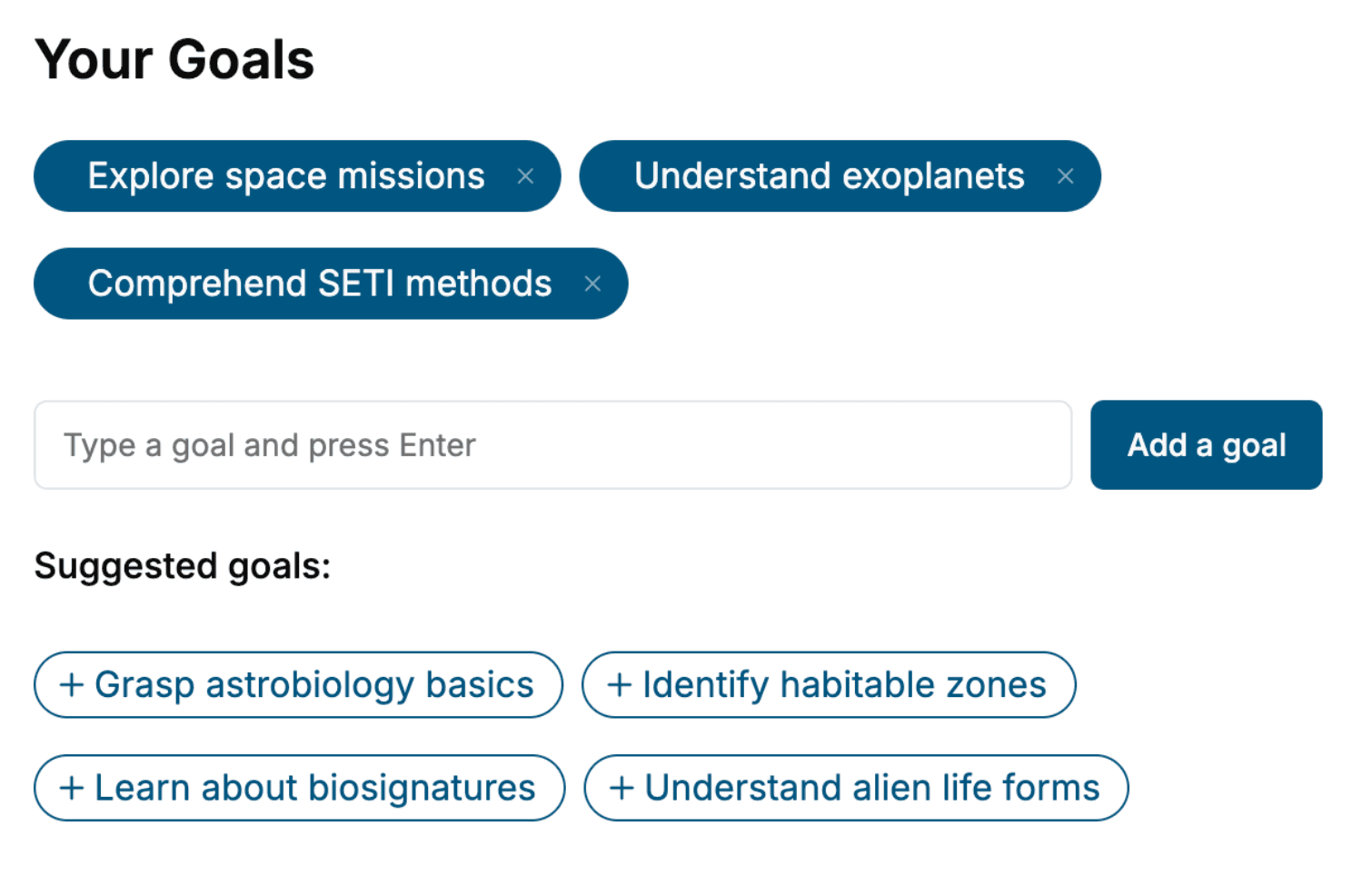
Tell us your goals and background, and get your own version of this book, tailored by AI to you.


Benefits of AI-tailored books
- Read one book, not ten:
- all the Algorithms knowledge you need, gathered into a single book.
- Save days of learning:
- tell us your goals, choose your topics, and the whole book is built around them.
- Learn effortlessly:
- Algorithms book written for your specific background and expertise.
- Understand at a glance:
- includes charts, tables, timelines, checklists, decision trees, and more.
- Stay current:
- written the day you order it, not years ago.
- Trust what you read:
- every book is checked for accuracy, with real research when your subject needs it.
Create your unique book in 3 steps
- 1. Select your focus
Select the focus of your Algorithms book and share your background
- 2. Personalize your book
Specify your goals and choose sub-topics to include
- 3. Get your tailored book
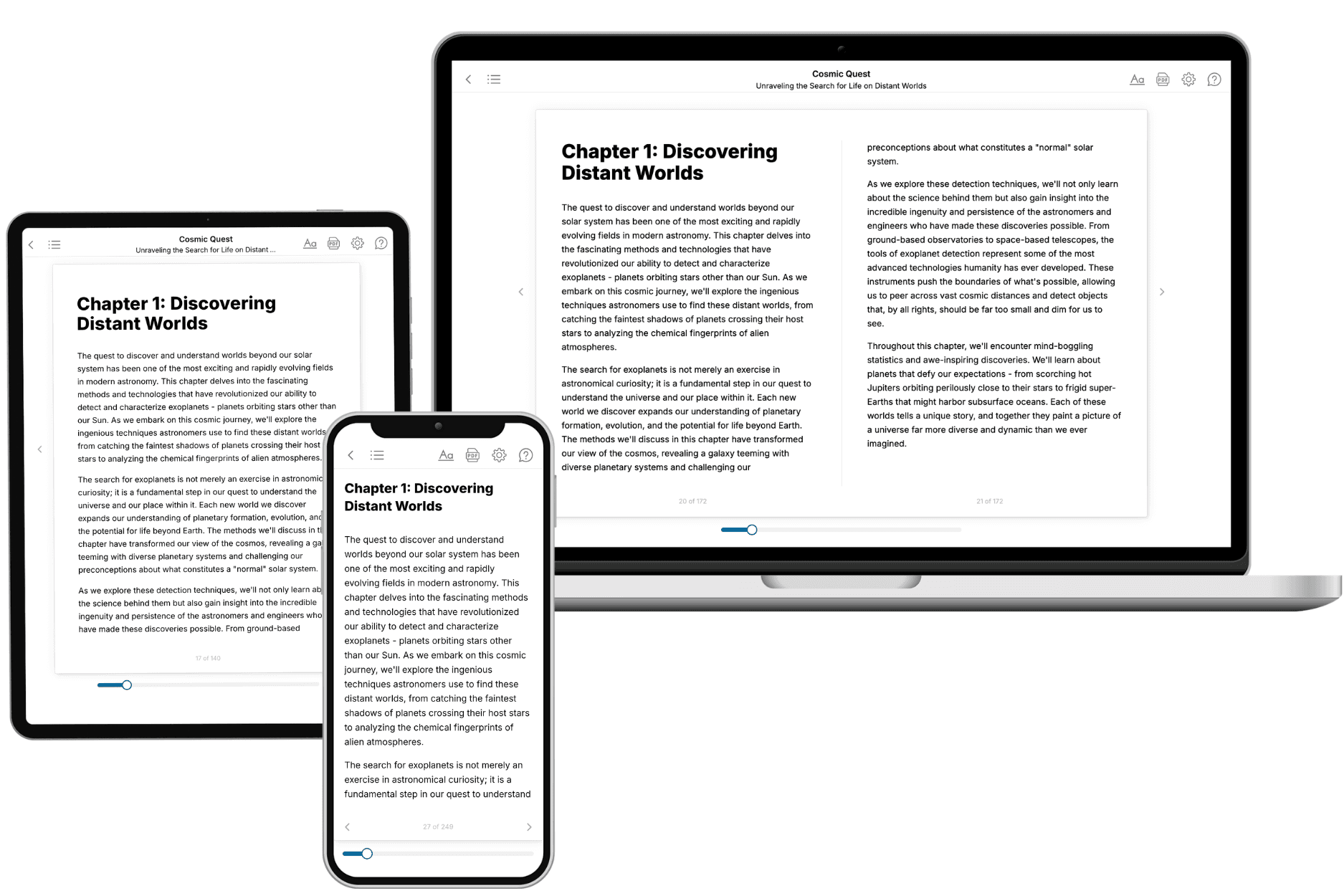
Your book is ready in 10 minutes. Read it online, download as EPUB or PDF, or send to Kindle.

Frequently asked questions
- What is TailoredRead?
TailoredRead creates complete, full-length nonfiction ebooks, written specifically for you. Tell us what you want to learn and why, and TailoredRead writes you a complete ebook on it, with charts, tables, and diagrams throughout. Read it online, on Kindle, or on any e-reader, or download it as a PDF or EPUB. Every book is written fresh the day you order it.
- How is the book tailored to me?
Before anything is written, you answer a few short questions about your goals, your background, and the topics you care about. Your book is then planned around your answers: written at your level, focused on your goals, and covering the topics you chose, instead of the one-size-fits-all book a store sells everyone.
- Will it read like generic AI content?
No. Your book isn't a chat transcript: it's planned chapter by chapter before a single word is written, told in a clear book voice, and explains ideas visually with charts, tables, and diagrams. After writing, every book goes through an editorial pass that polishes chapters so the book reads consistent from start to finish. Judge for yourself: browse thousands of sample books on our Explore Books page.
- How accurate is the content?
Our AI first checks whether your subject needs live research. Niche and fast-moving subjects are researched before writing, and the book plan and chapters are grounded in what it finds. After writing, every book goes through a quality pass that checks its facts and consistency, and researched books list their sources in a Notes section at the back.
- How long is the book?
You choose the length: Comprehensive (250-300 pages), Detailed (150-200 pages), Essential (70-100 pages), or Short (30-50 pages).
- Does the book include visuals?
Yes. Every book includes charts, tables, and diagrams: timelines, checklists, step-by-step guides, decision trees, comparison tables, matrices, and bar charts. A typical book includes dozens of these visual elements.
- Can I read it on Kindle? What formats can I download?
Yes. Every book can be read in our online reader or downloaded as a PDF or EPUB. The EPUB can be opened with Kindle, Apple Books, Kobo, and any e-reader. The Commercial and Author licenses also include an editable Word (DOCX) and Markdown download.
- How much does it cost?
About the price of a regular ebook. The exact price depends on your book's length and complexity, from $2 for the shortest books to $35 for the most comprehensive, and it's shown when you review your book, before you commit to anything. Each book is a one-time purchase, yours to keep, no subscription. Licenses that let you share, teach, or publish your book range from $35.99 to $49.99.
- Can I preview the book before purchasing?
Before you pay, you'll see what your book will cover: the title, a detailed description, the estimated length, and the complete chapter-by-chapter table of contents, so you know what you're getting before you decide. The full text itself is written after you purchase.
- How long does it take to create a book?
About 10 minutes. You can start reading the opening chapters while the rest is still being written.