Lucene Mastery
Advanced Techniques for Building High-Performance Search Applications
Imagine having the power to create lightning-fast, highly accurate search applications that can handle millions of documents with ease.
501 pages29 chaptersMar 7, 2025Software DevelopmentCreated by Chris
About this book
Picture yourself confidently implementing advanced features like geospatial search, custom analyzers, and distributed search architectures. With "Lucene Mastery: Advanced Techniques for Building High-Performance Search Applications," you'll turn these visions into reality. This comprehensive guide is tailored for experienced software engineers who are ready to take their Lucene skills to the next level. You'll dive deep into the intricacies of Lucene, exploring advanced topics such as query optimization, custom scoring algorithms, and memory management techniques that will supercharge your search applications. From fine-tuning relevance to implementing near-real-time search capabilities, this book covers the cutting-edge features that set exceptional search applications apart. You'll learn how to leverage Lucene's powerful plugin architecture, master the art of efficient indexing, and gain insights into the underlying data structures that make Lucene so performant. Whether you're building a sophisticated e-commerce platform, a content discovery system, or a large-scale analytics tool, "Lucene Mastery" will equip you with the knowledge and techniques to create search solutions that are fast, accurate, and scalable. Get ready to become the go-to Lucene expert in your organization and take your search applications to unprecedented heights.
Table of contents
- IntroductionOverview of Lucene and Its Importance, How This Book Is Structured, Prerequisites and Setup, Introduction to Advanced Lucene ConceptsRead below
- Chapter 1: Query Optimization TechniquesAnalyzing Query Performance, Writing Efficient Queries, Query Caching Strategies, Query Rewriting for Optimization
- Chapter 2: Designing Custom AnalyzersUnderstanding Analyzer Components, Creating Custom Tokenizers, Building Effective Token Filter Chains, Language-Specific Analysis Techniques
- Chapter 3: Implementing Faceted SearchTypes of Facets and Their Use Cases, Indexing Strategies for Faceted Search, Efficient Facet Aggregation Techniques, Implementing Dynamic Faceting
- Chapter 4: Optimizing Indexing SpeedIdentifying Indexing Bottlenecks, Concurrent Indexing Techniques, Bulk Indexing Strategies, Index Optimization and Maintenance
- Chapter 5: Developing Custom ScorersUnderstanding Lucene's Scoring Mechanism, Implementing Custom Similarity Measures, Advanced Boosting Techniques, Utilizing Function Queries for Scoring
- Chapter 6: Extending Lucene with PluginsUnderstanding Lucene's Plugin Architecture, Creating Custom Query Types, Developing Custom TokenFilters, Deploying and Managing Plugins
- Chapter 7: Advanced Query ParsingUnderstanding Query Syntax and Operators, Building a Custom QueryParser, Query Expansion Techniques, Optimizing Query Parsing Performance
- Chapter 8: Scaling Lucene for Large DatasetsSharding Strategies for Lucene, Distributed Indexing Architectures, Query Routing and Aggregation, Replication and Consistency Considerations
- Chapter 9: Implementing Geospatial SearchIndexing Spatial Data in Lucene, Performing Spatial Queries, Efficient Distance Calculations, Geospatial Faceting and Filtering
- Chapter 10: Advanced Tokenization TechniquesAddressing Complex Tokenization Challenges, Multilingual and Unicode Tokenization, Handling Compound Words and Phrases, Implementing Domain-Specific Tokenizers
- Chapter 11: Optimizing Index StructuresUnderstanding Lucene Index Formats, Choosing Optimal Field Types, Leveraging DocValues for Efficient Sorting, Index Compression Techniques
- Chapter 12: Implementing Fuzzy MatchingUnderstanding Edit Distance Algorithms, Configuring and Optimizing Fuzzy Queries, Implementing Phonetic Matching, Building Fuzzy Suggestion Systems
- Chapter 13: Mastering Relevance TuningUnderstanding Relevance Factors, Field Boosting Strategies, Query-Time Boosting Techniques, Testing and Measuring Relevance
- Chapter 14: Enhancing Query PerformanceQuery Profiling and Analysis, Filter Caching Strategies, Query Result Caching, Implementing Parallel Search Execution
- Chapter 15: Implementing Near-Real-Time SearchUnderstanding Near-Real-Time Concepts, Optimizing Indexing for NRT, Searching in NRT Scenarios, Managing NRT Trade-offs
- Chapter 16: Creating Custom FiltersTypes of Filters and Their Use Cases, Implementing Efficient BitSet Filters, Creating Dynamic Filters, Filter Caching and Reuse Strategies
- Chapter 17: Memory Optimization TechniquesAnalyzing Lucene's Memory Usage, Implementing Efficient Caching Strategies, Utilizing Off-Heap Storage, Garbage Collection Tuning for Lucene
- Chapter 18: Implementing Search HighlightingUnderstanding Different Highlighter Types, Creating a Custom Fragmenter, Optimizing Highlighting Performance, Handling Multilingual Highlighting
- Chapter 19: Mastering Distributed SearchDesigning Distributed Search Architectures, Shard Allocation and Balancing, Executing and Aggregating Distributed Queries, Implementing Fault Tolerance in Distributed Search
- Chapter 20: Enhancing Search AccuracyBalancing Precision and Recall, Query Expansion and Refinement Techniques, Implementing Semantic Search Capabilities, Leveraging Machine Learning for Improved Accuracy
- Chapter 21: Advanced Lucene Caching StrategiesUnderstanding Lucene's Caching Mechanisms, Implementing Custom Cache Solutions, Cache Eviction Policies and Strategies, Caching in Distributed Environments
- Chapter 22: Optimizing Inverted IndexesUnderstanding Inverted Index Structure, Index Compression Techniques, Efficient Index Update Strategies, Implementing Custom Codecs
- Chapter 23: Mastering Wildcard QueriesOptimizing Wildcard Query Performance, Utilizing N-gram Indexes for Wildcards, Implementing Automaton Queries, Understanding and Mitigating Wildcard Limitations
- Chapter 24: Implementing Synonym ExpansionTypes of Synonyms and Their Applications, Creating and Managing Synonym Mappings, Query-Time vs. Index-Time Synonym Expansion, Handling Multilingual Synonyms
- Chapter 25: Lucene Benchmarking TechniquesDefining Relevant Benchmark Metrics, Using Lucene Benchmark Tools, Creating Custom Benchmark Scenarios, Analyzing and Interpreting Benchmark Results
- Chapter 26: Optimizing Phrase QueriesIndexing Strategies for Phrase Queries, Understanding and Utilizing Slop Factor, Implementing Proximity Boosting, Efficient Phrase Query Highlighting
- Chapter 27: Leveraging Term VectorsUnderstanding Term Vector Types and Uses, Indexing and Storing Term Vectors, Applications of Term Vectors in Search, Performance Considerations for Term Vectors
- Chapter 28: Managing Lucene ConcurrencyImplementing Concurrent Readers, Understanding Writer Locking Mechanisms, Concurrency in Near-Real-Time Search, Ensuring Thread Safety in Custom Components
- Chapter 29: Advanced Span QueriesUnderstanding Different Types of Span Queries, Implementing SpanNearQuery for Proximity Search, Using SpanOrQuery for Complex Matching, Creating Custom Span Queries
- ConclusionFuture Trends in Lucene and Search Technology, Best Practices and Key Takeaways
- AppendixThe Lucene Ecosystem and Related Projects, Performance Tuning Cheat Sheet
Introduction
Welcome to "Lucene Mastery: Advanced Techniques for Building High-Performance Search Applications." This comprehensive guide is designed to take your Lucene skills to the next level, empowering you to create lightning-fast, highly accurate search applications capable of handling millions of documents with ease. As an experienced software engineer with a solid foundation in computer science, you're about to embark on a journey that will transform you into a Lucene expert, equipped with the knowledge to implement advanced features and optimize search functionality in ways you may have never thought possible.
In today's data-driven world, the ability to efficiently search and retrieve information is more critical than ever. Whether you're working on an e-commerce platform, a content management system, or a large-scale analytics tool, the techniques you'll learn in this book will be invaluable. Lucene, with its powerful and flexible architecture, stands at the forefront of search technology, and mastering its advanced features will set you apart in the field of search engineering.
Throughout this book, you'll dive deep into the intricacies of Lucene, exploring topics that go far beyond basic indexing and searching. You'll learn how to fine-tune query performance, implement custom analyzers for precise text processing, leverage faceted search for intuitive navigation, and much more. Each chapter is designed to build upon your existing knowledge, introducing advanced concepts and practical techniques that you can apply directly to your projects.
As we progress through the book, you'll not only gain theoretical knowledge but also hands-on experience through practical examples and real-world scenarios. By the end of this journey, you'll have the skills to create search solutions that are not just functional, but truly exceptional in terms of speed, accuracy, and scalability.
Overview of Lucene and Its Importance
Apache Lucene is an open-source, high-performance, full-featured text search engine library written entirely in Java. It is a technology suitable for nearly any application that requires full-text search, especially cross-platform. At its core, Lucene is remarkably simple yet powerful, providing the foundation for some of the most sophisticated search applications in use today.
The importance of Lucene in the modern software landscape cannot be overstated. In an era where data is growing exponentially, the ability to efficiently search through vast amounts of information has become crucial. Lucene excels in this domain, offering a robust set of tools for indexing and searching text. Its flexibility allows it to be used in a wide range of applications, from simple website search functionality to complex enterprise-level search systems handling terabytes of data.
One of Lucene's key strengths is its scalability. It can handle everything from small, embedded applications to large-scale distributed systems. This scalability is achieved through its efficient indexing mechanisms and advanced query processing capabilities. Lucene's inverted index structure allows for fast full-text searches, while its query parser and various query types provide the flexibility to construct complex search criteria.
Another critical aspect of Lucene is its extensibility. The library is designed with a modular architecture, allowing developers to customize and extend its functionality to meet specific requirements. This extensibility is particularly important for advanced use cases, where off-the-shelf solutions may not suffice. Throughout this book, you'll learn how to leverage this extensibility to create custom components that enhance Lucene's capabilities for your unique search needs.
Lucene's performance is another factor that sets it apart. Its efficient algorithms and data structures enable it to handle large volumes of data with minimal resource consumption. This performance aspect is crucial for applications that require real-time or near-real-time search capabilities, a topic we'll explore in depth later in this book.
Furthermore, Lucene's language analysis capabilities make it an excellent choice for multilingual applications. It provides built-in support for many languages and allows for the creation of custom analyzers to handle specific linguistic nuances. This feature is particularly valuable in our increasingly globalized digital landscape, where applications often need to cater to users from diverse linguistic backgrounds.
As we delve deeper into advanced Lucene concepts, you'll gain a greater appreciation for the library's design and capabilities. You'll learn how to harness these features to create search applications that not only meet but exceed user expectations in terms of speed, accuracy, and functionality.
How This Book Is Structured
"Lucene Mastery" is structured to provide a comprehensive and logical progression through advanced Lucene concepts and techniques. Each chapter builds upon the knowledge gained in previous sections, gradually increasing in complexity and depth. This approach ensures that you can steadily enhance your understanding and skills as you work through the book.
The book begins with an exploration of query optimization techniques, laying the foundation for efficient search operations. From there, we delve into the creation of custom analyzers, a crucial skill for tailoring Lucene to specific text processing requirements. Subsequent chapters cover a wide range of advanced topics, including faceted search implementation, indexing speed optimization, and the development of custom scoring algorithms.
As you progress, you'll encounter chapters dedicated to extending Lucene through plugins, mastering advanced query parsing, and scaling Lucene for large datasets. These sections are particularly valuable for those working on enterprise-level applications or dealing with big data scenarios. The book also covers specialized search functionalities such as geospatial search and fuzzy matching, broadening your toolkit for diverse search requirements.
Later chapters focus on fine-tuning and optimizing various aspects of Lucene, including relevance tuning, query performance enhancement, and memory optimization. These topics are crucial for creating high-performance search applications that can handle real-world demands. The book concludes with advanced topics such as distributed search architectures, caching strategies, and benchmarking techniques, providing you with a comprehensive skill set for tackling complex search challenges.
Each chapter is designed to be both theoretical and practical. You'll find in-depth explanations of concepts, followed by concrete examples and code snippets that illustrate how to implement these concepts in real-world scenarios. This balance of theory and practice ensures that you not only understand the "why" behind advanced Lucene techniques but also learn the "how" of implementing them effectively.
Throughout the book, you'll find callouts highlighting important points, tips for best practices, and warnings about common pitfalls. These elements are designed to reinforce key concepts and help you avoid typical mistakes that even experienced developers might make when working with advanced Lucene features.
At the end of each chapter, you'll find a summary of key takeaways and a set of exercises or challenges. These are intended to help solidify your understanding and encourage you to experiment with the concepts you've learned. By completing these exercises, you'll gain hands-on experience and confidence in applying advanced Lucene techniques to real-world problems.
The book also includes an extensive appendix covering the broader Lucene ecosystem and related projects. This section provides valuable context for understanding how Lucene fits into the larger world of search technology and points you towards additional resources for further exploration.
By structuring the book in this way, we aim to provide a comprehensive learning experience that takes you from an experienced Lucene user to a true Lucene master, capable of designing, implementing, and optimizing sophisticated search solutions for any application or scale.
Prerequisites and Setup
Before diving into the advanced concepts covered in this book, it's important to ensure that you have the necessary background knowledge and tools set up. While "Lucene Mastery" is designed for experienced software engineers, a quick review of the prerequisites will help you get the most out of this advanced guide.
First and foremost, a solid understanding of Java programming is essential. Lucene is written in Java, and all examples in this book will be in Java. You should be comfortable with object-oriented programming concepts, Java syntax, and common Java libraries. Familiarity with Java 8 or later versions is recommended, as some examples may utilize features introduced in recent Java releases.
A basic understanding of search concepts is also necessary. You should be familiar with terms like indexing, querying, tokenization, and relevance scoring. If you've worked with Lucene before, even at a basic level, you'll have a good foundation for the advanced topics we'll cover. However, if you need a refresher, the official Lucene documentation is an excellent resource.
In terms of development environment, you'll need a Java Development Kit (JDK) installed on your system. This book assumes you're using JDK 8 or later. You'll also need an Integrated Development Environment (IDE) of your choice. Popular options include IntelliJ IDEA, Eclipse, or NetBeans. Ensure that your IDE is properly configured for Java development.
For dependency management and build automation, we'll be using Apache Maven throughout this book. If you're not familiar with Maven, it's worth taking some time to understand its basics. Maven will help us manage Lucene dependencies and build our projects consistently.
To set up your development environment for the examples in this book, follow these steps:
- Install the latest version of the JDK (Java 8 or later) from the official Oracle website or adopt OpenJDK.
- Install your preferred IDE (IntelliJ IDEA, Eclipse, or NetBeans).
- Install Apache Maven from the official Apache Maven website.
- Create a new Maven project in your IDE.
- Add the following Lucene dependencies to your project's pom.xml file:
<dependencies> <dependency> <groupId>org.apache.lucene</groupId> <artifactId>lucene-core</artifactId> <version>8.8.2</version> </dependency> <dependency> <groupId>org.apache.lucene</groupId> <artifactId>lucene-analyzers-common</artifactId> <version>8.8.2</version> </dependency> <dependency> <groupId>org.apache.lucene</groupId> <artifactId>lucene-queryparser</artifactId> <version>8.8.2</version> </dependency> </dependencies> - Refresh your Maven project to download the dependencies.
With this setup, you'll be ready to run all the examples provided in the book and experiment with your own Lucene implementations. Remember to check for the latest Lucene version and update your dependencies accordingly, as new versions may be released after the publication of this book.
Additionally, it's recommended to have a good understanding of data structures and algorithms, as many advanced Lucene concepts build upon these fundamental computer science principles. Familiarity with concurrent programming concepts will also be beneficial, especially when we discuss topics like concurrent indexing and searching.
Throughout the book, we'll introduce additional tools and libraries as needed for specific topics. These will be clearly explained and setup instructions will be provided within the relevant chapters.
By ensuring you have these prerequisites in place, you'll be well-prepared to dive into the advanced world of Lucene and make the most of the knowledge and techniques presented in this book. Remember, the key to mastering Lucene is not just reading, but also practicing and experimenting with the concepts you learn. So, set up your environment, roll up your sleeves, and get ready to become a Lucene expert!
Introduction to Advanced Lucene Concepts
As we embark on this journey to master Lucene, it's crucial to understand the landscape of advanced concepts that we'll be exploring throughout this book. These concepts form the backbone of sophisticated search applications and will enable you to push Lucene to its limits, extracting maximum performance and functionality.
One of the fundamental advanced concepts in Lucene is the deep understanding and optimization of the inverted index. While you may be familiar with the basic idea of an inverted index, we'll delve into its intricacies, exploring how Lucene structures and manages this critical data structure. You'll learn about index segments, merging strategies, and how to optimize the index for different use cases, whether it's for fast indexing, quick searching, or a balance between the two.
Query optimization is another crucial area we'll explore in depth. Beyond simple keyword matching, you'll learn how to construct and optimize complex queries that can handle intricate search requirements. This includes understanding the various query types provided by Lucene, such as BooleanQuery, PhraseQuery, and SpanQuery, and knowing when and how to use each for maximum efficiency. We'll also cover advanced techniques like query rewriting and caching strategies to boost query performance.
Custom scoring and relevance tuning form another pillar of advanced Lucene usage. You'll learn how to go beyond Lucene's default scoring mechanisms to implement domain-specific relevance models. This involves understanding Lucene's scoring formula in detail, implementing custom Similarity classes, and utilizing features like function queries and query-time boosting to fine-tune search results for your specific use case.
Analyzers and tokenization are at the heart of Lucene's text processing capabilities. While you may have used standard analyzers before, we'll explore how to create custom analyzers tailored to specific languages or domains. You'll learn about the various components of an analyzer - character filters, tokenizers, and token filters - and how to combine them to handle complex text analysis requirements. We'll also delve into advanced tokenization techniques for handling challenges like compound words, acronyms, and domain-specific terminology.
Faceted search is a powerful feature that enhances the user experience by allowing intuitive navigation of search results. We'll explore different types of faceting, including taxonomy-based and dynamic faceting, and learn how to implement these efficiently in Lucene. You'll understand the indexing strategies required for faceted search and how to optimize facet computation for large result sets.
As we progress, we'll delve into more specialized search capabilities. Geospatial search, for instance, allows for location-based queries and is crucial for many modern applications. You'll learn how to index geographical data in Lucene and perform spatial queries efficiently. Similarly, we'll explore fuzzy matching and phonetic search techniques, enabling your applications to handle misspellings and phonetic variations effectively.
Scalability is a critical concern for large-scale search applications. We'll explore techniques for scaling Lucene, including sharding strategies, distributed indexing architectures, and efficient query routing in distributed environments. You'll learn how to design search systems that can handle billions of documents while maintaining low latency.
Memory management and caching strategies are vital for optimizing Lucene's performance, especially in resource-constrained environments. We'll discuss how to analyze and optimize Lucene's memory usage, implement efficient caching mechanisms, and tune garbage collection for Lucene applications.
Near-real-time search is another advanced capability that we'll explore. You'll learn how to implement search systems that can make newly indexed documents available for search almost immediately, a crucial feature for many modern applications requiring up-to-the-second search results.
Throughout the book, we'll also cover advanced topics like custom query parsers, efficient wildcard query handling, leveraging term vectors for advanced text analysis, and implementing sophisticated highlighting techniques. Each of these topics will be explored in depth, with practical examples and best practices to guide your implementation.
By mastering these advanced concepts, you'll be equipped to tackle complex search challenges and create search applications that are not just functional, but truly exceptional in terms of performance, accuracy, and user experience. Remember, the journey to mastering these concepts is as important as the destination. Each chapter will build upon the previous ones, gradually expanding your Lucene expertise and empowering you to push the boundaries of what's possible with search technology.
This is the end of the free sample. The full book has 29 chapters.
Want this book written for you?
Tell us your goals and background, and get your own version of this book, tailored by AI to you.


Benefits of AI-tailored books
- Read one book, not ten:
- all the Software Development knowledge you need, gathered into a single book.
- Save days of learning:
- tell us your goals, choose your topics, and the whole book is built around them.
- Learn effortlessly:
- Software Development book written for your specific background and expertise.
- Understand at a glance:
- includes charts, tables, timelines, checklists, decision trees, and more.
- Stay current:
- written the day you order it, not years ago.
- Trust what you read:
- every book is checked for accuracy, with real research when your subject needs it.
Create your unique book in 3 steps
- 1. Select your focus
Select the focus of your Software Development book and share your background
- 2. Personalize your book
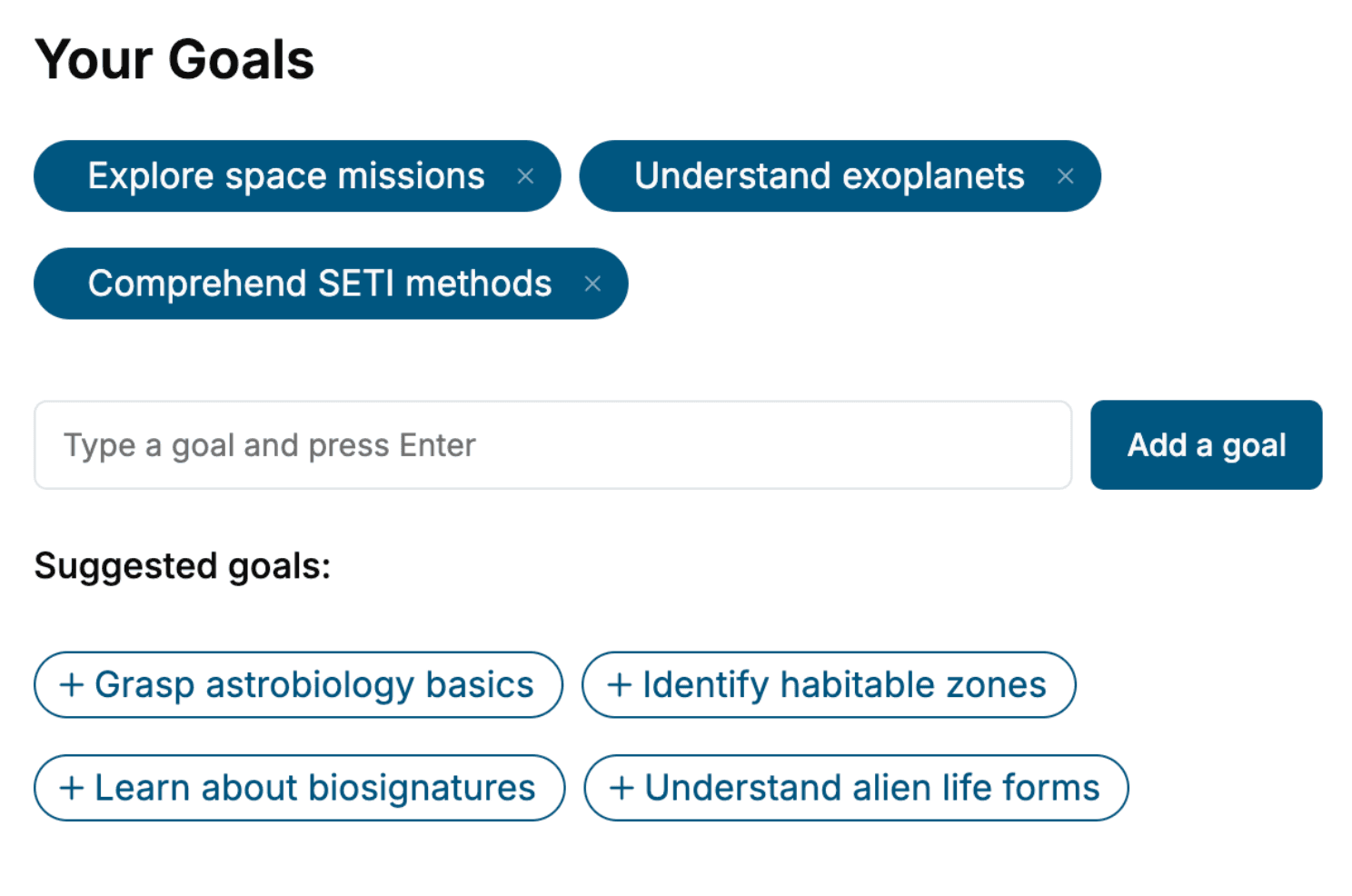
Specify your goals and choose sub-topics to include
- 3. Get your tailored book
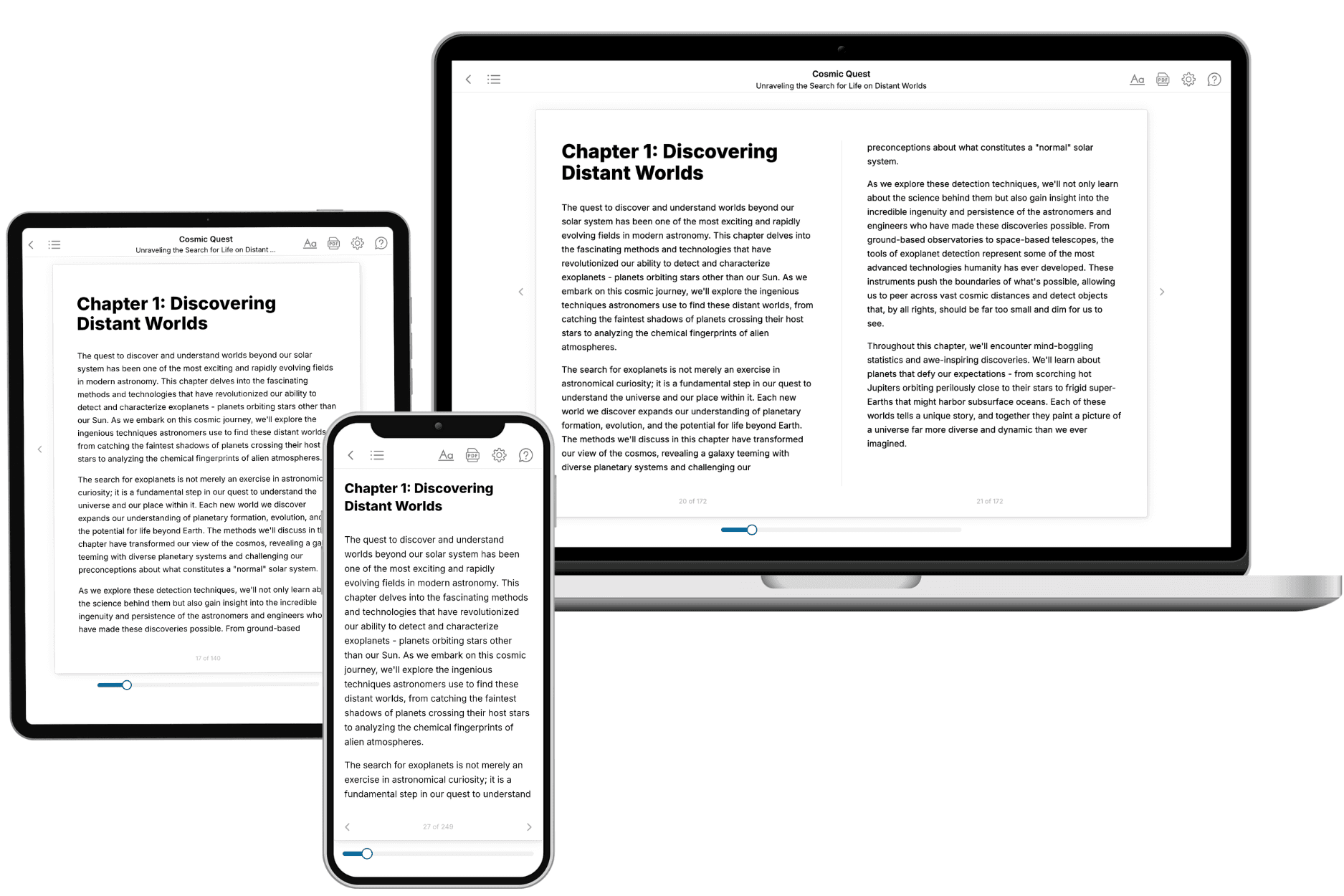
Your book is ready in 10 minutes. Read it online, download as EPUB or PDF, or send to Kindle.

Frequently asked questions
- What is TailoredRead?
TailoredRead creates complete, full-length nonfiction ebooks, written specifically for you. Tell us what you want to learn and why, and TailoredRead writes you a complete ebook on it, with charts, tables, and diagrams throughout. Read it online, on Kindle, or on any e-reader, or download it as a PDF or EPUB. Every book is written fresh the day you order it.
- How is the book tailored to me?
Before anything is written, you answer a few short questions about your goals, your background, and the topics you care about. Your book is then planned around your answers: written at your level, focused on your goals, and covering the topics you chose, instead of the one-size-fits-all book a store sells everyone.
- Will it read like generic AI content?
No. Your book isn't a chat transcript: it's planned chapter by chapter before a single word is written, told in a clear book voice, and explains ideas visually with charts, tables, and diagrams. After writing, every book goes through an editorial pass that polishes chapters so the book reads consistent from start to finish. Judge for yourself: browse thousands of sample books on our Explore Books page.
- How accurate is the content?
Our AI first checks whether your subject needs live research. Niche and fast-moving subjects are researched before writing, and the book plan and chapters are grounded in what it finds. After writing, every book goes through a quality pass that checks its facts and consistency, and researched books list their sources in a Notes section at the back.
- How long is the book?
You choose the length: Comprehensive (250-300 pages), Detailed (150-200 pages), Essential (70-100 pages), or Short (30-50 pages).
- Does the book include visuals?
Yes. Every book includes charts, tables, and diagrams: timelines, checklists, step-by-step guides, decision trees, comparison tables, matrices, and bar charts. A typical book includes dozens of these visual elements.
- Can I read it on Kindle? What formats can I download?
Yes. Every book can be read in our online reader or downloaded as a PDF or EPUB. The EPUB can be opened with Kindle, Apple Books, Kobo, and any e-reader. The Commercial and Author licenses also include an editable Word (DOCX) and Markdown download.
- How much does it cost?
About the price of a regular ebook. The exact price depends on your book's length and complexity, from $2 for the shortest books to $35 for the most comprehensive, and it's shown when you review your book, before you commit to anything. Each book is a one-time purchase, yours to keep, no subscription. Licenses that let you share, teach, or publish your book range from $35.99 to $49.99.
- Can I preview the book before purchasing?
Before you pay, you'll see what your book will cover: the title, a detailed description, the estimated length, and the complete chapter-by-chapter table of contents, so you know what you're getting before you decide. The full text itself is written after you purchase.
- How long does it take to create a book?
About 10 minutes. You can start reading the opening chapters while the rest is still being written.