Graph Theory Books
Explore tailored Graph Theory books created by our AI
Many people approach network theory as a purely graph-theoretic discipline, missing the profound insights that linear algebra brings to understanding complex systems. Without the right mathematical framework, analyzing large networks becomes computationally intractable and conceptually opaque. This book bridges that gap by showing you how matrices, eigenvalues, and linear transformations unlock the hidden structure of networks. You'll discover how adjacency and Laplacian matrices transform network questions into solvable linear algebra problems. Through spectral analysis, you'll learn to identify communities, measure centrality, and predict network behavior. The book connects abstract mathematical concepts to concrete applications, from ranking web pages to modeling epidemic spread. Each chapter builds systematically on linear algebra foundations while introducing network-specific techniques. You'll work through the mathematics of random walks, explore how eigenvalues reveal network connectivity, and understand why certain networks are robust while others are fragile. By the end, you'll possess a powerful toolkit for analyzing any networked system—from social networks to neural circuits—with mathematical rigor and computational efficiency.
Connected Insights
Mastering Graph Theory and Its Applications in the Real World
Feeling overwhelmed by the abstract nature of graph theory? You're not alone. Many students and professionals struggle to see the relevance of this mathematical field in their daily lives. But what if you could unlock the power of graphs to solve complex problems in various industries? Connected Insights: Mastering Graph Theory and Its Applications in the Real World is your gateway to understanding and harnessing the potential of graph theory. This book takes you on a journey from the fundamental concepts to advanced applications, showing you how to model and analyze real-world scenarios using graphs. You'll discover how graph theory is used to optimize transportation networks, enhance social media algorithms, and even solve puzzles. Through practical examples and engaging exercises, you'll develop the skills to apply graph theory to your own field of study or work. By the end of this book, you'll have the confidence to tackle complex problems using graph theory, giving you a competitive edge in your academic and professional pursuits.
Riemannian Geometry and Graphs
A Comprehensive Guide for Urban Planners and Spatial Analysts
Embark on a transformative journey into the world of Riemannian geometry and its applications to graph theory with this groundbreaking book. Tailored for urban planners, spatial analysts, and interdisciplinary researchers, this comprehensive guide bridges the gap between abstract mathematical concepts and real-world applications. You'll start with the fundamentals of manifolds and metric tensors, gradually progressing to more advanced topics such as spectral graph theory, Ricci flow, and differential forms. Each chapter builds upon the last, providing you with a solid foundation in Riemannian geometry while simultaneously exploring its connections to graph theory and urban planning. Through clear explanations, intuitive examples, and practical exercises, you'll gain the tools to enhance your spatial analysis skills, improve your research methods, and integrate sophisticated mathematical concepts into your work. Whether you're looking to collaborate with experts in the field or teach advanced concepts, this book will equip you with the knowledge and confidence to excel in your professional endeavors.
Many programmers think minimum spanning trees are just academic exercises with little practical value. This misconception leads to missed opportunities in network optimization, data clustering, and countless other domains where MST algorithms provide elegant solutions to complex problems. This comprehensive guide bridges the gap between theory and practice, taking you from fundamental graph concepts to advanced MST implementations. You'll discover how companies like Google use MST algorithms for network infrastructure, how image processing applications rely on MST-based segmentation, and how approximation algorithms leverage MST properties to solve otherwise intractable problems. Through clear explanations, detailed pseudocode, and practical examples, you'll master both Kruskal's and Prim's algorithms, understand when to use each approach, and learn to implement them efficiently using modern data structures. The book covers essential topics like Union-Find optimization, priority queue selection, and handling edge cases that often trip up even experienced developers. Whether you're preparing for technical interviews, working on network design projects, or simply want to deepen your algorithmic knowledge, this book provides the complete foundation you need to confidently apply minimum spanning tree algorithms in your work.
Network design decisions often feel overwhelming when you lack a systematic framework for evaluating options. Without mathematical grounding, you're left guessing about topology choices, routing strategies, and resource allocation—decisions that directly impact performance, cost, and reliability. This book bridges the gap between abstract mathematics and practical network engineering. You'll discover how graph theory reveals optimal network structures, how combinatorics solves resource allocation puzzles, and how algorithm analysis predicts real-world performance. Each concept connects directly to tangible network design challenges: minimizing latency, reducing costs, improving redundancy, and scaling efficiently. Rather than overwhelming you with proofs, this guide focuses on understanding the principles and applying them to networks you'll actually build. You'll work through concrete examples, see how mathematical models translate to design decisions, and learn when to prioritize mathematical optimality versus practical constraints. Whether you're designing enterprise networks, optimizing data center architectures, or planning infrastructure expansion, these mathematical tools become your competitive advantage.
Picture yourself confidently tackling any pathfinding challenge that comes your way. Whether you're building a GPS navigation system, optimizing network routes, or creating intelligent game AI, you'll have the algorithmic foundation to solve complex routing problems with elegance and efficiency. This comprehensive guide takes you deep into Dijkstra's Algorithm and the broader world of graph-based pathfinding. You'll discover how this fundamental algorithm powers everything from Google Maps to internet routing protocols, and learn to implement it from scratch with confidence. Through clear explanations, practical examples, and hands-on coding exercises, you'll build an intuitive understanding of how shortest path algorithms work and when to apply them. Beyond the core algorithm, you'll explore advanced variations like A*, bidirectional search, and specialized techniques for different graph types. You'll learn to optimize performance using priority queues, handle edge cases gracefully, and avoid common implementation pitfalls that trip up even experienced developers. By the end of this book, you'll possess a complete toolkit for solving pathfinding problems across domains. You'll understand not just how these algorithms work, but why they work, giving you the insight to adapt and extend them for your specific needs. Whether you're preparing for technical interviews, building production systems, or simply expanding your algorithmic knowledge, this book provides the depth and practical focus you need to truly master shortest path algorithms.
Networks in Motion
How Network Science Shapes Better Decisions in AI and Machine Learning
Make smarter decisions by understanding the hidden networks that shape outcomes in AI and machine learning. Network science reveals how connections matter as much as individual data points—and how to leverage that insight for better predictions and decisions. This book teaches you to see systems as networks, apply graph theory to real problems, and build machine learning models that account for relational structure. You'll learn practical frameworks for mapping decision networks, identifying influential nodes, detecting communities, and predicting cascading effects. Whether you're optimizing recommendation systems, improving organizational decisions, or building more robust AI models, network thinking provides the missing perspective that transforms how you approach complex problems. Grounded in both theory and application, this guide makes network science accessible and immediately useful for practitioners working at the intersection of data science, AI, and decision-making.
Imagine confidently tackling any network problem that comes your way—whether you're optimizing delivery routes, analyzing social networks, or designing efficient communication systems. You'll understand not just how algorithms work, but why they work, and when to apply them. This book bridges the gap between theoretical computer science and practical algorithm design. You'll explore the elegant mathematical structures underlying graph algorithms while developing the intuition needed to recognize which algorithmic approach fits each problem. From fundamental traversal techniques to advanced network flow algorithms, you'll build a comprehensive toolkit for solving complex computational challenges. You'll discover how computational complexity theory guides algorithmic choices, learn to identify when problems are tractable or inherently difficult, and master the art of algorithm analysis. Through clear explanations and rigorous analysis, you'll understand the trade-offs between different approaches and develop the judgment to make informed design decisions. Whether you're preparing for technical interviews, conducting research, or building production systems, you'll gain the deep understanding needed to work with graph algorithms confidently and effectively.
Graph Neural Networks Mastery
Build, Train, and Deploy Powerful Graph-Based AI Models
Master the art of building and training graph neural networks that solve complex real-world problems. This comprehensive guide takes you from foundational graph theory through advanced training techniques, equipping you with the knowledge to implement GNNs effectively in production environments. You'll explore how graphs represent relationships in data—from social networks to molecular structures—and learn why traditional neural networks fall short for these problems. Discover the message-passing paradigm that powers modern GNNs, explore leading architectures like Graph Convolutional Networks and Graph Attention Networks, and master the training strategies that separate successful implementations from failed experiments. Whether you're tackling node classification, link prediction, or graph-level tasks, this book provides the practical insights and technical depth needed to build models that deliver real business value. Includes implementation patterns, optimization techniques, and deployment considerations for production systems.
Picture yourself confidently selecting the perfect algorithm for any pathfinding challenge, whether you're optimizing network routing, planning efficient delivery routes, or solving complex computational problems. You'll have the deep understanding to analyze time complexity trade-offs and implement solutions that scale beautifully from small datasets to massive real-world applications. This comprehensive guide takes you beyond basic algorithm knowledge into the nuanced world of shortest path computation. You'll explore the mathematical foundations, analyze time complexity characteristics, and discover when to apply Dijkstra's algorithm versus Bellman-Ford, Floyd-Warshall, or specialized variants. Each algorithm is presented with clear explanations, visual representations, and practical implementation details that bridge theory with application. You'll master the art of choosing optimal data structures, understanding how priority queue implementations affect performance, and recognizing when graph preprocessing can dramatically improve query times. The book covers both classic algorithms and modern optimizations, providing you with a complete toolkit for tackling pathfinding challenges in any domain. By the final page, you'll possess the analytical skills to evaluate algorithm suitability, implement efficient solutions, and optimize performance for your specific use cases. Whether you're building navigation systems, analyzing social networks, or solving logistics problems, you'll have the expertise to choose and implement the most effective shortest path algorithms.
Combinatorial Connections
Unraveling the Interplay Between Combinatorics and Linear Algebra
Dive into the fascinating world of combinatorics and its intricate relationship with linear algebra. This book takes you on an enlightening exploration of mathematical structures, patterns, and their applications. You'll discover how combinatorial thinking enhances your understanding of linear algebraic concepts, and vice versa. Through clear explanations, engaging examples, and challenging exercises, you'll develop a deeper appreciation for the elegance of mathematical reasoning. From the foundations of set theory to advanced topics in graph theory and matrix combinatorics, this book guides you through the essential concepts with a perfect balance of theory and practice. As you progress, you'll uncover the beauty of mathematical connections, seeing how seemingly disparate ideas in combinatorics and linear algebra come together to solve complex problems. This book not only strengthens your mathematical toolkit but also hones your ability to think critically and creatively in approaching mathematical challenges.
Have you ever wondered why discrete mathematics and linear algebra are often taught separately when they share such profound connections? This comprehensive guide reveals the hidden relationships between these mathematical domains, showing you how concepts from one field illuminate and strengthen your understanding of the other. You'll discover how matrix operations can solve complex graph problems, how vector spaces provide elegant frameworks for discrete structures, and how algebraic thinking bridges the gap between finite and infinite mathematical systems. Through carefully crafted explanations and practical examples, you'll develop a unified mathematical perspective that enhances your problem-solving abilities across both discrete and continuous domains. Whether you're strengthening your mathematical foundation or seeking deeper insights into computational applications, this book provides the conceptual tools and practical techniques you need to master these interconnected fields with confidence and clarity.
Depth-First Search
Mastering the Fundamental Algorithm That Powers Modern Computing
What if the algorithm you learned in your first data structures course holds the key to solving some of computing's most challenging problems? Depth-first search appears deceptively simple, yet it powers everything from web crawlers and compiler design to game AI and network topology analysis. This book takes you beyond the textbook definition to explore how DFS actually works in practice. You'll discover why this traversal strategy excels at certain problems while struggling with others, master both recursive and iterative implementations, and learn to recognize the hidden DFS patterns in complex computational challenges. Through clear explanations, practical examples, and real-world applications, you'll develop an intuitive understanding of when and how to apply DFS effectively. Whether you're preparing for technical interviews, building sophisticated software systems, or simply want to think more algorithmically, this comprehensive guide provides the depth and clarity you need to truly master one of computer science's most versatile algorithms.
Imagine a world where you can effortlessly solve complex optimization problems, revolutionizing industries from logistics to circuit design. In "The Traveling Salesman's Dilemma," you'll dive deep into one of computer science's most intriguing puzzles: the Traveling Salesman Problem (TSP). This book takes you on an exhilarating journey through the realm of NP-Complete problems, unraveling the mysteries that have captivated computer scientists for decades. As you progress through the pages, you'll gain a solid foundation in computational complexity theory and discover how the TSP serves as a gateway to understanding a wide array of challenging problems. You'll explore cutting-edge algorithms and heuristics designed to tackle the TSP, equipping you with practical tools to approach similar optimization challenges in your own work. By the time you finish this book, you'll have a newfound appreciation for the elegance and importance of the Traveling Salesman Problem. You'll be able to analyze complex problems through the lens of NP-Completeness, and apply your knowledge to real-world scenarios. Whether you're a computer science student, a software engineer, or an algorithm enthusiast, this book will empower you to think critically about computational efficiency and inspire you to contribute to the ongoing quest for better solutions in the field of computer science.
Why do some algorithms feel intuitive while others remain mysterious, even after you've implemented them dozens of times? Depth-first search stands at the intersection of elegant simplicity and profound computational power, yet many practitioners never fully grasp its time complexity implications or recognize its hidden applications. This book bridges that gap by building your understanding from foundational graph theory through advanced algorithmic applications. You'll discover why DFS behaves the way it does, when to choose it over alternative approaches, and how to analyze its performance across different scenarios. Through clear explanations and practical examples, you'll develop an intuitive sense for recognizing DFS-solvable problems and implementing efficient solutions. Whether you're preparing for technical interviews, optimizing production code, or simply deepening your algorithmic knowledge, this comprehensive guide provides the insights you need to think like an expert about one of computer science's most versatile techniques.
Discrete Mathematics Decoded
Mastering the Foundations of Computer Science and Engineering
Think discrete mathematics is just a collection of abstract concepts with no real-world application? Think again. In "Discrete Mathematics Decoded," you'll discover how these fundamental structures form the backbone of modern computer science and engineering. From the binary code powering your smartphone to the algorithms optimizing your favorite apps, discrete mathematics is everywhere. This book demystifies complex concepts, making them accessible and engaging. You'll explore set theory, graph theory, and combinatorics, seeing how they directly apply to problem-solving in technology and beyond. Whether you're a student looking to excel in your coursework or a professional aiming to enhance your analytical skills, this book provides the tools you need. With clear explanations, practical examples, and challenging exercises, you'll develop a deep understanding of discrete structures and their far-reaching implications in our digital world.
Geometric Deep Learning
Harnessing the Power of Structure in Neural Networks
Discover how geometric principles can revolutionize your approach to neural network design and dramatically improve model performance. This comprehensive guide reveals why the structure of your data matters as much as the data itself, and how recognizing geometric properties leads to networks that learn faster, generalize better, and require fewer parameters. You'll explore the mathematical foundations that unify seemingly different architectures—from convolutional networks to graph neural networks—and learn practical techniques for applying these insights to real-world problems. Whether you're working with images, molecular structures, social networks, or any complex data, understanding geometric deep learning will enable you to build more efficient and interpretable models. This book bridges the gap between abstract mathematical theory and practical implementation, providing both the conceptual understanding and concrete examples needed to apply these powerful techniques in your research and projects.
Combinatorial optimization problems are everywhere, yet many professionals struggle to efficiently solve them in real-world scenarios. You've likely encountered the frustration of tackling NP-hard problems, only to find your solutions falling short in terms of performance or accuracy. "Mastering Combinatorial Optimization" is your comprehensive guide to conquering these challenges. This book bridges the gap between theoretical concepts and practical applications, providing you with a toolkit of powerful algorithms and techniques. You'll dive deep into the world of decision problems, exploring cutting-edge approaches to tackle issues in scheduling, routing, and resource allocation. Through clear explanations and hands-on examples, you'll learn how to model complex problems, design efficient algorithms, and implement effective solutions. By the end of this book, you'll have the confidence and skills to tackle even the most daunting combinatorial optimization challenges, opening up new possibilities in your work and research.
Embark on a journey through the fascinating world of Finite Mathematics with "Mastering Finite Math: A Student's Guide to Indiana Standards in Sets, Matrices, Networks, Optimization, and Probability." This comprehensive book is tailored specifically for high school students looking to excel in their math curriculum and build a strong foundation for future academic pursuits. Written in a clear, accessible, and engaging style, this guide breaks down complex concepts into easily digestible chunks. Each chapter is carefully crafted to align with Indiana Standards, ensuring that you're learning exactly what you need to succeed in your classes and beyond. From the basics of set theory to the intricacies of matrix operations, from the practical applications of network analysis to the powerful techniques of optimization, and the essential principles of probability, this book covers it all. Real-world examples and hands-on exercises will help you connect abstract mathematical concepts to everyday situations, making your learning experience both relevant and enjoyable. Whether you're struggling with these topics or looking to push your understanding to the next level, "Mastering Finite Math" provides the perfect balance of theory and practice. By the end of this book, you'll have the confidence and skills to tackle any Finite Math problem that comes your way, setting you up for success in your academic journey and beyond.
Matching Perfection
Unraveling the Stable Marriage Problem in Computer Science
Imagine a world where finding the perfect match isn't just a matter of chance, but a precise science. In the realm of computer algorithms, this world exists through the Stable Marriage Problem. You face the challenge of understanding complex matching scenarios that go beyond simple pairing. "Matching Perfection: Unraveling the Stable Marriage Problem in Computer Science" is your guide to mastering this fascinating algorithmic puzzle. You'll dive deep into the heart of matching theory, exploring how computers can create optimal, stable pairings in various scenarios. From the foundations of the problem to cutting-edge applications in network design and resource allocation, this book equips you with the knowledge to tackle complex matching challenges. You'll learn how to implement and optimize algorithms, analyze their efficiency, and apply these concepts to real-world problems. Whether you're a computer science student, a software engineer, or an algorithm enthusiast, this book will sharpen your problem-solving skills and expand your algorithmic toolkit. Get ready to see the world of matching in a whole new light and unlock the power of stable matching algorithms in your work and studies.
Build robust, efficient network routing solutions that scale with modern infrastructure demands. This comprehensive guide takes you through the essential algorithms that power today's internet and enterprise networks, from fundamental shortest-path algorithms to advanced multi-protocol routing strategies. You'll gain deep insights into how distance vector and link state protocols operate, when to apply Dijkstra's algorithm versus Bellman-Ford, and how to implement quality-of-service routing that meets specific application requirements. Each algorithm is presented with clear explanations, practical examples, and real-world implementation considerations that bridge the gap between theory and practice. The book covers both classical routing foundations and contemporary challenges, including load balancing techniques, network convergence optimization, and hierarchical routing strategies. You'll learn to analyze algorithm complexity, understand trade-offs between different approaches, and make informed decisions about which routing protocols best serve your network architecture. Whether you're designing enterprise networks, optimizing existing routing infrastructure, or preparing for advanced networking roles, this guide provides the algorithmic knowledge and practical insights needed to create reliable, high-performance routing solutions in today's complex network environments.
Dive deep into the fascinating world of computer network topologies and discover how these fundamental structures have shaped the digital landscape we know today. From the earliest mainframe connections to today's complex cloud infrastructures, you'll explore the evolution of network design through the lens of computer science history and algorithmic innovation. This comprehensive guide takes you through the mathematical foundations of graph theory that underpin all network designs, revealing how abstract concepts translate into real-world computing solutions. You'll examine classic topologies like bus, ring, and star configurations alongside modern mesh networks and software-defined architectures, understanding not just how they work, but why they emerged when they did. Through detailed analysis of algorithmic approaches to topology optimization, you'll gain insights into the decision-making processes that drive network design choices. Each topology's strengths, limitations, and ideal use cases are explored with practical examples that bridge theoretical knowledge with contemporary applications. Whether you're designing distributed systems, optimizing existing networks, or simply seeking to understand the architectural foundations of modern computing, this book provides the historical context, theoretical framework, and practical knowledge needed to master network topology concepts and apply them effectively in your work.
Algebra in Action
Mastering Operations Research Applications in Elementary Mathematics
You're about to take your mathematical skills to the next level. "Algebra in Action" is your gateway to mastering the fascinating world of operations research applications in elementary mathematics. This book bridges the gap between abstract algebraic concepts and real-world problem-solving, providing you with the tools to tackle complex challenges with confidence. Dive into a world where algebra comes alive through practical applications. You'll discover how mathematical models can optimize decision-making, streamline processes, and uncover hidden patterns in data. From supply chain management to resource allocation, you'll see how algebraic thinking drives innovation across industries. Whether you're a student looking to excel in your studies or a professional seeking to enhance your analytical toolkit, "Algebra in Action" offers a clear, engaging approach to operations research. With hands-on examples, step-by-step explanations, and thought-provoking exercises, you'll develop a deeper understanding of how algebra shapes the world around us. Get ready to see mathematics in a whole new light and become a more versatile problem-solver.
Mastering Dynamic Programming
A Practical Guide to Optimizing Operations Research Problems
Optimize complex decision-making processes and solve intricate operations research problems with ease. "Mastering Dynamic Programming" equips you with the tools to tackle multistage optimization challenges across various domains. Dive into the world of dynamic programming algorithms and discover how to break down complex problems into manageable subproblems. You'll learn to identify optimal substructures, implement efficient solutions, and apply these techniques to real-world scenarios in operations research. From understanding the fundamental principles to mastering advanced techniques, this book guides you through the intricacies of dynamic programming. Packed with practical examples, step-by-step explanations, and hands-on exercises, you'll develop the skills to design and implement powerful algorithms that drive operational efficiency and strategic decision-making.
The Strategic Mind
Mastering Game Theory for Mathematical Research
Embark on a fascinating journey into the world of game theory with "The Strategic Mind: Mastering Game Theory for Mathematical Research." This comprehensive guide is tailored for mathematics enthusiasts and students who are ready to elevate their understanding of this powerful analytical tool. In this book, you'll discover how game theory serves as a bridge between abstract mathematical concepts and real-world strategic decision-making. You'll explore the fundamental principles that underpin game theory, from the basics of player interactions to advanced equilibrium concepts. Each chapter builds upon the last, gradually expanding your knowledge and intuition about strategic thinking in mathematics. Whether you're interested in pure mathematics or its applications, "The Strategic Mind" offers invaluable insights into how game theory can enhance your problem-solving skills and research capabilities. By the end of this book, you'll have a robust framework for analyzing complex interactions, predicting outcomes, and optimizing strategies across various mathematical domains.
Petri Nets
A Comprehensive Guide to Modeling Concurrent Systems in Computer Science
You're navigating the complex world of concurrent systems, where multiple processes interact, compete for resources, and synchronize in ways that defy simple sequential logic. Traditional modeling approaches leave you struggling to capture the nuances of parallelism, deadlock, and nondeterminism that define modern computing systems. This comprehensive guide takes you deep into Petri nets, one of the most elegant and powerful formalisms for modeling concurrent systems. You'll discover how these mathematical structures combine intuitive graphical representations with rigorous analytical capabilities, enabling you to model everything from simple synchronization patterns to complex distributed algorithms. Starting with foundational concepts and building systematically toward advanced topics, you'll explore the mathematical properties that make Petri nets indispensable for system verification. You'll learn multiple analysis techniques—from reachability graphs to invariant methods—and understand how to apply them to real-world problems. Through careful examination of different Petri net classes, including colored and timed variants, you'll gain the flexibility to choose the right modeling approach for any concurrent system challenge. Whether you're designing communication protocols, analyzing workflow systems, or verifying algorithm correctness, this book equips you with the theoretical foundation and practical insights to master concurrent system modeling.
Master one of combinatorics' most powerful counting techniques and solve complex mathematical problems with confidence. This comprehensive guide takes you beyond basic set operations to develop deep expertise in the Inclusion-Exclusion Principle and its wide-ranging applications. You'll discover how to systematically approach counting problems that involve overlapping sets, from simple two-set scenarios to intricate multi-dimensional cases. Through carefully crafted examples and step-by-step explanations, you'll learn to identify when and how to apply this principle effectively, avoiding common pitfalls that trip up even experienced mathematicians. The book bridges theory with practice, showing you how the Inclusion-Exclusion Principle connects to other fundamental concepts in discrete mathematics, probability theory, and computer science. You'll explore advanced applications in number theory, graph theory, and algorithmic design, gaining the analytical tools needed to tackle challenging problems in academic and professional settings. Whether you're preparing for advanced coursework, competitive mathematics, or applying combinatorial methods in your field, this guide provides the comprehensive foundation you need to think clearly about complex counting scenarios and develop elegant solutions to seemingly intractable problems.
Imagine standing at the edge of mathematical discovery, where abstract concepts crystallize into profound insights and centuries-old conjectures yield to modern techniques. This book guides you through the most exciting frontiers of contemporary mathematics, from cutting-edge topology research to breakthrough developments in number theory and computational methods. You'll explore how advanced proof techniques—including category theory, homological algebra, and homotopy type theory—are reshaping mathematical practice. Discover how topological data analysis and spectral methods are revolutionizing data science, and understand why the Riemann Hypothesis remains mathematics' greatest unsolved challenge. Whether you're investigating chaos theory, mastering differential geometry, or exploring noncommutative geometry, this comprehensive exploration connects theory to application. Designed for self-taught mathematicians ready to engage with contemporary research, each chapter builds your abstract thinking skills while revealing how modern mathematics synthesizes insights across topology, algebra, analysis, and computation. Engage with the methods, concepts, and breakthroughs that define mathematical research today.
Graph Convolutional Networks
Mastering Advanced AI Techniques for Complex Data Structures
Elevate your AI and machine learning expertise with "Graph Convolutional Networks: Mastering Advanced AI Techniques for Complex Data Structures." This comprehensive guide takes you on a deep dive into the world of Graph Convolutional Networks (GCNs), equipping you with the knowledge and skills to harness their power in solving complex problems. You'll gain a thorough understanding of GCNs' fundamental concepts, their role in modern AI applications, and how they relate to perplexity in machine learning. Through practical examples and in-depth explanations, you'll learn to implement GCNs in various scenarios, from social network analysis to molecular structure prediction. By the end of this book, you'll have mastered the intricacies of Graph Convolutional Networks, enabling you to tackle challenging AI problems with confidence. Whether you're a data scientist, researcher, or AI enthusiast, this book will empower you to push the boundaries of what's possible in machine learning and artificial intelligence.
Master the mathematical foundations and practical implementations of network coding—the revolutionary approach to data transmission that outperforms traditional routing. You'll progress from fundamental coding theory concepts to advanced algorithmic techniques, understanding how network coding achieves optimal throughput by allowing intermediate nodes to combine and transform data packets. This book bridges theory and practice, showing you exactly how linear network coding works, why it guarantees superior performance, and how to implement it effectively in real-world systems. Whether you're optimizing wireless networks, building peer-to-peer applications, or designing distributed storage systems, you'll gain the knowledge to leverage network coding's efficiency gains while navigating its computational and security challenges. With clear explanations, practical examples, and algorithmic insights, this guide equips you to make informed decisions about when and how to deploy network coding in your projects.
What if the most complex problems you face could be solved by transforming them into simpler ones you already know how to handle? Search algorithms and reductions are the computational tools that make this possible. This book bridges the gap between theoretical computer science and practical problem-solving, showing you how search algorithms work, why reductions matter, and how to combine them strategically. Whether you're optimizing database queries, developing AI systems, or tackling algorithmic challenges in interviews, you'll discover that mastery comes from understanding the fundamental patterns beneath the surface. Through clear explanations, concrete examples, and progressive complexity, you'll learn to recognize problem structures, apply appropriate search strategies, and leverage reductions to transform obstacles into opportunities. This isn't just about memorizing algorithms—it's about developing the computational intuition that separates competent programmers from exceptional problem-solvers.
Bayesian Networks
A Practical Guide to Probabilistic Reasoning and Causal Modeling
Many people believe that mastering probability and statistics is enough to handle uncertainty in complex systems. Yet when faced with real-world problems involving multiple interacting variables, incomplete information, and the need to reason about causes and effects, traditional statistical methods often fall short. You need a framework that can represent intricate dependencies, update beliefs as new evidence emerges, and distinguish genuine causal relationships from mere correlations. Bayesian networks offer exactly this capability. This book guides you through the theory and practice of building, analyzing, and applying Bayesian networks to solve challenging problems. You'll discover how to construct networks that capture domain knowledge, perform efficient probabilistic inference, learn network structures from data, and use these models for prediction and decision-making. Through clear explanations and practical examples, you'll gain the skills to apply Bayesian networks across diverse domains—from diagnostic systems to risk assessment, from machine learning to causal analysis. Whether you're working with complete or incomplete data, simple or complex dependencies, you'll learn how to harness the power of probabilistic graphical models to reason systematically under uncertainty.
Related books you may like:
Discover how advanced functional materials are reshaping industries and enabling solutions to humanity's greatest challenges. This comprehensive guide takes you beyond basic materials science to explore the cutting-edge world of engineered materials designed to perform specific, transformative functions. You'll learn how scientists and engineers manipulate atomic structures and processing conditions to create materials that respond to stimuli, conduct electricity with unprecedented efficiency, or heal themselves. From smart polymers that change properties on demand to nanomaterials with revolutionary capabilities, this book reveals the principles behind these innovations and their practical applications in healthcare, energy, electronics, and aerospace. Whether you're advancing your career, developing new products, or simply fascinated by the materials shaping our future, you'll gain the knowledge to understand, evaluate, and potentially contribute to this rapidly evolving field.
Most chemical reactions should happen instantly, yet they don't. The culprit? Activation energy—the invisible barrier that keeps reactants locked in place until enough energy arrives to break them free. Without understanding this fundamental concept, enzyme kinetics remains a mystery, and the elegant mechanisms by which life accelerates reactions seem like magic. This book demystifies activation energy and enzyme kinetics through clear explanations, practical examples, and visual frameworks. You'll discover how enzymes perform their catalytic miracles by lowering activation energy, explore the mathematics of reaction rates through the Arrhenius equation and Michaelis-Menten kinetics, and learn how inhibition mechanisms control biological processes. Whether you're studying biochemistry, developing pharmaceuticals, or optimizing industrial processes, this guide equips you with both the conceptual understanding and quantitative tools needed to predict, analyze, and manipulate enzyme-catalyzed reactions with confidence.
Achieve reliable, reproducible separations of complex chemical mixtures using adsorption chromatography. This practical guide bridges the gap between theoretical principles and real-world laboratory application, providing you with the knowledge and skills to design effective separation strategies for your specific analytical needs. You'll explore the fundamental science of how compounds interact with adsorbent materials, learn to select optimal stationary and mobile phases, and master the practical techniques that ensure consistent results. Whether you're working with thin-layer chromatography, column chromatography, or HPLC systems, this book equips you with systematic approaches to troubleshooting common problems, optimizing separations, and interpreting data with confidence. Packed with practical examples, decision-making frameworks, and evidence-based strategies, you'll develop the expertise to tackle challenging separation problems and advance your analytical capabilities in pharmaceutical, environmental, or materials research.
Many assume adipose tissue is simply inert fat to be minimized or removed. In reality, it's a sophisticated, metabolically active organ with remarkable regenerative potential. This book reveals how adipose tissue engineering is revolutionizing medicine by creating functional tissue solutions for reconstruction, regeneration, and therapeutic applications. You'll discover the biological foundations of adipose tissue, learn how scientists harvest and cultivate adipose-derived stem cells, and explore cutting-edge engineering strategies that transform these cells into viable tissue constructs. From scaffold design and bioreactor optimization to vascularization techniques and clinical translation, this guide provides practical insights into the science and engineering behind adipose tissue regeneration. Whether you're a researcher, student, or healthcare professional, you'll gain actionable knowledge about the current state of the field, emerging technologies, and the real-world challenges of bringing engineered tissues from the laboratory to clinical practice.
In the rapidly evolving world of ultra-high-speed communications, the challenge of designing secure and efficient chips has never been more daunting. As a Principal Architect, you face the complex task of integrating cutting-edge VLSI techniques with robust cryptographic solutions. This book is your comprehensive guide to conquering these challenges. "Advanced VLSI Design" delves deep into the intricacies of modern chip architecture, offering you practical insights into overcoming CMOS scaling limitations, harnessing the power of 3D IC integration, and implementing state-of-the-art FinFET technology. You'll explore innovative approaches to low-power design and high-speed SerDes, crucial for next-generation communication systems. This book doesn't just stop at performance; it equips you with the knowledge to build security from the ground up. From hardware Trojan detection to side-channel analysis resistance, you'll learn how to create chips that are not only fast but also fortified against modern security threats. Dive into advanced topics like quantum-dot cellular automata and EUV lithography, positioning yourself at the forefront of VLSI innovation.
Create a Graph Theory Book Tailored to You
Create an AI-crafted book tailored to your goals, interests, and background






Benefits of AI-tailored books
- Read one book, not ten:
- all the Graph Theory knowledge you need, gathered into a single book.
- Save days of learning:
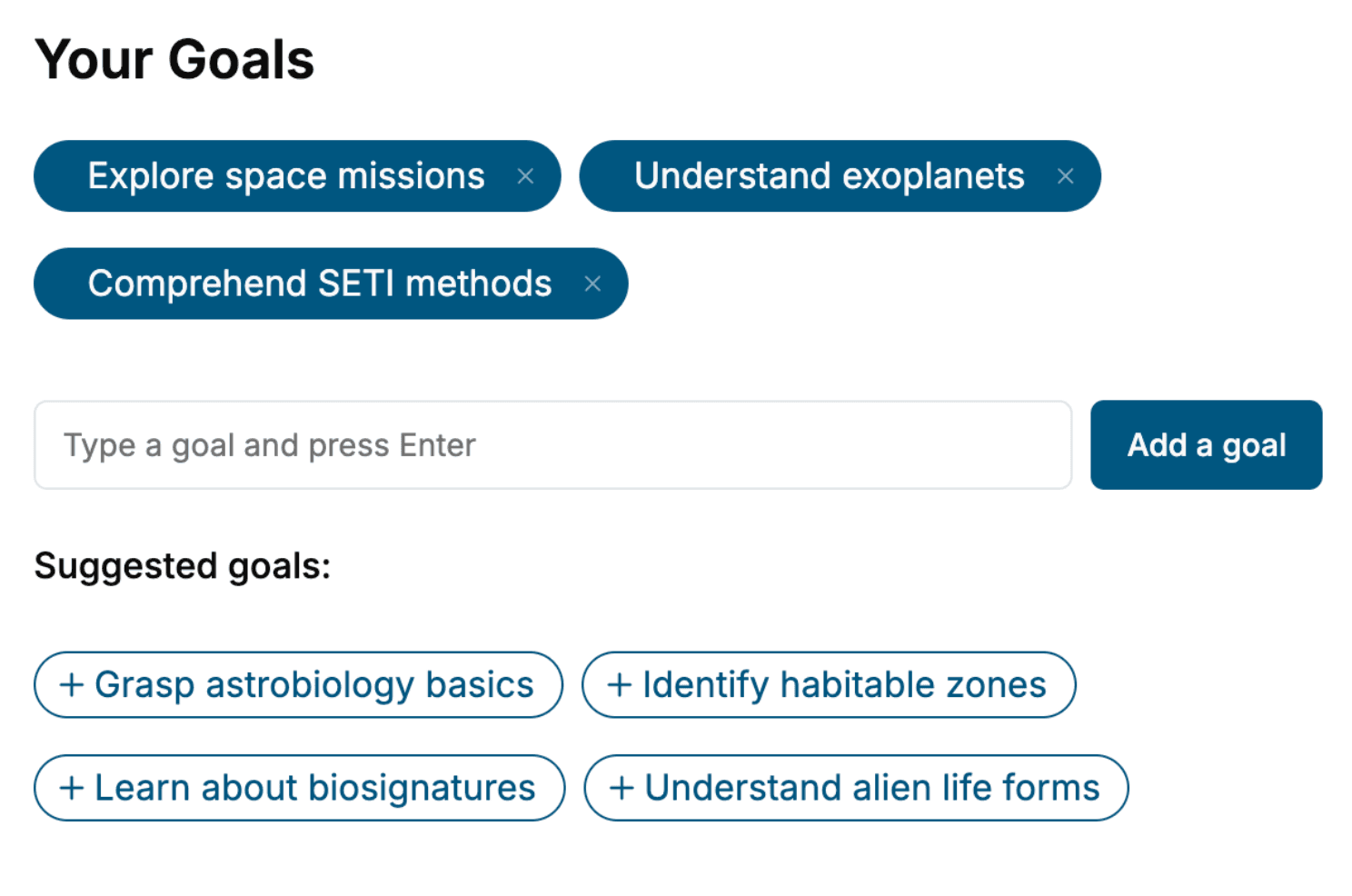
- tell us your goals, choose your topics, and the whole book is built around them.
- Learn effortlessly:
- Graph Theory book written for your specific background and expertise.
- Understand at a glance:
- includes charts, tables, timelines, checklists, decision trees, and more.
- Stay current:
- written the day you order it, not years ago.
- Trust what you read:
- every book is checked for accuracy, with real research when your subject needs it.
Create your unique book in 3 steps
- 1. Select your focus
Select the focus of your Graph Theory book and share your background
- 2. Personalize your book
Specify your goals and choose sub-topics to include
- 3. Get your tailored book
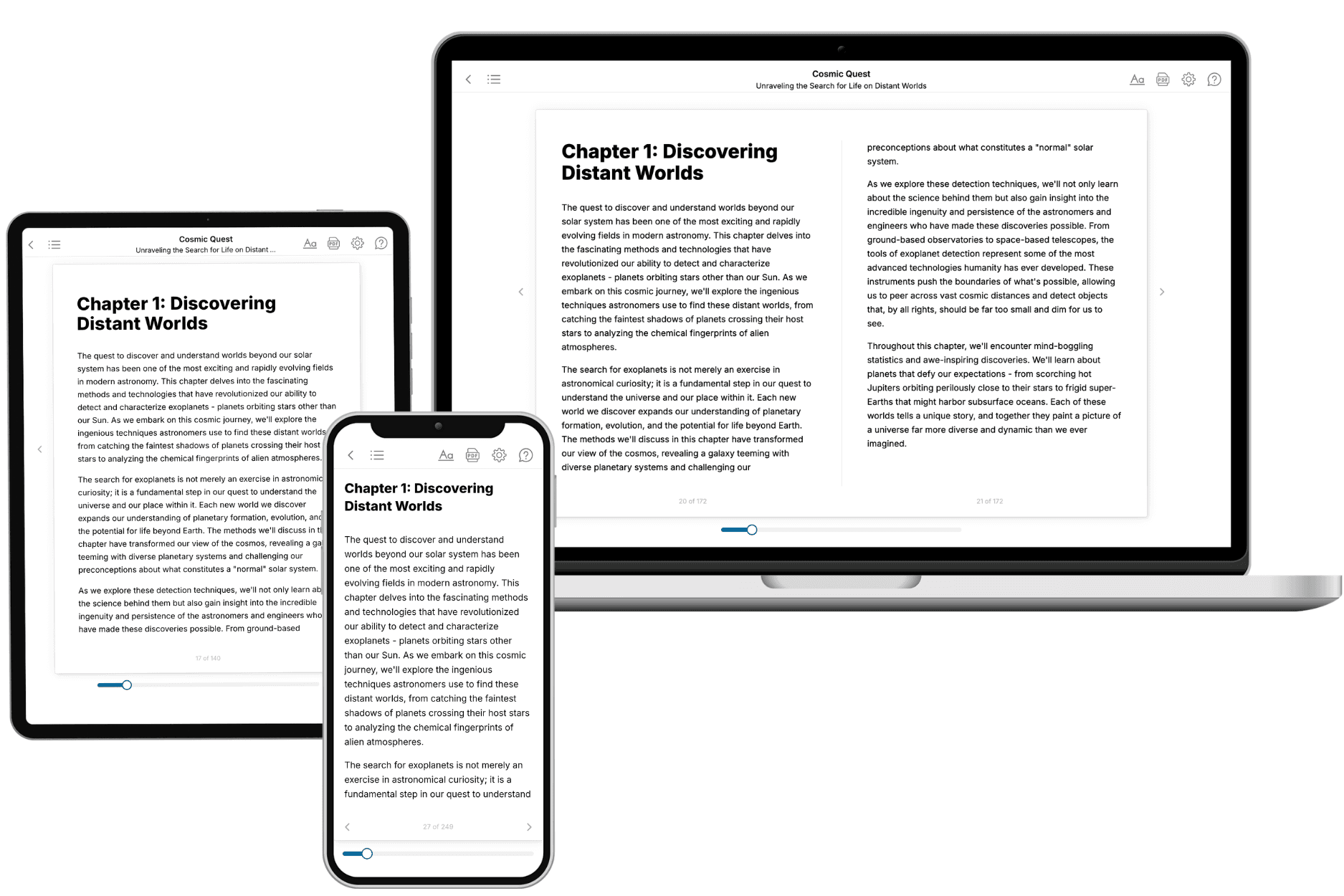
Your book is ready in 10 minutes. Read it online, download as EPUB or PDF, or send to Kindle.

Start from a template
Frequently asked questions
- What is TailoredRead?
TailoredRead creates complete, full-length nonfiction ebooks, written specifically for you. Tell us what you want to learn and why, and TailoredRead writes you a complete ebook on it, with charts, tables, and diagrams throughout. Read it online, on Kindle, or on any e-reader, or download it as a PDF or EPUB. Every book is written fresh the day you order it.
- How is the book tailored to me?
Before anything is written, you answer a few short questions about your goals, your background, and the topics you care about. Your book is then planned around your answers: written at your level, focused on your goals, and covering the topics you chose, instead of the one-size-fits-all book a store sells everyone.
- Will it read like generic AI content?
No. Your book isn't a chat transcript: it's planned chapter by chapter before a single word is written, told in a clear book voice, and explains ideas visually with charts, tables, and diagrams. After writing, every book goes through an editorial pass that polishes chapters so the book reads consistent from start to finish. Judge for yourself: browse thousands of sample books on our Explore Books page.
- How accurate is the content?
Our AI first checks whether your subject needs live research. Niche and fast-moving subjects are researched before writing, and the book plan and chapters are grounded in what it finds. After writing, every book goes through a quality pass that checks its facts and consistency, and researched books list their sources in a Notes section at the back.
- How long is the book?
You choose the length: Comprehensive (250-300 pages), Detailed (150-200 pages), Essential (70-100 pages), or Short (30-50 pages).
- Does the book include visuals?
Yes. Every book includes charts, tables, and diagrams: timelines, checklists, step-by-step guides, decision trees, comparison tables, matrices, and bar charts. A typical book includes dozens of these visual elements.
- Can I read it on Kindle? What formats can I download?
Yes. Every book can be read in our online reader or downloaded as a PDF or EPUB. The EPUB can be opened with Kindle, Apple Books, Kobo, and any e-reader. The Commercial and Author licenses also include an editable Word (DOCX) and Markdown download.
- How much does it cost?
About the price of a regular ebook. The exact price depends on your book's length and complexity, from $2 for the shortest books to $35 for the most comprehensive, and it's shown when you review your book, before you commit to anything. Each book is a one-time purchase, yours to keep, no subscription. Licenses that let you share, teach, or publish your book range from $35.99 to $49.99.
- Can I preview the book before purchasing?
Before you pay, you'll see what your book will cover: the title, a detailed description, the estimated length, and the complete chapter-by-chapter table of contents, so you know what you're getting before you decide. The full text itself is written after you purchase.
- How long does it take to create a book?
About 10 minutes. You can start reading the opening chapters while the rest is still being written.