Mastering Finite Math
A Student's Guide to Indiana Standards in Sets, Matrices, Networks, Optimization, and Probability
Embark on a journey through the fascinating world of Finite Mathematics with "Mastering Finite Math: A Student's Guide to Indiana Standards in Sets, Matrices, Networks, Optimization, and Probability." This comprehensive book is tailored specifically for high school students looking to excel in their math curriculum and build a strong foundation for future academic pursuits.
315 pages16 chaptersEnglishOct 8, 2024MathematicsCreated by Tiffany
About this book
Written in a clear, accessible, and engaging style, this guide breaks down complex concepts into easily digestible chunks. Each chapter is carefully crafted to align with Indiana Standards, ensuring that you're learning exactly what you need to succeed in your classes and beyond. From the basics of set theory to the intricacies of matrix operations, from the practical applications of network analysis to the powerful techniques of optimization, and the essential principles of probability, this book covers it all. Real-world examples and hands-on exercises will help you connect abstract mathematical concepts to everyday situations, making your learning experience both relevant and enjoyable. Whether you're struggling with these topics or looking to push your understanding to the next level, "Mastering Finite Math" provides the perfect balance of theory and practice. By the end of this book, you'll have the confidence and skills to tackle any Finite Math problem that comes your way, setting you up for success in your academic journey and beyond.
Table of contents
- IntroductionOverview of Finite Mathematics, Understanding Indiana Standards, How to Use This Book, Developing a Mathematical MindsetRead below
- Chapter 1: Foundations of Set TheoryBasic Concepts of Sets, Set Operations: Union, Intersection, and Complement, Visualizing Sets with Venn Diagrams, Real-world Applications of Set Theory
- Chapter 2: Advanced Set ConceptsSubsets and Proper Subsets, Power Sets and Their Properties, Cartesian Product of Sets, Set Identities and Proofs
- Chapter 3: Introduction to MatricesDefining Matrices and Their Components, Types of Matrices, Matrix Equality and Transposition, Practical Applications of Matrices
- Chapter 4: Matrix OperationsMatrix Addition and Subtraction, Scalar Multiplication of Matrices, Matrix Multiplication, Special Matrices: Zero and Identity
- Chapter 5: Properties of MatricesDeterminants of Matrices, Inverse Matrices and Their Properties, Matrix Rank and Its Significance, Matrices as Transformations
- Chapter 6: Applying Matrices to Real-World ProblemsSolving Systems of Equations with Matrices, Row Reduction Techniques, Modeling Polygons and Transformations, Matrices in Computer Graphics and Animations
- Chapter 7: Introduction to NetworksBasics of Graph Theory, Directed and Undirected Graphs, Representing Networks Mathematically, Real-world Applications of Networks
- Chapter 8: Analyzing NetworksPaths, Circuits, and Connectivity, Tree Diagrams and Decision Trees, Network Flows and Capacity, Adjacency Matrices for Graphs
- Chapter 9: Network Optimization TechniquesFinding Minimal Spanning Trees, Shortest Path Algorithms, Hamiltonian Paths and Circuits, Network Scheduling and Critical Path Analysis
- Chapter 10: Advanced Network ConceptsGraph Coloring Techniques and Applications, Vertex-Edge Graph Models, Bin Packing Problems and Solutions, Introduction to Markov Chains
- Chapter 11: Introduction to OptimizationBasic Concepts of Optimization, Linear Programming: An Overview, Real-world Applications of Optimization, Modeling Optimization Problems
- Chapter 12: Optimization TechniquesGeometric Methods in Optimization, Algebraic Approaches to Optimization, The Simplex Method, Using Technology in Optimization Problems
- Chapter 13: Foundations of ProbabilityBasic Concepts of Probability, Sample Spaces and Events, Rules of Probability, Real-world Applications of Probability
- Chapter 14: Calculating ProbabilitiesThe Addition Rule for Probabilities, The Multiplication Rule for Probabilities, Independent and Dependent Events, Complementary Events and Their Probabilities
- Chapter 15: Counting Principles in ProbabilityThe Multiplication Counting Principle, Permutations and Their Applications, Combinations and Their Applications, Using Simulations in Probability
- Chapter 16: Probability DistributionsRandom Variables and Their Properties, Expected Value and Its Interpretation, Theoretical Probability Distributions, The Law of Large Numbers
- ConclusionKey Takeaways, Future Learning Paths
- Glossary
- Further Reading
Introduction
Welcome to "Mastering Finite Math: A Student's Guide to Indiana Standards in Sets, Matrices, Networks, Optimization, and Probability." This comprehensive guide is designed to help high school students navigate the fascinating world of Finite Mathematics, providing a solid foundation for understanding and applying key concepts aligned with Indiana Standards. As you embark on this journey, you'll discover how mathematics serves as a powerful tool for solving real-world problems and how the various branches of Finite Math interconnect to create a robust framework for analytical thinking.
Throughout this book, we'll explore the core areas of Finite Mathematics: set theory, matrices, networks, optimization, and probability. Each of these topics plays a crucial role in developing your mathematical skills and preparing you for advanced studies and real-world applications. By mastering these concepts, you'll not only excel in your high school math curriculum but also gain valuable problem-solving skills that will serve you well in various aspects of life.
Our approach in this book is to break down complex ideas into manageable, easy-to-understand sections. We'll use clear explanations, practical examples, and engaging exercises to help you grasp each concept thoroughly. Remember, mathematics is not just about memorizing formulas or procedures; it's about understanding the underlying principles and developing the ability to apply them creatively to solve problems.
As we progress through the chapters, you'll notice how each topic builds upon the previous ones, creating a cohesive understanding of Finite Mathematics. This interconnectedness is one of the beautiful aspects of mathematics, and recognizing these relationships will deepen your appreciation for the subject and enhance your problem-solving capabilities.
Overview of Finite Mathematics
Finite Mathematics is a branch of mathematics that deals with mathematical structures that have a finite number of elements. Unlike calculus, which often deals with continuous functions and infinite processes, Finite Math focuses on discrete, countable sets and their properties. This makes it particularly useful for modeling real-world situations where we deal with specific, countable objects or events.
The term "Finite Mathematics" was coined in the mid-20th century as mathematicians and educators recognized the need for a mathematical curriculum that was more directly applicable to business, economics, and social sciences. Since then, it has become an essential part of many high school and college curricula, providing students with powerful tools for analyzing and solving practical problems.
One of the key strengths of Finite Mathematics is its versatility. The concepts and techniques you'll learn in this course have applications in a wide range of fields, including computer science, operations research, economics, biology, and social sciences. For example, set theory, which we'll explore in depth, provides a foundation for understanding databases and information systems. Matrix operations, another core topic, are crucial in computer graphics, data analysis, and even in understanding complex ecosystems.
Network theory, which we'll cover in later chapters, has applications ranging from optimizing transportation routes to understanding social media connections. The principles of optimization that you'll learn can be applied to everything from managing resources in a business to designing efficient algorithms. And probability theory, our final major topic, is essential for understanding risk assessment, making predictions, and interpreting scientific studies.
As we delve into each of these areas, you'll see how they interconnect and build upon each other. For instance, matrices can be used to represent and analyze networks, while probability theory often relies on set theory for its foundational concepts. This interconnectedness is not just academically interesting; it reflects the way real-world problems often require a multifaceted approach, drawing on various mathematical tools and concepts.
Throughout this book, we'll emphasize not just the "what" of Finite Mathematics, but also the "why" and "how." You'll learn not only the definitions and procedures but also the reasoning behind them and how to apply them to solve problems. This approach will help you develop a deeper understanding of the material and the ability to think critically and creatively when faced with new challenges.
As you progress through the chapters, you'll find that Finite Mathematics offers a unique blend of abstract reasoning and practical application. You'll be challenged to think logically and systematically, developing skills that are valuable far beyond the mathematics classroom. At the same time, you'll see how these abstract concepts translate into real-world solutions, giving you a powerful set of tools for analyzing and solving problems in various fields.
Remember, mastering Finite Mathematics is not just about passing a test or completing a course. It's about developing a way of thinking that will serve you well in your future studies and career. The logical reasoning, problem-solving skills, and analytical thinking you'll develop through studying Finite Math are highly valued in many professions and will give you a competitive edge in whatever field you choose to pursue.
As we begin our journey through Finite Mathematics, approach each topic with curiosity and an open mind. Don't be afraid to ask questions, explore different approaches to problems, and make connections between different concepts. Mathematics is not a spectator sport – it requires active engagement and practice. The more you engage with the material, work through problems, and apply the concepts to real-world situations, the more proficient and confident you'll become.
Understanding Indiana Standards
The Indiana Academic Standards for Mathematics play a crucial role in shaping the educational landscape for students across the state. These standards are designed to ensure that all Indiana students are well-prepared for success in college, career, and life beyond high school. In this section, we'll explore the importance of these standards, how they relate to Finite Mathematics, and how this book aligns with them to support your learning journey.
The Indiana Academic Standards for Mathematics are developed through a collaborative process involving educators, content experts, and community stakeholders. They are regularly reviewed and updated to reflect the evolving needs of students and the changing demands of the modern world. These standards are not just a list of topics to be covered; they represent a comprehensive vision for mathematical education that emphasizes both conceptual understanding and procedural fluency.
One of the key principles underlying the Indiana Standards is the idea of mathematical practices. These practices describe the ways in which students should engage with mathematical content, regardless of the specific topic. They include skills such as problem-solving, reasoning abstractly and quantitatively, constructing viable arguments, modeling with mathematics, using appropriate tools strategically, attending to precision, looking for and making use of structure, and looking for and expressing regularity in repeated reasoning. Throughout this book, you'll see how these practices are integrated into the study of Finite Mathematics, helping you develop not just knowledge, but also the skills and habits of mind that characterize successful mathematicians.
The Indiana Standards for high school mathematics are organized into conceptual categories, including Number and Quantity, Algebra, Functions, Modeling, Geometry, and Statistics and Probability. Finite Mathematics draws from and builds upon many of these categories. For example, the study of matrices and systems of equations in Finite Math extends concepts from Algebra, while probability theory connects closely with the Statistics and Probability category. The emphasis on real-world applications and modeling in Finite Math aligns perfectly with the Modeling category, which is integrated throughout the high school standards.
Specifically for Finite Mathematics, the Indiana Standards include expectations for students to understand and apply concepts in set theory, matrices, networks, optimization, and probability. These align closely with the chapters in this book. For instance, the standards expect students to be able to use set notation, perform operations on sets, and solve problems using Venn diagrams – all topics we'll cover in depth in our chapters on set theory. In the area of matrices, students are expected to perform matrix operations, use matrices to solve systems of equations, and apply matrices to real-world problems, which we'll explore thoroughly in our matrix chapters.
The standards also emphasize the importance of using appropriate technology in mathematics. This aligns with our approach in this book, where we'll introduce you to various technological tools that can aid in solving complex problems and visualizing mathematical concepts. However, it's important to note that technology is meant to enhance understanding, not replace it. The standards, and this book, stress the importance of understanding the underlying concepts and being able to perform calculations and reasoning without technology when appropriate.
Another key aspect of the Indiana Standards is the emphasis on mathematical modeling – using mathematics to analyze real-world situations and make predictions. This is a central theme in Finite Mathematics and is reflected throughout this book. You'll see how set theory can model relationships between groups, how matrices can represent and solve complex systems, how network theory can optimize processes, and how probability can be used to make predictions in uncertain situations.
The Indiana Standards also stress the importance of mathematical communication – being able to explain mathematical thinking and construct valid arguments. Throughout this book, we'll encourage you to articulate your reasoning, justify your solutions, and interpret results in context. This not only aligns with the standards but also helps deepen your understanding and prepares you for advanced study and real-world problem-solving.
It's worth noting that while this book is aligned with the Indiana Standards, it often goes beyond them, offering deeper insights and more advanced topics for those who are interested. This additional material can provide enrichment and prepare you for more advanced mathematics courses in the future.
As you work through this book, keep in mind that the goal is not just to meet the standards, but to develop a deep, flexible understanding of Finite Mathematics that you can apply in various contexts. The standards provide a framework, but your own curiosity, effort, and engagement with the material will determine how much you truly learn and grow as a mathematician.
How to Use This Book
"Mastering Finite Math" is designed to be a comprehensive, user-friendly guide to help you navigate the intricacies of Finite Mathematics. To get the most out of this book, it's important to understand its structure and the various features it offers. This section will walk you through how to effectively use this book to maximize your learning and achieve your mathematical goals.
The book is organized into chapters, each focusing on a major area of Finite Mathematics: set theory, matrices, networks, optimization, and probability. These chapters are further divided into subsections that break down complex topics into manageable chunks. This structure allows you to focus on specific concepts while also seeing how they fit into the broader picture of Finite Mathematics. We recommend reading the chapters in order, as later topics often build on earlier ones, but the book is also designed to allow you to jump to specific sections if you need to review or focus on particular areas.
Each chapter begins with an introduction that provides an overview of the topic, its importance in Finite Mathematics, and its real-world applications. This introduction sets the stage for the detailed exploration that follows and helps you understand why the topic is worth studying. Following the introduction, you'll find a series of subsections that delve into specific concepts, theorems, and techniques.
Throughout the text, you'll encounter several key features designed to enhance your learning:
- Definitions and Theorems: Important mathematical terms and principles are clearly highlighted and explained. These form the foundation of your understanding, so pay close attention to them.
- Examples: Each new concept is illustrated with worked examples. These show you step-by-step how to apply the concepts to solve problems. Study these carefully and try to understand each step.
- Practice Problems: After each major concept, you'll find practice problems. Attempt these on your own to test your understanding. Solutions are provided at the end of each chapter.
- Real-World Applications: To help you see the relevance of what you're learning, we include discussions and examples of how Finite Math concepts are used in various fields and industries.
- Technology Notes: Where appropriate, we provide guidance on using calculators, computer software, or online tools to solve problems or visualize concepts.
- Historical Notes: Brief snippets about the mathematicians and historical context behind certain concepts are included to add depth and interest to your study.
To make the most of these features and the book as a whole, we recommend the following approach:
- Begin each chapter by reading the introduction carefully. This will give you a roadmap of what to expect and why it's important.
- As you read through each section, pay close attention to definitions and theorems. These are the building blocks of your understanding.
- Study the examples thoroughly. Don't just read them passively – try to work through them yourself before looking at the solution.
- After each section, attempt the practice problems without looking at the solutions. This will help you identify areas where you need more practice or clarification.
- Use the real-world applications to connect what you're learning to practical situations. This can help make abstract concepts more concrete and memorable.
- Take advantage of the technology notes to explore concepts further and to learn how to use tools that can aid in problem-solving.
- At the end of each chapter, review the key points and try the chapter review problems. These will help reinforce your learning and prepare you for exams.
Remember, mathematics is not a spectator sport. The key to mastering Finite Math is active engagement with the material. Don't just read the book – work through it. Write out solutions, draw diagrams, and explain concepts in your own words. The more actively you engage with the material, the better you'll understand and remember it.
If you encounter difficulties, don't get discouraged. Mathematics can be challenging, and it's normal to struggle at times. When you hit a roadblock, try the following strategies:
- Reread the relevant section, paying close attention to definitions and examples.
- Try to identify specifically what you don't understand. Sometimes, pinpointing the exact source of confusion can help you overcome it.
- Look for similar examples or problems that you do understand, and see if you can apply the same principles.
- Discuss the concept with classmates or form a study group. Explaining concepts to others or hearing different perspectives can often clarify your understanding.
- Don't hesitate to seek help from your teacher or a tutor. They can often provide insights or explanations that can help you break through obstacles.
Finally, remember that learning mathematics is a process. It takes time, practice, and persistence. Don't expect to understand everything perfectly on the first try. Be patient with yourself, celebrate your progress, and keep pushing forward. With consistent effort and the structured approach provided by this book, you'll be well on your way to mastering Finite Mathematics.
Developing a Mathematical Mindset
As you embark on your journey through Finite Mathematics, one of the most important things you can develop is a positive mathematical mindset. This mindset is not just about believing you can do math; it's about approaching mathematical challenges with curiosity, resilience, and a growth-oriented attitude. In this section, we'll explore what it means to have a mathematical mindset and how you can cultivate one to enhance your learning and problem-solving abilities.
At its core, a mathematical mindset is characterized by the belief that mathematical ability is not fixed or innate, but can be developed through effort, learning, and persistence. This concept, known as a "growth mindset," was popularized by psychologist Carol Dweck and has profound implications for how we approach learning, especially in mathematics[1]. Students with a growth mindset tend to embrace challenges, persist in the face of setbacks, see effort as a path to mastery, learn from criticism, and find inspiration in the success of others.
One key aspect of developing a mathematical mindset is embracing the idea that mistakes are an essential part of learning. In mathematics, as in many areas of life, we often learn more from our mistakes than from our successes. When you encounter a problem you can't solve or make an error in your calculations, try to view it not as a failure, but as an opportunity to deepen your understanding. Ask yourself: What can I learn from this mistake? What misconception led me to this error? How can I approach similar problems differently in the future?
Another important element of a mathematical mindset is the ability to see connections and patterns. Mathematics is not just a collection of isolated facts and procedures; it's a web of interconnected ideas. As you study Finite Mathematics, try to look for relationships between different concepts. How does set theory relate to probability? How can matrices be used to solve network problems? By actively seeking out these connections, you'll develop a more holistic understanding of mathematics and improve your problem-solving skills.
Curiosity is also a crucial component of a mathematical mindset. Approach each new topic with genuine interest and a desire to understand not just how to perform calculations, but why certain methods work. Ask questions like: Why does this formula work? Is there another way to solve this problem? What would happen if we changed one of the conditions? This kind of curiosity can lead to deeper insights and a more enjoyable learning experience.
Persistence is another key trait of those with a strong mathematical mindset. Mathematics often involves tackling complex problems that don't yield to immediate solutions. It's important to develop the stamina to stick with a problem, trying different approaches and not giving up when the solution isn't immediately apparent. Remember, the process of working through a difficult problem is often more valuable than simply arriving at the correct answer.
Developing a mathematical mindset also involves recognizing the value of multiple approaches to problem-solving. In Finite Mathematics, as in many areas of math, there are often several valid ways to approach a problem. Instead of just memorizing one method, try to understand different approaches and their relative strengths and weaknesses. This flexibility in thinking will serve you well not just in mathematics, but in many areas of life.
It's also important to cultivate a sense of mathematical intuition. While Finite Mathematics involves rigorous definitions and proofs, developing a "feel" for numbers and mathematical relationships can be incredibly valuable. As you work through problems, try to develop a sense of what answers are reasonable, what strategies are likely to be fruitful, and how changes in problem conditions might affect the solution.
Another aspect of a mathematical mindset is the ability to communicate mathematical ideas clearly. Practice explaining concepts to others, whether in writing or verbally. The process of articulating your understanding can help solidify your own knowledge and reveal areas where your understanding might be incomplete.
Finally, remember that developing a mathematical mindset is a journey, not a destination. It's normal to feel frustrated or discouraged at times, but these feelings don't define your mathematical ability. With consistent effort and the right approach, you can continue to grow and improve your mathematical skills throughout your life.
Here are some practical strategies for developing and maintaining a positive mathematical mindset:
- Set learning goals rather than performance goals. Focus on understanding concepts deeply rather than just getting good grades.
- Embrace challenges. Choose to work on problems that stretch your abilities rather than sticking to what's comfortable.
- Practice self-reflection. Regularly ask yourself what you've learned, what you still find confusing, and how you can improve.
- Cultivate a supportive learning environment. Surround yourself with peers who share your commitment to learning and growth.
- Celebrate effort and progress, not just correct answers. Recognize the value in the process of learning, not just the end result.
- Use positive self-talk. Replace negative thoughts like "I can't do this" with more constructive ones like "I can't do this yet, but I'm learning."
- Seek out and embrace feedback. View criticism as an opportunity to improve, not as a judgment of your abilities.
By cultivating a positive mathematical mindset, you'll not only improve your performance in Finite Mathematics but also develop valuable skills and attitudes that will serve you well in many areas of life. Remember, every great mathematician was once a beginner. With the right mindset and consistent effort, you have the potential to achieve great things in mathematics and beyond.
Notes
Introduction
- 1. C. S. Dweck, Mindset: The new psychology of success, Random House, 2006
This is the end of the free sample. The full book has 16 chapters.
Want this book written for you?
Tell us your goals and background, and get your own version of this book, tailored by AI to you.


Benefits of AI-tailored books
- Read one book, not ten:
- all the Mathematics knowledge you need, gathered into a single book.
- Save days of learning:
- tell us your goals, choose your topics, and the whole book is built around them.
- Learn effortlessly:
- Mathematics book written for your specific background and expertise.
- Understand at a glance:
- includes charts, tables, timelines, checklists, decision trees, and more.
- Stay current:
- written the day you order it, not years ago.
- Trust what you read:
- every book is checked for accuracy, with real research when your subject needs it.
Create your unique book in 3 steps
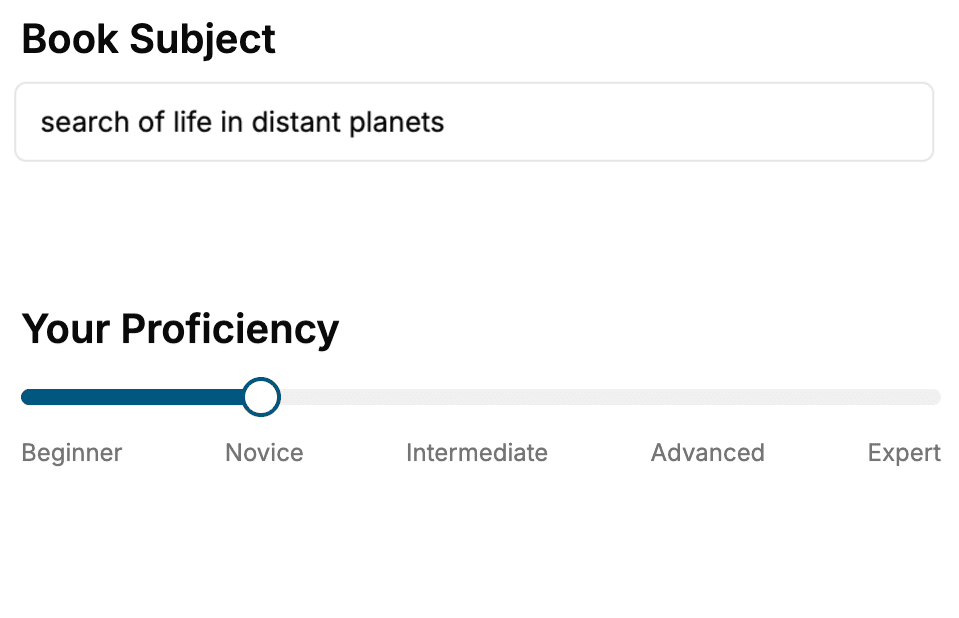
- 1. Select your focus
Select the focus of your Mathematics book and share your background
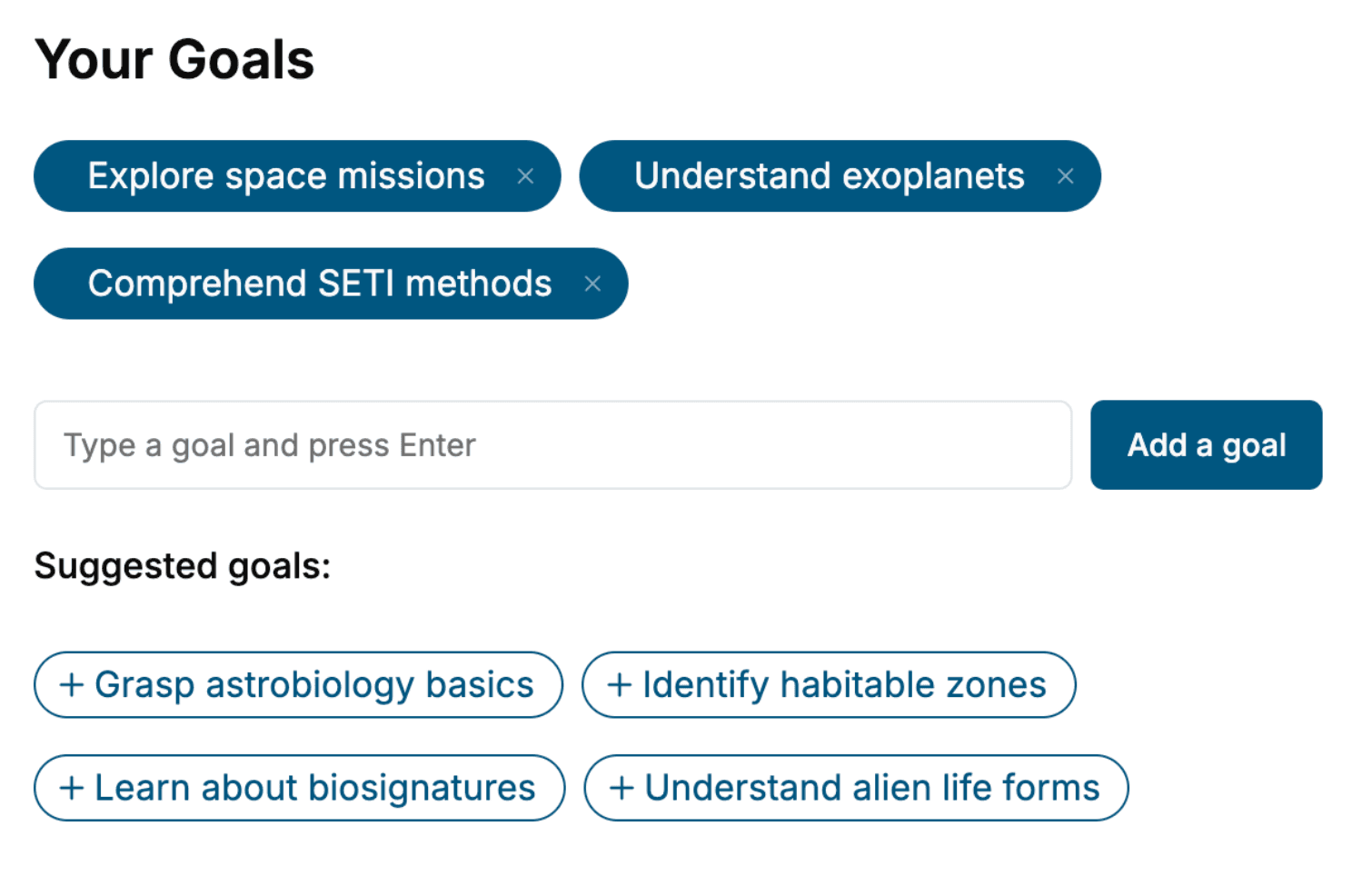
- 2. Personalize your book
Specify your goals and choose sub-topics to include
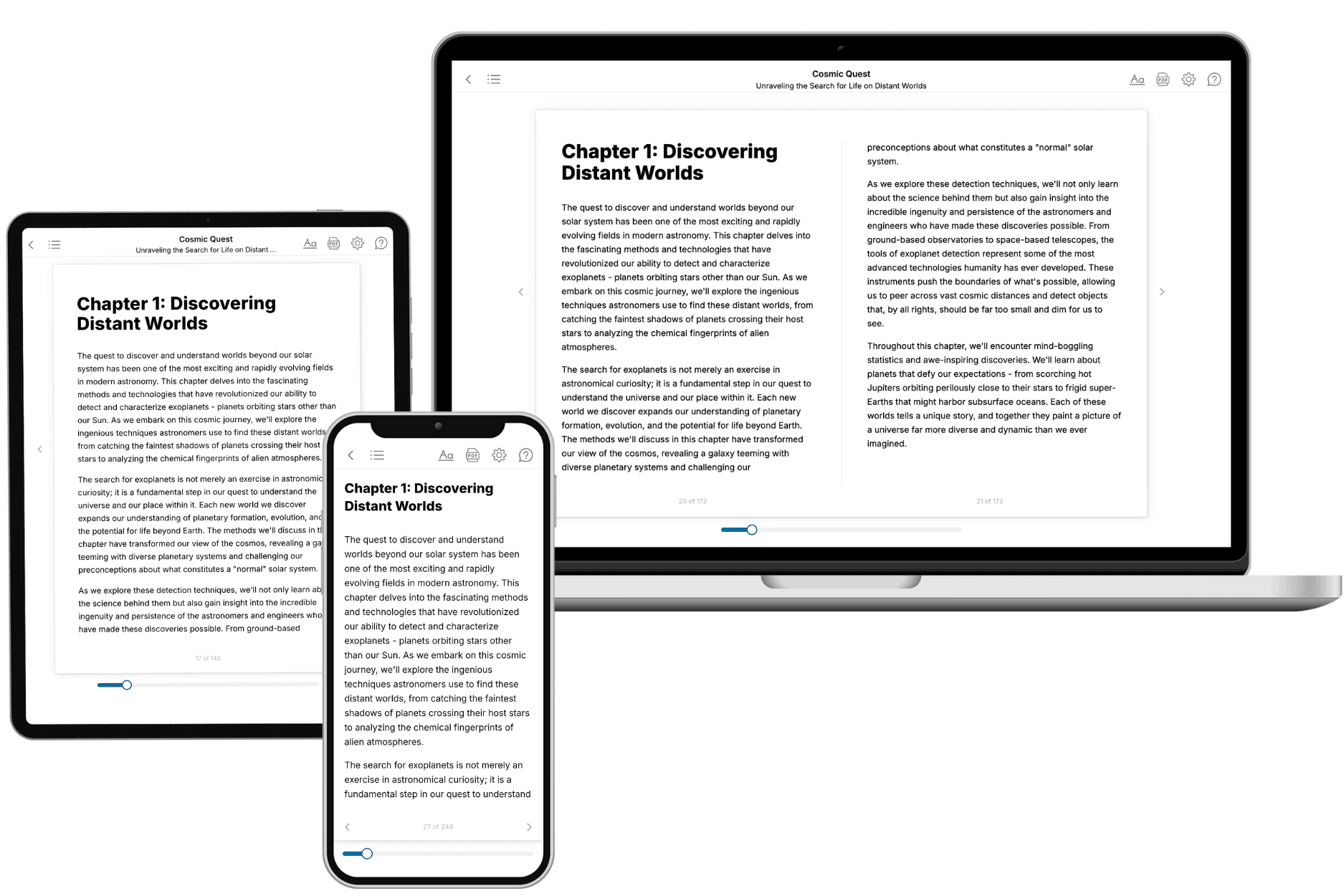
- 3. Get your tailored book
Your book is ready in 10 minutes. Read it online, download as EPUB or PDF, or send to Kindle.
Frequently asked questions
- What is TailoredRead?
TailoredRead creates complete, full-length nonfiction ebooks, written specifically for you. Tell us what you want to learn and why, and TailoredRead writes you a complete ebook on it, with charts, tables, and diagrams throughout. Read it online, on Kindle, or on any e-reader, or download it as a PDF or EPUB. Every book is written fresh the day you order it.
- How is the book tailored to me?
Before anything is written, you answer a few short questions about your goals, your background, and the topics you care about. Your book is then planned around your answers: written at your level, focused on your goals, and covering the topics you chose, instead of the one-size-fits-all book a store sells everyone.
- Will it read like generic AI content?
No. Your book isn't a chat transcript: it's planned chapter by chapter before a single word is written, told in a clear book voice, and explains ideas visually with charts, tables, and diagrams. After writing, every book goes through an editorial pass that polishes chapters so the book reads consistent from start to finish. Judge for yourself: browse thousands of sample books on our Explore Books page.
- How accurate is the content?
Our AI first checks whether your subject needs live research. Niche and fast-moving subjects are researched before writing, and the book plan and chapters are grounded in what it finds. After writing, every book goes through a quality pass that checks its facts and consistency, and researched books list their sources in a Notes section at the back.
- How long is the book?
You choose the length: Comprehensive (250-300 pages), Detailed (150-200 pages), Essential (70-100 pages), or Short (30-50 pages).
- Does the book include visuals?
Yes. Every book includes charts, tables, and diagrams: timelines, checklists, step-by-step guides, decision trees, comparison tables, matrices, and bar charts. A typical book includes dozens of these visual elements.
- Can I read it on Kindle? What formats can I download?
Yes. Every book can be read in our online reader or downloaded as a PDF or EPUB. The EPUB can be opened with Kindle, Apple Books, Kobo, and any e-reader. The Commercial and Author licenses also include an editable Word (DOCX) and Markdown download.
- How much does it cost?
About the price of a regular ebook. The exact price depends on your book's length and complexity, from $2 for the shortest books to $35 for the most comprehensive, and it's shown when you review your book, before you commit to anything. Each book is a one-time purchase, yours to keep, no subscription. Licenses that let you share, teach, or publish your book range from $35.99 to $49.99.
- Can I preview the book before purchasing?
Before you pay, you'll see what your book will cover: the title, a detailed description, the estimated length, and the complete chapter-by-chapter table of contents, so you know what you're getting before you decide. The full text itself is written after you purchase.
- How long does it take to create a book?
About 10 minutes. You can start reading the opening chapters while the rest is still being written.