Formal Languages Books
Explore tailored Formal Languages books created by our AI
Petri Nets
A Comprehensive Guide to Modeling Concurrent Systems in Computer Science
You're navigating the complex world of concurrent systems, where multiple processes interact, compete for resources, and synchronize in ways that defy simple sequential logic. Traditional modeling approaches leave you struggling to capture the nuances of parallelism, deadlock, and nondeterminism that define modern computing systems. This comprehensive guide takes you deep into Petri nets, one of the most elegant and powerful formalisms for modeling concurrent systems. You'll discover how these mathematical structures combine intuitive graphical representations with rigorous analytical capabilities, enabling you to model everything from simple synchronization patterns to complex distributed algorithms. Starting with foundational concepts and building systematically toward advanced topics, you'll explore the mathematical properties that make Petri nets indispensable for system verification. You'll learn multiple analysis techniques—from reachability graphs to invariant methods—and understand how to apply them to real-world problems. Through careful examination of different Petri net classes, including colored and timed variants, you'll gain the flexibility to choose the right modeling approach for any concurrent system challenge. Whether you're designing communication protocols, analyzing workflow systems, or verifying algorithm correctness, this book equips you with the theoretical foundation and practical insights to master concurrent system modeling.
Many programmers and computer science students believe that nondeterministic finite automata are purely academic concepts with little practical relevance. This misconception prevents them from leveraging one of the most elegant and powerful tools in computational theory. This comprehensive guide bridges the gap between abstract theory and practical application, showing you how NFAs form the backbone of pattern matching algorithms, lexical analyzers, and text processing systems. You'll discover how major programming languages and database systems use NFA-based techniques to handle regular expressions, and why understanding nondeterminism is crucial for designing efficient algorithms. Through clear explanations, visual diagrams, and hands-on examples, you'll master the fundamental concepts of nondeterministic finite automata, learn to construct and optimize them, and understand their relationship to deterministic automata and regular expressions. The book progresses systematically from basic definitions to advanced topics like state minimization and epsilon transitions. Whether you're preparing for technical interviews, working on compiler design, or simply want to deepen your understanding of computational theory, this book provides the knowledge and practical skills you need to confidently work with nondeterministic finite automata in both academic and professional settings.
You stand at the intersection of practical programming and theoretical computer science, ready to discover the mathematical elegance that underlies object-oriented programming languages. This comprehensive guide bridges the gap between the code you write daily and the formal principles that make it work. Through systematic exploration of formal language theory, you'll uncover how object-oriented concepts like inheritance, polymorphism, and encapsulation are grounded in mathematical structures. You'll learn to analyze algorithms within OOP contexts, understanding not just how they work, but why they work and how to optimize them using theoretical insights. Each chapter builds upon rigorous foundations while maintaining practical relevance, showing you how formal methods can improve your code quality, performance, and maintainability. You'll master the art of translating abstract mathematical concepts into concrete programming solutions, developing an intuitive understanding of when and how to apply different algorithmic approaches. By the end of this exploration, you'll possess a deeper appreciation for the theoretical underpinnings of object-oriented programming, enabling you to write more sophisticated, efficient, and mathematically sound code that stands the test of time and complexity.
Discover how finite state machines form the backbone of modern computing, from compilers to game engines. This book takes you through a structured exploration of automata theory, starting with the fundamental concepts that make FSMs work and progressing to their practical implementation in real-world systems. You'll learn to visualize FSMs through state diagrams, understand the mathematical principles that govern their behavior, and recognize where they appear in everyday software. Through clear explanations, practical examples, and hands-on exercises, you'll develop the ability to design, analyze, and optimize finite state machines for your own projects. Whether you're building a lexical analyzer, designing a communication protocol, or creating intelligent game behavior, this book equips you with both the theoretical knowledge and practical skills needed to leverage FSMs effectively in your work.
Building Compilers from Scratch
Master the Art of Translating Code into Machine Instructions
Most developers use compilers daily without understanding how they work. You write code, hit compile, and executable programs magically appear—but the process behind that magic remains a mystery. This gap in knowledge limits your ability to debug complex issues, optimize performance, and understand the languages you depend on. This book demystifies compiler design by walking you through each phase of compilation with clear explanations and practical examples. You'll learn how lexical analyzers tokenize source code, how parsers build syntax trees, how semantic analysis validates correctness, and how code generators produce efficient machine instructions. Rather than abstract theory, you'll see real algorithms and techniques used in production compilers, with concrete examples you can study and implement. Whether you're building a domain-specific language, optimizing a compiler for your platform, or simply want to deepen your technical expertise, this book provides the knowledge and confidence to tackle compiler design challenges. By the end, you'll understand not just how compilers work, but why they're designed the way they are.
You'll gain a deep, practical understanding of context-free grammars and their central role in computer science. This book bridges theory and application, taking you from fundamental definitions through advanced parsing algorithms and real-world implementations. You'll master the mathematical foundations of formal language theory while learning how these concepts power modern compilers, interpreters, and natural language processing systems. Through clear explanations and carefully constructed examples, you'll explore derivations, parse trees, ambiguity resolution, and the relationship between grammars and automata. You'll discover how to design efficient grammars, apply normal forms, and implement parsing algorithms that transform source code into executable programs. Whether you're building a compiler, working with domain-specific languages, or advancing your theoretical knowledge, this comprehensive guide provides the tools and insights you need. By the end, you'll confidently navigate the landscape of formal languages and apply context-free grammar techniques to solve complex computational problems.
You'll navigate the landscape of automated verification, starting with the fundamental concepts that make model checking possible and progressing through increasingly sophisticated techniques used in industry today. This book demystifies how computers can automatically prove that systems work correctly—from simple state machines to complex concurrent programs. You'll learn why satisfiability matters, how temporal logics express system requirements, and why state space explosion remains the central challenge in verification. Through clear explanations and practical insights, you'll discover how modern SAT solvers achieve remarkable efficiency, explore different model checking approaches from explicit-state to symbolic methods, and understand when and how to apply these techniques to real problems. Whether you're verifying hardware designs, ensuring software correctness, or validating security protocols, this book equips you with both the theoretical foundations and practical knowledge to leverage model checking effectively in your work.
What happens the moment you save a file and your IDE highlights syntax errors before you even compile? The answer lies in lexical analysis—the invisible process that transforms raw text into structured tokens your compiler can understand. This book demystifies that process, taking you from curious observer to confident implementer. You'll discover how finite automata and regular expressions work together to recognize patterns in source code, why token design matters more than you might think, and how to build lexical analyzers that are both correct and efficient. Whether you're designing a domain-specific language, optimizing a parser, or simply curious about how compilers work under the hood, this guide provides the practical knowledge and theoretical foundation you need. Through clear explanations, real-world examples, and hands-on techniques, you'll master the art and science of turning text into meaning.
Most people think scripting is just about writing quick automation scripts or gluing systems together. But scripting languages are far more sophisticated—they're formal languages with deep roots in computer science theory. This book reveals how understanding formal languages, algorithms, and computational theory transforms you from someone who writes scripts that work into someone who writes scripts that are elegant, efficient, and maintainable. You'll discover why certain patterns emerge across all scripting languages, how parsing and interpretation actually work under the hood, and how algorithmic thinking prevents common pitfalls. Whether you're automating workflows, processing data, or building tools, this book equips you with both the practical skills and theoretical foundations to make informed decisions about language choice, script design, and optimization. By connecting scripting to formal language theory and algorithms, you'll develop a deeper intuition for what's possible and why.
Imagine having a language perfectly tailored to your problem domain—one where business stakeholders and developers speak the same technical language, where complex logic becomes readable and maintainable, and where entire categories of bugs simply cannot occur. Domain-specific languages make this possible. This comprehensive guide takes you from foundational concepts through practical implementation, equipping you with the knowledge to design and build DSLs that solve real problems. You'll explore the theoretical underpinnings of formal languages and grammars, discover multiple implementation strategies from lightweight internal DSLs to full-featured external languages, and learn how to apply semantic analysis and code generation techniques. Through concrete examples and pragmatic guidance, you'll understand when to build a DSL, how to design one that your users will actually adopt, and how to evolve it as your domain changes. Whether you're building configuration languages, workflow engines, or specialized problem-solving tools, this book provides the frameworks and techniques to create languages that genuinely improve how your team works.
Gain mastery over the theoretical foundations that underpin all of computer science and mathematics. This comprehensive guide takes you from basic Turing machine concepts to advanced topics in recursion theory and mathematical logic, providing the deep understanding you need to tackle complex computational problems with confidence. You'll discover how Turing machines define the very limits of computation, explore the elegant mathematics behind decidability and undecidability, and learn to apply these powerful concepts to real-world scenarios. Through clear explanations, worked examples, and progressive skill-building exercises, you'll develop an intuitive grasp of computability theory that will enhance your problem-solving abilities across multiple domains. Whether you're strengthening your theoretical computer science foundation or preparing for advanced study, this book provides the comprehensive coverage and practical insights you need. You'll emerge with a sophisticated understanding of how computation works at its most fundamental level, equipped with the knowledge to analyze computational problems with mathematical precision and theoretical rigor. The concepts you master here will transform how you think about algorithms, complexity, and the nature of computation itself, giving you the theoretical tools to excel in advanced computer science, mathematics, and logic.
Related books you may like:
What if your app could serve twice as many users simply by making it accessible? Millions of people with disabilities want to use Android apps but face barriers created by poor design choices. This book shows you how to remove those barriers and build applications that work seamlessly for everyone. You'll learn the practical techniques for implementing screen reader support, voice control, and other assistive technologies. Discover how semantic markup, proper content descriptions, and inclusive design patterns create apps that are easier to use for all users. Through real-world examples and step-by-step guidance, you'll master the Android Accessibility Framework and understand WCAG 2.1 standards. Learn testing strategies that reveal accessibility issues before your users encounter them. By the end, you'll have the knowledge to make accessibility a core part of your development process, not an afterthought—expanding your market reach while creating genuinely inclusive digital experiences.
Imagine delivering software that consistently meets stakeholder expectations, where every feature works exactly as intended, and your team moves with confidence through changes and refactoring. This is the reality when you master acceptance test-driven development. This comprehensive guide takes you beyond the basics to show you how ATDD transforms the way teams develop software. You'll learn how to write acceptance tests that serve as living documentation, collaborate effectively with business stakeholders to define clear acceptance criteria, and integrate ATDD seamlessly into your Extreme Programming workflow. Whether you're struggling with unclear requirements, dealing with late-stage defect discovery, or simply want to elevate your development practices, this book provides practical strategies, real-world examples, and proven techniques. You'll understand not just the "how" but the "why" behind acceptance test-driven development, enabling you to make informed decisions about implementation in your own context. Master this essential XP practice and watch your team's productivity and code quality soar.
Take your TypeScript skills from intermediate to advanced in just 30 days with a structured, project-driven approach. This book guides you through focused techniques that matter most: mastering advanced types like generics and conditional types, writing reliable async code with proper error handling, integrating TypeScript with modern frameworks, and building confidence through comprehensive testing strategies. Each day builds on the previous one, combining theory with hands-on coding projects that you'll actually use. You'll refactor real code, understand why type safety matters, and develop the patterns that separate good TypeScript developers from great ones. By day 30, you'll have the skills to write safer, more maintainable code and the portfolio projects to prove it. This isn't theory—it's practical, accelerated learning designed for developers ready to level up.
Discover how to build software that meets expectations from day one. Acceptance test-driven development (ATDD) transforms how teams define, test, and deliver quality software by writing acceptance tests before development begins. This practical guide shows you how to collaborate with stakeholders to define clear acceptance criteria, automate those criteria into executable tests, and use them to guide development and beta testing efforts. You'll learn to bridge the communication gap between business requirements and technical implementation, reduce costly defects discovered late in the cycle, and create living documentation that keeps pace with your product. Whether you're a QA professional, beta tester, or developer, this book provides actionable strategies, real-world examples, and proven frameworks to implement ATDD in your organization. Move beyond traditional testing approaches and join teams that are catching defects earlier, improving stakeholder alignment, and delivering software with confidence.
Building systems that reliably handle data is one of the hardest challenges in backend development. Without a solid understanding of ACID properties, you risk data corruption, lost transactions, and system failures that cascade through your application. This book demystifies the four pillars of database reliability—Atomicity, Consistency, Isolation, and Durability—and shows you exactly how to apply them in real-world scenarios. You'll learn why these properties matter, how they work under the hood, and how to leverage them when designing transactions, choosing databases, and handling failures. Whether you're building a financial system that can't afford to lose a penny or a high-traffic application that needs to scale, understanding ACID properties gives you the confidence to make architectural decisions that keep your data safe and your systems running smoothly.
Create a Formal Languages Book Tailored to You
Create an AI-crafted book tailored to your goals, interests, and background





Benefits of AI-tailored books
- Read one book, not ten:
- all the Formal Languages knowledge you need, gathered into a single book.
- Save days of learning:
- tell us your goals, choose your topics, and the whole book is built around them.
- Learn effortlessly:
- Formal Languages book written for your specific background and expertise.
- Understand at a glance:
- includes charts, tables, timelines, checklists, decision trees, and more.
- Stay current:
- written the day you order it, not years ago.
- Trust what you read:
- every book is checked for accuracy, with real research when your subject needs it.
Create your unique book in 3 steps
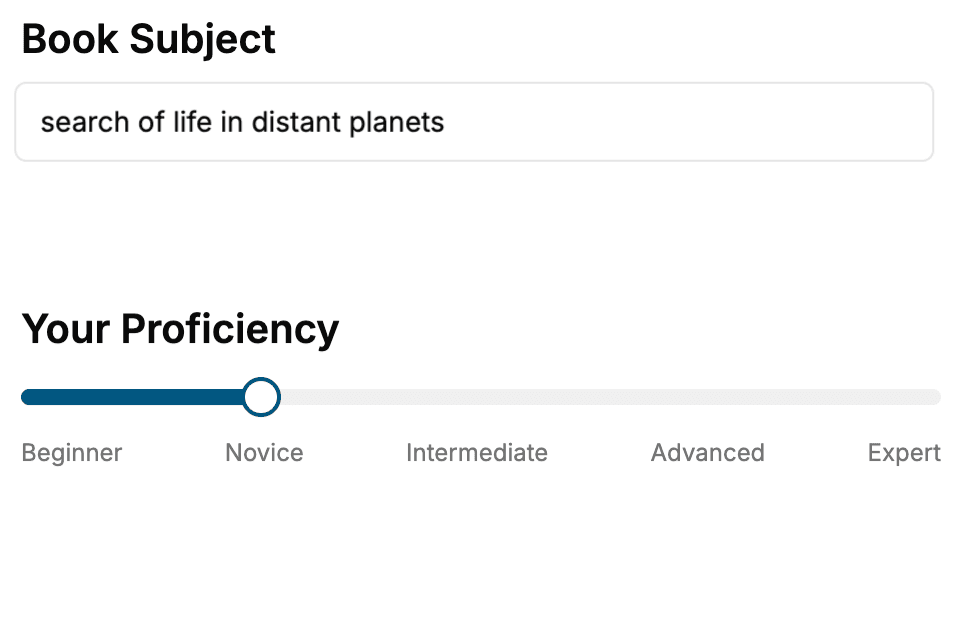
- 1. Select your focus
Select the focus of your Formal Languages book and share your background
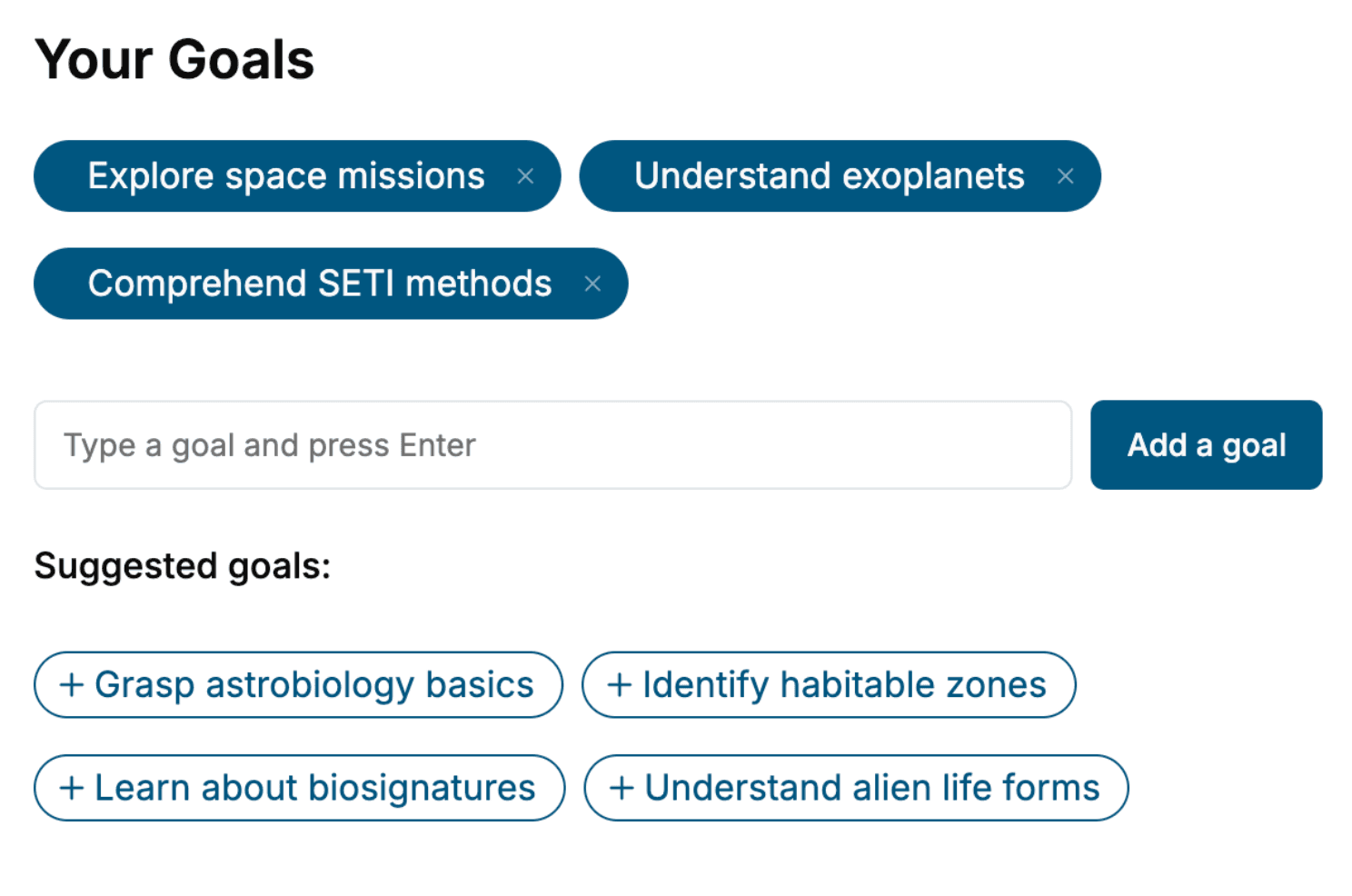
- 2. Personalize your book
Specify your goals and choose sub-topics to include
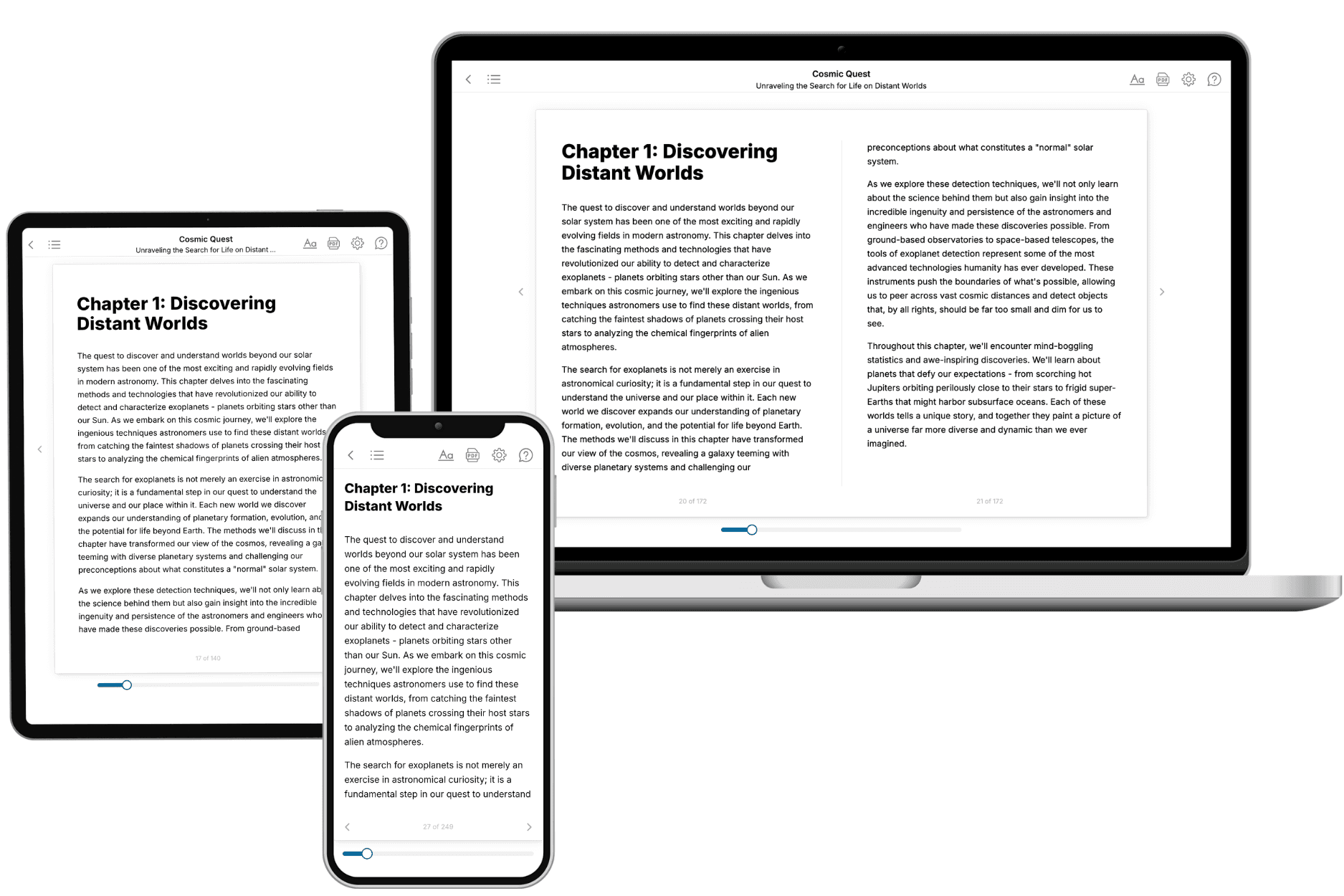
- 3. Get your tailored book
Your book is ready in 10 minutes. Read it online, download as EPUB or PDF, or send to Kindle.
Start from a template
Frequently asked questions
- What is TailoredRead?
TailoredRead creates complete, full-length nonfiction ebooks, written specifically for you. Tell us what you want to learn and why, and TailoredRead writes you a complete ebook on it, with charts, tables, and diagrams throughout. Read it online, on Kindle, or on any e-reader, or download it as a PDF or EPUB. Every book is written fresh the day you order it.
- How is the book tailored to me?
Before anything is written, you answer a few short questions about your goals, your background, and the topics you care about. Your book is then planned around your answers: written at your level, focused on your goals, and covering the topics you chose, instead of the one-size-fits-all book a store sells everyone.
- Will it read like generic AI content?
No. Your book isn't a chat transcript: it's planned chapter by chapter before a single word is written, told in a clear book voice, and explains ideas visually with charts, tables, and diagrams. After writing, every book goes through an editorial pass that polishes chapters so the book reads consistent from start to finish. Judge for yourself: browse thousands of sample books on our Explore Books page.
- How accurate is the content?
Our AI first checks whether your subject needs live research. Niche and fast-moving subjects are researched before writing, and the book plan and chapters are grounded in what it finds. After writing, every book goes through a quality pass that checks its facts and consistency, and researched books list their sources in a Notes section at the back.
- How long is the book?
You choose the length: Comprehensive (250-300 pages), Detailed (150-200 pages), Essential (70-100 pages), or Short (30-50 pages).
- Does the book include visuals?
Yes. Every book includes charts, tables, and diagrams: timelines, checklists, step-by-step guides, decision trees, comparison tables, matrices, and bar charts. A typical book includes dozens of these visual elements.
- Can I read it on Kindle? What formats can I download?
Yes. Every book can be read in our online reader or downloaded as a PDF or EPUB. The EPUB can be opened with Kindle, Apple Books, Kobo, and any e-reader. The Commercial and Author licenses also include an editable Word (DOCX) and Markdown download.
- How much does it cost?
About the price of a regular ebook. The exact price depends on your book's length and complexity, from $2 for the shortest books to $35 for the most comprehensive, and it's shown when you review your book, before you commit to anything. Each book is a one-time purchase, yours to keep, no subscription. Licenses that let you share, teach, or publish your book range from $35.99 to $49.99.
- Can I preview the book before purchasing?
Before you pay, you'll see what your book will cover: the title, a detailed description, the estimated length, and the complete chapter-by-chapter table of contents, so you know what you're getting before you decide. The full text itself is written after you purchase.
- How long does it take to create a book?
About 10 minutes. You can start reading the opening chapters while the rest is still being written.