Depth-First Search
Mastering the Fundamental Algorithm That Powers Modern Computing
What if the algorithm you learned in your first data structures course holds the key to solving some of computing's most challenging problems?
222 pages12 chaptersOct 19, 2025Algorithms
About this book
Depth-first search appears deceptively simple, yet it powers everything from web crawlers and compiler design to game AI and network topology analysis. This book takes you beyond the textbook definition to explore how DFS actually works in practice. You'll discover why this traversal strategy excels at certain problems while struggling with others, master both recursive and iterative implementations, and learn to recognize the hidden DFS patterns in complex computational challenges. Through clear explanations, practical examples, and real-world applications, you'll develop an intuitive understanding of when and how to apply DFS effectively. Whether you're preparing for technical interviews, building sophisticated software systems, or simply want to think more algorithmically, this comprehensive guide provides the depth and clarity you need to truly master one of computer science's most versatile algorithms.
Table of contents
- IntroductionWhy DFS Matters in Modern Computing, What You'll Learn and How to Use This Book, Prerequisites and Quick RefresherRead below
- Chapter 1: Foundations of Graph TraversalGraphs Are Everywhere: From Social Networks to File Systems, Graph Representations: Adjacency Lists vs Adjacency Matrices, The Two Fundamental Traversal Paradigms, Search vs Traversal: Understanding the Distinction
- Chapter 2: The Core DFS AlgorithmThe Intuition: Going Deep Before Going Wide, Recursive Implementation: Elegant and Natural, Tracing DFS Execution Step by Step, Tracking Visited Nodes: Why and How
- Chapter 3: Stack Mechanics and Iterative DFSThe Call Stack Revealed: What Recursion Really Does, Iterative DFS: Making the Stack Explicit, Recursive vs Iterative: Trade-offs and When to Choose Each
- Chapter 4: Complexity Analysis and PerformanceTime Complexity: Vertices, Edges, and Big O, Space Complexity: Stack Depth and Memory Usage, Real-World Performance Factors and Optimizations
- Chapter 5: DFS vs BFS: Choosing the Right ToolFundamental Differences in Exploration Strategy, When DFS Is the Better Choice, When BFS Is the Better Choice, Hybrid Approaches: Iterative Deepening DFS
- Chapter 6: Path Finding and ConnectivityFinding Paths Between Nodes, Identifying Connected Components, Cycle Detection in Directed and Undirected Graphs
- Chapter 7: Topological Sorting and DAGsDirected Acyclic Graphs: Properties and Applications, DFS-Based Topological Sort Algorithm, Practical Applications: Dependency Resolution and Task Scheduling
- Chapter 8: DFS on TreesTrees as Special Graphs, Preorder, Inorder, and Postorder Traversals, Tree Algorithms Powered by DFS
- Chapter 9: Backtracking and Constraint SatisfactionThe Backtracking Paradigm: Systematic Exploration, Pruning Strategies for Efficiency, Classic Problems: N-Queens, Sudoku, and Permutations, General Constraint Satisfaction Framework
- Chapter 10: Advanced DFS ApplicationsStrongly Connected Components: Kosaraju's and Tarjan's Algorithms, Articulation Points and Bridges, Maze Generation and Solving
- Chapter 11: Practical Implementation ConsiderationsHandling Large Graphs and Stack Overflow Prevention, Parallel and Distributed DFS, Debugging and Visualization Techniques
- Chapter 12: DFS in Real-World SystemsWeb Crawlers and Search Engines, Compiler Design and Abstract Syntax Trees, Game AI and Decision Trees, Network Analysis and Social Graphs
- ConclusionKey Takeaways and Mental Models, Continuing Your Algorithmic Journey
Introduction
Every day, billions of computational problems get solved using an algorithm that most programmers learn in their first data structures course but few truly master. Depth-first search appears in your code more often than you might realize—when your compiler checks syntax, when a game evaluates possible moves, when a web crawler indexes pages, or when your package manager resolves dependencies. This seemingly simple traversal strategy represents one of computing's most versatile problem-solving patterns, yet its power often remains hidden beneath textbook definitions and academic examples.
The gap between understanding DFS conceptually and applying it effectively can feel frustratingly wide. You might recognize the algorithm when you see it explicitly labeled in a coding challenge, but struggle to identify when a novel problem calls for a DFS-based solution. You might implement the recursive version correctly but hit stack overflow errors on large inputs. You might know that DFS and BFS are different but find yourself uncertain which to choose for a specific scenario. These challenges don't reflect a lack of intelligence or effort—they reflect the difference between surface-level familiarity and deep, practical mastery.
This book bridges that gap by taking you beyond the basics into the nuanced world of depth-first search as it actually works in practice. Rather than simply presenting the algorithm and moving on, we'll explore the mechanical details of how DFS operates, examine why it excels at certain problems while struggling with others, and develop your intuition for recognizing DFS-shaped solutions in disguise. You'll learn to think in terms of exploration and backtracking, to reason about stack behavior and memory constraints, and to make informed decisions about implementation strategies. By the end, DFS won't just be another algorithm you know—it will be a fundamental tool you can wield with confidence and creativity.
The journey ahead balances theory with practice, explanation with application, and breadth with depth. Each concept builds on previous ones, creating a cohesive understanding rather than a collection of disconnected facts. Whether you're preparing for technical interviews, building sophisticated software systems, working through algorithmic challenges, or simply cultivating your problem-solving abilities, this comprehensive exploration of depth-first search will transform how you approach computational problems. The algorithm itself may be decades old, but its applications continue to evolve, and mastering it remains as relevant today as ever.
Why DFS Matters in Modern Computing
Depth-first search occupies a unique position in the algorithmic landscape—it's simultaneously fundamental and sophisticated, simple to describe yet subtle to master. Unlike specialized algorithms designed for narrow problem domains, DFS represents a general-purpose exploration strategy that adapts to countless scenarios. This versatility explains why DFS appears throughout modern computing systems, often working invisibly behind the scenes to solve problems you encounter daily. Understanding DFS means understanding a pattern of thinking that transcends any single application or programming language.
Consider the software development tools you use every day. When your compiler or interpreter parses source code, it constructs an abstract syntax tree and traverses it using depth-first search to perform semantic analysis, type checking, and code generation. The compiler explores each branch of the syntax tree completely before moving to the next, ensuring that nested scopes and dependencies are processed in the correct order. This DFS-based approach enables the compiler to maintain context about the current scope while recursively processing nested structures—a task that would be significantly more complex with breadth-first exploration.
Version control systems like Git rely heavily on graph traversal algorithms, with DFS playing a central role in operations you perform constantly. When you run git log to view commit history, Git performs a depth-first traversal of the commit graph, following parent pointers to explore the ancestry of your current branch. When you merge branches or rebase commits, Git uses DFS to identify common ancestors and determine which commits need to be applied. The efficiency of these operations—which you might take for granted—depends directly on the properties of depth-first search and its ability to navigate complex branching structures with minimal memory overhead.
Web crawlers and search engines demonstrate DFS at internet scale. When a crawler discovers a new webpage, it must decide whether to explore all links on the current page before moving to the next page (breadth-first) or to follow one link deeply before returning to explore others (depth-first). While modern crawlers use sophisticated hybrid strategies, depth-first exploration offers distinct advantages for certain scenarios:
- Memory efficiency: DFS requires storing only the current path from root to the current node, rather than all nodes at the current level
- Deep content discovery: DFS naturally explores complete sections of a website before moving to others, which can be valuable for indexing hierarchical content
- Early termination: When searching for specific content, DFS can find deeply nested pages without exploring the entire breadth of a site
- Natural backtracking: DFS inherently supports backing out of dead ends, which aligns well with handling broken links or access restrictions
Game development showcases DFS in action through artificial intelligence and procedural generation. When a game AI evaluates possible moves, it often uses a depth-first approach to explore game trees—examining one sequence of moves to its conclusion before considering alternatives. This strategy proves particularly effective for games where deep tactical planning matters more than considering many shallow possibilities. Minimax algorithms, which power chess engines and other strategic game AIs, fundamentally rely on depth-first exploration with backtracking to evaluate positions and select optimal moves.
Procedural maze generation provides a concrete example of DFS creating tangible results. The algorithm starts at a random cell and repeatedly moves to an unvisited neighbor, carving a path as it goes. When it reaches a dead end with no unvisited neighbors, it backtracks to the most recent cell that has unvisited neighbors and continues from there. This process continues until every cell has been visited, resulting in a perfect maze—one with exactly one path between any two cells. The characteristic long, winding corridors of DFS-generated mazes reflect the algorithm's tendency to explore deeply before backtracking, creating a distinctly different feel from mazes generated with other algorithms.
Network analysis and social graph exploration represent another domain where DFS proves invaluable. When analyzing social networks, recommendation systems, or organizational structures, DFS helps identify communities, detect influence patterns, and trace information flow. For instance, finding all users within a certain degree of connection from a target user, identifying circular dependencies in organizational reporting structures, or detecting potential security vulnerabilities in network topologies all benefit from DFS-based approaches. The algorithm's ability to follow chains of relationships to their conclusion before exploring alternatives makes it particularly well-suited for these relationship-tracing tasks.
Dependency resolution in package managers and build systems relies fundamentally on DFS and topological sorting. When you install a software package that depends on other packages, which themselves have dependencies, the package manager must determine a valid installation order. This problem maps directly to topological sorting of a directed acyclic graph, which is efficiently solved using depth-first search. The package manager explores each dependency chain completely, ensuring that all prerequisites are identified before installation begins. Without DFS-based dependency resolution, modern software development with its complex webs of interdependent libraries would be practically impossible.
The prevalence of DFS across these diverse domains reveals an important truth: mastering depth-first search means more than memorizing an algorithm. It means developing an intuition for when problems involve exploration, backtracking, or exhaustive search through structured spaces. It means recognizing that many seemingly unrelated problems share an underlying graph structure that DFS can navigate effectively. It means understanding the trade-offs between different traversal strategies and choosing appropriately for your specific constraints. This deeper understanding transforms DFS from a textbook concept into a practical tool that shapes how you approach problem-solving across your entire programming career.
Perhaps most importantly, DFS serves as a gateway to advanced algorithmic thinking. Many sophisticated algorithms build upon DFS as a foundation—Tarjan's algorithm for finding strongly connected components, Kosaraju's algorithm for the same problem, algorithms for finding articulation points and bridges in networks, and various backtracking solutions to constraint satisfaction problems. By thoroughly understanding DFS, you prepare yourself to comprehend and apply these more advanced techniques. The investment in truly mastering depth-first search pays dividends far beyond the algorithm itself, developing your capacity for algorithmic reasoning and problem decomposition in ways that benefit your entire technical skillset.
What You'll Learn and How to Use This Book
This book follows a carefully structured progression designed to build your understanding systematically while maintaining practical relevance at every stage. Rather than overwhelming you with theory before showing applications, each chapter balances conceptual explanation with concrete examples and implementation details. You'll move from foundational concepts through core mechanics to advanced applications, with each topic building naturally on what came before. This approach ensures that you're never left wondering why something matters or how it connects to real programming challenges.
The early chapters establish essential foundations by exploring graph representations and traversal paradigms. You'll understand why graphs appear everywhere in computing—from file systems to social networks to program control flow—and how different representation choices affect algorithm performance. We'll examine the fundamental distinction between depth-first and breadth-first exploration strategies, developing intuition for why each approach suits different problem types. These chapters don't just present facts; they build mental models that will guide your algorithmic decision-making throughout your career. You'll learn to see graphs in problems that don't initially appear graph-related, a crucial skill for applying DFS effectively.
The middle chapters dive deep into DFS mechanics, implementation strategies, and complexity analysis. You'll master both recursive and iterative implementations, understanding not just how to write the code but why each approach works and when to prefer one over the other. We'll trace algorithm execution step by step, making the implicit explicit and revealing exactly what happens at each stage of traversal. The complexity analysis goes beyond stating that DFS runs in O(V + E) time—you'll understand why this is true, how it varies with different graph representations, and what it means for real-world performance. These chapters transform DFS from a black box into a transparent, predictable tool you can reason about confidently.
Subsequent chapters explore DFS applications across diverse problem domains, showing you how to recognize when a problem calls for depth-first search and how to adapt the core algorithm to specific scenarios. You'll work through path finding, connectivity analysis, cycle detection, and topological sorting—each with detailed examples and implementation guidance. The backtracking chapter reveals how DFS powers solutions to constraint satisfaction problems, from classic puzzles like N-Queens and Sudoku to practical challenges in scheduling and configuration. Rather than treating these as separate topics, we'll emphasize the common patterns that unite them, helping you develop transferable problem-solving strategies.
Advanced chapters tackle sophisticated DFS-based algorithms and real-world implementation considerations. You'll explore Tarjan's and Kosaraju's algorithms for finding strongly connected components, algorithms for identifying articulation points and bridges in networks, and techniques for handling large graphs that exceed available memory. These chapters don't assume you'll implement these algorithms from scratch in every project, but they develop your understanding of how DFS extends to solve increasingly complex problems. You'll learn to read and understand advanced algorithmic literature, preparing you to apply published algorithms to your own challenges.
Throughout the book, you'll encounter multiple types of learning aids designed to reinforce understanding and facilitate practical application:
- Concrete examples: Every major concept includes specific, detailed examples that show the algorithm in action on real data structures
- Implementation code: Working code examples demonstrate both correct implementations and common pitfalls to avoid
- Complexity analysis: Detailed breakdowns of time and space complexity help you predict performance and make informed trade-offs
- Visual traces: Step-by-step execution traces reveal exactly how the algorithm progresses through data structures
- Comparison tables: Side-by-side comparisons highlight differences between related approaches and guide algorithm selection
- Real-world applications: Examples from actual systems show how DFS solves practical problems in production environments
The book's structure supports multiple reading strategies depending on your goals and background. If you're new to DFS or need a comprehensive review, reading sequentially from beginning to end provides the most coherent learning experience. Each chapter assumes familiarity with previous material, so this linear approach ensures you encounter concepts in optimal order. If you're already comfortable with basic DFS but want to deepen your understanding of specific topics, the chapter organization allows you to jump directly to relevant sections—though you may occasionally need to reference earlier chapters for context.
For interview preparation, focus particularly on chapters covering path finding, cycle detection, topological sorting, and backtracking, as these topics appear frequently in technical interviews. The implementation chapters provide the practical coding skills you'll need, while the complexity analysis sections prepare you to discuss performance trade-offs articulately. The comparison between DFS and BFS proves especially valuable for interview discussions, as interviewers often ask you to justify your algorithmic choices. Practice implementing the algorithms from scratch without referring to the code examples, then compare your implementations to identify areas for improvement.
If you're working on a specific project that requires graph traversal, use the book as a reference guide to identify the most appropriate DFS variant for your needs. The application chapters provide templates you can adapt to your specific problem domain, while the implementation considerations chapter addresses practical challenges like handling large graphs, preventing stack overflow, and debugging traversal logic. Don't hesitate to modify the presented algorithms to suit your constraints—understanding the core principles enables you to adapt confidently rather than blindly copying code.
Active engagement dramatically improves learning outcomes with algorithmic material. As you read, implement the algorithms in your preferred programming language, even if the book provides examples in a different language. Trace algorithm execution on your own example graphs, predicting what will happen before checking your predictions. Modify the algorithms to solve variations of the presented problems, testing your understanding by applying concepts in new contexts. Work through the examples manually before reading the explanations, using the text to verify your reasoning rather than as a substitute for thinking. This active approach transforms passive reading into genuine skill development.
The book deliberately avoids language-specific idioms in favor of clear, transferable concepts. While code examples use common programming constructs, the focus remains on algorithmic thinking rather than language features. This approach ensures the material remains relevant regardless of which programming language you use professionally. When you encounter code examples, focus on understanding the logic and data flow rather than memorizing syntax. The goal is to develop the ability to implement DFS in any language, not to memorize specific code snippets.
By the end of this book, you'll possess a comprehensive, practical understanding of depth-first search that goes far beyond textbook knowledge. You'll recognize DFS patterns in novel problems, implement the algorithm efficiently in multiple forms, analyze its performance characteristics accurately, and adapt it creatively to diverse applications. More importantly, you'll have developed algorithmic intuition and problem-solving strategies that extend beyond DFS itself, enhancing your overall capabilities as a programmer. The time you invest in truly mastering this fundamental algorithm will pay dividends throughout your career, as DFS appears again and again in increasingly sophisticated contexts.
Prerequisites and Quick Refresher
This book assumes you have foundational programming knowledge and basic familiarity with data structures and algorithms. You should be comfortable reading and writing code in at least one programming language, understanding concepts like variables, functions, loops, and conditionals. You don't need to be an expert programmer, but you should be past the absolute beginner stage where basic syntax and program structure still feel unfamiliar. The book focuses on algorithmic concepts rather than language-specific features, so proficiency in any mainstream language—Python, Java, JavaScript, C++, or similar—provides sufficient background.
Familiarity with fundamental data structures proves essential for understanding DFS implementations and applications. You should understand arrays and how they provide constant-time access to elements by index. You should know what linked lists are and how they differ from arrays in terms of memory layout and access patterns. Most critically, you need a solid grasp of stacks and their last-in-first-out behavior, as stacks form the mechanical foundation of depth-first search. If you've taken an introductory data structures course or worked through a basic algorithms book, you likely have sufficient preparation.
Basic graph terminology and concepts appear throughout the book, so let's quickly review the essential vocabulary. A graph consists of vertices (also called nodes) connected by edges (also called links or arcs). Graphs can be directed, where edges have a specific direction from one vertex to another, or undirected, where edges represent bidirectional connections. An edge may have a weight representing cost, distance, or some other metric, though DFS itself doesn't inherently consider edge weights. A path is a sequence of vertices where each consecutive pair is connected by an edge, and a cycle is a path that starts and ends at the same vertex.
Understanding recursion is crucial for grasping the most natural DFS implementation. Recursion occurs when a function calls itself, either directly or indirectly through other functions. Each recursive call creates a new execution context with its own local variables, and these contexts stack up until a base case is reached, at which point they unwind in reverse order. If recursion still feels mysterious or uncomfortable, don't worry—the book dedicates significant attention to explaining exactly how recursive DFS works and how the call stack manages execution. However, having some prior exposure to recursive thinking will make these explanations easier to absorb.
Basic complexity analysis helps you understand performance characteristics and make informed algorithmic choices. You should be familiar with Big O notation and what it means to say an algorithm runs in O(n) or O(n²) time. You don't need to be able to derive complex recurrence relations or perform sophisticated mathematical analysis, but you should understand that Big O describes how runtime or memory usage grows as input size increases. The book provides detailed complexity analysis for DFS and its variants, but these discussions assume you understand the basic framework of asymptotic analysis.
Let's refresh some key concepts about stacks, since they're so central to understanding DFS mechanics. A stack supports two primary operations:
- Push: Add an element to the top of the stack
- Pop: Remove and return the element from the top of the stack
When you call a function in most programming languages, the system uses a call stack to manage execution. Each function call pushes a new stack frame onto the call stack, containing the function's local variables, parameters, and return address. When the function returns, its stack frame is popped, and execution resumes in the calling function. Recursive functions create multiple stack frames for the same function, each with different parameter values and local state. Understanding this mechanism is essential for grasping why recursive DFS works and why it can cause stack overflow on deep graphs.
Graph representation significantly affects DFS implementation and performance, so let's review the two primary approaches. An adjacency matrix uses a two-dimensional array where entry [i][j] indicates whether an edge exists from vertex i to vertex j. This representation provides constant-time edge lookup but requires O(V²) space regardless of how many edges actually exist. An adjacency list stores, for each vertex, a list of its neighbors. This representation uses O(V + E) space and proves more efficient for sparse graphs where the number of edges is much less than V². Most real-world graphs are sparse, making adjacency lists the more common choice.
If any of these prerequisite topics feel shaky, consider reviewing them before diving deep into the book. A solid foundation in these areas will make the DFS material much more accessible and allow you to focus on the novel concepts rather than struggling with background knowledge. That said, the book provides sufficient context and explanation that motivated readers can fill small gaps in their background knowledge as they progress. The key is being comfortable with the general concepts even if you don't remember every detail.
One final note about mathematical notation: the book uses standard mathematical symbols and notation where they provide clarity and precision. V typically represents the set of vertices in a graph or the number of vertices, while E represents edges. n often denotes input size in general contexts. Set notation like ∈ (element of) and ⊆ (subset of) appears occasionally but is always explained in context. If you encounter unfamiliar notation, the surrounding text should provide sufficient explanation, and you can always infer meaning from context and examples.
With these prerequisites in place, you're ready to begin your deep dive into depth-first search. The journey ahead will challenge you to think carefully about algorithmic behavior, implementation trade-offs, and problem-solving strategies. It will require active engagement and practice to truly master the material. But the reward—a thorough, practical understanding of one of computing's most versatile algorithms—is well worth the effort. Let's begin by exploring the foundational concepts of graph traversal and understanding why we need systematic strategies for exploring connected structures.
This is the end of the free sample. The full book has 12 chapters.
Want this book written for you?
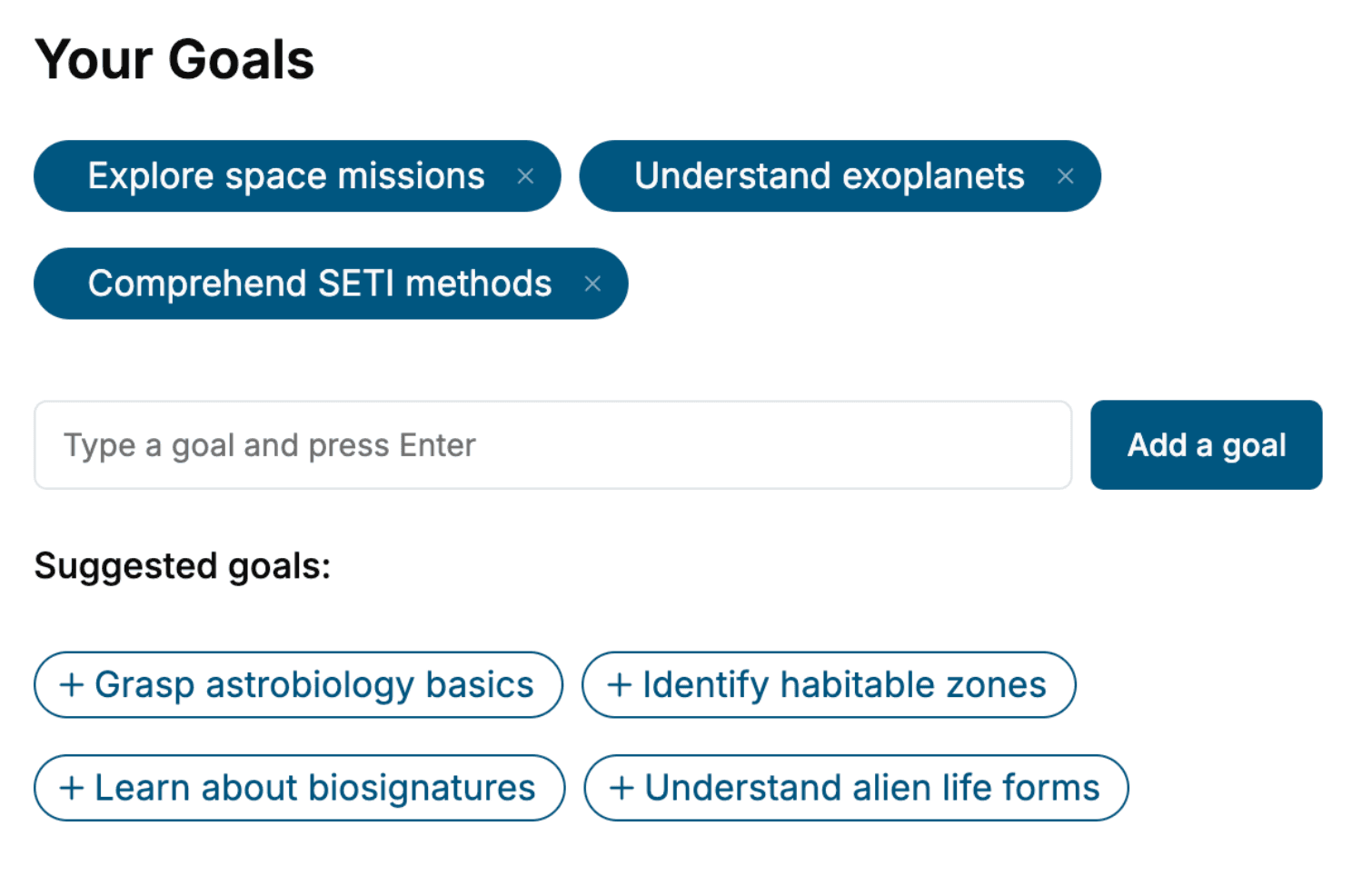
Tell us your goals and background, and get your own version of this book, tailored by AI to you.


Benefits of AI-tailored books
- Read one book, not ten:
- all the Algorithms knowledge you need, gathered into a single book.
- Save days of learning:
- tell us your goals, choose your topics, and the whole book is built around them.
- Learn effortlessly:
- Algorithms book written for your specific background and expertise.
- Understand at a glance:
- includes charts, tables, timelines, checklists, decision trees, and more.
- Stay current:
- written the day you order it, not years ago.
- Trust what you read:
- every book is checked for accuracy, with real research when your subject needs it.
Create your unique book in 3 steps
- 1. Select your focus
Select the focus of your Algorithms book and share your background
- 2. Personalize your book
Specify your goals and choose sub-topics to include
- 3. Get your tailored book
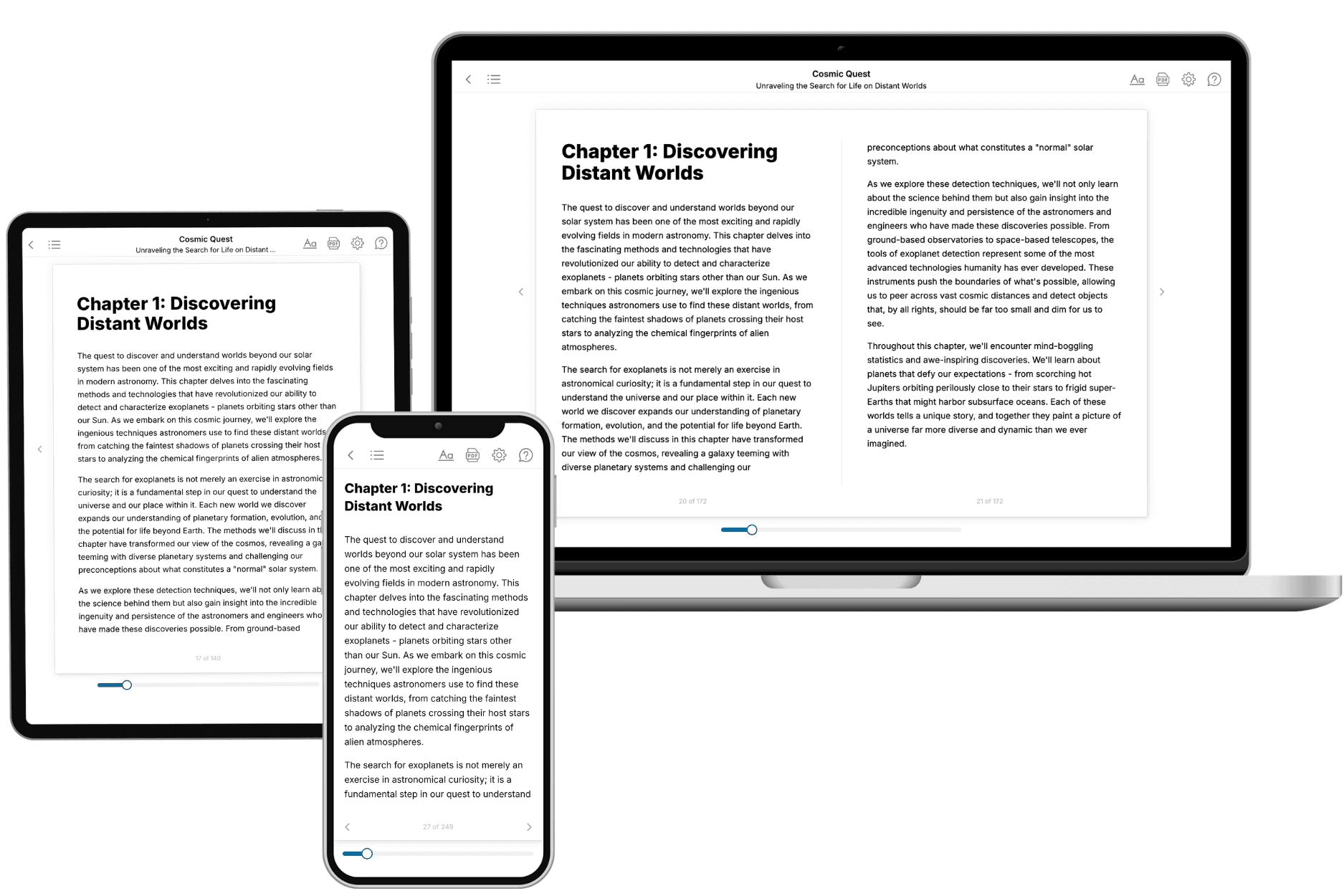
Your book is ready in 10 minutes. Read it online, download as EPUB or PDF, or send to Kindle.

Frequently asked questions
- What is TailoredRead?
TailoredRead creates complete, full-length nonfiction ebooks, written specifically for you. Tell us what you want to learn and why, and TailoredRead writes you a complete ebook on it, with charts, tables, and diagrams throughout. Read it online, on Kindle, or on any e-reader, or download it as a PDF or EPUB. Every book is written fresh the day you order it.
- How is the book tailored to me?
Before anything is written, you answer a few short questions about your goals, your background, and the topics you care about. Your book is then planned around your answers: written at your level, focused on your goals, and covering the topics you chose, instead of the one-size-fits-all book a store sells everyone.
- Will it read like generic AI content?
No. Your book isn't a chat transcript: it's planned chapter by chapter before a single word is written, told in a clear book voice, and explains ideas visually with charts, tables, and diagrams. After writing, every book goes through an editorial pass that polishes chapters so the book reads consistent from start to finish. Judge for yourself: browse thousands of sample books on our Explore Books page.
- How accurate is the content?
Our AI first checks whether your subject needs live research. Niche and fast-moving subjects are researched before writing, and the book plan and chapters are grounded in what it finds. After writing, every book goes through a quality pass that checks its facts and consistency, and researched books list their sources in a Notes section at the back.
- How long is the book?
You choose the length: Comprehensive (250-300 pages), Detailed (150-200 pages), Essential (70-100 pages), or Short (30-50 pages).
- Does the book include visuals?
Yes. Every book includes charts, tables, and diagrams: timelines, checklists, step-by-step guides, decision trees, comparison tables, matrices, and bar charts. A typical book includes dozens of these visual elements.
- Can I read it on Kindle? What formats can I download?
Yes. Every book can be read in our online reader or downloaded as a PDF or EPUB. The EPUB can be opened with Kindle, Apple Books, Kobo, and any e-reader. The Commercial and Author licenses also include an editable Word (DOCX) and Markdown download.
- How much does it cost?
About the price of a regular ebook. The exact price depends on your book's length and complexity, from $2 for the shortest books to $35 for the most comprehensive, and it's shown when you review your book, before you commit to anything. Each book is a one-time purchase, yours to keep, no subscription. Licenses that let you share, teach, or publish your book range from $35.99 to $49.99.
- Can I preview the book before purchasing?
Before you pay, you'll see what your book will cover: the title, a detailed description, the estimated length, and the complete chapter-by-chapter table of contents, so you know what you're getting before you decide. The full text itself is written after you purchase.
- How long does it take to create a book?
About 10 minutes. You can start reading the opening chapters while the rest is still being written.