Passion and Reason
Abelard and Heloise in the Crucible of Medieval Thought
Have you ever wondered how a scandalous love affair could shape the course of medieval philosophy?
284 pages14 chaptersJan 14, 2025Medieval History
About this book
In 12th century Paris, two brilliant minds collided, igniting a passion that would challenge the intellectual and social norms of their time. "Passion and Reason: Abelard and Heloise in the Crucible of Medieval Thought" delves deep into the lives of Peter Abelard and Heloise d'Argenteuil, unraveling their complex relationship and its profound impact on medieval philosophy. This book takes you on an intellectual journey through the bustling streets of medieval Paris, where the seeds of scholasticism were being sown. You'll explore the revolutionary ideas that Abelard introduced to logic and ethics, and discover how Heloise's sharp intellect and unwavering devotion both complemented and challenged her lover's thoughts. Beyond their personal story, you'll gain insight into the broader landscape of medieval thought, understanding how their ideas fit into and shaped the intellectual debates of their time. From the rise of urban schools to the clash between faith and reason, this book illuminates the dynamic world of medieval philosophy through the lens of one of history's most famous couples.
Table of contents
- IntroductionSetting the Stage: 12th Century Europe, Introducing the Protagonists: Abelard and Heloise, The Significance of Their Story in Medieval Thought, Overview of the Book's JourneyRead below
- Chapter 1: The Intellectual Landscape of Medieval ParisThe Rise of Urban Schools, Cathedral Schools and Their Curriculum, The Intellectual Climate of the 12th Century, Key Figures in Parisian Intellectual Circles
- Chapter 2: Abelard's Early Life and EducationChildhood and Family Background, Early Education and Intellectual Pursuits, The Move to Paris: Seeking Knowledge, Early Teachings and Rising Fame
- Chapter 3: Heloise: A Remarkable MindOrigins and Early Life, Education and Intellectual Prowess, Life in the Convent of Argenteuil, Heloise's Reputation in Parisian Circles
- Chapter 4: The Fateful MeetingCircumstances of Their First Encounter, The Intellectual Connection, The Tutor-Student Relationship, The Blossoming of Romance
- Chapter 5: A Forbidden LoveThe Secret Affair, Discovery and Consequences, The Clandestine Marriage, Fulbert's Revenge
- Chapter 6: The Aftermath of TragedyAbelard's Castration and Its Impact, Heloise's Return to the Convent, The Separation of the Lovers, Emotional and Spiritual Turmoil
- Chapter 7: Abelard's Philosophical ContributionsInnovations in Logic, The Problem of Universals, Ethical Theory and Intentionalism, Theological Controversies
- Chapter 8: Heloise: More Than a LoverHeloise's Intellectual Prowess, Mastery of Latin and Greek, Theological Insights and Debates, Leadership as an Abbess
- Chapter 9: The Famous CorrespondenceThe Letters: Authenticity and Controversy, Themes of Love, Faith, and Philosophy, Literary and Historical Value, Insights into Medieval Thought and Society
- Chapter 10: Sic et Non: A Revolutionary MethodExplanation of the Sic et Non Method, Impact on Scholasticism, Promoting Critical Thinking in Theology, The Legacy of Sic et Non in Medieval Education
- Chapter 11: Faith and Reason in Medieval ThoughtMajor Theological Debates of the Time, Abelard's Approach to Reconciling Faith and Reason, The Church's Reaction to Rational Inquiry, Lasting Influence on Western Philosophy
- Chapter 12: Love and Marriage in Medieval ThoughtMedieval Concepts of Love, Views on Marriage and Celibacy, Abelard and Heloise's Perspectives on Love, Influence on Medieval Literature
- Chapter 13: The Later YearsAbelard's Life in Monasticism, Heloise's Leadership at the Paraclete, Continued Intellectual Exchange, Their Final Days and Legacy
- Chapter 14: The Impact on Medieval EducationAbelard's Innovative Teaching Methods, The Birth of the University of Paris, Changes in Educational Curriculum, Long-term Influence on Western Education
- ConclusionRecapitulating the Legacy of Abelard and Heloise, Their Place in the Tapestry of Medieval Thought
- Glossary
- Further Reading
Introduction
In the tapestry of medieval history, few threads shine as brightly or intertwine as intricately as those of Peter Abelard and Heloise d'Argenteuil. Their story, a compelling blend of intellectual brilliance and passionate love, has captivated minds for centuries, offering a unique window into the complex world of 12th-century Europe. As you embark on this journey through "Passion and Reason: Abelard and Heloise in the Crucible of Medieval Thought," you will discover how the lives of these two remarkable individuals not only reflected but also shaped the intellectual and social landscape of their time.
The tale of Abelard and Heloise is more than a mere love story; it is a profound exploration of the human condition, set against the backdrop of a rapidly changing medieval world. Their relationship, which blossomed in the scholarly circles of Paris, challenged the established norms of society and the Church, forcing contemporaries and later generations alike to grapple with fundamental questions about the nature of love, faith, and reason. Through their writings, teachings, and personal struggles, Abelard and Heloise left an indelible mark on Western philosophy, theology, and literature.
As you delve deeper into this book, you will find that the story of Abelard and Heloise serves as a prism through which the broader intellectual currents of the 12th century can be examined and understood. From the rise of urban schools to the development of scholasticism, from debates over universals to discussions of ethics and intentionality, their lives intersected with and influenced some of the most significant developments in medieval thought. By exploring their story in detail, you will gain not only a richer understanding of two fascinating historical figures but also a deeper appreciation for the intellectual ferment of the High Middle Ages.
Setting the Stage: 12th Century Europe
To fully appreciate the significance of Abelard and Heloise's story, it is crucial to understand the world in which they lived. The 12th century was a time of remarkable change and growth in Europe, often referred to as the "12th-century Renaissance." This period witnessed a surge in population, the growth of cities, the expansion of trade, and a flourishing of intellectual and cultural activity that would lay the groundwork for the later Renaissance and the modern world.
In the realm of education and intellectual life, the 12th century marked a pivotal shift. The traditional monastic schools, which had been the primary centers of learning throughout the early Middle Ages, were gradually being supplemented and, in some cases, supplanted by cathedral schools in urban centers. This shift was particularly pronounced in Paris, which was emerging as one of the preeminent intellectual hubs of Europe. The cathedral school of Notre Dame, where Abelard would eventually teach, was at the forefront of this educational revolution.
The intellectual climate of the time was characterized by a growing interest in rational inquiry and logical analysis, particularly as applied to theological questions. This period saw the rediscovery and translation of many classical texts, including works of Aristotle, which had been largely lost to Western Europe during the early Middle Ages. The influx of these texts, along with works from Islamic and Jewish scholars, sparked new debates and intellectual explorations. Scholars began to apply logical reasoning to matters of faith, seeking to reconcile Christian doctrine with philosophical inquiry.
Politically, the 12th century was a time of both consolidation and fragmentation. The feudal system, which had dominated European social and political organization for centuries, was beginning to evolve. Kings were gradually centralizing their power, while at the same time, new forms of local governance were emerging in the growing towns and cities. The Church, meanwhile, was at the height of its temporal power, exerting significant influence over both political affairs and intellectual discourse.
It was in this context of intellectual ferment, urban growth, and shifting power dynamics that Abelard and Heloise lived and loved. Their story unfolded against a backdrop of competing ideas about the nature of knowledge, the relationship between faith and reason, and the proper role of the individual within society and the Church. As you explore their lives and works, you will see how they both reflected and challenged the norms and assumptions of their time.
The 12th century also saw significant developments in the realm of literature and the arts. The troubadour tradition was flourishing in southern France, introducing new ideas about courtly love and romantic relationships that would have a profound impact on Western literature. At the same time, the Gothic style was beginning to emerge in architecture, exemplified by the construction of great cathedrals like Notre Dame in Paris. These cultural developments provide an important context for understanding the emotional and aesthetic dimensions of Abelard and Heloise's relationship, as well as the ways in which their story has been interpreted and reimagined over the centuries.
As you delve into the subsequent chapters of this book, keep in mind this rich and complex backdrop. The story of Abelard and Heloise is not just a personal drama, but a lens through which we can view the broader intellectual, social, and cultural transformations of the 12th century. Their lives and works offer a unique perspective on a pivotal moment in European history, when the foundations of modern Western thought were being laid.
Introducing the Protagonists: Abelard and Heloise
At the heart of this narrative stand two extraordinary individuals: Peter Abelard and Heloise d'Argenteuil. Their lives, both separately and together, exemplify the intellectual vigor and emotional complexity of their era. As we introduce these central figures, it is important to recognize that while their love story has often overshadowed their individual accomplishments, both Abelard and Heloise were remarkable scholars and thinkers in their own right.
Peter Abelard, born in 1079 in Le Pallet, Brittany, emerged as one of the most brilliant and controversial intellectuals of the 12th century. From an early age, Abelard displayed an exceptional aptitude for learning, particularly in the field of dialectic or logical argumentation. Eschewing the traditional path of knighthood expected of a man of his social standing, Abelard chose instead to pursue a life of scholarship. His decision would lead him to Paris, the intellectual capital of Europe, where he would eventually become one of the most renowned teachers of his time.
Abelard's intellectual prowess was matched by his self-confidence, which often bordered on arrogance. He was known for his sharp wit and his ability to best his opponents in debate, traits that earned him both admiration and enmity. As a teacher, Abelard was revolutionary. He challenged the traditional methods of instruction, encouraging his students to question established authorities and to think critically. His approach to philosophy and theology, which emphasized the use of reason to explore matters of faith, would have a profound impact on the development of scholasticism.
Heloise, born around 1090, was in many ways Abelard's intellectual equal. Raised and educated in the convent of Argenteuil, she had acquired a level of learning that was exceptional for a woman of her time. Fluent in Latin, Greek, and Hebrew, Heloise was well-versed in classical literature, philosophy, and theology. Her intellect and erudition were widely recognized, even before her fateful meeting with Abelard. It is crucial to understand that Heloise was not merely a passive recipient of Abelard's teachings, but an active participant in intellectual discourse, capable of engaging with and challenging the most complex ideas of her day.
When Abelard and Heloise met, likely around 1115, the stage was set for a relationship that would transcend the boundaries of teacher and student, man and woman, in ways that both reflected and challenged the norms of their society. Abelard, then in his late thirties and at the height of his fame as a teacher, was captivated not just by Heloise's beauty but by her remarkable mind. For her part, Heloise found in Abelard not only a brilliant teacher but a kindred spirit who could match and stimulate her intellectual curiosity.
Their relationship, which began as an intellectual partnership, soon blossomed into a passionate love affair. This development was fraught with complications, given the social and ecclesiastical norms of the time. Abelard was not only Heloise's teacher but also a cleric, expected to remain celibate. Heloise, as a young unmarried woman of noble birth, was subject to strict societal expectations regarding her behavior and future prospects. The tension between their passionate feelings for each other and the constraints of their society would ultimately lead to tragedy, shaping the course of both their lives in profound ways.
As you proceed through this book, you will discover that the story of Abelard and Heloise is far more than a tale of forbidden love. It is a narrative that encompasses some of the most pressing intellectual and spiritual questions of the medieval period. Through their writings, teachings, and personal struggles, Abelard and Heloise grappled with fundamental issues of faith, reason, ethics, and the nature of love itself. Their story provides a unique window into the intellectual and emotional life of the 12th century, offering insights that continue to resonate with readers today.
In the chapters that follow, we will explore in detail the lives and works of these two remarkable individuals. You will learn about Abelard's groundbreaking contributions to logic and ethics, his controversial theological positions, and his development of the "Sic et Non" method, which would revolutionize medieval education. You will also discover Heloise's own intellectual achievements, her leadership as an abbess, and her profound reflections on love, marriage, and spirituality. Through their famous correspondence, you will gain insight into their enduring emotional and intellectual connection, even after circumstances forced them apart.
As we delve into their story, it is important to approach Abelard and Heloise not as distant historical figures, but as complex human beings grappling with timeless questions of love, faith, and personal fulfillment. Their struggles and triumphs, their intellectual breakthroughs and emotional turmoil, offer a mirror in which we can reflect on our own experiences and beliefs. By understanding their lives in the context of their time, we can gain a deeper appreciation for the evolution of Western thought and the enduring power of the human spirit.
The Significance of Their Story in Medieval Thought
The story of Abelard and Heloise is not merely a captivating historical anecdote; it represents a crucial juncture in the development of medieval thought and continues to hold profound significance for our understanding of intellectual history. Their lives and works embody the tensions and transformations that characterized the 12th century, a period that laid the foundations for many aspects of modern Western philosophy, theology, and education. As we explore the significance of their story, it becomes clear that Abelard and Heloise were not just participants in, but active shapers of, the intellectual landscape of their time.
One of the most significant aspects of Abelard and Heloise's legacy lies in their contribution to the evolving relationship between faith and reason in medieval thought. Abelard, in particular, was at the forefront of a movement that sought to apply logical analysis and rational inquiry to matters of faith. His approach, which emphasized the importance of questioning and critical thinking, represented a departure from the more traditional, authority-based methods of theological inquiry. This shift was not without controversy, and Abelard's ideas often brought him into conflict with more conservative elements within the Church. However, his insistence on the compatibility of faith and reason would have a lasting impact on Western philosophy and theology.
Abelard's method of "Sic et Non" (Yes and No) exemplifies this approach. In this work, Abelard presented a series of apparently contradictory statements from various authorities on theological questions, challenging his students to reconcile these contradictions through careful analysis and logical reasoning. This method, which encouraged critical thinking and the careful examination of sources, was revolutionary for its time. It laid the groundwork for the scholastic method that would dominate medieval universities in the following centuries and continues to influence academic discourse to this day.
The significance of Abelard and Heloise's story extends beyond the realm of abstract philosophical and theological debates. Their relationship and its aftermath provide valuable insights into medieval attitudes towards love, sexuality, and gender roles. The passionate nature of their affair, as well as their reflections on it in their later correspondence, challenged contemporary notions of clerical celibacy and the nature of spiritual love. Heloise, in particular, offers a rare and powerful female voice in medieval literature, articulating complex ideas about love, marriage, and personal fulfillment that were often at odds with the prevailing social and religious norms of her time.
Furthermore, the story of Abelard and Heloise illuminates the changing nature of education in the 12th century. Abelard's career as a teacher, first in the cathedral schools of Paris and later as an independent master, reflects the growing importance of urban centers as hubs of learning. His popularity as a teacher and his conflicts with established authorities highlight the tensions between traditional monastic education and the emerging schools that would eventually evolve into universities. Heloise's own erudition and her later role as an abbess underscore the complex and often overlooked role of women in medieval intellectual life.
The enduring fascination with Abelard and Heloise's story also speaks to its significance in the development of Western literature and cultural imagination. Their letters, whether viewed as authentic historical documents or as literary constructions, have been influential in shaping ideas about romantic love and intellectual partnership. The narrative of their relationship has been retold and reinterpreted countless times over the centuries, influencing literature, art, and popular culture. This ongoing engagement with their story demonstrates its power to speak to fundamental human experiences and emotions across time and cultural boundaries.
In the realm of ethics and moral philosophy, Abelard's contributions were groundbreaking. His emphasis on intention as a key factor in determining the moral value of an action represented a significant departure from previous ethical theories. This focus on the internal state of the moral agent rather than solely on external actions has had a lasting impact on Western ethical thought. Abelard's ethical writings, often drawing on his personal experiences and struggles, offer a nuanced exploration of human motivation and moral responsibility that continues to be relevant to contemporary ethical debates.
The significance of Abelard and Heloise in medieval thought also lies in their role as embodiments of the intellectual and spiritual struggles of their time. Their lives and works reflect the broader tensions between individual desire and societal expectations, between intellectual inquiry and religious orthodoxy, and between the emerging urban culture and traditional monastic values. By studying their story, we gain insight not just into two remarkable individuals, but into the complex social, cultural, and intellectual transformations that were reshaping European society in the 12th century.
As you proceed through this book, you will discover that the significance of Abelard and Heloise's story lies not just in its historical interest, but in its continued relevance to contemporary discussions about the nature of love, the role of reason in matters of faith, and the challenges of reconciling personal fulfillment with social and moral obligations. Their lives and works offer a rich tapestry of ideas and experiences that continue to provoke thought and inspire debate, making them enduring figures in the history of Western thought.
Overview of the Book's Journey
As you embark on this exploration of Abelard and Heloise's lives and their impact on medieval thought, it is helpful to have an overview of the journey that lies ahead. This book is structured to provide a comprehensive understanding of not only the personal story of these two remarkable individuals but also the broader intellectual and cultural context in which they lived and worked. Through a carefully organized progression of chapters, you will be guided through the complexities of 12th-century Europe, the intricacies of medieval philosophy and theology, and the enduring legacy of Abelard and Heloise's contributions to Western thought.
The book begins by setting the stage with a detailed examination of the intellectual landscape of medieval Paris. You will learn about the rise of urban schools, the curriculum of cathedral schools, and the key figures who shaped the intellectual climate of the 12th century. This background is crucial for understanding the environment in which Abelard and Heloise emerged as influential thinkers. The vibrant intellectual atmosphere of Paris, with its competing schools of thought and lively debates, provides the backdrop against which their story unfolds.
Following this contextual introduction, the book delves into the early lives and education of both Abelard and Heloise. You will explore Abelard's childhood and his decision to pursue a life of scholarship, tracing his journey from Brittany to Paris and his rise to fame as a teacher and logician. Similarly, you will discover Heloise's background, her exceptional education, and her reputation as a scholar even before her fateful meeting with Abelard. These chapters will provide insight into the formative experiences and intellectual foundations that shaped both individuals.
The narrative then turns to the central drama of their relationship, beginning with their first meeting and the development of their intellectual and romantic connection. You will follow the course of their secret affair, its discovery, and the tragic consequences that followed. This section of the book not only recounts the personal story of Abelard and Heloise but also examines how their relationship challenged and was shaped by the social and religious norms of their time.
In the aftermath of their separation, the book explores the divergent paths taken by Abelard and Heloise. You will learn about Abelard's continued philosophical and theological work, including his innovative approaches to logic, ethics, and the problem of universals. The controversies surrounding his teachings and writings, which led to accusations of heresy and his eventual condemnation, are examined in detail. Simultaneously, you will discover Heloise's life as an abbess and her own intellectual pursuits, challenging the notion that she was merely Abelard's student or lover.
A significant portion of the book is dedicated to an analysis of the famous correspondence between Abelard and Heloise. These letters, which have fascinated readers for centuries, offer profound insights into medieval concepts of love, faith, and intellectual partnership. You will explore the themes of these letters, their literary and historical value, and the debates surrounding their authenticity. This section provides a unique window into the emotional and intellectual lives of both individuals, as well as broader medieval attitudes towards love, marriage, and spirituality.
The book then turns to a detailed examination of Abelard's philosophical and theological contributions. You will learn about his method of "Sic et Non" and its revolutionary impact on medieval education and critical thinking. The influence of this approach on the development of scholasticism and its lasting legacy in Western education are thoroughly explored. Additionally, you will delve into Abelard's approach to reconciling faith and reason, a central concern of medieval philosophy that continues to resonate in modern theological and philosophical debates.
In exploring the broader implications of Abelard and Heloise's story, the book examines medieval concepts of love and marriage. You will gain insight into how their relationship both reflected and challenged contemporary views on romantic love, sexuality, and the institution of marriage. This section also considers the influence of their story on medieval literature and its enduring impact on Western cultural imagination.
The later years of both Abelard and Heloise are also given careful consideration. You will learn about Abelard's life in monasticism, his continued intellectual work, and his ongoing struggles with church authorities. Heloise's leadership at the Paraclete, the abbey she founded, and her role in preserving and promoting Abelard's work are also examined. This section provides a poignant look at how both individuals continued to influence medieval thought and education even after their separation.
Finally, the book concludes with a comprehensive assessment of Abelard and Heloise's legacy. You will explore their lasting impact on medieval education, philosophy, and theology. The ways in which their ideas and experiences have been interpreted and reinterpreted over the centuries are examined, demonstrating the enduring relevance of their story to ongoing discussions about the nature of love, faith, reason, and individual freedom.
Throughout this journey, you will encounter not only the personal story of two remarkable individuals but also a rich exploration of the intellectual, social, and cultural world of the 12th century. By the end of this book, you will have gained a deep understanding of Abelard and Heloise's significance in the history of Western thought, as well as a nuanced appreciation for the complexities of medieval philosophy and society. This comprehensive approach will allow you to see how their story continues to resonate with and inform contemporary debates about love, faith, reason, and the human condition.
This is the end of the free sample. The full book has 14 chapters.
Want this book written for you?
Tell us your goals and background, and get your own version of this book, tailored by AI to you.


Benefits of AI-tailored books
- Read one book, not ten:
- all the Medieval History knowledge you need, gathered into a single book.
- Save days of learning:
- tell us your goals, choose your topics, and the whole book is built around them.
- Learn effortlessly:
- Medieval History book written for your specific background and expertise.
- Understand at a glance:
- includes charts, tables, timelines, checklists, decision trees, and more.
- Stay current:
- written the day you order it, not years ago.
- Trust what you read:
- every book is checked for accuracy, with real research when your subject needs it.
Create your unique book in 3 steps
- 1. Select your focus
Select the focus of your Medieval History book and share your background
- 2. Personalize your book
Specify your goals and choose sub-topics to include
- 3. Get your tailored book
Your book is ready in 10 minutes. Read it online, download as EPUB or PDF, or send to Kindle.

Frequently asked questions
- What is TailoredRead?
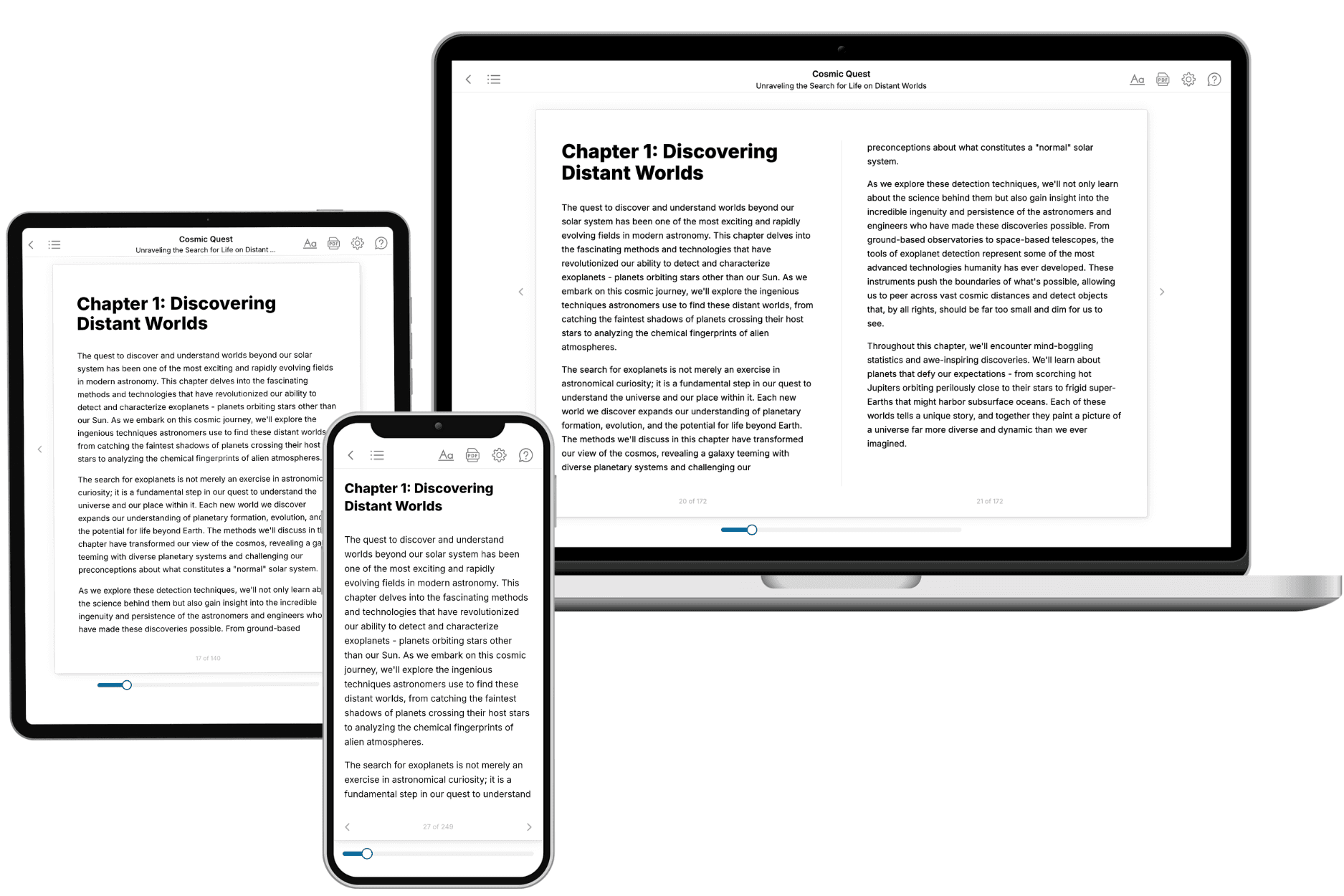
TailoredRead creates complete, full-length nonfiction ebooks, written specifically for you. Tell us what you want to learn and why, and TailoredRead writes you a complete ebook on it, with charts, tables, and diagrams throughout. Read it online, on Kindle, or on any e-reader, or download it as a PDF or EPUB. Every book is written fresh the day you order it.
- How is the book tailored to me?
Before anything is written, you answer a few short questions about your goals, your background, and the topics you care about. Your book is then planned around your answers: written at your level, focused on your goals, and covering the topics you chose, instead of the one-size-fits-all book a store sells everyone.
- Will it read like generic AI content?
No. Your book isn't a chat transcript: it's planned chapter by chapter before a single word is written, told in a clear book voice, and explains ideas visually with charts, tables, and diagrams. After writing, every book goes through an editorial pass that polishes chapters so the book reads consistent from start to finish. Judge for yourself: browse thousands of sample books on our Explore Books page.
- How accurate is the content?
Our AI first checks whether your subject needs live research. Niche and fast-moving subjects are researched before writing, and the book plan and chapters are grounded in what it finds. After writing, every book goes through a quality pass that checks its facts and consistency, and researched books list their sources in a Notes section at the back.
- How long is the book?
You choose the length: Comprehensive (250-300 pages), Detailed (150-200 pages), Essential (70-100 pages), or Short (30-50 pages).
- Does the book include visuals?
Yes. Every book includes charts, tables, and diagrams: timelines, checklists, step-by-step guides, decision trees, comparison tables, matrices, and bar charts. A typical book includes dozens of these visual elements.
- Can I read it on Kindle? What formats can I download?
Yes. Every book can be read in our online reader or downloaded as a PDF or EPUB. The EPUB can be opened with Kindle, Apple Books, Kobo, and any e-reader. The Commercial and Author licenses also include an editable Word (DOCX) and Markdown download.
- How much does it cost?
About the price of a regular ebook. The exact price depends on your book's length and complexity, from $2 for the shortest books to $35 for the most comprehensive, and it's shown when you review your book, before you commit to anything. Each book is a one-time purchase, yours to keep, no subscription. Licenses that let you share, teach, or publish your book range from $35.99 to $49.99.
- Can I preview the book before purchasing?
Before you pay, you'll see what your book will cover: the title, a detailed description, the estimated length, and the complete chapter-by-chapter table of contents, so you know what you're getting before you decide. The full text itself is written after you purchase.
- How long does it take to create a book?
About 10 minutes. You can start reading the opening chapters while the rest is still being written.