The Vatican Secret Archives Revealed
A Traveler's Guide to History, Mystery, and Access in Rome's Most Guarded Institution
Discover the truth behind one of the world's most mysterious institutions.
191 pages8 chaptersMay 28, 2026Rome Travel Guide
About this book
The Vatican Secret Archives has captivated imaginations for centuries, inspiring countless theories and legends. This guide cuts through the mythology to reveal what the Archives actually contains, why it matters to history, and how you can engage with this remarkable institution during your Rome visit. Learn about the real documents housed within its walls—from papal correspondence to diplomatic records that shaped European history. Understand the legitimate reasons for restricted access and how researchers can gain entry. Explore the fascinating stories behind famous historical events documented in the Archives, and discover the Vatican's ongoing digitization efforts that are opening these treasures to the world. Whether you're a history buff, curious traveler, or serious researcher, this book provides the practical knowledge and historical context you need to appreciate the Archives' true significance and make the most of Vatican-related experiences in Rome.
Table of contents
- IntroductionWhy the Vatican Archives Matter to History, Separating Fact from Fiction and Conspiracy, How to Use This GuideRead below
- Chapter 1: The Vatican Secret Archives: What It Really IsThe Official Name and True Purpose, Not a Conspiracy Vault: Understanding Its Real Function, Why It's Called 'Secret' and What That Actually Means
- Chapter 2: Eight Centuries of History: The Archives' EvolutionOrigins in the Medieval Period, Renaissance Expansion and Organization, Modern Era Challenges and Preservation Efforts
- Chapter 3: What's Inside: The Archives' Collections and DocumentsMajor Document Categories and Collections, Famous Historical Records and Their Stories, Papal Correspondence and Administrative Records, Diplomatic Documents and Political History
- Chapter 4: Access and Restrictions: How the Archives Actually WorkWhy Access Is Restricted: Legitimate Reasons, Who Can Access the Archives and How, The Application Process for Researchers
- Chapter 5: Digitization and Public Access: The Future Is OpeningCurrent Digitization Initiatives and Projects, Online Collections Now Available to the Public, Future Plans for Expanded Public Access
- Chapter 6: Famous Documents and Historical RevelationsThe Galileo Inquisition Records, Reformation Era Documents and Papal Responses, Diplomatic Intrigue and Political Maneuvering
- Chapter 7: Visiting Vatican-Related Sites in RomeVatican Museums and Historical Collections, Vatican Library and Public Research Opportunities, Guided Tours and Educational Experiences
- Chapter 8: Myths, Legends, and Popular CultureCommon Misconceptions About the Archives, Popular Conspiracy Theories and the Facts, How the Archives Appear in Books, Films, and Media
- ConclusionUnderstanding the Archives' True Significance, Your Next Steps: Engaging with Vatican History
- Glossary
- Further Reading and Resources
Introduction
Somewhere beneath the Vatican, behind locked doors and centuries of rumor, lies one of the most talked-about collections of documents in the world. The Vatican Secret Archives has inspired novels, films, conspiracy theories, and breathless speculation for generations. People imagine hidden gospels, suppressed scientific discoveries, and diplomatic secrets powerful enough to reshape history. The reality, as is often the case with legendary institutions, is both more complicated and more genuinely fascinating than any of those stories suggest.
The Archives is not a dungeon full of forbidden knowledge. It is a working historical repository, one of the largest and most significant in the world, holding roughly 85 linear kilometers of shelving packed with documents that span more than twelve centuries of human history.[1] Papal letters, diplomatic correspondence, trial records, administrative registers, and political agreements fill its rooms. These are the working papers of an institution that has been at the center of European and global affairs for over a thousand years. That alone makes the Archives extraordinary, without adding a single conspiracy.
This guide exists because the gap between what people imagine the Archives to be and what it actually is has grown wide enough to obscure something genuinely worth understanding. Whether you are planning a trip to Rome, researching Vatican history from home, or simply curious about what really sits behind those famous walls, you deserve a clear and honest account. The pages ahead will give you that account, along with practical guidance for engaging with Vatican history in ways that are accessible, meaningful, and grounded in fact.
The story of the Vatican Secret Archives touches on some of the biggest themes in Western history: the relationship between religious authority and political power, the way institutions preserve memory, the tension between transparency and institutional privacy, and the slow, ongoing work of making the past available to the present. These are not abstract ideas. They show up in specific documents, specific decisions, and specific moments that changed the course of history. Getting to know the Archives means getting to know those moments more clearly.
Why the Vatican Archives Matter to History
To understand why the Vatican Secret Archives matters, it helps to think about what it actually contains. The Catholic Church has been a continuous institutional presence in Europe since the early centuries of the Common Era. Unlike kingdoms that rose and fell, dynasties that collapsed, or empires that fragmented, the papacy maintained its administrative structure across more than a millennium. That continuity produced an extraordinary paper trail. The Archives holds records that no other institution on earth could have preserved, because no other institution survived long enough to keep them.
Consider the scope of what that means in practical terms. The Archives contains correspondence between popes and monarchs that shaped the political map of medieval Europe. It holds records from the Inquisition, including the famous trial documents related to Galileo Galilei. It preserves the original papal bull that excommunicated Martin Luther, a document that helped trigger the Protestant Reformation. It includes letters from figures as varied as Mary Queen of Scots, Michelangelo, and Abraham Lincoln.[2] These are not curiosities. They are primary sources for some of the most consequential events in Western history.
Primary sources matter enormously to historians. A secondary account of a historical event is always filtered through interpretation, translation, and the perspective of whoever wrote it. A primary source, a letter written by the person involved, a record made at the time of the event, gives historians direct access to the past in a way that no later account can replicate. The Vatican Archives is one of the richest collections of primary sources anywhere in the world, covering a period and a geographic range that few other archives can match.
The Archives also matters because of what it reveals about institutional power. The Catholic Church was not just a religious organization during the medieval and early modern periods. It was a political force that crowned emperors, brokered peace treaties, controlled vast territories, and shaped the laws and customs of dozens of nations. The documents in the Archives reflect that power in granular detail. Reading them gives you a window into how power actually worked in pre-modern Europe, not as a simplified narrative, but as a messy, negotiated, constantly shifting reality.
For travelers visiting Rome, understanding the Archives adds a layer of depth to everything else you see. The Vatican Museums, St. Peter's Basilica, the Sistine Chapel, and the surrounding neighborhoods all carry the weight of the same history that fills the Archives' shelves. Knowing something about the documents behind the art and architecture transforms a sightseeing trip into something closer to a genuine historical encounter. The buildings and the records are part of the same story, and understanding one enriches the other.
Finally, the Archives matters because it is changing. After centuries of restricted access, the Vatican has been gradually opening its collections to researchers and, through digitization projects, to the general public. Documents that were once accessible only to credentialed scholars working in Rome are now viewable online. This shift is ongoing and significant. It represents a broader reckoning with questions about institutional transparency, historical accountability, and the public's right to engage with the past. The Archives is not a static vault. It is a living institution navigating a changing world, and that process is worth following.
The Vatican Secret Archives holds approximately 85 linear kilometers of shelving, containing documents that span from the 8th century to the present day. It is one of the largest and most historically significant archival collections in the world.
Separating Fact from Fiction and Conspiracy
The Vatican Secret Archives has a mythology problem. Decades of novels, films, and internet speculation have layered so many invented stories onto the institution that it can be genuinely difficult to find the real thing underneath. Dan Brown's novels, in particular, introduced millions of readers to a version of the Archives that bears little resemblance to the actual institution. In that fictional world, the Archives is a place of hidden gospels, suppressed truths, and shadowy cover-ups. It makes for gripping reading. It also makes for serious historical confusion.
The most persistent myth is that the Archives contains documents the Church is actively hiding from the world, specifically texts that would undermine Christian theology or reveal embarrassing historical secrets. This idea has enormous popular appeal, but it does not hold up to scrutiny. The Archives has been open to qualified researchers since 1881, when Pope Leo XIII lifted the previous restrictions on scholarly access.[3] In the decades since, thousands of historians from around the world have worked in its reading rooms. If there were explosive hidden gospels or world-altering suppressed documents, the scholarly community would know about them by now.
A second common misconception involves the word "secret" in the Archives' name. In modern English, "secret" implies something hidden or forbidden. In the original Latin and Italian context, the word secretum carried a different meaning, closer to "private" or "personal." The Archives was the pope's private collection of documents, as distinct from other Vatican libraries and collections. The name describes ownership and administrative function, not a policy of concealment. This distinction matters, and it is explored in more detail later in this guide.
Conspiracy theories about the Archives tend to follow a predictable pattern. They start with the fact of restricted access, which is real, and then leap to the conclusion that restriction must mean concealment of something scandalous. But restricted access to archival collections is completely normal. National archives around the world restrict access to sensitive documents, particularly those involving living individuals, ongoing diplomatic matters, or materials that require special handling for preservation reasons. The Vatican's restrictions are not unusual by archival standards. They are, in some respects, less restrictive than those of several major national archives.
That said, the Church's history is not without genuine controversies, and the Archives does contain documents related to some of them. The records of the Inquisition, the Church's response to the Protestant Reformation, and the Vatican's diplomatic activities during World War II are all areas where historians have raised serious and legitimate questions. The Archives has been a resource for investigating those questions, not a barrier to them. Researchers have used its documents to write nuanced, critical histories of the Church that neither whitewash its record nor reduce it to caricature.
One useful way to approach the Archives is to think about what it would mean if the conspiracy theories were true. If the Church were actively hiding documents that contradicted its teachings, it would need to have successfully concealed those documents from thousands of independent scholars working over more than a century. It would need to have prevented any leaks, any accidental discoveries, any deathbed confessions from archivists. The logistics of that kind of sustained concealment are implausible. The simpler explanation, that the Archives contains what it says it contains, is far more consistent with what researchers have actually found there.
Separating fact from fiction is not just an academic exercise. It matters for how you engage with the Archives and with Vatican history more broadly. When you visit Rome and walk through the Vatican Museums, or when you read about a famous historical event that involved the papacy, you will encounter layers of myth and legend alongside genuine history. Developing the habit of asking "what do the actual documents say?" is one of the most valuable tools you can bring to that experience. This guide is designed to help you build that habit.
Pope Leo XIII opened the Vatican Secret Archives to qualified researchers in 1881, stating that the Church had nothing to fear from history. Since then, thousands of scholars from around the world have conducted research in its reading rooms.
How to Use This Guide
This guide is organized to take you from the big picture down to the practical details. It begins with the Archives itself, what it is, how it came to be, and what it actually contains. It then moves into questions of access, both for researchers who want to work with the documents directly and for travelers who want to engage with Vatican history during a visit to Rome. Along the way, it addresses the myths and misconceptions that surround the Archives, and it points you toward resources for going deeper on any topic that captures your interest.
You do not need to read this guide from cover to cover in order. If you are primarily interested in planning a Rome visit, the chapters on Vatican-related sites and practical access will be most immediately useful. If you are a researcher or student interested in the Archives' collections, the chapters on document categories and the application process will be your starting point. If you are drawn to the historical stories behind famous documents, the chapters on specific records and historical events will give you what you are looking for. The table of contents is designed to help you navigate directly to what you need.
Throughout the guide, specific examples and concrete details are used to illustrate broader points. History becomes meaningful when it is attached to specific people, specific decisions, and specific moments. Rather than offering only general descriptions of what the Archives contains, this guide walks through particular documents and the stories behind them. The Galileo trial records, the letter from Mary Queen of Scots written the night before her execution, the papal correspondence that shaped the outcome of the Reformation: these are not just illustrations. They are the substance of what makes the Archives worth caring about.
The guide also takes seriously the practical dimension of engaging with Vatican history. Rome is a city with an extraordinary density of historical sites, and navigating it well requires preparation. Knowing which museums hold the most relevant collections, which tours offer genuine historical depth, and how to make the most of limited time in a city that could absorb weeks of exploration: these are real questions that deserve real answers. The chapters on visiting Vatican-related sites are written with that practical orientation in mind.
A note on sources and claims: wherever specific historical facts are cited, footnotes point to the relevant sources. The history of the Vatican Archives is a field where popular accounts sometimes diverge significantly from scholarly consensus, and it is important to be clear about the basis for specific claims. Where historians disagree, those disagreements are noted rather than papered over. The goal is not to present a simplified or sanitized version of the Archives' history, but to give you an accurate and honest account that you can build on.
Here is a quick overview of what each part of this guide covers:
- Chapters 1 and 2 cover the Archives' identity and history, from its medieval origins through its modern form.
- Chapters 3 and 4 go inside the collections, describing what the Archives holds and how access to it works in practice.
- Chapter 5 covers the digitization efforts that are gradually making the Archives' contents available online.
- Chapter 6 focuses on specific famous documents and the historical stories they illuminate.
- Chapter 7 provides practical guidance for visiting Vatican-related sites in Rome.
- Chapter 8 addresses the myths, conspiracy theories, and popular culture representations that surround the Archives.
- The Conclusion brings the threads together and points toward next steps for continued engagement.
One final thought before diving in. The Vatican Secret Archives is, at its core, a place where the past has been carefully preserved so that the present can understand it. That is a remarkable thing. In a world where so much is ephemeral, where records are lost, destroyed, or simply never made, the existence of a collection that stretches back over twelve centuries represents something genuinely precious. Whatever your reason for picking up this guide, the hope is that by the end of it, you will see the Archives not as a vault of secrets, but as something more interesting: a window into the long, complicated, endlessly surprising story of how human beings have organized their lives, their beliefs, and their power across the centuries.
The Vatican Secret Archives is not a place of hidden conspiracies. It is one of the world's great repositories of primary historical sources, and understanding it clearly is the first step toward appreciating what it genuinely has to offer.
Notes
Introduction
- 1. Vatican Apostolic Archive official website, 'History and Description,' accessed 2024. vatican.va/content/vatican/en/istituzioni/archivio-segreto.html
- 2. Blouin, Francis X. Jr, and William G. Rosenberg. Processing the Past: Contesting Authority in History and the Archives. Oxford University Press, 2011
- 3. "Pásztor," Lajos. Guida delle fonti per la storia dell'America Latina negli archivi della Santa Sede. Vatican City: Archivio Vaticano, 1970
This is the end of the free sample. The full book has 8 chapters.
Want this book written for you?
Tell us your goals and background, and get your own version of this book, tailored by AI to you.


Benefits of AI-tailored books
- Read one book, not ten:
- all the Rome Travel Guide knowledge you need, gathered into a single book.
- Save days of learning:
- tell us your goals, choose your topics, and the whole book is built around them.
- Learn effortlessly:
- Rome Travel Guide book written for your specific background and expertise.
- Understand at a glance:
- includes charts, tables, timelines, checklists, decision trees, and more.
- Stay current:
- written the day you order it, not years ago.
- Trust what you read:
- every book is checked for accuracy, with real research when your subject needs it.
Create your unique book in 3 steps
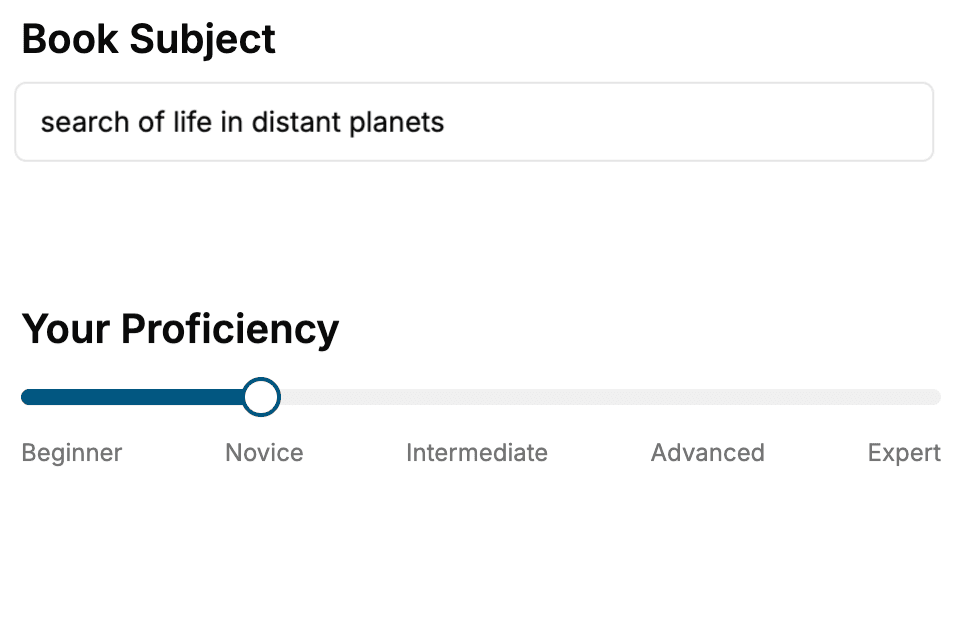
- 1. Select your focus
Select the focus of your Rome Travel Guide book and share your background
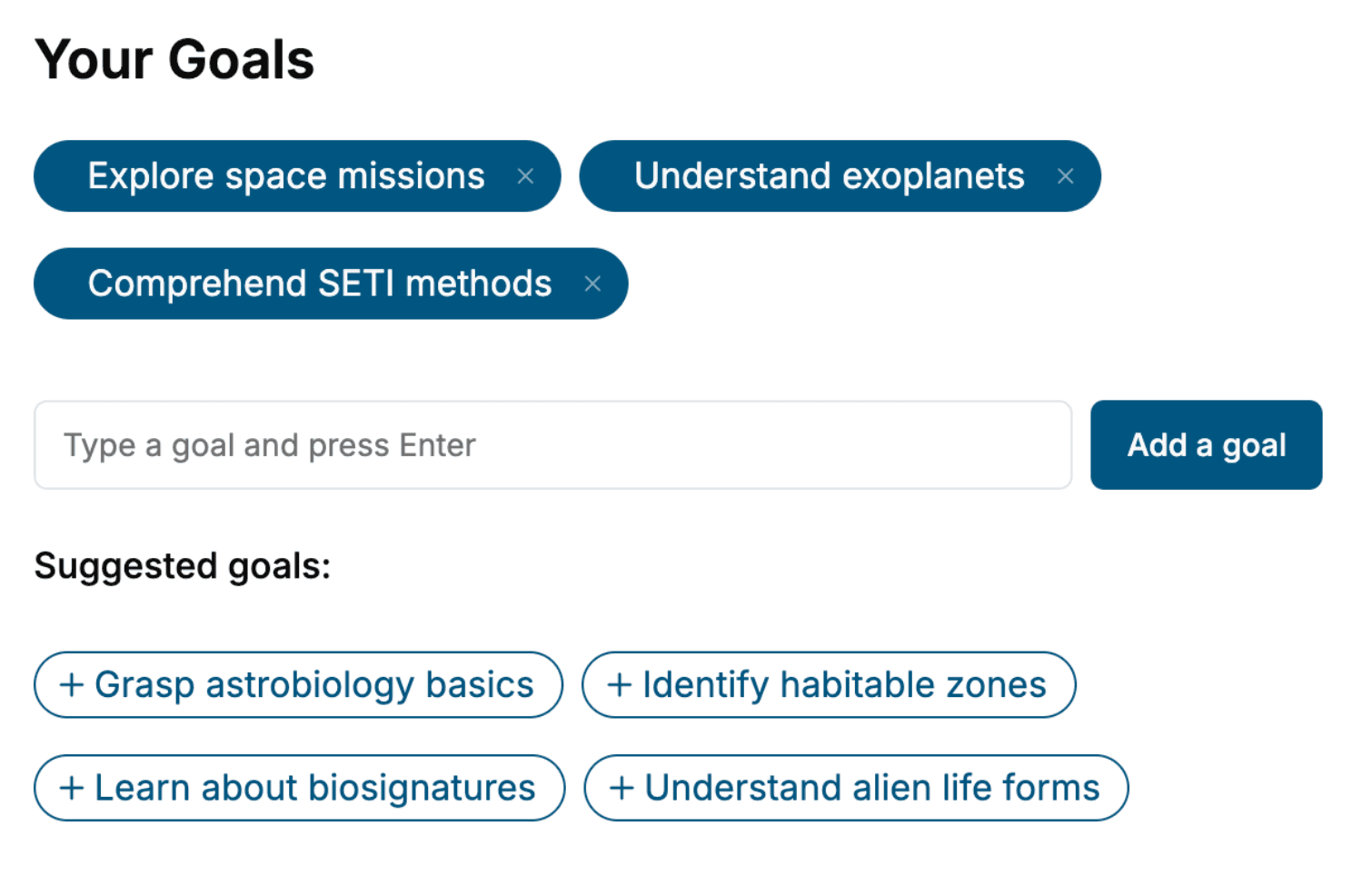
- 2. Personalize your book
Specify your goals and choose sub-topics to include
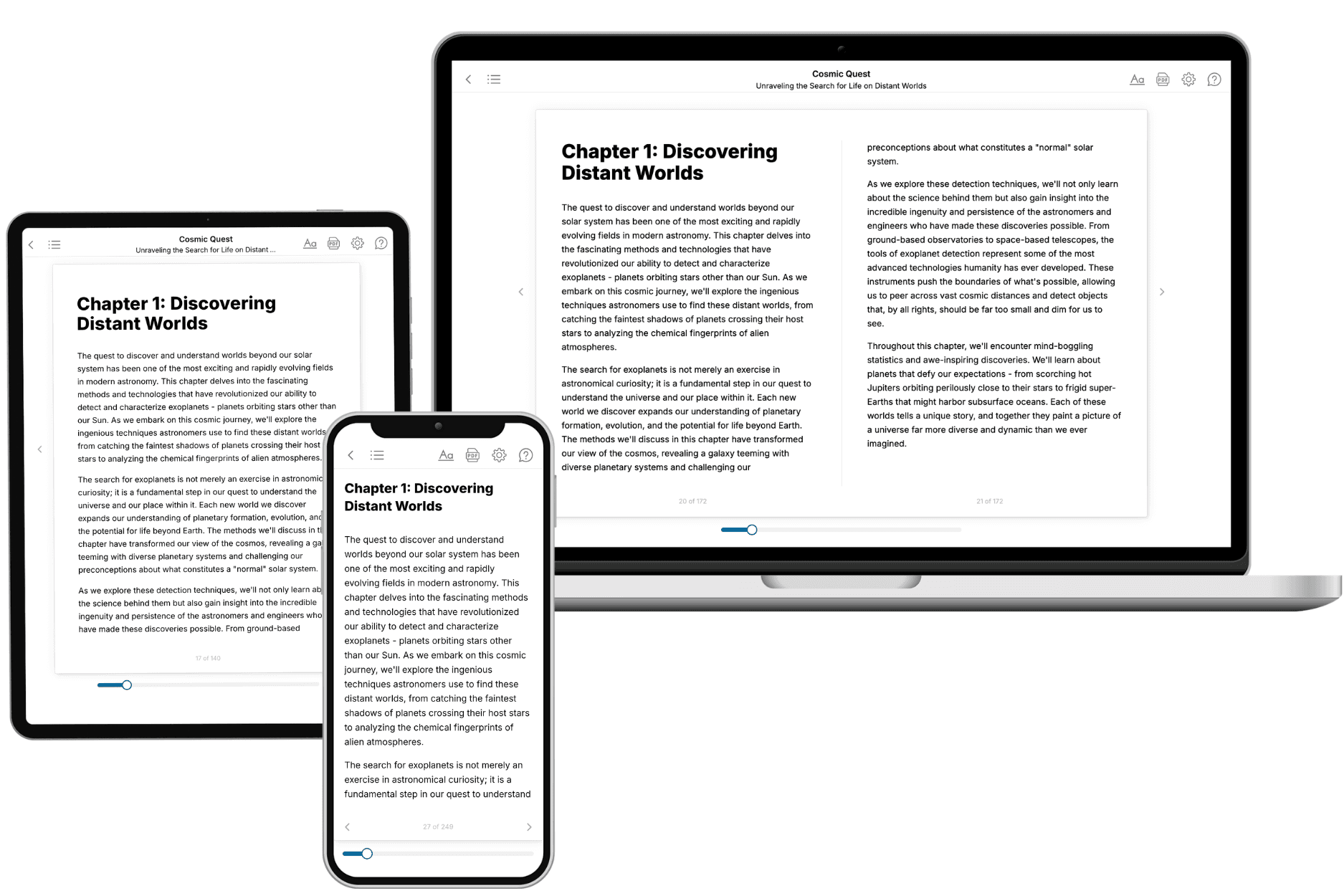
- 3. Get your tailored book
Your book is ready in 10 minutes. Read it online, download as EPUB or PDF, or send to Kindle.
Frequently asked questions
- What is TailoredRead?
TailoredRead creates complete, full-length nonfiction ebooks, written specifically for you. Tell us what you want to learn and why, and TailoredRead writes you a complete ebook on it, with charts, tables, and diagrams throughout. Read it online, on Kindle, or on any e-reader, or download it as a PDF or EPUB. Every book is written fresh the day you order it.
- How is the book tailored to me?
Before anything is written, you answer a few short questions about your goals, your background, and the topics you care about. Your book is then planned around your answers: written at your level, focused on your goals, and covering the topics you chose, instead of the one-size-fits-all book a store sells everyone.
- Will it read like generic AI content?
No. Your book isn't a chat transcript: it's planned chapter by chapter before a single word is written, told in a clear book voice, and explains ideas visually with charts, tables, and diagrams. After writing, every book goes through an editorial pass that polishes chapters so the book reads consistent from start to finish. Judge for yourself: browse thousands of sample books on our Explore Books page.
- How accurate is the content?
Our AI first checks whether your subject needs live research. Niche and fast-moving subjects are researched before writing, and the book plan and chapters are grounded in what it finds. After writing, every book goes through a quality pass that checks its facts and consistency, and researched books list their sources in a Notes section at the back.
- How long is the book?
You choose the length: Comprehensive (250-300 pages), Detailed (150-200 pages), Essential (70-100 pages), or Short (30-50 pages).
- Does the book include visuals?
Yes. Every book includes charts, tables, and diagrams: timelines, checklists, step-by-step guides, decision trees, comparison tables, matrices, and bar charts. A typical book includes dozens of these visual elements.
- Can I read it on Kindle? What formats can I download?
Yes. Every book can be read in our online reader or downloaded as a PDF or EPUB. The EPUB can be opened with Kindle, Apple Books, Kobo, and any e-reader. The Commercial and Author licenses also include an editable Word (DOCX) and Markdown download.
- How much does it cost?
About the price of a regular ebook. The exact price depends on your book's length and complexity, from $2 for the shortest books to $35 for the most comprehensive, and it's shown when you review your book, before you commit to anything. Each book is a one-time purchase, yours to keep, no subscription. Licenses that let you share, teach, or publish your book range from $35.99 to $49.99.
- Can I preview the book before purchasing?
Before you pay, you'll see what your book will cover: the title, a detailed description, the estimated length, and the complete chapter-by-chapter table of contents, so you know what you're getting before you decide. The full text itself is written after you purchase.
- How long does it take to create a book?
About 10 minutes. You can start reading the opening chapters while the rest is still being written.