Special Education Books
Explore tailored Special Education books created by our AI
Books readers created
14 Special Education books, each written for the reader who ordered it. Read its introduction, then personalize it to get a book of your own.
What if the strategies you've been using to improve your reading and math skills have actually been working against your brain's natural learning style? This comprehensive guide reveals how dyslexia and dyscalculia are rooted in neurology—not intelligence—and shows you exactly how to work with your brain instead of against it. You'll discover the science behind neuroplasticity and learn proven multisensory methods like the Orton-Gillingham approach that rewire neural pathways for reading and math. From phonological awareness training to assistive technology tools, from working memory enhancement to dyscalculia interventions, this book provides practical, actionable strategies you can implement immediately. Whether you're navigating your own learning differences, supporting a family member, or advocating for appropriate accommodations, you'll gain the knowledge and confidence to transform academic challenges into opportunities. Learn to recognize your dyslexic cognitive strengths, manage learning anxiety, and build organizational systems that actually work for your brain.
Gain a clear, practical understanding of learning disabilities and how they affect individuals across all ages. This guide moves beyond myths and misconceptions to explain the neurobiological foundations of learning differences, helping you recognize the signs, understand assessment processes, and implement effective support strategies. Whether you're an educator, parent, healthcare provider, or someone navigating learning disabilities personally, you'll discover how to identify specific learning profiles, access appropriate interventions, and create environments where individuals with learning disabilities can thrive. Learn evidence-based approaches to accommodation and remediation, understand the psychological dimensions of learning differences, and explore how to leverage individual strengths while addressing challenges. This resource equips you with the knowledge and tools to make informed decisions and provide meaningful support.
Embracing Autism
A Parent's Guide to Nurturing, Supporting, and Empowering Your Child
Discover a wealth of knowledge and practical strategies in "Embracing Autism: A Parent's Guide to Nurturing, Supporting, and Empowering Your Child." This comprehensive resource is tailored for parents navigating the unique journey of raising a child with autism. Within these pages, you'll find expert guidance on managing challenging behaviors, enhancing your parent-child bond, and optimizing daily routines. Learn how to implement effective visual supports, boost emotional regulation, and improve executive functioning skills. Explore innovative approaches to strengthen family dynamics and develop coping strategies that work for both you and your child. From ABA techniques to communication skills, social development to life skills enhancement, this book covers a wide range of topics crucial for your child's growth and your family's well-being. Dive into chapters on sensory integration, social stories, autism-friendly home environments, and much more. You'll also find valuable information on available support systems, including autism support groups, occupational therapy, and social skills groups. "Embracing Autism" doesn't just focus on your child – it recognizes the importance of self-care for parents too. Discover strategies for managing stress, finding support networks, and maintaining your own well-being as you navigate this rewarding journey. Whether you're looking to understand autism and puberty, explore the benefits of creativity and mindfulness, or learn about the latest autism research, this book has you covered. Empower yourself with knowledge, gain confidence in your parenting approach, and unlock new possibilities for your child's future. "Embracing Autism" is more than just a guide – it's a companion on your path to creating a fulfilling, supportive, and joyful life for your family.
What if the behaviors and learning challenges you've observed weren't signs of laziness or defiance, but rather reflections of how someone's brain is wired differently? This comprehensive guide demystifies neurodevelopmental disorders through the lens of modern neuropsychology, exploring the fascinating science behind conditions like ADHD, autism spectrum disorder, dyslexia, and intellectual disabilities. You'll discover how brain development unfolds, why certain individuals process information differently, and how these differences manifest across childhood and adulthood. Rather than viewing these conditions as deficits alone, you'll learn to recognize the distinctive strengths and challenges associated with each disorder. This book equips you with practical knowledge about assessment methods, evidence-based interventions, and strategies for creating supportive environments. Whether you're a parent seeking answers, an educator wanting to better support your students, or a professional deepening your expertise, you'll gain actionable insights grounded in current neuroscience research that can meaningfully improve outcomes and quality of life.
Many people struggle to understand why someone has difficulty expressing thoughts, understanding conversations, or mastering written language—and they don't realize these challenges often stem from language disorders, not laziness or low intelligence. This comprehensive guide demystifies language disorders by explaining how they develop, how they present across different contexts, and most importantly, what actually works to support affected individuals. You'll discover the neurological foundations of language processing, learn to recognize the subtle and obvious signs of language disorders in children and adults, and gain practical strategies for home, school, and workplace settings. Whether you're a parent noticing communication delays, an educator working with struggling students, a caregiver supporting someone with acquired language loss, or a professional seeking deeper understanding, this book provides evidence-based insights and actionable techniques. You'll explore assessment approaches, intervention strategies, technology solutions, and ways to build confidence in individuals with language disorders. By the end, you'll understand that language disorders aren't limitations to overcome—they're differences to understand and support.
What if the way we understand developmental disabilities has been incomplete? Most discussions focus on deficits and limitations, but the intersection of developmental disabilities with mental health reveals a far more complex and hopeful picture. This comprehensive guide explores how developmental disabilities affect psychological functioning, mental health outcomes, and overall well-being. You'll discover the neurobiological foundations of conditions like autism spectrum disorder, intellectual disability, and ADHD, while learning how anxiety, depression, and other mental health challenges frequently accompany these diagnoses. The book provides practical frameworks for assessment, intervention, and support that honor both the challenges and strengths of individuals with developmental disabilities. Whether you're a parent seeking answers, a professional working in mental health or education, or someone navigating your own developmental disability, this guide offers evidence-based insights and actionable strategies to improve outcomes and foster genuine inclusion and well-being.
What if the defiant behavior you're witnessing isn't willful disobedience, but a genuine neurological struggle with emotion regulation and impulse control? Oppositional Defiant Disorder affects millions of children and adults, yet remains widely misunderstood. This comprehensive guide cuts through misconceptions to reveal the true nature of ODD—its neurobiological foundations, developmental pathways, and evidence-based solutions. Whether you're a parent navigating daily conflicts, an educator managing classroom challenges, or a mental health professional seeking deeper insights, this book provides the knowledge and practical strategies you need. Discover how to distinguish ODD from typical defiance, understand the role of trauma and environment, and implement proven interventions that actually work. Learn why traditional punishment fails and what approaches create lasting change. With compassion and clarity, this guide empowers you to support individuals with ODD toward meaningful improvement and better outcomes.
The Voice of Innovation
Alexander Graham Bell's Journey from Teacher to Telephone Pioneer
Many believe Alexander Graham Bell's sole contribution to the world was the telephone. But did you know that this remarkable inventor's curiosity and ingenuity extended far beyond this groundbreaking device? "The Voice of Innovation" takes you on a captivating journey through the life of Alexander Graham Bell, revealing the multifaceted genius behind the man who forever changed the way we communicate. From his early years as a teacher of the deaf to his groundbreaking work in aviation and hydrofoils, you'll discover the relentless spirit of innovation that drove Bell to push the boundaries of what was possible. This book delves deep into Bell's personal life, exploring the relationships and experiences that shaped his worldview and fueled his passion for invention. You'll gain insight into his creative process, understanding how his diverse interests in sound, speech, and technology converged to create revolutionary advancements that we still benefit from today. Whether you're a science enthusiast, a history buff, or simply someone who appreciates the stories of those who dared to dream big, "The Voice of Innovation" offers a fresh perspective on one of history's most influential figures. Prepare to be inspired by the man whose voice still echoes through time, challenging us all to listen closely to the world around us and imagine the possibilities that lie ahead.
Parenting a child with sensory processing differences can feel isolating and confusing. You notice your child reacts intensely to sounds, textures, or movements that don't seem to bother other kids. You wonder if something is wrong, or if you're simply not parenting effectively. The truth is neither—your child's nervous system processes sensory information differently, and understanding how is the first step toward meaningful support. This guide walks you through the science of sensory processing, helping you recognize the signs in your own child and understand why certain situations trigger distress. You'll discover practical, evidence-based strategies for creating calming environments, managing sensory meltdowns, and advocating for your child's needs at school and in social settings. Whether your child is hypersensitive to stimulation or seeks intense sensory input, you'll find actionable tools tailored to their unique profile. Most importantly, you'll learn to see your child's sensory differences not as deficits, but as part of their individual neurology—and discover how to help them thrive.
The Sound Foundation
Master Phonological Awareness and Transform How You Understand Language
Many people struggle to understand why some children excel at reading while others fall behind, often unaware that the foundation lies in phonological awareness—the ability to recognize and manipulate sounds in language. This gap in understanding can limit your effectiveness as an educator, parent, or language professional. This comprehensive guide demystifies phonological awareness, moving beyond surface-level explanations to reveal how sound awareness develops, why it matters for literacy, and how to cultivate it effectively. You'll discover the developmental progression from rhyming to phoneme manipulation, learn to distinguish phonological awareness from phonics, and explore practical strategies grounded in research. Whether you're supporting struggling readers, teaching multilingual learners, or deepening your professional expertise, this book provides the knowledge and tools you need to make informed decisions and create meaningful change in language development.
Beyond the Outburst
Understanding and Addressing Disruptive Mood Dysregulation Disorder
You're about to gain a comprehensive understanding of one of the most challenging and misunderstood childhood disorders in modern psychology. This book takes you through the complexities of Disruptive Mood Dysregulation Disorder (DMDD), from its controversial origins and diagnostic criteria to evidence-based treatment approaches that actually work. You'll discover why DMDD was introduced into psychiatric classification, how it differs from bipolar disorder and oppositional defiant disorder, and what the latest neuroscience reveals about its underlying mechanisms. Through careful analysis of assessment methods, therapeutic interventions, and medication strategies, you'll develop the knowledge needed to recognize, understand, and respond effectively to this condition. Whether you're deepening your clinical expertise, supporting a child with severe irritability and temper outbursts, or simply seeking to understand this relatively new diagnosis, you'll find practical insights grounded in current research. The book bridges the gap between academic theory and real-world application, examining family dynamics, school interventions, and long-term outcomes while addressing the ongoing debates that shape how we conceptualize childhood emotional dysregulation.
Tiny Hands, Big Skills
A Parent's Guide to Building Fine Motor Development in Toddlers
Your toddler will eventually write their name, tie their shoes, and feed themselves independently—but getting there requires more than just waiting. Fine motor skills are the foundation for self-care, learning, and confidence, yet many parents don't know how to actively support this development. This guide breaks down what fine motor skills actually are, when your child should be developing them, and exactly what you can do at home to help. You'll discover that the most effective activities aren't expensive toys or special programs—they're simple, everyday moments you're already having with your child. Learn the developmental milestones to watch for, understand why some children develop faster or slower than others, and gain practical strategies for activities like grasping, pinching, scribbling, and self-feeding. Whether your child is just beginning to explore objects or preparing for preschool, you'll find age-specific guidance that fits naturally into your daily routine.
The Developmental Milestone Guide
Understanding Your Child's Growth from Birth to Age Five
Watching your child grow is one of parenting's greatest joys—but it can also feel overwhelming when you're unsure what's normal. This guide cuts through the confusion by explaining exactly what developmental milestones to expect from birth through age five, and how to support each stage with confidence. You'll learn the four key areas of development—physical, cognitive, language, and social-emotional—and discover practical, evidence-based strategies for nurturing growth in each. Whether you're a parent, babysitter, or caregiver, you'll find clear explanations of what typical development looks like, red flags that warrant professional attention, and simple activities that naturally support learning. This book replaces anxiety with understanding, helping you appreciate your child's unique timeline while ensuring they get the support they need to thrive.
Strong Foundations
A Parent's Guide to Building Gross Motor Skills in Early Childhood
You watch your toddler struggle to climb the playground equipment while other children seem to move with ease. You wonder if your child is developing normally, or if you should be doing more to help. The confusion about what's typical, what's concerning, and how to actually support your child's physical development can feel overwhelming. This guide cuts through the noise with clear, practical information about gross motor development in early childhood. You'll learn what skills emerge at each stage, how to recognize when development is on track, and exactly what activities and environmental changes make the biggest difference. Rather than pushing your child toward arbitrary milestones, you'll discover how to create conditions where movement naturally flourishes—through play, exploration, and everyday opportunities. Whether your child is cautious, athletic, or somewhere in between, you'll gain the confidence to support their unique developmental journey and build the strong physical foundation that benefits them for life.
Related books you may like:
Embark on a transformative journey through the world of AI-powered education with this groundbreaking book. As an educator and researcher, you'll discover how artificial intelligence is reshaping the landscape of learning, assessment, and academic research. Dive deep into the realm of AI-driven educational tools, from intelligent chatbots that enhance student engagement to sophisticated algorithms that optimize curriculum design. You'll gain invaluable insights into analyzing learning patterns, predicting student success, and integrating AI seamlessly into your teaching methods. This comprehensive guide offers practical strategies for leveraging AI to streamline your grading process, enhance research methodologies, and ultimately improve learning outcomes. Whether you're looking to write a cutting-edge paper on AI in education or simply want to stay ahead of the curve in your field, this book provides the knowledge and tools you need to thrive in the digital age of education.
Picture a university where AI seamlessly enhances every aspect of learning and research. Students engage with AI-powered teaching assistants, researchers leverage AI to push the boundaries of discovery, and curricula evolve to prepare graduates for an AI-driven world. This isn't a far-off dream—it's the new reality of higher education, and you have the power to bring it to life on your campus. "AI in Academia: A Leader's Guide to Shaping the Future of Higher Education" is your roadmap to revolutionizing your institution with artificial intelligence. This comprehensive guide demystifies AI technology and its applications in education, providing you with practical strategies to integrate AI across your university's operations. You'll discover how to develop cutting-edge AI ethics curricula, enhance STEM education with AI tools, and leverage AI to streamline course planning and research processes. Learn to implement AI literacy programs that empower your entire campus community, from freshmen to faculty. With this book, you'll gain the knowledge and confidence to lead your institution into the AI era, fostering a culture of innovation and preparing your students for the challenges and opportunities of tomorrow's workforce.
You'll elevate your training effectiveness by mastering the science and strategy behind adult learning. This comprehensive guide bridges theory and practice, providing you with evidence-based frameworks, actionable techniques, and real-world applications that immediately improve learner engagement, retention, and performance transfer. Whether you're designing curricula, facilitating virtual sessions, or assessing competencies, you'll discover how to apply andragogy principles, leverage cognitive science, and integrate technology strategically. You'll learn to motivate adult learners through intrinsic drivers, create psychologically safe environments, and deliver feedback that drives improvement. With practical tools for instructional design, assessment strategies, and blended learning approaches, you'll design learning experiences that stick—transforming how your organization develops talent and builds capability. This is your complete resource for becoming a master facilitator of adult learning.
Many educators believe that integrating AI into their teaching practices is a daunting and time-consuming task. However, this couldn't be further from the truth. AI in the Classroom: A Teacher's Guide to Revolutionizing Education with Artificial Intelligence is your comprehensive roadmap to harnessing the power of AI to transform your teaching methods and streamline your workload. This guide takes you on a step-by-step journey through the world of educational AI, from automated grading systems to AI-powered trip planners. You'll discover how to design AI-assisted lessons that captivate your students' attention and cultivate their tech-savvy skills. Learn to leverage AI writing feedback tools to improve student compositions and explore the exciting possibilities of gamified learning powered by artificial intelligence. As you delve into the pages of this book, you'll gain practical insights on how to automate time-consuming tasks like report card generation, freeing up valuable time to focus on what truly matters - your students. With a balanced approach that combines theoretical understanding with hands-on applications, this guide ensures you're well-equipped to navigate the future of AI in schools.
Discover how integrating the arts into core academic subjects creates powerful learning experiences that engage all students and boost achievement. This book shows you that arts integration isn't about adding art classes—it's about weaving creative thinking, expression, and collaboration into every subject you teach. You'll learn why students who engage with arts-integrated instruction show stronger performance in math, reading, and science, while developing critical thinking and problem-solving abilities. Through practical strategies, real classroom examples, and evidence-based research, you'll understand how to design lessons that honor diverse learning styles and help every student succeed. Whether you're teaching elementary, middle, or high school, you'll find actionable approaches to connect the arts with your curriculum, build community partnerships, and create classrooms where creativity and academic rigor work together. This book empowers educators to transform instruction and help students see themselves as capable, creative learners.
Create a Special Education Book Tailored to You
Create an AI-crafted book tailored to your goals, interests, and background





Benefits of AI-tailored books
- Read one book, not ten:
- all the Special Education knowledge you need, gathered into a single book.
- Save days of learning:
- tell us your goals, choose your topics, and the whole book is built around them.
- Learn effortlessly:
- Special Education book written for your specific background and expertise.
- Understand at a glance:
- includes charts, tables, timelines, checklists, decision trees, and more.
- Stay current:
- written the day you order it, not years ago.
- Trust what you read:
- every book is checked for accuracy, with real research when your subject needs it.
Create your unique book in 3 steps
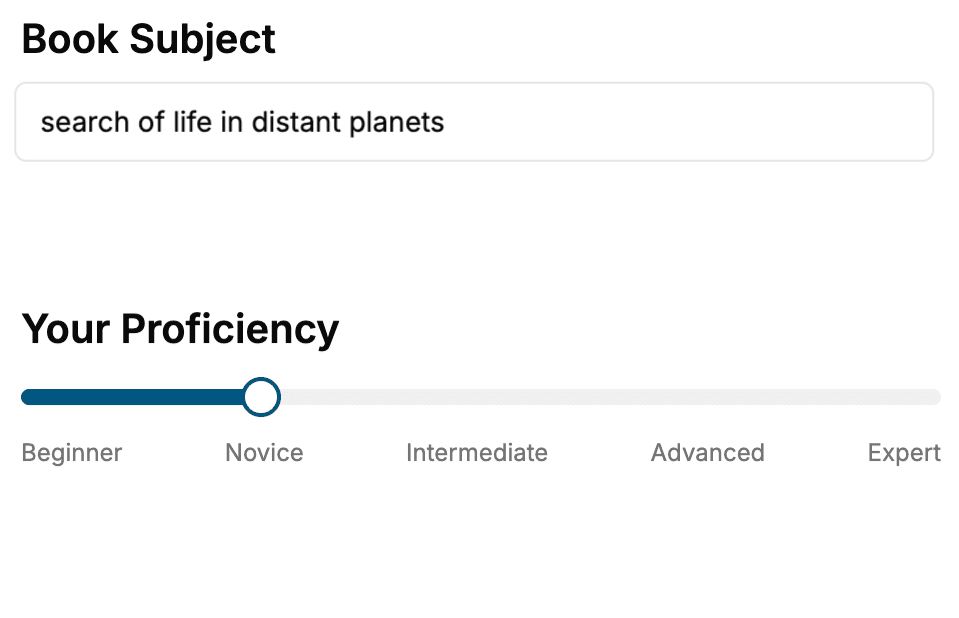
- 1. Select your focus
Select the focus of your Special Education book and share your background
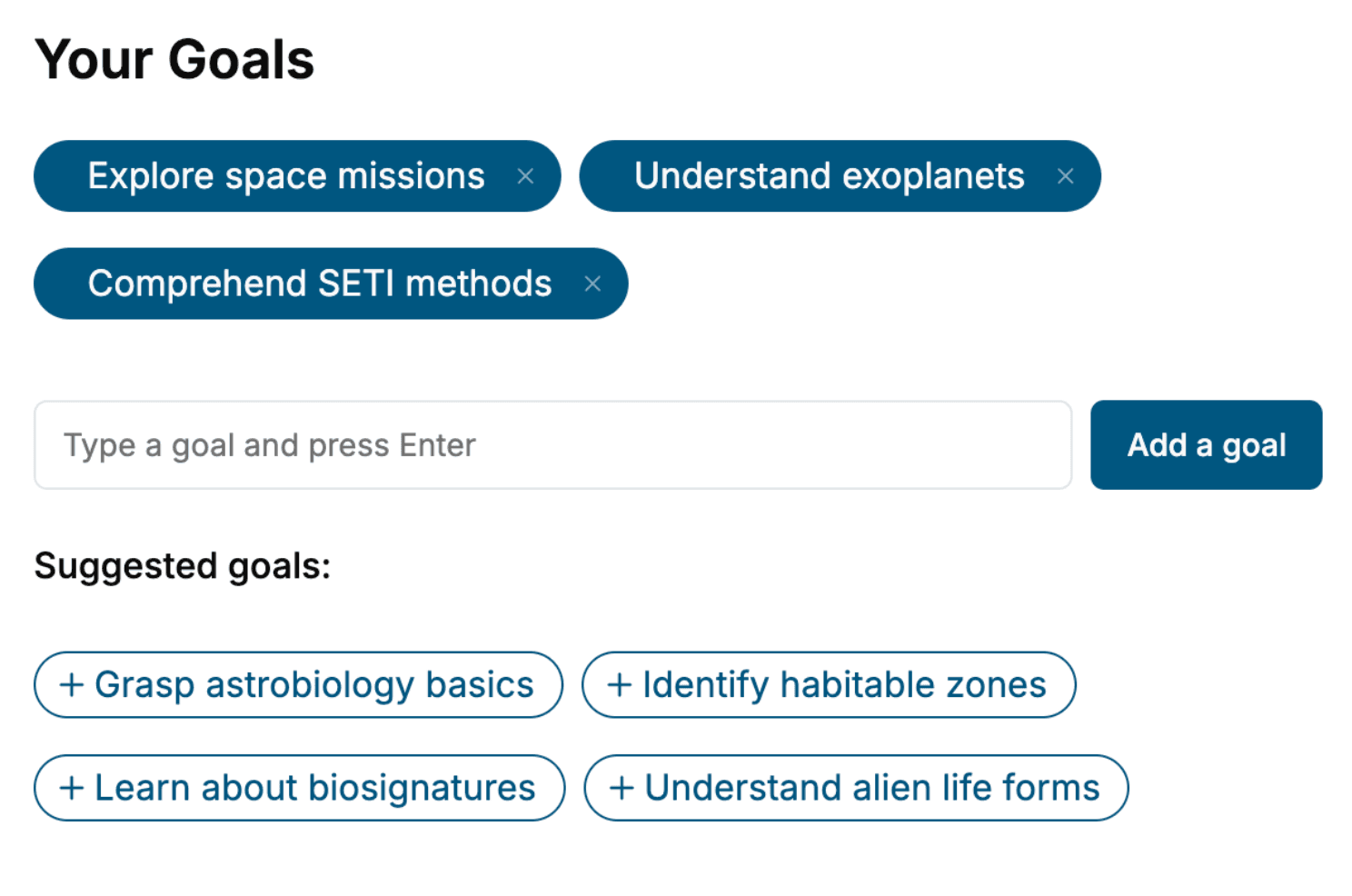
- 2. Personalize your book
Specify your goals and choose sub-topics to include
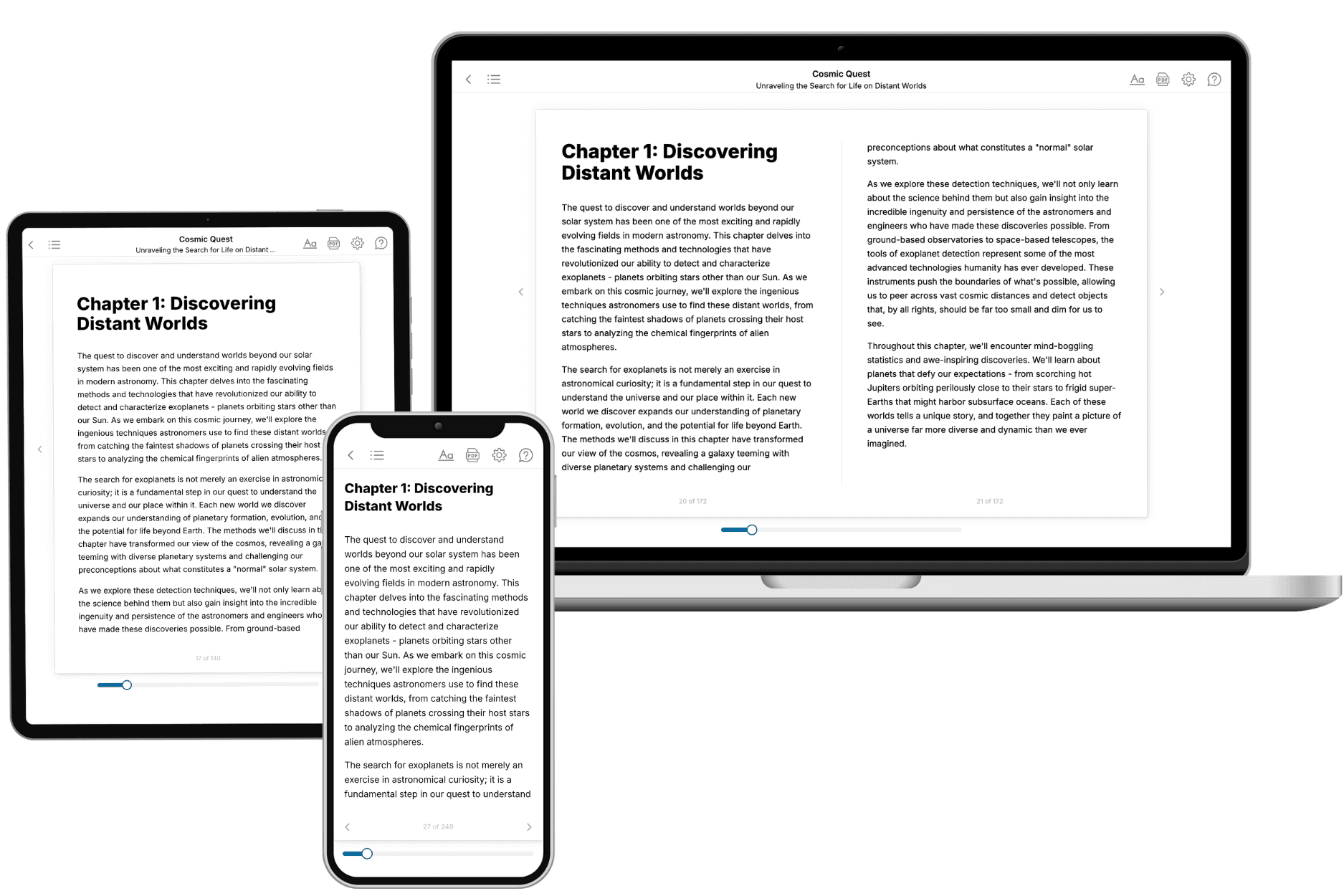
- 3. Get your tailored book
Your book is ready in 10 minutes. Read it online, download as EPUB or PDF, or send to Kindle.
Start from a template
Frequently asked questions
- What is TailoredRead?
TailoredRead creates complete, full-length nonfiction ebooks, written specifically for you. Tell us what you want to learn and why, and TailoredRead writes you a complete ebook on it, with charts, tables, and diagrams throughout. Read it online, on Kindle, or on any e-reader, or download it as a PDF or EPUB. Every book is written fresh the day you order it.
- How is the book tailored to me?
Before anything is written, you answer a few short questions about your goals, your background, and the topics you care about. Your book is then planned around your answers: written at your level, focused on your goals, and covering the topics you chose, instead of the one-size-fits-all book a store sells everyone.
- Will it read like generic AI content?
No. Your book isn't a chat transcript: it's planned chapter by chapter before a single word is written, told in a clear book voice, and explains ideas visually with charts, tables, and diagrams. After writing, every book goes through an editorial pass that polishes chapters so the book reads consistent from start to finish. Judge for yourself: browse thousands of sample books on our Explore Books page.
- How accurate is the content?
Our AI first checks whether your subject needs live research. Niche and fast-moving subjects are researched before writing, and the book plan and chapters are grounded in what it finds. After writing, every book goes through a quality pass that checks its facts and consistency, and researched books list their sources in a Notes section at the back.
- How long is the book?
You choose the length: Comprehensive (250-300 pages), Detailed (150-200 pages), Essential (70-100 pages), or Short (30-50 pages).
- Does the book include visuals?
Yes. Every book includes charts, tables, and diagrams: timelines, checklists, step-by-step guides, decision trees, comparison tables, matrices, and bar charts. A typical book includes dozens of these visual elements.
- Can I read it on Kindle? What formats can I download?
Yes. Every book can be read in our online reader or downloaded as a PDF or EPUB. The EPUB can be opened with Kindle, Apple Books, Kobo, and any e-reader. The Commercial and Author licenses also include an editable Word (DOCX) and Markdown download.
- How much does it cost?
About the price of a regular ebook. The exact price depends on your book's length and complexity, from $2 for the shortest books to $35 for the most comprehensive, and it's shown when you review your book, before you commit to anything. Each book is a one-time purchase, yours to keep, no subscription. Licenses that let you share, teach, or publish your book range from $35.99 to $49.99.
- Can I preview the book before purchasing?
Before you pay, you'll see what your book will cover: the title, a detailed description, the estimated length, and the complete chapter-by-chapter table of contents, so you know what you're getting before you decide. The full text itself is written after you purchase.
- How long does it take to create a book?
About 10 minutes. You can start reading the opening chapters while the rest is still being written.