Understanding Developmental Disabilities
A Comprehensive Guide to Mental Health, Psychology, and Practical Support
What if the way we understand developmental disabilities has been incomplete?
238 pages11 chaptersMar 15, 2026Psychology
About this book
Most discussions focus on deficits and limitations, but the intersection of developmental disabilities with mental health reveals a far more complex and hopeful picture. This comprehensive guide explores how developmental disabilities affect psychological functioning, mental health outcomes, and overall well-being. You'll discover the neurobiological foundations of conditions like autism spectrum disorder, intellectual disability, and ADHD, while learning how anxiety, depression, and other mental health challenges frequently accompany these diagnoses. The book provides practical frameworks for assessment, intervention, and support that honor both the challenges and strengths of individuals with developmental disabilities. Whether you're a parent seeking answers, a professional working in mental health or education, or someone navigating your own developmental disability, this guide offers evidence-based insights and actionable strategies to improve outcomes and foster genuine inclusion and well-being.
Table of contents
- IntroductionWhy This Topic Matters Now, What You'll Learn in This Book, How to Use This Guide, Key Definitions and TerminologyRead below
- Chapter 1: Foundations of Developmental DisabilitiesDefining Developmental Disabilities, Historical Context and Evolution of Understanding, Prevalence and Population Impact
- Chapter 2: Neurobiology and Brain DevelopmentCritical Periods in Brain Development, Neurobiological Differences in Developmental Disabilities, Genetics, Environment, and Gene-Environment Interactions
- Chapter 3: Autism Spectrum Disorder and Mental HealthUnderstanding Autism Spectrum Disorder, Co-occurring Mental Health Conditions in Autism, Neurodiversity Perspective and Strengths-Based Approaches
- Chapter 4: Intellectual Disability and Cognitive FunctioningDefining and Assessing Intellectual Disability, Adaptive Functioning and Daily Living Skills, Mental Health Considerations in Intellectual Disability
- Chapter 5: ADHD and Executive Function ChallengesADHD Across the Lifespan, Executive Function and Self-Regulation, ADHD and Co-occurring Conditions
- Chapter 6: Mental Health Conditions and Developmental DisabilitiesAnxiety Disorders and Developmental Disabilities, Depression and Mood Disorders, Behavioral Challenges and Emotional Regulation
- Chapter 7: Assessment and DiagnosisComprehensive Psychological Assessment, Diagnostic Challenges and Differential Diagnosis, Cultural Sensitivity and Bias in Assessment
- Chapter 8: Evidence-Based Interventions and TreatmentsBehavioral and Applied Behavior Analysis Approaches, Cognitive-Behavioral and Psychotherapeutic Approaches, Pharmacological Treatment Considerations
- Chapter 9: Family Systems and SupportImpact on Family Systems and Dynamics, Caregiver Stress, Burnout, and Mental Health, Family-Centered Interventions and Support Strategies
- Chapter 10: Education, Inclusion, and Social DevelopmentEducational Approaches and Accommodations, Social Development and Peer Relationships, Transition Planning and Life Skills Development
- Chapter 11: Practical Strategies for Daily SupportEffective Communication and Understanding Needs, Positive Behavior Support and Crisis Management, Promoting Self-Advocacy and Independence
- ConclusionMoving Forward with Compassion and Evidence, Resources and Next Steps
- Glossary of Terms
- Further Reading and Resources
Introduction
Every day, millions of parents sit across from a clinician's desk waiting for words that will change how they see their child. Every day, teachers try to reach students whose minds work differently from what the curriculum assumes. Every day, adults with developmental disabilities navigate a world that was not designed with them in mind, often carrying the additional weight of anxiety, depression, or other mental health challenges that go unrecognized and untreated. These are not rare or isolated experiences. They are the everyday reality for a significant portion of the population, and yet the conversation around developmental disabilities has historically been far too narrow to address them fully.
For decades, the dominant framework for understanding developmental disabilities focused almost exclusively on deficits. What a person could not do. What skills they lacked. What milestones they had missed. That framework was not without value, but it left out something essential: the full psychological and emotional life of the person. It treated developmental disabilities as conditions to be managed rather than as part of a complex human experience that intersects with mental health, relationships, identity, and well-being. The result has been a persistent gap between what individuals with developmental disabilities actually need and what systems of care have been designed to provide.
This book was written to help close that gap. It brings together what research in psychology, neuroscience, and clinical practice has revealed about the relationship between developmental disabilities and mental health, and it translates that knowledge into something practical and usable. Whether you are a parent trying to understand your child's diagnosis, a professional working in education or healthcare, or someone who lives with a developmental disability yourself, this guide is designed to give you a clearer, more complete picture. The goal is not just to inform but to equip you with frameworks, strategies, and perspectives that genuinely improve outcomes for real people.
The chapters ahead cover a wide range of topics, from the neurobiological foundations of conditions like autism spectrum disorder, intellectual disability, and ADHD, to the mental health challenges that frequently accompany these diagnoses, to evidence-based approaches for assessment, intervention, and daily support. Throughout, the emphasis is on integration. Developmental disabilities and mental health are not separate issues that happen to coexist. They are deeply intertwined, and understanding that relationship is the key to providing support that actually works.
Why This Topic Matters Now
The numbers alone make a compelling case. In the United States, approximately one in six children aged three to seventeen has a diagnosed developmental disability, a figure that has risen steadily over the past two decades.[1] Globally, the World Health Organization estimates that hundreds of millions of people live with some form of intellectual or developmental disability. These are not small numbers. They represent families, classrooms, workplaces, and communities across every demographic and geographic boundary. The scale of the issue demands serious, sustained attention.
What makes the current moment particularly important is the growing recognition that mental health conditions are not separate from developmental disabilities but are deeply intertwined with them. Research consistently shows that individuals with autism spectrum disorder are significantly more likely to experience anxiety and depression than the general population.[2] People with intellectual disabilities face elevated rates of mood disorders, trauma, and behavioral challenges that are often misunderstood or misattributed. ADHD, which affects roughly 8 to 10 percent of school-age children, is associated with a wide range of co-occurring emotional and psychological difficulties. Treating these conditions in isolation has not worked well. An integrated approach is not just preferable; it is necessary.
There is also a growing urgency around access to care. Despite the high prevalence of mental health needs among individuals with developmental disabilities, this population consistently faces significant barriers to receiving appropriate psychological support. Clinicians often lack specialized training. Assessment tools are frequently not validated for this population. Insurance systems create obstacles. The result is that many individuals go undiagnosed, misdiagnosed, or undertreated for mental health conditions that are entirely treatable. Understanding the landscape is the first step toward changing it.
The cultural moment also matters. The neurodiversity movement has brought new perspectives to how society understands and values cognitive differences. Advocacy communities have pushed back against purely deficit-based models and called for approaches that recognize strengths, promote self-determination, and support genuine inclusion. These perspectives are not in conflict with clinical rigor. In fact, the most effective modern approaches to developmental disabilities incorporate both evidence-based practice and a genuine respect for the individuality and agency of the people being supported. This book reflects that integration.
Finally, the science itself has advanced dramatically. Neuroimaging, genetics, and longitudinal research have transformed what is known about how developmental disabilities emerge, how they affect brain function, and how early intervention can alter developmental trajectories. Psychological research has produced increasingly refined tools for assessment and increasingly effective models of intervention. There has never been a better time to bring this knowledge together in an accessible, practical format for the people who need it most.
The stakes are real. When developmental disabilities are well understood and well supported, individuals thrive. They build meaningful relationships, develop skills, pursue goals, and contribute to their communities. When they are poorly understood or inadequately supported, the consequences include preventable suffering, lost potential, family crisis, and enormous social cost. Getting this right matters enormously, and it starts with knowledge.
What You'll Learn in This Book
This book is organized to build understanding progressively, starting with foundational concepts and moving toward increasingly practical application. Each chapter addresses a distinct aspect of the relationship between developmental disabilities and mental health, but the chapters are designed to connect with each other. By the end, you will have a comprehensive framework rather than a collection of isolated facts.
The early chapters establish the groundwork. You will learn how developmental disabilities are defined, how that definition has evolved over time, and what the current research says about prevalence and population impact. You will explore the neurobiology of brain development, including what happens during critical developmental periods and how genetic and environmental factors interact to shape outcomes. This scientific foundation is not just background information. It directly informs how assessment and intervention should be approached.
The middle chapters take a condition-by-condition approach to three of the most prevalent and well-researched developmental disabilities:
- Autism Spectrum Disorder (ASD): including its psychological profile, the mental health conditions that most commonly co-occur, and how a neurodiversity-informed perspective changes the support approach
- Intellectual Disability (ID): including how it is assessed, how adaptive functioning is understood, and the specific mental health considerations that apply
- Attention-Deficit/Hyperactivity Disorder (ADHD): including its presentation across the lifespan, its relationship to executive function, and the complex web of co-occurring conditions that often accompany it
A dedicated chapter on mental health conditions and developmental disabilities addresses the most common co-occurring challenges in depth, including anxiety disorders, depression, mood disorders, and behavioral and emotional regulation difficulties. This chapter is particularly important for anyone who has noticed that a person's behavioral challenges or emotional struggles are not fully explained by their developmental disability diagnosis alone. Understanding the overlap is essential for getting the right support in place.
The assessment chapter provides a clear picture of what comprehensive psychological evaluation looks like for this population, why it is more complex than standard assessment, and how cultural factors can introduce bias that leads to misdiagnosis. This is followed by a thorough review of evidence-based interventions, covering behavioral approaches, cognitive-behavioral and psychotherapeutic methods, and pharmacological considerations. Each intervention section is grounded in research and oriented toward practical application.
The final chapters shift toward the broader context of support. You will find detailed coverage of family systems, including how developmental disabilities affect family dynamics, how caregiver stress and burnout develop, and what family-centered interventions look like in practice. Educational approaches, social development, and transition planning are addressed with specific attention to what works and why. The book closes with a practical chapter on daily support strategies, covering communication, positive behavior support, and the critically important topic of promoting self-advocacy and independence.
Throughout every chapter, the emphasis is on evidence and practicality. Concepts are illustrated with concrete examples and real-world scenarios. Frameworks and checklists are provided where they add value. The goal is not to overwhelm with information but to give you tools you can actually use, whether you are sitting with a family in a clinical office, planning a lesson for a student with ADHD, or trying to understand your own experience more clearly.
How to Use This Guide
This book is designed to be useful in multiple ways, depending on who you are and what you need. It can be read cover to cover as a comprehensive introduction to the field, or it can be used as a reference guide, with specific chapters consulted as particular questions or challenges arise. Both approaches are valid, and the structure of the book supports both.
If you are a parent or family member of someone with a developmental disability, you may find it most useful to start with the introduction and the foundational chapters before moving to the chapter that addresses your family member's specific diagnosis. The chapters on family systems, caregiver well-being, and daily support strategies are written with you directly in mind. They address the emotional realities of caregiving alongside the practical strategies, because both matter.
If you are an educator, the chapters on assessment, educational approaches, social development, and transition planning will be especially relevant. The sections on ADHD and executive function, and on behavioral challenges and emotional regulation, address some of the most common difficulties teachers encounter in inclusive classrooms. The communication strategies chapter offers concrete tools for building more effective relationships with students who have developmental disabilities.
If you are a mental health or healthcare professional, the entire book is relevant to your practice, but the chapters on assessment, differential diagnosis, evidence-based interventions, and pharmacological considerations are particularly important. The discussion of diagnostic challenges and cultural sensitivity in assessment addresses issues that are often underemphasized in clinical training but have significant consequences for the people being assessed.
If you are personally affected by a developmental disability, this book is written with your perspective in mind throughout. The neurodiversity framework that runs through the autism and ADHD chapters, the emphasis on strengths-based approaches, and the self-advocacy section in the final chapter all reflect a commitment to centering the experiences and agency of individuals with developmental disabilities, not just the perspectives of those who support them.
A few practical notes on how to engage with the material:
- Each chapter begins with the core concepts and builds toward application. If a section feels dense, keep reading. The practical examples and frameworks that follow often make the earlier material click.
- The glossary at the back of the book defines key terms. If you encounter an unfamiliar term, it is worth checking there before assuming the concept is beyond reach.
- Footnotes throughout the text point to the research behind specific claims. These are included for transparency and for readers who want to explore the evidence more deeply. They are not required reading for the main content to make sense.
- The further reading section at the end of the book provides curated resources for each major topic area, organized by audience type.
One important note about scope: this book is a comprehensive guide, not a substitute for professional assessment or clinical care. The information here is designed to inform, support, and empower. It is not designed to replace the judgment of qualified professionals who know an individual's specific situation. Where clinical concerns exist, professional consultation is always the right step. This guide is most powerful when it helps you ask better questions, understand the answers more fully, and advocate more effectively within the systems of care that serve individuals with developmental disabilities.
Finally, this book is written with the understanding that the field continues to evolve. Research is ongoing, diagnostic criteria are periodically revised, and best practices are updated as evidence accumulates. The frameworks and principles presented here are grounded in the current state of the science, but staying engaged with new developments in the field is always worthwhile. The resources section at the end of the book includes organizations and publications that can help you stay current.
Key Definitions and Terminology
Before diving into the substance of the book, it is worth establishing a shared vocabulary. The field of developmental disabilities uses a range of technical terms, and some of those terms carry specific clinical meanings that differ from how they are used in everyday conversation. Getting clear on the language from the start will make everything that follows easier to understand and apply.
Developmental disability is an umbrella term that refers to a group of conditions that originate during the developmental period, typically defined as before age 22, and result in significant limitations in intellectual functioning, adaptive behavior, or both. The term encompasses a wide range of conditions, including intellectual disability, autism spectrum disorder, ADHD, cerebral palsy, Down syndrome, fetal alcohol spectrum disorders, and others. What these conditions share is that they emerge early in life, persist across the lifespan, and affect how a person learns, communicates, and functions in daily life.[3]
Neurodevelopmental disorder is a related term used in clinical and diagnostic contexts, particularly in the Diagnostic and Statistical Manual of Mental Disorders (DSM-5-TR). It refers to conditions that involve disruptions in brain development and that manifest early in the developmental period. Autism spectrum disorder, ADHD, intellectual disability, specific learning disorders, and communication disorders all fall under this category. The term emphasizes the neurological basis of these conditions and their developmental origins, distinguishing them from mental health conditions that may emerge later in life.
Co-occurring conditions (also called comorbidities) refer to the presence of two or more distinct diagnoses in the same individual. In the context of this book, co-occurring conditions most often refers to mental health conditions such as anxiety, depression, or obsessive-compulsive disorder that are present alongside a developmental disability. It is important to understand that co-occurring conditions are not simply symptoms of the developmental disability. They are separate conditions that require their own assessment and treatment, even though they interact with the developmental disability in complex ways.
Adaptive behavior refers to the collection of conceptual, social, and practical skills that people learn and use in everyday life. Conceptual skills include things like language, reading, writing, and understanding of time and money. Social skills include interpersonal skills, social responsibility, and the ability to follow rules. Practical skills include activities of daily living such as personal care, occupational skills, and use of transportation. Adaptive behavior is a central concept in the diagnosis of intellectual disability and is assessed alongside cognitive functioning to get a complete picture of how a person functions in real-world settings.
Intellectual functioning refers to general mental capacity, including reasoning, problem-solving, planning, abstract thinking, judgment, academic learning, and learning from experience. It is typically measured using standardized intelligence tests, with results expressed as an intelligence quotient (IQ). An IQ score of approximately 70 or below, combined with significant limitations in adaptive behavior, is one of the diagnostic criteria for intellectual disability. It is important to note that IQ scores are not fixed or deterministic. They are influenced by many factors, including the quality of assessment, the cultural and linguistic background of the individual, and the presence of other conditions.
The language used to describe developmental disabilities has changed significantly over time, and it continues to evolve. Some key distinctions worth noting:
- Person-first language (e.g., "a person with autism") emphasizes the individual before the diagnosis and is preferred by many advocacy organizations and families.
- Identity-first language (e.g., "an autistic person") is preferred by many autistic self-advocates who view autism as an integral part of their identity rather than something separate from who they are.
- Both approaches are used in this book, reflecting the diversity of preferences within the communities being discussed. The most important principle is to follow the preference of the individual being referred to whenever that preference is known.
The term neurodiversity refers to the natural variation in human brain function and behavioral traits. It is a concept that originated in the autism community in the late 1990s and has since been applied more broadly to include ADHD, dyslexia, and other conditions.[4] The neurodiversity framework does not deny that developmental disabilities can involve genuine challenges. Rather, it argues that cognitive differences are a natural part of human variation and that many of the difficulties experienced by neurodivergent individuals are the result of environments that are not designed to accommodate them, rather than inherent deficits in the individuals themselves. This perspective has important implications for how support and intervention are designed and delivered.
Evidence-based practice is a term used throughout this book to describe approaches to assessment and intervention that are grounded in rigorous scientific research. In the context of developmental disabilities, evidence-based practice means using methods that have been tested in well-designed studies, shown to produce meaningful outcomes, and replicated across different populations and settings. It does not mean that every decision must be driven by a randomized controlled trial. Clinical expertise and the preferences and values of the individual and their family are also essential components of evidence-based practice. The goal is to integrate the best available research with professional judgment and individual circumstances.
Finally, person-centered planning is an approach to support and service delivery that places the individual with a developmental disability at the center of all decisions about their life. It involves identifying the person's strengths, preferences, goals, and support needs, and then building a plan around those elements rather than around a standardized service menu. Person-centered planning is associated with better engagement, greater self-determination, and improved quality of life outcomes.[5] It is a thread that runs through many of the chapters in this book, because it reflects a fundamental commitment to treating individuals with developmental disabilities as full human beings with their own voices, values, and visions for their lives.
With these definitions in place, the foundation is set for everything that follows. The chapters ahead will build on these concepts, deepen them, and show how they apply in real situations. The goal throughout is the same: to give you a clearer, more complete, and more useful understanding of developmental disabilities and the mental health dimensions that are so often overlooked. That understanding is not just academic. It is the basis for better support, better outcomes, and a more inclusive world for everyone involved.
Notes
Introduction
- 1. B. Zablotsky and others, "Prevalence and Trends of Developmental Disabilities among Children in the United States," Pediatrics, 2019
- 2. E. Simonoff and others, "Psychiatric Disorders in Children with Autism Spectrum Disorders," Journal of the American Academy of Child and Adolescent Psychiatry, 2008
- 3. American Association on Intellectual and Developmental Disabilities, Intellectual Disability: Definition, Diagnosis, Classification, and Systems of Supports (12th ed.), AAIDD, 2021
- 4. J. Singer, "Why can't you be normal for once in your life?," From a 'problem with no name' to the emergence of a new category of difference. In M. Corker & S. French, Disability Discourse. Open University Press, 1999
- 5. S. Holburn and others, Person-Centered Planning, Paul H. Brookes Publishing, 2002
This is the end of the free sample. The full book has 11 chapters.
Want this book written for you?
Tell us your goals and background, and get your own version of this book, tailored by AI to you.


Benefits of AI-tailored books
- Read one book, not ten:
- all the Psychology knowledge you need, gathered into a single book.
- Save days of learning:
- tell us your goals, choose your topics, and the whole book is built around them.
- Learn effortlessly:
- Psychology book written for your specific background and expertise.
- Understand at a glance:
- includes charts, tables, timelines, checklists, decision trees, and more.
- Stay current:
- written the day you order it, not years ago.
- Trust what you read:
- every book is checked for accuracy, with real research when your subject needs it.
Create your unique book in 3 steps
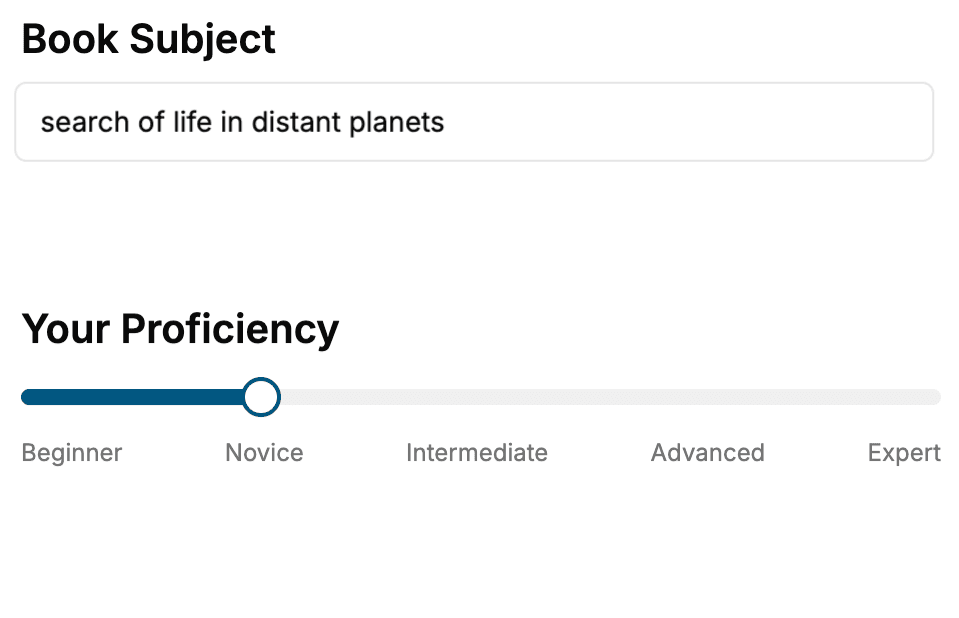
- 1. Select your focus
Select the focus of your Psychology book and share your background
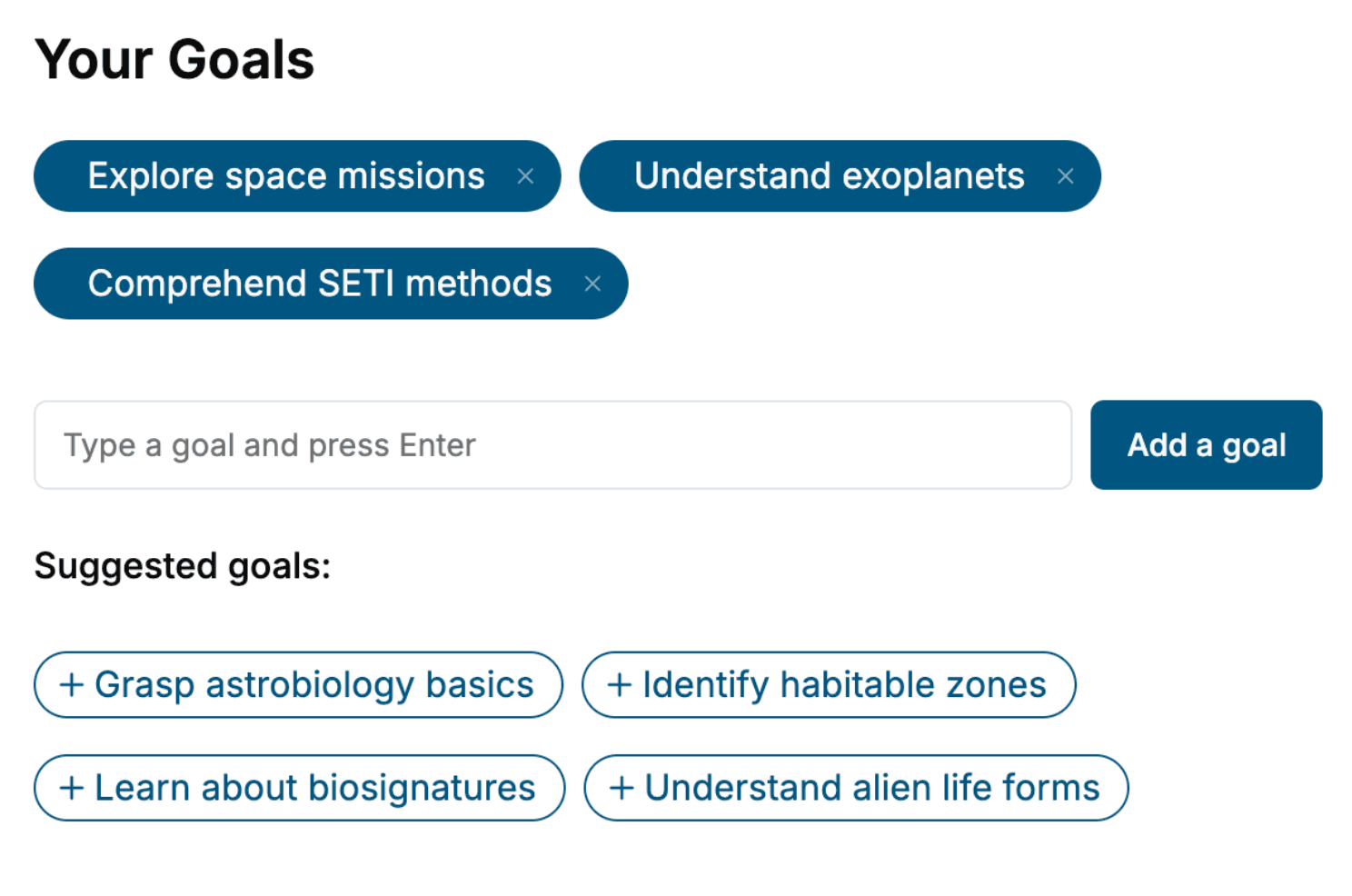
- 2. Personalize your book
Specify your goals and choose sub-topics to include
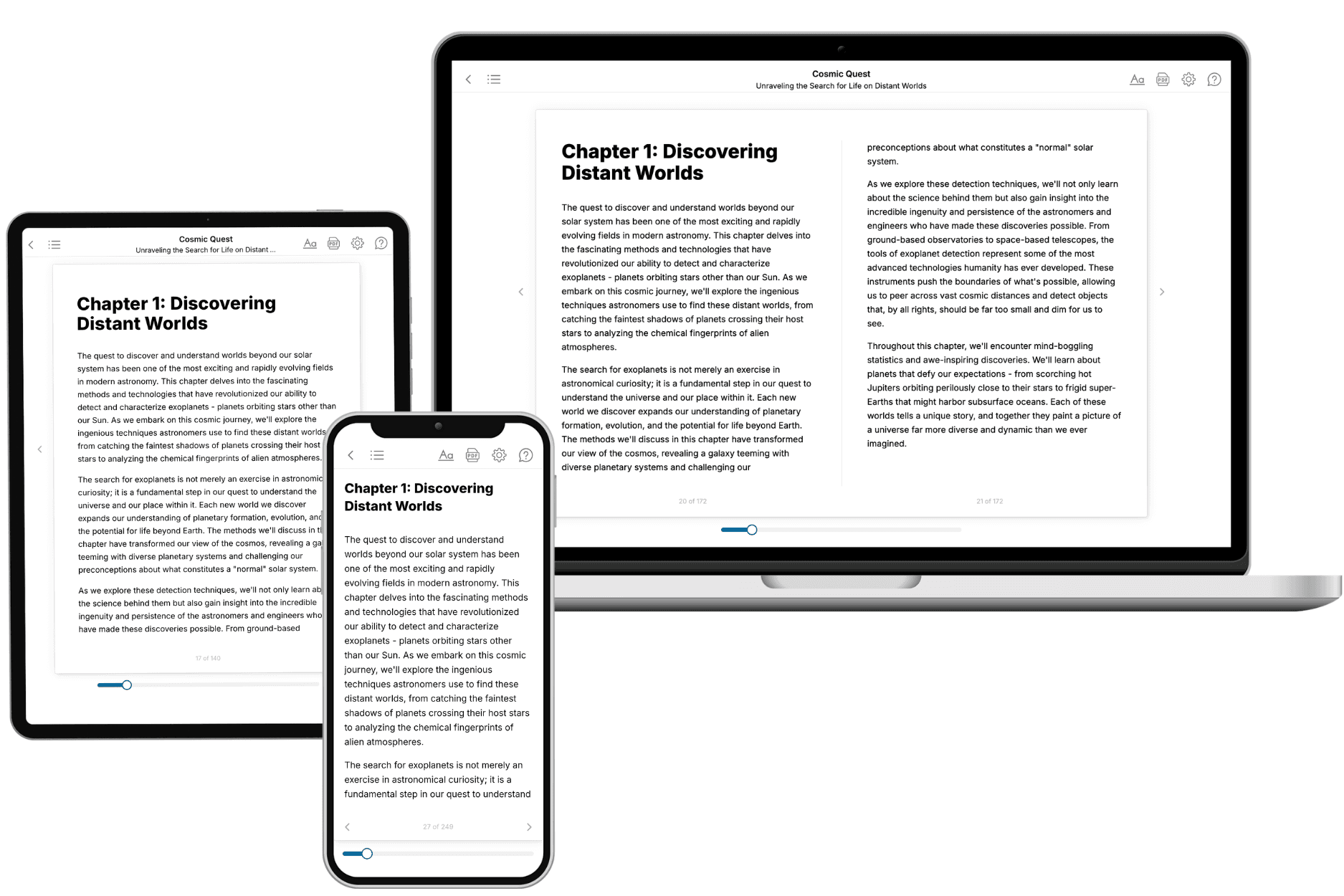
- 3. Get your tailored book
Your book is ready in 10 minutes. Read it online, download as EPUB or PDF, or send to Kindle.
Frequently asked questions
- What is TailoredRead?
TailoredRead creates complete, full-length nonfiction ebooks, written specifically for you. Tell us what you want to learn and why, and TailoredRead writes you a complete ebook on it, with charts, tables, and diagrams throughout. Read it online, on Kindle, or on any e-reader, or download it as a PDF or EPUB. Every book is written fresh the day you order it.
- How is the book tailored to me?
Before anything is written, you answer a few short questions about your goals, your background, and the topics you care about. Your book is then planned around your answers: written at your level, focused on your goals, and covering the topics you chose, instead of the one-size-fits-all book a store sells everyone.
- Will it read like generic AI content?
No. Your book isn't a chat transcript: it's planned chapter by chapter before a single word is written, told in a clear book voice, and explains ideas visually with charts, tables, and diagrams. After writing, every book goes through an editorial pass that polishes chapters so the book reads consistent from start to finish. Judge for yourself: browse thousands of sample books on our Explore Books page.
- How accurate is the content?
Our AI first checks whether your subject needs live research. Niche and fast-moving subjects are researched before writing, and the book plan and chapters are grounded in what it finds. After writing, every book goes through a quality pass that checks its facts and consistency, and researched books list their sources in a Notes section at the back.
- How long is the book?
You choose the length: Comprehensive (250-300 pages), Detailed (150-200 pages), Essential (70-100 pages), or Short (30-50 pages).
- Does the book include visuals?
Yes. Every book includes visual elements such as timelines, checklists, step-by-step guides, decision trees, comparison tables, and matrices, and many include bar charts. A typical book includes dozens of these visual elements.
- Can I read it on Kindle? What formats can I download?
Yes. Every book can be read in our online reader or downloaded as a PDF or EPUB. The EPUB can be opened with Kindle, Apple Books, Kobo, and any e-reader. The Commercial and Author licenses also include an editable Word (DOCX) and Markdown download.
- How much does it cost?
About the price of a regular ebook. The exact price depends on your book's length and complexity, from $2 for the shortest books to $35 for the most comprehensive, and it's shown when you review your book, before you commit to anything. Each book is a one-time purchase, yours to keep, no subscription. Licenses that let you share, teach, or publish your book range from $35.99 to $49.99.
- Can I preview the book before purchasing?
Before you pay, you'll see what your book will cover: the title, a detailed description, the estimated length, and the complete chapter-by-chapter table of contents, so you know what you're getting before you decide. The full text itself is written after you purchase.
- How long does it take to create a book?
About 10 minutes. You can start reading the opening chapters while the rest is still being written.