The Evolution of Political Science
From Ancient Philosophy to Modern Scientific Inquiry
Political science today is a rigorous, data-driven discipline, but few scholars understand how it became one.
207 pages10 chaptersJun 24, 2026Political Science
About this book
The challenge many face is viewing political science as either purely scientific or purely philosophical—missing the rich, complex history that bridges these worlds. This book traces the fascinating evolution of political science from ancient philosophical inquiry through its transformation into a modern scientific discipline. You'll discover how thinkers from Plato and Aristotle to Machiavelli and Hobbes grappled with fundamental questions about power and governance, and how Enlightenment scholars introduced systematic methods that would eventually define the discipline. The narrative continues through the professionalization of political science in universities, the behavioral revolution that brought quantitative rigor, and contemporary innovations in computational analysis. By understanding this history, you'll gain deeper insight into why political scientists ask the questions they do, what methods they employ, and how the discipline continues to evolve in response to new challenges and technologies.
Table of contents
- IntroductionWhy the History of Political Science Matters, Defining the Discipline: What Is Political Science?, The Scope of Our JourneyRead below
- Chapter 1: Ancient and Classical FoundationsGreek Political Philosophy: Plato and Aristotle, Roman Contributions to Political Theory, The Enduring Legacy of Ancient Thought
- Chapter 2: Medieval and Renaissance Political ThoughtMedieval Synthesis: Religion and Politics, Machiavelli and the Birth of Political Realism, Renaissance Innovation and Secular Analysis
- Chapter 3: The Enlightenment and Scientific RevolutionApplying the Scientific Method to Politics, Social Contract Theory and Rational Analysis, Key Enlightenment Thinkers and Their Impact
- Chapter 4: Political Science in the Nineteenth CenturyThe Rise of Positivism and Scientific Ambition, Comparative Politics and Historical Analysis, Institutional Analysis and Constitutional Studies
- Chapter 5: Professionalization and InstitutionalizationThe Establishment of Political Science in Universities, Professional Organizations and Academic Journals, Defining Disciplinary Identity and Standards
- Chapter 6: The Behavioral RevolutionThe Quantitative Turn in Political Science, Behavioral Assumptions and Individual-Level Analysis, Empirical Testing and Hypothesis Verification
- Chapter 7: Theoretical Developments and DebatesSystems Theory and Structural Analysis, Rational Choice Theory and Game Theory, Critical Responses and Alternative Approaches
- Chapter 8: Contemporary Methods and TechnologiesComputational Methods and Big Data Analysis, Mixed Methods and Methodological Pluralism, The Digital Revolution in Political Research
- Chapter 9: Subfields and SpecializationAmerican Politics and Electoral Studies, International Relations and Global Politics, Comparative Politics and Regional Studies
- Chapter 10: Current Challenges and Future DirectionsThe Replication Crisis and Research Integrity, Interdisciplinary Trends and Integration, Emerging Questions and New Frontiers
- ConclusionSynthesizing Key Insights from the Discipline's Evolution, The Future Trajectory of Political Science
- Further Reading and Resources
Introduction
Political science is one of the oldest intellectual pursuits in human history, yet it is also one of the most contested in terms of what it actually is. Ask ten political scientists to define their discipline, and you will likely receive ten different answers. Some will emphasize the study of power and who holds it. Others will point to institutions, elections, international relations, or public policy. This diversity of answers is not a weakness. It reflects the remarkable breadth of a discipline that has been shaped by thousands of years of philosophical debate, scientific innovation, and real-world political upheaval.
The story of how political science became what it is today is genuinely fascinating. It begins not in a university department or a research laboratory, but in the open-air discussions of ancient Athens, where thinkers like Plato and Aristotle first tried to understand why some cities flourished while others collapsed into tyranny. From those early conversations, a long chain of intellectual development stretches forward through Roman law, medieval theology, Renaissance statecraft, Enlightenment rationalism, nineteenth-century positivism, and the quantitative revolution of the twentieth century. Each era added new tools, new questions, and new controversies to the discipline.
Understanding that history is not just an academic exercise. It changes how you read contemporary political research. When you know why political scientists started counting votes and running statistical regressions in the 1950s, you understand what problems they were trying to solve. When you know how Machiavelli broke from medieval political thought, you grasp why realism remains such a powerful framework in international relations today. The past is not separate from the present in political science. It is embedded in every research question, every methodological choice, and every theoretical assumption that modern scholars bring to their work.
This book traces that entire journey. It is written for people who already have some familiarity with political science but want to understand the deeper story of how the discipline developed. Whether you are a student trying to make sense of competing theoretical frameworks, an educator looking for historical context to bring to your teaching, or a professional who wants a richer understanding of the field, this book offers a clear and engaging account of political science from its ancient roots to its digital present. The goal is not to overwhelm with detail, but to illuminate the key turning points, the pivotal thinkers, and the defining debates that made political science what it is today.
Why the History of Political Science Matters
There is a common temptation in any scientific discipline to focus entirely on the present. New methods, new datasets, and new theoretical models seem more urgent than old debates. But in political science, ignoring history comes at a real cost. The questions that dominate contemporary research, such as how democracies erode, why states go to war, or what drives voter behavior, did not appear from nowhere. They emerged from specific historical circumstances and were shaped by the intellectual traditions that preceded them. Knowing that history helps you ask better questions and avoid repeating old mistakes.
Consider the concept of the state, which is arguably the central object of study in political science. The modern understanding of the state as a sovereign, territorially bounded entity with a monopoly on legitimate force did not exist in ancient Greece. It was constructed gradually through centuries of political theory and practice, reaching a kind of intellectual crystallization in the work of thinkers like Hobbes and Weber. If you do not know that history, the concept of the state can seem like a natural, obvious fact about the world. Once you understand its intellectual origins, you can see it for what it is: a theoretical construct with specific assumptions built in, assumptions that can be questioned and revised.[1]
The history of political science also reveals how deeply the discipline has been shaped by its social and political context. The behavioral revolution of the 1950s and 1960s, which brought quantitative methods to the forefront of political research, did not happen in a vacuum. It emerged partly in response to the perceived failures of earlier institutional approaches to predict or explain the rise of fascism and the outbreak of World War II. Scholars wanted a more rigorous, empirically grounded approach that could actually explain political behavior rather than just describe political structures. Understanding that context makes the behavioral revolution far more comprehensible than it appears when presented as a purely methodological development.
History also provides a useful corrective to intellectual overconfidence. Every generation of political scientists has believed, to some degree, that it had finally found the right methods and the right theoretical frameworks. The institutionalists of the late nineteenth century thought they had established political science on a firm scientific footing. The behavioralists of the mid-twentieth century thought they had corrected the institutionalists' errors. The rational choice theorists of the 1970s and 1980s thought they had brought genuine scientific precision to the discipline. Each of these movements made real contributions, but each also had significant blind spots that later scholars identified and criticized. Knowing this pattern should inspire intellectual humility about current approaches.
There is also a practical dimension to understanding the history of political science. Many of the methodological debates that seem purely technical, such as debates about the proper use of regression analysis, the value of case studies, or the role of formal modeling, are actually rooted in deeper philosophical disagreements about what kind of knowledge political science should produce. These disagreements go back centuries. Knowing their origins helps you navigate contemporary methodological debates with greater clarity and confidence, rather than treating them as arbitrary disputes between competing academic factions.
As the political theorist Sheldon Wolin once observed, political theory is not simply a body of doctrines but a tradition of discourse, a continuing conversation across time about the fundamental questions of political life.[2] Understanding that conversation, from its earliest moments to its most recent developments, is what this book aims to provide.
Finally, the history of political science matters because it is genuinely interesting. The story of how human beings have tried to understand politics is full of dramatic intellectual breakthroughs, fierce controversies, surprising connections, and fascinating personalities. From Aristotle collecting the constitutions of 158 city-states to modern researchers analyzing millions of tweets to understand political polarization, the discipline has always been driven by a deep curiosity about how power works and how societies organize themselves. That curiosity is worth celebrating and exploring in its full historical depth.
Defining the Discipline: What Is Political Science?
Before tracing the history of political science, it is worth pausing to ask what exactly is being traced. Defining political science is harder than it might seem. The discipline covers an enormous range of topics, from the voting behavior of individual citizens to the foreign policy decisions of great powers, from the design of constitutional systems to the dynamics of international organizations. It uses methods ranging from formal mathematical modeling to ethnographic fieldwork. It draws on philosophy, history, economics, sociology, psychology, and statistics. What holds all of this together under a single disciplinary label?
The most common answer is that political science is the systematic study of politics, power, and governance. But this definition immediately raises further questions. What counts as politics? Where does political life end and social or economic life begin? These boundary questions have been debated throughout the discipline's history, and different schools of thought have drawn the lines in very different places. Marxist scholars, for example, have argued that economic relations are fundamentally political. Feminist scholars have argued that personal and domestic relations are political. Pluralists have focused on the competition among organized interest groups within formal political institutions.
A more precise way to think about political science is to identify the core questions it has consistently tried to answer. These questions have remained remarkably stable across centuries, even as the methods used to address them have changed dramatically. They include:
- Who holds power, and how did they get it?
- How do political institutions shape behavior and outcomes?
- What makes political systems stable or unstable?
- How do states interact with one another?
- What do citizens want from their governments, and how do they express those preferences?
- What makes a political order just or unjust?
These questions connect Aristotle's Politics to a contemporary study of electoral systems or a game-theoretic model of international bargaining. The methods are radically different, but the underlying curiosity is the same. Political science is, at its core, the sustained intellectual effort to understand how human beings organize collective life, distribute power, and make binding decisions for their communities.
It is also important to distinguish political science from related fields, particularly political philosophy and political theory. Political philosophy is primarily concerned with normative questions: what ought political life to look like? What is justice? What are the proper limits of state authority? Political science, especially in its modern empirical form, is primarily concerned with descriptive and explanatory questions: what does political life actually look like, and why? In practice, the boundary between these two modes of inquiry has always been blurry. The greatest political thinkers, from Aristotle to Tocqueville to Rawls, have typically engaged with both normative and empirical questions. But the distinction is useful for understanding the discipline's development, particularly the twentieth-century push toward empirical rigor and scientific methodology.[3]
Political science also differs from political history, though the two disciplines have always been closely intertwined. Political history focuses on the narrative reconstruction of specific political events and processes. Political science seeks to identify general patterns, test theoretical propositions, and build cumulative knowledge that extends beyond any single case. A historian might write a detailed account of how the Weimar Republic collapsed. A political scientist would use that case, along with many others, to develop and test a general theory of democratic breakdown. Both approaches are valuable, and the best political science has always drawn heavily on historical knowledge.
One more distinction worth drawing is between political science and political commentary or journalism. Political science aims to produce knowledge that is systematic, replicable, and subject to rigorous scrutiny. It is not primarily concerned with advocating for particular political positions or predicting the outcome of the next election, though it can inform both activities. This commitment to systematic inquiry is what makes political science a science, even if it is a social science with distinctive challenges and limitations that differ from those of the natural sciences. Understanding what political science is, and what it is not, is essential preparation for understanding how it developed over time.
The Scope of Our Journey
This book covers roughly 2,500 years of intellectual history, from the political philosophy of ancient Greece to the computational methods of the twenty-first century. That is an ambitious scope, and it requires some choices about what to include and what to leave out. The focus throughout is on the Western tradition of political thought and the development of political science as an academic discipline primarily in Europe and North America. This is not because other traditions are unimportant. Political thought in China, India, the Islamic world, and Africa has a rich and sophisticated history that deserves serious attention. But the specific story of political science as a formal academic discipline, with its particular methods, institutions, and professional norms, is primarily a Western story, at least in its origins.
The book is organized chronologically, moving from ancient foundations through medieval and Renaissance thought, the Enlightenment, the nineteenth century, the professionalization of the discipline, the behavioral revolution, and contemporary developments. Each chapter focuses on a distinct period or intellectual movement, identifying the key thinkers, the central debates, and the methodological innovations that defined that era. The chapters are designed to be read in sequence, since each builds on what came before, but they can also be read independently if you are interested in a particular period or topic.
Within each chapter, the goal is to do more than simply list important thinkers and their ideas. The aim is to explain why those ideas emerged when they did, what problems they were trying to solve, and how they changed the trajectory of the discipline. This means paying attention to context: the political events, social changes, and intellectual currents that shaped how scholars thought about politics at different moments in history. A theory does not emerge in a vacuum. It emerges in response to specific challenges, and understanding those challenges is essential to understanding the theory.
The book also pays close attention to methodology throughout. One of the most important dimensions of political science's evolution is the changing set of tools that scholars have used to study politics. These tools have ranged from philosophical argument and historical comparison to statistical analysis, formal modeling, experimental design, and computational text analysis. Each methodological innovation has opened new possibilities for political research while also generating new debates about what counts as valid evidence and rigorous explanation. Tracing these methodological developments is central to understanding how political science became the discipline it is today.
Several recurring themes run through the entire narrative. The first is the tension between scientific rigor and humanistic understanding. Political science has always been pulled in two directions: toward the precision and generalizability of natural science, and toward the interpretive depth and contextual sensitivity of the humanities. Different eras and different schools of thought have resolved this tension in different ways, and the debate continues today. The second recurring theme is the relationship between theory and practice. Political scientists have always had to grapple with the question of whether their work should be purely academic or should inform and improve political life. The third theme is the question of universality versus particularity: whether political science should seek universal laws of political behavior or whether political life is too varied and context-dependent for such laws to be meaningful.
Here is a brief overview of what each part of the book covers:
- Chapters 1 and 2 cover the ancient, medieval, and Renaissance foundations of political thought, from Plato and Aristotle through Aquinas and Machiavelli.
- Chapter 3 examines the Enlightenment and the scientific revolution, focusing on how rational analysis and systematic observation transformed political inquiry.
- Chapters 4 and 5 trace the nineteenth-century development of political science and its professionalization as an academic discipline in universities and professional associations.
- Chapters 6 and 7 cover the behavioral revolution and the major theoretical developments of the mid-to-late twentieth century, including systems theory, rational choice, and critical responses.
- Chapters 8 and 9 examine contemporary methods, technologies, and the specialization of the discipline into distinct subfields.
- Chapter 10 addresses current challenges and future directions, including the replication crisis, interdisciplinary trends, and emerging research frontiers.
By the end of this journey, the goal is not just that you know more about the history of political science. The goal is that you see the discipline differently. You will understand why contemporary political scientists ask the questions they do, why they use the methods they use, and why they disagree with each other in the ways they do. You will have a richer sense of what political science can and cannot tell us about political life, and a deeper appreciation for the intellectual tradition you are engaging with whenever you read a piece of political research. That kind of historical self-awareness is, in the end, one of the most valuable things a student of any discipline can develop.
The history of political science is not a story of steady, linear progress from ignorance to knowledge. It is a more complicated story of genuine advances, false starts, productive controversies, and ongoing debates. It is a story about human beings trying, with varying degrees of success, to understand one of the most complex and consequential aspects of their collective life. That story is worth knowing, and it begins more than two thousand years ago on the shores of the Aegean Sea.
Notes
Introduction
This is the end of the free sample. The full book has 10 chapters.
Want this book written for you?
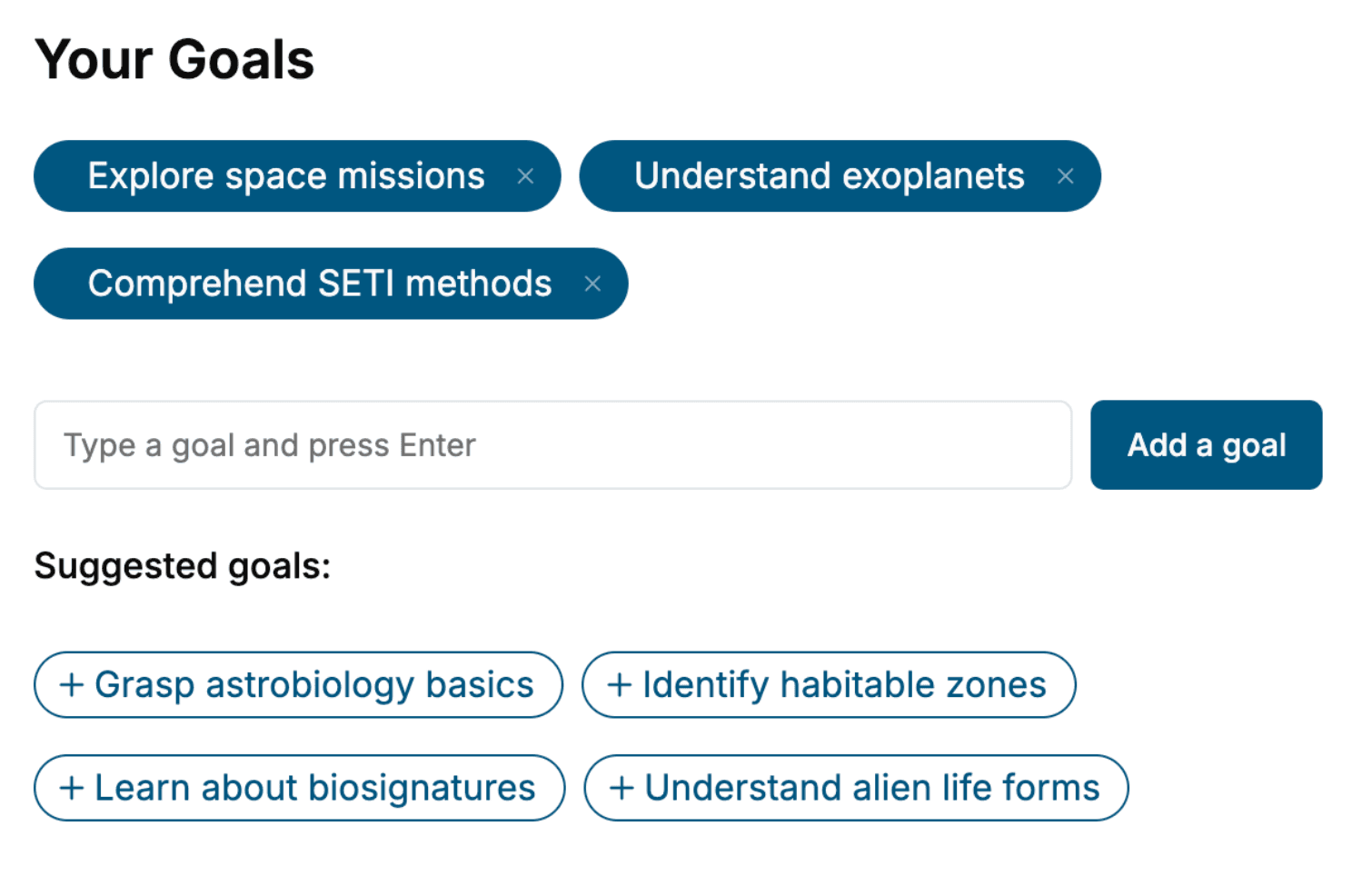
Tell us your goals and background, and get your own version of this book, tailored by AI to you.


Benefits of AI-tailored books
- Read one book, not ten:
- all the Political Science knowledge you need, gathered into a single book.
- Save days of learning:
- tell us your goals, choose your topics, and the whole book is built around them.
- Learn effortlessly:
- Political Science book written for your specific background and expertise.
- Understand at a glance:
- includes charts, tables, timelines, checklists, decision trees, and more.
- Stay current:
- written the day you order it, not years ago.
- Trust what you read:
- every book is checked for accuracy, with real research when your subject needs it.
Create your unique book in 3 steps
- 1. Select your focus
Select the focus of your Political Science book and share your background
- 2. Personalize your book
Specify your goals and choose sub-topics to include
- 3. Get your tailored book
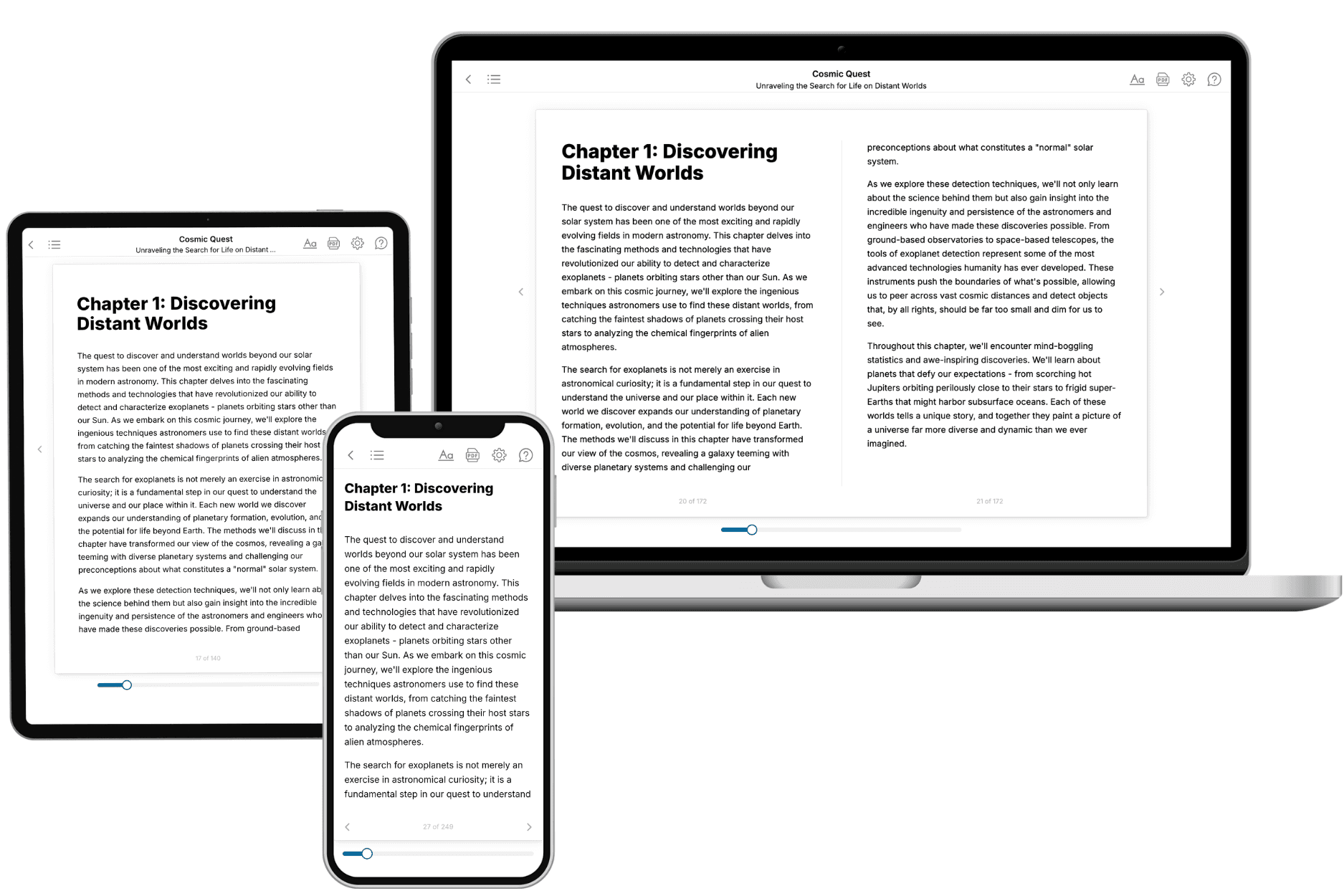
Your book is ready in 10 minutes. Read it online, download as EPUB or PDF, or send to Kindle.

Frequently asked questions
- What is TailoredRead?
TailoredRead creates complete, full-length nonfiction ebooks, written specifically for you. Tell us what you want to learn and why, and TailoredRead writes you a complete ebook on it, with charts, tables, and diagrams throughout. Read it online, on Kindle, or on any e-reader, or download it as a PDF or EPUB. Every book is written fresh the day you order it.
- How is the book tailored to me?
Before anything is written, you answer a few short questions about your goals, your background, and the topics you care about. Your book is then planned around your answers: written at your level, focused on your goals, and covering the topics you chose, instead of the one-size-fits-all book a store sells everyone.
- Will it read like generic AI content?
No. Your book isn't a chat transcript: it's planned chapter by chapter before a single word is written, told in a clear book voice, and explains ideas visually with charts, tables, and diagrams. After writing, every book goes through an editorial pass that polishes chapters so the book reads consistent from start to finish. Judge for yourself: browse thousands of sample books on our Explore Books page.
- How accurate is the content?
Our AI first checks whether your subject needs live research. Niche and fast-moving subjects are researched before writing, and the book plan and chapters are grounded in what it finds. After writing, every book goes through a quality pass that checks its facts and consistency, and researched books list their sources in a Notes section at the back.
- How long is the book?
You choose the length: Comprehensive (250-300 pages), Detailed (150-200 pages), Essential (70-100 pages), or Short (30-50 pages).
- Does the book include visuals?
Yes. Every book includes visual elements such as timelines, checklists, step-by-step guides, decision trees, comparison tables, and matrices, and many include bar charts. A typical book includes dozens of these visual elements.
- Can I read it on Kindle? What formats can I download?
Yes. Every book can be read in our online reader or downloaded as a PDF or EPUB. The EPUB can be opened with Kindle, Apple Books, Kobo, and any e-reader. The Commercial and Author licenses also include an editable Word (DOCX) and Markdown download.
- How much does it cost?
About the price of a regular ebook. The exact price depends on your book's length and complexity, from $2 for the shortest books to $35 for the most comprehensive, and it's shown when you review your book, before you commit to anything. Each book is a one-time purchase, yours to keep, no subscription. Licenses that let you share, teach, or publish your book range from $35.99 to $49.99.
- Can I preview the book before purchasing?
Before you pay, you'll see what your book will cover: the title, a detailed description, the estimated length, and the complete chapter-by-chapter table of contents, so you know what you're getting before you decide. The full text itself is written after you purchase.
- How long does it take to create a book?
About 10 minutes. You can start reading the opening chapters while the rest is still being written.