The Thirty Years' War
Europe's Bloodiest Conflict and the Birth of the Modern State System
Many assume the Thirty Years' War was simply a religious conflict between Catholics and Protestants.
207 pages11 chaptersNov 29, 2025Thirty Years' War
About this book
In reality, this devastating struggle (1618-1648) was a complex web of religious fervor, dynastic ambition, and geopolitical maneuvering that fundamentally reshaped Europe. This book cuts through the complexity to reveal how religious differences became tools for political power, how entire regions were depopulated by warfare and disease, and how one peace treaty established principles that still govern international relations today. You'll discover why Sweden became a major power, how France consolidated its dominance, and why the Holy Roman Empire never recovered its authority. By examining the war's military innovations, economic consequences, and diplomatic solutions, you'll gain insight into how Europe transformed from a religiously fractured continent into a system of sovereign states. This is the story of how catastrophic conflict created the modern world.
Table of contents
- IntroductionWhy This War Matters Today, Beyond Religion: The Real Causes, What You'll Learn in This BookRead below
- Chapter 1: The World Before 1618The Religious Landscape of Europe, The Holy Roman Empire: Fragmented Power, Dynastic Rivalries and Territorial Ambitions
- Chapter 2: The Spark: Bohemia and the DefenestrationThe Bohemian Crisis of 1618, The Defenestration of Prague, From Local Revolt to Continental War
- Chapter 3: The Palatinate Phase: Early Conflict (1618-1625)Frederick V and the Winter King, Early Battles and Imperial Victories, Foreign Powers Enter the Fray
- Chapter 4: The Danish Phase: Expansion and Stalemate (1625-1629)Denmark's Intervention and Ambitions, Wallenstein: The Mercenary General, The Edict of Restitution and Its Consequences
- Chapter 5: The Swedish Phase: Gustavus Adolphus (1630-1635)Sweden's Entry and Strategic Goals, Gustavus Adolphus: The Lion of the North, The Battle of Breitenfeld and Military Revolution, Swedish Dominance and Lützen
- Chapter 6: The French Phase: The Final Struggle (1635-1648)France Declares War: Richelieu's Strategy, French Military Successes and Expansion, War Exhaustion and the Path to Peace
- Chapter 7: The Human Cost: Devastation and SurvivalPopulation Loss and Regional Depopulation, Famine, Disease, and Displacement, Social Breakdown and Economic Collapse
- Chapter 8: Military Innovation and WarfareNew Tactics and the Military Revolution, Artillery, Firearms, and Fortifications, Logistics, Supply Lines, and Army Organization
- Chapter 9: The Peace of Westphalia: Reshaping EuropeThe Negotiations and Diplomatic Process, Key Terms and Territorial Changes, The Principle of State Sovereignty, Religious Tolerance and the End of Confessional War
- Chapter 10: Winners and Losers: The New European OrderFrance's Rise to Dominance, Sweden's Brief Moment as a Great Power, The Dutch Republic's Independence and Prosperity, The Holy Roman Empire's Permanent Decline
- Chapter 11: Legacy and Lessons: From Thirty Years to Modern EuropeThe Birth of the Modern International System, The Emergence of National Identity, The Separation of Church and State
- ConclusionUnderstanding Conflict and Its Consequences, Why the Thirty Years' War Still Matters
Introduction
The Thirty Years' War stands as one of history's most devastating conflicts, yet it remains poorly understood outside academic circles. Between 1618 and 1648, Europe tore itself apart in a struggle that killed approximately eight million people—roughly one-third of the population in affected regions. Cities were razed, entire villages disappeared, and famine and disease stalked the land. What began as a local religious dispute in Bohemia escalated into a continental catastrophe that drew in every major European power. The war's complexity can seem overwhelming, with shifting alliances, multiple phases, and dozens of key figures whose motivations often contradicted their stated religious principles.
This book cuts through that complexity to reveal the war's essential dynamics and lasting significance. You'll discover how religious differences became weapons in struggles for political power, how military innovation transformed warfare itself, and how one peace treaty established principles that still govern international relations today. The Thirty Years' War wasn't simply Catholics fighting Protestants—it was a transformative conflict that destroyed the medieval order and created the foundations of modern Europe. Understanding this war means understanding how our contemporary world came into being, from the concept of state sovereignty to the separation of church and state.
The narrative that follows traces the war through its distinct phases, examines its human cost, explores its military innovations, and analyzes its diplomatic resolution. You'll meet remarkable figures like Gustavus Adolphus of Sweden, Cardinal Richelieu of France, and the mercenary general Wallenstein. You'll witness pivotal battles that changed military history and diplomatic negotiations that reshaped the map of Europe. Most importantly, you'll gain insight into how catastrophic conflict can paradoxically create new systems of order—and why those systems continue to shape our world nearly four centuries later.
Why This War Matters Today
The Thirty Years' War created the international system we still inhabit. Before 1648, Europe operated under a medieval framework where the Holy Roman Emperor and the Pope claimed universal authority over Christian territories. Religious affiliation determined political loyalty, and the concept of sovereign, independent states barely existed. The Peace of Westphalia, which ended the war, fundamentally changed these assumptions. It established that states, not religious authorities, held supreme power within their territories. This principle of state sovereignty—the idea that each nation controls its own affairs without external interference—became the cornerstone of international law and remains so today.
Modern diplomacy and international relations trace their origins directly to Westphalia. The peace negotiations involved over 100 delegations and took five years to complete, establishing precedents for multilateral diplomacy that we still follow. The concept of a balance of power, where no single state dominates the continent, emerged from the war's lessons. European powers learned that allowing one nation to become too strong threatened everyone's security. This insight shaped European politics for centuries and influenced the creation of institutions like the United Nations and NATO. When diplomats today speak of Westphalian sovereignty
or the Westphalian system
, they're referencing principles established in 1648.
The war also demonstrated the catastrophic consequences of mixing religious ideology with political conflict. The devastation was so complete in some regions that it took over a century for populations to recover. German states lost between 25% and 40% of their inhabitants, with some areas experiencing even higher mortality rates[1]. This horror taught European leaders a brutal lesson: religious wars of annihilation threatened civilization itself. The gradual separation of church and state, the development of religious tolerance, and the secularization of politics all emerged partly from the Thirty Years' War's ashes. When we take for granted that governments shouldn't enforce religious uniformity, we're benefiting from lessons learned at tremendous cost.
Understanding this conflict illuminates contemporary issues in unexpected ways. The war shows how local disputes can escalate into international catastrophes when major powers intervene for their own interests. It reveals how humanitarian rhetoric can mask territorial ambitions—Catholic France allied with Protestant powers not from religious conviction but from strategic calculation. The conflict demonstrates how prolonged warfare destroys the social fabric, creating refugee crises, economic collapse, and generational trauma. These patterns repeat throughout history, from the World Wars to modern conflicts in Syria and Ukraine. The Thirty Years' War provides a historical lens for understanding how wars begin, why they persist, and what it takes to end them.
The war's legacy extends beyond politics and diplomacy into military affairs, economics, and culture. It accelerated the military revolution that transformed European armies from medieval levies into professional, disciplined forces. It shifted economic power from Central Europe to the Atlantic states, setting the stage for colonial expansion. It influenced art, literature, and philosophy—the war's horrors inspired works questioning religious certainty and political authority. German culture, in particular, bears the war's imprint; the conflict fragmented Germany into hundreds of small states, delaying German unification until 1871 and shaping German historical consciousness. The war's shadow stretches across centuries, touching aspects of European life that seem far removed from seventeenth-century battlefields.
Perhaps most importantly, the Thirty Years' War reminds us that the international order we inhabit isn't natural or inevitable—it was created through specific historical events and can be unmade. The principles of sovereignty, territorial integrity, and diplomatic resolution of conflicts emerged from catastrophic failure. They represent hard-won wisdom about how to prevent total war. As contemporary challenges strain the Westphalian system—from terrorism to climate change to cyber warfare—understanding how and why this system was created becomes increasingly relevant. The war teaches us that international order requires constant maintenance and that its collapse carries unthinkable costs.
Beyond Religion: The Real Causes
The conventional narrative presents the Thirty Years' War as a straightforward religious conflict: Catholics versus Protestants, fighting to determine which faith would dominate Europe. This explanation contains truth but obscures more than it reveals. Religious differences certainly mattered—they provided the ideological framework that mobilized populations and justified violence. However, the war's actual dynamics reveal a far more complex reality where religious rhetoric masked political ambitions, where Catholic powers fought each other, and where Protestant and Catholic states formed alliances against co-religionists. Understanding the war requires looking beyond religious labels to the underlying political, economic, and dynastic motivations that drove the conflict.
The Habsburg dynasty stood at the conflict's center, and their ambitions explain much of the war's trajectory. The Habsburgs ruled both the Holy Roman Empire and Spain, creating a vast territorial bloc that encircled France and threatened to dominate Europe. Emperor Ferdinand II genuinely believed in Catholic restoration, but his religious zeal aligned conveniently with political goals: centralizing imperial authority, reducing the independence of German princes, and expanding Habsburg power. When Ferdinand moved to suppress Protestantism in Bohemia, he wasn't simply defending Catholic doctrine—he was asserting imperial control over a traditionally autonomous kingdom. The religious and political dimensions were inseparable, but political calculation often trumped religious principle.
France's role demolishes any simple religious interpretation. Cardinal Richelieu, chief minister to King Louis XIII, was a Catholic cardinal who spent French resources supporting Protestant powers against Catholic Habsburgs. This wasn't hypocrisy—it was raison d'état, reason of state, the principle that national interest supersedes religious solidarity. Richelieu understood that Habsburg dominance threatened French security regardless of shared Catholic faith. He subsidized Swedish and German Protestant armies, allied with the Dutch Republic, and eventually brought France directly into the war against Spain and the Empire. France's intervention proved decisive, demonstrating that dynastic rivalry and balance-of-power politics mattered more than religious unity.
Economic factors also drove the conflict in ways that religious explanations miss. The war occurred during a period of economic transformation, as trade routes shifted from the Mediterranean to the Atlantic and new commercial powers emerged. The Dutch Republic's wealth came from trade, and their struggle for independence from Spain had economic dimensions alongside religious ones. Sweden's intervention was partly motivated by control of Baltic trade and German ports. The war disrupted traditional trade patterns, destroyed productive capacity, and redistributed economic power. Armies needed to be paid, and control of wealthy territories determined military success. The conflict's economic dimensions shaped its course as much as theological disputes.
Dynastic succession and territorial claims provided another crucial motivation. The war began when Bohemian estates rejected Ferdinand II's succession and elected Frederick V of the Palatinate as their king. This wasn't primarily about religion—it was about which dynasty would control Bohemian territory and resources. Throughout the war, succession disputes, inheritance claims, and territorial ambitions drove military campaigns. The Peace of Westphalia spent considerable time redistributing territories, adjusting borders, and settling dynastic claims. These concrete political issues mattered more to negotiators than abstract theological principles. The war was fought over land, power, and sovereignty, with religion providing the language to justify these struggles.
The constitutional crisis within the Holy Roman Empire added another layer of complexity. The Empire was a unique political entity—neither fully centralized nor completely fragmented, with power shared between the Emperor and hundreds of princes, bishops, and free cities. Protestant princes had gained significant autonomy through earlier religious settlements, particularly the Peace of Augsburg (1555). Ferdinand II's attempts to reassert imperial authority and roll back Protestant gains threatened this constitutional balance. The war became a struggle over the Empire's fundamental nature: would it be a centralized monarchy under Habsburg control or a loose confederation of semi-independent states? This constitutional question transcended religious divisions, as even some Catholic princes opposed imperial centralization.
Understanding these multiple causations doesn't diminish religion's importance—it contextualizes it. Religious identity mattered intensely to seventeenth-century Europeans. It shaped worldviews, determined social networks, and provided meaning in uncertain times. The war's atrocities were often committed along religious lines, and religious rhetoric motivated soldiers and civilians alike. However, religious differences alone didn't cause the war, and religious unity didn't prevent it. The conflict emerged from the intersection of religious division, political ambition, dynastic rivalry, economic competition, and constitutional crisis. This complexity makes the war harder to understand but more relevant—it shows how multiple factors combine to create catastrophic conflicts that no single explanation can capture.
What You'll Learn in This Book
This book guides you through the Thirty Years' War chronologically while also exploring thematic dimensions that transcend specific battles and dates. You'll begin by understanding the world before 1618—the religious landscape created by the Reformation, the peculiar structure of the Holy Roman Empire, and the dynastic rivalries that set the stage for conflict. This foundation is essential because the war didn't emerge from nowhere; it resulted from tensions that had been building for decades. You'll see how the Peace of Augsburg created an unstable religious settlement, how Habsburg ambitions threatened the European balance of power, and how smaller states maneuvered between greater powers for survival and advantage.
The narrative then follows the war through its distinct phases, each characterized by different participants and dynamics:
- The Bohemian-Palatinate Phase (1618-1625): How a local revolt escalated into international conflict
- The Danish Phase (1625-1629): Denmark's failed intervention and the rise of Wallenstein
- The Swedish Phase (1630-1635): Gustavus Adolphus transforms the war and military practice
- The French Phase (1635-1648): France's entry and the final, exhausting struggle toward peace
Beyond chronology, you'll explore the war's human dimensions in depth. A dedicated chapter examines the conflict's devastating impact on civilian populations—the demographic catastrophe that killed millions, the economic collapse that impoverished entire regions, and the social breakdown that destroyed communities. You'll encounter specific examples of cities besieged and destroyed, regions depopulated by violence and disease, and the survival strategies people employed in impossible circumstances. This human perspective prevents the war from becoming merely an abstract sequence of battles and treaties. Real people suffered these events, and their experiences shaped European consciousness for generations.
The book also analyzes the war's military dimensions, showing how conflict drove innovation in tactics, technology, and organization. You'll learn about the military revolution that transformed European warfare during this period:
- New infantry tactics combining pike and musket in flexible formations
- Improved artillery that could breach previously impregnable fortifications
- Professional standing armies replacing feudal levies and unreliable mercenaries
- Sophisticated logistics systems that could sustain armies in the field for extended campaigns
- Strategic thinking that emphasized maneuver, supply lines, and territorial control
The Peace of Westphalia receives extensive treatment because it represents the war's most important legacy. You'll follow the complex negotiations that involved over 100 delegations meeting simultaneously in two cities, Münster and Osnabrück, for five years. The treaty's specific terms—territorial adjustments, religious settlements, constitutional changes within the Empire—mattered immensely to contemporaries. But you'll also understand the broader principles that emerged: state sovereignty, religious tolerance, diplomatic resolution of conflicts, and the balance of power. These concepts seem obvious today, but they were revolutionary in 1648. The chapter explains both what the treaty said and what it meant, connecting seventeenth-century diplomatic language to principles that still govern international relations.
The final chapters assess winners and losers, examining how the war redistributed power across Europe. France emerged as the continent's dominant power, a position it would hold for over a century. Sweden briefly became a great power, controlling much of the Baltic region. The Dutch Republic secured independence and entered a golden age of prosperity and cultural achievement. Meanwhile, the Holy Roman Empire's authority collapsed, German states gained effective independence, and Spain began its long decline. You'll understand not just what changed but why—how military success, diplomatic skill, economic resources, and strategic position determined outcomes. These shifts in the European power structure had consequences that extended far beyond 1648, shaping colonial expansion, future conflicts, and the development of modern nation-states.
Throughout the book, you'll encounter key figures whose decisions shaped events: Ferdinand II's religious zeal and political ambition, Gustavus Adolphus's military genius and strategic vision, Richelieu's cold calculation of French interests, Wallenstein's mercenary pragmatism, and many others. These weren't abstract historical forces—they were individuals making choices under pressure, often with incomplete information and conflicting advice. Understanding their motivations, constraints, and decisions humanizes the war and reveals how contingent historical outcomes can be. Different choices at key moments might have produced radically different results, a reminder that history isn't predetermined but shaped by human agency.
By the book's end, you'll possess a comprehensive understanding of the Thirty Years' War—its causes, course, and consequences. More importantly, you'll grasp why this seventeenth-century conflict remains relevant today. The war teaches lessons about how conflicts escalate, why they persist, and what it takes to end them. It shows how international systems emerge from catastrophic failure and why maintaining order requires constant effort. It demonstrates the dangers of mixing religious ideology with political conflict and the importance of separating the two. These aren't merely historical curiosities—they're insights that illuminate contemporary challenges and help us understand our own world's origins. The Thirty Years' War shaped modernity in fundamental ways, and understanding it means understanding ourselves.
Notes
Introduction
- 1. Geoffrey Parker, The Thirty Years' War, Routledge. Population estimates based on parish records and tax documents, 1984
This is the end of the free sample. The full book has 11 chapters.
Want this book written for you?
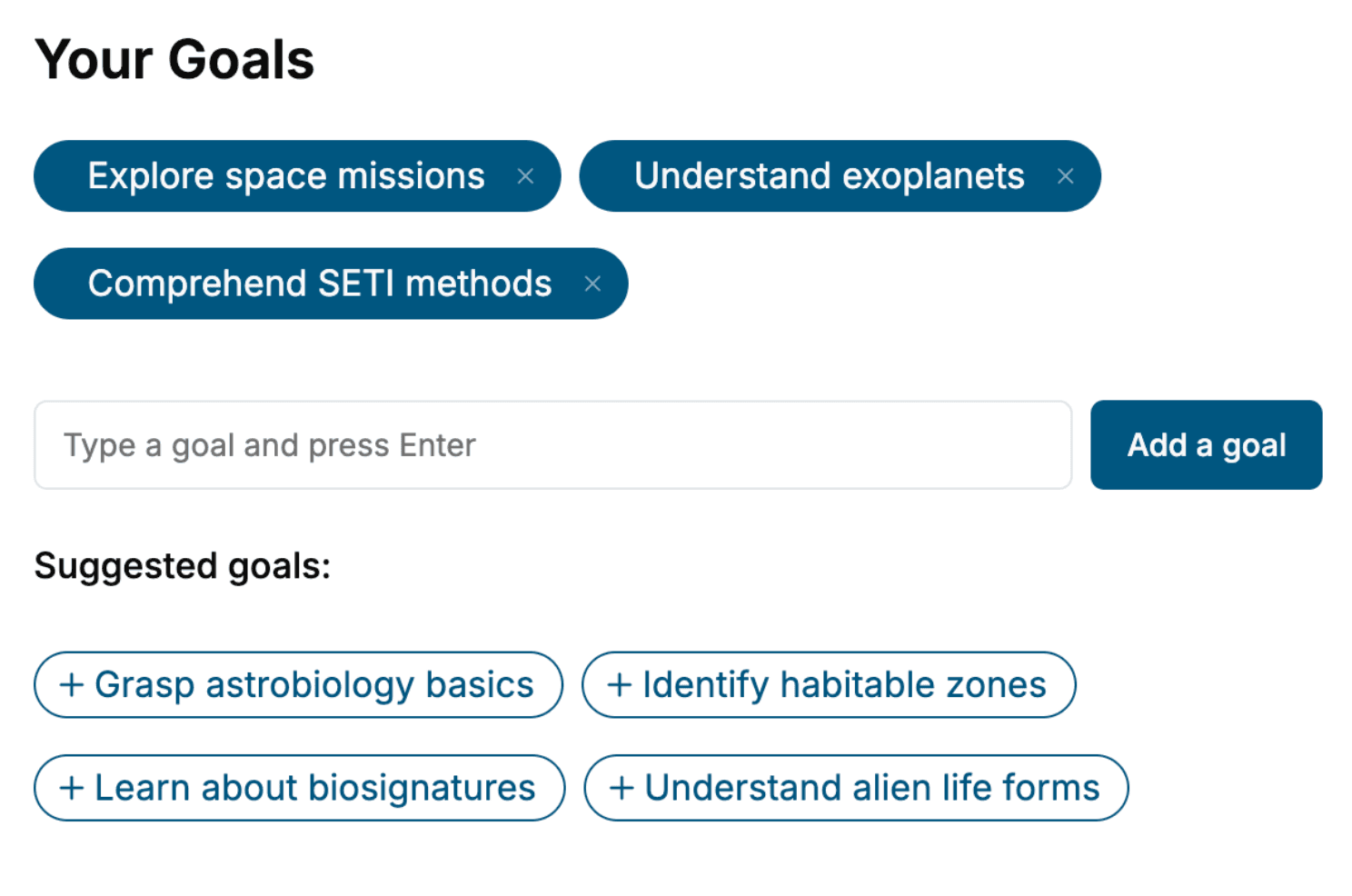
Tell us your goals and background, and get your own version of this book, tailored by AI to you.


Benefits of AI-tailored books
- Read one book, not ten:
- all the Thirty Years' War knowledge you need, gathered into a single book.
- Save days of learning:
- tell us your goals, choose your topics, and the whole book is built around them.
- Learn effortlessly:
- Thirty Years' War book written for your specific background and expertise.
- Understand at a glance:
- includes charts, tables, timelines, checklists, decision trees, and more.
- Stay current:
- written the day you order it, not years ago.
- Trust what you read:
- every book is checked for accuracy, with real research when your subject needs it.
Create your unique book in 3 steps
- 1. Select your focus
Select the focus of your Thirty Years' War book and share your background
- 2. Personalize your book
Specify your goals and choose sub-topics to include
- 3. Get your tailored book
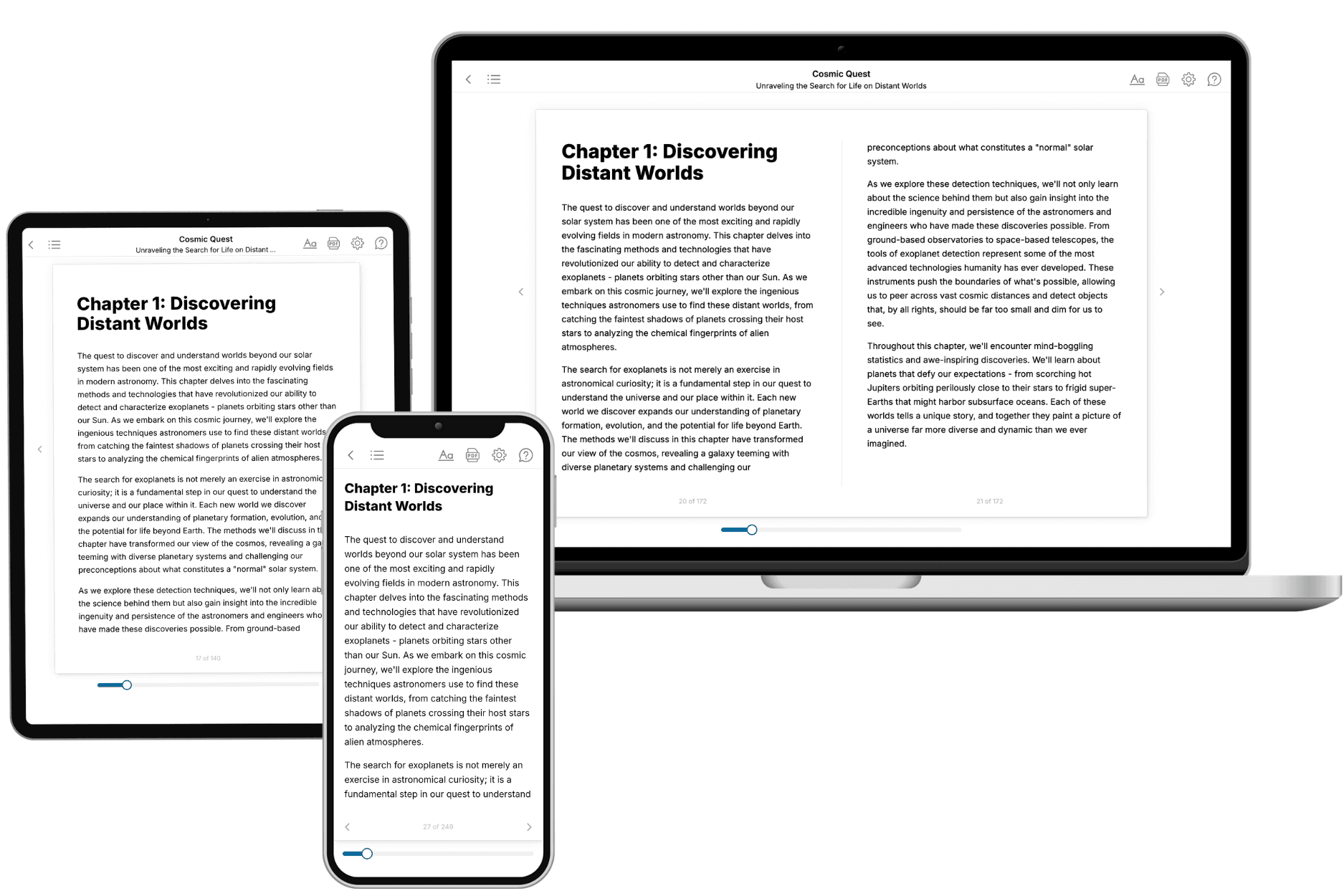
Your book is ready in 10 minutes. Read it online, download as EPUB or PDF, or send to Kindle.

Frequently asked questions
- What is TailoredRead?
TailoredRead creates complete, full-length nonfiction ebooks, written specifically for you. Tell us what you want to learn and why, and TailoredRead writes you a complete ebook on it, with charts, tables, and diagrams throughout. Read it online, on Kindle, or on any e-reader, or download it as a PDF or EPUB. Every book is written fresh the day you order it.
- How is the book tailored to me?
Before anything is written, you answer a few short questions about your goals, your background, and the topics you care about. Your book is then planned around your answers: written at your level, focused on your goals, and covering the topics you chose, instead of the one-size-fits-all book a store sells everyone.
- Will it read like generic AI content?
No. Your book isn't a chat transcript: it's planned chapter by chapter before a single word is written, told in a clear book voice, and explains ideas visually with charts, tables, and diagrams. After writing, every book goes through an editorial pass that polishes chapters so the book reads consistent from start to finish. Judge for yourself: browse thousands of sample books on our Explore Books page.
- How accurate is the content?
Our AI first checks whether your subject needs live research. Niche and fast-moving subjects are researched before writing, and the book plan and chapters are grounded in what it finds. After writing, every book goes through a quality pass that checks its facts and consistency, and researched books list their sources in a Notes section at the back.
- How long is the book?
You choose the length: Comprehensive (250-300 pages), Detailed (150-200 pages), Essential (70-100 pages), or Short (30-50 pages).
- Does the book include visuals?
Yes. Every book includes charts, tables, and diagrams: timelines, checklists, step-by-step guides, decision trees, comparison tables, matrices, and bar charts. A typical book includes dozens of these visual elements.
- Can I read it on Kindle? What formats can I download?
Yes. Every book can be read in our online reader or downloaded as a PDF or EPUB. The EPUB can be opened with Kindle, Apple Books, Kobo, and any e-reader. The Commercial and Author licenses also include an editable Word (DOCX) and Markdown download.
- How much does it cost?
About the price of a regular ebook. The exact price depends on your book's length and complexity, from $2 for the shortest books to $35 for the most comprehensive, and it's shown when you review your book, before you commit to anything. Each book is a one-time purchase, yours to keep, no subscription. Licenses that let you share, teach, or publish your book range from $35.99 to $49.99.
- Can I preview the book before purchasing?
Before you pay, you'll see what your book will cover: the title, a detailed description, the estimated length, and the complete chapter-by-chapter table of contents, so you know what you're getting before you decide. The full text itself is written after you purchase.
- How long does it take to create a book?
About 10 minutes. You can start reading the opening chapters while the rest is still being written.